
Brother Cycles started with a single steel frame and has grown in the decade-ish since into a real bike company. Run by two actual brothers, Brother is low-key and approachable – no hype, no reinventing the wheel, just good bikes made by people who love riding them. Petor Georgallou visits a fruit farm in Kent to find out the story behind the brand.
I’ve known Will and James – that is, I’ve been aware of them – since about 2012, when we met in the foyer of the Barbican Cinema during the Bicycle Film Festival in London. At that time they had one product, a steel track frame called Steel Track Frame. This was an accidental master stroke of SEO, but coming in on the tail end of peak fixie, I hadn’t imagined they’d ever make a second product, because while Steel Track Frame was fine, in London in 2012 everyone and their mother was making a drop-shipped product like Will and James. They gave me a t-shirt, or I won one in some kind of competition, that had an illustrated picture of Steel Track Frame on it with script that read “He ain’t heavy, he’s my Brother”, which I didn’t realise was the title of a song. I thought it was just weird marketing for a basic frame. Since Will moved out to Margate a few years back, we’ve hung out a bit and done some riding, and Brother has grown from a side hustle to a proper small bike company, with a growing roster of bikes that just seem to get better and better. Rather than arbitrarily changing models, they make updates to the models they already have, working with a Taiwanese factory to dial things in and improve through iteration over time.
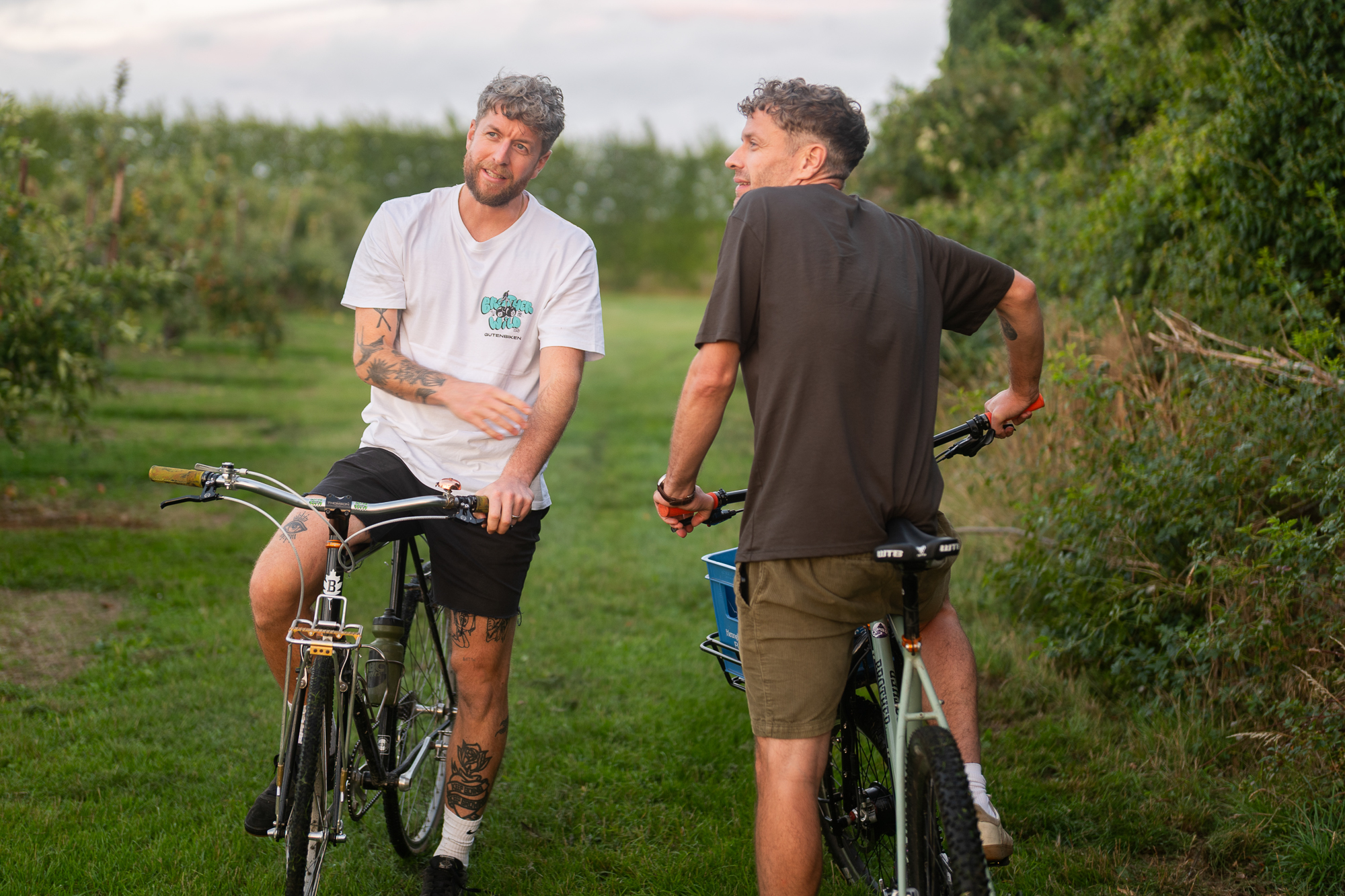
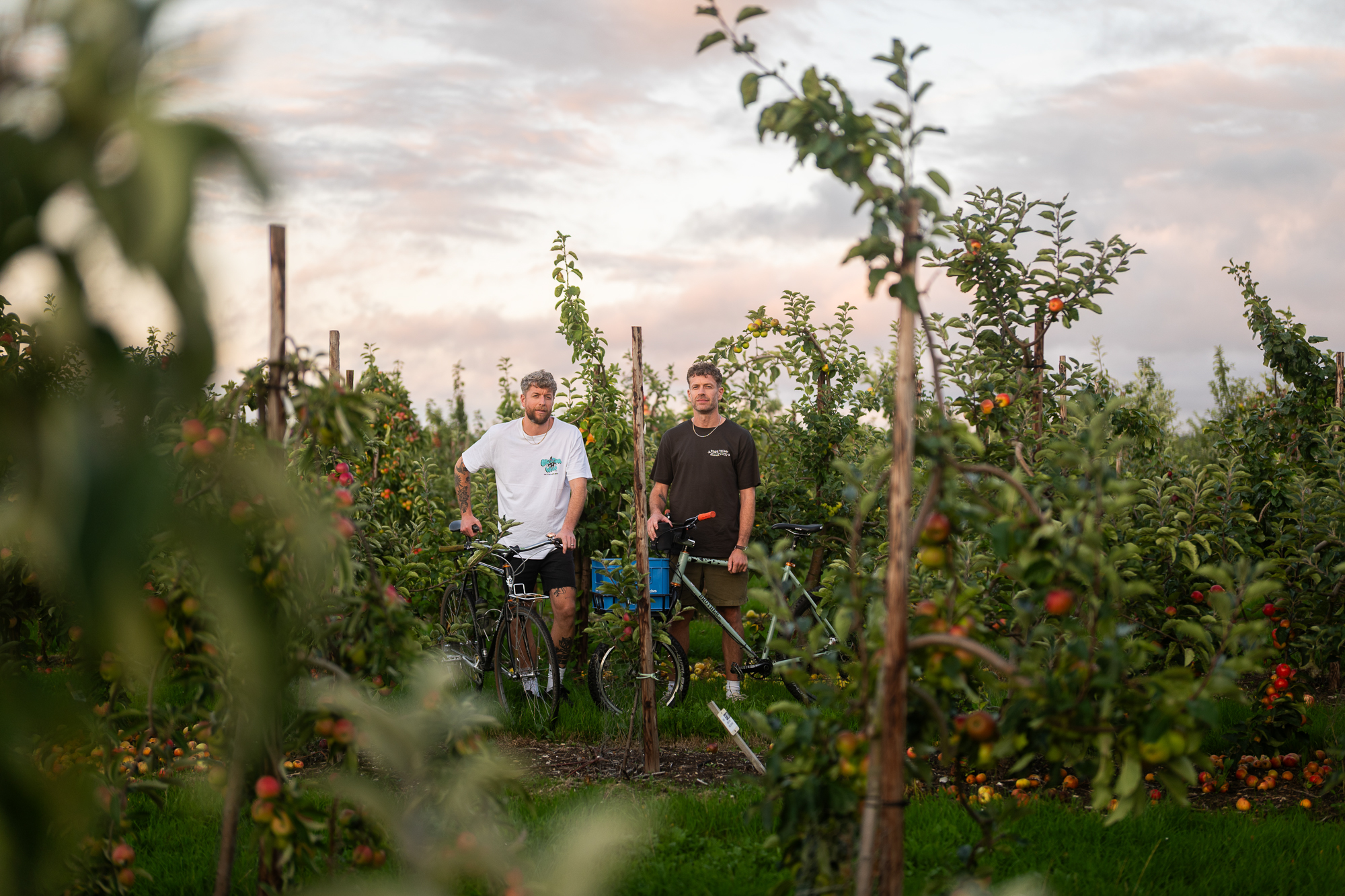
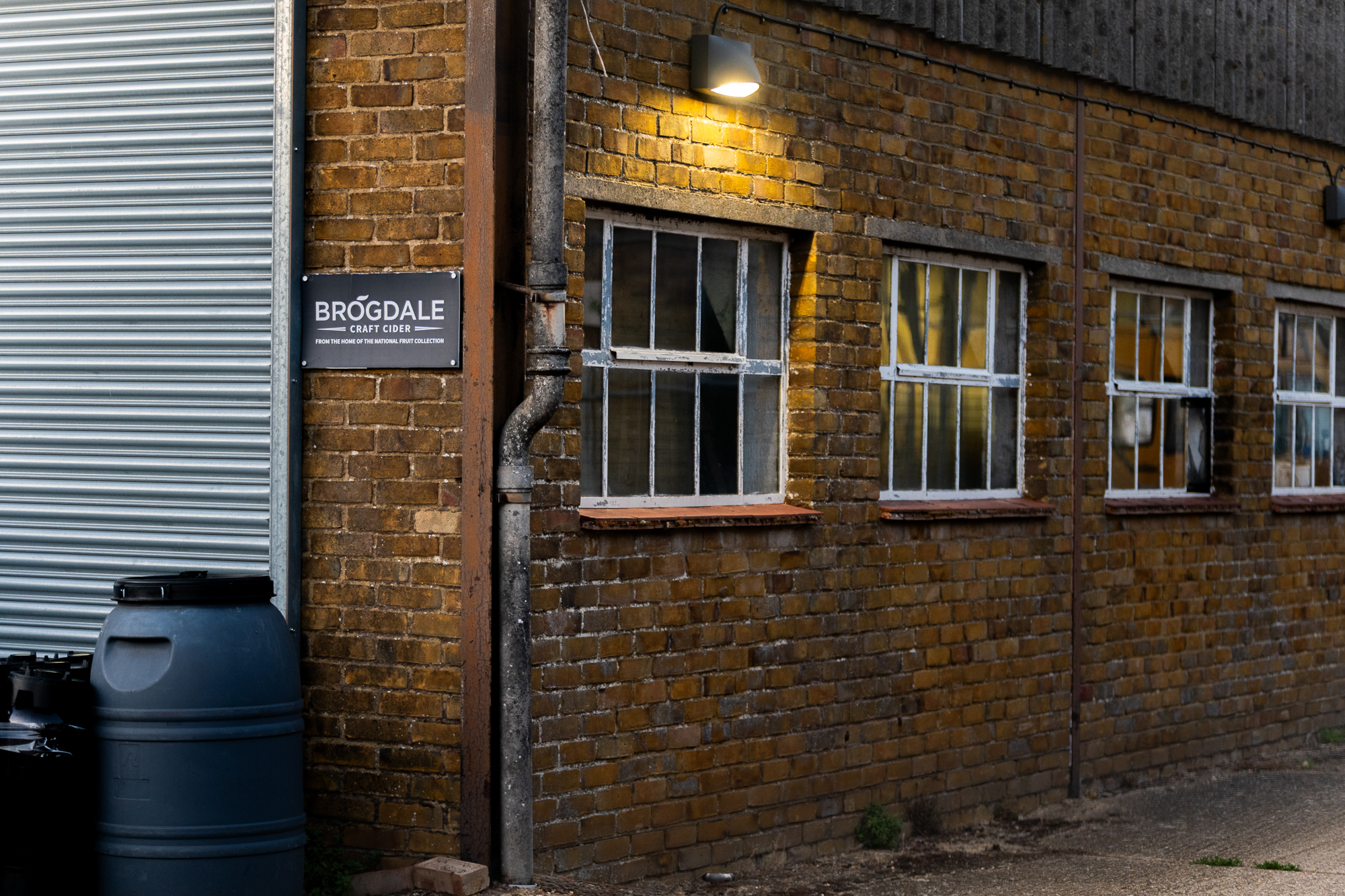
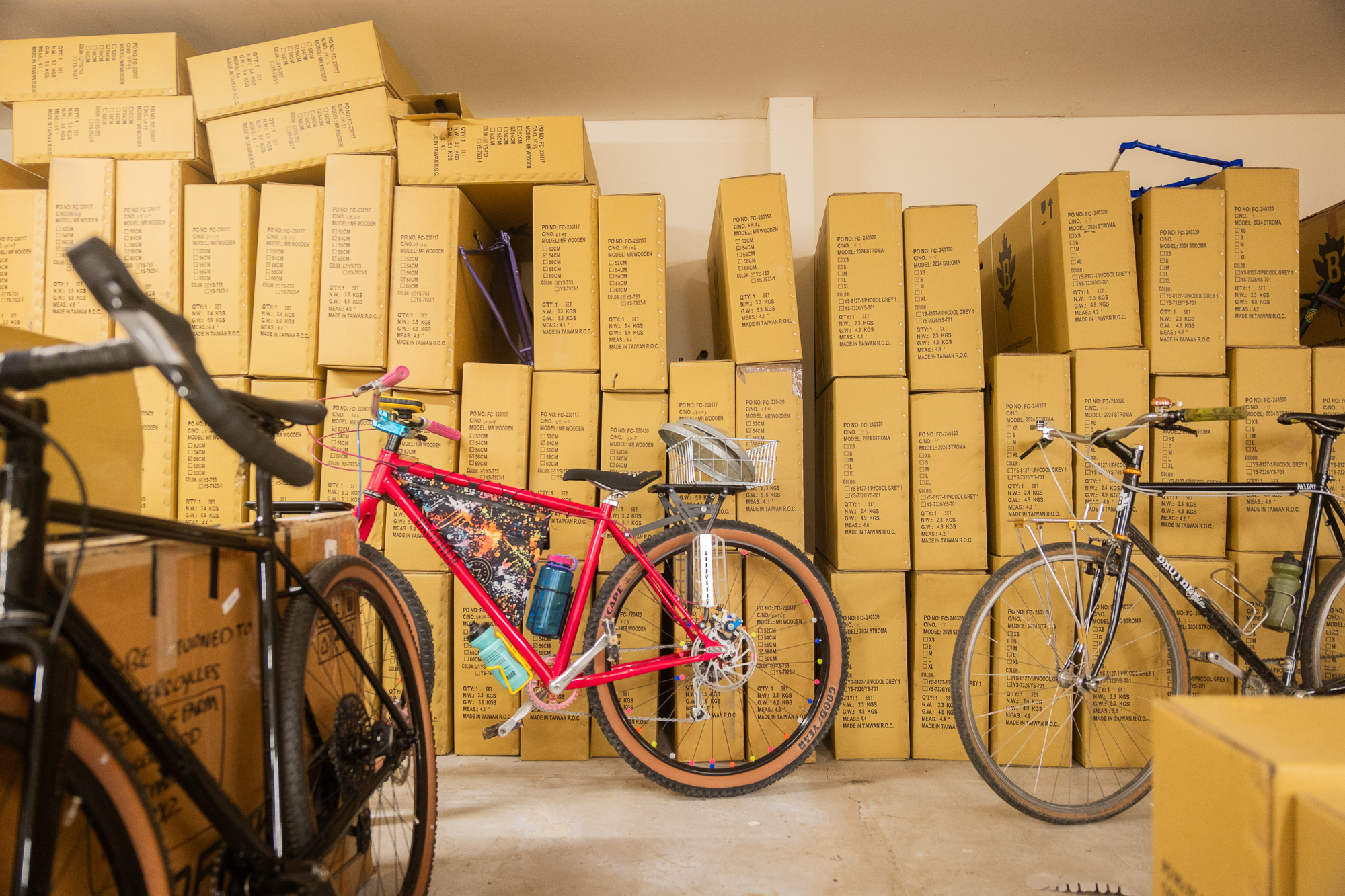
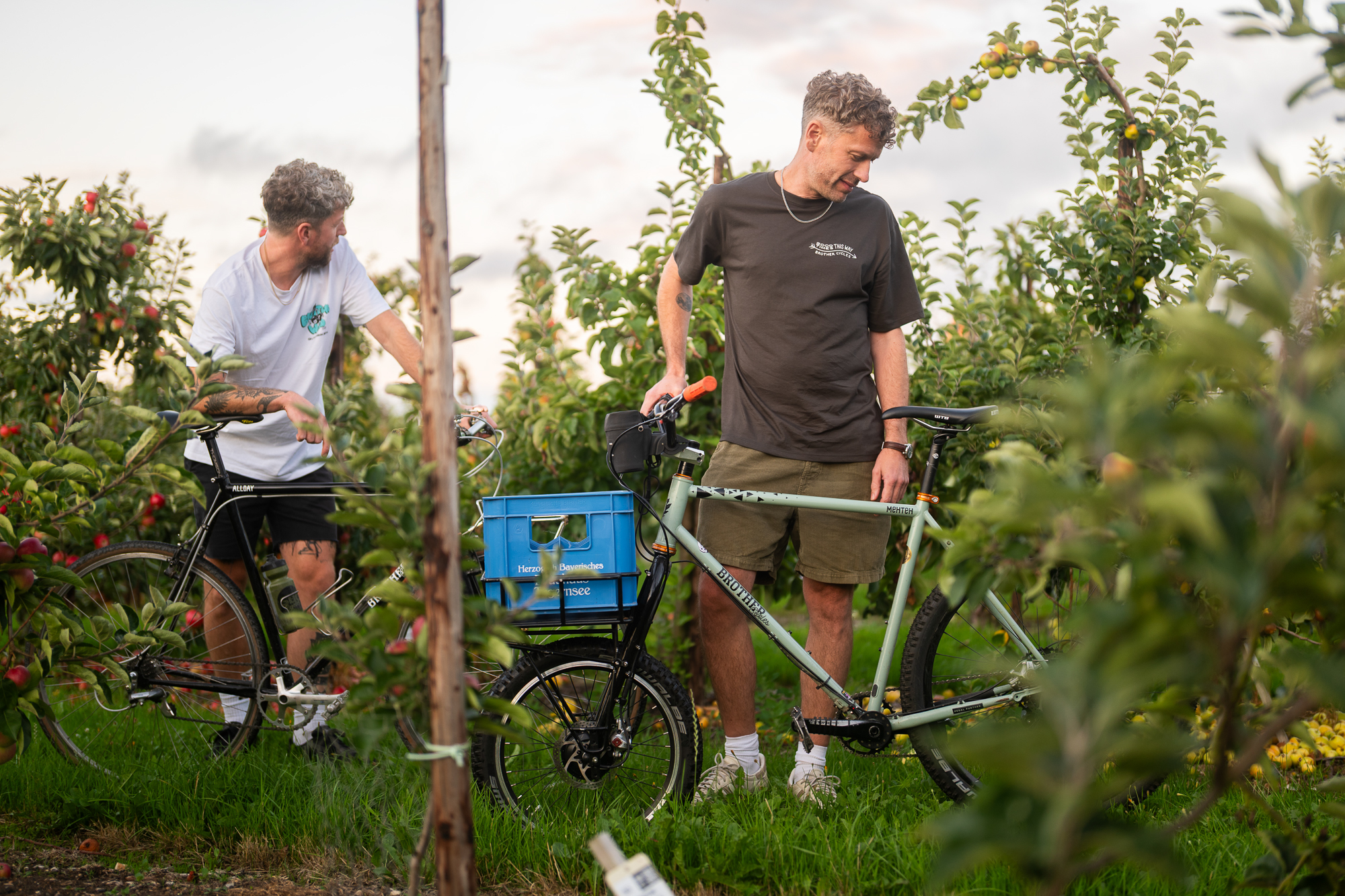
I met up with the two brothers at their HQ at Brogdale Farm, home to the National Fruit Collection, which has over 3,500 varieties of fruit trees, with a strong focus on apples and cider production. Their warehouse used to be a butcher’s cold store, so it has a lower ceiling than you’d imagine for a warehouse, with more of a garage vibe. It’s filled with boxed frames ready for shipping, a little workshop for assembling bikes, and a slew of toys of varying sizes thrown into the mix. There’s a motorbike, a car engine, and shelves filled with RC cars. I’d come with the idea of recording some sound, so we built a box fort in one corner out of stock and sat down there. Will looked a little shifty at the beginning because he’d seen a cat-sized spider in that corner a week before, but once we’d settled in, it was quite comfortable and sounded great.
The Origins of Brother
Petor: I started taking Brother seriously as a bike company – probably when you released the Kepler – I kind of thought of Brother as being like an English Surly?
Will: That’s interesting, I think [Surly] were one of our early inspirations. We looked at where we sort of imagined we might be going, not to replicate them but to do our own version, like an English version.
From the UK, Surly has always seemed almost cartoonishly American, but you guys grew up in the United States?
James: Our dad worked out there, so we moved out there in maybe the late ’80s, when Will was 3 or 4 and I was 9 or 10, and then we stayed there for 6 years – but they were quite formative years. It was great! I mean, America in the late eighties, early nineties was a really fun place to be. No one realised the harm that was being done, it was all just great. McDonald’s, Levi’s, and Coca-Cola – everything was just like cool America back then. It was a great time to be there.
So when you came back, did you feel like you’d been Americanised?
James: I really wanted to come back to the UK. Because at that age, like 16, I thought that everything British was really cool. I was a bit over America – little did we know! I found England quite a harsh place to come back to compared to America, because back then, everything there was just kind of nice. But we went back out there a lot afterwards, like during school holidays, so we stayed in constant contact with the States growing up.
Whereabouts?
Will: Washington, DC, but we also lived in Harvard and Boston for a bit as well. We moved around a lot of schools together, so we spent a lot of time together. I think that set us up for running a business together and that not being too intense! Also I think as we’ve gotten older, we’ve become a bit more like each other. The differences have softened, or maybe our interests have converged a bit more. I don’t know if that’s because we’ve just spent a lot of time together, or maybe it’s just age?
Do you think growing up in the States influenced the way you think about cycling?
Will: I think a lot of my interest in the outdoors comes from growing up in the States, and going on nature hikes and camping and summer camps: all those things that you see in American movies. That just actually happens out there.
Mr. Wooden, the Man
And that’s where the name for Mr. Wooden came from?
Will: Mr. Wooden is basically just named after a guy who’s probably still there!
Did you tell him you’d named a bike after him?
Will: No, I wouldn’t even be able to get in contact with him. He was my second-grade teacher in America. So I would have been like 6 or 7, which means he may well not even be alive anymore. This is my memory of him: he was like the epitome of an American ’90s outdoorsman. You know? Like little shorts and sandals. He was kind of like the neighbour in The Simpsons, like Ned Flanders, and he would take all the kids out to his little woodland ranch and tell us about all the leaves and the bugs and insects and teach us how to make fires. He was really cool, and a lot of my interest in the outdoors comes from that time. Weirdly, James and I, our whole lives like 30 years later, we still every now and then reference Mr. Wooden, so when we were designing this frame it somehow just fit.
Brothers in Bicycles, Brothers in Business
Will and James are strikingly similar, and I don’t think I ever sat down and talked to them both in a room at the same time before. I have much more contact with Will, partly because we live in the same small town, but also because of the two Will is perhaps the extroverted and involved with the events side of the business. Not only do they have the same mannerisms, but they constantly finish each other’s sentences, elaborate on each other’s stories, and say the same thing at the same time.
How is it working together? You’ve been going a while now.
Will: Yeah, there’s no rhyme or reason to what we do, or structure. We sit in the office and it’s like, “When are you going to be in? Next Tuesday? Okay, Tuesday we need to come up with a paint scheme for next year’s Mehteh.” Then we get in and just kind of piss around until about 4 in the afternoon, and then we’re like, “Okay! We actually need to think about this very important decision.” So we get the sample paint tubes out, throw some names around, put stuff on the whiteboard, and then go get some coffee. At times like that, working with my brother is actually really good because you can revert back to childhood brotherly silliness, and then fun stuff just kind of comes out that perhaps wouldn’t if you were trying to be even slightly professional.
James: We try to be as honest as possible. We don’t like hyping anything, like the materials we use or our design. A lot of these things have been done before. We’re not reinventing anything. We’re just trying to be honest about making a thing that we’re quite into, and we try not to do anything unless it’s necessary. In your review, you described Mr. Wooden as “just a bike”, and yeah – it is just a bike. In the end, a lot of its characteristics come down to the fact that it’s steel, and it’s rim brake, and the tubing selection supports that. And it makes a nice bike! I’m not trying to make it sound like lots of thought doesn’t go into it. There’s a lot that goes into it, but at the same time, we’re still working within a kind of framework of what’s possible in a production frame. For me, what’s cool is that within that fairly tight framework, we can still make something like a Mr. Wooden, but then also make a Pinecone and a Big Bro, which all have very different characteristics. The differences in them are all fairly subtle to someone who doesn’t ride bikes, but they create very different characteristics which make them each suitable to quite different types of riding.
A Note on Brother Cycles Models
The Big Bro is Brother’s heavy-duty suspension-corrected off-road touring frame which came about when Will had aspirations to racing the TCR. Since then it’s undergone a number of iterations, the most recent of which features heat-treated tubes and thru-axle dropouts with an optional Rohloff insert as it’s gained popularity as a Rohloff bike. It’s a great bike, but it’s a better bike loaded up over thousands of kilometers.
A couple of years ago, I reviewed the Mr. Wooden – an off-the-shelf, rim brake-only 650b rando bike. I really liked it. So much so that I’m still riding it as my normal bike for almost everything that doesn’t involve a helmet, shoes, or special clothes. Mr. Wooden is kind of an interesting bike because, by modern standards, it’s really under-built for a production bike, which has been achieved by using relatively small-diameter tubes and old standards. Rim brake frames, which are made out of steel for production, can be built much lighter as there’s a far better mechanical advantage on a rim brake than a disc brake, and no need for anywhere near the stiffness. It’s far easier to pass ISO testing to the same standards with a rim brake bike than a disc. My love for my Mr. Wooden gets me really excited about the next bike I’ll be reviewing very soon, the Pinecone. If Mr. Wooden is a 650b randonneuring bike, and the Big Bro is a modern, suspension-corrected off road touring bike, then the Pinecone sits squarely in the middle, and from my one ride around a car park with a bad back on a pre-production sample, I’m excited. It feels like the most Brother frame yet.
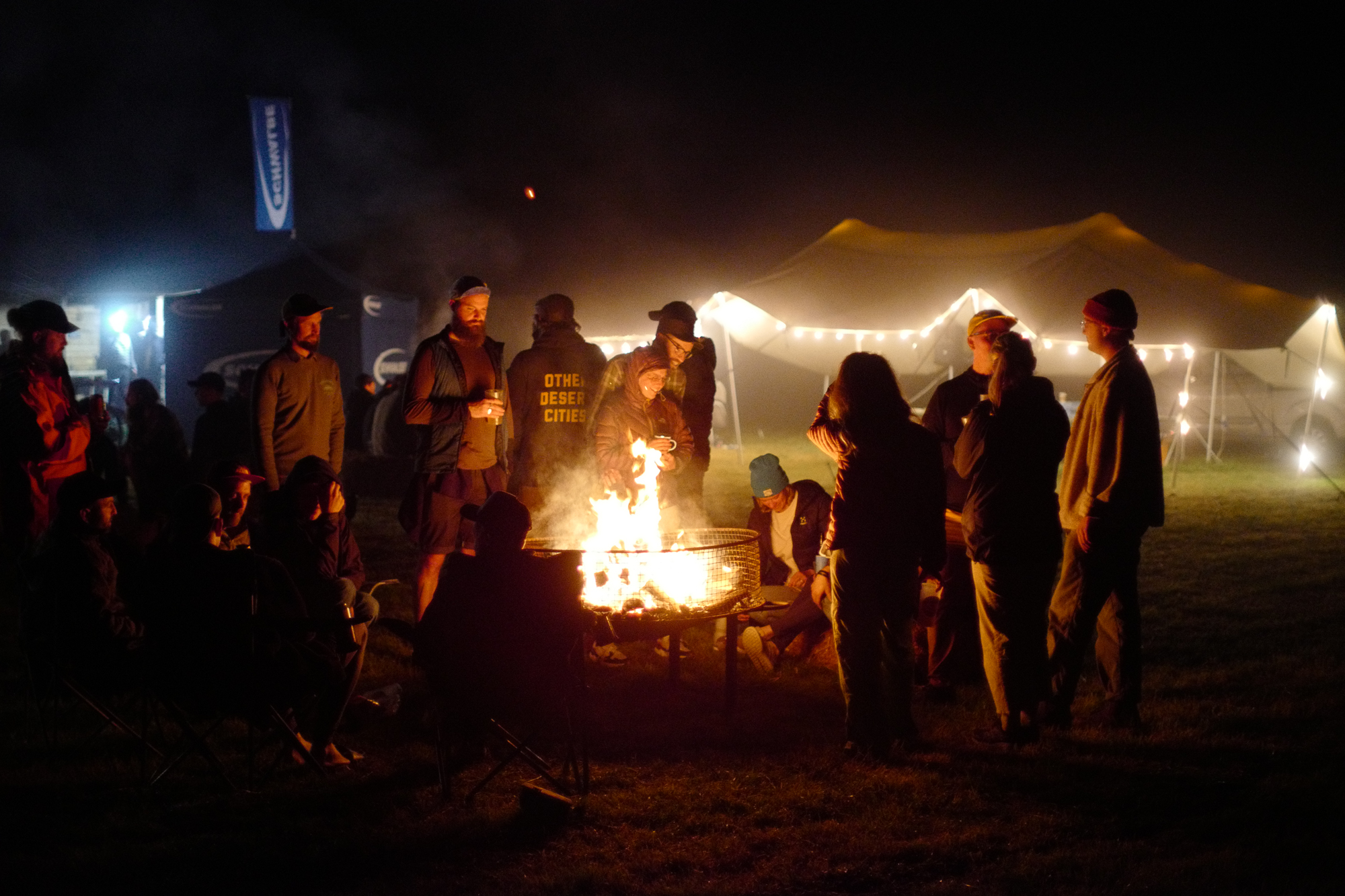
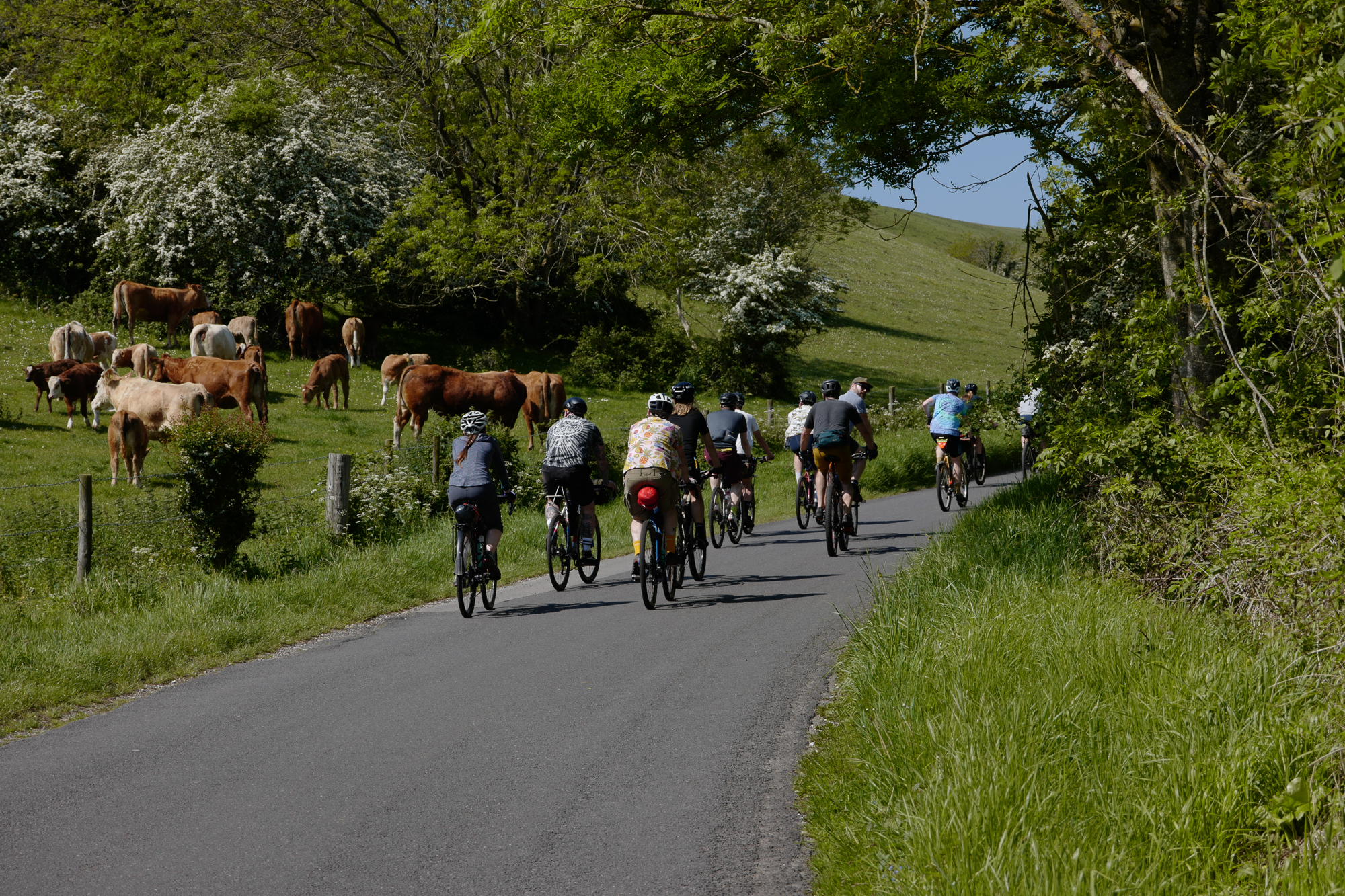
Brother in the Wild 2026
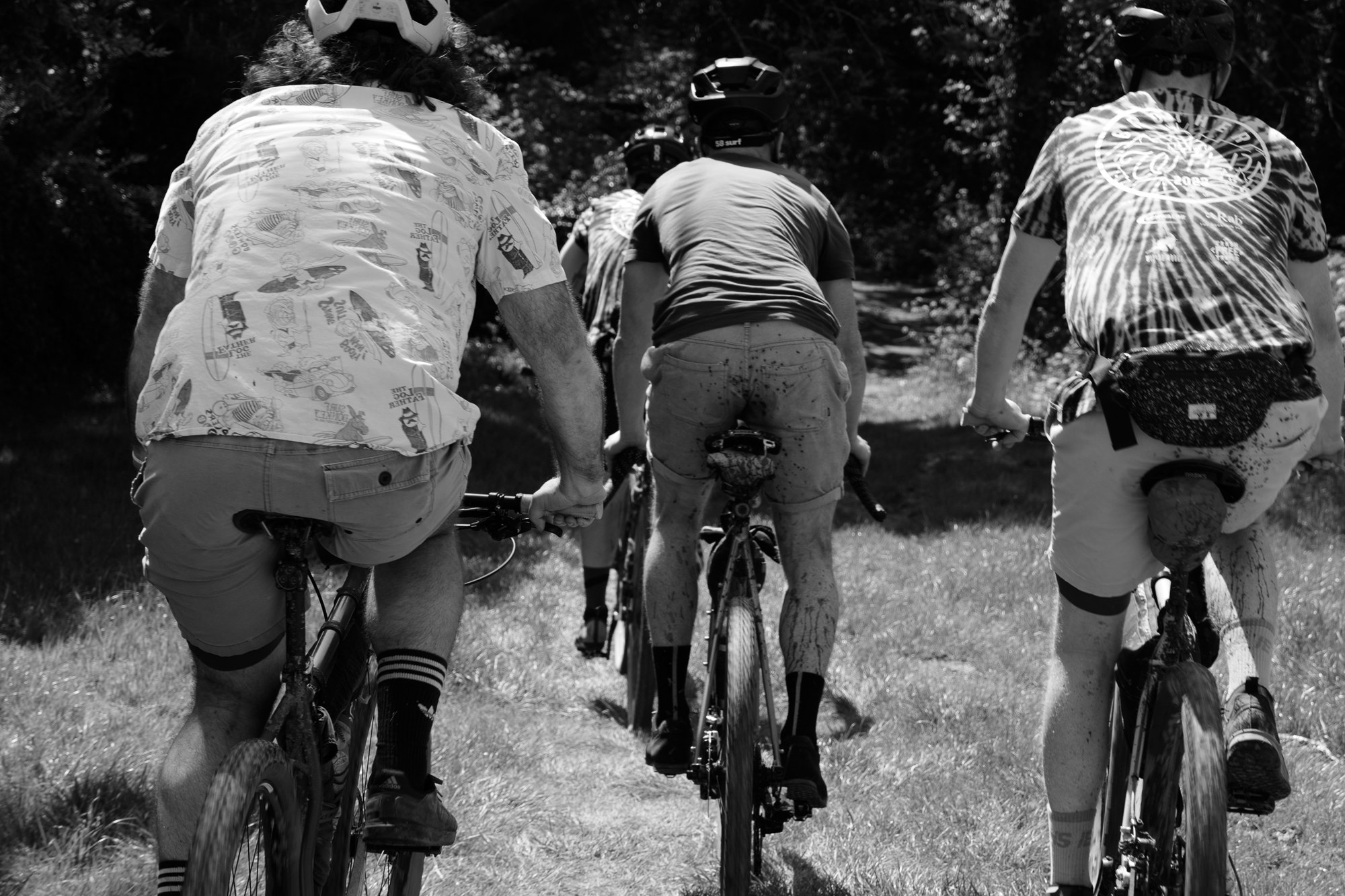
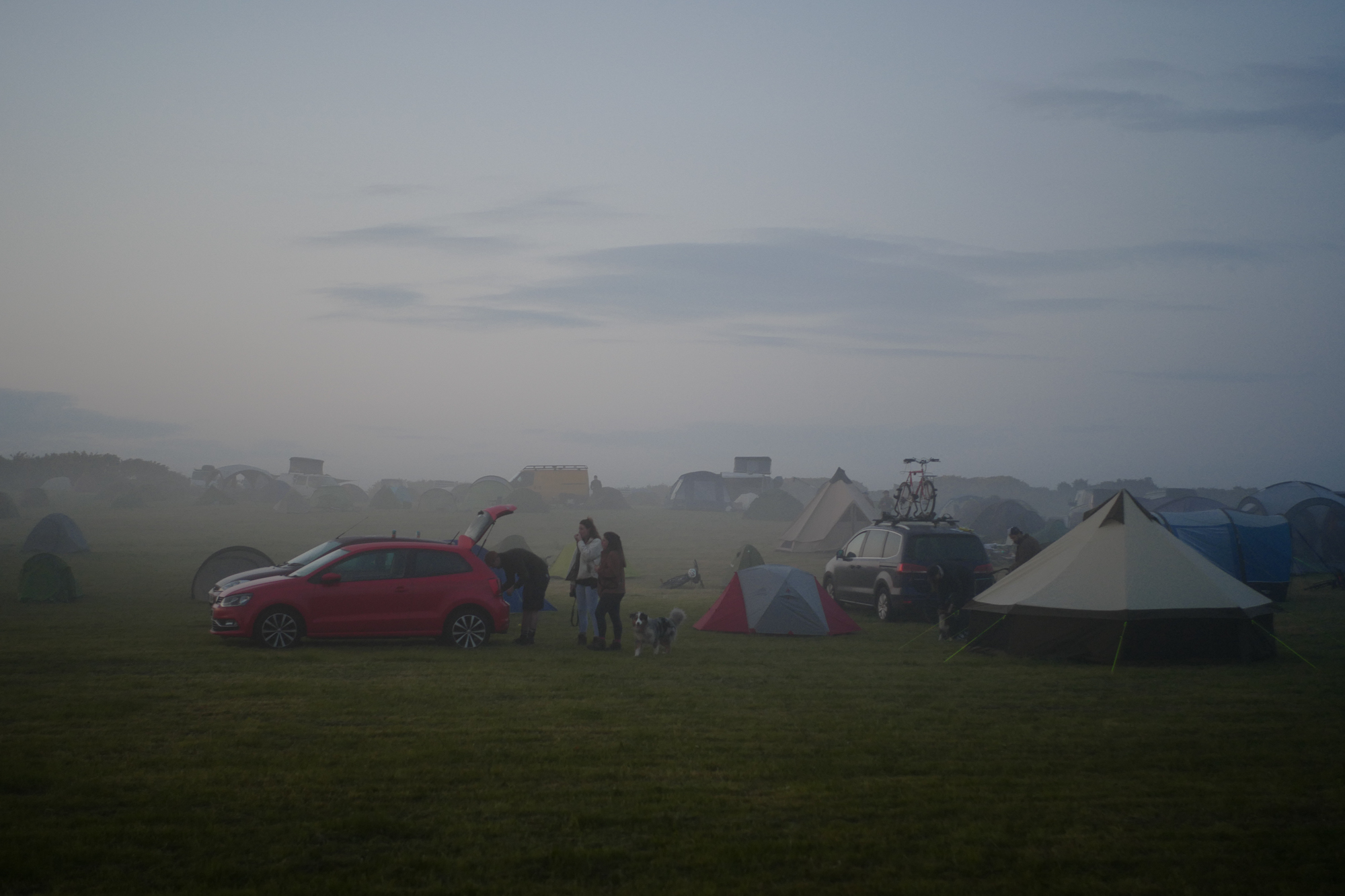
In 2026 Brother Cycles celebrates a decade of Brother in the Wild, their annual low-key, high-fun campout. I hope to make all three events: the main Dorset event, Munich (which I had the slightest taste of last year and my personal favorite), The Big ‘Un, which is both the easiest and hardest because it’s a ride from my house rather than a drive, but it’s also a 115km/140km off-road ride. The last Big ‘Un I attended was brutal; it was hosted on the last weekend of October, the week after Bespoked in Dresden, and rained torrentially the whole time.
Unbeknownst to me at the time, I also had COVID, and despite knowing the route and having ridden it plenty of times before, the somehow simultaneously claggy, greasy, and sloppy mud cut the ride short for almost everyone. When I think back to it, it feels like a spiritual experience, so I’m really looking forward to this year’s ride, which I believe is scheduled for the beginning of September, to benefit from a summer’s worth of dry ground. The route is more or less Pinecone specific and seemingly takes in every hill Kent has to offer.
I can’t wait.
Check out Brother in the Wild in 2026!