
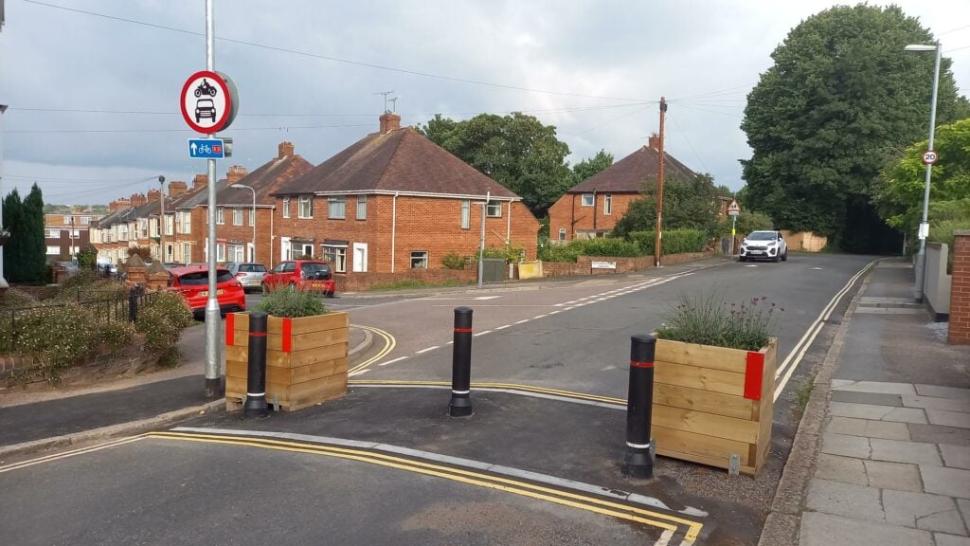
A new study has found that low traffic neighbourhoods are struggling due to a lack of funding that fails to account for the impact of “national politics and culture wars”.
The research, published in Transport Policy, is based on interviews with councillors and transport officers from 12 English local authorities and concludes that years of austerity have “hollowed out” councils’ ability to deliver successful LTNs.
Whilst the physical implementation of an LTN, such as installing bollards and planters, is relatively inexpensive, the study found that the true cost of delivering a scheme is significantly higher.
> “Our safe streets are here to stay”: Mayor’s “dangerous” decision to axe low traffic neighbourhoods deemed unlawful, as campaigners hail “huge precedent for London”
“LTNs shouldn’t be perceived as low-cost schemes,” said one transport officer. “The cost of them is huge – but the potential benefits are huge as well.”
The study explains that LTNs are frequently caught up in “national politics and ‘culture wars’”, which generate additional, often unbudgeted costs. These include the press team, the legal team, the Freedom of Information team, and the cabinet executive.
As a result of this funding gap, many schemes are stripped back, with minimal public engagement and little investment in public space improvements. There are measures which the study says are key to building public support and encouraging active travel.
One officer was aware of the impact of the lack of consultation, saying, “The community felt they had not been involved in the design and development of the schemes, and that was a source of considerable frustration, and even people who supported the schemes felt frustrated that they had not been consulted, even though we were doing this during an emergency period.”
> High Court orders Labour council to scrap “unlawful” low traffic neighbourhood as anti-LTN campaigners hail landmark ruling as “wake-up call to councils everywhere”
A paper by Habermel and Perry previously revealed that in Greater Manchester, “staff felt they spent most of their time responding to public complaints and were unable to implement innovative approaches to spatial planning.”
Other councillors mentioned that due to staff cuts, they are reliant on consultancy and support, or a small team working many more hours than they were being paid for.
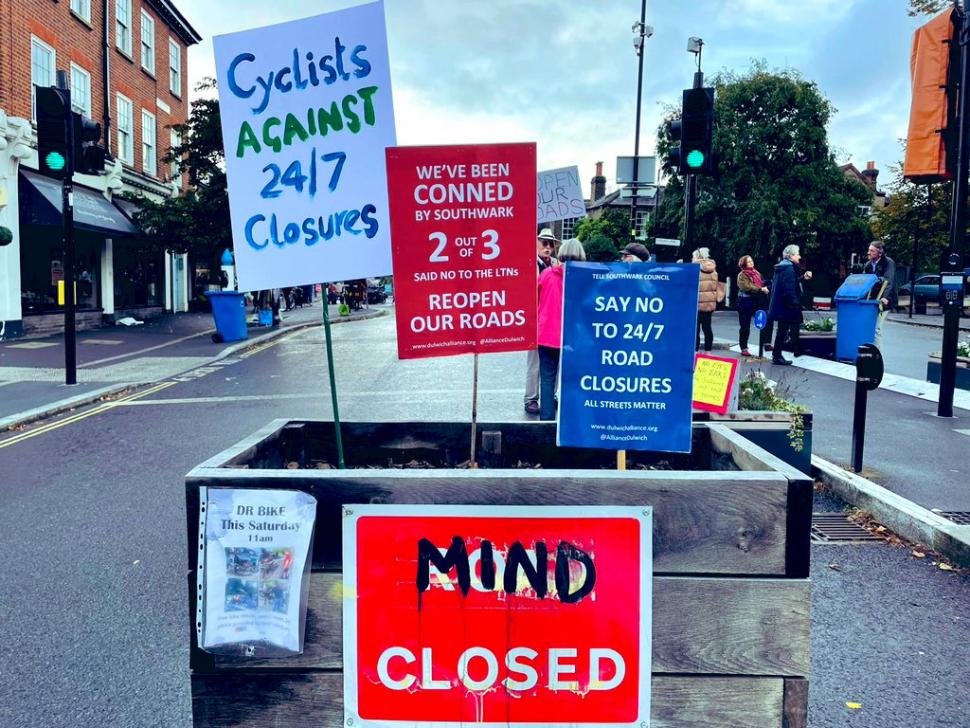 Anti-LTN protest Dulwich (credit: Railton LTN)
“One officer referred to ‘firefighting’ and ‘walking around like headless chickens’, and the intense workload and endless meetings involved.”
Several also described abuse, harassment and the need for security at public events. One officer said that they had to take out a Community Protection Order against someone who was threatening them, alongside receiving anonymous texts and “quite horrible” abuse.
> Transport Secretary wants end to “perverse half cycle lanes” and hints at long-term funding for cycling and walking
The study is also critical of the reliance on short-term competitive funding pots such as the Active Travel Fund.
Councils are required to bid repeatedly for one-year grants, often with unrealistic delivery deadlines, encouraging rushed implementation rather than long-term network planning.
 LTN vandalism (credit: Safer Greener Silverknowes @safer_sknowes)
“One of the major issues that we have to deal with as a local highways authority is the way that central Government funds these things,” a non-London councillor said.
“So, almost everything that we do on the highways is funded by a particular discrete grant or pot of money. Sensible multi-year funding settlements would just be such a game-changer.”
The research highlights a stark divide between London and the rest of England. London boroughs were far more likely to successfully implement and retain LTNs, largely due to stronger funding streams, greater staff capacity and experience gained from earlier schemes.
> London low-traffic neighbourhoods cut deaths and serious injuries by a third, new study suggests
Outside the capital, the picture was very different. Of 16 planned non-London LTNs tracked by the researchers, just one was fully implemented – a failure rate of around 94 per cent.
The study argues that this “projectification” of active travel makes it harder for councils to build public trust, learn from earlier schemes, or develop coherent cycling networks, particularly beyond London.