
Published February 8, 2026 12:38PM
There is a new trend in professional cycling: structured Zone 2 intervals. Littered across Strava, TrainingPeaks, and Instagram, you will find riders doing 10x10min, and 5x20min, and 3x60min Zone 2 intervals. Why not just ride 4-5 hours in Zone 2? What are the benefits of doing structured Zone 2 intervals, if there are any? Those are the questions that I set out to answer in this article. Let’s dive in.
Why Zone 2 Matters
A quick refresher on Zone 2: most coaches, riders, and physiologists agree that “Zone 2” is the upper part of your aerobic threshold. This is the point at which the rate of blood lactate increases significantly. Once you start riding above Zone 2, your effort becomes much harder. Fatigue and soreness can be felt in your legs, your breathing is more labored, sweat rate increases, and the effort eventually becomes unsustainable.
If you were to ride 1-2 hours in Zone 2, assuming you are well-trained and fueling properly, you will feel nearly the same at the end of the ride as you did at the beginning. This is the core of endurance training: completing repeatable workouts that increase fitness without creating too much fatigue. You can’t do Zone 5 intervals every day – technically, you can, but you will burnout after 1-2 weeks of training – so you supplement hours of weekly training with Zone 2.
It’s important to remember that Zone 2 is a range, not a specific power number. When a pro does a lab test, they will typically measure their power, heart rate, lactate, and VO2 Max throughout a step test. At each step (often 10-20w increments), their coaches and physiologists will evaluate their data to help determine where the rider’s aerobic (Zone 2) and anaerobic (FTP) thresholds are. Again, these are only estimates, but they can help build the overall picture of the rider’s physiology, as well as their strengths and weaknesses.
Coaches will then use the test data to determine a rider’s training zones, and these are crucial for proper training because they help riders maximize their gains and avoid burnout. When it comes to Zone 2 training, there are a few different schools of thought. Is one better than the other? Let’s find out.
Different Types of Zone 2 Work

There are many different philosophies on Zone 2 training, but the most widely accepted one is that, the longer the ride or interval, the lower the power target for Zone 2. So let’s say you are a professional cyclist with an FTP of 420w and aerobic threshold of 300w. The aerobic threshold is the line between Zone 2 and Zone 3.
So, if you are going to do a 7hr endurance ride, most coaches would say that you should ride at the lower end of your Zone 2: 220-250w (55-60% FTP). But if you are doing a shorter endurance ride, or shorter blocks of Zone 2, some coaches would tell you to ride at the upper end of your Zone 2: 270-300w (65-70% FTP).
It’s difficult to say if one method is better than the other, but let’s take a look at what the pros are doing.
To the best of my knowledge, UNO-X is the biggest proponent of structured Zone 2 training. Their riders regularly complete 10x5min, 8x10min, and 6x20min LT1 sessions. LT1 is the aerobic threshold, and while it’s not the exact same thing as “Zone 2”, it’s in the same ballpark. Riders like Tour de France stage winner, Jonas Abrahamsen, have been cranking out massive trainer rides all winter. LT1 intervals are a staple of these sessions. Here is a ride that Abrahamsen did this February.
Jonas Abrahamsen – 6x20min LT1
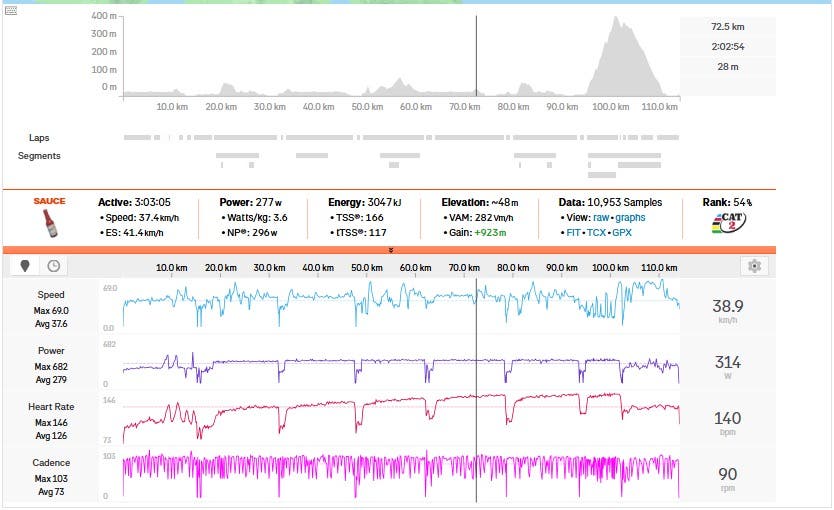
Intervals: 6x20min high Zone 2 with 3min rest
Power: 310-325w
Heart Rate: 125-145 bpm
A pro rider’s explanation

The belief is that 10min LT1 efforts can help you “become able to ride very efficiently/economically on a higher power output than before,” says former UNO-X rider, Magnus Kulset. “As LT1 is very controllable, you open on a power you know is under your LT1, and then you can be careful at not going over LT1, so you get a quality session in a controlled way. You do the power according to your lactate measurement, not based on heart rate or feeling. Whereas a steady z2 ride with similar/same average power in total will be more impacted by other factors, such as bad legs or high heart rate.”
Of course, not all intervals are made the same, and there are plenty of other pros doing structured Zone 2 training. UAE Team Emirates-XRG has long been known as the team with the toughest Zone 2 training sessions. If you spend enough time on Strava or Instagram, you will see UAE Team Emirates-XRG riders posting pictures of their head unit after a massive Zone 2 ride. It might be a sunset-lit photo from Tim Wellens where the screen reads: “Time: 6:43:32 / Avg Power: 285w / NP: 310w”.
These are rides that would leave most cyclists grabbing a plastic chair for their post-ride shower. But the UAE Team Emirates-XRG riders can do these rides day in and day out. It’s an aggressive approach to Zone 2 training, one that could easily cause burnout if executed improperly.
Looking at Brandon McNulty’s data

Brandon McNulty is one of the few UAE Team Emirates-XRG riders who shares his ride data, and you can see that he actually uses both approaches to Zone 2: structured and unstructured.
Some days, McNulty will ride 3-5 hours at a steady heart rate of 115-135 bpm. With a maximum heart rate around 190 bpm, this is quite low intensity, probably on the lower end of the American’s Zone 2. But there are other times where McNulty does 20-60min blocks of Zone 2. You can see his laps on Strava, and how, during the Zone 2 blocks, his heart rate is at the upper end of Zone 2 (140-150 bpm). When McNulty was still posting his power numbers, he was doing these exact intervals at an average power of 300-320w.
McNulty – 3x1hr Zone 2
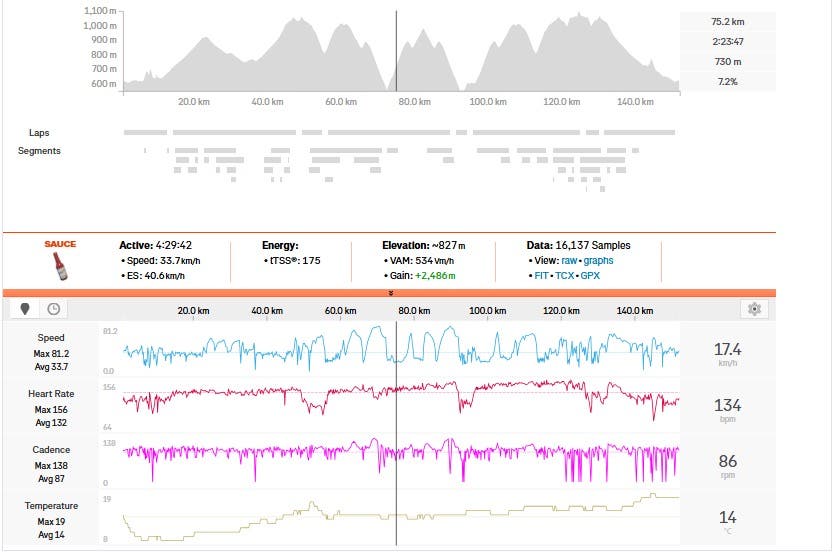
Intervals: 3x1hr Zone 2 with 10min rest
Estimated Power: 300-320w
Heart Rate: 140-150 bpm
The other side to Zone 2 philosophies is simple, steady riding. This is classic Zone 2 because back in the day, cyclists didn’t have lactate monitors, power meters, or heart rate straps. They only had the feeling in their bodies; so if they were going to go ride 6-7 hours, they would probably want to ride fairly easy. This is the philosophy that seems to be prevalent at Visma Lease-a-Bike. We don’t know for certain, but I do know that I’ve never seen a Visma LAB rider post, publish, or talk about 5x10min or 3x20min Zone 2 intervals. Instead, they ride steady Zone 2 for hours at a time.
Jorgenson’s version of Zone 2
Perhaps the idea is that steady Zone 2 rides are easy, especially when done at a lower intensity. While McNulty rides 3x1hr at 310w, Matteo Jorgenson might ride 4-5 hours at 250w. Both riders are training in Zone 2, but with slightly different approaches.
Jorgenson – 5.5hrs Zone 2
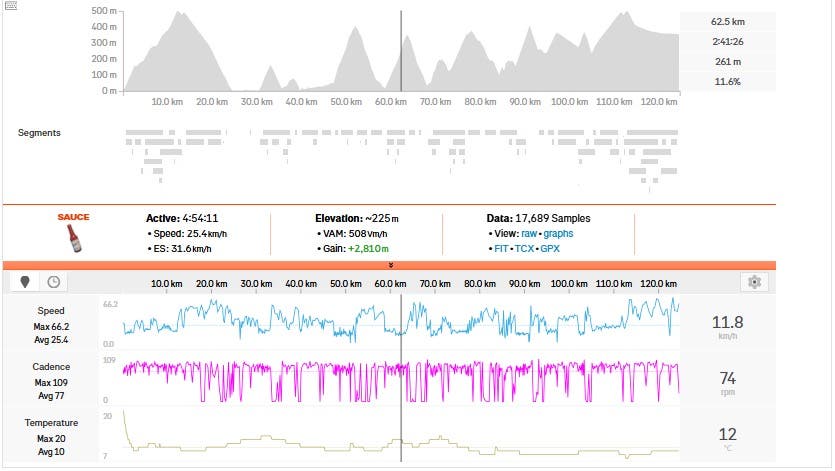
Time: 5hrs 32min
Estimated Power: 250-270w
Which Should You Choose: Structured or Unstructured?
Structured intervals allow you to spend more time at higher power outputs, versus aiming for the same power output over a longer time period. Take your 5min power PR, 400w for example. If you were to go out and ride at 400w, you would only last five minutes. But let’s say you did 30/30s instead, with a target power of 400w and 150w recovery periods. A well-trained cyclist can complete 3x10min of 30/30s at this power output, which means you would accumulate 15min at 400w in this example workout.
The same applies to Zone 2 training. Riders like Abrahamsen and McNulty are able to accumulate more time at a higher percentage of their Zone 2 power than if they were doing a steady endurance ride. Is this the best way to train your Zone 2? I say it depends.
Making sense of it all
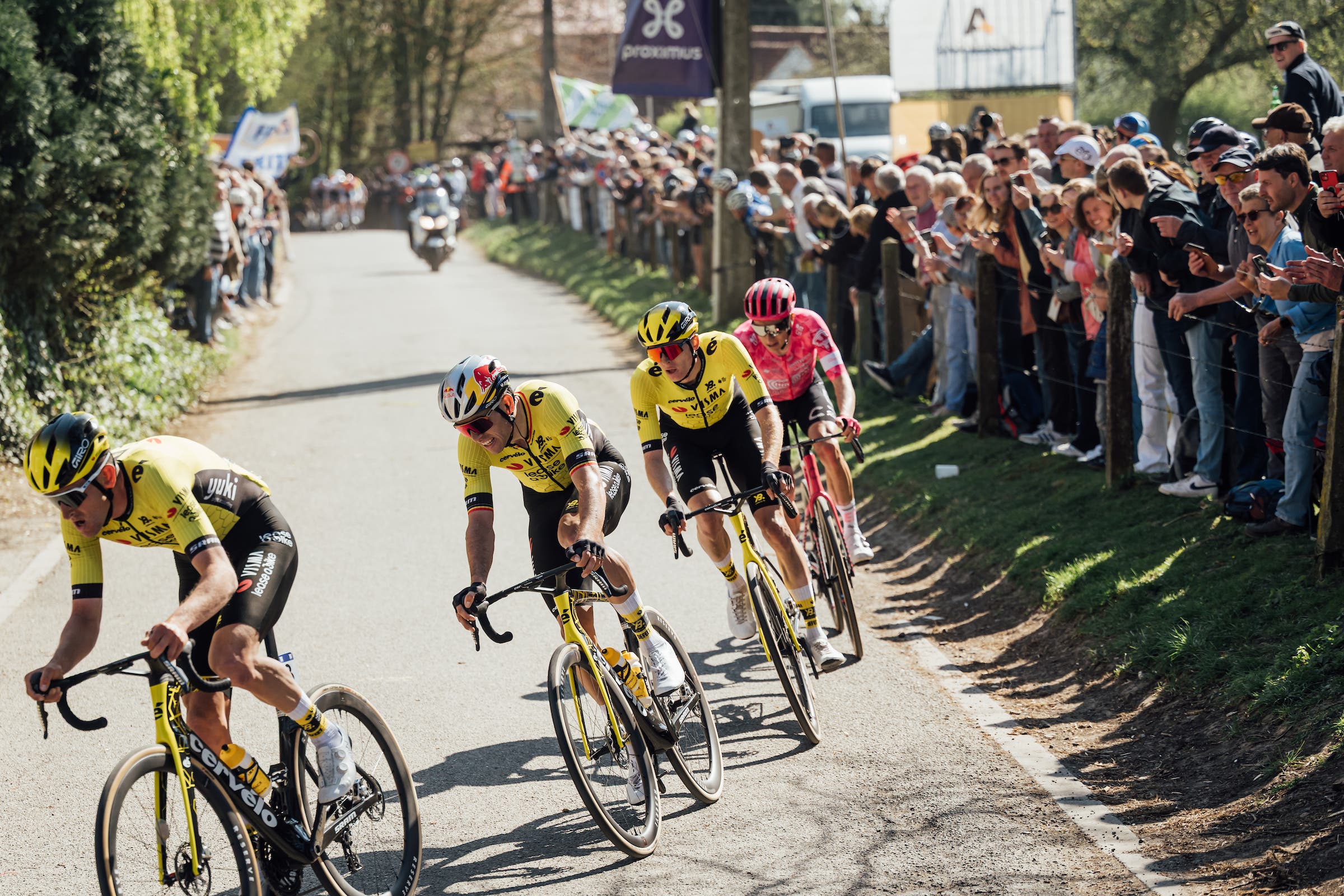
The key factor here is understanding your goals as a cyclist. If your main goal is to go in breakaways or pull at the front of the peloton for 4hrs, then you will get a massive benefit out of increasing your Zone 2 power. But if you are a puncheur or sprinter, you probably won’t get much out of doing 3x1hr Zone 2 intervals. Sure, it can increase your overall fitness. But there are a thousand other ways to do that that would be more specific to your goals.
Kulset said that for him, there is, “also a mental aspect. For example, indoors I find it easier to stay focused when I am doing some sort of efforts, compared to just a steady ride. Even if the end result is the same average/normalized power.” Most importantly, you have to enjoy the training. If you’re not enjoying your endurance sessions, structured or unstructured, you are heading down the path to burnout.
Structured Zone 2 intervals may also be more effective if you have a lower training volume. They might be more bang for your buck, as the saying goes. Pros Matteo Jorgenson can afford to ride 4-5hrs of low Zone 2 because they have time to train 20-30 hours per week. If you only have six hours per week to train, you might get more benefit from a 5x10min high Zone 2 session than doing an hour of low Zone 2.
How to Train Your Zone 2
Step 1: Consider your goals. Would you benefit from increasing your Zone 2 power?
Step 2: Try structured and unstructured endurance training. Do you prefer one over the other?
Step 3: Don’t be afraid to switch it up. If one method becomes stale, switch to the other and note any benefits or drawbacks.
—-
Jonas Abrahamsen took stage 11 of last year’s Tour in a tight sprint.