
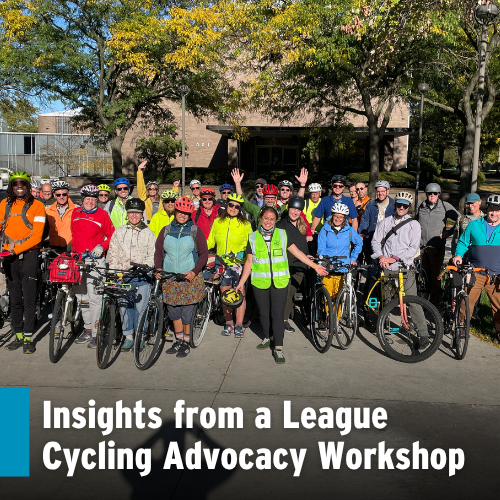
Detroit, known as “Motor City” and long hailed as the car capital of the United States, might seem like an unlikely location to host a bike advocacy workshop. But after last month’s League Cycling Advocacy workshop, I’m proud to say the city has made incredible strides and lasting infrastructure investments that make it a world-class bike destination — and an excellent case study for grassroots advocates to witness the impact that sustaining advocacy can make.
Detroit is a Bike Destination
Detroit is in the midst of completing its Joe Louis Greenway, which will connect many neighborhoods and their communities to jobs, recreation, and each other. The riverfront walk boasts top-tier shared-use paths and celebrates the successful advocacy campaign to get a bike lane on a bridge to Canada! The murals around town showcase art and placemaking in ways that highlight the community and breathe life into quiet corners. Detroit also has at least one group bike ride every night of the week, providing an array of options that leave visiting riders envious of all the opportunities to get out and ride together (myself, included). Best of all, Detroiters are proud of what they have accomplished and warmly welcome visitors to enjoy what they have and continue to create.
Setting the Stage
It is in the midst of this remarkable growth that the League’s most recent bike advocacy workshop took place. Biking a mile in steady rain from my hotel to Wayne State University to kick off a three-day bike advocacy workshop gave me just enough time to worry that I might not have prepared the cohort enough, or had not thought of all the small details to make the workshop a success. But as I continued biking down the protected bike lane on Cass Ave and arrived at the university lecture hall where several friendly faces were already gathered, my nerves began to subside.
For this workshop, thirty-five advocates came from thirteen states from across the country: as far west as Oregon, east from Rhode Island, North from Minnesota, and South from Alabama. We started with a nametag game, which set a friendly and collaborative tone for the workshop, and then headed out on a group ride to dinner, where we filled the bike rack to overflowing.
Workshop Content

The next day, the main content of the workshop kicked off with Todd Scott, the Executive Director of Detroit Greenways Coalition. Todd provided a thoughtful analysis of the “History of Bike Advocacy,” peppered with local insights and fun facts for all of us to nerd out about, like how the first stop sign was invented in Detroit.
We moved on to the topic of “How to Get Organized,” where participants did a powermapping exercise, followed by “Working With Partners in Your Community,” presented by Jeff Jones, the ED of Hope Village CDC, and Idress Mutahr, Chief Greenway Planner with the City of Detroit. Idress gave an in-depth overview of the Joe Louis Greenway engagement initiatives, highlighting how involved and extensive the work was. For example, he shared how one neighborhood worked with some of its long-time residents to shape the informational plaques, source historic photos, and inform project planners about what to include.
After this came the Equity and Mobility Justice presentation by Marco Speeks, the founder and executive director of Major Taylor Michigan (read our recent LCI spotlight interview with Marco here!). He covered this essential topic by discussing how critical it is that communities understand the transportation needs of all of their residents. Marco noted that communities must mitigate transportation insecurity and proactively include ways for people who bike to get around safely, conveniently, and reliably. In Detroit, many residents don’t have access to cars or transit and he illustrated how advocates like him address this by his example of working with kids, bike buses, and being able to discuss these issues with community members.
After those inspiring sessions, we heard from Chrissy Debose, a.k.a “SociallyChrissy, Detroit’s Car Free Mom.” She talked about her journey into becoming car-free and what it takes to run social media communications and storytelling from both the personal and professional sides of advocacy.
John Waterman, the Executive Director from Programs to Educate all Cyclists (PEAC), then presented with four students on “How to Make the Case: Data and Beyond.” PEAC works with folks with disabilities, teaching people how to ride bikes and public transit safely and independently. John and his students made an impactful and heartfelt presentation: showing and telling the audience how inclusive communication and creative logic need to be part of the decision-making process around bike infrastructure, planning, and design. All of his students shared personal stories of learning how to bike to work and navigating the infrastructure where they live, and talked about what it’s like to advocate and make their voices heard.
Jason Hall was next to take the stage and talk about “Programming and Getting People on Bikes.” As the founder of RiDetroit and co-founder of Slow Roll Detroit, he’s gotten thousands of people out riding and has helped to shape and normalize biking in Detroit. Todd Scott then led the group on an advocacy-themed 10-mile group ride showcasing many of Detroit’s hardest-won bike infrastructure projects, such as the 14th St. bike lanes, SW Greenway, RiverWalk, and Dequindre Cut Greenway.
Hearing about and seeing firsthand the amount of work that Todd and other bike advocates have put into improving and making space for bicyclists in Detroit was incredible! Their recent updates, investments, and new connections make their bike network feel seamless. The geography is also great for inclusive biking, since it’s mostly flat. One of my favorite moments happened towards the end of the ride when we passed by the Lions’ stadium as the crowd roared, letting off fireworks from their winning game!
People Have the Power
The final day brought out Erin Stanley and Christina Peltier with the City’s Council and the City’s Department of Public Works, respectively. They gave us solid advice around policy basics: tips on working with local councils and practical factors that advocates need to consider, such as strategic timing, making the right asks, and setting realistic expectations.
Todd Scott then took the stage again to discuss the topic of “Effective Political Engagement: Talking To Your Decision Makers.” Using the Gordie Howe International Bridge as an example, Todd talked about the effort that it took to advocate for this cross-border infrastructure project over the last 10+ years: building lasting relationships with state representatives and local council members, making compromises that accomplish small wins towards larger goals, and the importance of having fun along the way to sustain morale.

Jacob Graham with Detroit’s bikeshare program, MoGo, was the final speaker. His topic was “Funding Fundamentals” and focused on getting engaged with your local budget as well as exploring a variety of funding sources like membership, grants, events, and donations. The training ended with a mock public meeting, where attendees took on the roles of various council members interacting with members of the public requesting funding.
The Ending is Just the Beginning
Overall, the energy at the workshop was undeniable. It was a bonding experience that touched our hearts and minds, leaving all the advocates in attendance rejuvenated and in high spirits.
I ended the workshop just as it started, with an overview of what it takes to be an effective advocate — but with the addition of new perspectives gained from the guest speakers. Many people lingered to say their farewells, and one attendee even teared up while reflecting upon the event and its meaning for them, the city, and the community. Another attendee remarked that this experience gave them the inspiration and fire they needed to go home and reinvigorate their advocacy work.

Moments like these are why this work is so important and gratifying to me. People are the heart of the bike movement, and being able to help, motivate, and boost the morale of the advocates who are doing this work makes me appreciate that I can be a part of this growing movement, too!
Thank you to all who participated, volunteered, and spoke at this League Cycling Advocate workshop. The momentum we built this October will continue rolling toward a stronger, more inclusive cycling future in Detroit and beyond. I’m looking forward to what 2026 brings!
Want to stay in the loop on bike advocacy? Subscribe to the League’s newsletter for advocacy news or request to join the BikeWalkAdvocates Google Group!