
Even before the first collective on-track Formula 1 action of 2026, there has been talk about the new engine regulations in Formula 1. More specifically, the focus is on the compression ratio of the internal combustion engine (ICE) – the ratio between the cylinder’s maximum and minimum volume.
Under the previous regulations, this ratio was 18:1, but for 2026 it has been reduced to 16:1 – partly to make the engine regulations more accessible for newcomers.
The controversy arose after it emerged that Mercedes, and to a lesser extent Red Bull Powertrains, would comply with static tests, but in practice – at higher temperatures while running – could achieve a higher ratio.
Article C5.4.3 stipulates that the FIA check is carried out solely under static conditions and at ambient temperature: “No cylinder of the engine may have a geometric compression ratio higher than 16.0. The procedure to measure this value will be detailed by each PU manufacturer according to the guidance document FIA-F1-DOC-C042 and executed at ambient temperature. This procedure must be approved by the FIA technical department and included in the PU manufacturer homologation dossier.”
Those who comply with this and achieve a higher ratio while running can therefore argue that they are simply operating within the regulations. Other engine manufacturers – Audi, Ferrari and Honda – however point to a different section of the 2026 regulations, namely Article C1.5: “Formula 1 cars must comply with these regulations in their entirety at all times during a competition.”
Since the 16:1 compression ratio is explicitly stated in the rules, those manufacturers argue that all engines must also comply with it while running.
In the short term, the FIA appears set to stick with the current checks and therefore the current wording of the regulations, although the governing body has left the door open for changes later on – if required.
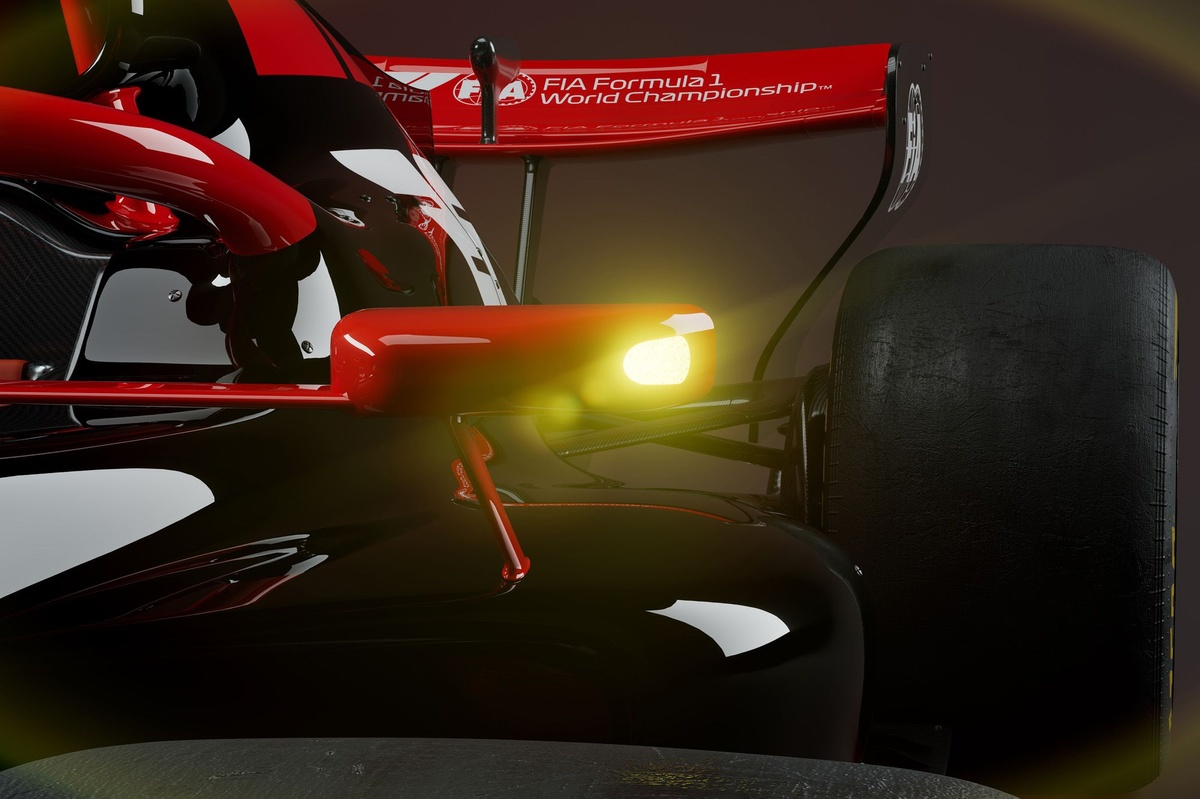
2026 FIA F1 car render
Photo by: FIA
The topic will be discussed again on 22 January, when a meeting with technical experts is scheduled ahead of the first day of pre-season testing at Barcelona.
“As is customary with the introduction of new regulations, discussions on the 2026 iteration covering power unit and chassis are ongoing,” an FIA spokesperson said.
“The meeting planned for 22 January is between technical experts. As always, the FIA assesses the situation in order to make sure the regulations are understood and applied in the same manner between all the participants.”
The FIA has clarified to Motorsport that this meeting had been planned for longer and is not solely about the engine loophole controversy. The meeting has a broader scope, also covering the new chassis regulations, although it is logical that most attention will be on the compression ratio.
As is often the case, those who have found a potential loophole naturally deem it to be within the legal boundaries, while others lobby for more clarity, at least longer term. Because the FIA is not intervening at present, little change is expected to occur before the start of the season. Any tweaks are more likely to be aimed at 2027 or, in the earliest scenario, around the summer break.
However, the Additional Development and Upgrade Opportunities (ADUO) mechanism already provides a safety net in the regulations for manufacturers that are behind in terms of the combustion engine. Power is measured every six races (1-6, 7-12, 13-18), with manufacturers that are between 2% and 4% down on the best ICE receiving one additional upgrade. Manufacturers that are more than 4% behind are allowed two additional upgrades.
Adjusting the compression ratio, however, is easier said than done – even with permitted upgrades it remains a complex task. It’s exactly why Audi, Ferrari and Honda keep pushing to tweak the measurement procedures, or at least to get more clarity on the maximum compression ratio going forward.
We want your opinion!
What would you like to see on Motorsport.com?
– The Motorsport.com Team