
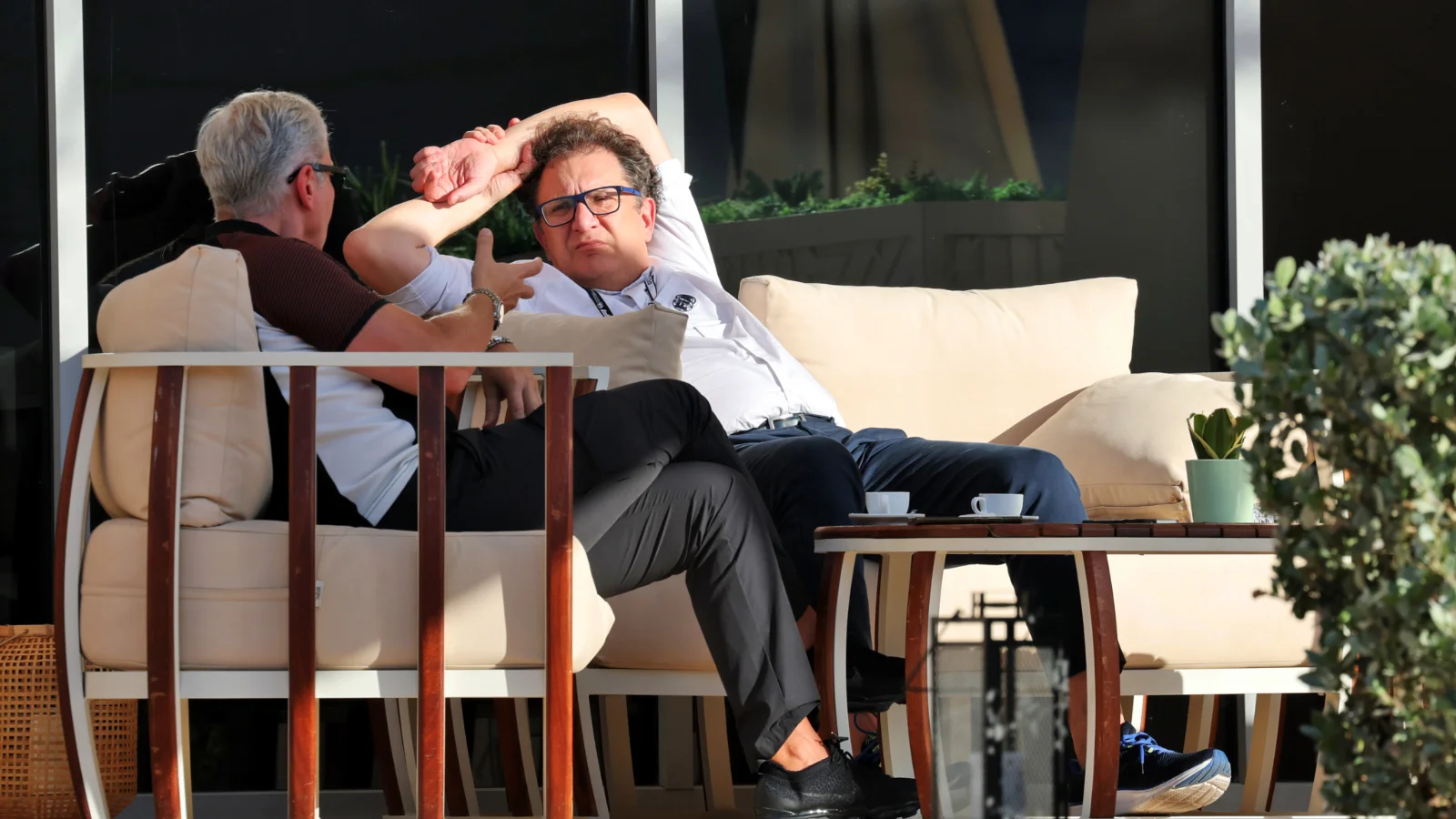
FIA Single-Seater Director Nikolas Tombazis has said the governing body of Formula 1 is “fully open” to address concerns raised by Max Verstappen and other drivers regarding the 2026 regulations.
Verstappen enters the latest era of the sport not completely happy with the direction that the F1 technical regulations have taken.
The 50-50 split between electric and combustion propulsion, for one, is an extreme decision the four-time World Champion has declared.
Calling the 2026 cars more like “Formula E on steroids” during the pre-season tests at Bahrain, the RB22 isn’t a car the 28-year-old particularly enjoys to drive irrespective of its competitiveness.
The Dutchman isn’t the only detractor of the new-generation of F1 cars. George Russell also highlighted how sans the MGU-H, the start procedures with the revamped power units have produced race starts “worse than my worst ever start in Formula 1.“
Tombazis has now responded to these comments, insisting that the FIA won’t let driver feedback fall on deaf ears.
“Well, we need to, I think, always remember that the sport has a lot of stakeholders,” he said.
“The drivers, of course, are extremely important in that. They are the stars, but we have to also remember that this sport attracts big motor manufacturers like Mercedes, Audi, Ferrari and Cadillac.”
FIA ready to make ‘small adjustments’ to energy deployment in 2026
One of the biggest talking points of the pre-season tests have been surrounding energy deployment and recharging.
Drivers were seen employing aggressive lift and coast after long straights and searching for higher revs in slow corners by aggressively downshifting.
All of this to ensure that the powerful yet quickly depleting battery pack of the 2026 engines are not starved of almost 470hp.
Tombazis explained that the FIA is cognizant of this fact and is looking closely at potential “adjustments” to strike the right balance. That said, he did emphasise that the changes won’t be too drastic, if any.
“The cars are new. In the period of last summer and last autumn, there were a lot of people driving simulators and expressing huge concerns,” he added.
“I think the comments in Barcelona and in Bahrain are certainly much better than people going in on the simulator, but there are some comments, like what Max said.
“I think they’re getting used to the new cars, but we are completely conscious that we may need to make adjustments, and that has been a discussion.
“We’ve been open with the teams and the PU manufacturers for a long, long time, and with the drivers, indeed. I think there are some ways that we can act as a sport to make adjustments in the rules.
“Clearly, they would also need approval through the governance process – and we can’t just say tomorrow ‘we’ll change this and change that’, there’s a process.
“We are taking the drivers’ comments into consideration. We are asking them a number of questions to give us feedback, and the teams and the PU manufacturers are being extremely constructive in this process.
“So, I don’t think we are exactly where we’re going to be in a few months from now, we may have to make some adjustments and, frankly, I don’t think the adjustments are huge, that we need to make.”
F1 on the right path insists Tombazis
Hot on the heels of Verstappen’s comments, ex-F1 boss Bernie Ecclestone had delivered his verdict on the technical overhaul.
Siding with the Red Bull driver, the 95-year-old doubled down on the Formula E theory while expressing grave concern over the “danger” that F1 might lose its fans.
Tombazis, however, believes that the sport is moving in the right direction, and needs only a few optimisations to achieve what it set out to achieve with the 2026 rules in the first place.
“If you take the comments that were being made in November or last summer, I think we are way, way better, and we’ve addressed a lot of the concerns,” asserted the former Ferrari engineer.
“Have we addressed every single concern? No, I think there are some topics that are still open. Clearly, drivers are used to extracting the maximum performance and driving a certain way, and they have to adapt, and until we solve these issues, it is correct that they give this feedback.
“Sometimes that may sound as complaining…it’s not. It’s part of the game. Of course, it is very easy to say, ‘yes, if the internal combustion was much bigger, the ERS was much smaller, there would be fewer of these problems.’ That is true.
“We’ve known that the 50/50 power solution has challenges right from 2022. It’s not new or a surprise. We’ve done a huge amount of work to work on how this energy is deployed, and I think we’ve done, in my view, 90% of the work to get to a reasonable place.
“There may be some adjustments now, as we’ve learned about the cars, and we are fully open to do that.”
READ MORE – Max Verstappen issues warning as F1 heads into his ‘least favourite’ era