
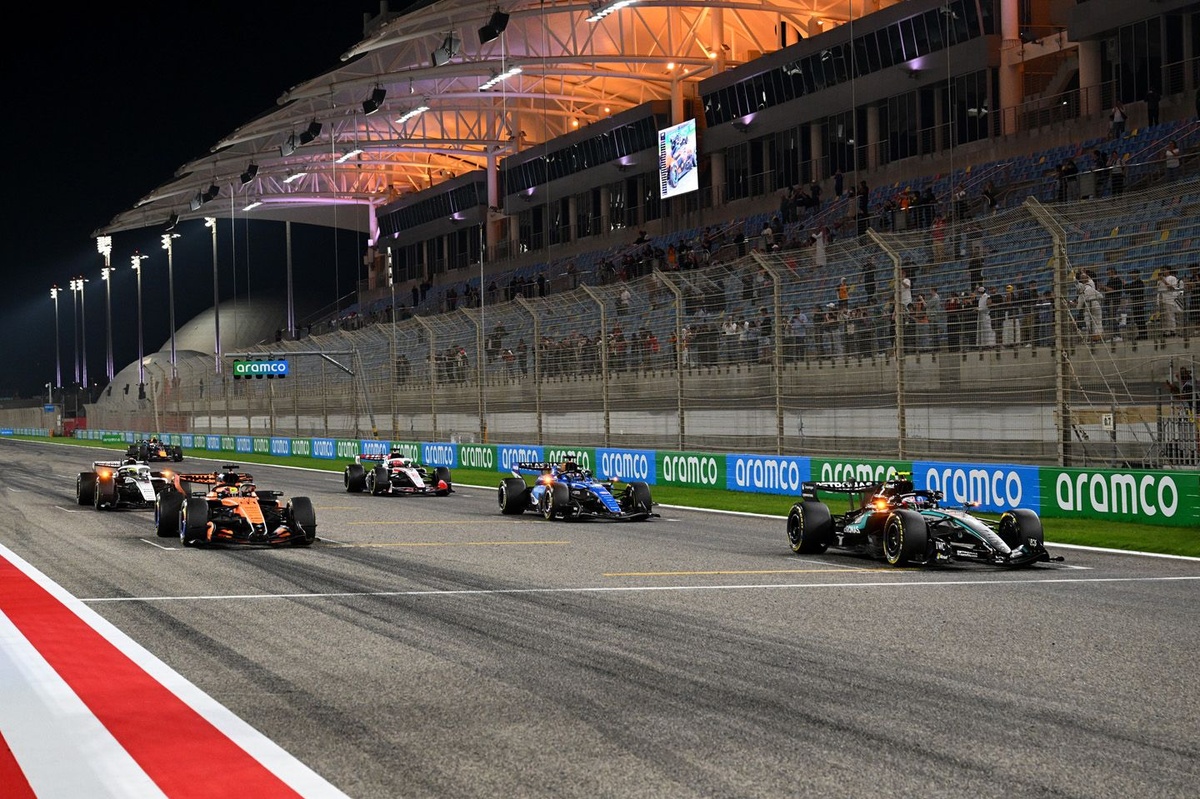
Formula 1’s governing body the FIA will experiment with tweaked start procedure timings at Bahrain’s second pre-season test amid safety concerns.
The FIA will trial a longer start procedure at the end of each day’s running in Bahrain pre-season testing to alleviate team concerns.
F1’s 2026 rules have placed a much bigger emphasis on electric energy regenerated under braking, while doing away with the MGU-H system used between 2014 and 2025. The removal of that system means drivers are now having to rev up the V6 combustion engine for around 10 seconds to spool up their turbochargers at the start of the race, leading to experiments with laborious procedures to make a clean getaway from the grid.
Last Friday, McLaren team boss Andrea Stella proposed changes to the start procedure, allowing drivers more time to line up on the grid and spool up their turbos.
It’s a suggestion that was given the cold shoulder by Ferrari, which Motorsport.com understands inquired with the FIA about that exact issue over the course of 2025 and was told the procedures would remain unchanged. As a result, Ferrari is believed to have designed its turbo in such a way that it would reduce the amount of time it needs to be brought up to the right boost level.
Lewis Hamilton, Ferrari
Photo by: Glenn Dunbar / LAT Images via Getty Images
To help alleviate the situation without committing to drastic changes to the start sequence, the FIA will trial different timings at the end of each day’s running in Bahrain’s pre-season test, so it can gather data and feedback to make an informed decision before Melbourne. The issue was discussed in Wednesday morning’s F1 Commission meeting in Bahrain, presided by the FIA’s head of single-seaters Nikolas Tombazis and F1 CEO and president Stefano Domenicali.
“There were constructive talks and proposals centred on the race start procedure during the commission meeting,” the FIA stated. “As a result, further evaluation of updates to race systems and on-car management will be undertaken during the current Bahrain test.
Stella also ran the alarm bells on safety concerns over extreme closing speeds when cars run out of energy on the straights, but it has been decided not to take any immediate action before the start of the season and instead gather more evidence over the first few race weekends of 2026.
“It was agreed that no immediate major regulatory changes were required given that initial evidence and feedback remains immature and that premature change carried the risk of increased instability ahead of the first race,” the FIA added. “Further reviews will be carried out once more data becomes available.”
Ferrari’s Lewis Hamilton was keen to shrug those concerns off. “It’s definitely not dangerous,” he said. “I think we should probably take that connotation away from it, because it’s just a different procedure.
“It’s just a longer procedure than it has been in the past. If right now you put the five lights up, we would all still be standing there when the lights went out for a little bit longer. But you can still pull away without the turbo going. It’s just that you probably will anti-stall a couple of times. So perhaps the anti-stall is something that maybe is a potential for some people. But I don’t think that it’s dangerous.”
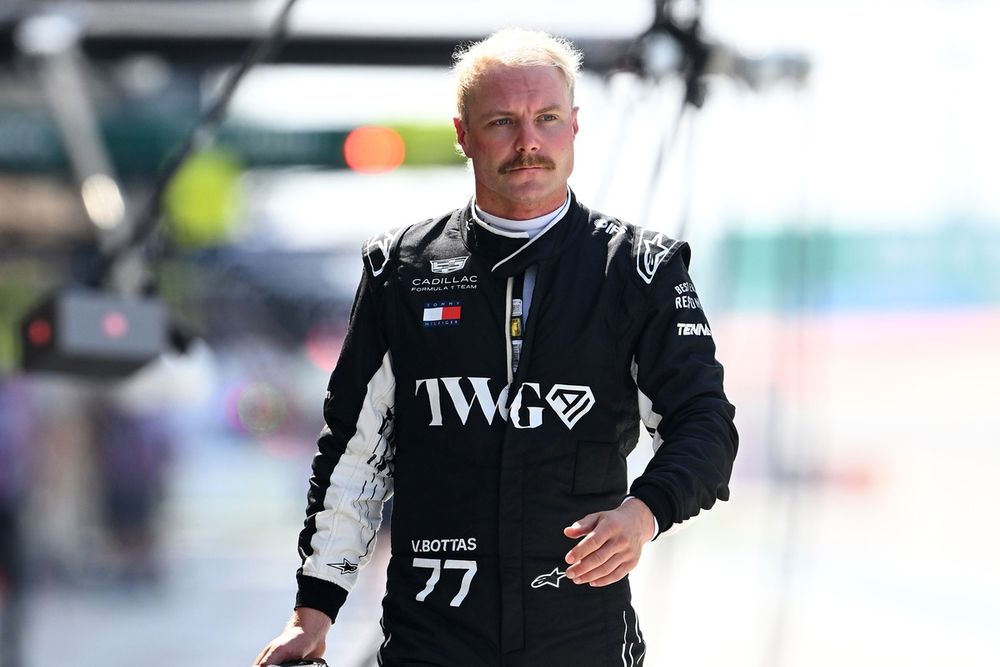
Valtteri Bottas, Cadillac Racing
Photo by: Mark Sutton / Formula 1 via Getty Images
Valtteri Bottas, who also has a Ferrari engine in the back of his Cadillac, said the only real headache concerns drivers who start at the back of the grid and therefore get much less time to prepare the start procedure, a position the Finn will likely be in with the start-up team.
“Honestly, I don’t think it’s more dangerous than before,” Bottas said. “The main difference is with holding revs [for longer]. And I think we’ve got to figure out something for that, because my only concern with that is like when you’re at the back of the grid, the light will already start going and you won’t have enough time to get the turbo spinning before the lights go off.
“That’s obviously only an issue for the drivers in the back. But apart from that, I think we’ll find solutions, and I don’t see any element of danger in just having to hold revs for longer.”
We want your opinion!
What would you like to see on Motorsport.com?
– The Motorsport.com Team