
When in 2021 vintage bike dealer Richard Hoddinott went in search of a bike that had belonged to Eddy Merckx, he didn’t realise he was scripting a story that would take him to film festivals across Europe. Nor did he expect that the star of the story would turn out to be not the bike, hidden away in an old bike shop just outside of Manchester, but the shop’s owner.
That man was 97-year-old Gerry Shields, who at the time would still turn up to work at the shop that bore his name above the door. Hoddinott said that Shields did much of the heavy lifting in the film. What began as a search for the Merckx bike ended up covering Shields’s whole life. Shields had been into boxing, did club singing, and was widely remembered as an extraordinary character. He passed away in 2023.
Image 1 of 4


The 20-minute film, called The Lost Merckx, is based on the premise that the bike Merckx rode to victory at the 1974 UCI World Championships in Montreal, Canada had for years been gathering dust in an upstairs room of an old bike shop. It tells the story of how Shields came by the bike through his many connections in the cycle trade. In a long interview for the film, Shields recalled in vivid detail each character, their role in the industry, and how he had come to know them.
This includes the business dealings between Merckx and the founder of Falcon Cycles, Ernie Clements, centring on the number of decals Merckx provided Clements to put on his Molteni orange, UK-built frames. It took Shields many months to secure the purchase of Merckx’s bike, as Clements initially said the Belgian wouldn’t be interested in selling it. Shields never revealed how much it eventually cost him, but said he had bought a lot of cars for less money than he paid for the bike.
The bike was originally on display in Shields’s shop, but was later moved into an upstairs room, out of sight. As years passed and fewer people saw it, its existence became local club-run folklore, which is how Hoddinott first came to hear of it.
Image 1 of 4


Shields was an excellent track rider in his youth and raced against Reg Harris on the Fallowfield track. He opened his first shop in 1948 after leaving his job as an underground electrician at Bradford Colliery in Manchester. The shop closed in 2022 when the building was converted into flats, but until then it had remained a family-run business throughout its history. When Shields retired, his son Chris took over.
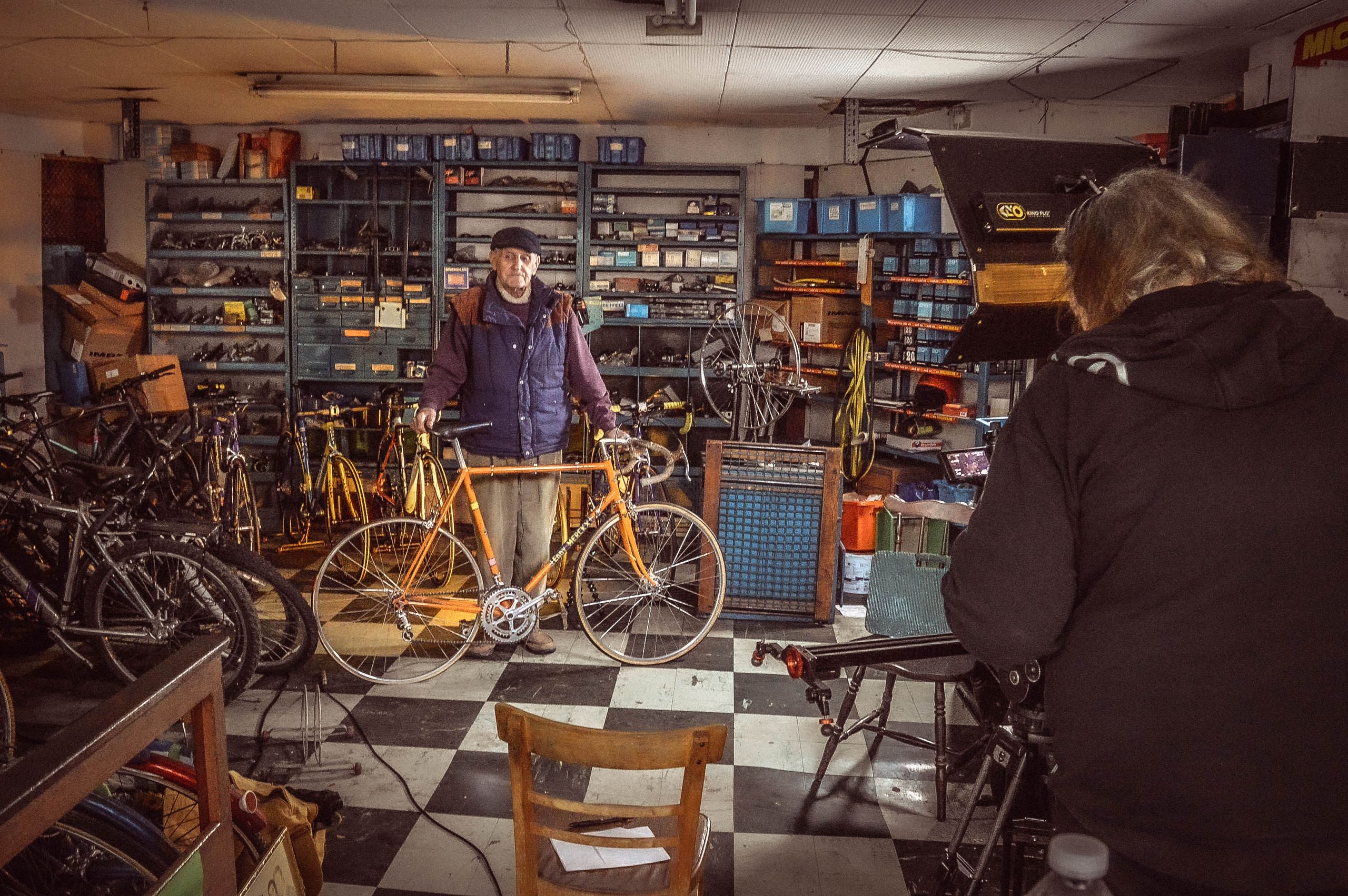
A gifted mechanic, Chris remembers as a child being handed a Sturmey Archer hub by his father and being set the task of taking it apart to work out how it functioned. The photographs taken for the project show Shields at home and around the shop before it closed. Although they were shot in 2021, they appear to come from another era, with metal filing cabinets packed full of spare parts and a building slowly falling into disrepair.
Hoddinott said the bench in the workshop had been bought second-hand by Shields in 1947 and was essentially a butcher’s block covered in oil. The shop was full of artefacts, ephemera and accumulated items stretching back decades.
RIDDEN, YES – BUT RACED?
Merckx was famously fastidious when it came to his bikes and their set-up, and was provided with multiple bikes throughout a season. Before releasing the film, Hoddinott carried out extensive research into the bike’s provenance. When Merckx supplied it to Falcon to go on tour, he described it as a world championship bike. This was in early 1975, after Merckx had won the World Championships in Montreal the previous year.

A US-based collector who specialises in Merckx memorabilia told Hoddinott that Merckx would often travel to races with four bikes rather than the standard two. Following enquiries with Cristiano De Rosa, his father Ugo confirmed that he built this bike for Merckx to race on during the 1974 season. It is assumed that at the very least it was one of the four bikes Merckx took to Montreal, but it cannot be confirmed whether it was the bike he raced on the day.
WATCH THE FILM
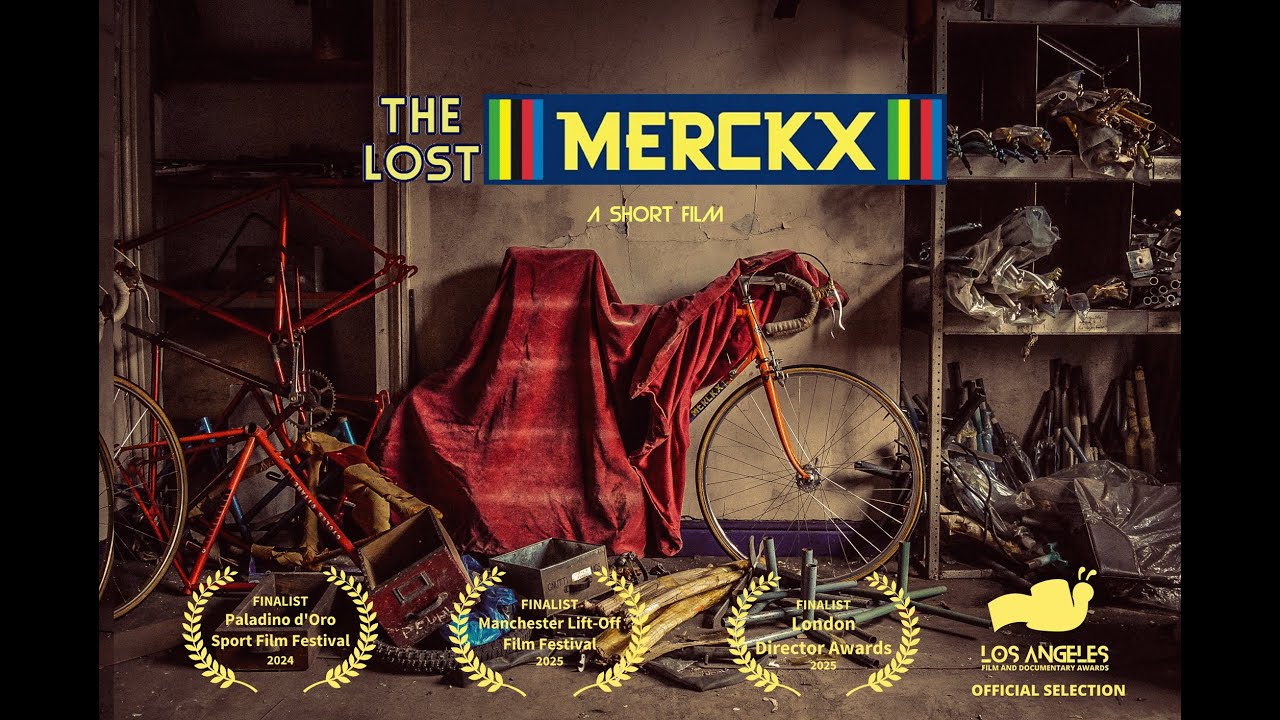
Richard Hoddinott’s film The Lost Merckx, The Ultimate Cycling Barnfind was shortlisted in the Short Documentary category at the Paladino d’Oro Sport Film Festival in Palermo, Italy. Although it did not win, it was selected alongside films with budgets far exceeding the £500 spent on its production. Around 10,000 films are submitted each year for 10 awards at the festival. The film is now available to watch on YouTube.
The De Rosa-built Merckx, a 1972 Kessels, and three frames are currently for sale. Further information is available via Richard Hoddinott through The Velo Pages website or Facebook page.