
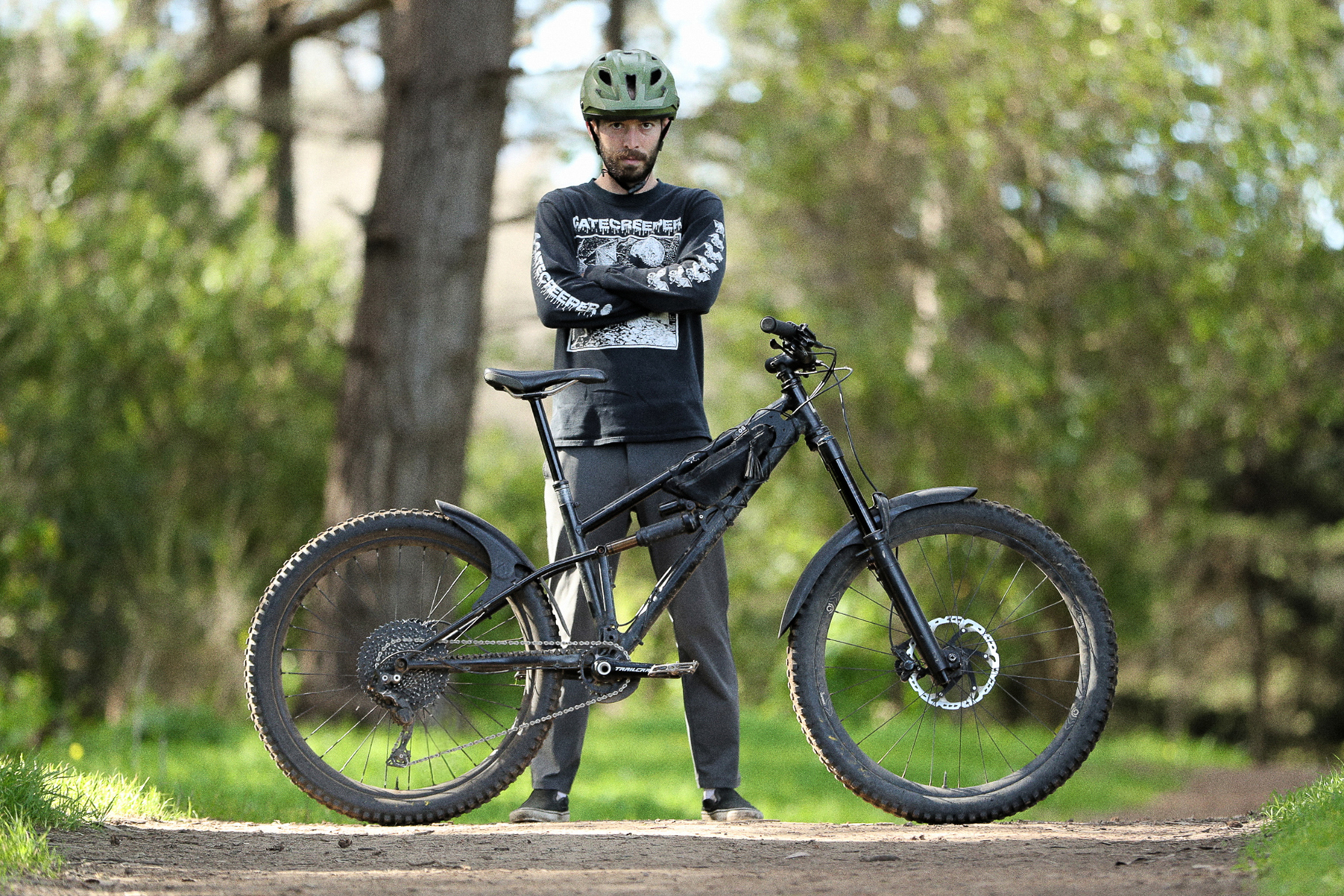
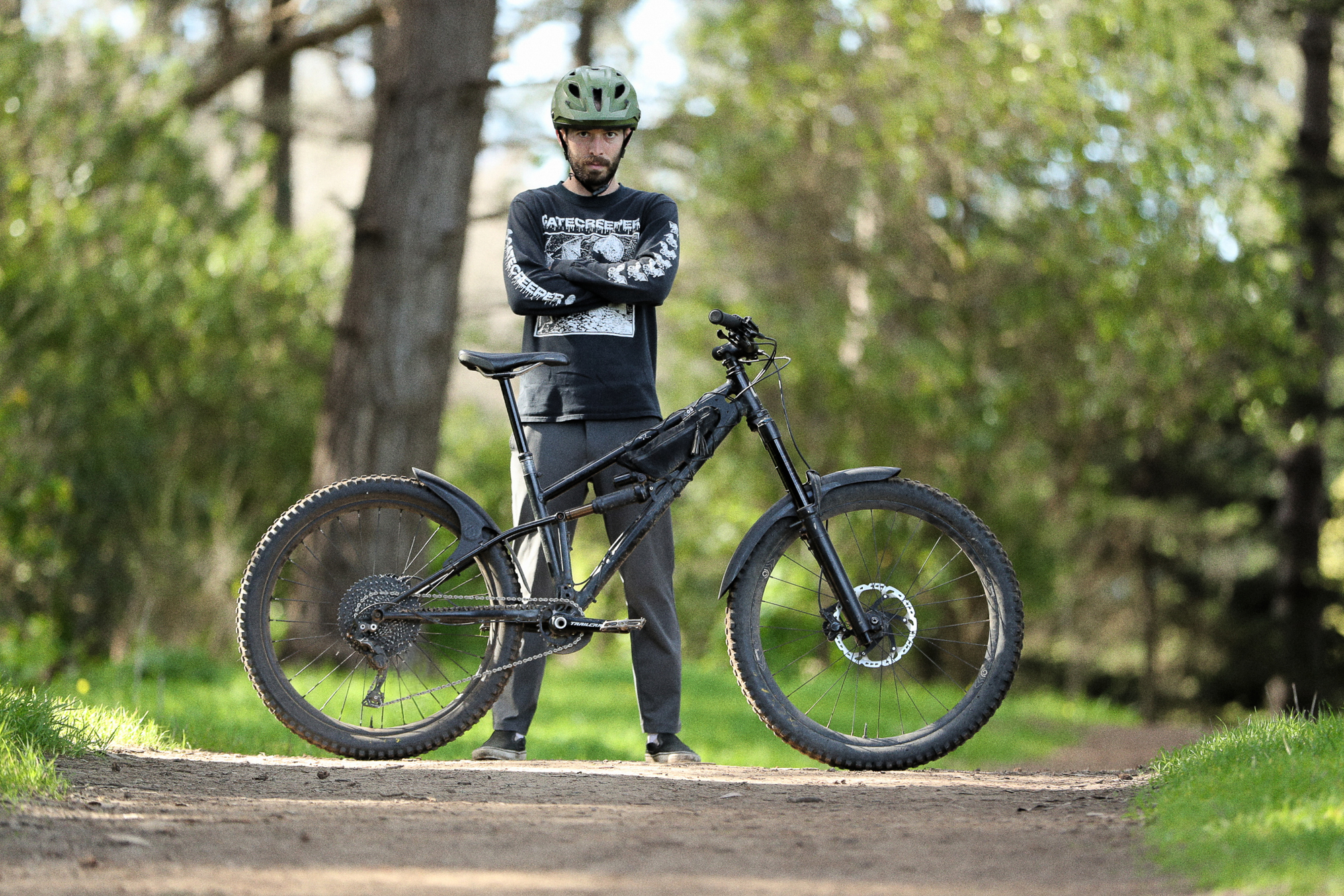
Four years into owning his “forever bike”, Alex Steadman decided to alter his Starling Swoop in some significant ways. Can he even call it the same bike after it has evolved? Is a forever bike a myth?
When I bought my Starling Swoop in 2020, I firmly believed it would be my forever bike.
My previous bike, a 2017 Giant Trance, taught me what I didn’t want: a frame I didn’t fully understand, with geometry I hadn’t thought through carefully. So when I went looking for a replacement, I was deliberate. Steel tubing meant the frame could take a beating and be repaired if it cracked. Progressive geometry meant I wouldn’t find myself chasing the next trend a year later.
There was still some luck involved. I bought the frame blind – no test ride, no comparable geometry to reference, just internet research and a bet on where mountain bike geometry was headed. It paid off. Progressive geo trends did settle around 2020, and every time I throw a leg over this bike I’m reminded it’s the best one I’ve ever ridden. If it ever cracks, I’ll have it repaired. Someday I’ll be that old guy on the trail with the outdated bike, and I’ll be perfectly happy about it.
So why, with all that conviction, am I now making some pretty serious changes to my supposedly perfect forever bike?
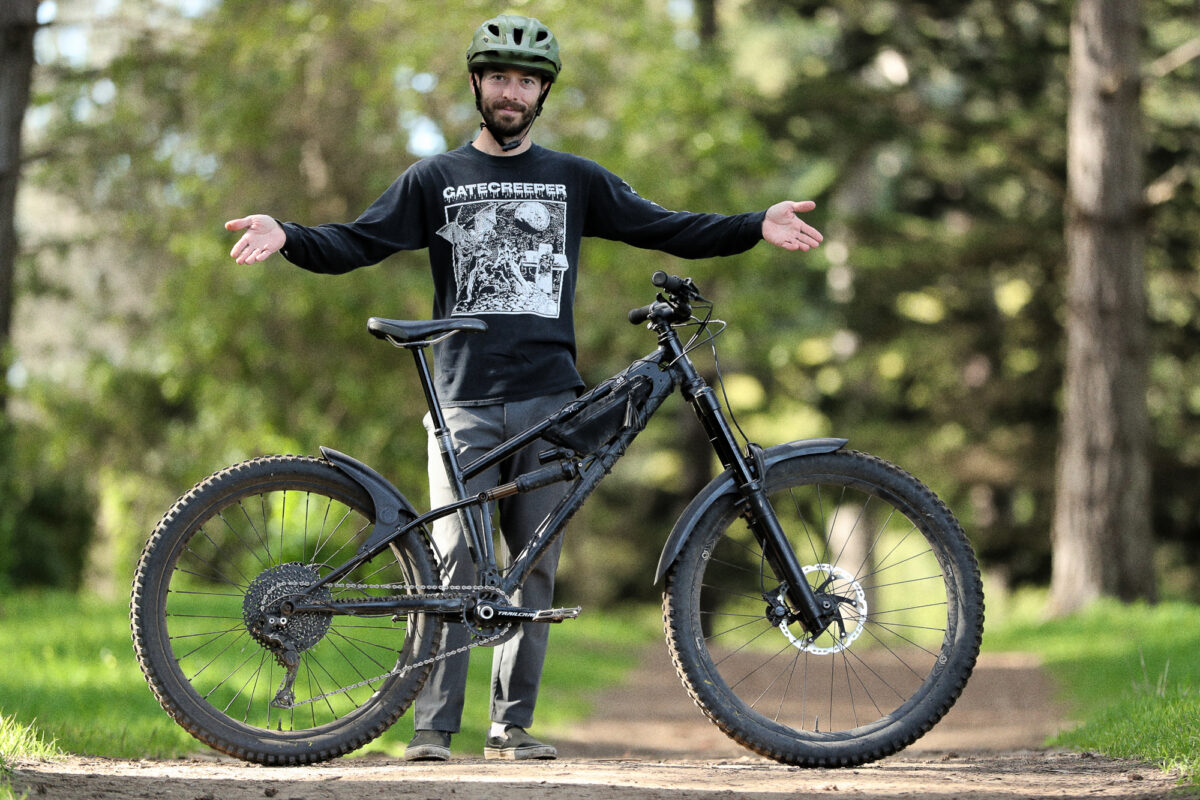
Tell Me Why: Forever Bike
After about three years, I started thinking about making some big changes. Every now and then I’d bottom out hard enough that the tire would buzz the seat tube, and that same limited rear travel restricted how long a dropper I could run before the tire hit the seat. My first thought was to fit a longer shock to raise the back end slightly, but that alone would push the bottom bracket too high. After watching too many Remy Morton videos, I landed on a solution: pair the longer shock with a smaller 26″ rear wheel, which would drop the bottom bracket back down close to where it started.
Before ordering anything, I pulled out a digital angle finder to establish a baseline and model how the longer shock would affect the geometry. Then I hit the head angle and stopped. 62.5 degrees? I was already 10 mm overforked, but that should only account for about half a degree of slackening, not 1.5º. I checked the seat tube angle as a sanity check and it was right on spec. No wonder this bike handled steep stuff so well, I was running a full downhill head angle! Coming off my old Giant Trance with its 67º head angle and short front center, I’d just assumed this was what modern geometry was supposed to feel like – and apparently I loved it. While I was at it, I measured the actual rear wheel travel and got 165 mm instead of the claimed 160mm. No complaints there.
When Life Gives You Lemons
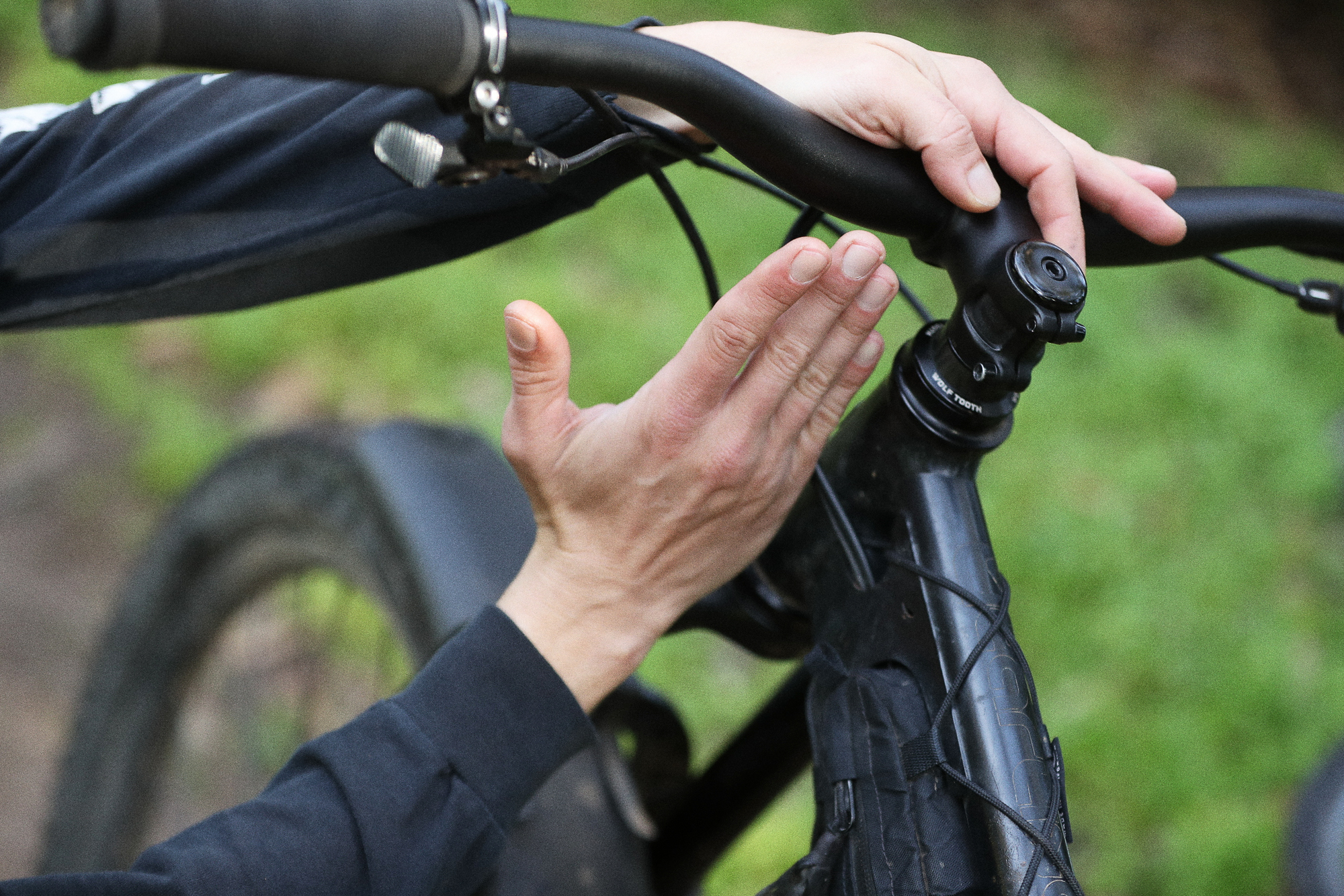
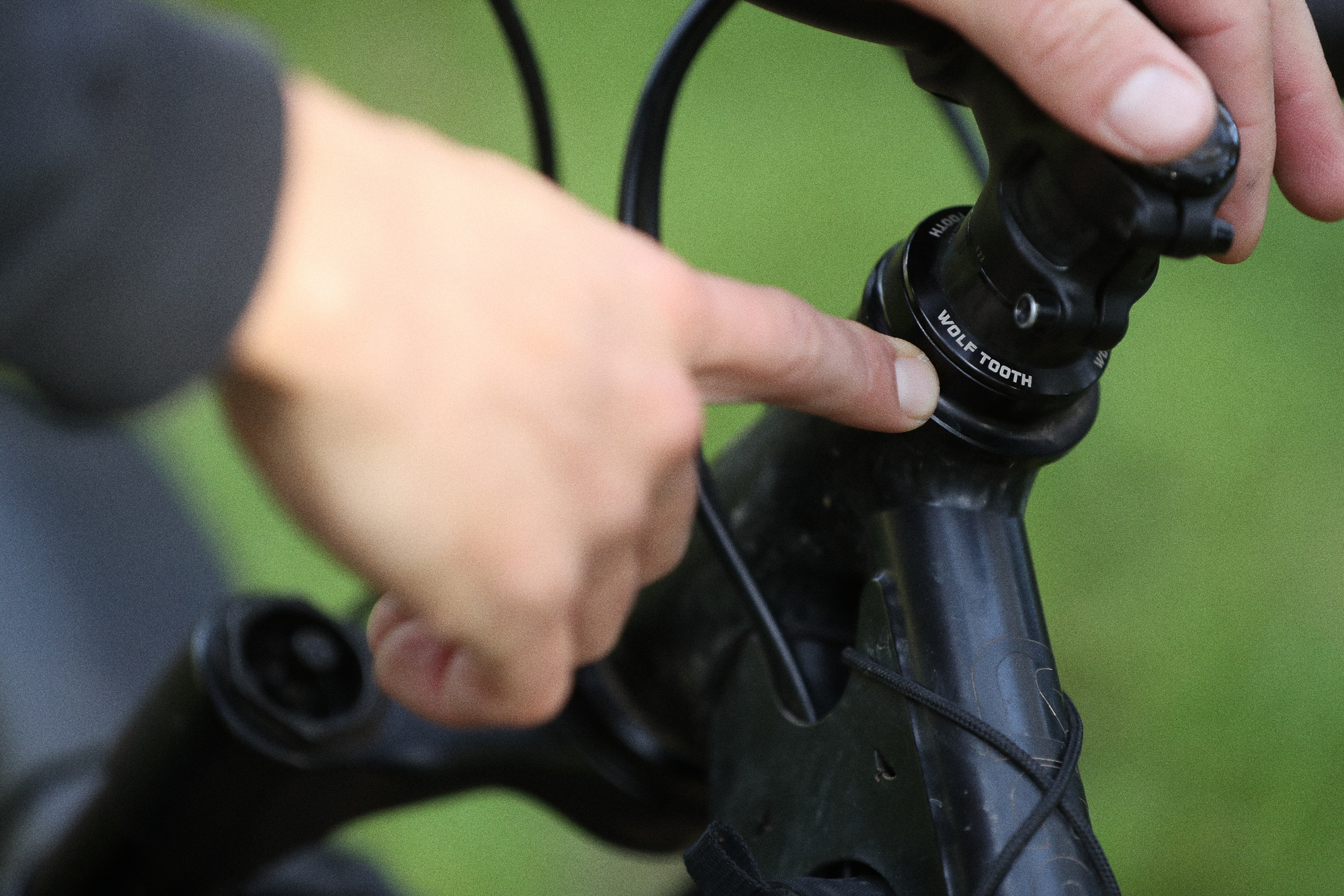
While this came as a surprise, it actually gave me a solution to my mini mullet problem. Changing the stock 27.5” rear wheel to a 26” back wheel would drop the bottom bracket and also slacken the head angle around 0.5º (down to 62º). So if I installed a 2º angle-adjust headset to steepen the head angle, it would both bring it up to what should have been the stock 64º while also bringing the bottom bracket up close to stock. This would slacken the seat tube, but as it was already steep –modern geometry, baby – and since I have short cranks, I still had plenty of room to put my seat in the right place.
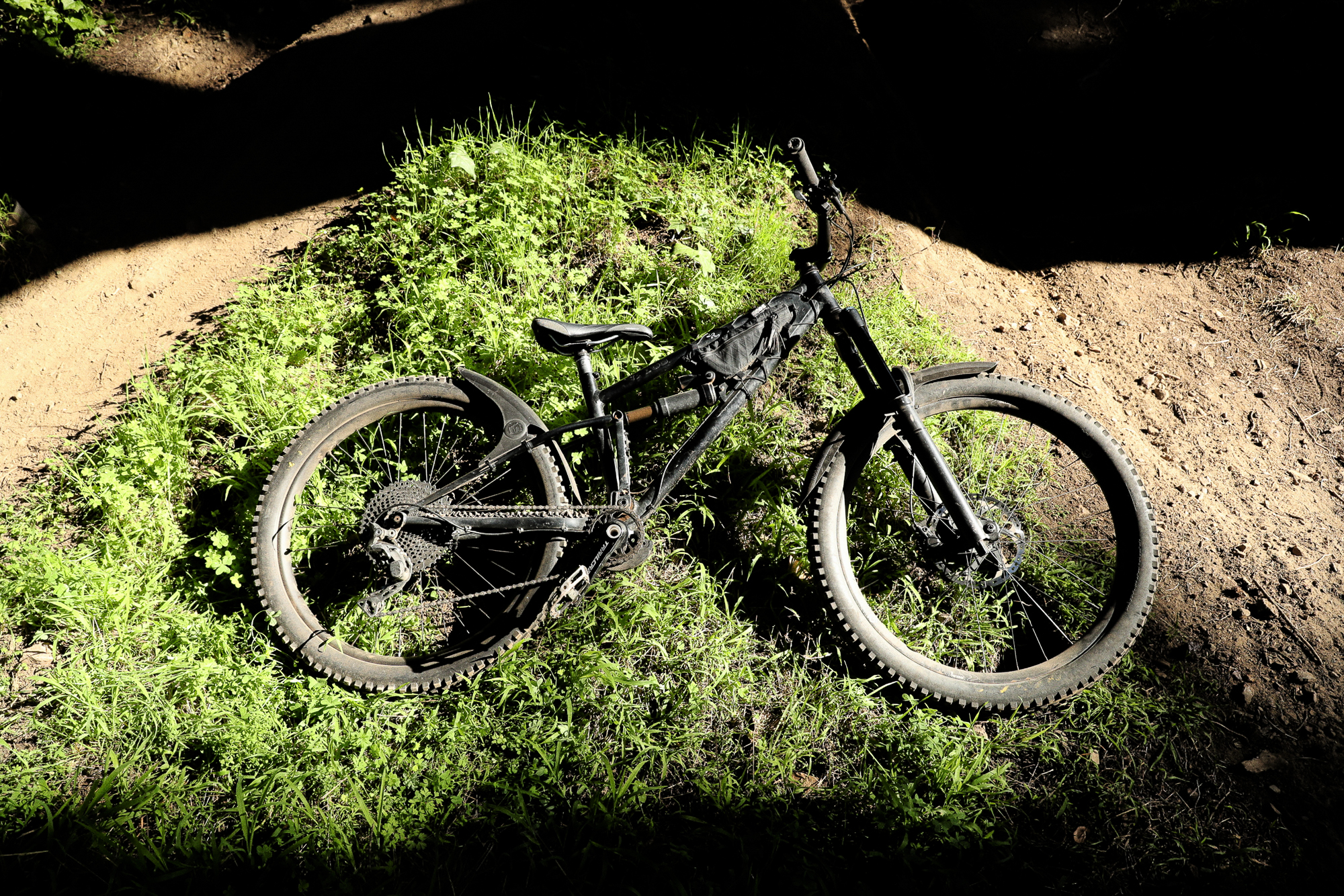
So that was the plan. But what if 26ers suck and I was making a huge mistake? Just in case, I spent as little money as possible converting my bike. I built the rear wheel from a 32-hole dirt jumper rim, a mystery eBay hub, and used spokes from the bike shop for around $60, an eBay 26” Minion for around $50, and the Wolf Tooth GeoShift headset cost me less than the $114 msrp because I work at a bike shop. So for around $200, my experiment could begin.
After swapping to the smaller wheel and installing the GeoShift headset, I confirmed all the angles and my calculations were spot on.
Ride Impressions
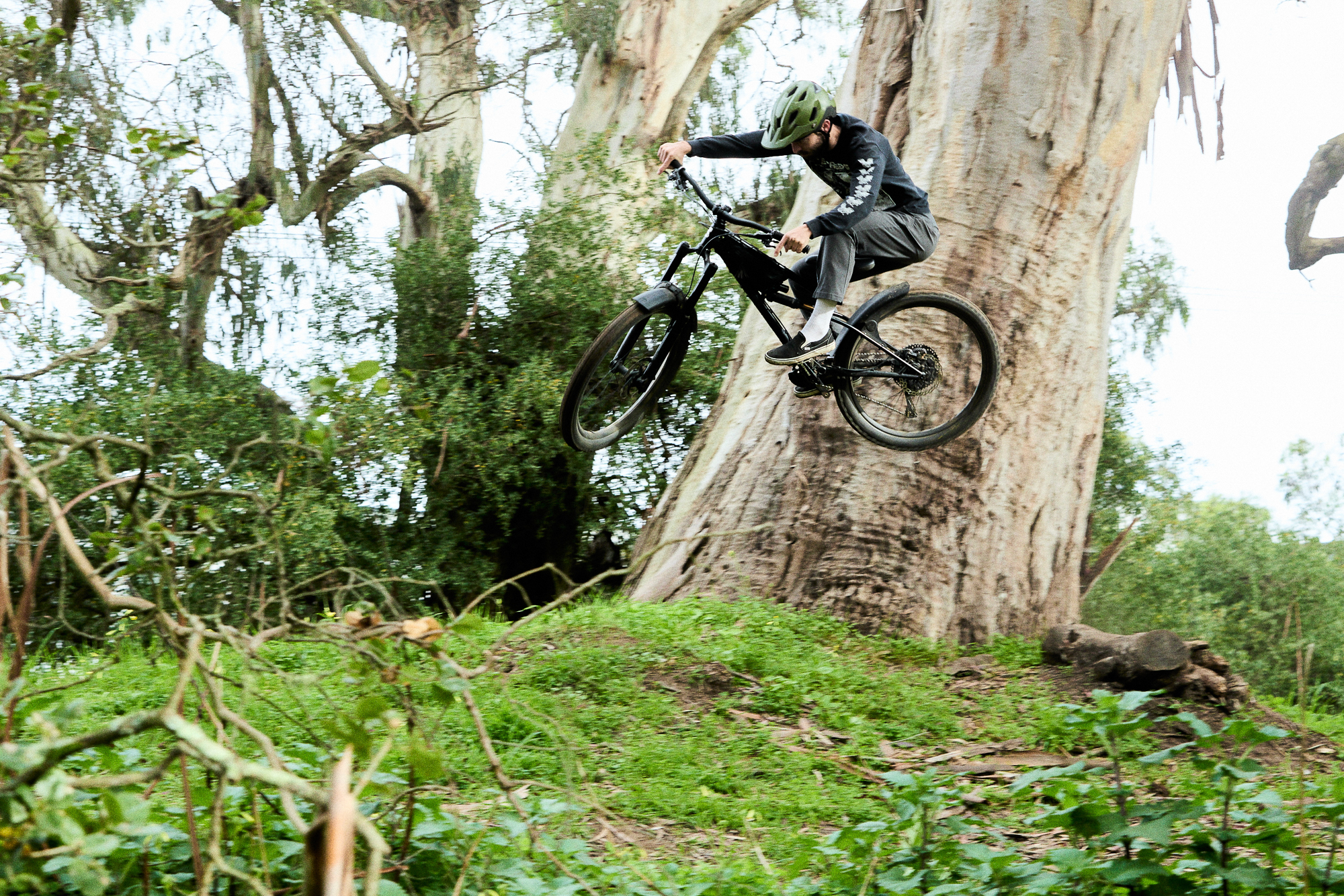
Rolling down to the bike shop to install the headset, I could instantly feel the maneuverability of the smaller back wheel. It just turned so much more quickly. Steepening the head angle made that feel even more pronounced. My initial test run at the UN skate plaza proved the bike to be more flickable. Front wheel moves became so much easier.
My first run down the trail took a second to get used to. I popped and aimed my front wheel into a little dip in the trail only to realize I didn’t have the support of a 62º head angle that I once did. It was fine; I just learned I couldn’t land quite as nosedown as before. Switchbacks and cornering were amazing; I can’t believe I was able to make some of those turns with this new setup! High-speed jams were a bit twitchier, but it went from an insanely stable bike to a very stable bike – well worth the trade-off for me.
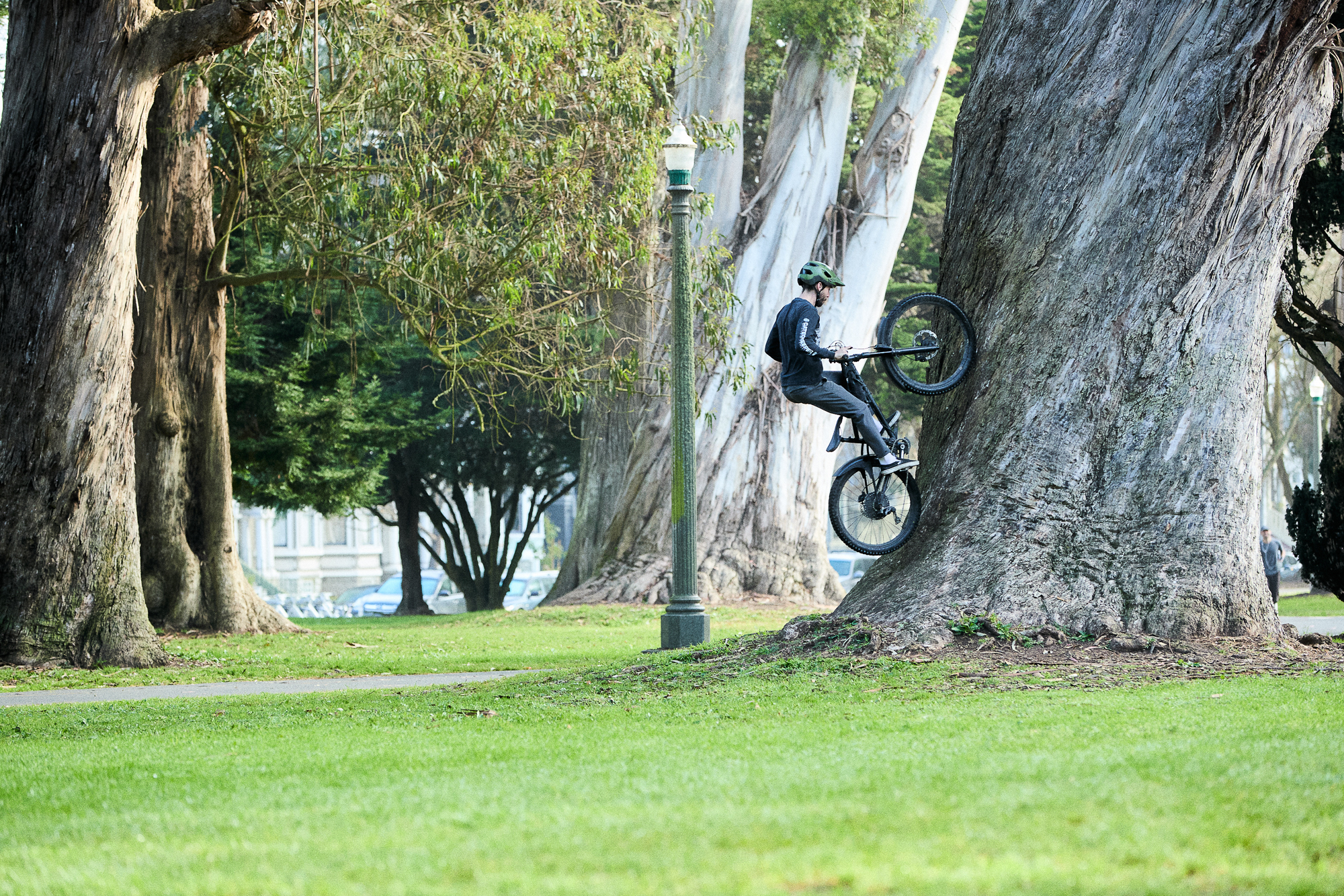
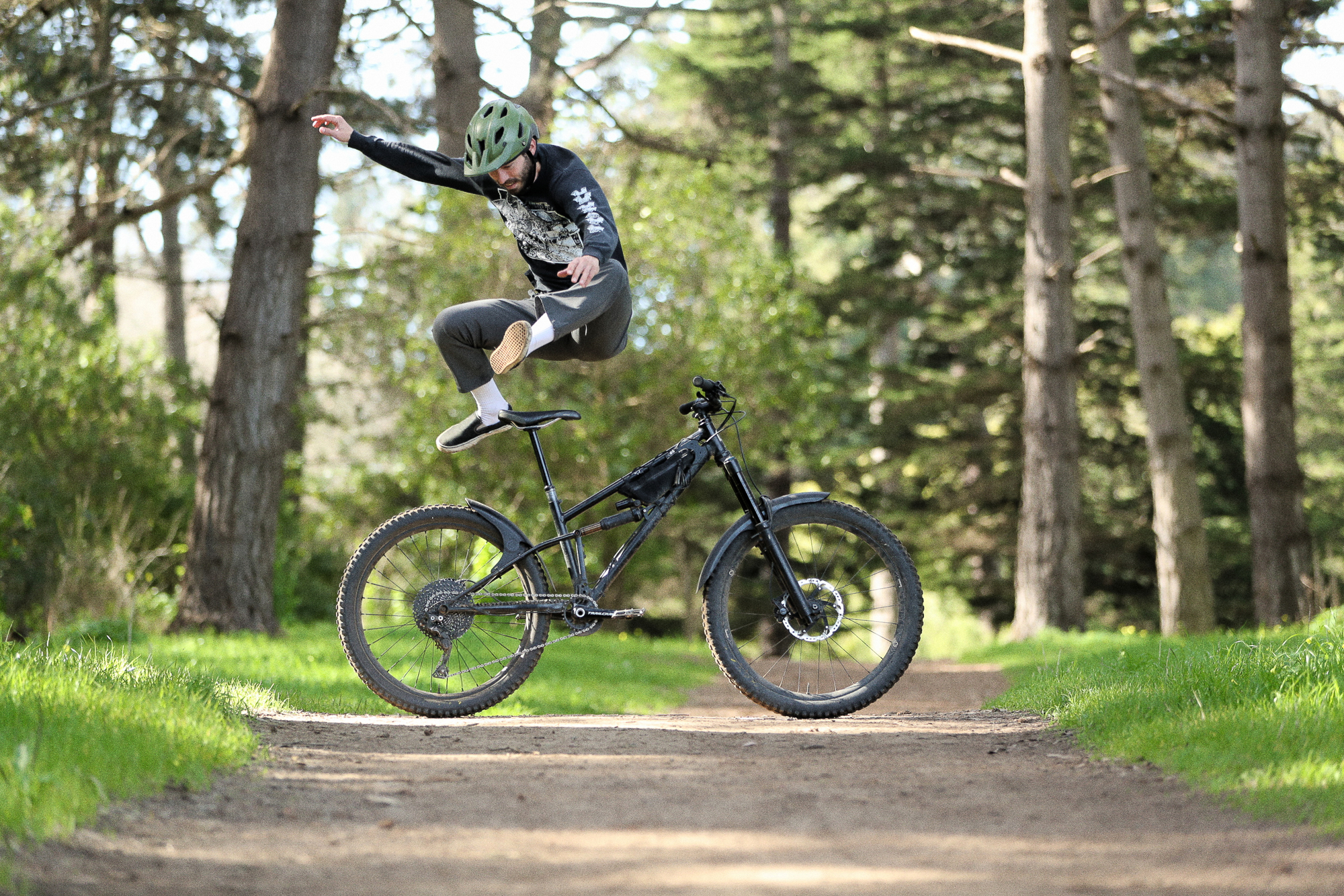
Jumping also felt improved. Coming from a scooter background, I’m used to 110mm wheels (recently up to 115mm!!) and a 660mm wheelbase, so just about any bicycle is going to feel long when bunnyhopping or coming off a lip. The added clearance with the small back wheel was nice when I botched a jump and barely cleared it: it was much easier to tuck the back in just a little bit more to avoid casing the landing. What I started to realize at Truckee Bike Park was that the tighter lips that always had me wishing for a dirt jumper felt more manageable. The slightly shorter wheelbase due to the angleset helped, but more importantly, the small back wheel was able to roll through the tighter-radius lips better. That gave me more control to pump off the lip and get a bit more distance or height. I remain mediocre at big scary jumps with this current setup, but I have only myself to blame there.
I expected the trade-off to be a rougher-riding rear end. I started off on a relatively smooth trail in Pacifica and it somehow felt smoother. I progressed to chunkier stuff and it still felt smoother. How could a smaller wheel with worse rollover make my bike feel smoother? The tire is barely bigger and I’m running it at the same pressure as always. Either rollover is a lie or my eBay hub’s terrible engagement was smoothing things out.
Brief Sidetrack
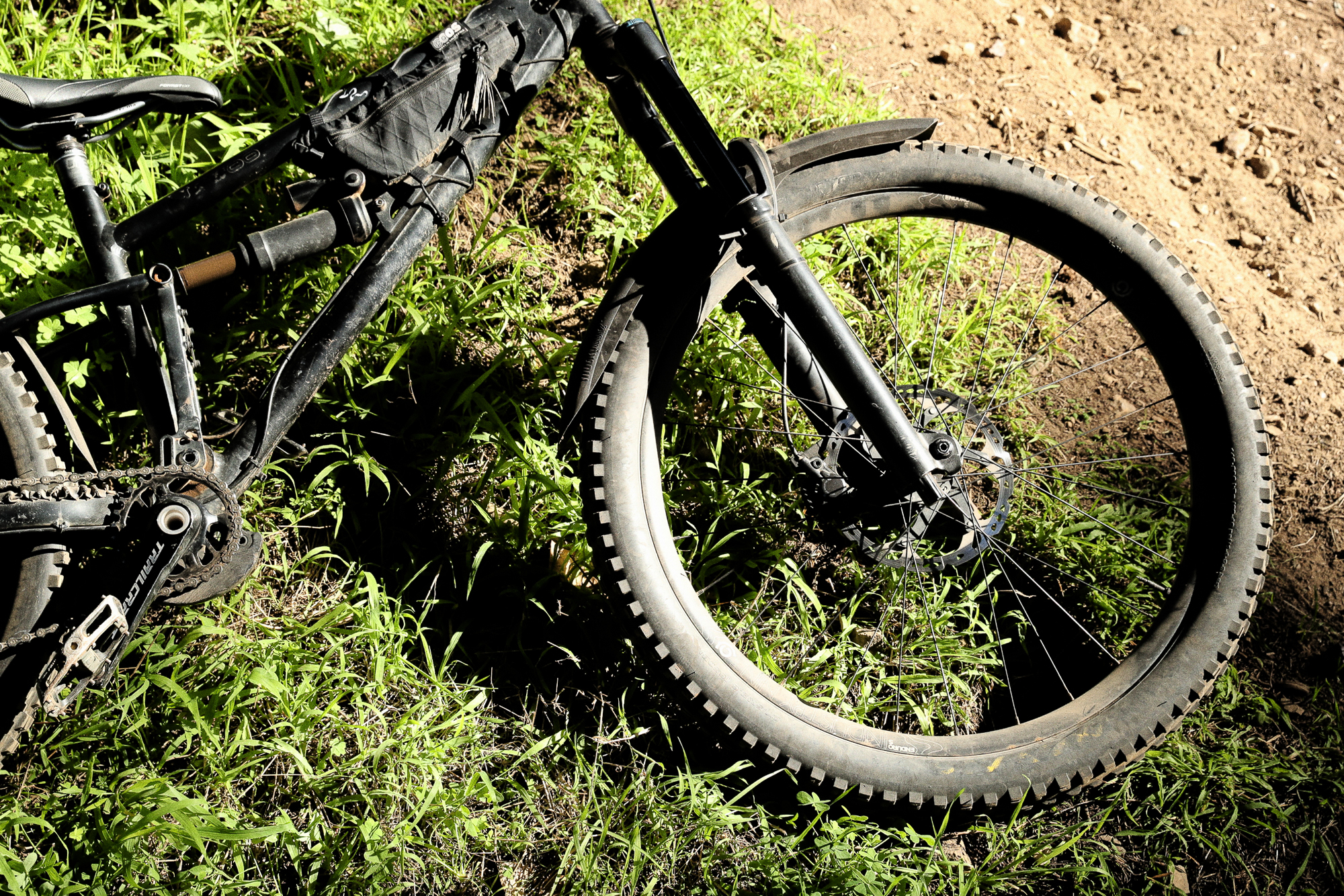
My closest guess: that feeling of smoothness came from the Novatec hub, but I can’t say for sure. What I can say is the engagement is way worse than my Industry 9 1/1 hub… and I think I like it. The 1/1 has 90 points of engagement (POE) which adds up to 4º of engagement. My cheap hub has 28 POE for 12.9º of engagement (please check my math). Plenty of people are running chain damping devices on their chainrings to quiet things down, but what if you could get some of those benefits by buying a cheaper hub with worse engagement? I digress, though – this article is about the different wheel size, so I’ll leave kickback alone. But after a year of riding this setup, I’m happily sticking with worse engagement.
Another Brief Sidetrack
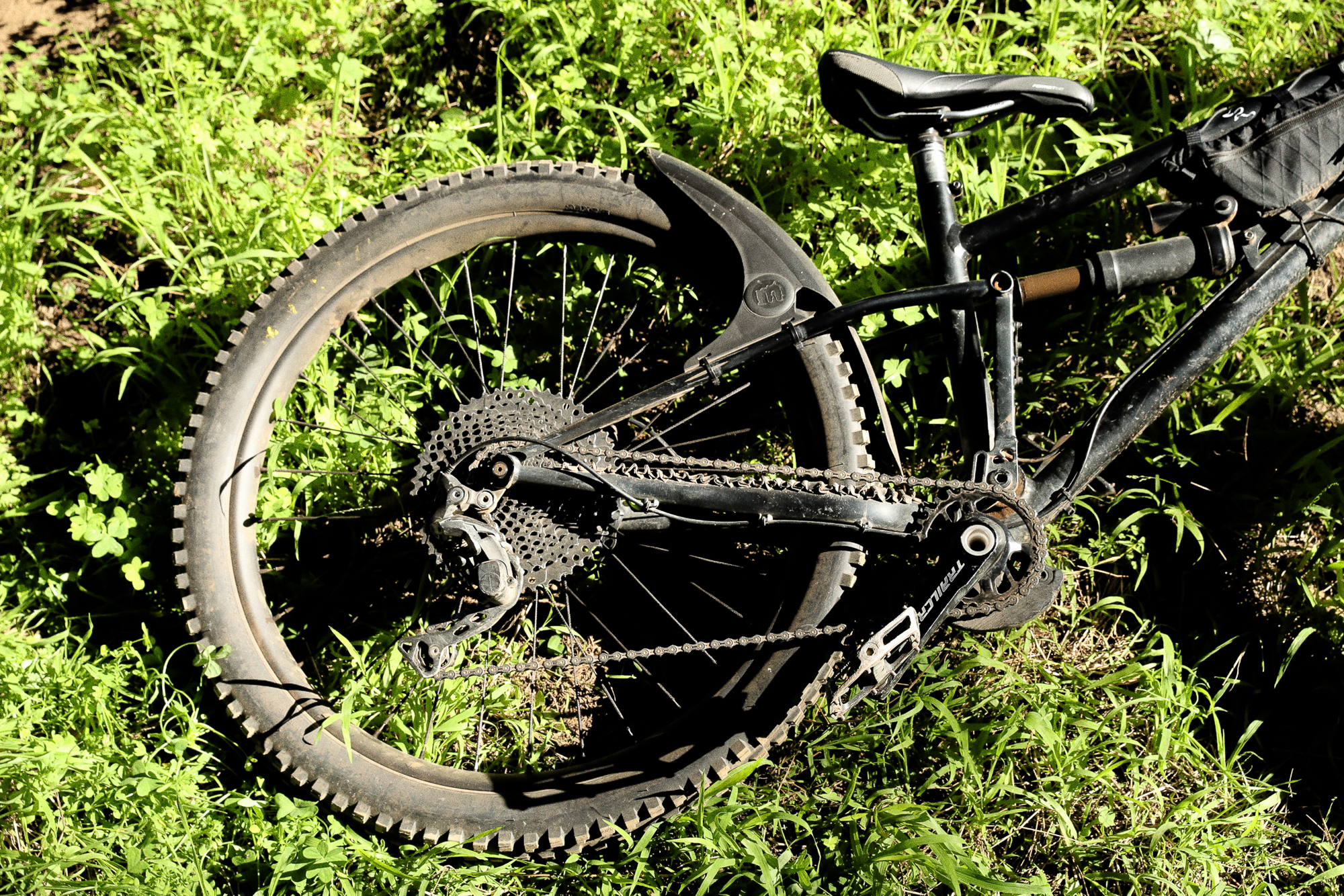
After a year of riding I was confident enough in the wheel size to commit to a lighter, higher quality– and much more expensive – wheelbuild, a decision that became easier when I cracked the ratchet ring on the eBay hub. I had Berd lace a DT Swiss 240 hub to a lighter Stan’s rim, and the half-pound savings was immediately noticeable. The first bunny hop up a stair set confirmed it: weight does matter, at least in certain ways.
The DT Swiss hub runs a 36-tooth ratchet, giving 10° of engagement (about 2.9° quicker) than the cheap hub. I expected more chatter on descents, but if there is any, I can’t feel it. If anything, the bike feels smoother, which I wouldn’t have thought possible. My best guess is that the Berd spokes’ natural compliance, combined with the reduced unsprung mass, more than offsets whatever additional feedback the faster engagement introduced.
Climbing, the Seemingly Clear Loser
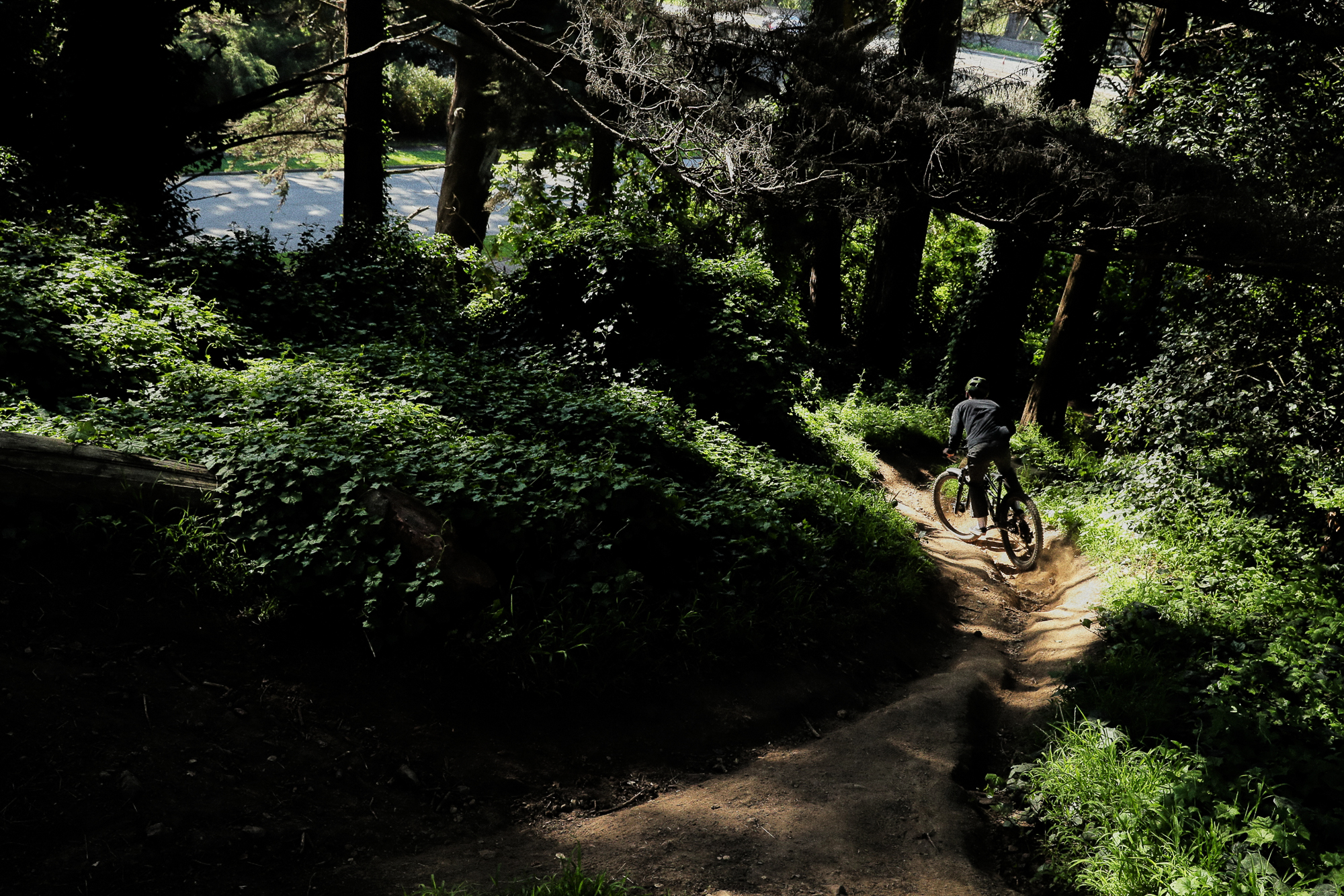
Alongside chunky descents, climbing is another place I thought I’d surely lose performance. I was happy that my climbing gear became a bit easier, but I just knew my back wheel would be hanging up on everything. I usually pull my back wheel up onto ledges or over roots and that was, unsurprisingly, a better experience since I had just a little more clearance to help out with those bigger pulls. But even with spots where I was just mashing through and blasting my back wheel on rough stuff, I didn’t climb any worse. I still cleared Hogs, the Hiline climb, and even cleared a bit more of that goddamn Templeton climb than before. Once again, I’m sold.
Diameter-Curious?
So that’s it. I’m on board with 26ers, apparently, even for all-around trail riding. I solved my initial problem of not enough rear tire clearance both to my seat tube and saddle, I solved my problem of a too-slack head tube, I increased my bike’s maneuverability, and I didn’t lose out on pedaling performance or high-speed stability.
The nice thing about experimenting with wheel sizes is that cheap wheels are pretty widely available, and thanks to disc brakes you can just slap them on. Most people are probably riding 29ers nowadays, so it’s a fun experiment to install a cheap 27.5” rear wheel and put your bike in high mode or extend your fork and get weird. If you have a full 27.5” bike still you can get a cheap 29er front wheel (maybe a fork too if you don’t have clearance) and see how that feels. That’s what I did with my hardtail for mixed terrain rides, and I enjoy the bigger front wheel on that bike since it’s more for pedaling than my full suspension is. Plenty of people are doing the same thing with 32ers by putting them on their 29” hardtails. All of this is much cheaper than buying a brand-new bike, especially if you know how to wrench and have access to tools. Maybe you can get your bike to ride just a little bit better so you can enjoy it even more. I sure have.
Forever Bike
You’ll notice I briefly mentioned 32” wheels as a point of experimentation. Maybe we shouldn’t be quite as concerned about whether they’re going to take over and ruin bikes once and for all. 27.5” and 29” wheels didn’t ruin bikes, and while 26” isn’t nearly as popular as before, it ain’t dead and plenty of people still choose to ride them along with all these other wheel sizes. It’s just one more step toward people having bikes that fit them based on their riding style and regardless of height. While a 32” mountain bike would be a nightmare for me, a medium mullet bike like mine would likely be a nightmare for a tall rider or someone who wants straight-line speed and efficiency. Similar to manufacturers making a bigger variety of crank lengths and handlebars coming in a huge array of widths, it adds more SKUs, but can make bikes work better for more people.
Don’t be afraid to experiment with your bike! They’re meant to be FUN!
What do you think of Alex’s medium mullet Swoop?