
By Lois Leveen.
I want a street named Dolores Huerta
Let me tell you why
It would show us where we’ve been
And where we can go if we try
And if I ever feel lost
On a night that’s dark and bleak
I’ll find my way back home
On Dolores Huerta Street– Alice Bag
Just after waking up on Thursday morning, I heard on OPB that Portland City Councilor Candace Avalos was proposing a street be renamed for Dolores Huerta. Huerta, a ninety-five-year-old activist who has dedicated her life to community building, political organizing, and bettering conditions for those whose labor makes our nation function, deserves to be honored. But the street Avalos identified already bears the name of one of Huerta’s longtime fellow activists, Cesar E Chavez. Avalos’s proposal is one of many such responses to the startling revelation, newly documented by the New York Times, that for years, Chavez sexually abused girls and women, including Huerta.
Although the news broke on Wednesday, I somehow hadn’t heard it. Nevertheless, I had been thinking and speaking about Huerta on Wednesday evening, as I stood in the Abernethy Elementary schoolyard, singing with the Wild Rose Resistance Choir. Wild Rose is a street choir dedicated to singing songs of solidarity, resistance, and liberation. One of our favorites is Carsie Blanton’s “Little Flame,” a song that commemorates and inspires action in the face of injustice. “Little Flame” references a number of resistors and revolutionaries, and that night we took time to talk about each of them and the movements they were part of, including “Dolores,” as she is named in the song.
Wild Rose is a radically welcoming choir, and we invite anyone who shares our commitment to resistance to sing with us. One of the participants on Wednesday, Perry, was joining our song circle for the first time. But, as is often the case, this person wasn’t a stranger. As fellow bicyclists, we’d connected on various group rides around Portland. And as a pedaling parent, Perry noted during our discussion of “Little Flame” that in April, various Portland schools would be participating in El Camino de Dolores, an Oregon Safe Routes to School “walk and roll to school day … to celebrate Dolores Huerta’s dedication to social justice” when “students will have the opportunity to learn about the farmworkers’ movement, her fight for equality, and how these struggles connect to current efforts for positive change.”
Wednesday evening, the intersection of two parts of my Portland community-building life – singing as resistance and bicycling as connection – filled me with joy. But the revelation of the abuse Huerta and other women and girls survived has filled me and countless others with shock, horror, betrayal, and regret that someone we admired and lauded and studied had intentionally enacted such harm. As journalist Julio Ricardo Varela put it, “The years I spent defending César Chávez make me feel like a fool.”
In 2024, I had co-taught Songs of Activism: The Music and the Movements of Harry Belafonte and Cesar Chavez, a course designed as part of an ongoing effort to diversify whose voices we raise up in music classes and jams. My co-teacher Avery Hill and I undertake this work because of how many beautiful and valuable voices have been marginalized or silenced, over many decades and centuries. We did not imagine that Huerta, whose inspirational activism we discussed in the class, was also one of the many beautiful and valuable voices who had been silenced. Now that we can finally understand from her own words what she carried all these years, we are even more inspired and moved to learn from her.
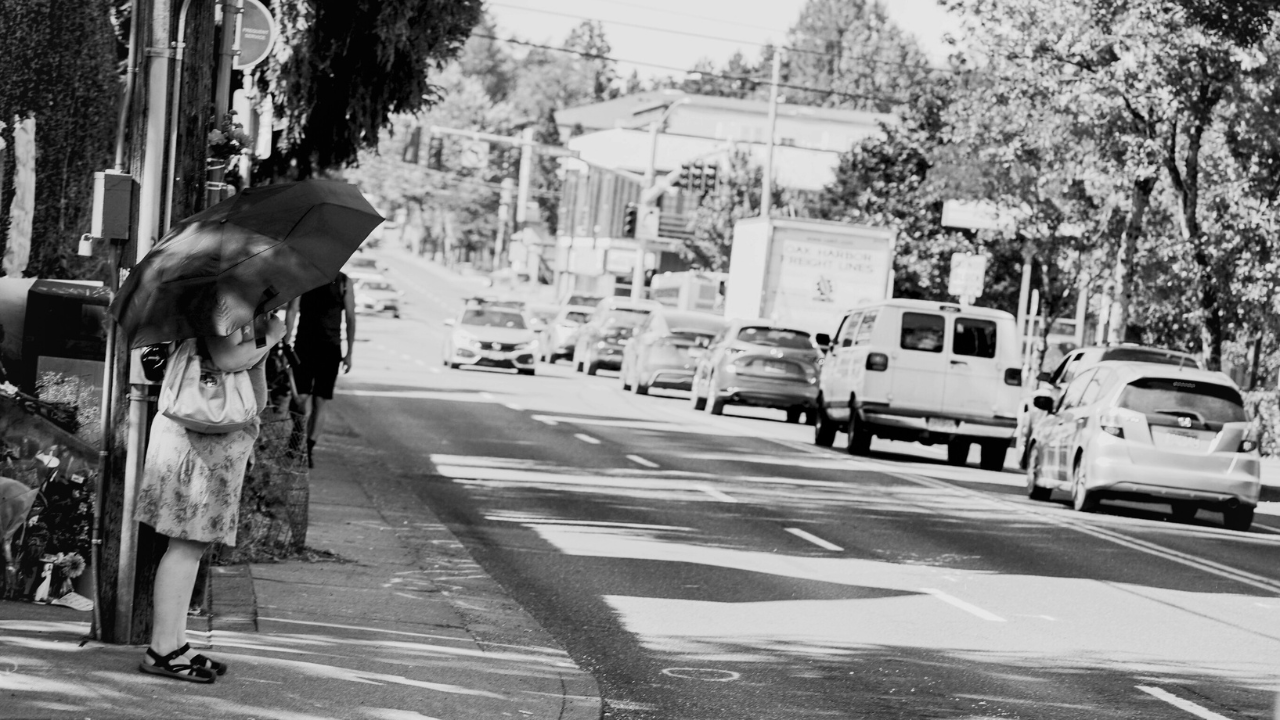
Every day, I cross Cesar E Chavez Boulevard. And every time I do, I think of terrible violence, violence that people in power have not done enough to prevent. I think of beloved children’s librarian Jeanie Diaz, killed by a driver across the street from the Belmont Library, while waiting for a bus to bring her home to her family. Of my beloved friend Grey Wolfe, a therapist and activist who, like Diaz, touched the lives of innumerable community members, and who was killed by a driver on the day before Thanksgiving, as she took her morning walk to Mount Tabor. Of Jocelyn Latka, a teenager I chatted with regularly when I patronized Movie Madness, where she worked, who was killed by a driver on 39th, as it was still called in 2006, partway along the seven-block-stretch where Diaz and Wolfe would later die. And of the others who have also died or been injured on this dangerous street, because Portland leaders fail to protect us.
Renaming one street is not enough to make us safe. Not safe from vehicular violence, nor safe from sexual predators. But renaming this particular street will make a difference. Reeling from the revelations about Chavez’s sexual predation, I composed a message to send the students who had taken Songs of Activism. I wanted to include a musical tribute to the women of the farmworkers movement, and that is how I discovered “Dolores Huerta Street,” a song written and performed for Huerta several years ago by the Latina punk pioneer Alice Bag. One verse, referring to an unspecified man for whom a street is named, seems particularly prescient in light of what we now know:
Those worn roads help preserve
And cement his story
Ignoring all her deeds
But think what it could mean
To a girl in her teens
If she could see what she could be
What she could be
Every day of my life, I cross a street named for someone we now know did terrible things over and over again, in a calculated and cruel way. I cannot honor that man, and I don’t want my city to honor him either.
Naming a street or a school or anything for a particular individual can distort our understanding of history, because it’s not a single hero who makes meaningful change; positive historical change is always the work of many people, joining together. Labor movements in particular demonstrate the power of union: coming together in collective struggle is a necessary strategy to make things better for everyone. Dolores Huerta herself is now reminding us that “The farmworker movement has always been bigger and far more important than any one individual.”
So when my friends suggest the street formerly known as 39th might be better named Farm Workers Boulevard, or Grape Boycott Boulevard, or Solidarity Forever Boulevard, or Sí, se puede Boulevard, I know I would be proud to travel any of those streets. But I also know what Huerta has always meant to those whose lives she improved and to those whose own activism she inspired, and how much more she means to us for all she is modeling now.
I don’t want to laud individual heroes. The cult of personality is part of what protects perpetrators like Chavez, just as it is part of what silences and isolates those they harm. And yet, in these times that feel so dark and bleak, I find that like Candace Avalos and Alice Bag, I also want a street named Dolores Huerta.
As Nikki Darling wrote in “A Street Called Dolores Huerta,” the poem that inspired Alice Bag’s song,
What would it feel like and where would it go?
It would be like taking a journey down a road I knew was meant for me.
A road I knew had been travelled before my arrival.
A street named Dolores Huerta would be a street worth seeing.
It would be valuable. It is necessary and urgent.
Let us come together and build it. We need desperately someplace to go.
Lois Leveen is an author, activist, bicyclist, and ukulele player in Portland.
(Photo: Jonathan Maus/BikePortland)