
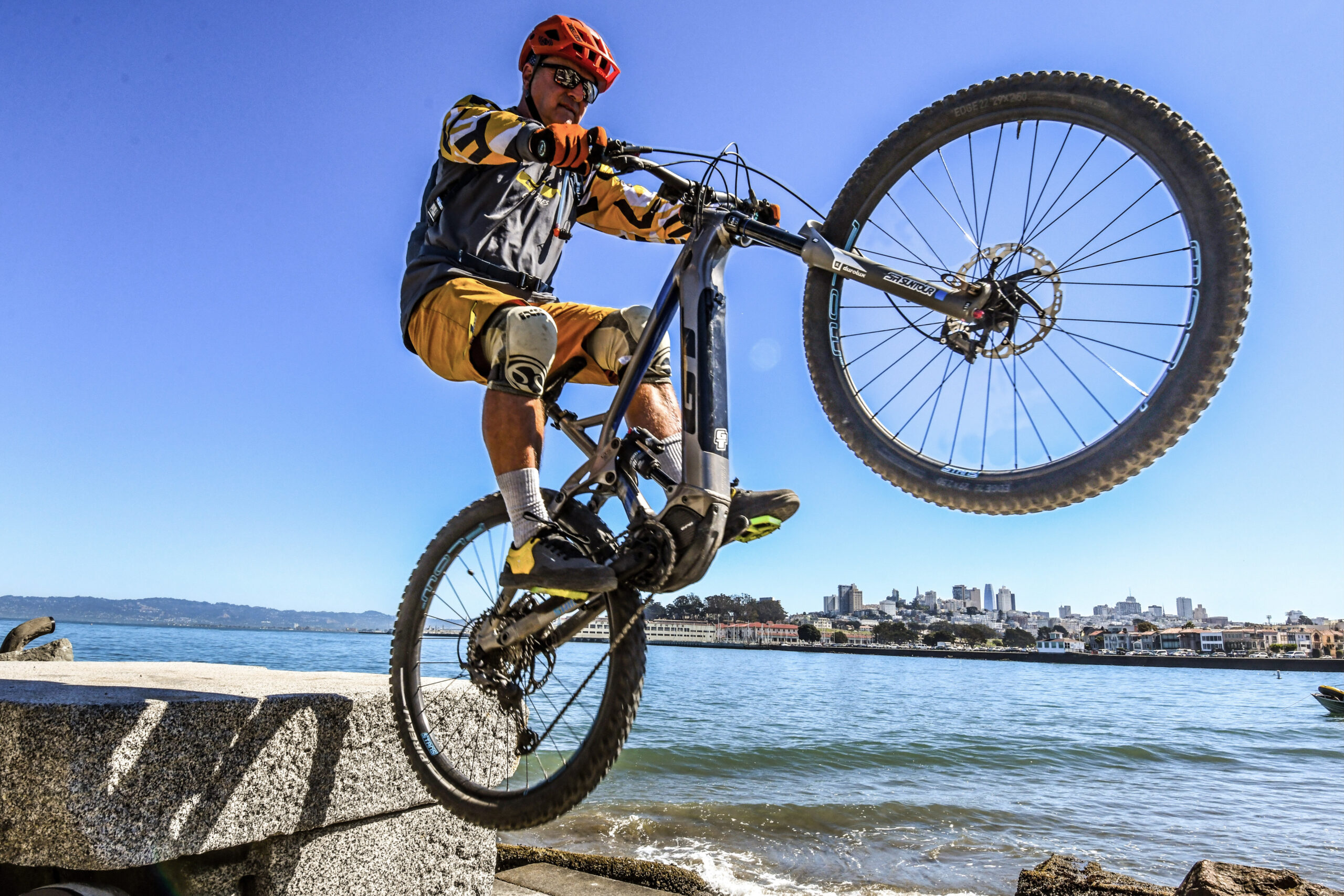
MTB legend asks if it is time to draw a line in the sand of when e-bikes become “too powerful”
An Open Letter to the Bicycle Industry
To the leaders, builders, advocates, and riders who shape our industry,
I’m writing because I care deeply about where bicycles—and electric bicycles—are headed. We are at a crossroads. The decisions we make about language, power limits, and definitions will determine whether Class 1 e-bikes remain accepted as bicycles—or get grouped with much more powerful machines that don’t belong in the same category.
It’s time to define our language and it’s time to draw a line in the sand of when e-bikes become too powerful.

Words Matter
Today, the term “e-bike” is used to describe everything from a lightweight pedal-assist mountain bike to electric mopeds and full-blown electric motorcycles. That lack of precision creates confusion—and conflict—with land managers, other trail users, parents, and lawmakers.
If we don’t define our terms, others will define them for us.
Ideally, “e-bike” would mean one thing:
A Class 1 pedal-assist bicycle with a maximum assist speed of 20 mph [in North America – Editor] , no throttle, and a motor not exceeding 750 watts of peak power.
Instead, the label has expanded to cover vehicles with throttles, higher speeds, and significantly more power. That blurring of categories puts access at risk.
Clear Categories, Clear Expectations
We need distinct names for distinct machines:
- E-bicycle (EMTB): Class 1 pedal-assist only (20 mph max assist, 750W max peak power)
- E-moped: Throttle-equipped or faster than 20 mph or exceeding 750W, incl. Class 2&3
- E-motorcycle: High-power electric motorcycles well beyond bicycle-level performance
Clear labeling should be mandatory. Every electric vehicle should visibly state its category, assist speed, and peak motor power. This isn’t about enforcement—it’s about clarity and accountability.
The 750-Watt Line Matters
The 750-watt peak limit is not arbitrary. It helps determine whether a vehicle is treated as a bicycle or a motorcycle—and whether it remains welcome on trails and bike paths.
Maximum peak power and nominal (or average/rated) peak power are not the same.
A bike limited to 750 watts peak never exceeds that output. A motor rated at 750 watts nominal can produce much higher bursts of power. That difference is significant.
Class 1 e-bikes gained acceptance because they behave like bicycles: pedal-assist only, no throttle, limited speed, and moderate power. If we allow power creep—higher torque, faster acceleration, motorcycle-like performance—we shouldn’t be surprised when access disapears and regulations increase.
We are already seeing warning signs. In New Jersey, a bill was already signed that will require insurance, registration, motorcycle helmets, and will restrict trail access for electric bikes. In California, lawmakers are working to reinforce the 750W peak limit to improve safety and preserve trail legality. These debates are not theoretical—they are happening now.
A Call to Responsibility
To manufacturers:
Resist the temptation to chase bigger numbers at the expense of long-term access. Short-term sales gains could lead to long-term collapse.
To media and marketers:
Use precise language—even when it’s less convenient. Help draw and defend the line that protects this category.
To riders:
Ride responsibly. Understand what’s at stake. Don’t take trail access for granted.
To advocates and trade groups:
Defend Class 1 clearly and consistently. The industry must self-regulate until the laws are defined.
In order to protect what we have we must stop asking how much power we can get away with—and start asking how much power is too much.
— Hans Rey
What’s the problem with power?
Why is more watts a problem? Well, it’s nothing really much to do with mountain biking rider safety or trail erosion or even the forever in the background spectre of illegal de-restriction. It’s to do with pedal assist bicycles straying too far from their original remit and raisn d’être. Namely, to add a bit of extra motor power on top of the rider power going into the pedals.
Anyone who’s ridden a DJI Avinox ebike – such as the Amflow PL Carbon – will know that it doesn’t take very many rider input watts to get the motor ro give out its much hyped 1,000 watts of motor assistance. The experience is akin to using soft-pedalling of the cranks as essentially a throttle.
It’s this ‘support ratio’ issue that the bike industry is concerned about. Although 1,000w pedal assist bikes are still quite far off things like Surron e-motos in terms of power (minimum 12,500w of peak), there’s no denying that higher and higher wattage e-bikes have the potential to stray too far from regular bicycles.
Also, it should be mentioned that Hans Rey is a Bosch ambassador, so is not entirely without skin in the game, as they say.
Read more about the e-bike power struggle.