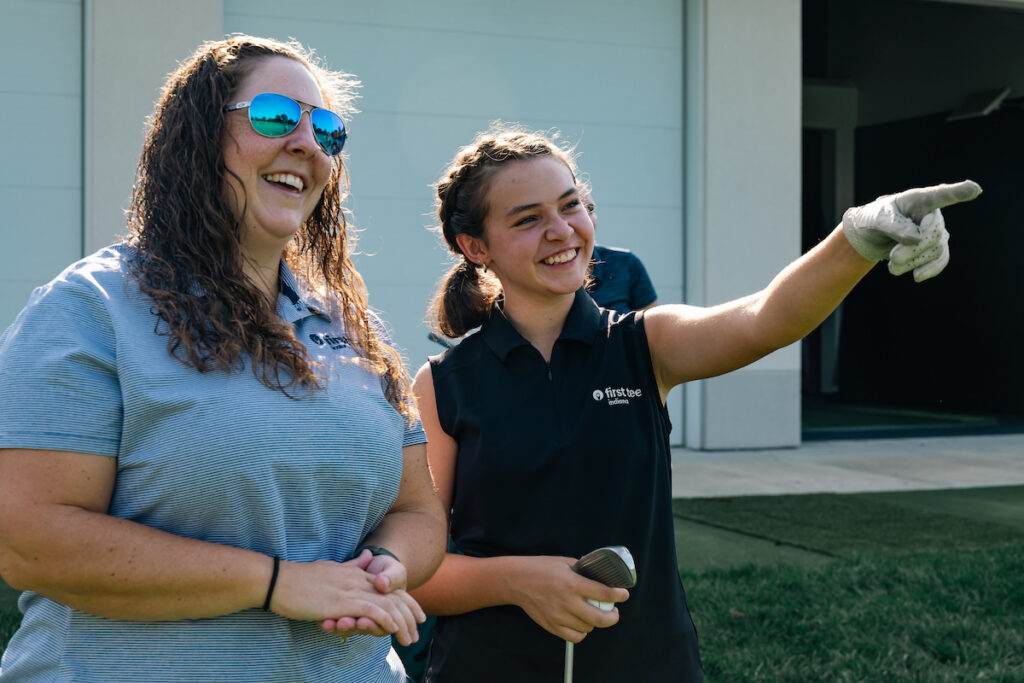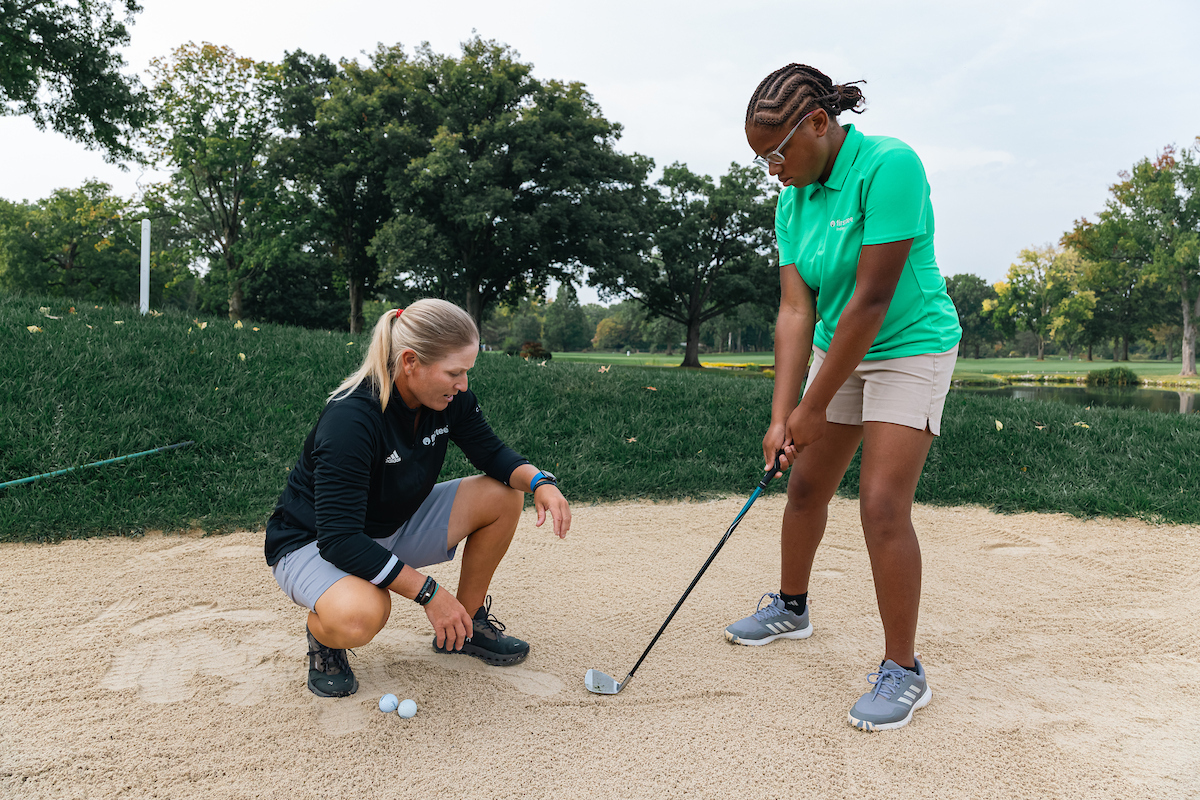
First Tee coaches feel proud when a new player launches a drive or sinks a putt for the first time. But the true magic of our program happens off the course when a participant overcomes a tough obstacle at school or when an alumnus achieves a big goal.
Those moments highlight how much mentorship matters.
A landmark 30-year study by Big Brothers Big Sisters of America found that young adults with mentors earned 20% more than their peers. The same research determined that mentorship is one of the most cost-effective youth development interventions available.
Drawing on results from over 70 program evaluations, MENTOR: The National Mentoring Partnership has found that mentoring supports improved grades, test scores and educational attainment, while also improving classroom behavior and school attendance.
But accessible mentors aren’t always easy to find
For all of mentorship’s documented benefits, access to mentors isn’t equal — and the gap is widening.
A 2024 report by MENTOR found that today’s 18–21-year-olds are 9% less likely to have had a mentor growing up compared to the Millennial generation. More than one in three young adults say they grew up without the support of any mentor at all.
The research is clear that mentoring relationships promote a strong sense of belonging, an asset that’s essential for healthy youth development. For the young people who most need a caring adult in their corner, that connection is often unavailable. It’s a gap that programs like First Tee are uniquely equipped to fill.
More than a game
According to research from First Tee and The Harris Poll, 88% of parents with coached children say their child has become more likely to speak up for themselves in other areas of life since participating in coached sports. An even larger majority — 94% — believe sports help children grow their confidence and social skills.
First Tee coaches teach participants how to introduce themselves to playing partners, and participants learn the A-L-R method for engaging in conversation:
A: Ask questions to learn about someone.
L: Listen to their response. Make sure you’re listening to understand rather than thinking of what to say next.
R: Reflect and respond thoughtfully with a follow up question or by sharing your own thoughts or feelings on the topic.
The impact of coaching lasts well into adulthood. Among parents who had coaches in their own youth, 67% say they wouldn’t be where they are today without those adults. They credit their coaches with teaching them to collaborate, lead and overcome challenges.
Most First Tee coaches are not golf professionals and that’s OK – not every First Tee participant aspires to play competitive golf, but we ask our coaches to lead by example as great listeners, cheerleaders and positive role models for the next generation.
Support First Tee’s efforts to provide quality mentors for our future leaders. Become a Donor Ambassador today.