

Updated December 18, 2025 08:24AM
Pros
⊕ Great ride quality when cruising
⊕ Premium looks
⊕ Outstanding value for money
Cons
⊗ Old school frame geometry won’t be for everyone
⊗ State components felt cheap
Specs
Size tested: S
Weight: 21.6 pounds/9.8 kg
Price: $4400
Brand: State Bicycle Company
Verdict
The State Bicycle Company Titanium All-Road offers a uniquely titanium ride feel and expensive looks, but we’d argue the frame is best suited for a custom build.
This State Titanium All-Road review is part of the Velo Field Test, where we brought 7 of the latest gravel bikes of 2025 to Maine to test them and find a winner. See prior episodes and full reviews here.
Attainably priced gear in the bike industry usually goes one of two ways. Many times, it goes for gimmicks, frills, or a featureset that makes you think the bike is far more expensive than it is. In the case of State Bicycle Company, however, the gear aims to be simple, approachable, and focus on the basics. That ethos extends to this State Bicycle Company Titanium All-Road, a bike that can credibly call itself one of the easiest ways to get into a titanium bike.
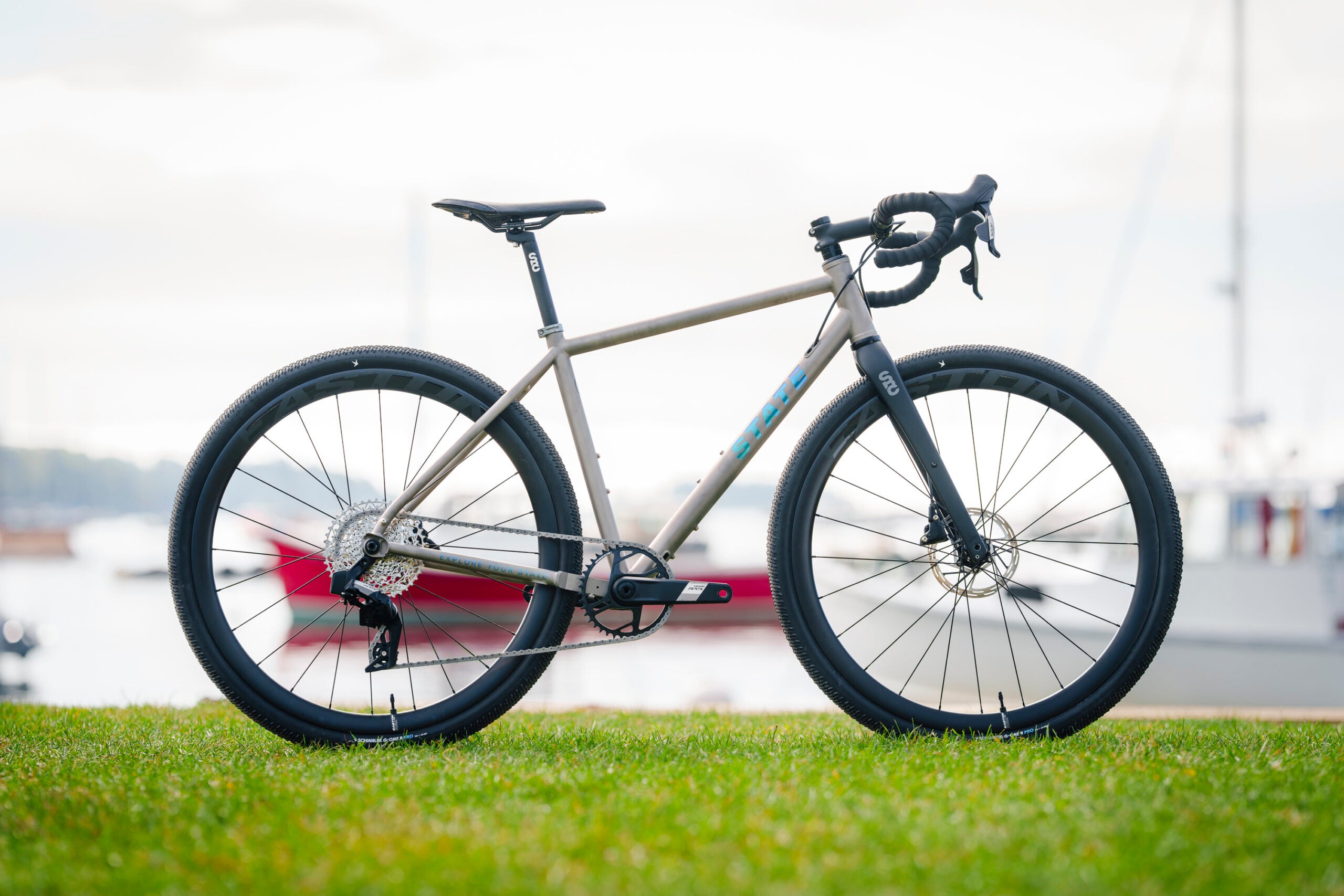
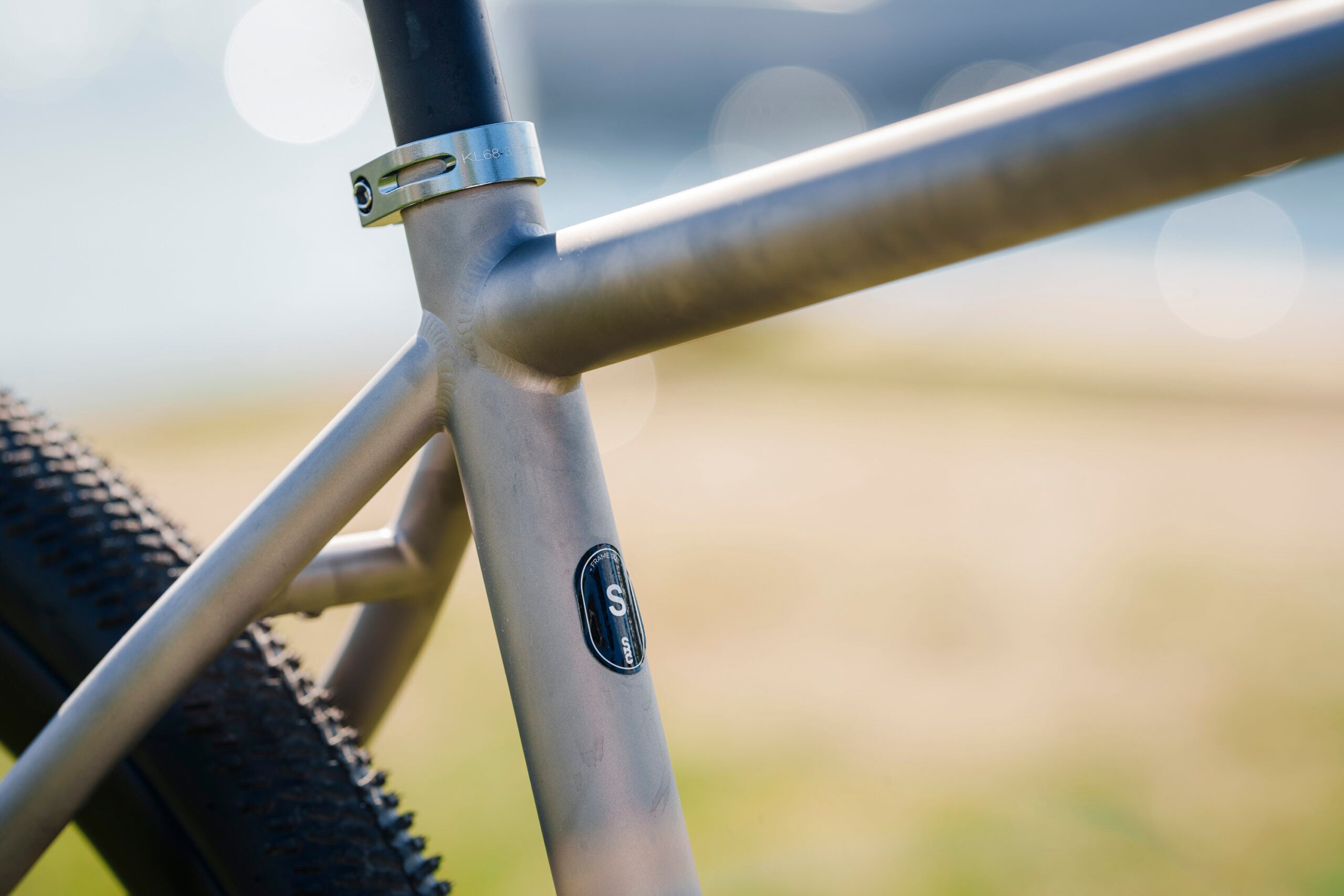
The State Titanium All-Road looks more expensive than it is, largely thanks to its titanium construction. Even then, the construction is fairly simple. State claims 3/2.5 titanium tubing TIG-welded to a 44 mm head tube, which should allow for the use of nearly any modern fork today with a tapered steerer. Those tubes are largely frill-free, with hardly any shaping to them besides the downtube ovalizing as it approaches the bottom bracket.
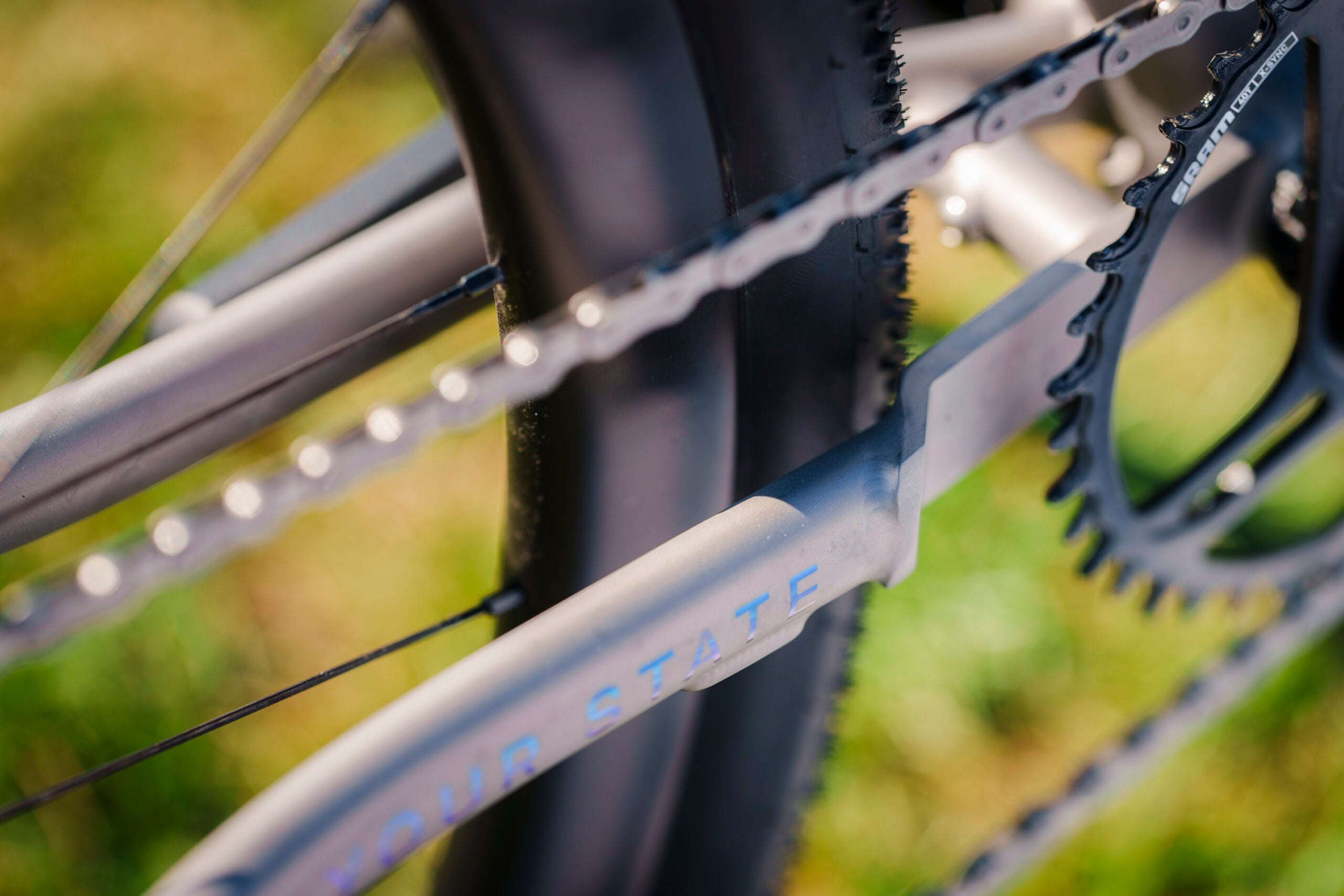
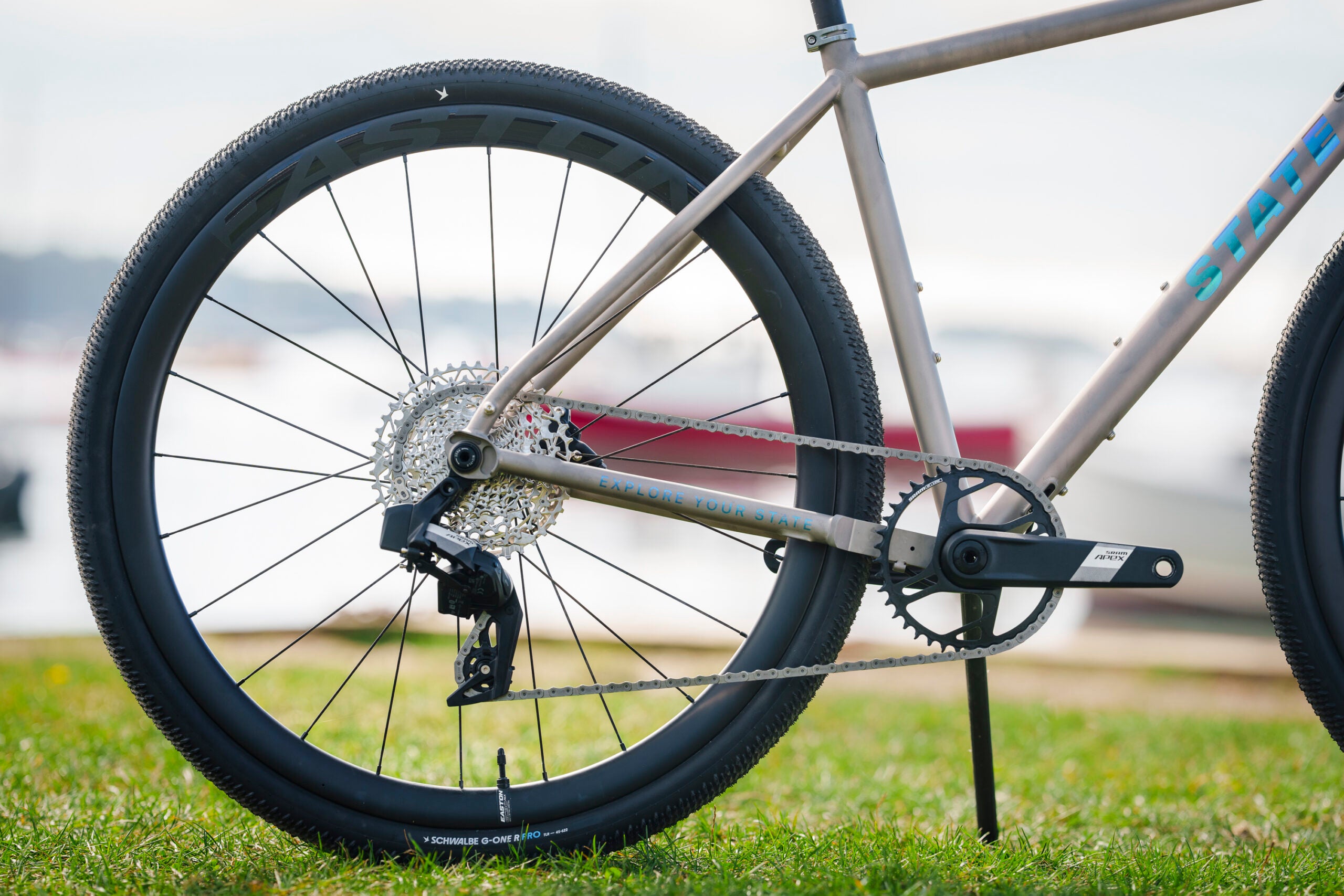
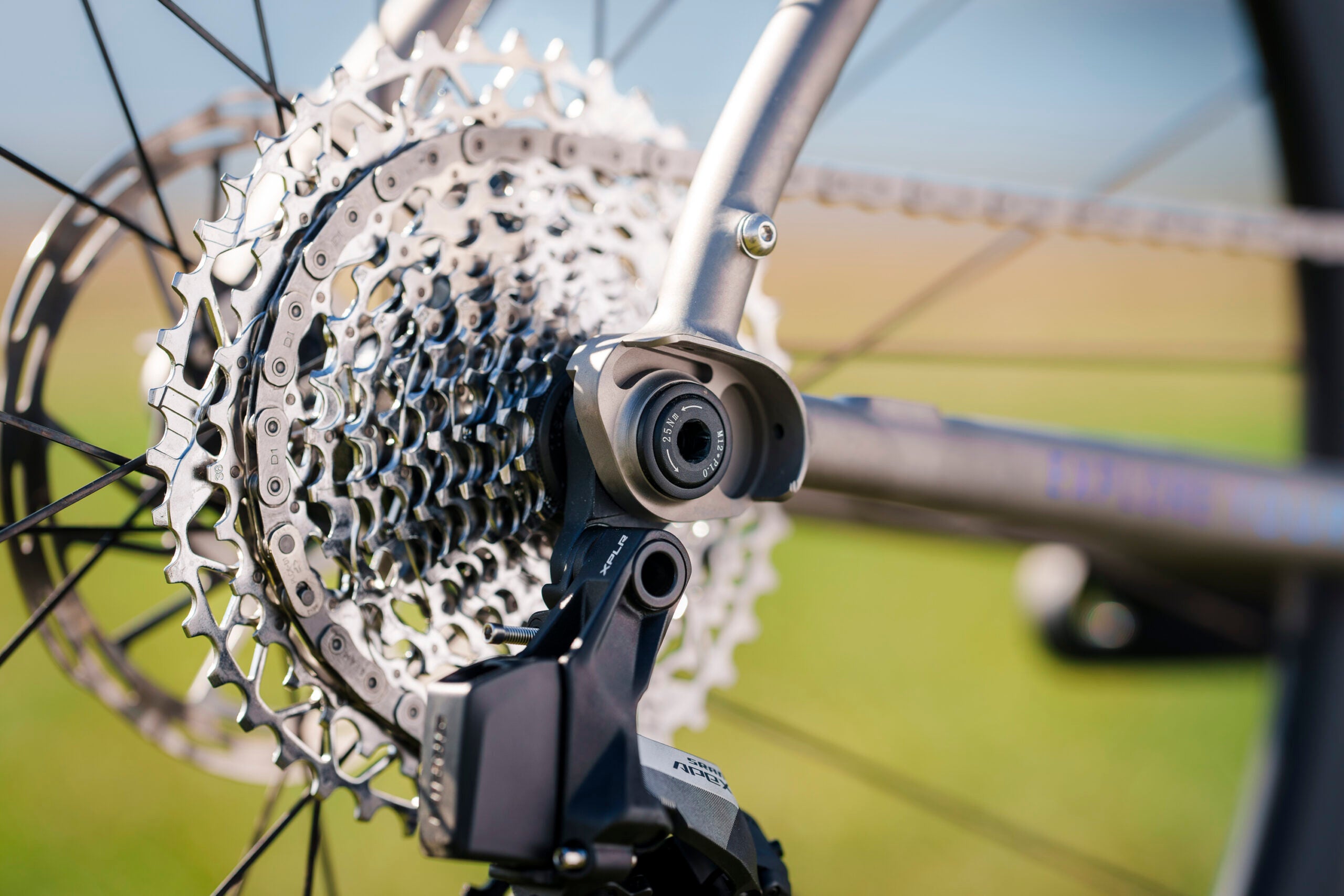
The back of the bike is a bit more impressive. There’s a UDH-compatible rear dropout here, a helpful update over the first run of these Titanium All-Road frames. The chainstays themselves get a slight S-bend, with the drive side chainstay getting a half-yoke near the bottom bracket to optimize clearance for both a big tire and a gravel-specific chainring.
To note, this is a formula that seems to really work. State Bicycle Company says it sold out of its initial run of the Titanium All-Road within a week of announcement. Hop on their website today, and it appears that select sizes and build kits sell here faster than the others. I don’t blame them. While not impossible, it is a real challenge to find an attainably priced titanium gravel bike quite like this.
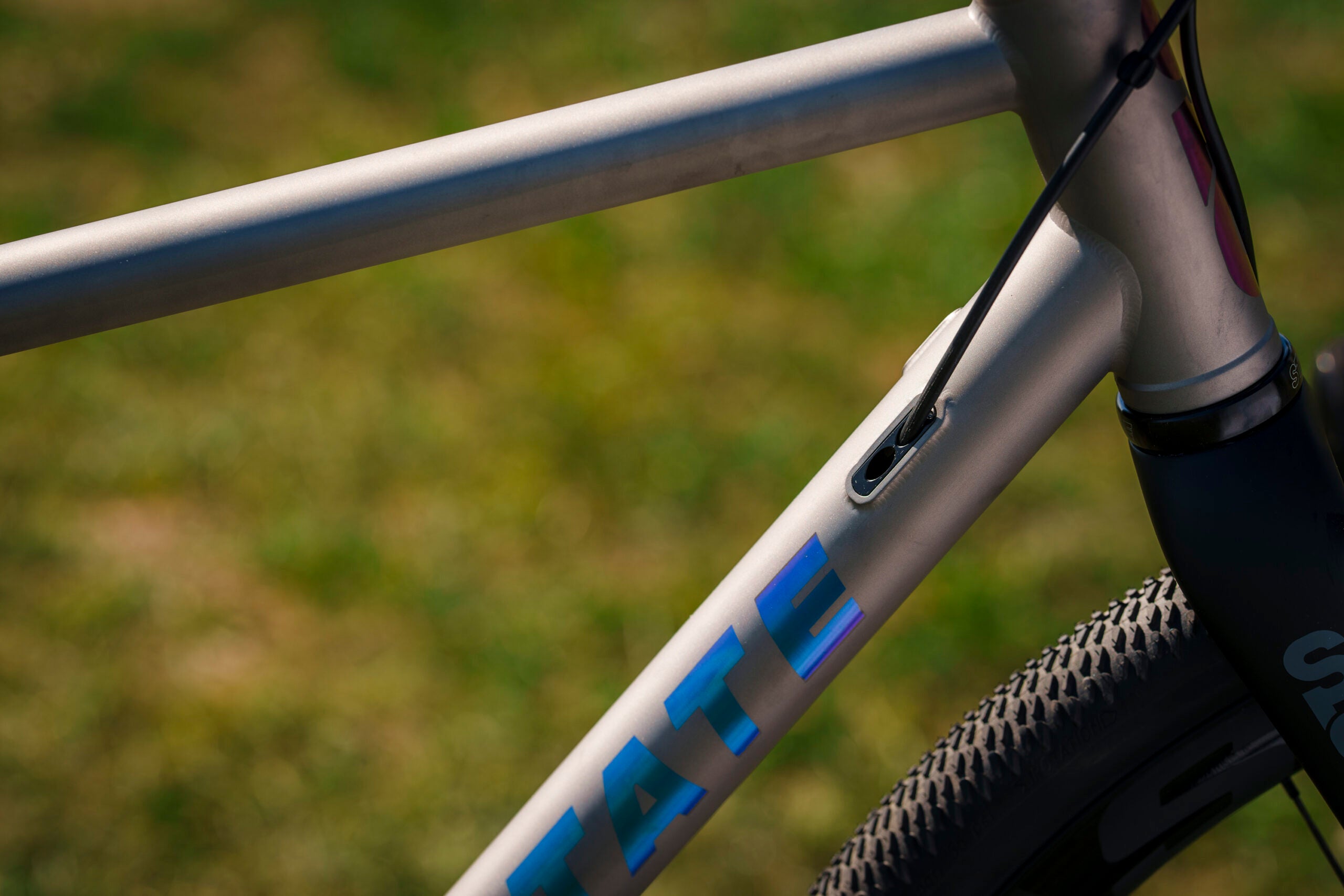
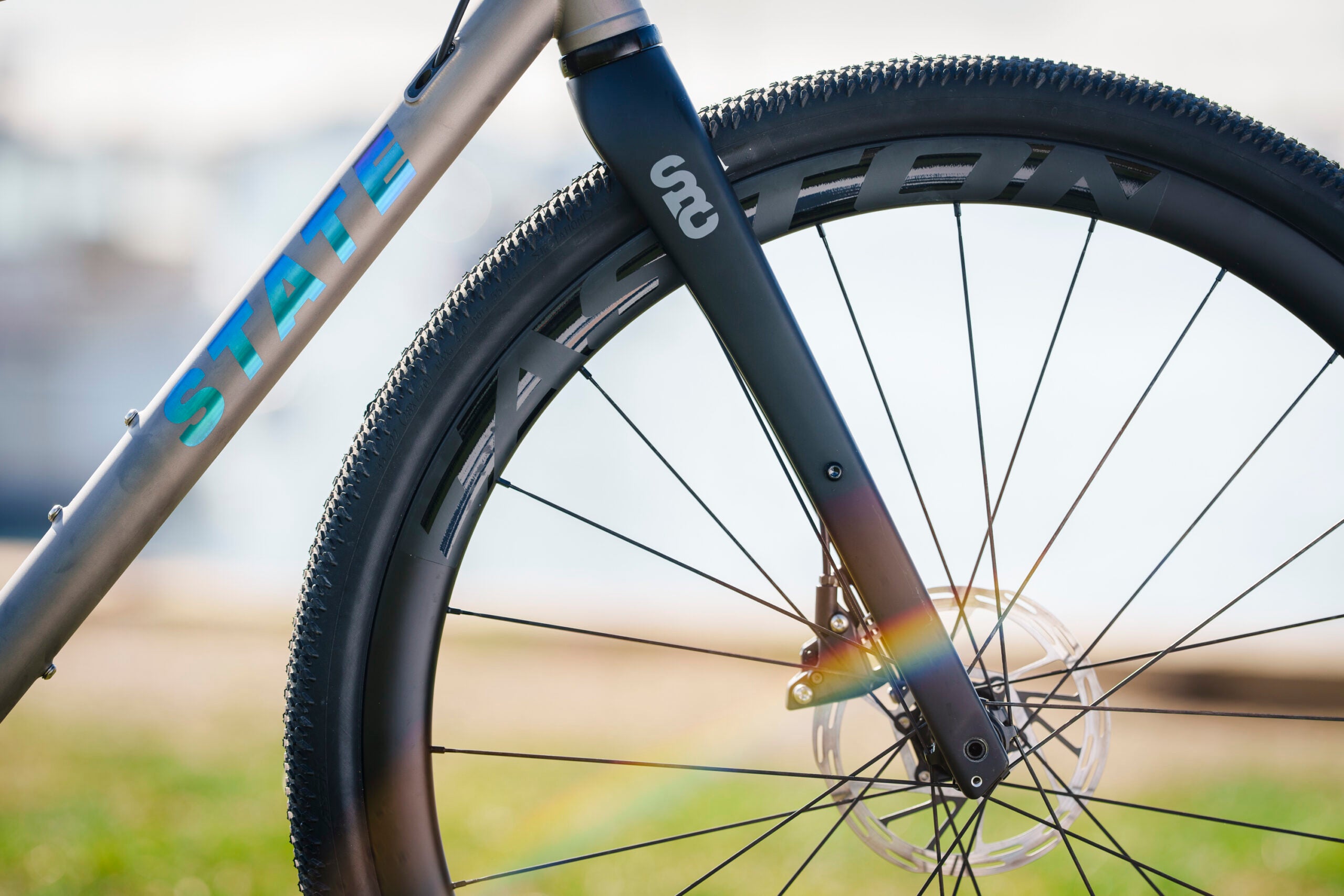
Every Ti All-Road frame offers fender mounts, three bottle cage mounts, and a matching carbon fork. State offers the ability to build the bike (or a frameset!) using the stock fork, a “Monster Gravel” fork with greater tire clearance, or a suspension fork, both at a fairly modest upcharge. The frame is finished in that classic raw titanium look, though the logos get a colorful physical vapor deposition (PVD) finish rather than the anodization one might find on more expensive titanium bikes.
State claims the Titanium All-Road has a max tire clearance of 700c x 53 mm, or 650b x 2.25”, strong numbers against the rest of the gravel bike market. Unlike most of the market, however, cables and hoses are routed externally until they hit the downtube. All framesets are compatible with both 1x and 2x drivetrains, as well as electronic or mechanical drivetrains and internally-routed dropper posts.
Frame geometry is, again, fairly frill-free. Each of the five sizes is what I’d call traditional in its geometry: high stack, short reach, higher trail figures, a tall bottom bracket, and a slack seat tube angle. While I said this bike “won’t necessarily be a straight line cruiser” when the bike was first launched, we came to find that that’s exactly what the bike is best at.
State Titanium All-Road specs
What we like about the State Titanium All-Road
The most obvious thing we like about the State Titanium All-Road has to be that it’s a bargain. The bare frame at $1,499 is genuinely impressive. While we have our qualms with the base build kit, getting a titanium gravel bike at $2,499 is impressive still. Even our complete build, which featured an upgraded SRAM Apex XPLR AXS drivetrain and Enve AG25 carbon wheels, still felt like a bargain. That deserves to be commended.
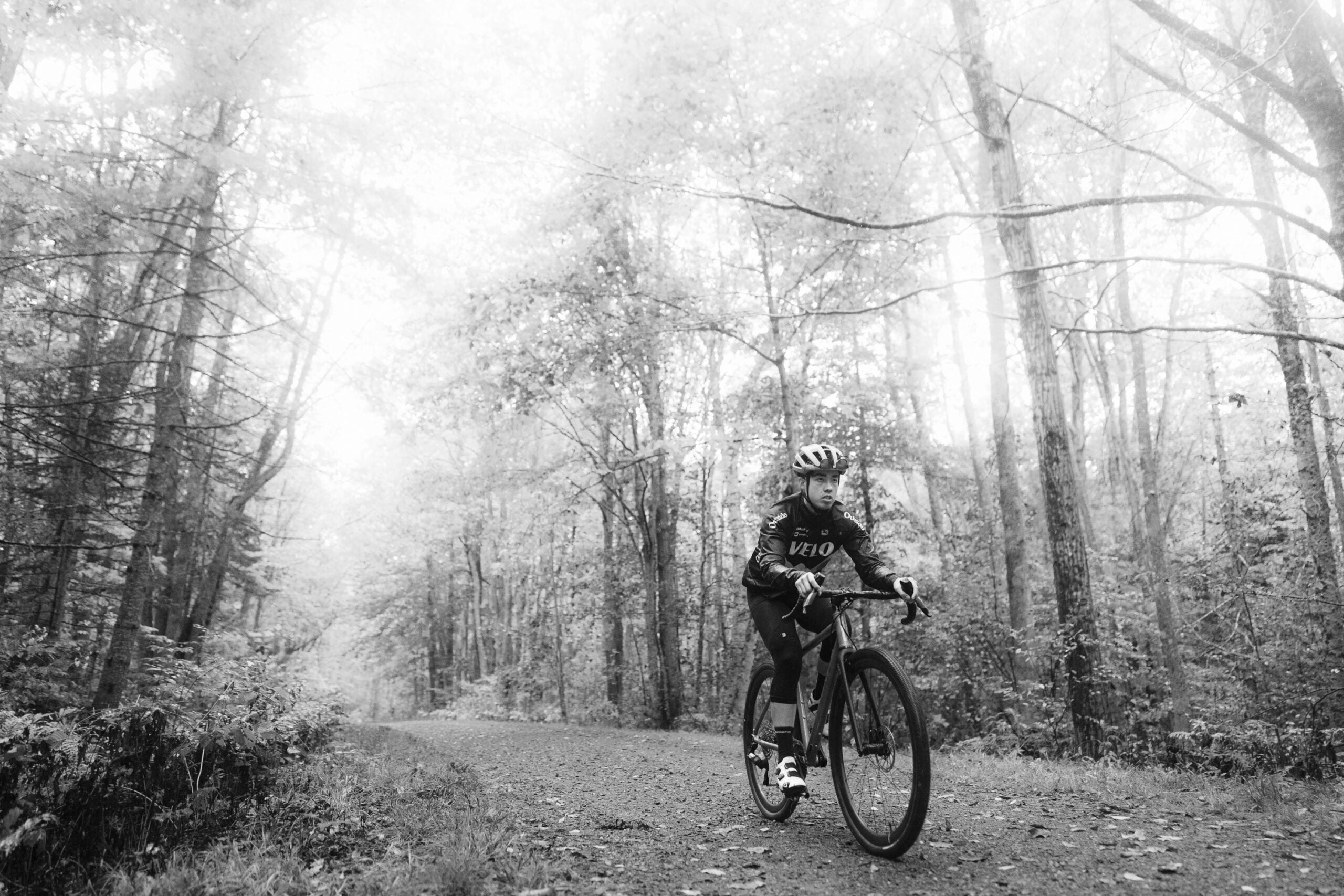
Regardless of how the bike is built, however, the key characteristic you’ll notice is that this is a cruiser. The Titanium All-Road offers the smooth ride one might anticipate from titanium. When riding the bike at a 7/10ths effort, the bike settles into a rhythm and feels truly unique against the other bikes.
That uniqueness comes from feeling completely different from the rest of the bikes. There’s some flex and spring side to side as you pedal the bike, and less buzziness at the handlebars on washboards than you’d find from the likes of the Orbea Terra or Pinarello Grevil F. However, the Titanium All-Road shouldn’t be classified as having an especially comfortable, cushy ride. Bigger hits get transmitted to the rider more obviously than the carbon alternatives here. We suspect part of that could be aided by using a carbon seat post rather than the aluminum one here.
Turn-in feels absolutely appropriate to the bike, at least at that 7/10ths or below effort mentioned earlier. Turn in at a more sedate pace is stable, not especially quick, and certainly easy to grasp. It’s a bike for folks whose group ride is more social than hammerfest, party pace than competitive.
We dug the finish of the bike, as it helped the bike appear more premium than it was. Bead-blasted titanium will almost always be associated with feeling expensive. The PVD graphics give the bike a signature look that, according to State, should be tougher against scratches and wear while still offering a shiny, bright look. Welds look even, everything screws in together nicely, and the basics of the package inspire confidence in the long term-durability of the frame at least.
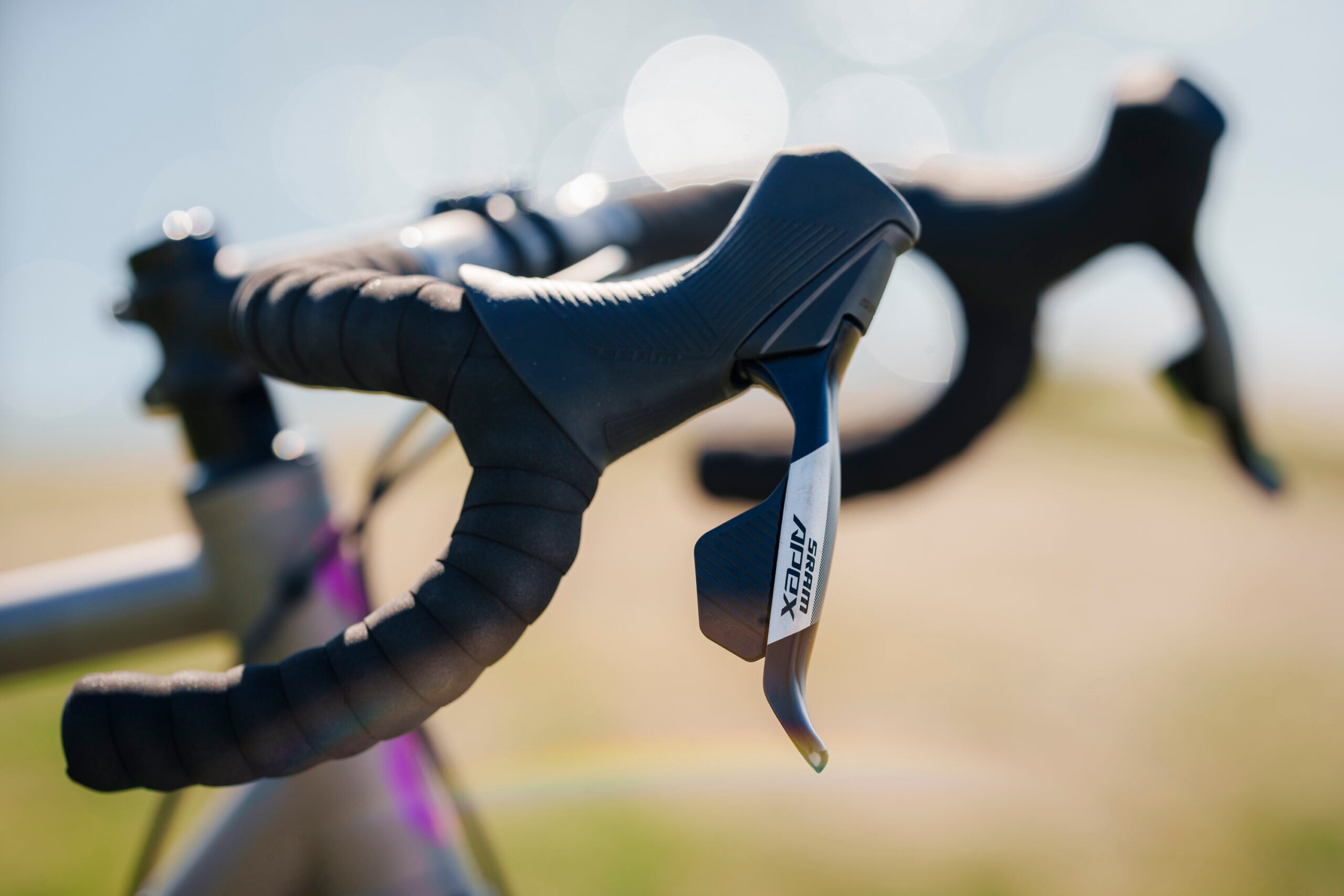
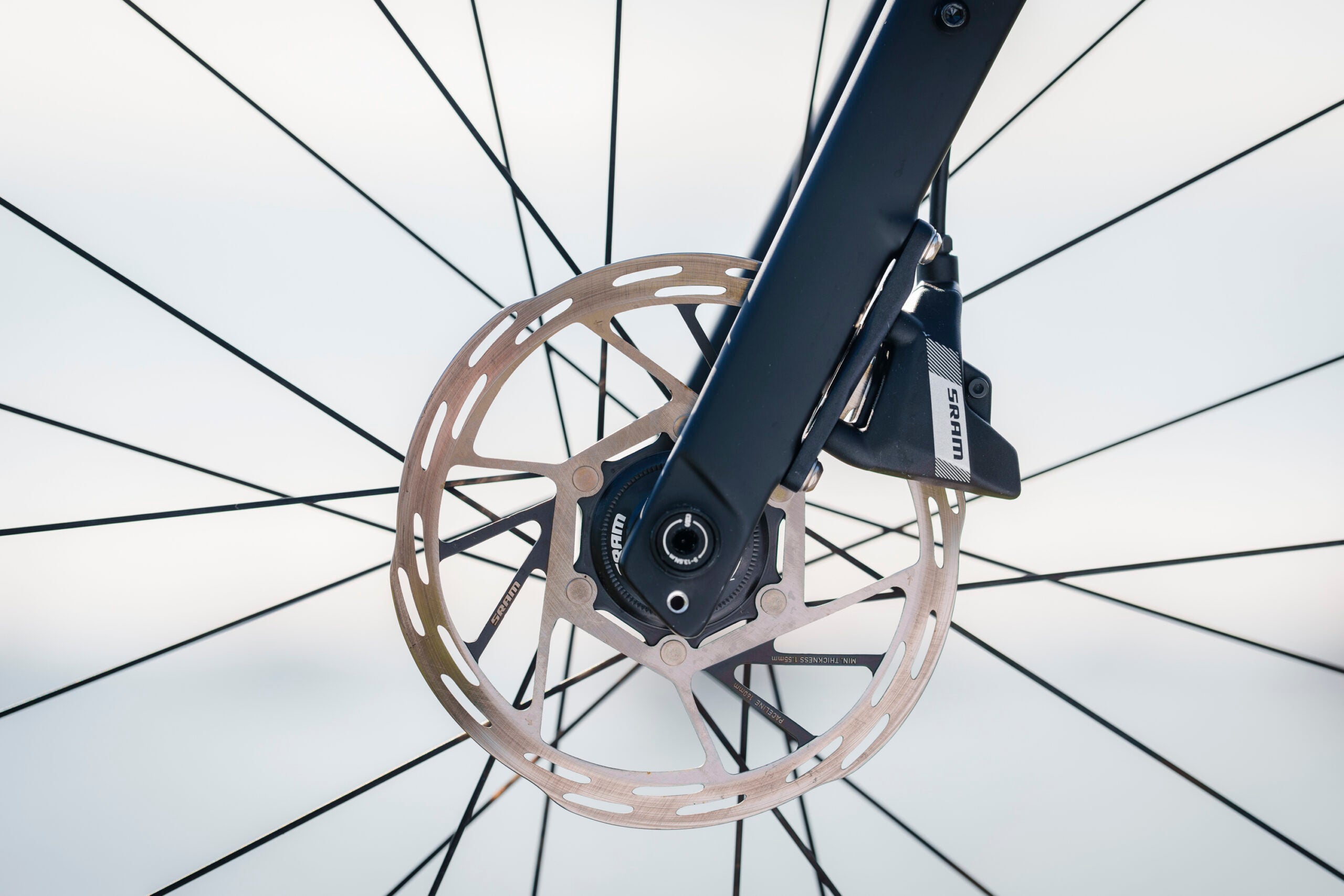
On that note, the SRAM Apex XPLR AXS drivetrain works great. Braking isn’t up to the lofty standard set by the newer SRAM Rival E1 brakes in the field test, but it offers plenty of control and peak power. Shifting is reliable, precise, quick enough, and a massive upgrade over State’s own gravel groupset we experienced on the 4130 All-Road. And while we didn’t spend much time aboard the Enve AG25 wheels, they’ve proven to be reliable and easy to recommend.
What we don’t like
Let’s just get this out of the way: we didn’t care for the components. The handlebar, stem, seat post, and saddle are shared with the 4130 All-Road, a $1,000 gravel bike. While it feels entirely appropriate for that bike, the components felt awfully cheap, even considering the price.
Most of our qualms came with small stuff. Both our other tester, Hannah, and I found that the stem bolts would scratch our inner thighs when standing out of the saddle. The saddle was immediately deemed the least comfortable of the test, lacking support from shape or foam thickness. Oddly enough, the rear thru axle on our bike lacked any type of washer, too. This meant that we were tightening the thru axle directly against the titanium dropout every time we installed the rear wheel. Titanium is strong, but this felt like an oversight.
These things are fairly small and easy to replace. Nonetheless, there are noticeable quality-of-life issues on a bike that feels and looks the part most of the time.
Even with the SRAM Apex AXS drivetrain, control Easton wheels and Schwalbe tires, and a fairly reasonable claimed frame weight of 1870 g in a size M, the State Titanium All-Road is surprisingly heavy. All told, it weighed in at 21.6 pounds/9.8 kg in a size S, nearly two pounds heavier than the next heaviest bike in the test. We’re not quite sure where that weight is going, however, as we were unable to weigh just the frame or components separately.
I hesitate to call it a clear pro or con, but the handling felt a bit old school, like early steel gravel bikes. The short reach, paired with an average wheelbase and long chainstays, makes the front end quite sensitive to weight distribution. The long-for-the-test 100 mm stem can calm things down, but we found the Titanium All-road understeered when really pushed. You can force it to turn by leaning on the bars, but that also requires a lot more commitment to countersteering, as we found the bike tended to dive into corners when pushed hard.
All of that to say that the State Titanium All-Road is better suited to cruising. Owners will likely get used to how this bike handles, but it didn’t make us feel confident in pushing it further.
Livability
This one is easy, as we feel the State Titanium All-Road is the easiest bike to maintain in the Velo Field Test. Everything is standardized here – even the UDH dropouts! – meaning that theoretically, you have a wide array of aftermarket options to choose from without being locked into the company’s component ecosystem.
Everything about this bike is straightforward. As mentioned, the 44 mm head tube gives owners compatibility with nearly any fork you want, State or otherwise. The BSA threaded bottom bracket is easy to install and service with minimal bike-specific tools. There’s a round 27.2 mm seat post and an aluminum seat post clamp. The only trouble spot might be the internally-routed brake hose at the downtube, but we’re willing to live with that.
Even still, we have to mention a couple of negatives here, namely around those small parts. As mentioned, they’re going to be easy enough to replace, and fairly inexpensive too. For us, the State-branded components would be the first things to go, in which case you’re still left with a bike that feels like incredible value.
Who is this bike for?
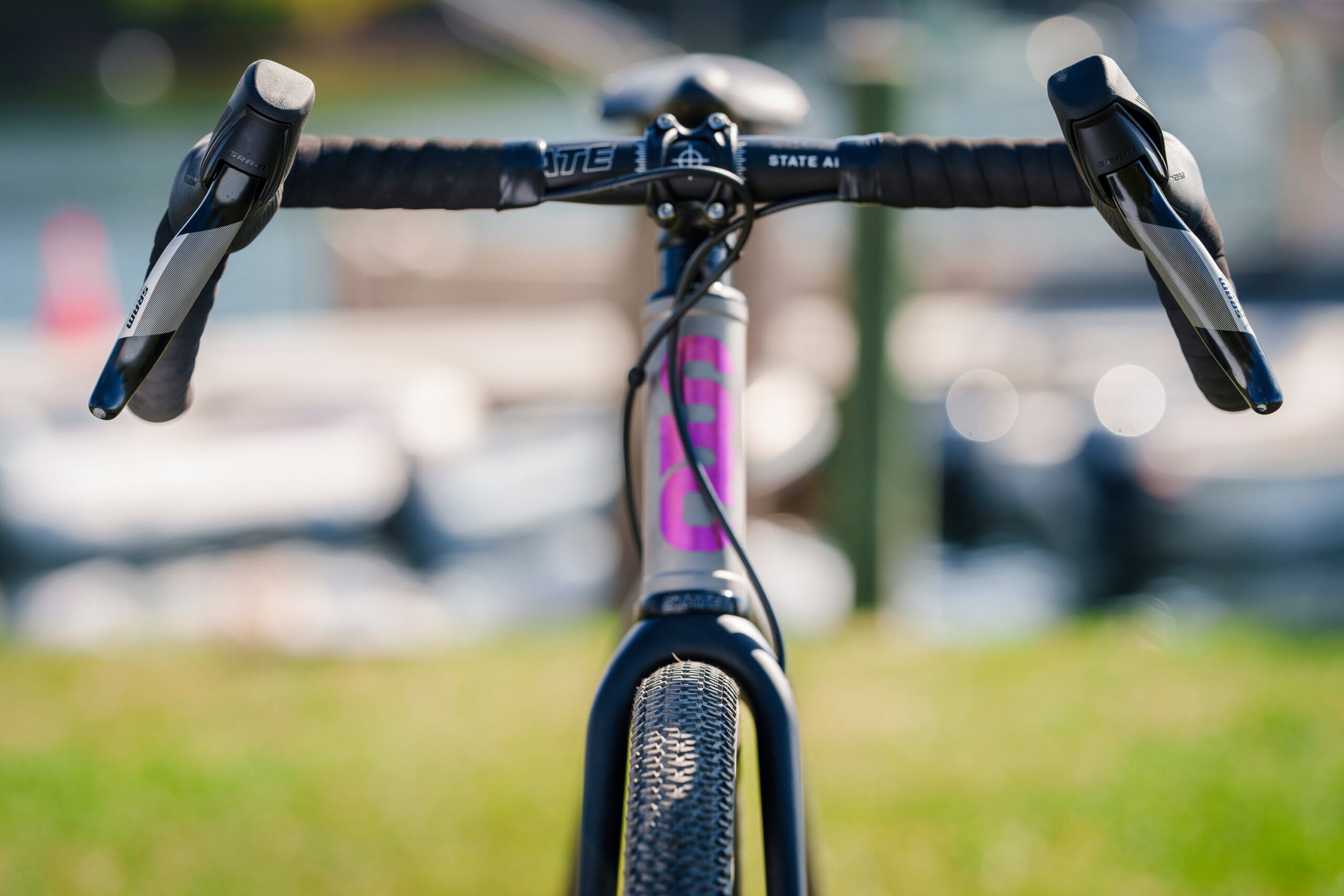
The State Titanium All-Road gravel bike is for someone who wants to stand out from the ocean of carbon gravel bikes out there. Against the sharp lines and big tubes of the other bikes in the field test, the Titanium All-Road looks expensive, purposeful, and built to last. The bike rides far different than the competition, too. It’s a real cruiser at a 7/10ths pace or less, making this an outstanding value for most gravel riders.
As one might expect, however, some tradeoffs come with a titanium gravel bike at this price point. If you’re coming from a modern carbon gravel bike, you’ll find the State Titanium All-Road simply requires a different mindset than the others. It’s most rewarding to ride when you’re exploring and have nowhere to be, and the well-rounded facade fades a bit when you need to hustle it.
However, we’d argue that the best way to experience State Titanium All-Road is as a frameset. Build it how you want from the start, and you’ll be rewarded with a bike that will feel as expensive as it looks.
Gallery
This review has been updated for clarity.