
Updated March 31, 2026 03:20AM
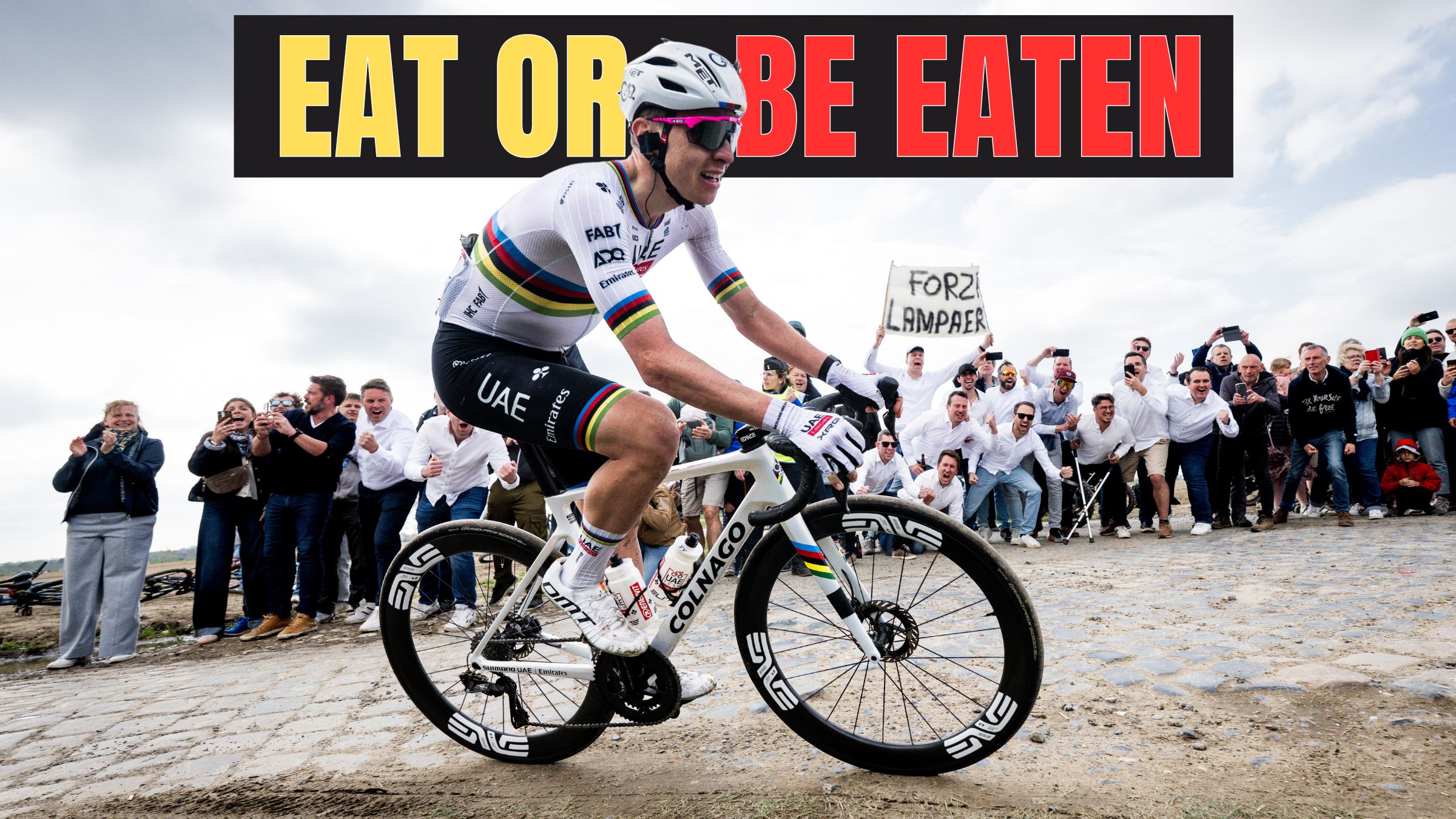
High-carb fueling pressed fast forward on the cobbled classics, and now Tadej Pogačar and Mathieu van der Poel are pressing fast forward on high-carb fueling.
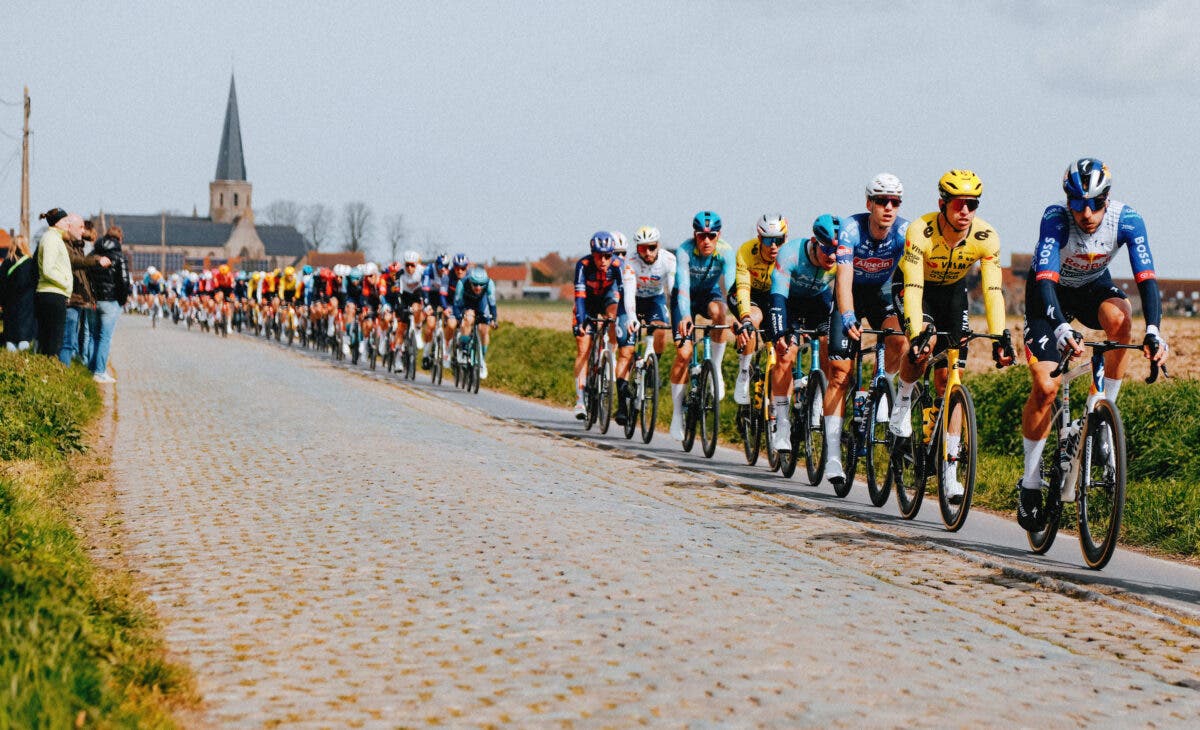
The wild new era of one-day racing has made the peloton a freight train that is fueled with 500 calories of carbohydrate per hour, from zero hour.
Carb-loading techniques, supplement stacks, and even feed zone strategies have been dragged into a new dimension by a Mad Max take on monument racing.
Visma-Lease a Bike nutritionist Gabriel Martins told Velo that the paradigm has shifted as fast as the racing.
“Racing has changed dramatically in the last few years, with how it’s so hard from the very start. And that’s totally changed the way teams and performance departments look at fueling, too,” he said. “No one wants to take any risks.
“Everyone has to start a race as if they’re going in the breakaway – they’re fueling to the maximum from the start. It’s the only suitable approach with how things are now,” Martins said on a recent call.
For all but the select few, the upcoming Tour of Flanders and Paris-Roubaix double-header is a fight for survival.
Carbohydrates are their life raft.
The Pogačar effect
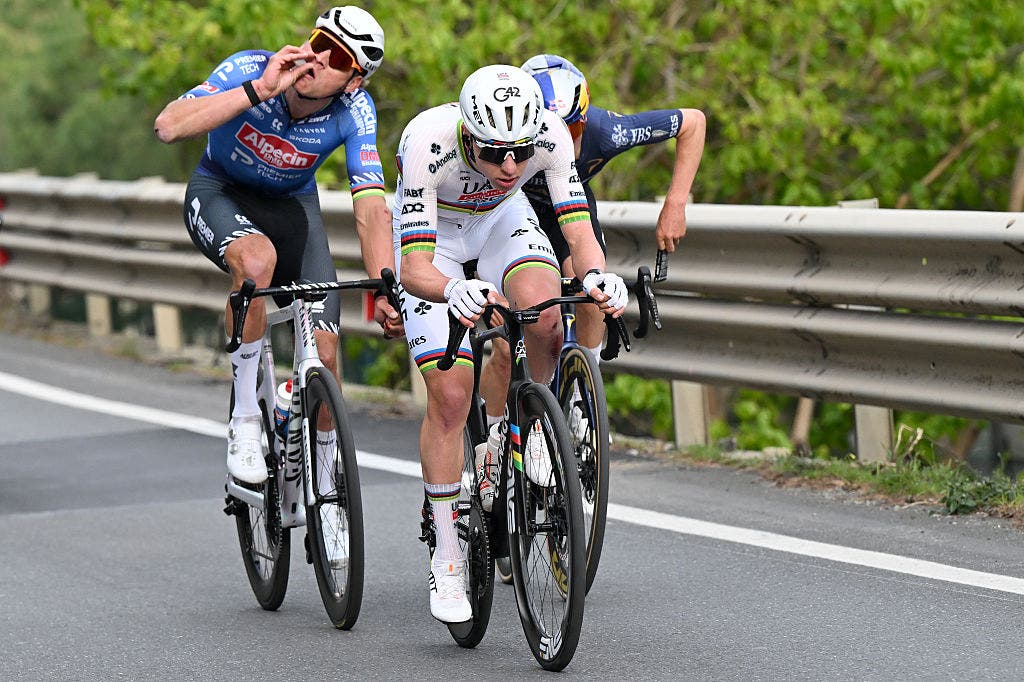
Van der Poel and Pogačar pushed the high-speed evolution of cycling to a different level in the northern classics.
Racing is wild from kilometer zero as outsiders battle to “anticipate” long-range attacks from these cycling superheroes. In the group of favorites, the battle for Pogi’s wheel is like a bar brawl.
This “Pogačar Effect” has joined advances in aerodynamics, tire technology, and training to push the accelerator on spring’s toughest races.
Gent-Wevelgem was raced at record speed on Sunday. Likewise, the past three editions of both the Tour of Flanders and Paris-Roubaix were the fastest on record.
Pogacar rocketed De Ronde to a new mark of 45.0kph in 2025. Van der Poel took the speediest trip through “Hell” when he romped to victory in 2024 at 47.8kph.
A new approach to high-carb fueling
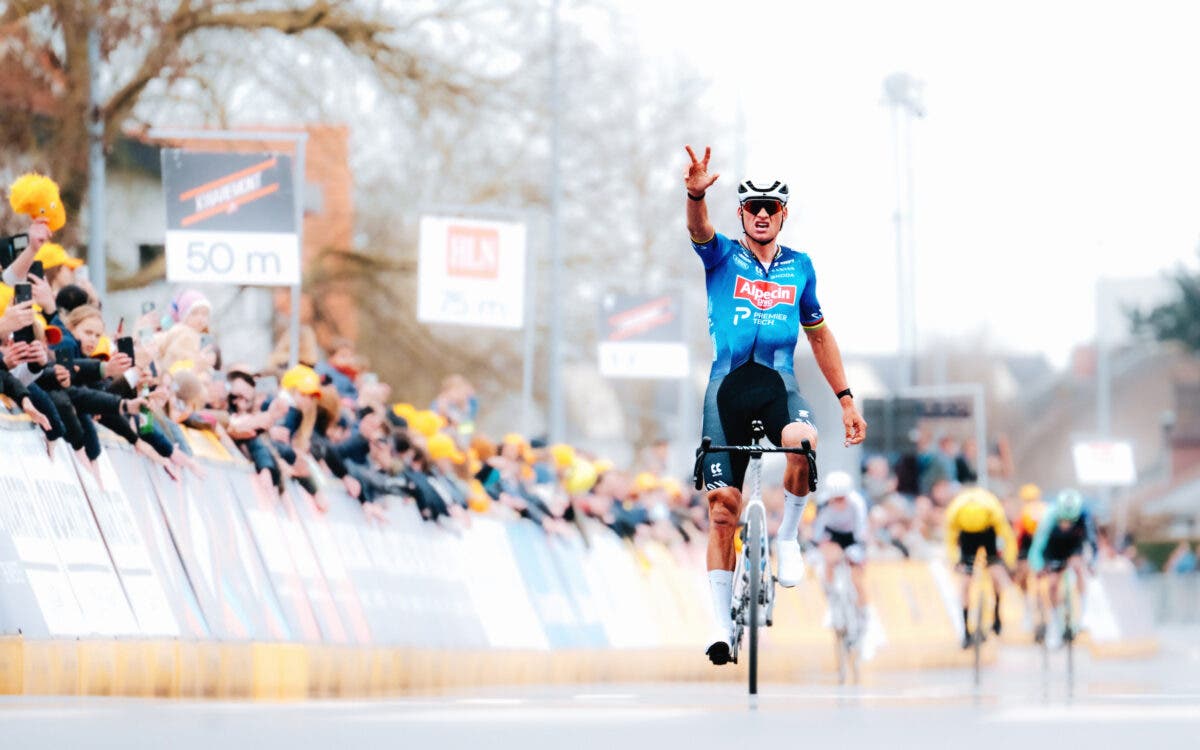
The numbers spilling out of the E3 Saxo Classic lay bare how harsh the cobbles have become.
MVDP pushed 446 watts (approx 6 w/kg) in the final 90 of the “Mini Flanders”. The power file from Jonas Abrahamsen’s 6,000-calorie sufferfest was so top-heavy it made my turbo trainer wince.
More than 50 minutes above 510 watts? Ouch.
Fueling strategies have had to shift to feed this raging classics beast.
“We have to use the most aggressive fueling and supplementation possible with the way guys like Pogačar are making races,” Jayco-AlUla trainer Peter Leo told Velo.
“When it’s so hard, you have to use every tool available.”
However, fueling these crazed classics doesn’t simply mean “more.” Multiple team nutritionists have told Velo that riders are accepting that 120g of carbohydrate per hour is typically the maximum.
A brief trend for experimental “hyper-fueling” is only for those with guts of steel.
Instead, carbohydrates are front-loaded and intensified.
Riders start guzzling gels as soon as they’ve clipped in for races that could be broken open before they’ve even seen a cobblestone.
“It’s unlikely now that any rider doesn’t go with 120 grams per hour from the very start,” Martins said. “That wasn’t the case just a few years ago. Fueling the first hour might have been more moderate as riders are already loaded with glycogen from the days before.”
But 120 isn’t a fixed number. It’s flexed to “fuel the work required.”
Tudor Pro Cycling nutrition expert Tim Podlogar explained on the Knowledge in Watt Substack how riders might venture higher in anticipation of the most decisive moments of racing.
Think an hourly rate of 120g, 120g, 140g, 140g, 110g, 110g, for example.
It’s a carbohydrate pyramid that peaks for cruelest cobbles and most horrid Hellingen, and ensures riders can bulldoze through the final.
High-carb fueling in small packages
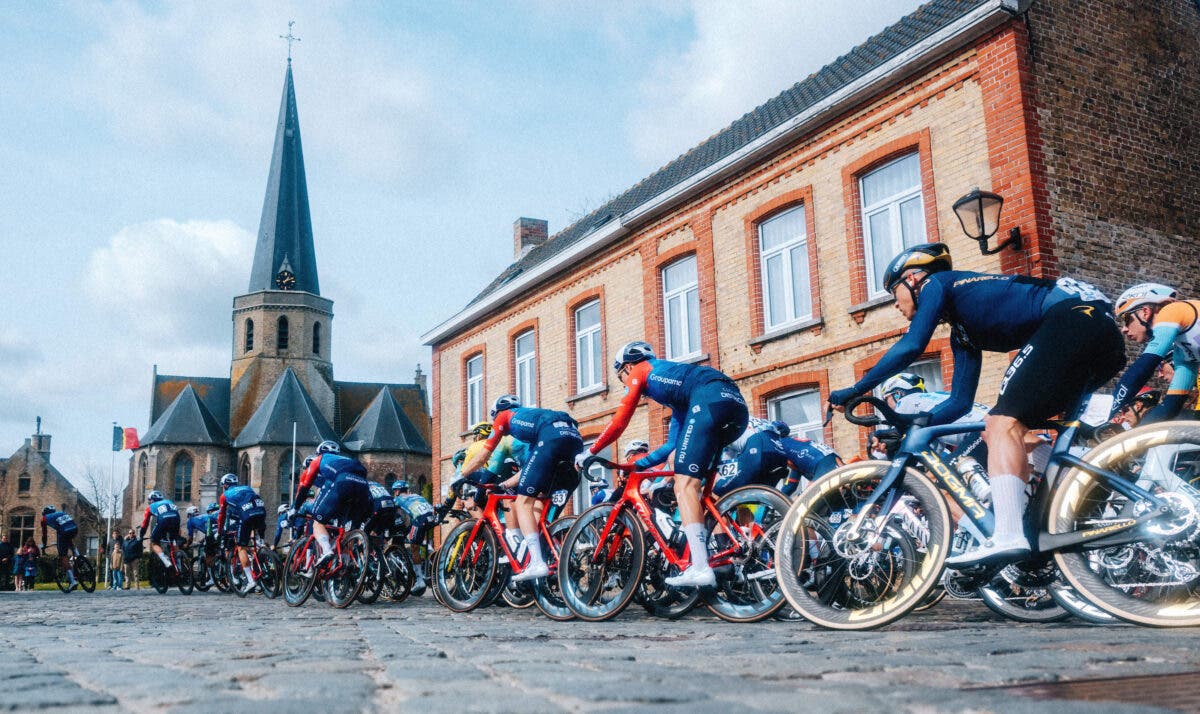
Fueling hard and fueling early also makes riders less reliant on hazardous feed zones.
Compared to the calm and typically uphill bottle points of a stage-race, feed zones in a northern classic are a 400-watt lottery.
Riders face the grim reality of missing a hand-up in high-speed picnic points that might be littered with street furniture or ride as smoothly as a farm track.
Frozen, wet fingers mean a bottle isn’t safe until it’s stowed.
There’s no guarantee a team car will be on hand to provide emergency (and potentially sticky) rations either. Staffers are stretched thin as they support mechanicals and navigate narrow lanes.
Visma nutritionist Martins explained teams manipulate their drinks to ensure any hand-up a rider does keep hold of is saturated with speed-bringing sugar.
“We always plan to maximize what we can achieve at every bottle point. We get as much carbohydrate as we can into the bottles, and pass up as much [sport nutrition] as we can,” Martins said.
“So, instead of bottles with 30 or 40 grams of carbs, we increase that up to 80 or 90 grams. We can’t really go higher than 90 because it’s so risky for the gut.”
Nutrition brands are pumping out drink powders that can be dosed to provide anything between 30 and 90 grams of carbohydrates per bottle.
In the modern Tour of Flanders and Paris-Roubaix, maximal concentration is the only concentration.
Fewer bonks, more speed
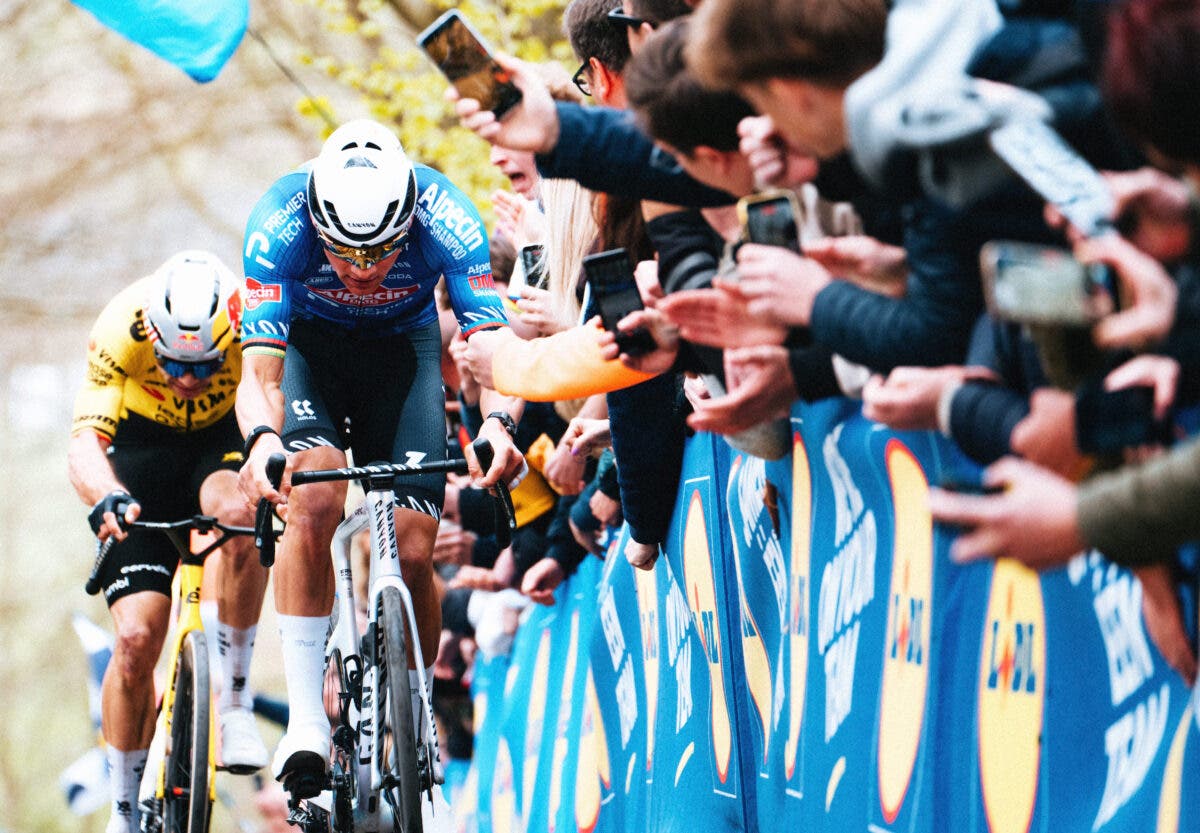
It was a rare sight to see Van der Poel on the verge of a “bonk” when he secured his heroic against-the-odds victory at E3.
“The hunger knock” has been all but eliminated in a peloton that’s wired on sugar.
In fact, there hasn’t been a high-profile blow-up since Pogačar all but lost the 2022 Tour de France when he turned white and pasty on the Galibier and Granon.
Martins said his “Killer Bees” barely go near a bonk.
“The last five years or so, it’s become very rare. Everything is so maximised now, from the carb loading in the days before to the breakfast and then the sport nutrition,” he said.
“One big difference is that we really know how to get the carb load right now. I’d say that having your glycogen stores fully topped up before a race is probably the highest predictor of performance.
“We see a very big difference between fueling very high but not being fully loaded before a race and fueling high on top of full glycogen stores,” Martins said. “The outcome can be completely different.”
The peloton sped up during the “carbohydrate revolution.” Now riders like Pogačar and Van der Poel are forcing the bunch to adopt – and adapt – its lessons.
It’s a positive feedback loop of racing aggression and feeding intensity.
“We’ve learned so much that riders don’t really bonk now, even at these super high intensities,” Martins said. “Everything is maximised.”
Beyond high-carb fueling: Bicarb bombs and mystery bottles
Another thing stopping riders from blowing up?
Supplements, both before and during the race.
Sodium bicarbonate and beta-alanine have been go-to ergogenic aids for decades. Only now, like everything else, their use has been studied and perfected to the point that they can be overloaded in the classics.
“Riders go pretty hard on supplements and carbs in one-day racing to compensate for the intensity,” said team Jayco staffer Leo. “Even more so since guys like Pogačar started to do what they’re doing.”
As an example, Leo explained that riders all use different bicarb-loading protocols to suit the sensitivity of their stomach.
Some may “load” this muscle-acidity buffer over several days; others might go one-and-done the morning of the race using new stomach-safe hydrogels and carb mixes.
The brave go full-send with a mid-race bicarbonate bomb – typically taken as a pill or gel – to take the sting out of the 800-watt attacks.
What are you drinking? Don’t ask
But of course, bicarbonate gels, anti-cramp shots, and caffeine pills are simply the supplements that are openly talked about. They’re safe, legal, and over-the-counter.
Out of the spotlight, the “finishing bottles” that have been mythologized since the times of Merckx still lurk in the shadows.
Leo revealed these mystery vials are not just an old wives’ tale. These circumspect shots still lurk in the jersey pockets and team cars of the Pogačar-era peloton.
They’re typically a cocktail of painkillers, stimulants, caffeine, and who-knows-what, and pack more punch than the generous Vodka Martini.
“They’re generally a high sugar, high-caffeine concentration with some stimulants to improve alertness for the final,” Leo said.
“Paracetamol is also quite commonly used, which is a real grey area. It can have really negative side effects when used at high effort,” he continued. “Taurine also sometimes goes into these bottles, and is well proven to be effective.”
And what happens beyond the finish line?
Don’t get us started on the cherry juice, ketones, protein shakes, and salmon tablets …