
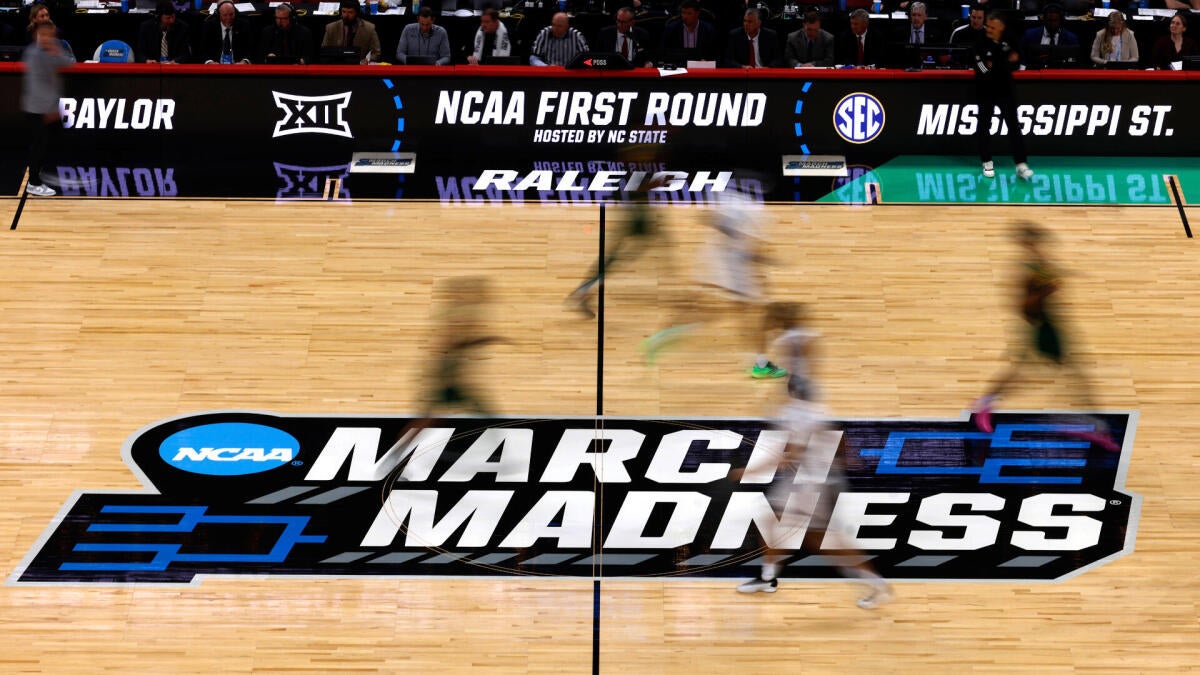
Don’t be surprised to see some potential nonconference rematches in the second round of the NCAA Tournament bracket when the field of 68 is revealed March 15 during Selection Selection Sunday on CBS.
One of the issues on the NCAA’s radar for 2026 is how the proliferation of blockbuster games in November and December could make such meetings largely unavoidable during the bracketing process.
“I think it’s quite possible that we will see more of those nonconference repeat matchups this year as a result of the fact that there were more high-major versus high-major, ranked games in the top 25 this year,” NCAA senior vice president of basketball Dan Gavitt told CBS Sports.
Bracketology: Houston squanders chance to validate itself as fourth No. 1 seed as UConn elevates
David Cobb
Trying to avoid rematches
Historically, bracketing principles prioritized avoiding nonconference rematches through the Sweet 16.
Current NCAA bracketing principles state that nonconference rematches “should be avoided in the First Four and first round.” Avoiding potential second round rematches of such contests is listed as a “secondary consideration” for the committee.
That phrasing grants the committee some leeway to produce a bracket that contains potential Round of 32 rematches between the litany of projected NCAA Tournament teams that played each other in a historic November/December for college basketball.
There have been 175 regular season nonconference games played between high-major teams so far this season, and that tally will rise again Saturday, when No. 1 Michigan and No. 3 Duke square off. By contrast, there were 146 such games last season. Furthermore, there have been 44 nonconference games between ranked teams this season compared to 31 a year ago, per Sports Reference data.
Gavitt called the trend “great for college basketball overall” and “great for the tournament committee as well.”
The upshot for the committee could be a decision matrix. Principles state the committee “will not consider” moving teams up or down a seed line to avoid a nonconference rematch. While the committee can — and often does — move teams within a seed line to avoid those rematches, that’s not a perfect solution.
In some cases, the only alternative to avoiding a nonconference rematch is to create a conference rematch.
More marquee games
Here is the rundown of how many ranked vs. ranked nonconference regular season games there have been over recent years. The 2020-21 season was omitted due to the impact of the COVID-19 pandemic.
| Season | Ranked vs. ranked nonconference games |
|---|---|
| 2025-26 | 44 |
| 2024-25 | 31 |
| 2023-24 | 28 |
| 2022-23 | 33 |
| 2021-22 | 17 |
| 2019-20 | 25 |
| 2018-19 | 26 |
| 2017-18 | 22 |
| 2016-17 | 30 |
| 2015-16 | 21 |
| 2014-15 | 24 |
| 11-season average | 27.4 |
That is an unavoidable reality in the evolving landscape of college basketball.
In the 2015 NCAA Tournament, there were 11 multi-bid leagues and no conference received more than seven bids. There were just 24 regular season nonconference games between ranked teams that season.
In those days, before everyone was mashed together into one big pot of teams that largely just plays each other, adhering to stringent rematch rules was easier.
This year, just seven leagues are projected to get multiple bids, and four conferences are on pace to place eight or more teams in the field according to the CBS Sports Bracketology model. Additionally, there were a whopping 20 more nonconference games played between ranked teams this season than in the 2014-15 season.
Committee reacts to realignment by relaxing rules
But amid the collapse of the Pac 12 and the consolidation of the “high-major” class into just five leagues, the committee leaned into the winds of change before last season.
“I think the committee did a really good job anticipating what the result of conference realignment could mean in terms of the principles and procedures for establishing the bracket of the tournament,” Gavitt said.
In 2025, the rub was that the committee produced a final bracket containing three potential second-round rematches between SEC teams, which was an unavoidable byproduct of that league receiving a historic 14 NCAA Tournament bids.
Principles permit such rematches, so long as the teams in question met only once prior to the NCAA Tournament. If they met twice, they can’t play before the Sweet 16, and if they played three times they cannot meet until the Elite Eight.
Gavitt emphasized that the committee also did not move a team up or down last year to avoid potential conference rematches. Doing so would only be a “very last resort,” and doing so to avoid a nonconference rematch is prohibited by bracketing principles.
Bottom line: seed integrity is more important than avoiding a second-round rematch.