
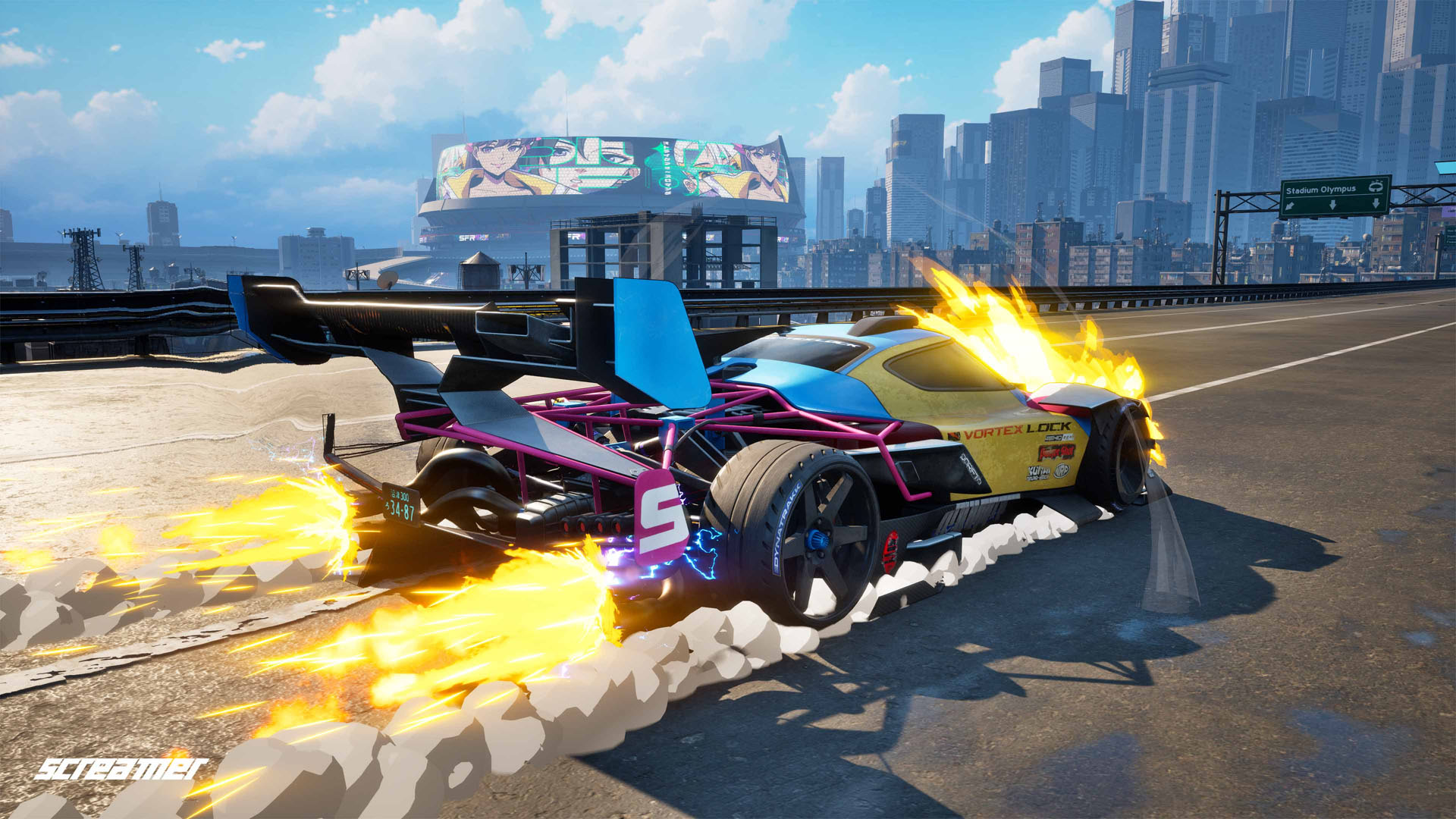
Screamer is a futuristic reimagining of Milestone’s original 1990s PC racing series. Merging exuberant arcade driving with fighting mechanics, it’s shaping up to be one of 2026’s most intriguing new racing releases.
Everything is anchored by an original, anime-inspired story mode integrated into the gameplay.
Story modes in racing games are nothing new, but the results are often mixed. Most are cliched rags-to-riches stories told countless times before.
With Screamer, Milestone wants to challenge this convention.
Screamer “sets the stage for something completely different from other racing games”
“If you start from the usual tropes of racing games, you can only go so far,” Creative Director Michele Caletti explains to Traxion.
“They always end up with the same themes and narrative tensions that are already well explored in movies and games.”
Inspired by fighting games, you select a character from one of five racing teams rather than a vehicle.
“The car each character drives is specifically designed for that driver to better represent them,” adds Game Director Federico Cardini.
“This sets the stage for something completely different from other racing games, where the focus is usually on the competition itself, rather than those taking part in it.
“There’s usually a focus on the main character, which is usually the player, and how they come to the top of a certain competition. But we wanted to do something that empowers the characters we created.”
Set in the near future, the story sees a group of drivers join an underground racing tournament orchestrated by a mysterious figure known as Mr. A.
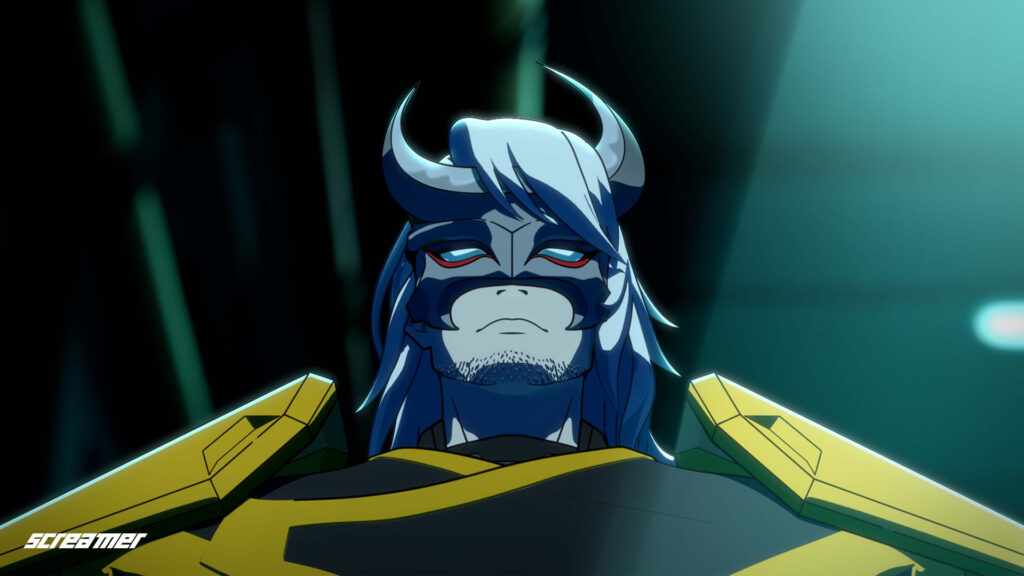
“They join for a variety of reasons,” says Cardini.
“Some because of revenge, others because of money, or they have something to prove to their family. It’s not like the usual racing structure.”
Linking these characters together is the Echo System. As well as activating special abilities in races, it’s an integral part of the story. Previewed in the story-focused trailer at The Game Awards 2025, one of the first cut scenes sees Gage, a mechanic, fit cars with the Echo System.
“Without the Echo, they are not allowed to take part in the tournament,” clarifies Cardini.
“It can do incredible things like returning people from an explosion. That’s perplexing and incredible for everyone. But then they start to take an interest for different reasons.
“The heroes, for example, see it as an impediment to their mission. They want to kill Gabriel [a member of the Anaconda Corp rival team with “a penchant for dirty tactics”] on the track, but now they can’t.
“For other teams like the high-tech Jupiter Stormers, it’s incredible. They think the technology can change the world.
“As the story unfolds, the Echo is always present. That was very important for us, because we wanted the game to feel cohesive, from the menus to the characters, cars, story and gameplay mechanics. You will see the ramifications of this in the story.”
Caletti is confident that Screamer’s story “underlines many strong points, difficulties and things for the characters to overcome,” but the “real backbone is the characters themselves.”
“When I first thought of the cast, I had in mind a very strong lineup of characters that are interesting and not two-dimensional, but complex. You can tell a good story with that.”
An authentic anime art style
For Milestone, Screamer is a highly ambitious project involving multiple studio collaborations.
“It’s the first time we’ve done something so complex and with such distributed collaboration,” explains Caletti. “It was a daunting task.”
First, “there was a writer for fleshing out the characters and story,” according to Caletti. Then, for the cutscenes, Milestone enlisted Polygon Studios, a Japanese animation studio best known for TV shows like Star Wars: The Clone Wars and Transformers Prime.
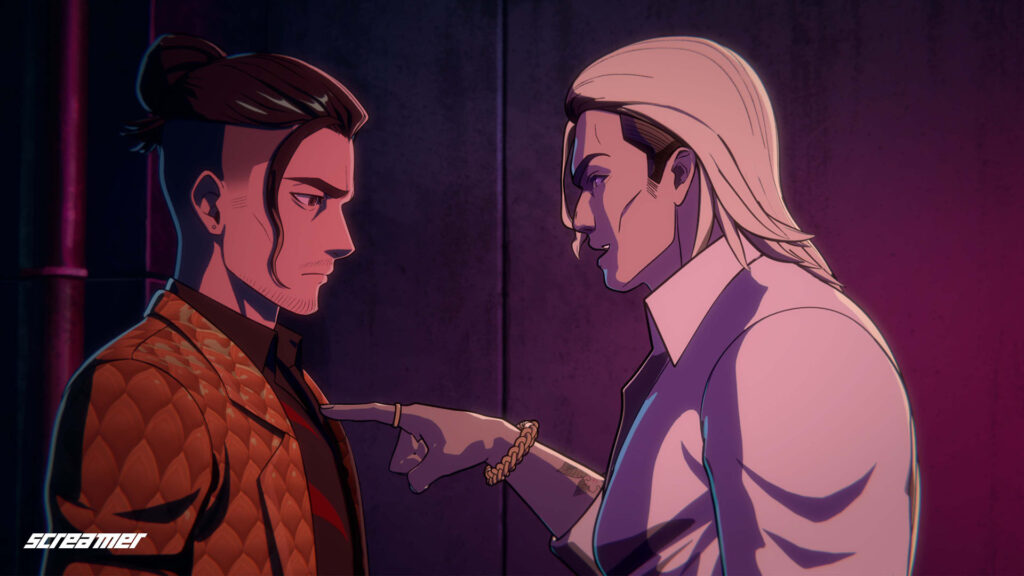
“We try to be respectful to everything we refer to, whether it’s the original Screamer or our love for 1990s anime,” says Cardini.
“It was incredibly important to work with a Japanese studio to get the most authentic representation of anime possible.
While crucial story beats will be told in over 35 minutes of cutscenes produced by the animation studio, characters also interact with each other during gameplay as their relationships develop, with dialogue voiced by the likes of Troy Baker (The Last of Us, Uncharted 4: A Thief’s End) and Aleks Le (Solo Leveling, Street Fighter 6) moving the story forward.
Inspired by Japanese RPGs like Final Fantasy and Persona, each character is animated during the in-game dialogue scenes and voiced in their own language. “We wanted to have a high production value in this extra narrative. It’s all dubbed from the same actors,” explains Caletti.
Character-driven
Alongside Polygon Pictures, a concept artist helped design the characters, while another studio visualised the vehicles.
Like the original series, none of Screamer’s cars are licensed. “It’s something we have capitalised because you can elaborate and find your own trademark language,” says Caletti.
“We reference cars for some characters, but we’ve been a lot more creative with others.”
Like other aspects of the game, the futuristic vehicle designs are informed by the story and setting, which Caletti describes as “more sci-fi than cyberpunk.”

“In the story, racing is a niche idea. Old cars are still driven but no longer produced. We wanted to have vintage vibes but in a stylish way. We’ve tried to make every car stand out and represent the characters. Look at any car, and you can understand the team they come from.”
“One great example is the Green Reapers,” adds Cardini.
“In the story, they didn’t have cars, so they build them from scraps. The designs reflect them. These are all key elements when designing the cars that can drastically change how you approach a specific design.
“We have seen people trying to figure out the original designs of the cars in comments. In many cases, they are wrong.”
Don’t expect any flying cars with folding wheels, however. “We wanted to go a bit extreme. When you have a team that is from space industries, you cannot stay tame. But at the same time, we didn’t want the [car] designs to be too stereotypical,” says Caletti.

Speaking about the game’s unique art style, Caletti says it “strikes a difficult balance between fantasy and realistic,” adding that “it’s not cell shaded or totally retro.” Instead, Milestone is striving for a look somewhere in between anime and real life.
Milestone is no stranger to story modes. Hot Wheels Unleashed 2’s campaign featured a family-friendly story with comic-book-style cutscenes, inadvertently serving as a testbed for Screamer.
“It helped us understand the scope of the challenge,” says Caletti. “In Hot Wheels, the story mode was more childlike to entertain a younger audience. In this case, it’s integrated into everything from the ground up. It’s a completely different approach and scope.”
Screamer’s story mode lasts over 10 hours, plus optional side missions
Screamer’s anime-inspired story will pan out across a series of “missions” in the game’s tournament mode. Visualised on a timeline, the core story will last over 10 hours on average, but optional side quests will double the campaign’s length.
“At certain points, there is an option to explore what’s happening with a specific team if you want more information on their story,” explains Cardini. These can be played in different orders or revisited after completing the main story missions.
While Milestone isn’t revealing specific details yet, some missions will eschew traditional racing and utilise the Echo.
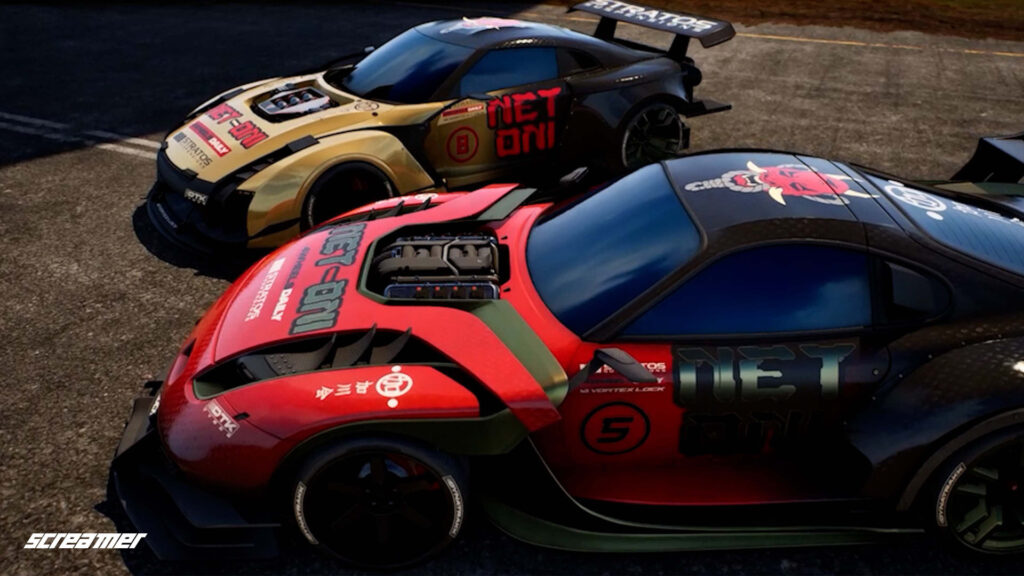
“You don’t necessarily have to race to win all the time,” says Cardini. “There are many events where you have to try out the mechanics related to the Echo.”
Not everything is unlocked at the start, with the attack and defence abilities gradually introduced to ease players in as they are “tied to the development of the story.
While everything is unlocked in a separate arcade mode, “if you want to throw yourself immediately into the action,” Screamer won’t have a traditional championship mode like most racing games.
“There are a lot of options in our game modes that people are not expecting,” Cardini teases.
Screamer is set to release on 26th March, 2026, for PC, PlayStation 5 and Xbox Series X|S, with up to three days of early access for those who pre-order the Digital Deluxe Edition.