
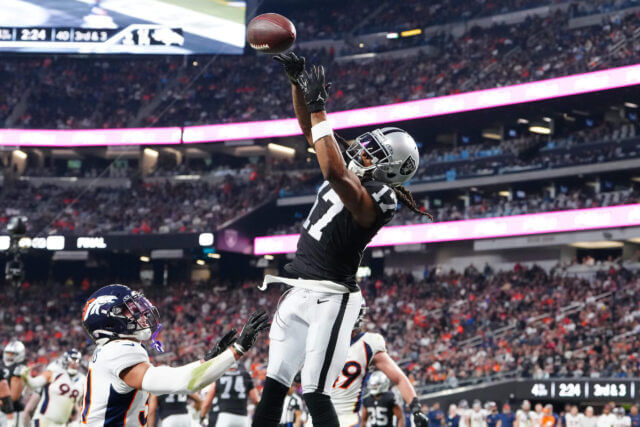
The Las Vegas Raiders enter the 2026 offseason at a turning point. After a disappointing 2025 campaign exposed deep structural problems across the roster, the organization has chosen a full offensive reset rather than incremental adjustments.
Ownership, the front office, and the coaching staff now share a unified goal: construct a modern offense capable of competing consistently in the AFC.
Instead of chasing short-term fixes, the Raiders are focusing on building a sustainable offensive identity. That means strengthening the offensive line, identifying a long-term quarterback, and developing young playmakers who can grow together within the same system.
Several major decisions already signal the direction of this rebuild. New leadership, key free-agent signings, and the upcoming draft all point toward a deliberate strategy designed to reshape the Raiders’ offense for the 2026 season and beyond.
The Season That Forced a Reset
The Raiders’ 2025 season made it clear that a reset was unavoidable. Las Vegas finished 3–14, one of the worst records in the NFL, as offensive inconsistency plagued the team from opening week through the finale. Quarterback Geno Smith struggled with ball security, throwing a league-leading 17 interceptions while facing relentless pressure behind an offensive line that allowed 64 sacks.
The offensive structure also lacked cohesion. Head coach Pete Carroll and coordinator Chip Kelly attempted to blend contrasting philosophies, but the result was a system that rarely found rhythm.
Even promising rookie running back Ashton Jeanty faced difficult circumstances, rushing for 975 yards on 266 carries in an offense that struggled for consistency.
Those issues forced ownership to act decisively. Carroll was released, and Seattle offensive coordinator Klint Kubiak was hired as head coach after helping guide a Super Bowl run. General manager John Spytek received a clear directive from ownership, including minority owner Tom Brady, to rebuild the offense methodically rather than rush into another quick fix.
Building the Foundation Up Front
The Raiders’ rebuild begins with the offensive line, an area that struggled throughout the 2025 season. Instead of prioritizing skill positions first, Las Vegas has adopted an infrastructure-first approach designed to stabilize the offense before introducing a new quarterback.
The most significant move came with the signing of All-Pro center Tyler Linderbaum to a three-year, $81 million contract, the largest deal ever given to a center. Linderbaum arrives with a 96.2% pass-block win rate (since 2022), making him the centerpiece of a line that desperately needed consistency and leadership.
New offensive line coach Rick Dennison also appears positioned to play an important role in the Raiders’ offensive transition. A four-time Super Bowl winner, Dennison brings decades of NFL experience and a strong background in run-game coaching. Klint Kubiak has called him a ‘top hire,’ and his addition points to a more structured, run-oriented identity up front.
Fans tracking the team’s progress are already studying the Las Vegas Raiders game schedule, anticipating how the revamped offensive line could influence matchups across the 2026 season.
Kubiak also plans to reduce Ashton Jeanty’s workload by introducing a two-back rotation similar to the one he used in Seattle. The approach aims to keep the Raiders’ most productive runner effective over a full season while maintaining balance within the offense.
Drafting the Franchise Quarterback
With the offensive foundation beginning to take shape, the Raiders now turn their attention to the most important piece of the rebuild: the quarterback position. Las Vegas holds the No. 1 overall pick in the upcoming draft, and Indiana quarterback Fernando Mendoza has emerged as the clear favorite to become the centerpiece of the franchise’s future.
Mendoza’s college career places him among the most productive quarterback prospects in recent memory. He finished his final season with a 16–0 record, captured the Heisman Trophy, and threw 41 touchdowns against only six interceptions. His 91.6 Pro Football Focus grade ranked third among all college quarterbacks.
Head coach Klint Kubiak has already begun evaluating Mendoza’s film extensively. He describes the quarterback as “a winner,” a player who can operate efficiently within a system built on play-action and disciplined decision-making.
General manager John Spytek has emphasized that championship contenders typically build around a franchise quarterback. NFL narratives point out that this draft represents the clearest opportunity for the Raiders to secure one since the organization selected JaMarcus Russell in 2007.
To support Mendoza’s transition to the NFL, the Raiders are also exploring veteran mentorship options. Kirk Cousins, who previously worked with Kubiak in Minnesota, has reportedly emerged as a potential bridge quarterback to guide the rookie through his first season.
Mendoza’s background in run-pass option systems aligns naturally with Kubiak’s offensive philosophy. That compatibility could allow the Raiders to install a coherent identity early in his career.
Weapons, Cap Space, and the Road Ahead
Beyond the quarterback position, the Raiders still have some flexibility to keep strengthening the offense. Spotrac currently lists Las Vegas with about $25.4 million in top-51 cap space for 2026, and the team holds two first-round picks, Nos. 1 and 14 overall, giving the front office flexibility as it continues reshaping the roster.
The current skill-position core also provides a strong starting point. Brock Bowers and Ashton Jeanty combined for 119 receptions in 2025, accounting for 35% of the Raiders’ 340 team catches.
Wide receiver Jalen Nailor adds another dynamic option in the passing game. His speed and route versatility provide opportunities to stretch defenses vertically, something the Raiders lacked at times during the previous season.
However, Las Vegas still needs an established wide receiver capable of drawing consistent defensive attention. Adding that type of target would reduce pressure on both Bowers and Jeanty while expanding the possibilities within Kubiak’s system.
With Linderbaum anchoring the line, Dennison shaping the running game, and Mendoza likely arriving through the draft, the Raiders have assembled the key pieces of a forward-looking offensive framework.
A New Offensive Identity Takes Shape in Las Vegas
The Raiders’ offensive rebuild reflects a deliberate shift in organizational philosophy. Instead of relying on quick fixes or isolated roster moves, Las Vegas is constructing an offense designed to grow together over multiple seasons.
The strategy begins with the offensive line, continues with developing a franchise quarterback, and extends to young playmakers who can contribute immediately. Each decision aligns with Klint Kubiak’s vision of a balanced system built around physical running, efficient play-action passing, and disciplined execution.
While the results will ultimately unfold on the field, the structure of the rebuild suggests a long-term approach centered on stability and cohesion.