

Given our wide-ranging testing program, we inventory a lot of tires, so it takes a long time to burn through any particular set. How do we keep them minty fresh for optimal performance over the long haul–especially as today’s front-running Super 200 tires typically gain performance as the tread wears away?
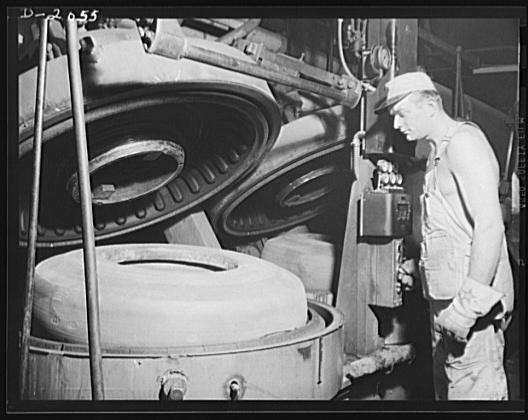
Before we answer that, let’s talk theory. The rubber compounds in a tire are cooked during manufacturing in a process known as vulcanization, which turns a short-lasting gooey rubber gum into something that holds shape and resists abrasive wear. The process was discovered by Charles Goodyear way back in 1839 when he accidently dropped some raw rubber mixed with sulfur onto a hot stove, causing it to become rigid but still flexible. U.S. patent 1090 describes the process that begat the entire tire industry.
Dubbed vulcanization by Goodyear, the procedure subjects raw rubber to heat, pressure and various activator and accelerator compounds–most notably sulfur–to form a witch’s brew unique to every tire compound. Upward of 100 different ingredients can be present in the formulations of a tread cap compound, which is how manufacturers dial in the inevitable trade-offs between grip, durability and heat tolerance.
Photograph courtesy Wikipedia
Much like baking a cake, every ingredient matters–as does the duration and intensity of the heat and pressure. Unfortunately, the vulcanization process does not completely end when the tire pops out of the mold. Instead, the rubber continues to harden over time. Think of it as a slow-burning fuse, gradually altering the performance characteristics of the tire.
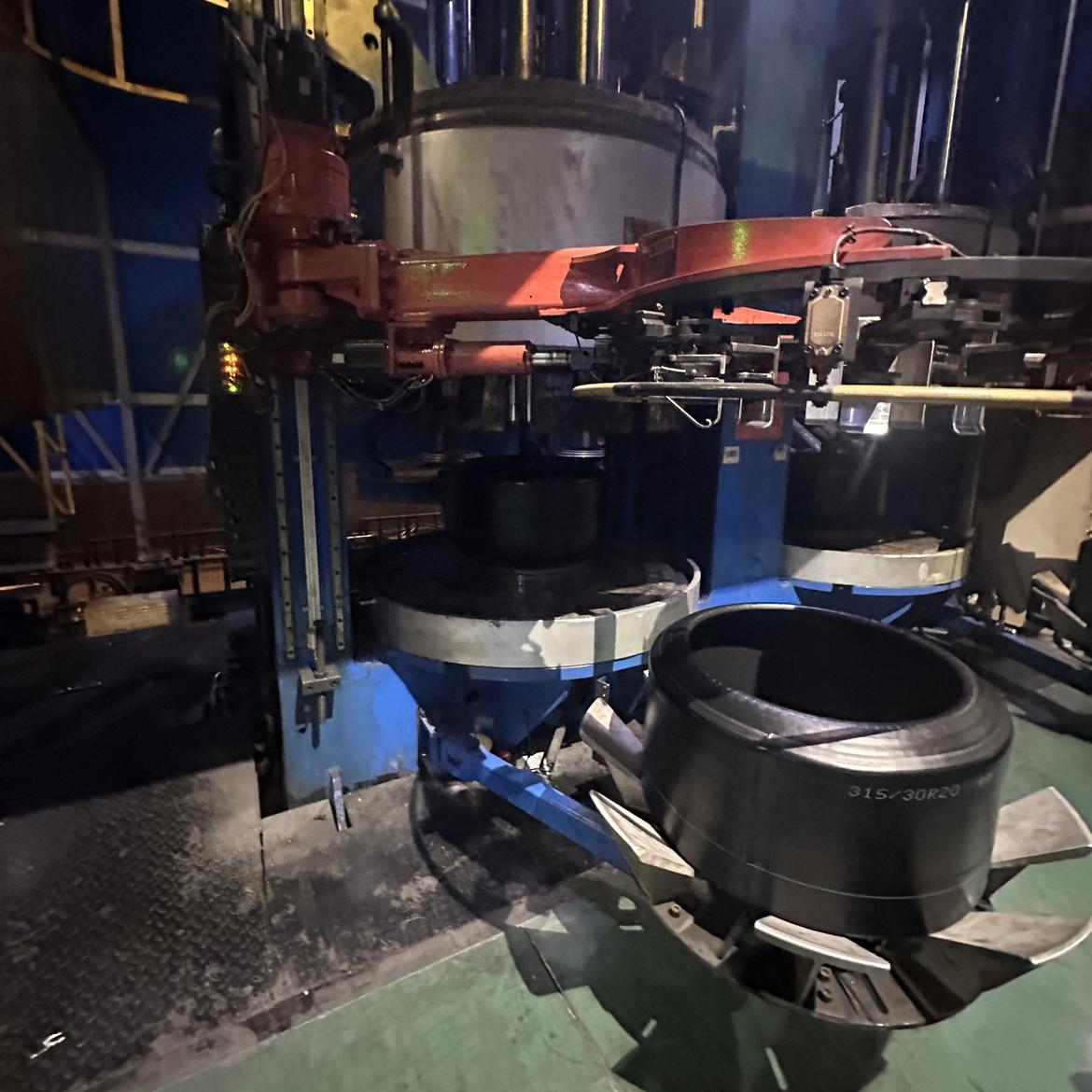
Despite nearly a century of progress–see the black-and-white photo above–vulcanizing rubber is still about heating it up and letting it cure. Photograph courtesy Vitour
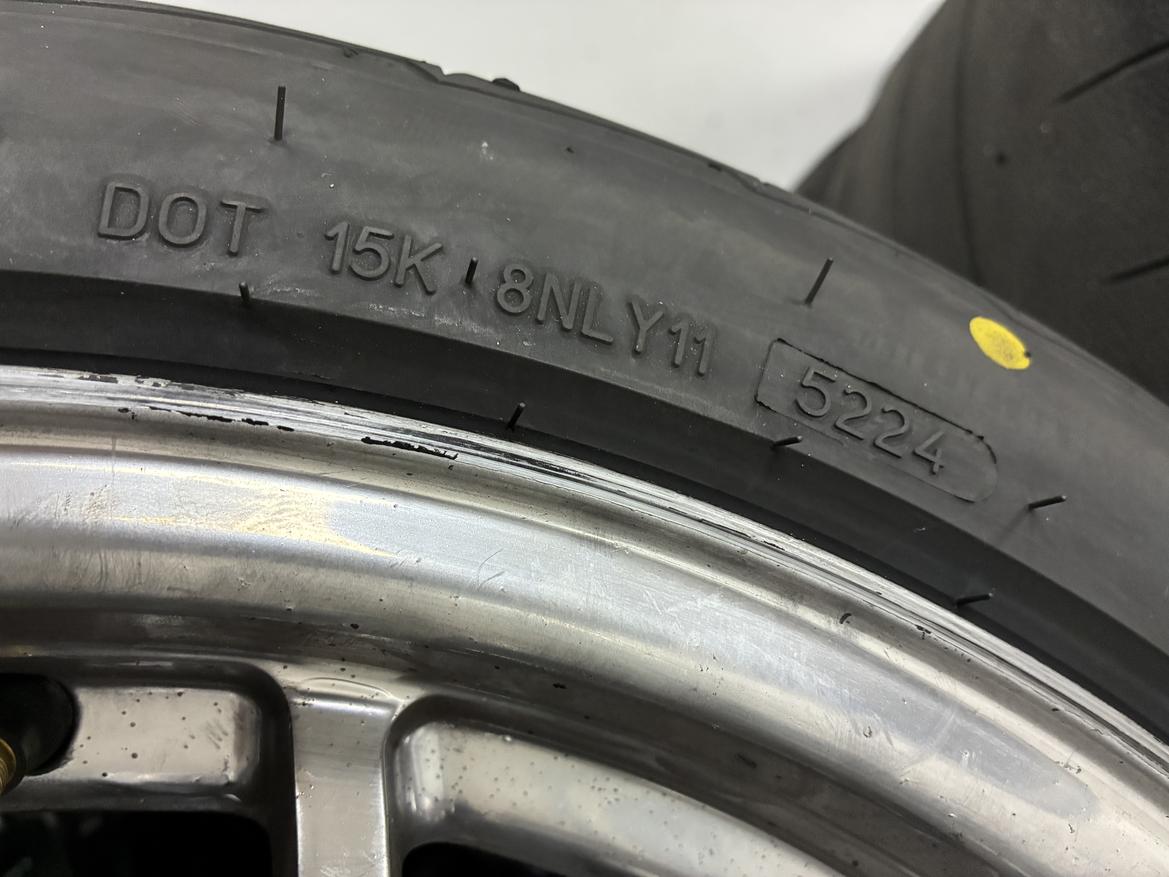
This is why freshness of tires matters. The born-on date required of every DOT-marked tire shows the week in which it was made. General industry convention is that tires 6 to 8 years old have aged out regardless of mileage/use and should be replaced.
Photograph by Andy Hollis
The tires used in motorsports rarely last that long simply due to tread life, however. The grippier they are, the more quickly they abrade–yet the more fun they produce.
The real enemy of motorsports tires is heat cycling. Long-term vulcanization is accelerated in spurts through cycles of heat generated during use. Imagine a perfectly cooked steak that you keep putting back in the oven for a few minutes once every hour. Soon enough, it’s way past well done.
So it is with rubber. Every heating and cooling cycle accelerates the burn of that slow fuse, altering the performance characteristics of the tire. How deep and long each cycle is determines how much fuse is burned.
Run a tire for an 8-hour endurance race, and you’ve sucked a lot of the life out of the tire, regardless of remaining tread depth. Conversely, a three-lap time trial session is much easier on a tire. That said, anecdotal evidence supports the notion that frequency of cycles are more important than depth. Cooling down is where the negative effects are produced.
One way to mitigate this process in non-endurance use is to keep the tires on a low simmer using electric tire blankets between sessions during the day. A beneficial side effect is that there’s no need for a warmup lap before putting down a flyer.
Proper storage between uses is also key to longevity. If the tires are subjected to regular street use, they’ll continue to burn their fuse through mild but frequent cycling. Storing them in a shed out in the yard isn’t much better, as temperatures will continue to fluctuate.
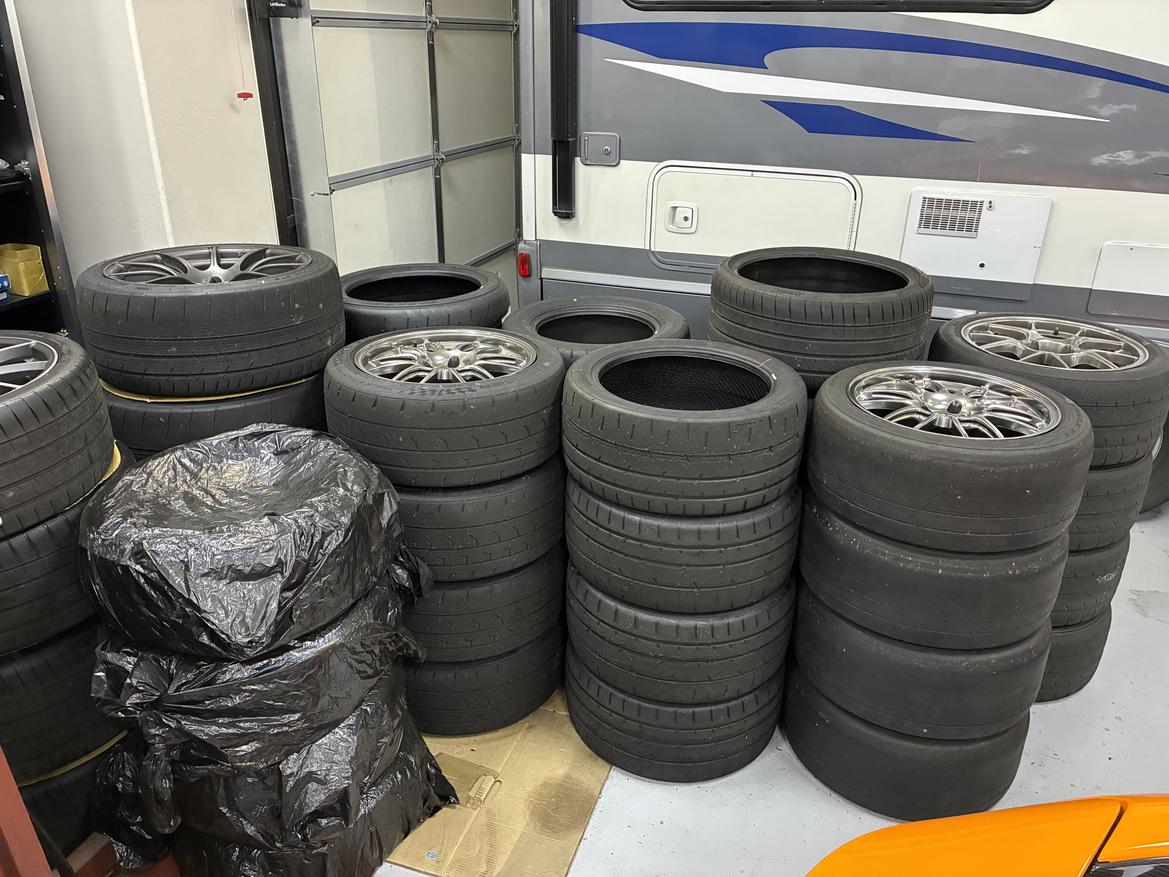
The gold standard–and what we do–is to store them off the car in a well-ventilated, climate-controlled shop. That way, continued vulcanization is minimized to a slow burn rate. Further, the tires being loose as they cool minimizes any cold-set flat spots that can develop when a warm tire cools down with load on it. Some tires–notably the Hoosier TrackAttack Pro–exhibit this trait and will take a few miles of use before they loosen up and become fully round again.
Photograph by Andy Hollis
Climate-controlled storage also removes the risk of cold weather damage. Rubber compounds have a chemical characteristic known as the glass transition point. The sticky rubber seen in racing slicks, R-comps and 200tw street tires will change to a more solid state in near-freezing temperatures. Any use in that condition will crack the rubber, destroying the tire.
Manufacturers place warnings on these summer-only tires to inform consumers of the inherent danger. Such tires subjected to freezing temps can sometimes be thawed out and used again, but continued freeze/thaw cycles will hurt performance long-term.
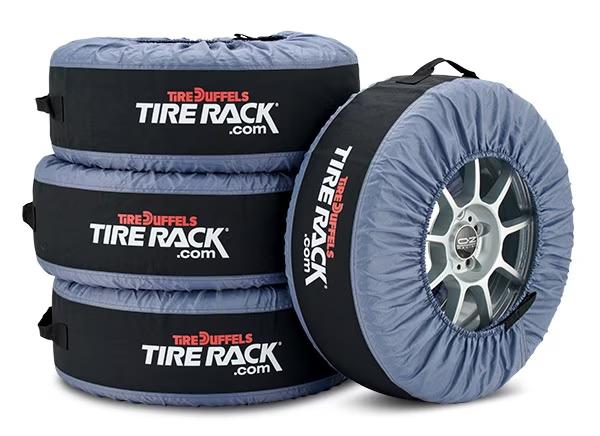
Photograph courtesy Tire Rack
In addition to its heating effects, the sun’s UV rays will also harm a tire by prematurely breaking down the rubber. This is why you see tire covers on vehicles and trailers stored outside for long periods of time.
Another detrimental hazard to tires is ozone, which can be produced by electric motors and furnaces, so your basement or machine shop might not be a good storage choice. The solvents and chemicals you spray in your shop can also attack rubber. If you can smell it, it can affect your tires.
Airtight bagging of your tires can also help slow atmospheric evaporation of oils in the rubber compound. Airing them down to relieve internal pressure will also help keep the oils from being pushed out of a mounted tire.
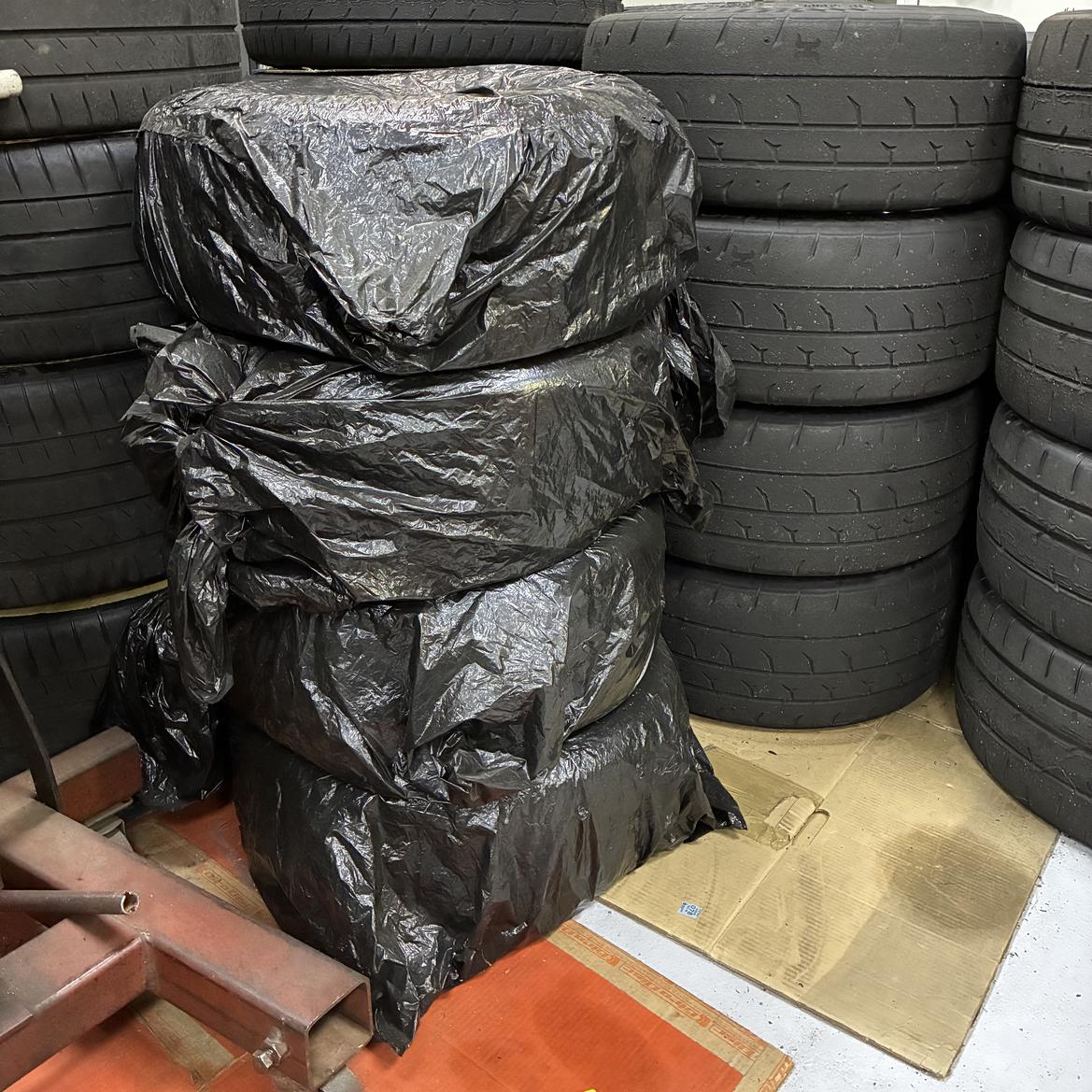
Photograph by Andy Hollis
Keep in mind that every tire model is different and will respond in different ways to negative effects. But these tips should help you get the most usable life out of each set of tires you mount up.
Comments

Reading this made me realize that I have a set of tires that have probably aged out to the point that they should be rehomed. (And that new home might well be the tire disposal pile at the landfill.)

Are you looking for volunteers to use up tires? If I only lived closer.

It is possible to get completely anal about race tires. Such as: Not let the installer us liquid to mount them. Then use a vacuum pump to remove most the air. Then fill with nitrogen. repeat. Inflate to projected “hot” pressure. Measure circumference. Record. Set to “cold” pressure. Scuff on Friday practice. Record “hot” pressure each time car comes off track on pit lane. Remeasure. Store in shade at the track. Sometimes flip on the rim and move to opposite side of car if reusing. Deflate and store in black plastic bags when back at air-conditioned shop. ( I probably forgot to type a few steps.) Rinse and repeat.
Don’t ask how I know. But I did learn the process from a 7 time national champion.

Looking out at my street-parked daily, I feel kind of bad for those tires.
Granted, they aren’t high-performance tires, but I still feel bad. Someday, I’ll have a garage.

I’ve always taken off my autocross tires and stored them in the garage between events. I would air them down to about 17 pounds and bag them in heavy plastic bags.
I’ve backed off on the routine, swapping them off the cars between events, but not airing them down or bagging them.
I need to address the biggest issue, my garage gets over 100 degrees F in the summer. I need to get an air conditioner. I have been running a dehumidifier for years, so the power consumption probably won’t change much.

Interesting read! You have separately discovered many modern 200tw tires, when given a good initial heat cycle, do not generally suffer much degradation all the way down to the cords. You even captured it here.
https://grassrootsmotorsports.com/articles/how-to-get-more-performance-out-of-200tw-tires/
Mostly for time and space, I daily drive on my x12, 305/30R20 CRS-V2 track setup. One of the things that made me initially feel good about that was knowing their performance shouldn’t degrade much over time (and should actually get better as the tread wears), based on your previous posts and captured in the above link.
Can you help me understand where more of the nuance lies?
Thanks!

Lindenwood said:
Interesting read! You have separately discovered many modern 200tw tires, when given a good initial heat cycle, do not generally suffer much degradation all the way down to the cords. You even captured it here.
https://grassrootsmotorsports.com/articles/how-to-get-more-performance-out-of-200tw-tires/
Mostly for time and space, I daily drive on my x12, 305/30R20 CRS-V2 track setup. One of the things that made me initially feel good about that was knowing their performance shouldn’t degrade much over time (and should actually get better as the tread wears), based on your previous posts and captured in the above link.
Can you help me understand where more of the nuance lies?
Thanks!
The difference lies is the “between times”.
By pulling the tires off the car and storing them inside the shop between uses, we limit the “slow burn” of the heat cycle monster. So the reduction of tread depth due to track use ends up being the predominant effect on the long-term performance of the tire.
As mentioned in the storage story above, what you are doing instead is putting a lot of additional low-amplitude heat cycles on the tire through daily use. So you’ve accelerated the slow burn a bit and at some point, it will make more of an impact on performance than the reduction in tread life.
We typically burn through a set of tires in under six months — and that’s rotating through a bunch of sets. So the slow burn has little overall impact.

te72
HalfDork
6/6/25 12:50 a.m.
I store my tires in the basement when they’re off the car, hadn’t considered the ozone factor of the furnace. It’s still my best option considering how cold it gets around here, the garage has a much wider temperature swing.
te72 said:
I store my tires in the basement when they’re off the car, hadn’t considered the ozone factor of the furnace. It’s still my best option considering how cold it gets around here, the garage has a much wider temperature swing.
Bag them air tight
Tom77
New Reader
7/29/25 4:41 p.m.
In reply to Andy Hollis :
How would one bag a tire in a trash bag air tight? I guess you could use a vacuum?…
Displaying 1-10 of 30 commentsView all comments on the GRM forums
You’ll need to log in to post.