
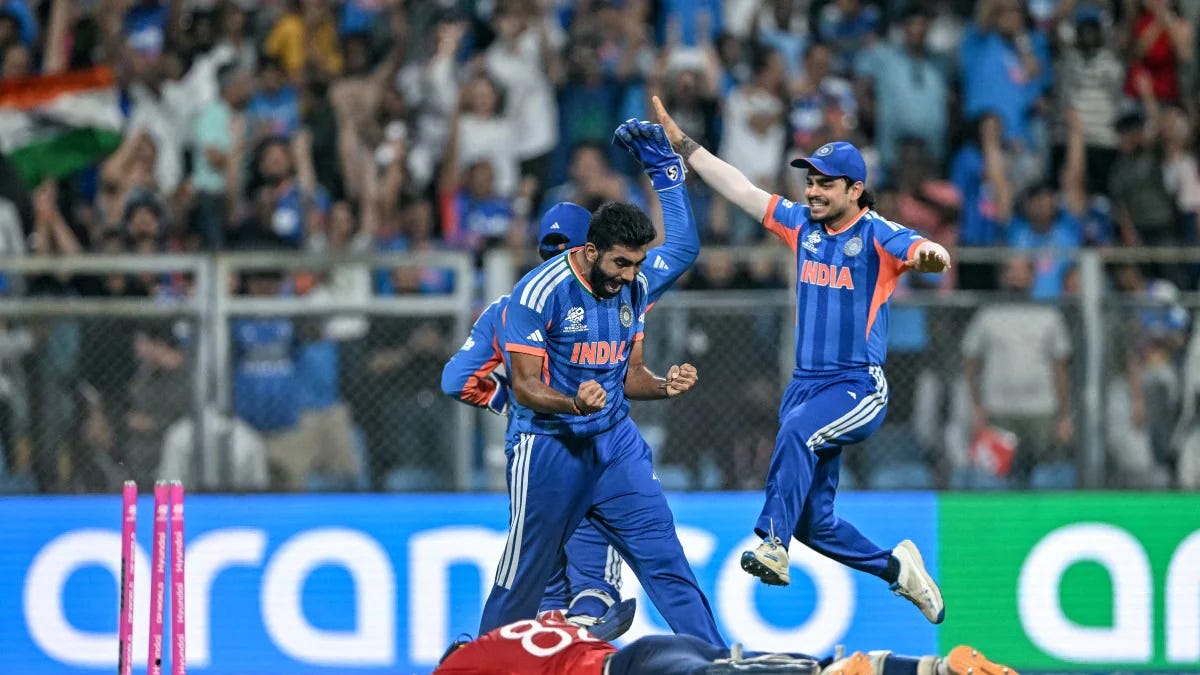
IND beat ENG by 7 runs.
The game was both much closer and more one-sided than that headline suggests. IND’s batting order finally kicked into 6th gear, but Jacob Bethell’s one-man heroics nearly pulled off an improbable upset.
But, what happened beyond the headlines?
-
⭐️ IND’s top seven are as close to T20 perfection as possible.
-
⬆️ How Dube’s promotion broke ENG’s bowling plans.
-
🏏 How Bethell countered Chakravarty to help ENG nearly chase 253 runs.
If you’re reading this online, remember: you can get it via WhatsApp or direct to your email👇!
✍️ Written by Tarutr Malhotra, who runs Best of Cricket.
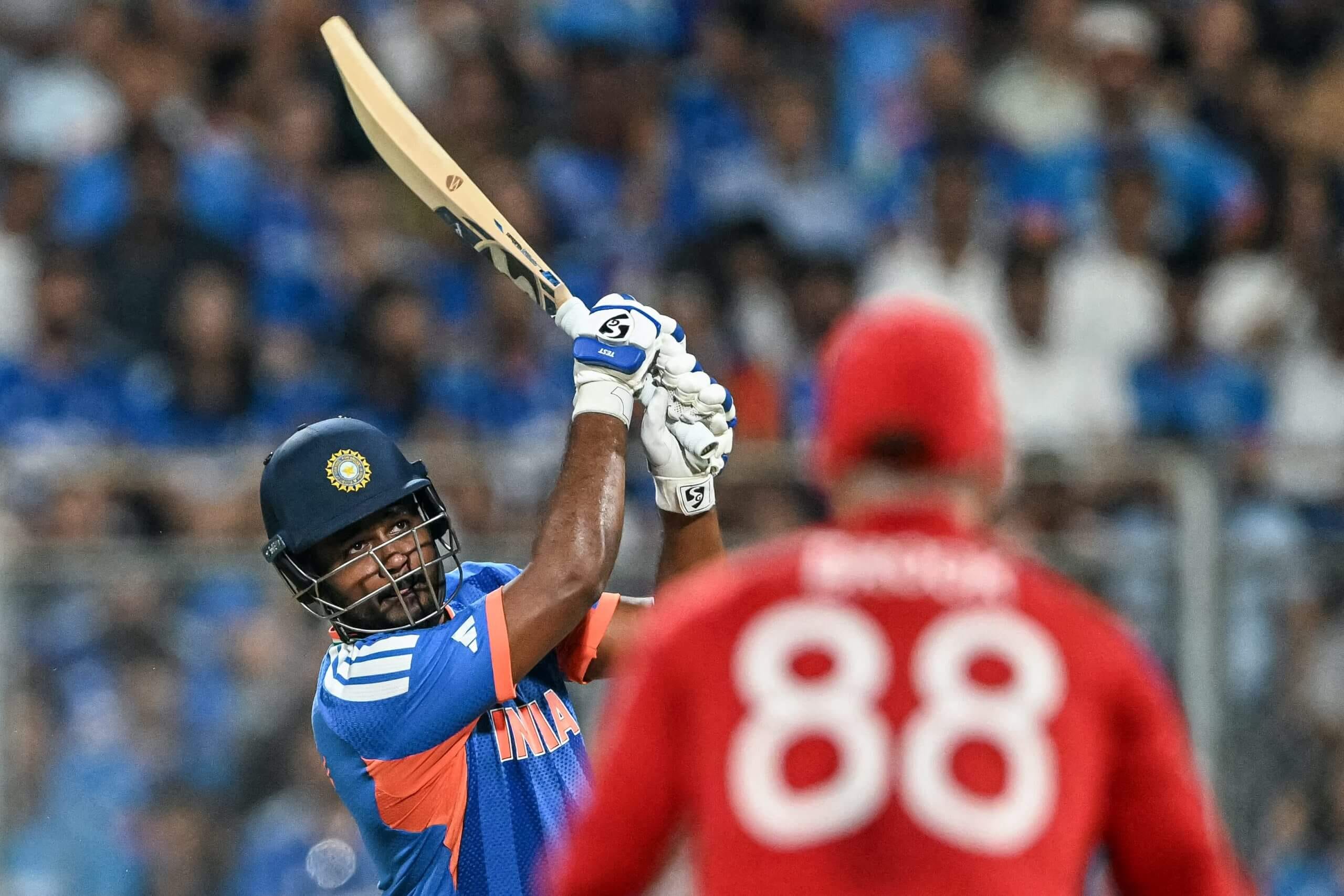
Tonight’s game looks relatively close through the lens of the scorecard. Jacob Bethell’s century kept ENG in the game, but don’t let it overshadow a fundamental truth; India’s top 7 batters are as close to perfection as possible in T20 cricket.
The lowest career strike rate amongst the seven batters is Tilak Varma’s 144.47, while the average career strike rate of their specialist batters (plus Hardik Pandya) is 155.69 (!). The numbers only get more ridiculous as you dig deeper.
On average, the entire top 7 scores a boundary every 4.56 balls. They average a strike rate of 153.16 versus spin, and 159.31 versus pace. Oh, but you’re just dumping all their stats together! Obviously the good players’ numbers will cancel out the bad players’ numbers.
The worst career balls per boundary rate? Pandya at 5.38.
The worst career strike rate v/ spin? Pandya at 126.1.
The worst career strike v/pace? Shivam Dube at 148.5.
It gets scarier. Every single batter is playing through their skin in 2026. Every batter but one has had a massive jump in strike rate this year, for an average strike rate jump of 23.28 points amongst IND’s top 7. The outlier? Suryakumar Yadav, whose 2026 strike rate is 161.87 – a horrible, terrible drop from his career SR of 162.96.
The balls per boundary for the entire top 7 has reduced from 4.56 balls to 3.68 balls. Their average SR v spin? Jumped from 153.16 to 171.29. Their average SR v pace? Jumped from 159.31 to 187.66.
Just for quick comparison, only two English batters tonight have a SR of over 150 in 2026; Harry Brook (161.66) and Will Jacks (173.48). Not a single member of IND’s top 7 have a SR of under 155 in 2026.
And this doesn’t consider the specifics of how their batting order is constructed.
In 2026, Sanju Samson (192.0 SR) and Abhishek Sharma (203.8 SR) are both striking rapidly against pace. One drop Ishan Kishan is rapid against any type of bowling (203.7 v spin, & 212.7 v pace). SKY (4.27 balls per boundary) and Tilak Varma (4.41) can both keep the scoreboard ticking via consistent boundaries in the middle overs. Dube and Hardik have both scored more 6s than 4s in 2026, showcasing their ability to accelerate at the death for India.
Every single top 7 batter has scored at least two half centuries for IND already in 2026 – apart from Varma who has none. Every single batter has at least one Not Out this year, signalling their ability to finish an innings – apart from the burn-bright-and-die-early Kishan.
Why am I throwing all these impossible-to-remember facts at you? To prove a simple point. You can’t stop this Indian batting order. Only they can stop themselves.
Sharma’s clearly not recovered from his infection, and is getting out to increasingly stupid shots (including today v/s Jacks). Samson was getting in his own way this year, until he finally figured it out v/s WI. Ishan’s just been brilliant. SKY’s choosing to slow down and play anchor. Tilak’s shown enough value in the middle overs (though has struggled against spin this year). Dube is altering opposition bowling strategies with his 221 SR v spin in 2026. Pandya is alternating between accumulator and accelerator depending on the need of the day.
Tonight, for the first time in the tournament, IND’s batting order clicked. Samson was the clear star with his 42-ball 89, but his runs per ball today (2.12) is just marginally higher than the Indian innings’ run per ball of 2.11. This wasn’t the WI game where IND desperately needed his innings. If Samson didn’t show up, someone else would’ve.
Hell, he showed up and multiple other batters did too. That’s how you score the highest ever total recorded in a T20 World Cup knockout game.
Data from ESPNcricinfo & Cricmetric.
If you’re reading this online, remember: you can get it via WhatsApp or direct to your email👇!
✍️ Written by Raunak Thakur, who runs Dead Pitch’s Society. Follow him on X.
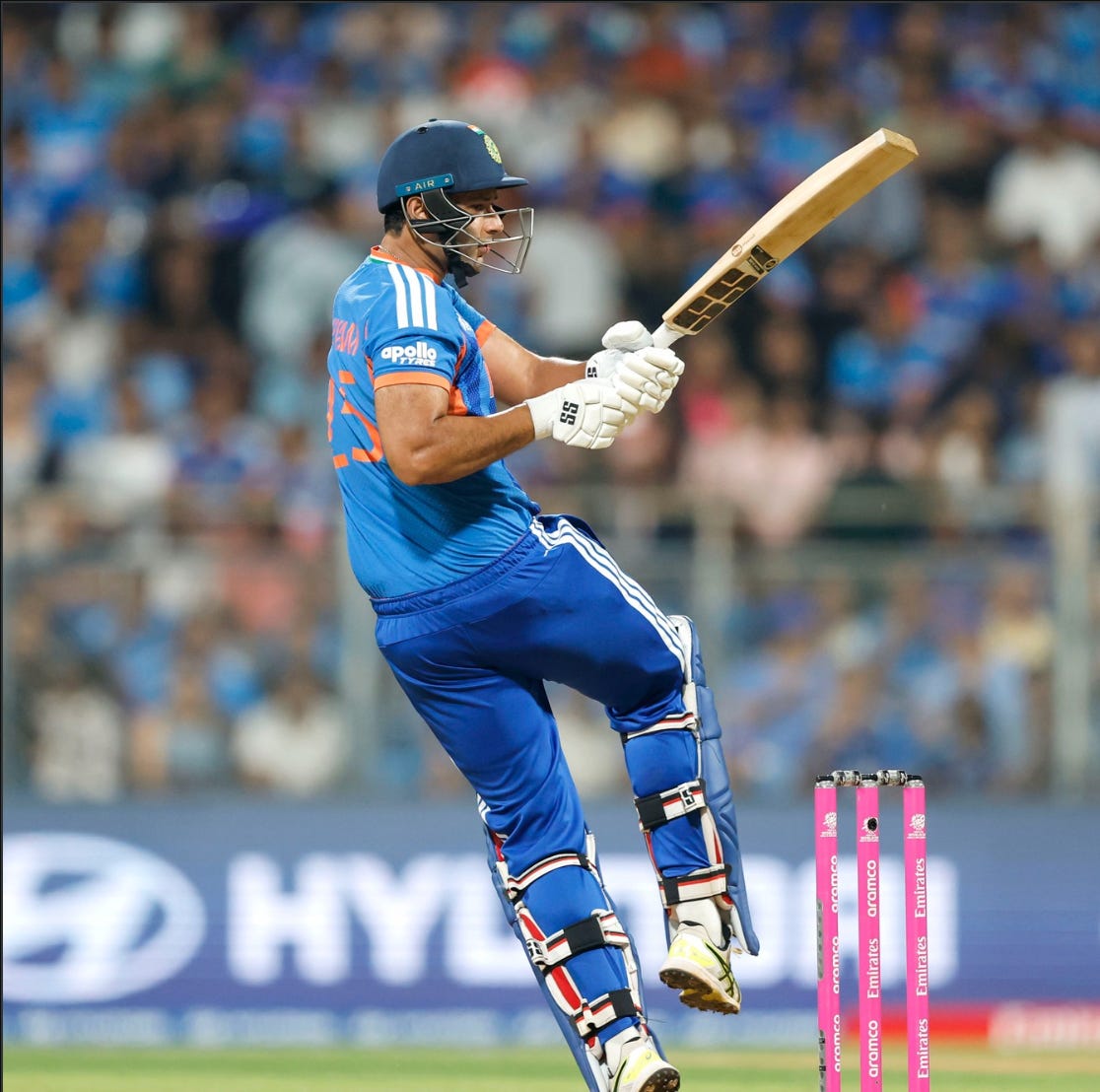
Despite his claims that he doesn’t believe in data, Gautam Gambhir made a vital data-backed tweak today. By promoting Shivam Dube to come in at No. 4, he forced ENG into drastically altering their middle overs bowling tactics. In the confusion, ENG lost control and IND ended up with a record total.
Dube walked out in the 10th over after Ishan Kishan holed out following a quickfire 39 (18). Dube is IND’s designated spin basher, and everyone knows it. He strikes at 173.5 vs spin between overs 10 to 16, with that number jumping to 223.1 in 2026. Oh, and he hasn’t been dismissed by a spinner this calendar year.
Liam Dawson – ENG’s second spinner on the night – had already been hit for 19 runs by Sanju Samson and Kishan in the 8th over. Meanwhile, Dube strikes at 182.6 versus SLAs in the middle overs this year. ENG couldn’t risk another shellacking, and Dawson could not be risked as long as IND’s surprise promotion was out in the middle.
This is a big deal because Dawson and Adil Rashid have been ENG’s heavy lifters in the middle overs during this World Cup. Rashid’s been going at 7.52 RPO and an elite average of 16.2 this tournament, while Dawson’s matched his economy (7.24) though struggled for wickets (average of 25.3). Together, they’ve been able to strangle the middle overs, such as against PAK in the Super 8s when their concession of just 23 runs from 27 balls kept ENG in the game.
However, with Dube in the middle, ENG were forced to turn to their pacers far sooner than they’d have liked. Jamie Overton was given the 11th over, Adil Rashid was persisted with for the 12th, and Jofra Archer came in for the 13th. The three overs went for 41 runs because of two reasons; Dube’s no slouch against pace (162.9 SR against it in 2026), and Sanju Samson just thrives against it (192 SR in 2026).
Will Jacks finally got Samson in the 14th over, but Dube stuck around. And stuck around. And stuck around, until a stupid run out in the 18th over. By then, ENG were well into their death over quota and had given up on Dawson. Dube’s 8-over stint forced ENG to ignore their 5th bowler – who’s actually taken 3 wickets at 5 RPO during the death in this World Cup.
The pacers had to stick with their quotas, and Archer – who was terrible today and forced into bowling more than he should have – got hit for 61/1 in 4 overs. The bowling order mix up meant that Archer was even thrown the 19th over for a shot at redemption, but instead faced Tilak Varma who strikes at 213.2 vs right-arm pace at the death. Tilak took the game away in brutal fashion, hitting him for three 6s as the over went for 20 runs. Those runs were important – ENG’s chase was on par with IND’s until the 19th over.
In all, the three ENG pacers conceded 150/1 in their 12 overs, and they were bowled out before the 20th over because ENG were looking to avoid the decimation that came with a potential Dube v spin match-up in the middle orders.
With Dawson out of favour, Jacks was thrown the ball for the final over. He’d already pulled off two miracles by taking both Abhishek Sharma’s and Samson’s wickets, and had gone at just 8.67 RPO in his first three overs. But, now he was facing Hardik Pandya who strikes at 260 versus off-spin at the death. The IND batter duly scored 16 runs in the final over.
Questions have to be asked of ENG’s management. Dube as a tool to disrupt the spinners’ overs is not a new tactic; IND used it at the 2024 World Cup as well. Harry Brook & co. looked completely baffled by the promotion though, and they let an already high start of 117/2 in 9.3 overs spiral into a record score of 253/7 because they didn’t know what to do with Shivam Dube.
Data from Cricmetric.
If you’re reading this online, remember: you can get it via WhatsApp or direct to your email👇!
✍️ Written by Raunak Thakur, who runs Dead Pitch’s Society. Follow him on X.
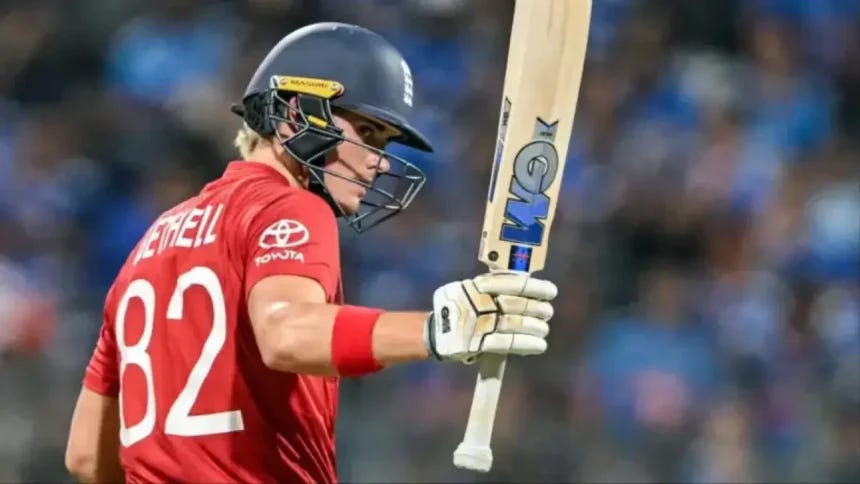
Varun Chakravarthy’s rise to the top has been built around the good length corridor. The 3-5 metre zone where the ball grips just enough, turns just enough, and asks a question every time. It is the length that holds his spells together and keeps batters second-guessing.
England – and the ton-scoring Jacob Bethell – never really let him settle tonight.
En route to his 105 (48), Bethell plundered 42 off 14 balls versus the number one T20I bowler in the world. Moreover, it felt less like an assault on bad deliveries and more like a deliberate dismantling of Chakravarthy’s rhythm.
The first sign came immediately as Chakravarthy got the rare powerplay over to capitalise on ENG’s early collapse to 38/2. His first ball to Bethell was a shorter one that sat up nicely for the batter to climb into the pull. Then a fuller ball disappeared over mid-off. When Varun drifted outside off on his third ball, Bethell went across the line and reverse swept him over short third for a third 6 in a row.
That reverse sweep was a particularly effective weapon. He was effectively playing the field with this. Not a wild swipe, but a premeditated shot. That single stroke on 5.3 shifted the field, brought point up, pushed third man across, and suddenly that good-length corridor outside off felt a lot less comfortable to bowl into. Chakravarthy would find some redemption by picking up Jos Buttler’s wicket, but Bethell had effectively thrown him off.
The spinner came back in the 9th over, and Bethell picked up where he left off – but with a new strategy of batting deep in his crease. A googly that would normally drag a batter forward was met off the back foot and pulled through midwicket for a 4. Another delivery, not especially short, was still worked square. On a true surface with decent bounce, Bethell had just enough time to stay deep and hit through the line rather than lunge at it while Varun kept delivering with ample pace to do just that.
Varun tried several adjustments. A quicker one fired wide of off. A flatter delivery darted into the pads. A fuller dart at the stumps. None of it lasted long enough to reclaim control. Bethell kept finding angles, backing away to carve through the covers, dabbing behind point, swinging across the line when the ball came straighter.
Chakravarthy’s struggles go beyond tonight. Since the start of the Super 8s, batters have been attacking him early and forcing him to adjust rather than the other way around. When Chakravarthy inevitably drags his length back to find control, it opens up opportunities square of the leg. Since the Super 8s started, he’s conceded 21 runs per over to his traditional good length deliveries, and 11.5 to his adjusted back-of-a-length balls.
For a bowler whose entire game is built on deception and controlling pace, rhythm is everything. Much like David Miller in South Africa’s game against IND, Bethell didn’t let him settle tonight. Chakravarthy conceded 64-1 across his 4 overs tonight, his worst figures ever. The English No. 4 took what should’ve been IND’s second best bowler, and turned him into cannon fodder that nearly helped ENG chase down a record 253-run total.
Data from Cricbuzz.
If you’re reading this online, remember: you can get it via WhatsApp or direct to your email👇!