
Published March 25, 2026 03:00PM
When it comes to valves on drop-bar bikes, Presta is king, queen, emperor, and president combined. Suddenly, options have emerged that threaten that hegemony.
Different brands are challenging the valve status quo, with new types of valves emerging like springtime bulbs. But are any of those options truly ready to become a new industry standard?
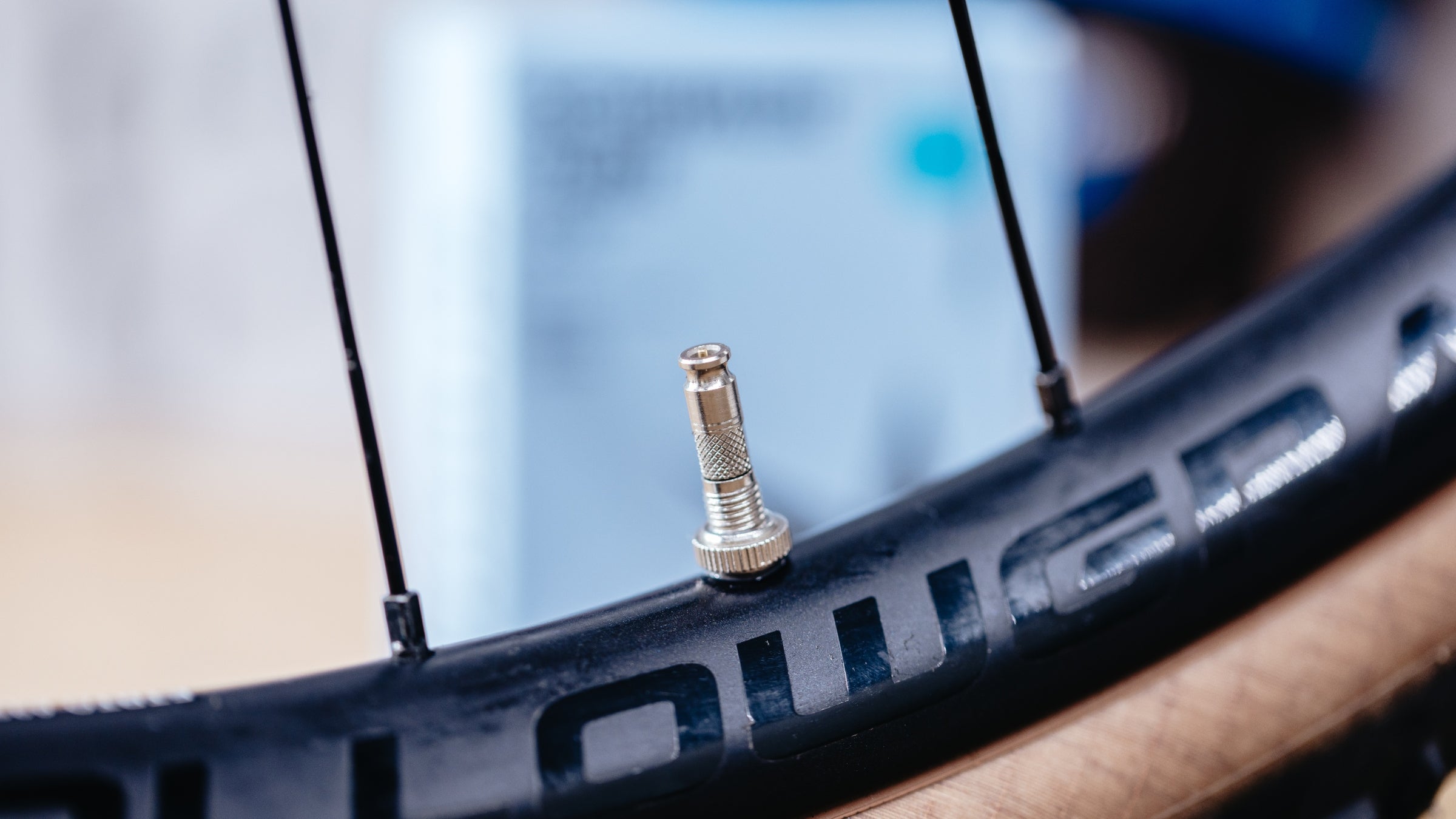
At the Belgian trade show Velofollies, one line of items stood out to me: valves. It simply wasn’t something to look out for at trade shows, but that has clearly shifted. Although Reserve was arguably the first to introduce a truly innovative valve with their Fillmore valves, back in 2021, Schwalbe was the first to openly declare they wanted to set a new standard with their Clik Valve.
At Eurobike 2024, where they first launched the product, they were very ambitious. They wanted their new valve to become the industry standard within the next few years for all types of bikes. Whether it was tubeless valves or valves on inner tubes and whether it was road bikes or urban bikes. In the almost two years that followed, they’ve struggled to really put the product out there to the general public, and a new industry standard doesn’t seem to be in sight.
That might not come as a surprise in an environment as conservative as the bike industry, however, they may have just beenahead of the trend rather than missing the mark. More brands are putting their backs into dethroning Presta.
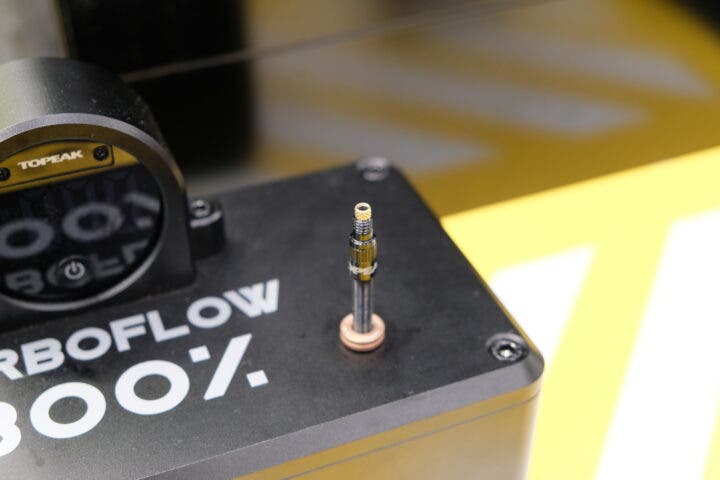
At the end of last year, Topeak launched TurboFlow — which we first spotted at Velofollies — and, more recently, BBB launched another alternative called the BBB CoreCap. Does this finally mean we can expect to all be using a different valve in a few years?
Tubeless trouble
To answer that question, we first need to answer another: what is the exact reasoning behind the launch of these different new valves all of a sudden? Well, there are multiple reasons, but there’s one they share: tubeless tires. It might not be the most important reason, but it seems to have accelerated the development of new valves.
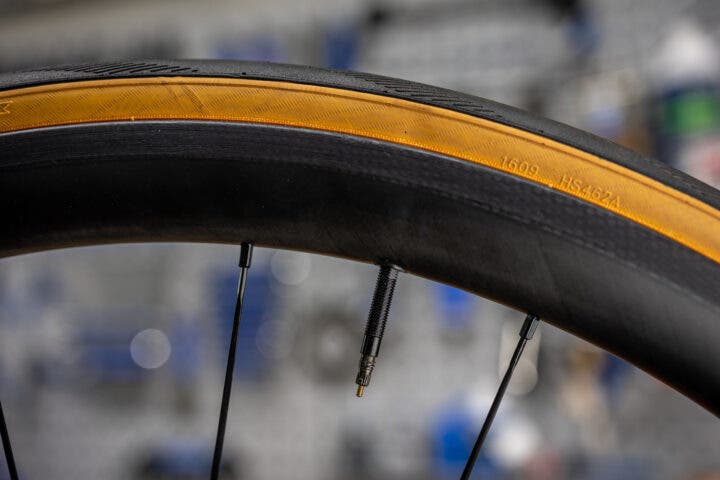
Everyone who has ever used tubeless tires has probably had the issue of the tubeless sealant getting into the Presta valve and subsequently clogging it. The latex dries up and limits airflow to the point where it is not only hard to inflate the tire, but it also makes it almost impossible to inflate tubeless tires fast enough to seat them.
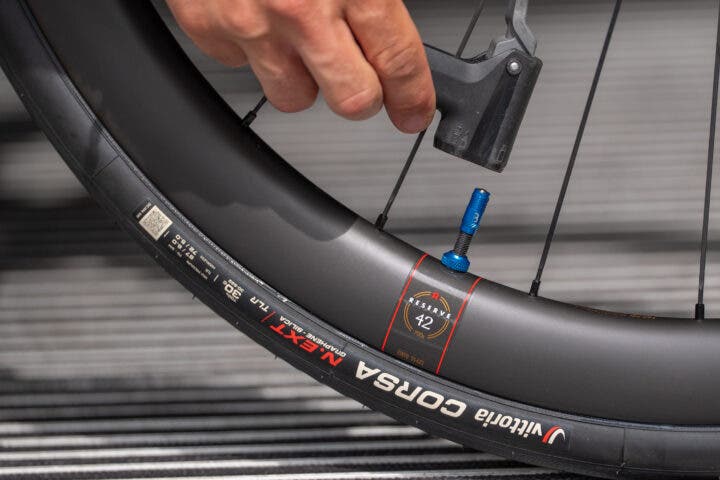
That, specifically, was one of the reasons for Reserve to develop their Fillmore valves, which are only available as tubeless valves. Rather than a tiny valve core, Fillmore valves use a steel pin that runs through the entire shaft of the valve. That allows for a bigger opening at the bottom and increased airflow (hence the name). According to Reserve, the airflow is improved threefold.
The one big limitation of the Fillmore valves, however, is that they are only made for tubeless setups.
When Schwalbe launched Clik Valve, they didn’t only want to address the tubeless issues, but they also wanted to create a valve that was generally more user-friendly, even if it wasn’t something they were initially planning on.
“One year at Sea Otter, we were approached by John Quintana,” Maiko Bakker, who works for Schwalbe, said. “We didn’t know him yet, but he was working on a new valve system when he saw his kids struggle to inflate their bikes’ tires. They would always ask him to do it, which made him think about how he could create a valve that everyone could use on their first try.”
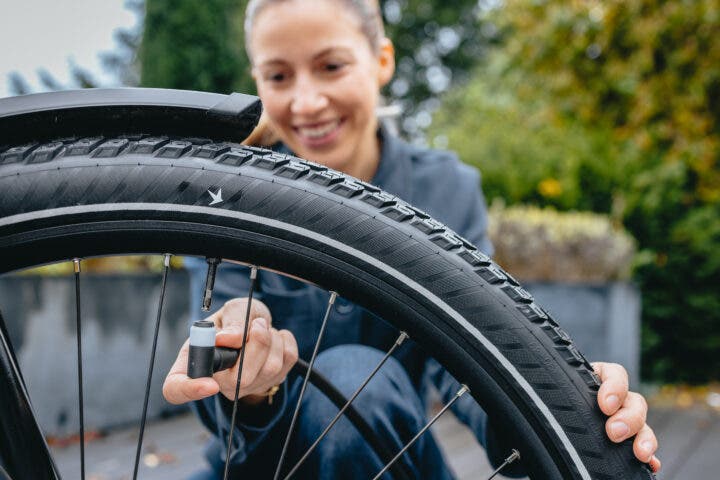
Although Presta has been the standard valve core for years, it has always been less than perfect. Besides the valve easily clogging with tubeless sealant, the valve head from Presta can easily bend and even break. Attaching the pump to the valve correctly can be a bit of a struggle, and because the pump has to use a rubber attachment to the valve, it will inevitably wear off and not fit anymore.
So, when Schwalbe started developing Clik Valve with Quintana, they didn’t focus solely on preventing the clogging of the valve, but wanted to create a valve that was generally more user-friendly.
“We’d always accepted Presta as a standard, but it’s actually very weird that those performance issues were normalised,” Bakker said. “Dunlop and Schrader valves are probably more user-friendly. Presta is probably the least user-friendly, but it was simply the most widely use.”
BBB had similar reasoning behind CoreCap, although it was also something that crossed their path. “One of our product managers was visiting a factory that produces parts for us, and we came across a valve they were developing for the automotive sector.
“We immediately recognized that if we fine-tuned that mechanism a bit, we could really create something that worked even better than existing options,” Florian Bont, who works for BBB, explained. “We already had the idea of a new valve, but it was a bit easier for us because the factory that produces our valves had already developed some things.”
Different valves, different ideas
Ultimately, both brands have tried to fix more or less the same issue, but they have very different approaches.
Clik Valve can replace a valve core, but it also comes as a complete valve, meaning Schwalbe can easily integrate it on all their tubes, and even other tire brands can use it. CoreCap is made solely to replace the valve core and not the entire core. Topeak also has a similar product with TurboFlow, which is also a valve core you screw onto an existing valve shaft.
Nevertheless, the biggest difference is actually that Schwalbe also developed a new pump head that doesn’t need a lever to be attached to the valve. You simply click it on the valve, hence the name Clik Valve. At the same time, it’s also backwards compatible with regular Presta and Dunlop pumps. Meanwhile, Topeak TurboFlow requires a special pump head, and BBB’s CoreCap only works with a Schrader pump.
All things considered, like other advancements, each company with a new idea is backing its own way of attacking the issue of valves.
“Clik Valve is obviously much better than Presta, but it comes with its own challenges,” Bont said. “Schwalbe needs to change the industry on two sides. They need to sell their valves, but they also need to convince the producers of bike pumps to create Clik Valve-ready pumps.
“In our case, you just twist on the CoreCap, and you’re done, which makes it easier to transfer. The learning curve is much easier than with Presta.”
Bakker and Schwalbe have a different view on that.
“For most users, messing around with a pump and the lever is actually the annoying part,” Bakker said. “You have probably also worked with a worn pump head where one person needed to push the pump onto the valve, and the other was pumping. Our biggest added value is that you can just click the pump on easily and it doesn’t wear.”
Besides that, Topeak and BBB are both parts you twist on an existing valve shaft. To set a new industry standard, you need something that works for all bikes, and as far as I know, Clik Valve is the only one that does that so far.”
And in that reasoning, Bakker might be right. That does not guarantee Clik Valve will become the new industry standard, but it is probably the most promising new valve to be able to do so.
Reserve’s Fillmore valves simply have a limited scope as they only work for tubeless tires. Topeak’s TurboFlow and BBB’s CoreCap are nice to have, but not compatible with all existing tires. Besides, it’ll be hard to convince bike brands or tire brands to sell their bikes with a part that needs to be twisted on separately, which is the case for their valves.
A matter of perseverance?
Schwalbe is currently working on persuading industry partners to adopt Clik Valve. If they truly want to set a new standard, they need major brands to join in.
“Admittedly, that takes longer than anticipated,” Bakker said. “We were a bit naive about thinking everybody wanted to transfer. But more and more users are adopting our valves, and more and more brands are switching to them. That means more bike shops will be seeing the product, and bit by bit we can set a new standard.
“There are also some advantages to it for bike brands if we can set this new standard. Right now, they might need to use different valves for different countries — sometimes even with different diameters for the valve holes in wheel rims. We can bring that back to just one valve, which simplifies production.”
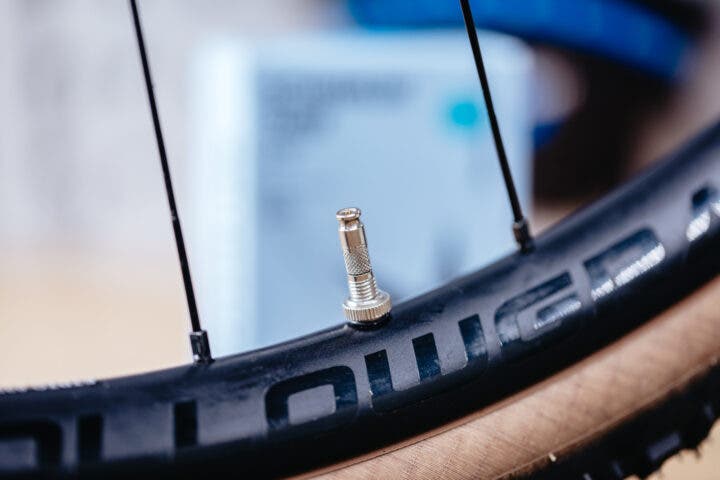
Although BBB, Topeak, and Reserve’s valves are easier to switch to as a user, Schwalbe is the one brand that is really trying to change the game. Not only does their product allow for wider adoption, but as a tire producer, they are also in a better position to convince other brands of that new standard.
Even if a new industry standard seems to be feasible, the question is when a new standard has truly been achieved. It will take years for the majority of bike brands, bike shops, and users to adopt a new valve as the status quo. Bakker has a very clear idea of that.
“I think when other tire brands also decide to use Clik Valve, we have truly done well.”