
This article first appeared in the January 2026 edition of World Soccer Magazine
Football is a complex game. An action taken in one area to rectify one issue will almost certainly have a knock-on effect elsewhere, which is why any change to the laws of the game should be undertaken with great caution.
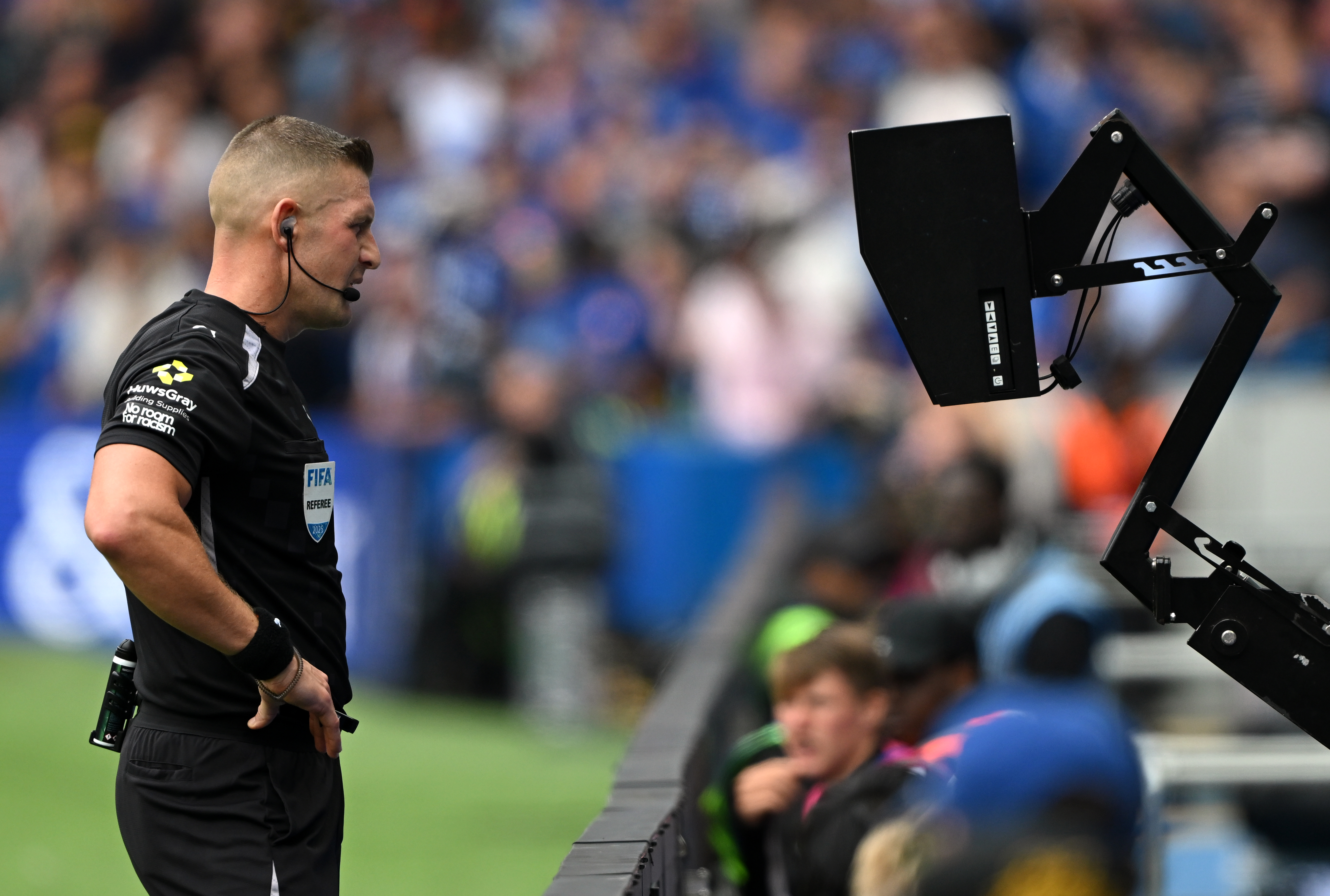
Take, for example, the introduction of three points for a win, implemented in the English leagues from 1981-82. The theory, set out by Jimmy Hill, was that it would make football more attacking. In fact, it led to teams with a lead fighting harder to retain it: what went up was not the number of goals but the number of fouls and bookings. VAR, inevitably, has had its own impact. Discussion tends to centre on whether decisions are actually correct and the delays to the game, the interruption to the rhythm, which are of course important. But VAR has also changed how the game is actually played.
Perhaps the most striking feature of last summer’s transfer window was how many fairly classical centre-forwards changed hands for vast sums of money. With Alexander Isak, Benjamin Sesko, Viktor Gyokeres,
Hugo Ekitike and Nick Woltemade all making big moves, and Erling Haaland already established, it felt like a reversion to the football of the 1980s. VAR is not the only reason for the return of the target man, but it is at least in part responsible. VAR has changed offside. From 1992, to be level with the penultimate defensive player was to be onside. In practice, of course, that was almost impossible for a linesman to judge, and the tendency was for forwards
to get the benefit of the doubt. So a forward could be three or four inches ahead of the relevant defender and still reasonably expect to be considered onside. This was understood and accepted; defenders knew that to play a forward offside and be relatively confident the linesman would give it, the core of their body had to be obviously in advance of the forward’s core.
That has gone now: forwards can be played offside by a pixel. Level, that convenient compromise, has effectively been taken out of the game. That makes it harder for forwards to get behind defenders to make a run on goal. Life has been made much harder for the Pippo Inzaghi style of slight sniffer goalscorers and so, not surprisingly, they have effectively faded from the elite level of the game.
But in one area, VAR has made life far easier for forwards. One of the problems is that it is not used consistently not in the sense that an incident will be given as a foul one week that was not given the week before, but in its design. VAR checks goals and it will check penalty shouts; it does not check for free-kicks in the box to a defending side. So when a corner comes in, attacking players – who are only risking a free-kick-effectively have carte blanche to wrestle and grapple. But if a defender does it, even if they manage to avoid the gaze of the referee, VAR could give a penalty against them.
Perhaps you think that’s good, that the laws should favour the attacking side. The infantile lust for goals at any cost is why someone in football has mysteriously decided that a forward standing offside in the middle of the six-yard box is somehow not interfering as a shot flashes past a goalkeeper standing a few feet behind that forward. But it creates absurdities.
Take, for example, the penalty Manchester United were awarded at Fulham earlier this season as Calvin Bassey wrestled Mason Mount to the ground. It was, fairly clearly, a foul. But six feet behind Mount and Bassey, Luke Shaw was committing essentially the same foul on Rodrigo Muniz. VAR can only look at the incident that might lead to a penalty. So even though a player from each side was committing a foul, the same foul, VAR could only penalise one of them. That, obviously, hands a massive advantage to the attacking team.
In that context, it’s hardly a surprise that the number of goals from set- plays, be that corners, free-kicks or throw-ins, has gone up. Forwards can make blocking runs or hold defenders and are very unlikely to be penalised. Even if a goal is scored, the instinct is to let it stand. But defenders feel always the eye of the unseen deity watching them, judging them, waiting to hand the attacking side a 75% chance of a goal.
Its defenders will point out that VAR means there are fewer wrong decisions than ever before, and that may be true, but what is not seen is how it has changed the nature of the game. VAR has made the game more stop-start and increased the value of set-plays. Is that the football we want? Is the loss of fluency worth it to get a few more decisions right?