

José Bautista’s Major League Baseball career is one of the most fascinating and inspiring stories in modern baseball. His journey from relative obscurity to becoming one of the game’s most feared sluggers is a testament to perseverance, hard work, and an unrelenting belief in his potential. Known for his explosive bat, sharp eye at the plate, and fiery competitiveness, Bautista’s career was marked by dramatic highs and unforgettable moments. Beyond the statistics, his impact on baseball—especially in Canada and among Latin American players—remains significant and enduring.
José Antonio Bautista Santos was born on October 19, 1980, in Santo Domingo, Dominican Republic. From a young age, he exhibited a deep passion for baseball, a common thread among many Dominican youths. However, unlike some of his peers who signed with professional teams as teenagers, Bautista took a different path. His journey to MLB was longer and more arduous. He attended high school in the Dominican Republic and later enrolled at Chipola College in Florida, where he played junior college baseball. This move to the U.S. college system was rare for Dominican players at the time, signaling Bautista’s unique blend of academic aptitude and baseball ambition.
Bautista was drafted by the Pittsburgh Pirates in the 20th round of the 2000 MLB draft. He was selected in the Rule 5 draft by the Baltimore Orioles in 2003, then became a well-traveled prospect in 2004, bouncing between multiple organizations. That year, he played for five different major league teams—the Orioles, Tampa Bay Devil Rays, Kansas City Royals, New York Mets, and finally, returning to the Pirates—all within one season. This chaotic movement underscored the uncertainty and instability that marked the early phase of his professional career. Despite these challenges, Bautista never wavered in his pursuit of success.
In his early years with the Pirates, Bautista showed flashes of potential, particularly in his power, but struggled to find consistency. Between 2004 and 2008, he was used in various roles, often playing third base and the corner outfield spots. In 2006, he had his first full MLB season, appearing in 117 games and hitting 16 home runs. He followed that with a 15-home-run campaign in 2007 and 15 more in 2008. While his numbers were respectable, he was not yet seen as a cornerstone player. After a mid-season trade to the Toronto Blue Jays in 2008, Bautista’s career entered its most pivotal and transformative chapter.
Initially, his time in Toronto did not appear to differ much from his previous stints. He played sparingly in 2008 and 2009, showing some pop but again not standing out in a crowded lineup. However, a late-season adjustment in 2009, facilitated by then-interim manager Cito Gaston and hitting coach Dwayne Murphy, became the turning point of his career. Bautista changed his swing mechanics, adopting a more pronounced leg kick that allowed him to better time pitches and unlock his full power potential. This mechanical transformation set the stage for one of the most remarkable breakout seasons in baseball history.
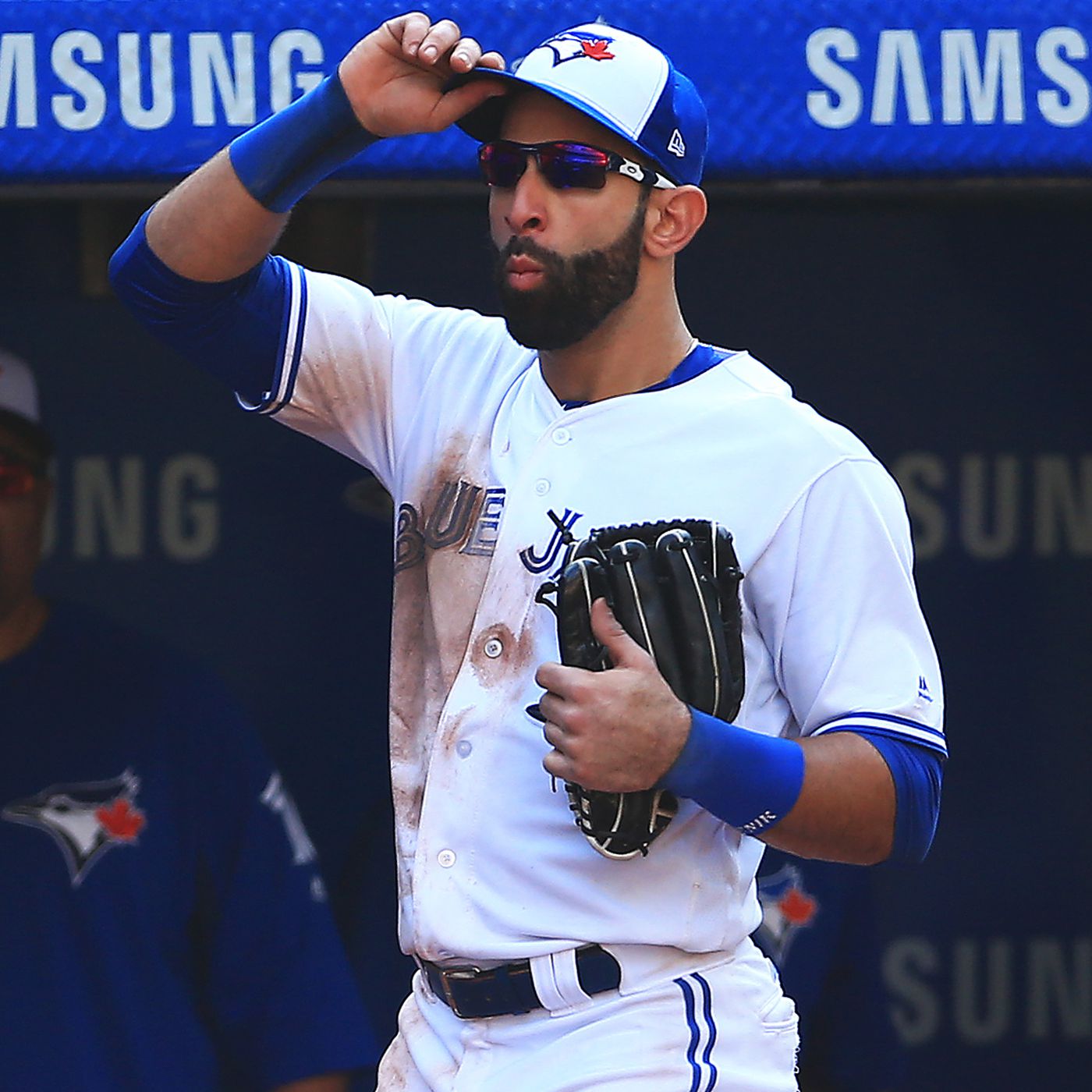
In 2010, José Bautista exploded onto the scene. He hit a league-leading and franchise-record 54 home runs, drove in 124 runs, and posted a .260 batting average with a .378 on-base percentage and a .617 slugging percentage. His sudden power surge drew skepticism from some corners, but for those who followed his adjustments and work ethic, it was the culmination of years of effort and refinement. He earned his first All-Star selection and won the Silver Slugger Award as an outfielder. Bautista became an overnight sensation, not only in Toronto but across all of baseball.
The following year, 2011, Bautista proved that his previous season was no fluke. He led the league again with 43 home runs and posted career-highs in batting average (.302), on-base percentage (.447), and slugging percentage (.608). He also led the league in walks with 132, demonstrating a disciplined approach at the plate that complemented his raw power. His Wins Above Replacement (WAR) for the season was an astounding 8.3, a figure that placed him among the game’s elite. Bautista’s dominance earned him another All-Star nod, another Silver Slugger, and a third-place finish in American League MVP voting.
From 2010 through 2015, Bautista was one of the most consistently productive hitters in baseball. He hit at least 27 home runs in each season, reached 100 RBIs three times, and walked over 100 times four times. He was a fixture in the middle of the Blue Jays lineup and became the face of the franchise. His powerful bat, combined with a flair for the dramatic, endeared him to fans and made him a feared opponent.

Perhaps no moment encapsulates Bautista’s career more than his iconic three-run home run in Game 5 of the 2015 American League Division Series against the Texas Rangers. In the seventh inning of a tense, chaotic game, Bautista crushed a go-ahead home run and punctuated it with a dramatic bat flip that instantly became one of the most replayed and discussed highlights in postseason history. The bat flip polarized fans and pundits but also symbolized a shift in baseball culture—toward a more expressive, emotional, and personal style of play that many younger players, particularly from Latin America, embraced. Bautista’s moment was not just a turning point for the Blue Jays, who were making their first playoff appearance in over two decades, but a cultural milestone in the sport.
Bautista’s leadership extended beyond the batter’s box. As a veteran, he became a vocal presence in the clubhouse, mentoring younger players and guiding the Blue Jays through competitive seasons. His presence was especially significant during the 2015 and 2016 playoff runs, where Toronto once again became a contender in the American League. In those two seasons combined, he hit 55 home runs and drove in 166 runs, providing both power and leadership during crucial moments.
Injuries began to slow Bautista in the latter part of his career. He battled through various ailments in 2016 and 2017, including toe and knee injuries that affected his swing and mobility. His numbers began to decline, though he still managed to hit 22 home runs in 2017. The Blue Jays opted not to re-sign him following that season, signaling the end of an era in Toronto. Bautista signed minor league deals with the Atlanta Braves, New York Mets, and Philadelphia Phillies in 2018, appearing in a combined 122 games and hitting 13 home runs. While he was no longer the dominant force of earlier years, his knowledge and experience continued to add value to the teams he joined.
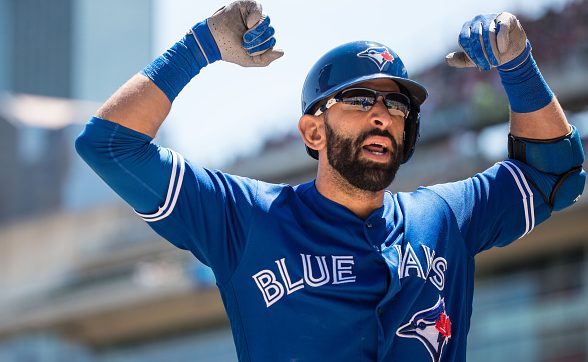
José Bautista finished his MLB career with a .247 batting average, 344 home runs, 975 RBIs, and a .361 on-base percentage. He was a six-time All-Star (2010-2015), a three-time Silver Slugger (2010, 2011, 2014), and led the league in home runs twice. He also ranked among the league leaders in walks and OPS throughout his peak seasons. His career WAR stands at approximately 36.7, underscoring his all-around contributions despite his late breakout.
Beyond the numbers, Bautista’s influence on the game of baseball is multifaceted. He helped reinvigorate a Blue Jays franchise that had languished in mediocrity for years, bringing postseason baseball back to Canada and uniting a passionate fanbase. His success story inspired countless players who struggled early in their careers, proving that perseverance and adaptation can lead to greatness. Bautista also became a role model for young Latin American players, showing that cultural expression and flair could coexist with discipline and professionalism.
One of the unique aspects of Bautista’s career was his ability to dramatically reinvent himself at a point when many players are considered finished products. His late breakout at age 29 defied conventional wisdom in baseball, which often emphasizes early development and peak performance in a player’s mid-20s. Bautista’s transformation, driven by mechanical changes, mental focus, and tireless preparation, offered a blueprint for others seeking to revitalize their careers.

In addition to his on-field contributions, Bautista was active in charitable work, especially in the Dominican Republic. He established the Bautista Family Education Fund to support underprivileged children and families. His commitment to community service and education further solidified his legacy as more than just a baseball player. He used his platform to advocate for causes he believed in and to represent his heritage with pride.
Throughout his career, Bautista carried a chip on his shoulder. He often spoke about being overlooked, doubted, or dismissed early on, and he used that as motivation to prove his worth. That competitive fire manifested in intense moments on the field—whether arguing with umpires, confronting opponents, or simply delivering in clutch situations. His passion made him a polarizing figure at times, but it also made him unforgettable.
José Bautista’s place in baseball history is secure. He may not have reached the statistical milestones typically associated with Hall of Fame induction, but his cultural and competitive impact is undeniable. He was a game-changer in every sense, from his majestic home runs to his outspoken leadership to his role in reshaping how players express themselves. His career is a reminder that greatness can come from unexpected places and that the journey, with all its twists and turns, can be as compelling as the destination.
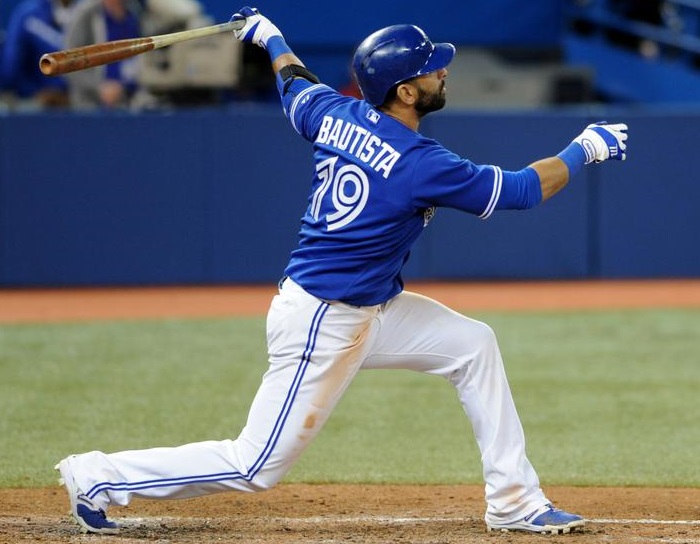
For Toronto Blue Jays fans, Bautista will forever be remembered as the man who brought power, passion, and postseason magic back to the city. For baseball fans more broadly, he will be remembered as one of the defining sluggers of his era—a player who stood tall when it mattered most and who left a lasting mark on the game he loved.