ProStockHockey.com proudly presents Journeymen, our ongoing blog series — a raw, unfiltered look into the lives of elite players at various stages of their individual hockey journey, told entirely in their own words. This series isn’t about stats or headlines — it’s about the miles, the grind, and the road that shaped them. Each story dives deep into the successes and failures, the setbacks and celebrations, and those moments when walking away might have been easier — but they didn’t. Through honesty and reflection, these players share what kept them moving forward and what they want young, aspiring players to know from their own experiences as they chase their own hockey dreams.
Getting There the Hard Way
Growing up, I was never one of the best players. At 8 years old, I got cut from a team for the first time and told I wasn’t good enough. It took a long time before I started to hear something different. I played AA hockey until I was 15, and I played four years of New York public high school hockey. My path to college hockey wasn’t a common one, but it goes to show there isn’t one path or one “right way” to get there.
Getting Cut and Closing the Gap
I spent the first seven years of my life living in the Upper Peninsula of Michigan. Between skating on the outdoor rink at my house and constantly being around the game of hockey, this is where my love of the game started. When I turned seven, I moved to Providence, Rhode Island, where I got my first taste of getting cut from teams. It was also my first taste of having to deal with adversity. My skating was the main reason why I got cut from teams early on.
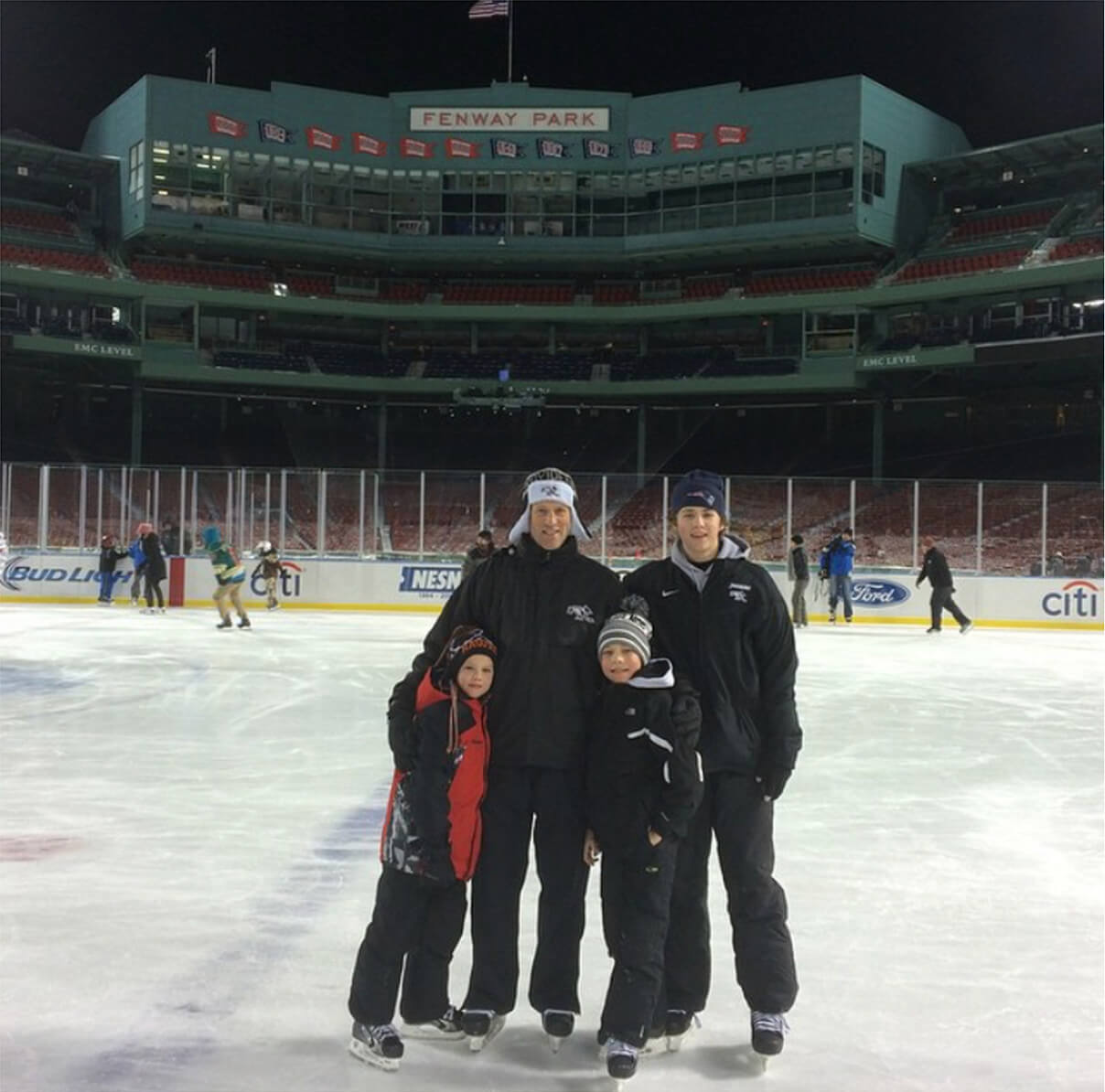
In the three years I lived in Providence, I got better every single year and started closing the gap between myself and the players that made the team. This was largely because of the sacrifices my family and I made. One of the biggest things that made a difference in my development was the extra ice time. At 5:45 a.m., I would go and do power skating before school with my dad and two brothers, and my skating took a big step.
The Rink Became Home
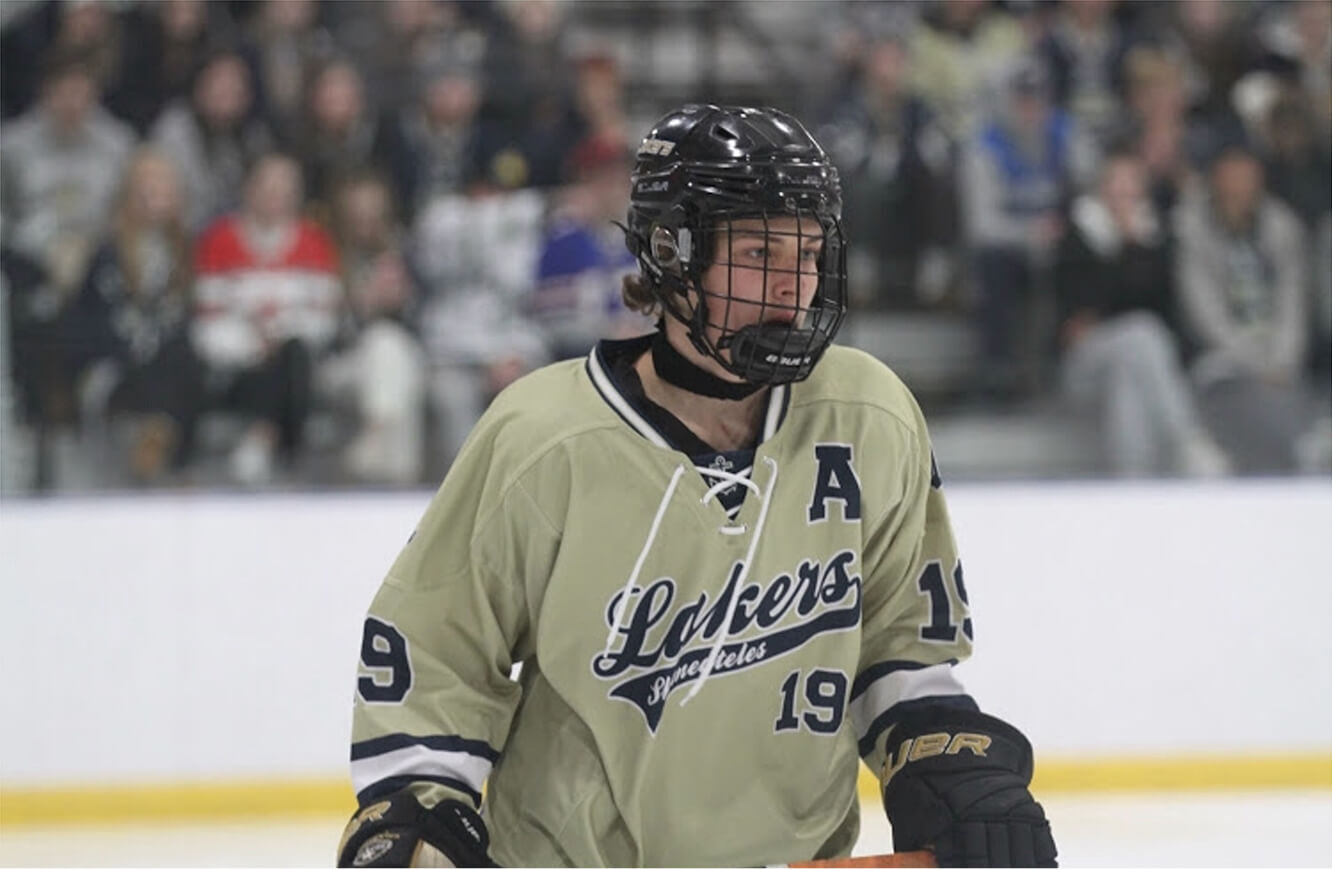
When I was 10, I moved to Skaneateles, New York, where I played locally for seven years. It’s a small town of around 7,000 people but has two sheets of ice. The ability to be constantly on the ice was a key aspect in my development. I played for Mitch Major for seven seasons during this time, both on his youth teams and high school teams.
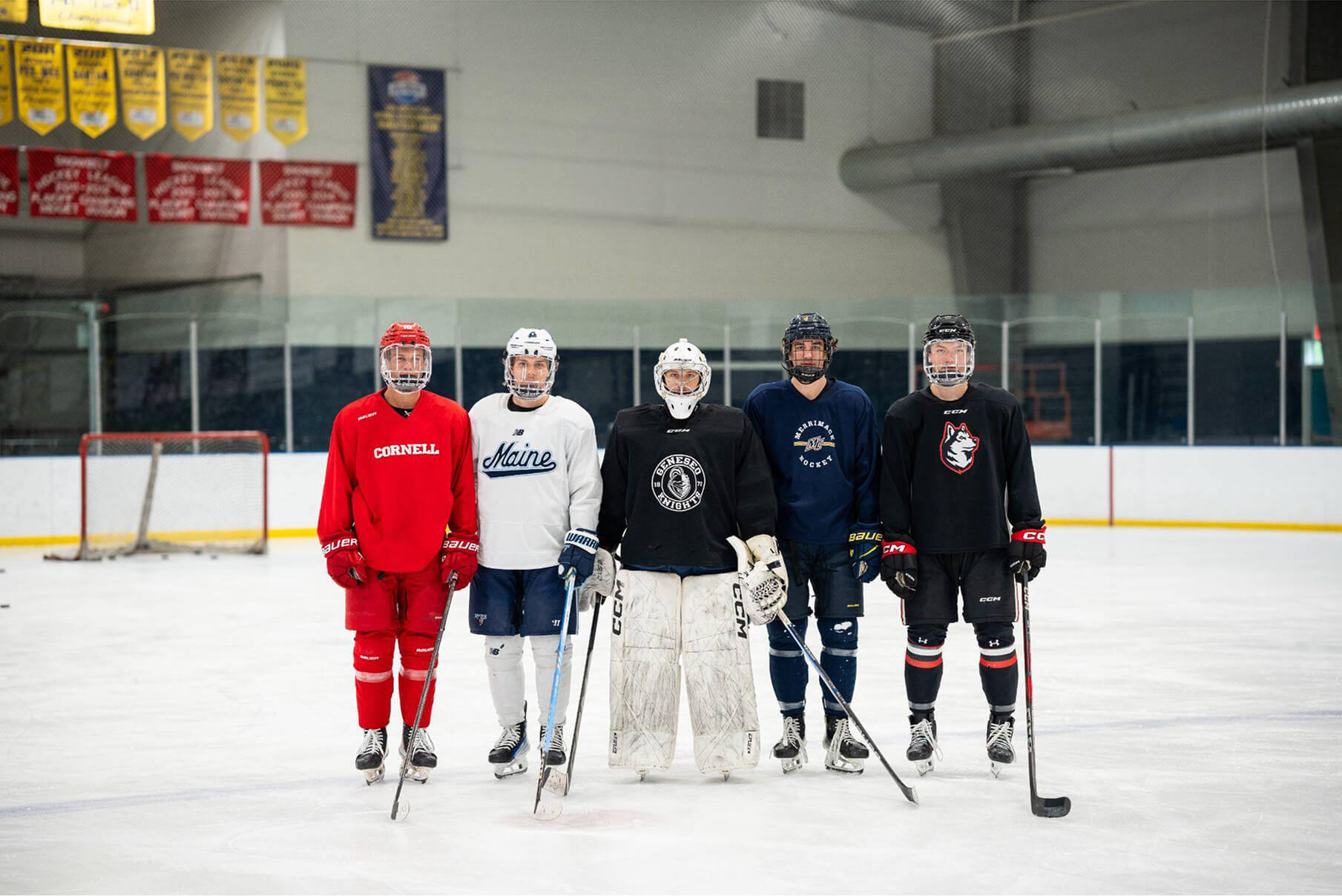
It was during these years that I believe I took the biggest jump in my development. I spent countless hours at the rink during these years, with two of my former teammates Charlie Major (Cornell) and Jack Henry (Northeastern). Whether it was at skate-and-shoot before school playing shinny, or during the structured practices, we were always on the ice. All three of us pushed each other to be better, and it made a big difference in all our hockey journeys.
When Production Wasn’t Enough
In my senior year of high school, I went to South Kent School in Connecticut and played for my dad. During this season I took another step in my game and produced offensively. I was one of the better players on that team (38 points in 25 games) but was healthy scratched for the first time in my career. It made for some interesting family dinners.
During the summer before I made the jump to junior hockey, I spent lots of time in the weight room and doing skill work with my dad on the ice. Without all these hours on the ice and in the gym over the summer, I don’t know if I could’ve successfully made the jump to junior hockey.
Choosing Development Over Attention
My first year of junior hockey was with the Bonnyville Pontiacs in the AJHL. When I was deciding on where to play, my family and I weighed several factors. I had an opportunity to play in the USHL that year, but I turned it down. I felt that I wasn’t ready to play in that league and thought it would be better for my development to go to a spot where I would play in all situations and compete for a championship. Looking back on it now, I think this was the right move as I developed a lot as a player and my confidence in myself grew.
Overall, I had a pretty good year and was expecting to get some attention from colleges. During the season, I got almost zero attention from any schools. I remember looking at line charts before the games and couldn’t wrap my head around some of the kids that had logos next to their name. I was unbelievably frustrated during that year seeing players that I thought I had finally gotten better than, getting interest from schools. I thought I was getting overlooked and it added fuel to the fire.
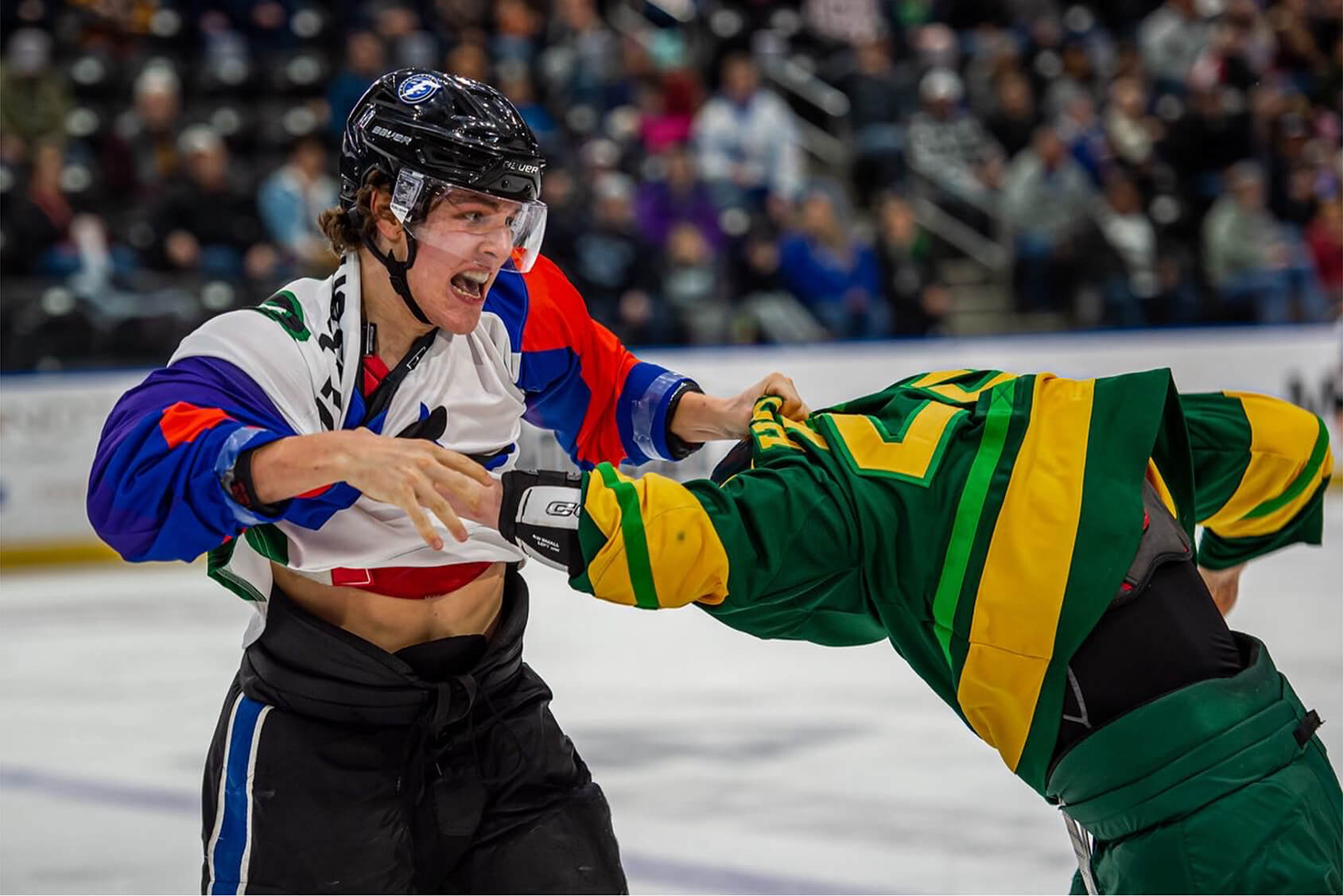
My big break was supposed to be the AJHL showcase, where almost every school in the country would be in attendance. Two shifts into the first game, I got a major penalty for contact to the head and was suspended for the entire showcase. Once again, I had to face adversity and find another way to be successful.
Forcing the Issue
After that season, I got drafted by the Fargo Force in the USHL and attended their main camp in the summer. At the camp, I knew I had a good chance to make the team but knew there was going to be some strong competition. It was a team who returned a lot from the year before and was going to be challenging to make.
My mindset for the main camp was to work my tail off and be the hardest player to play against, and that I’m going to force them to take me. I ended up making the team out of main camp and committed to Clarkson University right after. I had a good year overall, and Clarkson decided to bring me in the following year.
Betting on Myself — Again
After finally having success, I had a really difficult start to my college hockey career. I was out of the lineup constantly and it didn’t feel like a great fit. I felt that I wasn’t getting a great opportunity and decided to go back to junior hockey. This decision wasn’t easy.
It was at a time when college hockey had a logjam of players with all the extra Covid years. I was leaving a full scholarship at Clarkson with nothing promised once I decided to go back to junior hockey.
I bet on myself and ultimately found a home at the University of Maine after a good second half in the USHL.
Learning How Winning Works
When I got to Maine, I was blown away at how hard it was. The workouts, conditioning tests, and daily practices were at a different level than what I had been a part of previously. It is a highly intense and detailed environment where you are held accountable in everything you do. My first week of practice, I was sent a clip of every pass I gave that wasn’t on the tape and the coaches stressed the importance of each rep and each puck.
I learned a lot that year on what it takes to be successful and how the gap between the best teams and the worst teams isn’t very big in college hockey. My biggest take away from this year was how important the small habits and details are in playing winning hockey. The difference between stopping on a puck, or looping away can end up making the difference in a game and even a season.
Off the ice, I learned a ton from the leaders on that team on what it takes to be a pro. The preparation and detail they did everything with are big reasons why they had such an impact on the rebirth of Maine Hockey. I lived with two of the seniors on that team (Nolan Renwick and Harrison Scott) and saw every day their consistency and how they took care of their bodies.
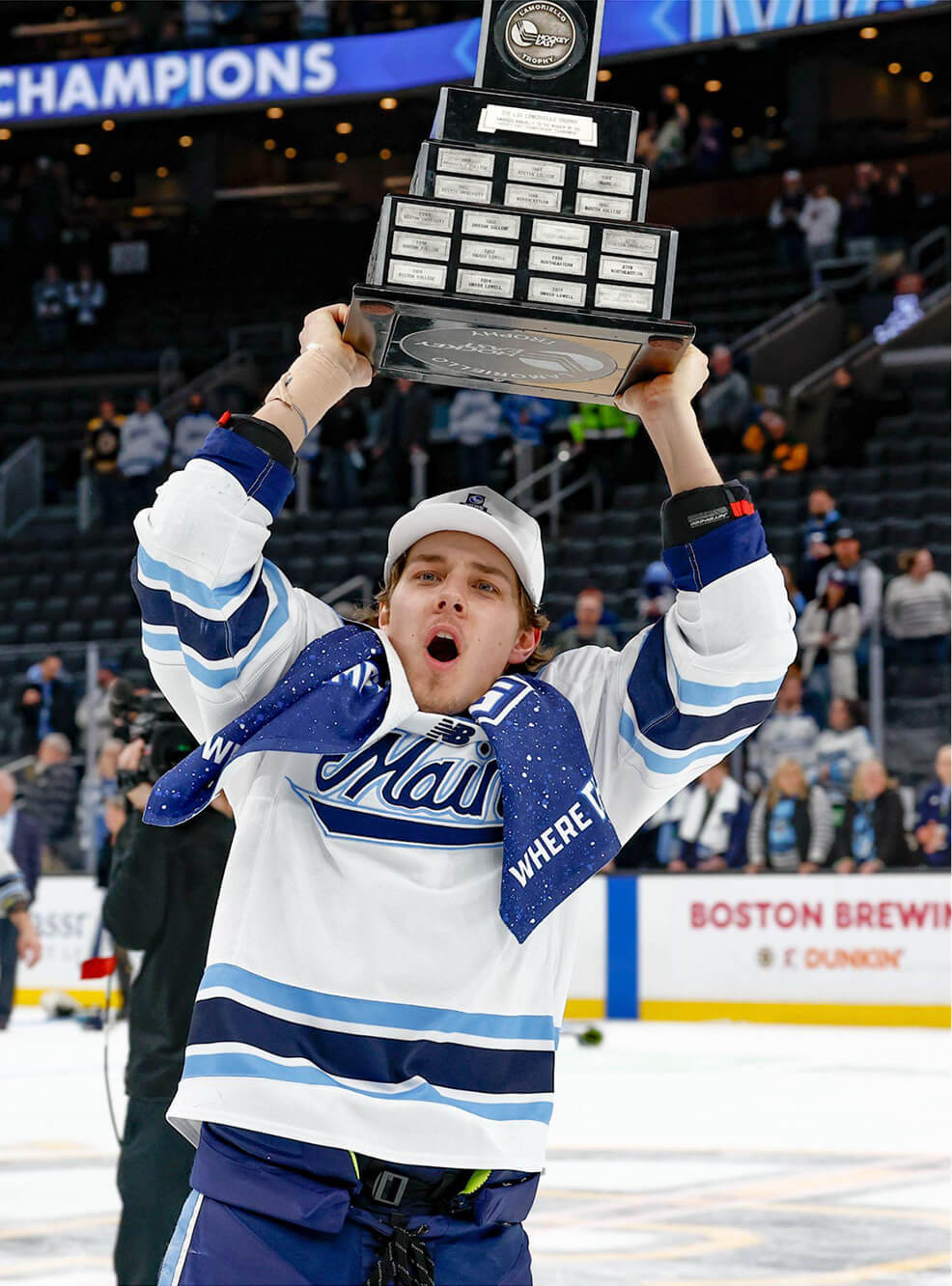
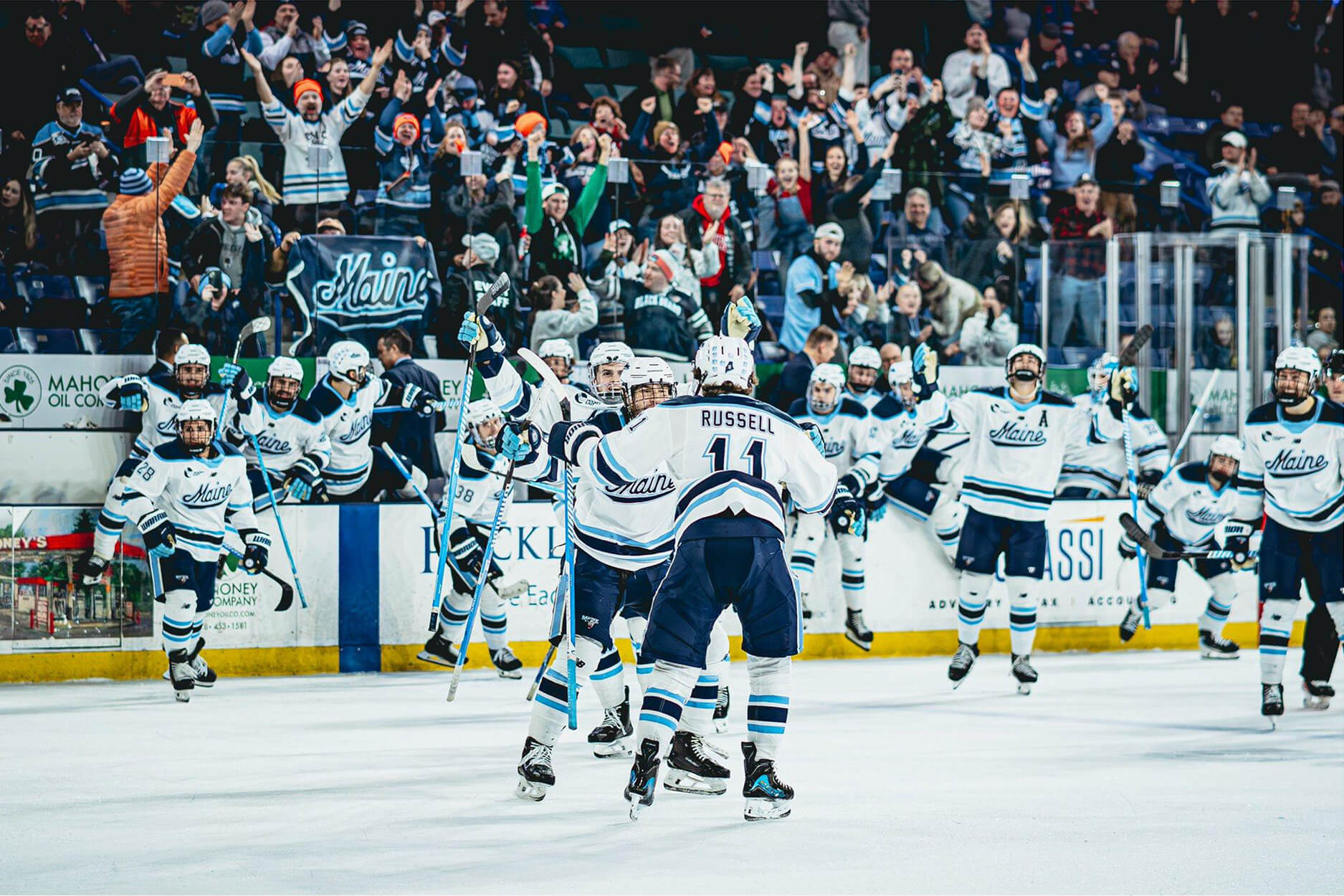
Ultimately, I had a successful year individually and as a team we ended the season with a Hockey East championship and berth in the NCAA tournament.
What the Grind Teaches
Looking back on my career so far, I think all my successes have been preceded by failures. My skating was one of the biggest knocks on my game early on. I spent countless hours working on my edgework and stride. Once I got my skating technique down, I lacked lower body strength. This past summer, I spent almost the entire summer working with the strength coach at Maine to improve this. What started as one of my biggest detriments has turned into one of my greatest strengths as a player. Overall, I would give four main pieces of advice for those going through their own hockey journeys.
- It’s a marathon not a sprint. A lot of the best players I played with growing up, no longer play hockey. It’s not about who is the best 12-year-old, it’s about who can be the best over their entire hockey career.
- Don’t focus on what everybody else is doing, focus on your own development. Growing up, I was always so frustrated looking at the attention and praise all these other kids were getting. It did me no good and caused a lot of headaches and stress that accomplished nothing.
- Have an uncompromised belief in yourself. There are going to be times where it is hard but always having that belief in yourself is incredibly important. If you don’t believe in yourself, it’s going to be hard to get others to.
- I’ve always liked the phrase, “be elite at getting better.” I think this has summed up my development over the course of my career so far. Finding new ways to continue to grow no matter the level, will pay dividends during your career. If you improve your game faster and better than everybody else, you will win the race in the long run.