

[GRM+ members read this article first. Subscribe and gain access to more exclusive content for only $3/month.]
If you’ve ever gotten any sort of driving instruction–or even just some advice from a friend or fellow competitor–you’ve undoubtedly been given the directive to “look ahead.”
It’s a core principle of autocross and track work. But what does “look ahead” really mean? It’s a simple descriptor for a slightly more complex process. What are those well-meaning advice-givers actually saying?
[Why does track driving make simple instructions so hard to follow?]
The first thing I want you to get your head around is that looking ahead doesn’t specifically refer to space and distance; rather, it refers to looking ahead in time.
Now, it just so happens that being in a fast car means that you are using your time to cover space and distance, so that will be a primary focus, but if you can internalize the fact that looking ahead actually means peering into the future, you’ll have a much easier time negotiating this process.
Getting philosophical for a bit, the reason for this framing of the concept is that the future is really the only thing that you can do anything about. The past already happened, you create the future by acting in the present, and that present is a constantly shifting window in which your actions are taking place. Okay, you can turn off the black lights and air out your basement now.
So, since you can’t affect the past, you have no business dwelling on it in the moment. That’s what data is for. Save the analysis of the past for when you have the additional cognitive capacity to properly process it. When behind the wheel, your job is to focus on the future.
But how far in the future? Well, that’s a complex question, so the real answer is, “It depends.”
Speed is certainly a factor, but knowledge of subsequent events is also important–particularly in a situation like autocross, where every maneuver tends to lead into another maneuver, or on a hilly track where you may not see what’s coming next but you need to be ready for that moment.
The goal here is to eliminate reaction time from your decision-making process and turn your laps into planned and executed activities–because whenever you’re reacting, you’re naturally behind the game.
The average human reaction time is around 0.25 second. Fast reactors will occasionally be under 0.20, but you’re still looking at the better part of a couple of tenths of a second to turn stimulus into action. If you don’t believe me, you can go check out this human reaction time test and try it yourself.
And that quarter-second number is just the reaction time for turning simple perception into simple action, like clicking a mouse with one finger. For more complex inputs requiring more complex outputs, things will naturally slow down even more. For an example of this, you can check out this aim trainer.
A quarter of a second may not seem like much, but let’s look at it in perspective. At 60 mph, you’re traveling 88 feet every second. In that quarter of a second, you cover 22 feet. That’s more than a car length, and I can’t think of many corners that will give you a car length-plus tolerance on your turn-in spot and still let you maintain an optimal line. On an autocross course, the line will be even more sensitive than that.
The goal here is to look far enough into the future that you’re never reacting, but always planning and executing. This doesn’t mean you should fix your gaze a certain distance or even time ahead of the car. Take in as much information coming at you as you can process.
Occasionally, this may mean looking several seconds ahead and then scanning back to maybe a second ahead of your current position to evaluate how your plan is working; that way you can make any necessary adjustments.
Long autocross slaloms–particularly ones that change distance–or a segment like the climbing esses at VIR are great examples where you might want to constantly scan ahead in varying increments. If you have a missed execution on an early control input in a sequence, your plan for the rest of that sequence will likely need to be adjusted on the fly. That constant reanalysis made available by varying your scanning distance gives you the ability to do just that.
I also want you to think about the fact that looking into the future doesn’t always mean looking at what’s in front of you. For track drivers sharing the course with other vehicles, your future may well be shaping up in your mirrors; knowing what’s going on back there can be every bit as important to your success as what’s happening out the windshield. For autocrossers, well, nothing back there matters. You can skip this paragraph. Except you can’t, because it already happened! See how that works?
Anyway, looking ahead is important. But hopefully this little reframe of what the concept actually means will help you integrate it into your process even more naturally and fluidly.
Comments
Interesting bit is that reaction times aren’t meaningfully better with pro athletes. The difference is that they can predict what is going to happen next from given info better. I read a sports medicine study where they did things like show people images with the ball removed and ask them to predict where the ball was. Pro level players were much better at that, but generally the same 200-250ms range in untrained reaction speed.
In that context, looking ahead is about giving yourself more information from which to predict. If you’re looking 10ft in front your hood you don’t even know about the next cone, or maybe the tire that came off a car and is bouncing at you.

This is a significant part of the situational awareness that everyone should be practicing, both inside and outside a car. Be alert. See what might be coming. Start forming a plan. Anyone who says they’re bored when driving is not doing it correctly. Your eyes and your mind should be pretty much constantly busy.

That’s an excellent reframing JG. I’m going to steal that for use in my own instructing.

Your eyes are like headlights. If they aren’t pointed up enough, you can easily outdrive them.

Msterbee said:
This is a significant part of the situational awareness that everyone should be practicing, both inside and outside a car. Be alert. See what might be coming. Start forming a plan. Anyone who says they’re bored when driving is not doing it correctly. Your eyes and your mind should be pretty much constantly busy.
As I driver education instructor I preach this constantly. And looking up/ahead transfers to other skills and arenas. The HS hockey players I teach understand this when they come around the back of the net with their head down.
Regarding boredom. I tell my students to identify things. Not just a house. A blue house with white shutters. Not just a barn. A red barn with most of the roof missing. If you engage the brain you have more information to work with and the brain remains malleable.

Tom1200
UltimaDork
6/13/25 11:44 p.m.
The only thing I would add to this excellent advice is that opening up your periphal vision is key element that needs to be coordinated with looking ahead.
If you actually have to look at your turn in point, versus using your peripheral vision, that target fixing will not let you look ahead.

An added complication is thick A-pillars that can block the view around a corner. I sometimes have to look out the side window to see far enough ahead.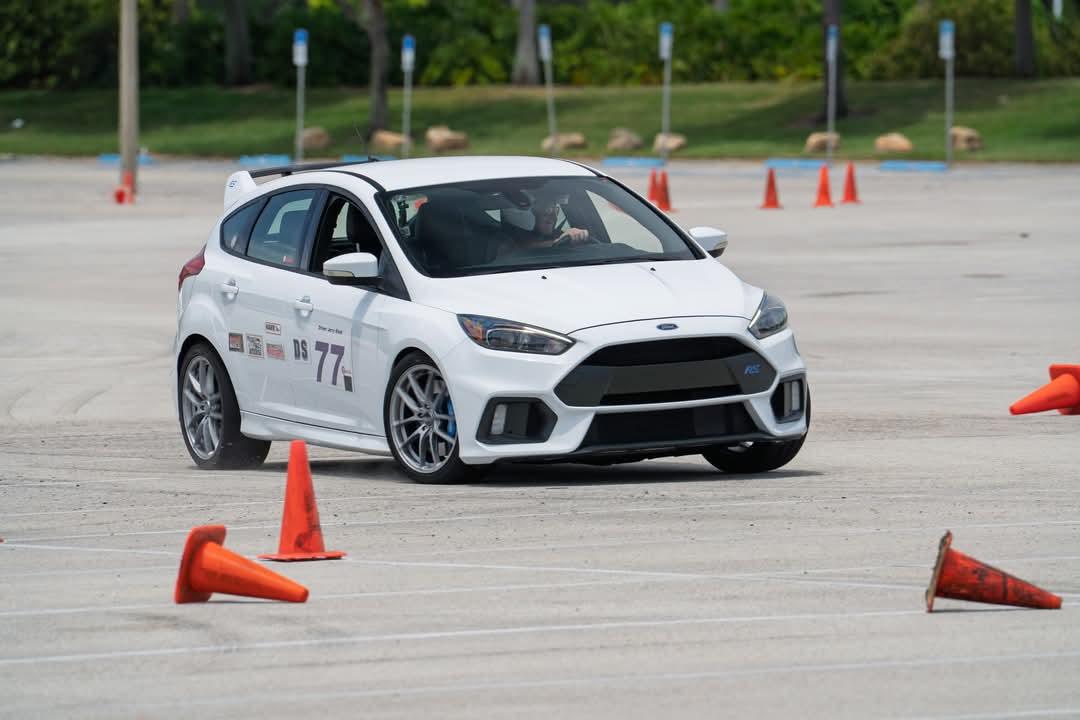

Great piece, JG. Best I’ve read on the topic in awhile.
I especially like using the term “scan”. Your eye/brain continuum works best when the eyes are moving and not fixed on a target. Spatial awareness in a moving frame of reference needs that kind of data for your super-computer brain.
When I’m in a performance slump, it’s almost always because I have gotten lazy and am not scanning ahead often/far enough.
And you know that section of every tire test when I talk about a warm-up session on non-test tires to clean the track and dial in driving? That second part is key to consistency. On a track where I have thousands of laps, the tendency is strong to be lazy with the eyes.
As someone who instructed at autocross schools for decades, teaching over a thousand students, I can count on one hand the folks that exhibited this skill as novices. Names like Peters, Corn, Buetzer and….Hollis.
Not me — my wife Ann. This is her very first autocross. Took me many years to learn this. She just did it.
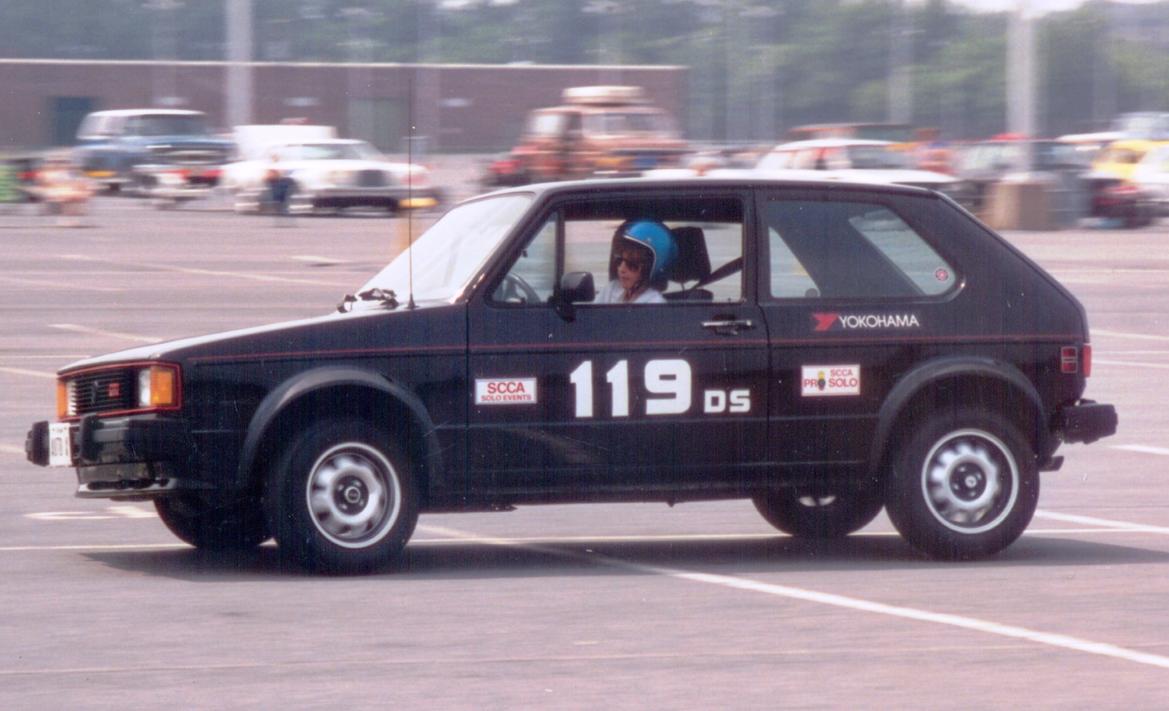

FWIW, whenever I ask Jerry for advice at an autocross, his reply usually boils down to “look ahead.”
He’s never wrong.
Displaying 1-10 of 15 commentsView all comments on the GRM forums
You’ll need to log in to post.