
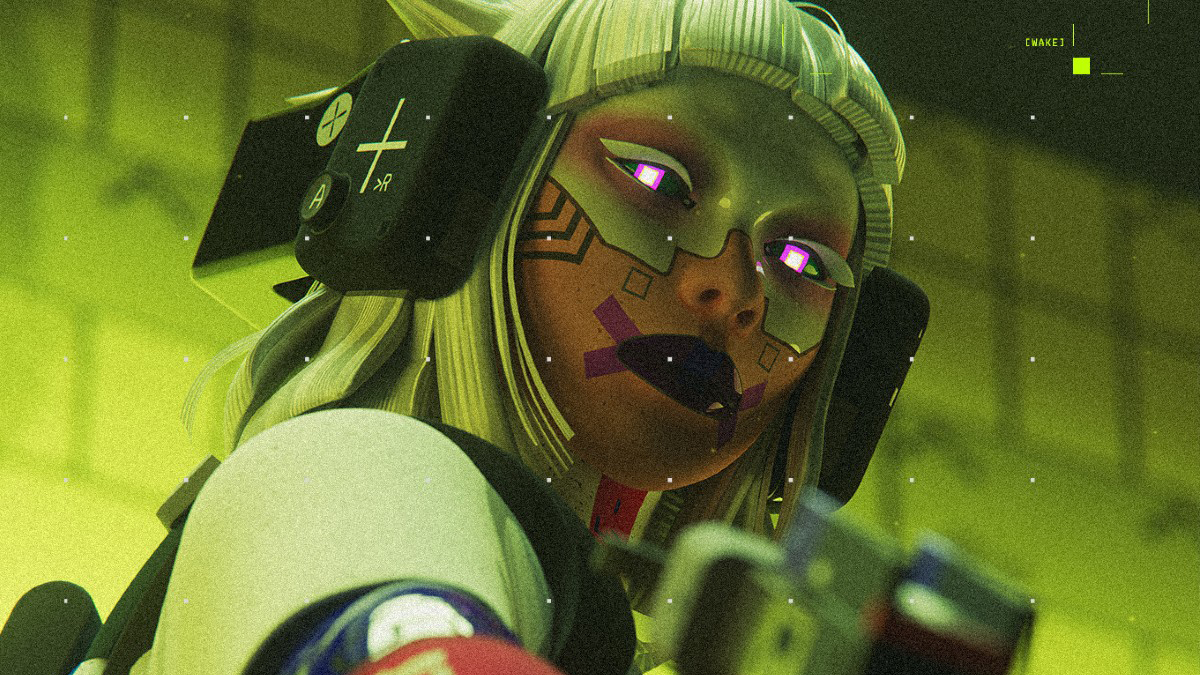
Marathon doesn’t welcome tourists. Bungie’s latest FPS might play by the rules and even share DNA with the studio’s past works and recent extraction shooters hits like ARC Raiders, but the unnatural hostility of Tau Ceti IV after the disaster of the UESC Marathon isn’t softened to accommodate players. Its mechanics and systems are the text. Ludonarrative dissonance? I don’t know her.
Following a $3.6 billion transaction to acquire the legendary FPS developer behind the original Halo games and Destiny, it was reasonable to expect Marathon to be a palatable online shooter that felt inviting while sporting its “graphic retro futurism” aesthetic with confidence. Instead, Bungie has delivered something that could be quickly described as “all killer, no filler” and seems squarely targeted at “sweaty” players, but its reality is more complex.
If you’re a newcomer, you only need to know Marathon (2026) is a loose follow-up to Bungie’s original Marathon games, which took cues from early FPS like Doom while telling a pretty ambitious story about an alien invasion aboard the colony ship UESC Marathon in the year 2794. The premise is simple enough, but the narrative was full of twists and turns, with rogue AIs and existential dread quickly taking over the tale. The sequels only made things zanier, leading to even alternate realities and god-like forces humans can’t even aspire to comprehend.
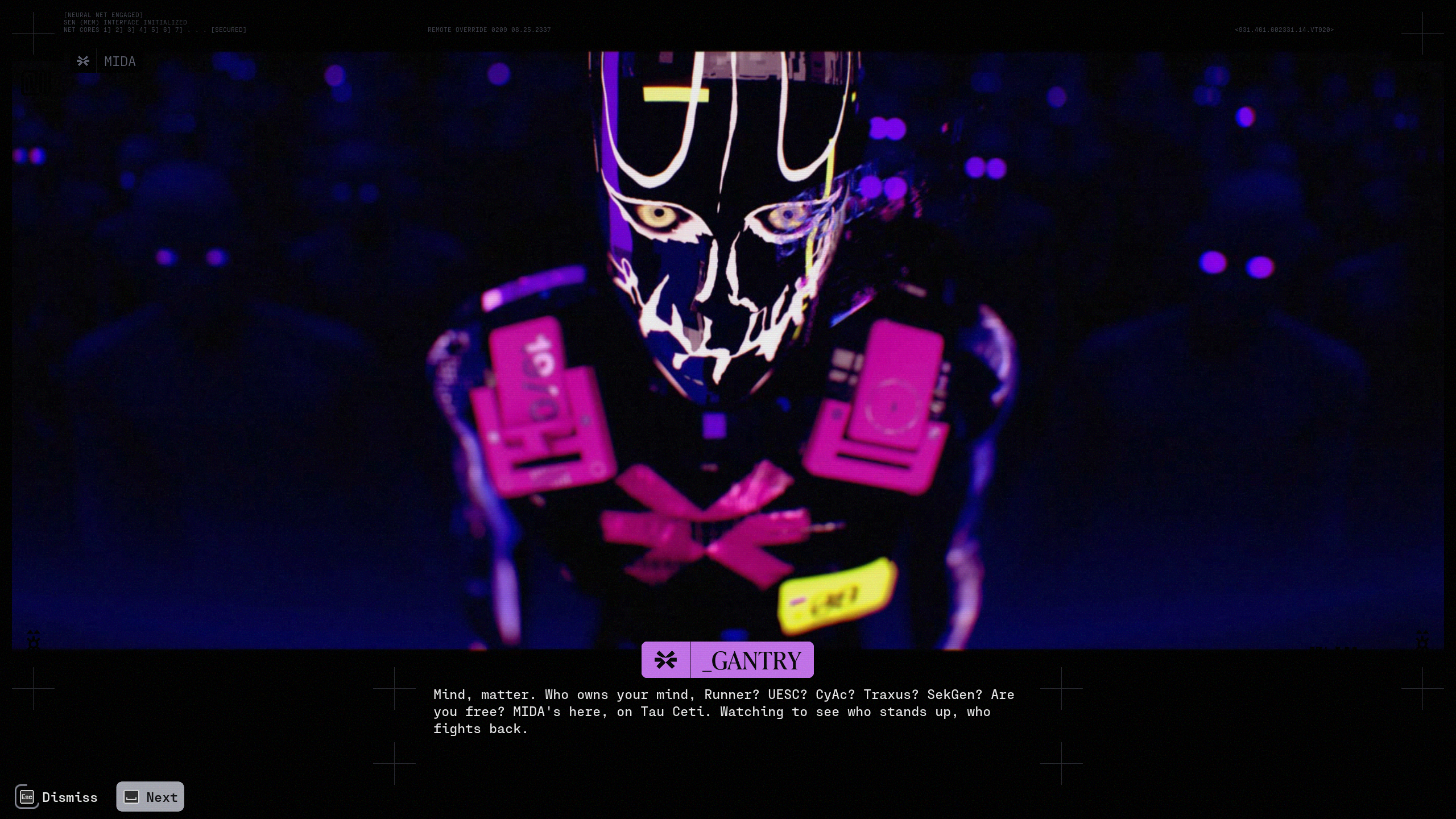
This “soft reboot” kicks things off with a solid hook: Once comms with the colony ship were lost, people on Earth grew anxious and demanded answers. Meanwhile, forces gathered to travel to Tau Ceti IV and investigate what happened to the colony and its colonists. In the year 2893, 99 years after the events of the first game, corporations descend on the planet using Runners, humans who have sacrificed their bodies in order to use upgraded cybernetic ones. They’re effectively “ghosts” who inhabit Shells expected to be lost sooner rather than later. But they can always return to finish the job, as the different groups looking to make some credits will spend as much money as needed to retrieve valuable tech and data from the lost colony.
The very concepts of Runners and Shells not only make the risky visits to the planet “make sense” narratively; they also encourage aggression and avoiding attachments to the physical. Your body and valuable loot might be lost often, but the mission and momentary thrills are eternal. Go out there, show no mercy, and extract as much value for shareholders as possible. Marathon is explicitly about the grind and is very upfront about it.
Ironically, the actual video game isn’t nearly as grindy as most of its contemporaries. Whereas extraction shooters like Hunt: Showdown don’t really take shape until you have developed a hunter’s meta progression enough and found the perfect loadout (which you’re likely to lose at some point), Marathon makes sure every Runner can ruin an entire squad’s day if they play things smart. This is why we shoot Rooks on sight.
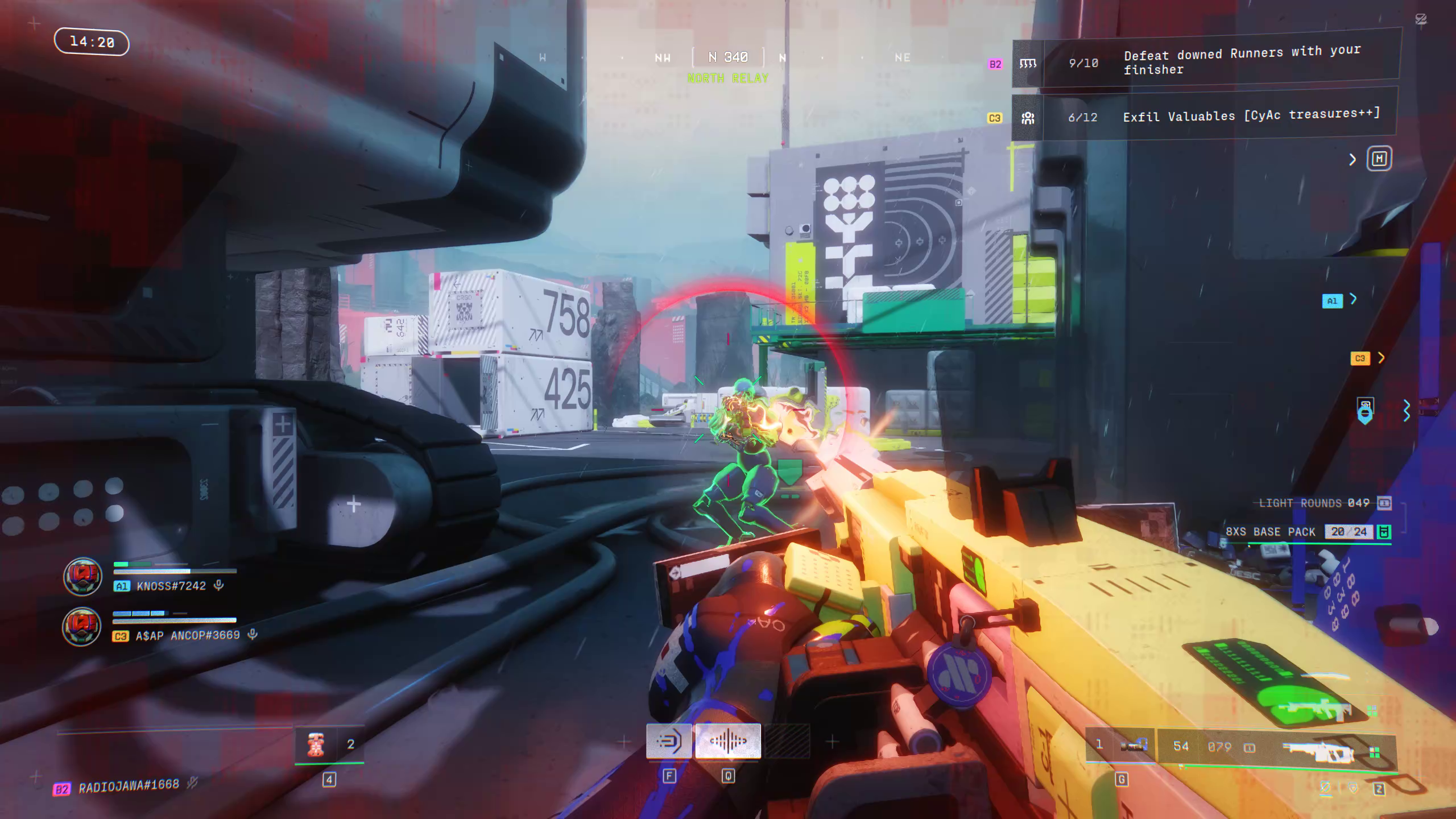
Sure, guns of higher rarity offer better damage-per-second and might have thermal scopes that are super valuable while fighting in dark environments, but even if you have a purple shield protecting your health bar from damage, such equipment will only give you a couple of extra seconds tops of reaction time. Likewise, permanent passives bought from corporations/groups (you’ll earn money and then spend the same money on products sold to you by your employers) slowly remove friction without suddenly turning Marathon in a run-and-gun experience.
It’s a delicate equilibrium, and once you spend enough time with the game, you’ll begin to realize how difficult it was to properly test and balance the whole thing. Marathon isn’t entirely free from modern progression systems or the importance of loadouts which are decided before starting a mission (unless you’re broke after too many failures), yet it offers enough opportunities inside the runs to bet small and come out winning. It’s all about how you play the cards you’re dealt and how you choose to engage with the enemies you come across. Normally, you don’t want to engage at all.
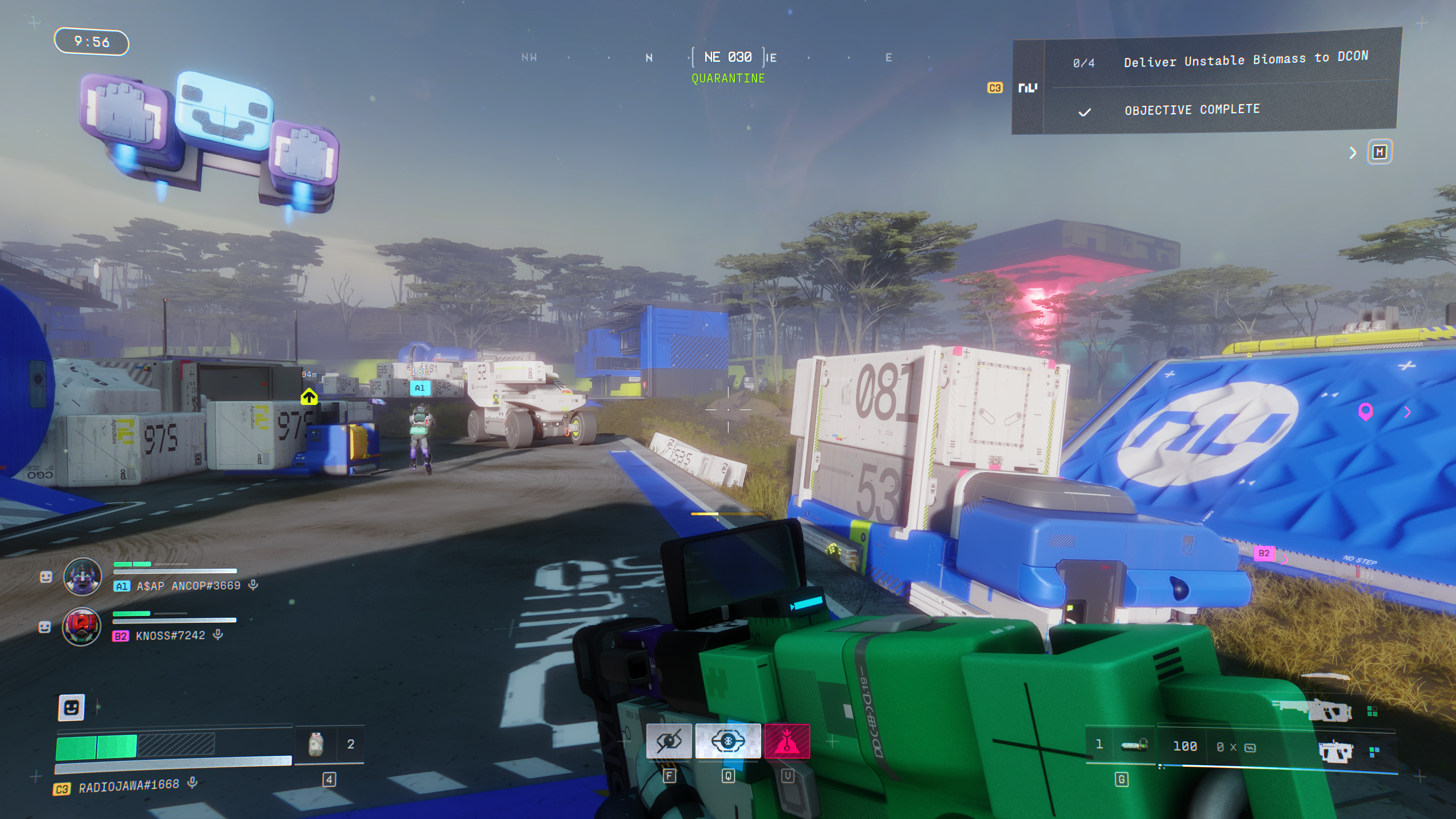
As cool as Marathon’s cleanly designed guns and Shell skills are, it’s low-key a stealth game. The best possible run is the run during which you don’t fire a single bullet. Even if you avoid enemy Runners and squads before extracting (via limited teleportation points), chances are that you’ll be running into the roaming UESC bots sooner or later. They’re mean, they’re many, and they’ll ruin your day, especially as you try to skulk around empty command centres and labs while looking for specific keys, devices, and samples, among other things.
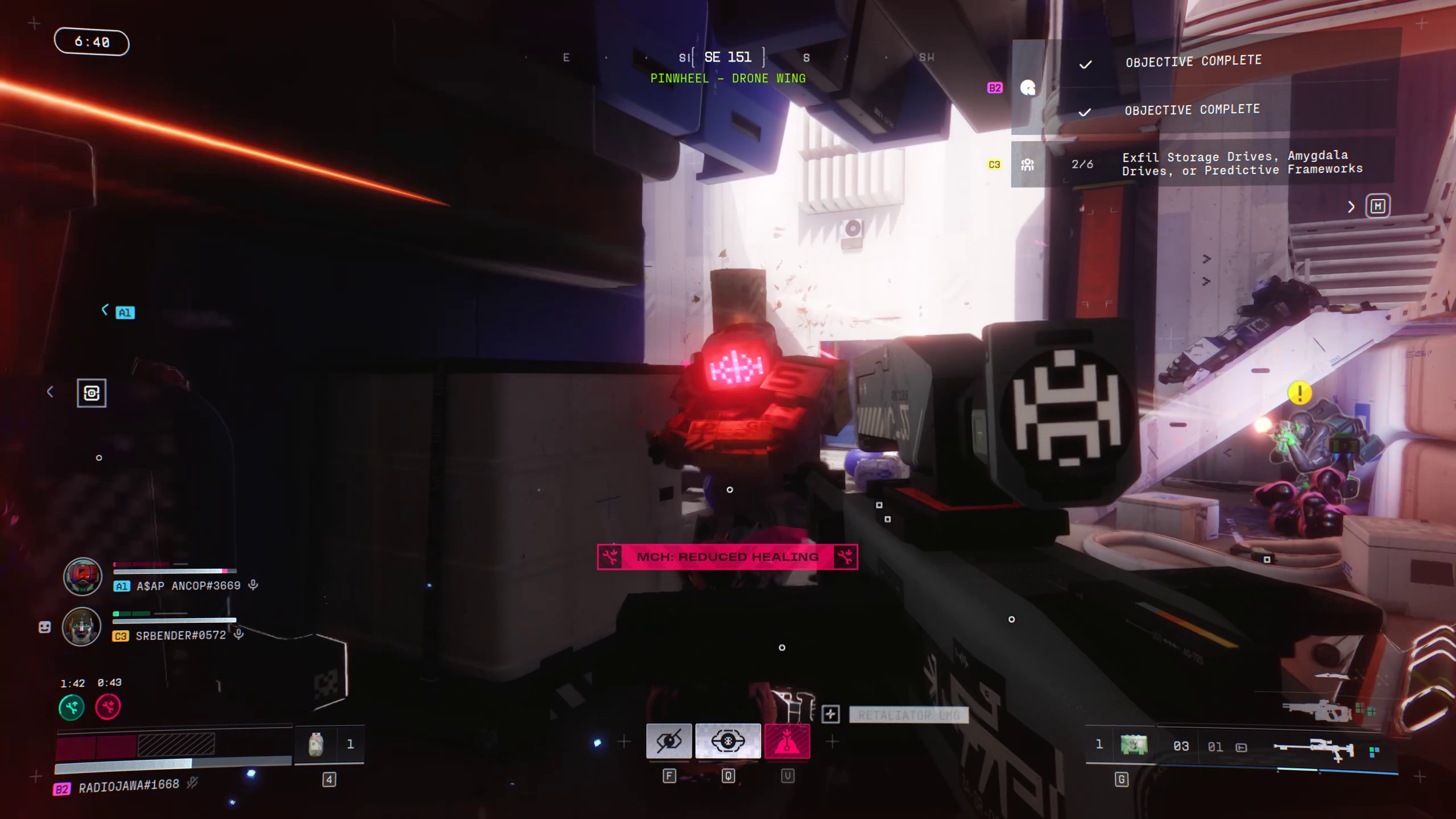
The NPC threat on Tau Ceti IV is serious enough to make waiting for enemy Runner squads to be “softened” by them before attacking a viable strategy. Use distractions and chaos to your advantage without being in a bad spot yourself. It sounds simple, but randomised spawns and events will keep any solo Runner or team on their toes. The maps in Marathon (four so far) might be static, but there’s enough variance in them (alongside the unpredictability caused by enemy players and traps) to keep things fresh and engaging, at least for now. Each one serves a purpose and offers varying levels of intensity, effectively making the game’s very off-beat approach to “progression” evident.
Regardless, you’ll be doing a lot of shooting, and Bungie has unsurprisingly nailed the gunplay once again. Even the smallest handguns have a good feeling to them, and every piece of lethal hardware has kick and oomph that also translates to solid performance under the right circumstances. Runners are bloodthirsty dogs, so killing has to feel nice even if the most sensible course of action actually is to team up with other mercs to maximize everyone’s profits. Unlike ARC Raiders, Marathon doesn’t want you making friends, and the moment-to-moment gameplay and every little fun design decision reflects that.
Circling back to the game’s progression and narrative, it’s important to underline the main reason why you’ll want to complete contracts (which quietly reshape entire runs with clear objectives or more obscure investigation) is to push the story forward. This shooter is played strictly online and has no campaign, but don’t mistake that for a lack of hard-hitting and shockingly intriguing story beats. The voice cast alone was a sign of Bungie taking things seriously on that front, but each cutscene and dialogue interaction feels meaningful (or at least unnerving) as long as you’re interested in the setting and the “live” mystery at the centre of it all.
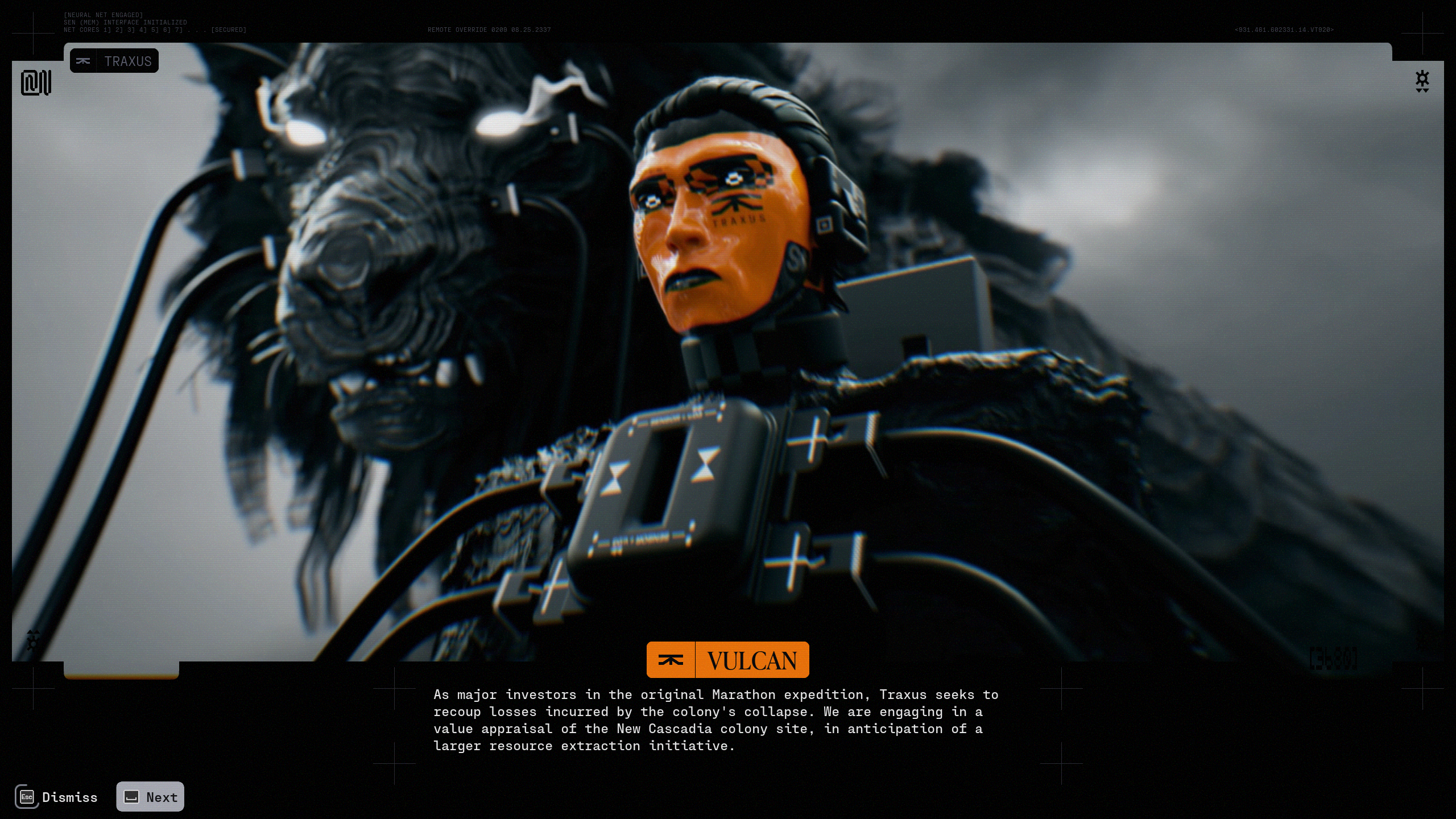
The mix of six distinct factions with different goals is what pushes players to go out there and gradually learn the maps and classes. Instead of picking up random notes which fill up codex entries and do little else, you’re following breadcrumbs that give your runs meaning and direction. As rewards, you’ll get solid story progression and equipment which will make mercenary work easier, or at least less expensive. When you go down far too often before returning with fresh rewards, you’ll have access to free kits, but those offer only the basics to rejoin the fight and hopefully get the good stuff from locked rooms, unsuspecting Runners, or kitted-up UESC bots.
Here’s the thing: You don’t need the “good stuff” to have fun in Marathon. Even in Perimeter, the game’s less daunting area, every system shines and there are fun locations to explore and clean. But the game will tell you that you need to be tall enough to join the big boys in the later attractions. It’s not a roadblock; it’s just Bungie protecting you from harm and being at an unfair disadvantage. It also makes narrative sense; only top-tier Runners should realistically take on big military bases and even the UESC Marathon itself (Cryo is a different kind of sci-fi hell you should experience for yourself).
Some Runner Shells also feel more tailored to solo players than others; for example, the Assassins’ cloaking capabilities make them the perfect loners. On the other end of the spectrum, Triage is a key part of any squad that’s serious about staying in the game and seeing things through thanks to healing drones and even quicker ways to revive downed teammates. With the promise of more Shells arriving in the future with other pieces of content, the “metagame” will only become more complex.
It’s hard to predict how Marathon may (or may not) evolve over time for a number of reasons. The main one so far is Bungie taking a Destiny 2-like approach to updates and ARG mysteries that open up entirely new features and content inside the game. While there’s a seasonal structure in place and the promise of regular content drops, anything could happen. Even the Cryo Archive map is an elusive chunk of the game which comes and goes, inviting only the boldest Runners to venture into its corridors.
While Bungie seems conscious about past live-service mistakes and committed to feeding a diehard crowd that “gets” the pitch versus everyone in order to chase fast profits, everything could change if Sony gets too nervous. Marathon needs to grow in its own terms, but making sure players stick with its very specific vision seems tricky. Looking at other extraction shooters that are equally hostile, like Hunt or Tarkov, it’s a perfectly doable thing, yet the production budget on this behemoth no doubt will put more pressure on the studio even if the post-launch and MTX plans seem solid. I do appreciate the season pass and store items aren’t shoved in the players’ faces every time they load up Marathon after putting down $40, by the way. That’s rare.
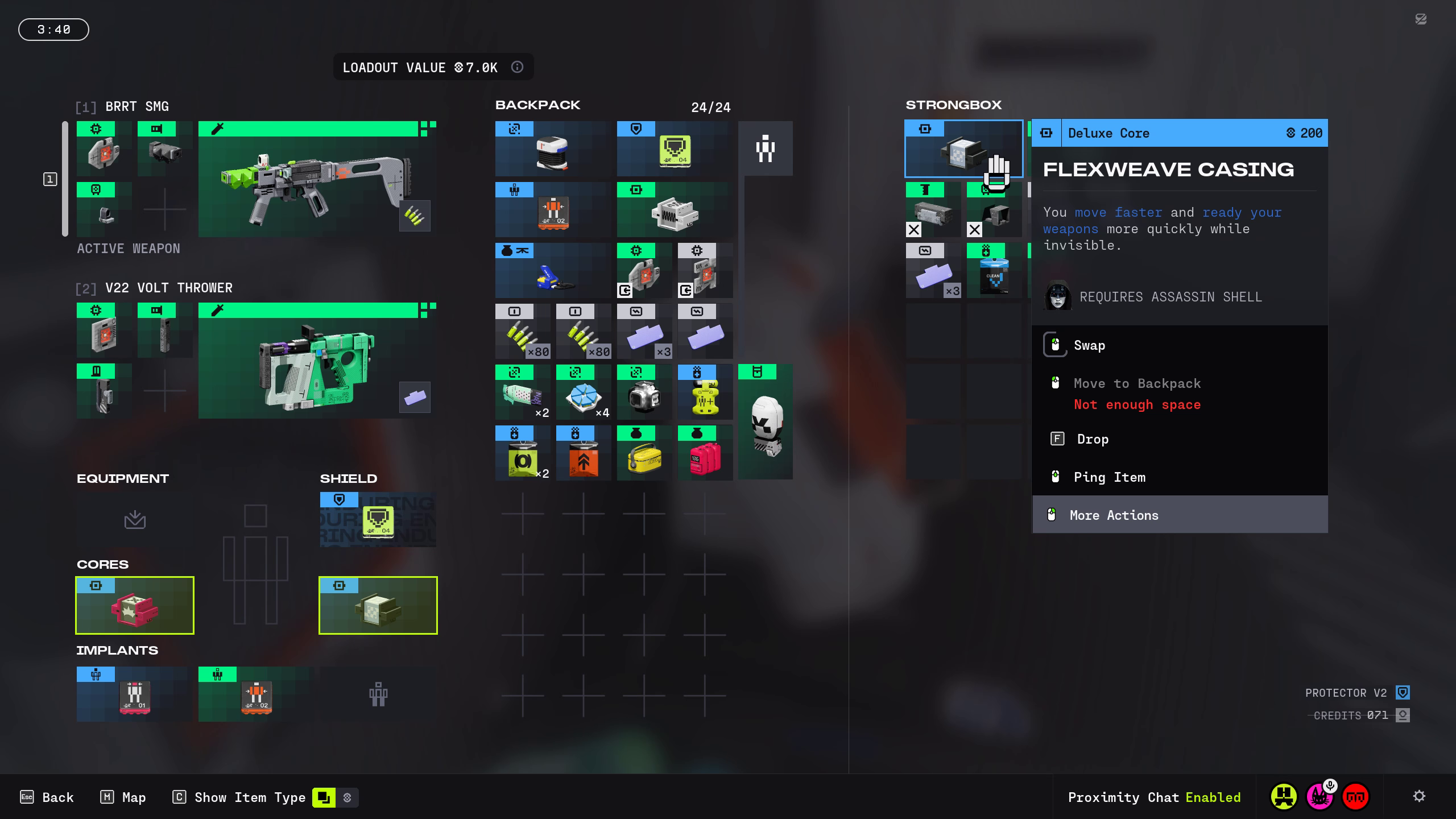
Entire essays will be written about the game’s stunning, cyberpunk-adjacent visual presentation by smarter and more well-read people than me. As someone with his own (but brief) academic past, I can say the governing aesthetic and attention to detail of its sci-fi hypercapitalism, which is disruptive but conservative at the same time, is more than enough on its own to fuel long dissertations. Hell, even the load screens are miraculously gorgeous for a triple-A shooter. This all adds up to create environments, weapons, icons, and character classes that are easy to “read” when things get chaotic fast without sacrificing style nor performance, which is no small feat. I’ll admit the UI and some menus, especially when it comes to inventory and vault management, could use further iteration though.
Similarly, Marathon’s soundscape is booming but sharp. The long-forgotten futuristic structures seem cursed by the souls of those who tried to tame Tau Ceti IV before it swallowed everyone; they’re creaky but semi-functional, as if suddenly left in a hurry. Opening and closing doors can give you heart attacks as you try to find valuable loot while paying attention to every and any sudden sound that might signal UESC bots or Runners are around the corner. This is “lite horror” shared by everyone inside a run, and it’s something that you can exploit. At the same time, be mindful of where (and how often) you shoot your guns, as their artificial thunders traverse further than you’d expect.
The original soundtrack by Ryan Lott (of Son Lux) deserves its own discussion, as it effortlessly blends sounds you’ll normally associate with a regular cyberpunk setting and cleaner, oddly relaxing alien melodies. There’s an edge to the entire work, but it often bounces between peaceful moments in a place that dislikes visitors and beats that aren’t as relentless as you’d expect. Anyone who’s familiar with Lott’s work was excited for Marathon’s OST, but this is truly special stuff which highlights how strong the overall creative vision is.
At a time when many players are starting to consider whether live-service games are worth the time (and money) investment and far too many studios and publishers try to hunt whales with lesser copycat projects, Marathon is a confident reminder that Bungie prefers to do its own thing, even if that thing feels like a radical departure from past creative endeavours at first glance. Its audiovisual presentation alone makes the familiar cycle of violence refreshing, but it’s the surprising harmony holding it all together while not bending to the players’ desires that makes the package memorable. This FPS is a caterpillar which deserves to get its wings.
Marathon is now available on PC (Steam), PS5, and Xbox Series X/S. An evaluation copy was provided by the publisher for this review.
MARATHON VERDICT
Though it’s impossible not to question Marathon’s long-term appeal, it’s one of the most confident big-budget FPS in years and a fantastic reminder that Bungie devs can shake things up when given the space and freedom to cook.
TOP GAME MOMENT
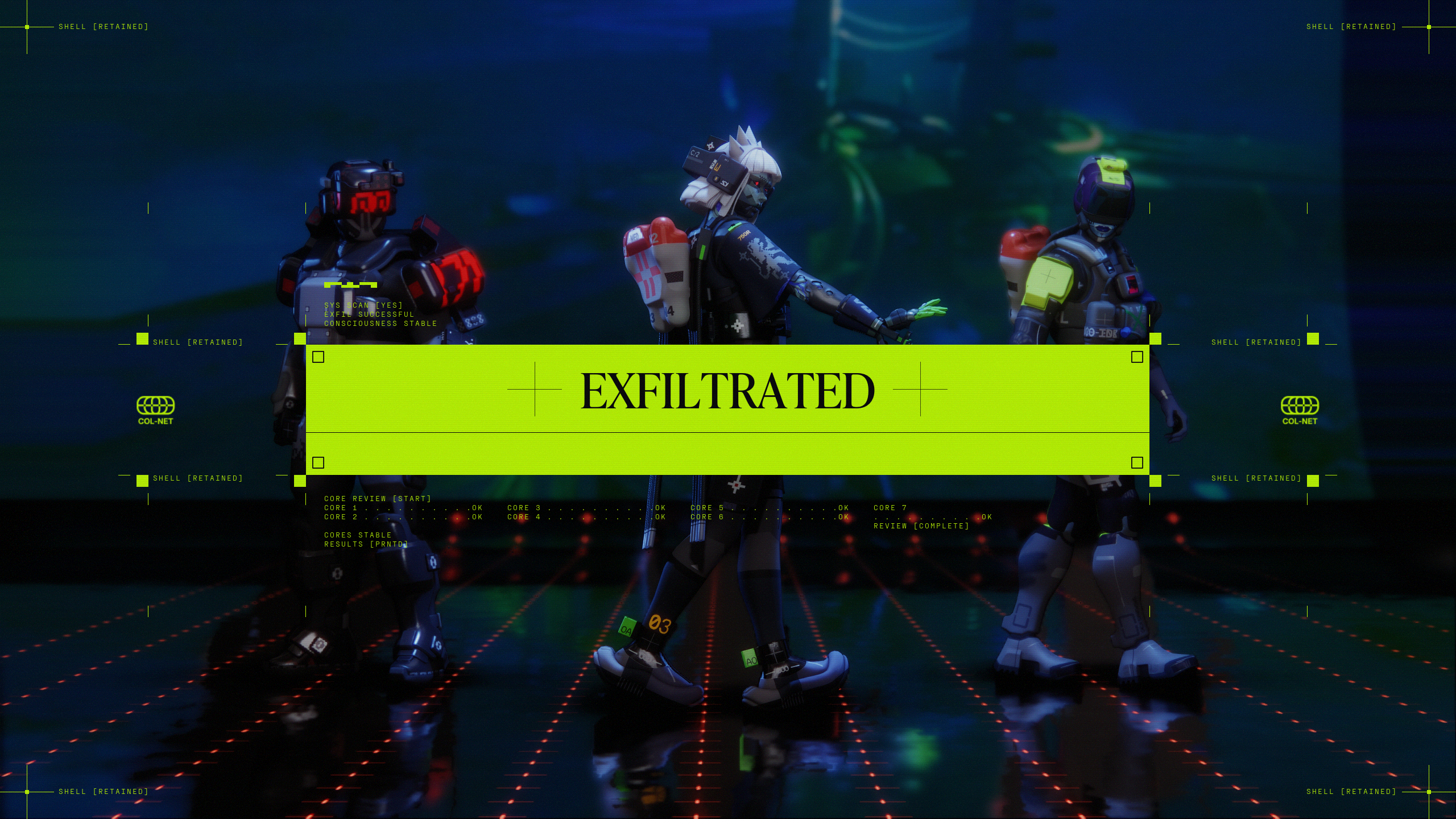
A last-second exfil during which I executed a Rook who was attempting to sneak in.
Good
vs
Bad
- Top-class art direction and visual polish
- Dense sci-fi atmosphere and lived-in setting
- Narratively, it’s a captivating evolution of the original games’ central ideas
- Fun Shell classes which aren’t overdesigned
- Satisfying gunplay with a wide selection of weapons at launch
- Generally tense but flexible runs thanks to the variety in contracts
- Audio and voice acting are two steps ahead of the competition
- The rare kind of modern triple-A game that doesn’t soften its blows
- UI and menu navigation require some more work
- While refreshing, the game’s hardcore nature might impede its growth
- Weak paid class and weapon cosmetics at launch