
Summary
In Brazilian Jiu-Jitsu, small positional adjustments can create major control advantages. Just by mastering and understanding specific control systems can help beginners feel less lost during live rolls. Another aspect is understanding the mechanics of certain techniques before they happen. One of those lesser discussed but highly effective concepts is the tren lock in BJJ.
For many, the tren lock offers a structured way to stabilize top positions and limit an opponent’s movement. It may not be as flashy as submissions or passes, but it builds control, pressure, and confidence. If you are starting BJJ and want to improve your positional dominance, learning how the tren lock works is a smart step forward.
Key Takeaways
- The tren lock in BJJ focuses on controlling the opponent’s hips and legs.
- It is especially useful for beginners trying to stabilize top positions.
- This position limits movement and can potentially set up various guard passes or transitions.
What Is A Tren Lock In BJJ?
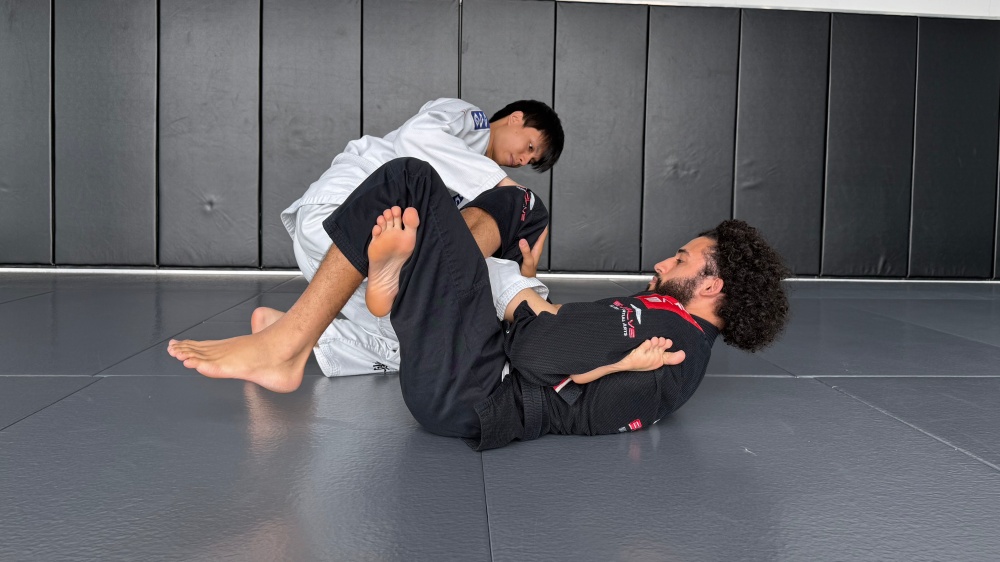
In BJJ, control is often more important than speed. The tren lock is a leg and hip control system typically used from top position. It involves trapping or isolating your opponent’s legs in a way that restricts their ability to recover guard or create space.
While the exact mechanics may vary slightly between instructors, the core principle remains the same. You use your legs and body positioning to lock down your opponent’s lower body, preventing them from turning or inserting frames. This gives you the stability needed to pass or advance position.
For beginners in BJJ, the tren lock simplifies chaos. Instead of chasing movement, you limit it first.
Why Beginners Benefit From Learning The Tren Lock
One of the biggest struggles beginners face in BJJ is maintaining top pressure. You pass halfway, your opponent recovers guard. You get to side control, they shrimp away. The tren lock helps reduce these constant resets.
By isolating the legs and controlling hip movement, you remove the foundation of most escapes. Modern grappling analysis often highlights how elite competitors prioritize hip control before attacking submissions.
For beginners, this creates two advantages. First, it builds confidence because you feel stable instead of reactive. Second, it teaches patience. BJJ rewards control before aggression.
Where The Tren Lock Is Commonly Used
The tren lock is frequently applied during guard passing sequences. When your opponent attempts to recover guard by threading a leg inside, the tren lock can trap that leg and prevent them from resetting position.
It is also useful in half guard situations. By controlling their lower body and limiting hip rotation, you can flatten your opponent and begin working toward side control or mount.
In transitional scrambles, the tren lock acts like a pause button. Instead of getting swept or tangled, you anchor the legs and re-establish your base.
Common Mistakes Beginners Make With The Tren Lock
One mistake beginners make is focusing only on the legs and ignoring upper body control. While the tren lock stabilizes the lower half, you still need cross faces, underhooks, or proper shoulder pressure to fully dominate the position.
Another mistake is applying the position too loosely. If your legs are not actively engaged and positioned correctly, your opponent can easily pummel their legs back inside.
Finally, beginners sometimes rush to submission too quickly. The tren lock is a control tool first. Use it to secure a position before advancing.
FAQs On The Tren Lock In BJJ
Q: Is The Tren Lock A Submission In BJJ?
A: No. The tren lock is primarily a control position rather than a submission. It is designed to restrict movement and create opportunities for guard passing or positional advancement.
Q: Is The Tren Lock Suitable For BJJ Beginners?
A: Yes. In fact, beginners benefit greatly from learning control-based systems like the tren lock. It helps build strong fundamentals and reduces unnecessary scrambling.
Q: Can The Tren Lock Be Used In Gi And No-Gi BJJ?
A: Yes. The principles of hip and leg control apply in both Gi and No-Gi. However, the exact grip adjustments may vary depending on clothing and friction.
Q: How Does The Tren Lock Differ From Half Guard Control?
A: Half guard control typically involves trapping one of your opponent’s legs. The Tren lock focuses more specifically on isolating and pinning the legs to prevent guard recovery and hip movement.
Q: Does The Tren Lock work Against Advanced Practitioners?
A: Yes, but it must be applied with proper pressure and awareness. Advanced practitioners are skilled at creating space, so combining the tren lock with upper body control is essential.
Final Thoughts
In BJJ, beginners often look for the next meta submission. But long-term progress comes from mastering control. The tren lock is not flashy, yet it strengthens one of the most important areas of grappling. Stability.
When you learn how to slow your opponent down and anchor their movement, your entire game becomes calmer and more effective. For beginners, that shift in control can make training more enjoyable and less overwhelming.
In Brazilian Jiu-Jitsu, fundamentals always win. The tren lock is one more tool that reinforces that truth.
You may also like:
Inside vs Outside Heel Hook: Differences, Effectiveness, And When To Use Each
Evolve Mixed Martial Arts® is Asia’s premier championship brand for martial arts. It has authentic World Champions in Muay Thai, Brazilian Jiu-Jitsu, Mixed Martial Arts, Boxing, Wrestling, and No-Gi Grappling. Named as the #1 ranked martial arts organization in Asia by CNN, Yahoo! Sports, FOX Sports, ESPN StarSports, Tokyo Times, and many other leading authorities, Evolve MMA aims to deliver the best martial arts instruction available anywhere on the planet.