
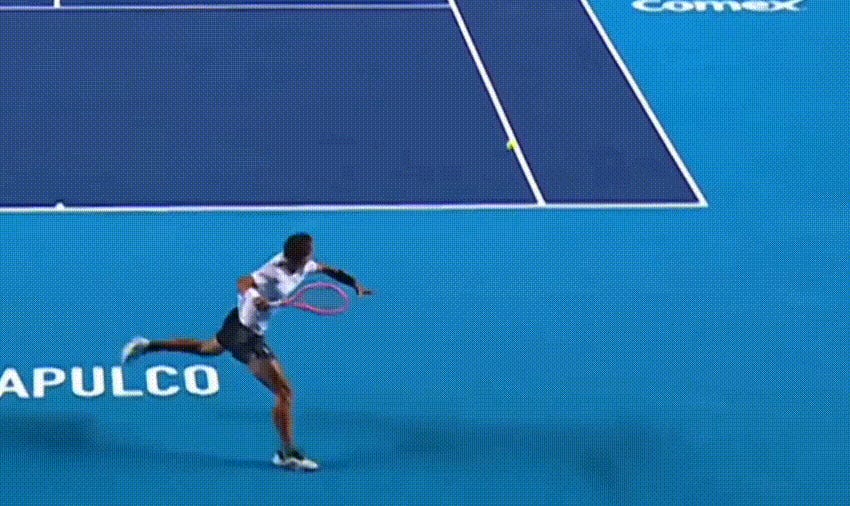
Speed-running last week’s action. Looking forward to desert action in Indian Wells coming up.
Daniil Medvedev won Dubai via walkover, as Tallon Griekspoor was unable to take the court for the final. The Dutchman suffered a hamstring tear in his semifinal win over Andrey Rublev and is expected to miss several weeks of action. The win is Medvedev’s first title that he has won twice, ending an astonishing record that had him with 22 career titles in 22 different cities.
What was working for the Russian this week?
On serve Medvedev was targeting the forehands of Shang, Wawrinka, Brooksby, and FAA on both deuce and ad courts, with Deuce wide and Ad-T serves up from his 52-week averages:
Perhaps that contributed his slower first-serve numbers this week — down to 119 mph from his 123 mph average — but did these targets help provide him a very healthy first-serve percentage of 73%? (52-week avg. is 62%). Perhaps adding slice to his first-delivery was helping him control the ball, and he was still getting purchase in quicker conditions.
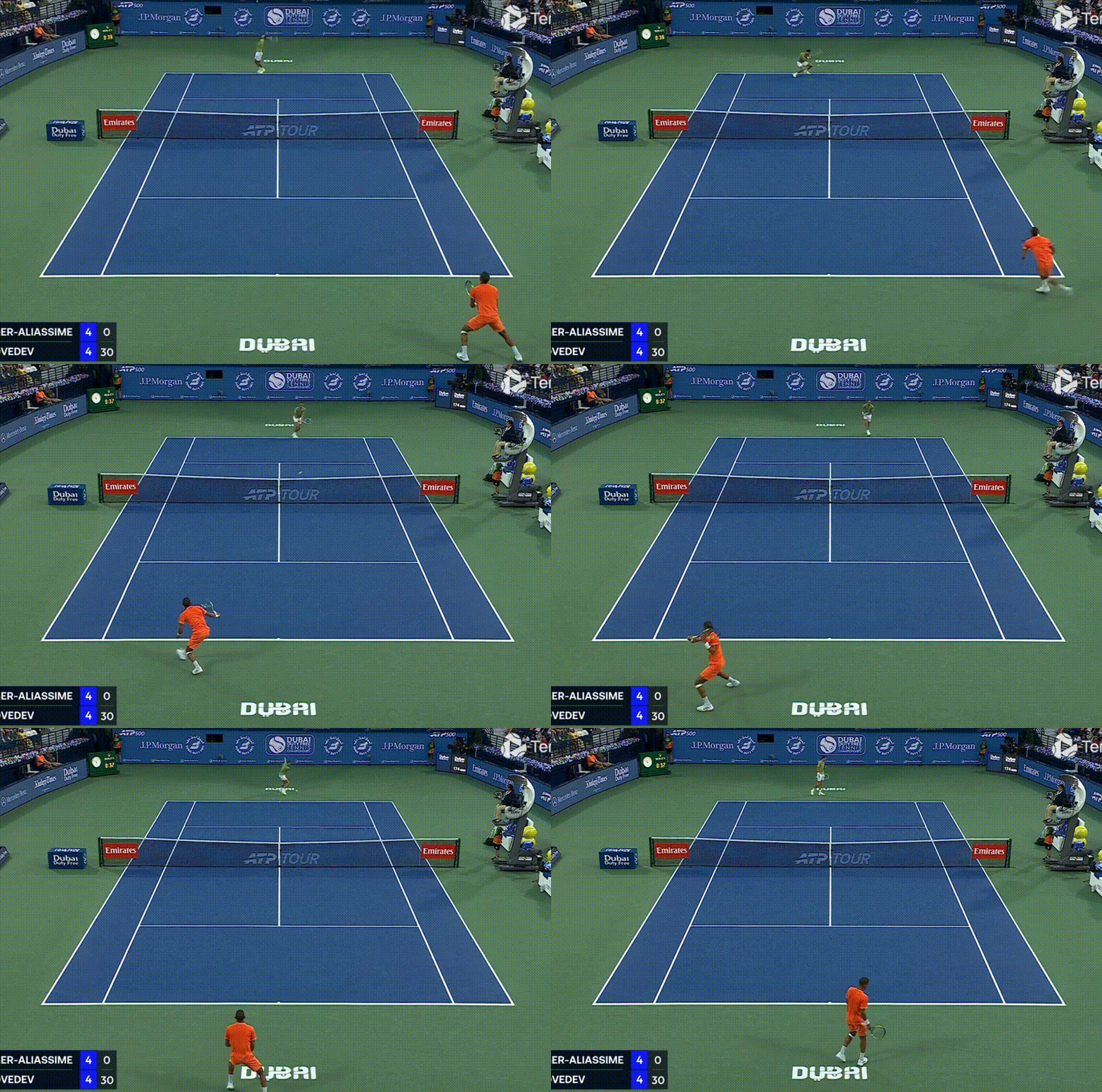
Off the ground it was the Medvedev backhand from the middle that had the biggest impact, winning 65% of points when he used that play (tour avg. is 49%) across his four wins. It’s kind of a weird trait to have because most top players look for forehands from the middle (and from their backhand wing). In fact, Medvedev swims well against the current trend of top players — even compared to Zverev — as Matt Willis tweeted recently:
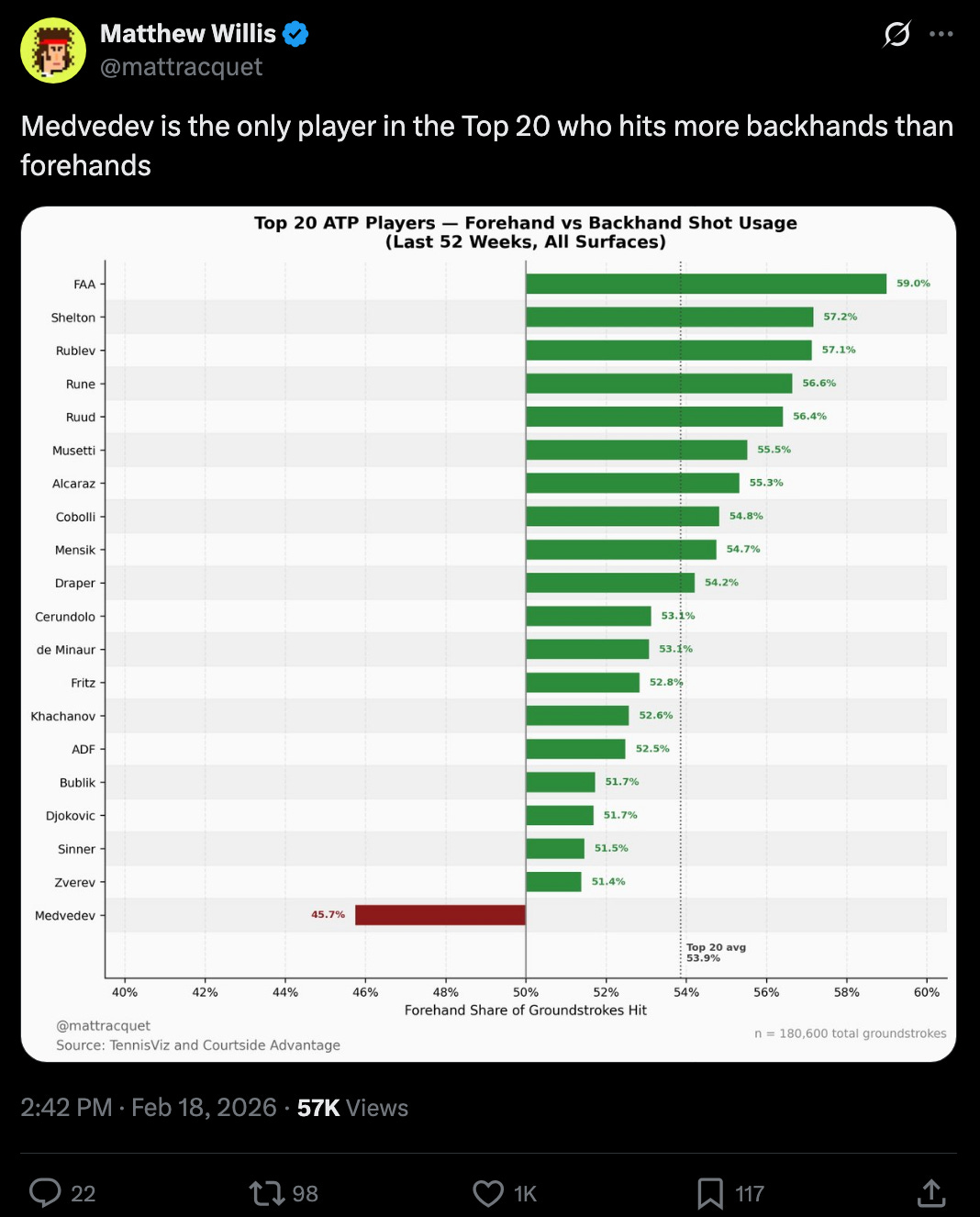
If you look at who sits at the top of that chart, FAA is the most forehand hungry player on tour. This makes sense when you consider the delta between his forehand and backhand capabilities. So it was perhaps unsurprising in the Medvedev vs FAA semifinal in Dubai to find out that the Russian’s top three impactful plays were: forehand crosscourt, backhand down the line, and backhand from the middle. In other words, Medvedev exposed FAA’s Ad-court-biased positioning with forehand-directed hits.
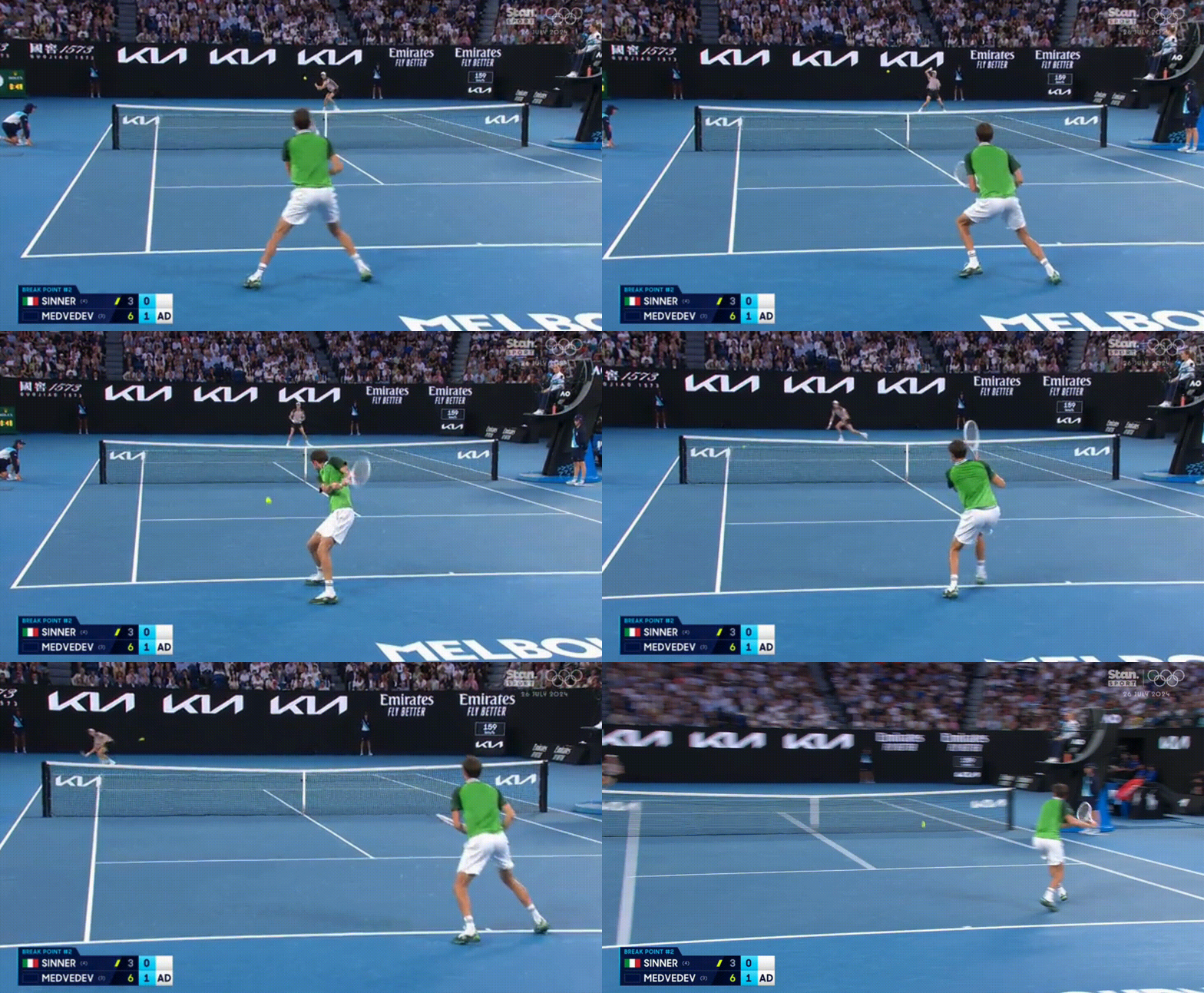
From the 2024 Australian Open final:
Medvedev’s flat penetrating strokes are the perfect foil for Sinner’s more liquid-whipped swings. The low and deep skidding ball into the lanky Sinner forehand was Medvedev’s ideal shot, as Sinner’s forehand has always looked more comfortable when hit above the knee. Perhaps this is another reason the Italian has often struggled in this matchup; the lower bounce exposes his forehand a little more.
The other statistic of note from Medvedev’s Dubai run was his conversion score (a measure of how often a player converts on a point from an attacking position). Medvedev was at 73% for the tournament, 5% better than his 52-week average. Gill Gross mentioned on his channel that across four matches Medvedev only volleyed nine times…in four matches! That he was converting so well is a reminder to how good the Russian is when assisted with truly fast conditions.
Medvedev reportedly got a flight today out of Dubai, having been stranded as a result of the Iran conflict.
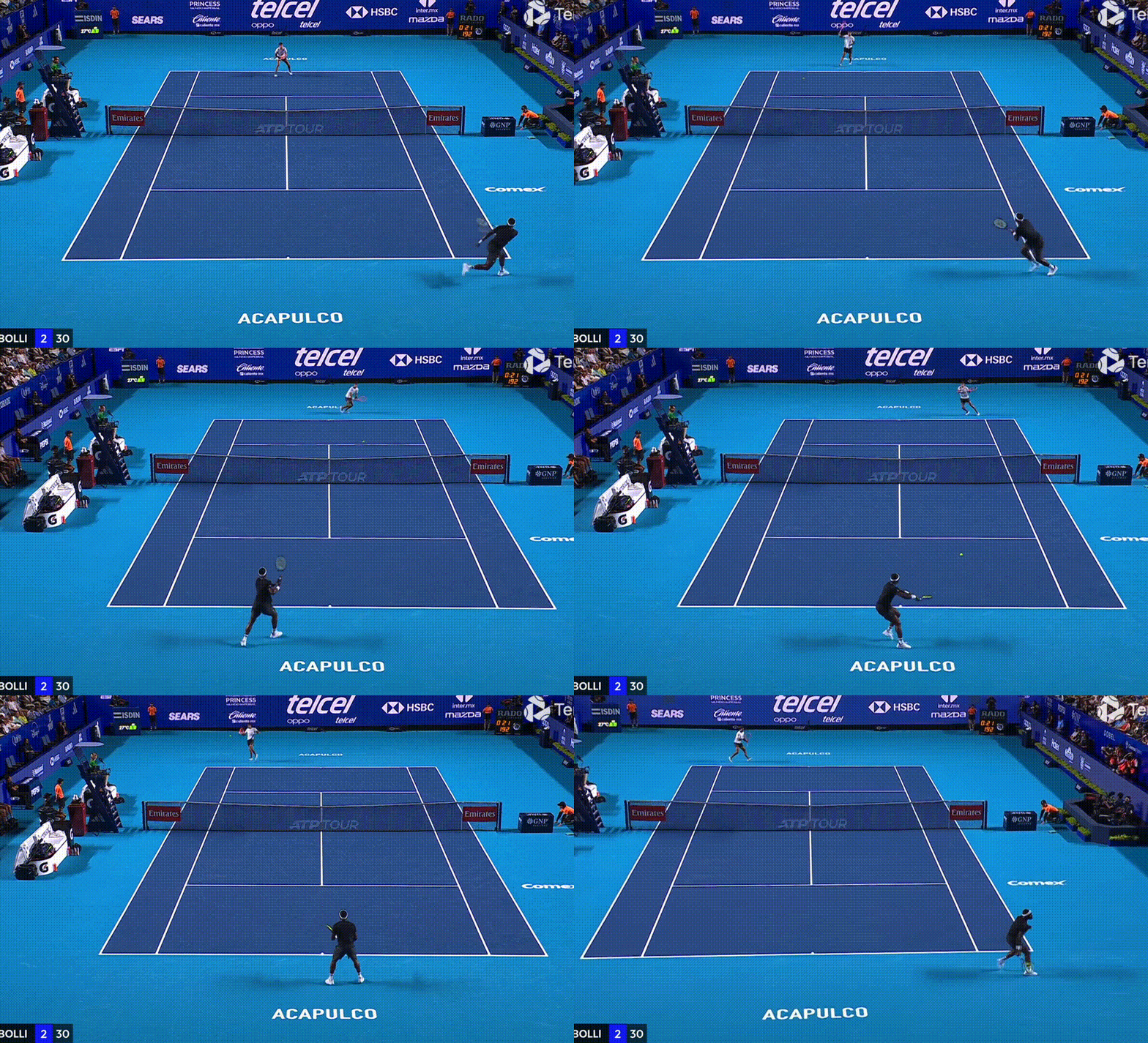
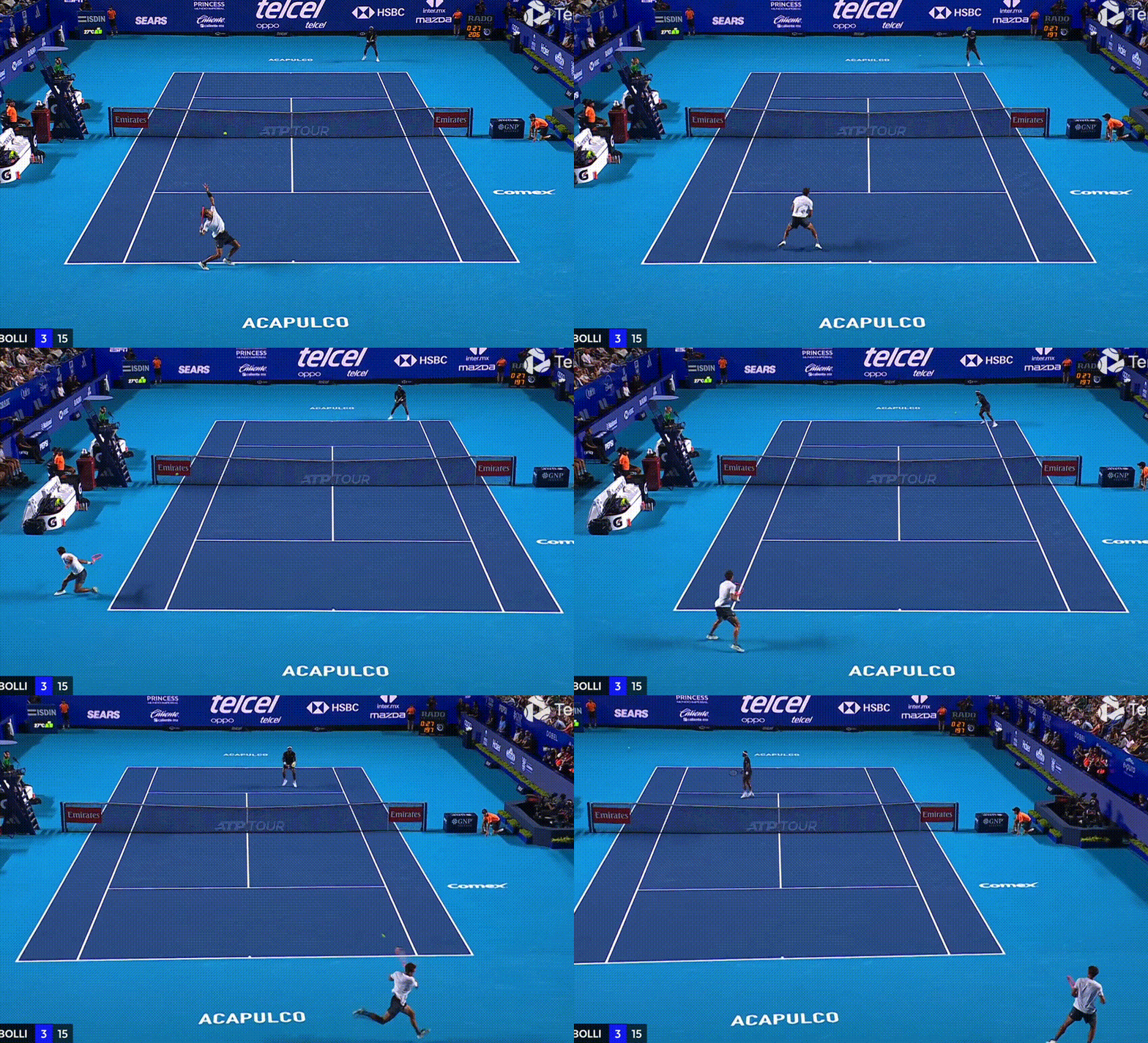
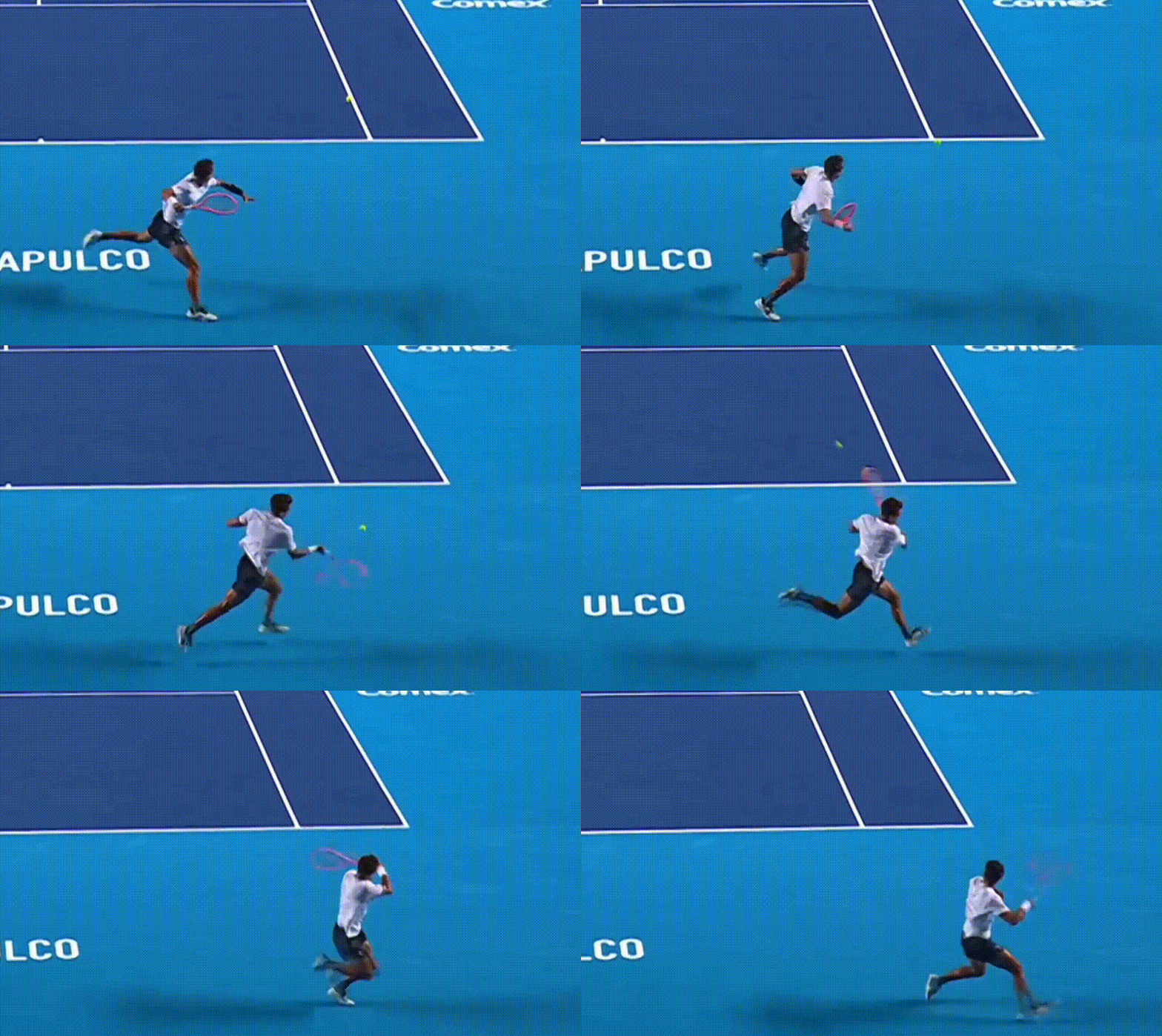
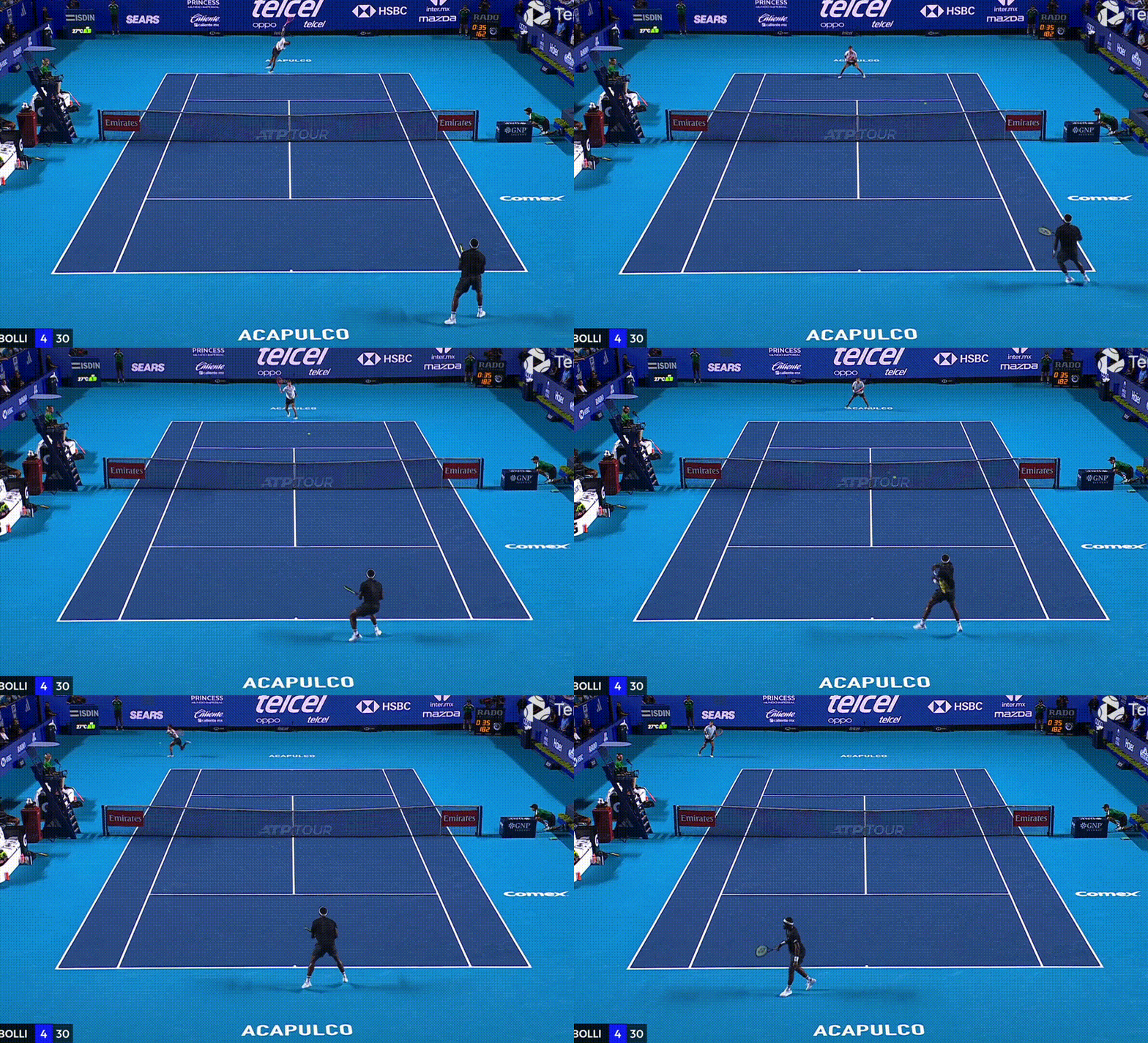
Flavio Cobolli defeated Francis Tiafoe 7/6 6/4 in the final of the Acapulco 500 on Saturday night to earn a place in the top-15 of the rankings.
Frances Tiafoe’s forehand was one I highlighted as being most susceptible to weak paths and speeds in a recent in-depth technical piece. I don’t think it can ever become a weapon.
Cobolli’s is yet to rate highly on Tennis Insights’ forehand shot quality metric; a combination of average speed/spins and in-%’s has him lagging in the 70s in terms of tour rank for that shot, but I believe it has the pieces to often shine, as it did in this final, registering an 8.5 to Tiafoe’s 6.8. The wide running forehand made several highlights in the first set alone:
Luciano Darderi defeated Yannik Hanfmann 7/6 7/5 in the final of the Santiago 250 to win his fifth clay title since the start of 2024.
All of Darderi’s five titles have been 250 clay events, but the Italian made good on his seeding by reaching the fourth round of this year’s Australian Open, losing to countryman Jannik Sinner. He owns a hammer of a forehand, and it came through in the biggest moment of today’s first set: 6-6 in the tie-breaker:
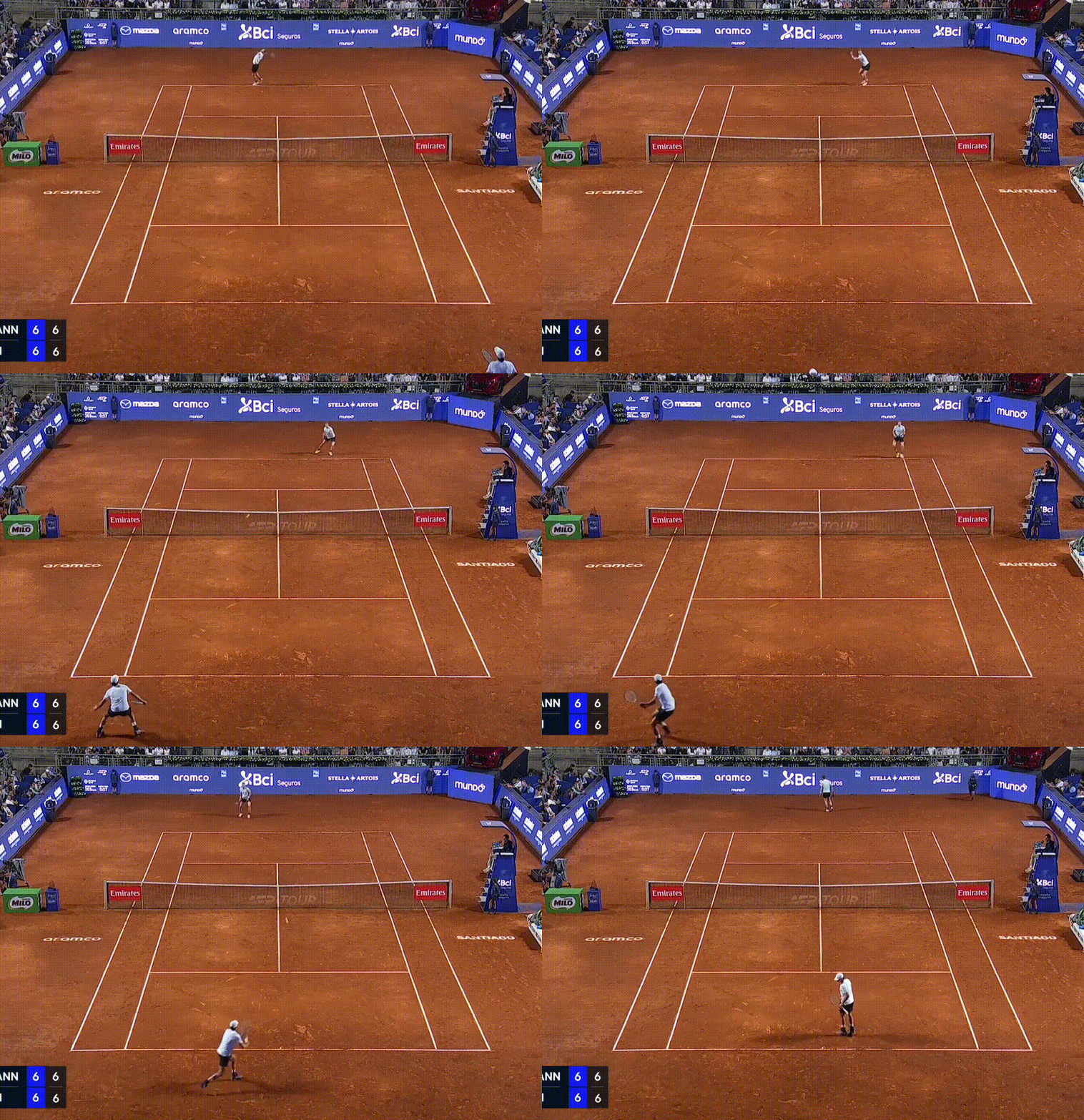
In the second set it was Hanfmann’s forehand that completely fell away, making 14 unforced errors off that wing after keeping it very tidy in the first set; altitude clay can make it difficult to control the ball, and picking corners is risky.
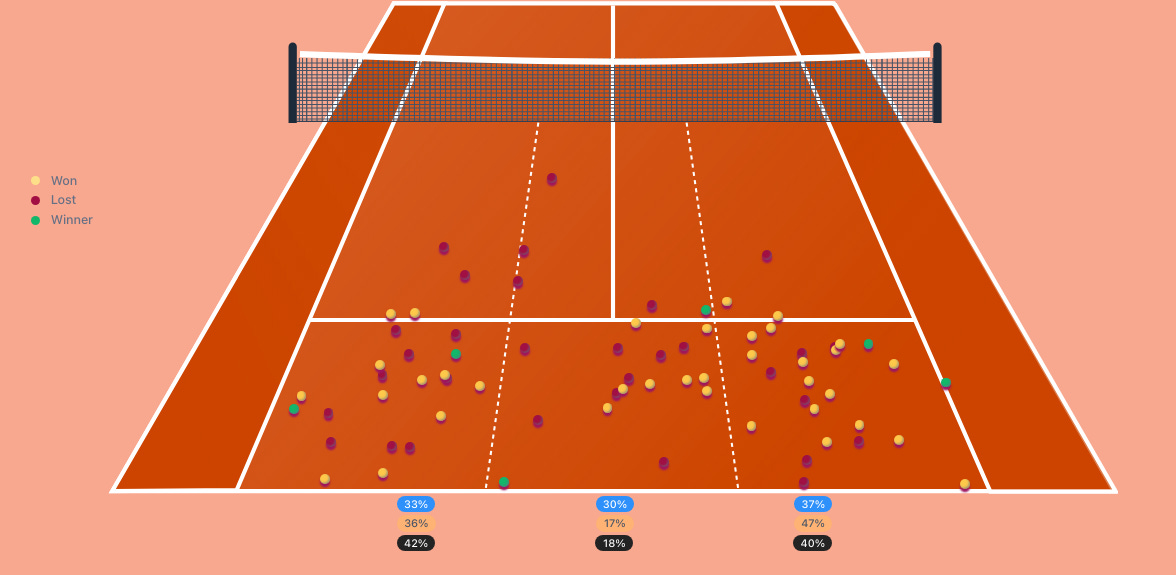
It’s a similar situation to last week’s Delray Beach final, where the wind wreaked havoc on timing. Like Korda, Darderi kept his forehand numbers very clean by committing to a very central ball location, going through the middle twice as often as his opponent:
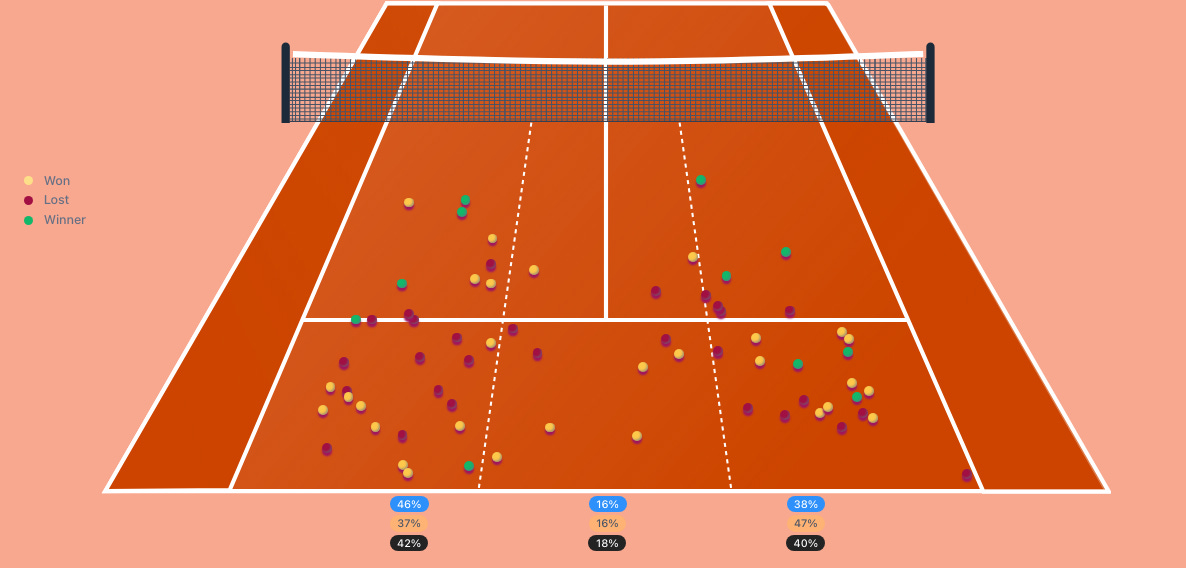
Compare to Hanfmann’s forehand attempt to find the corners, especially to Darderi’s backhand:
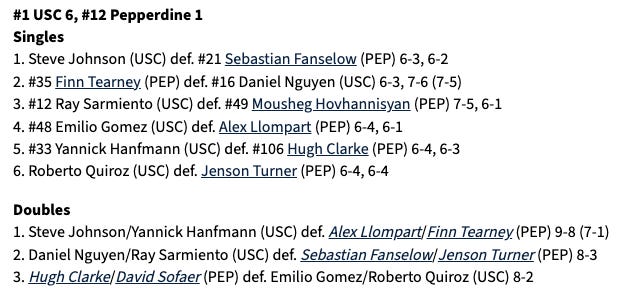
It was Hanfmann’s third tour final — all at altitude clay — and it makes sense with his kick-serve and high backhand excellence that he enjoys these conditions. Even if he never finds that elusive tour level title he’s come a long way since playing number five for USC. From the archives:
Jack Draper made his return in Davis Cup in February, followed by a second-round loss in Dubai to Arthur Rinderknech. The Brit had been sidelined by a bone bruise in his left arm for quite a period, and he’s made a couple of tweaks on his return. The first is the use of natural gut strings in the mains: this is a more powerful and comfortable string and is becoming somewhat more prevalent on tour in response to deader balls. The second change was technical: Draper is now using a platform stance. Compare 2025 to now:
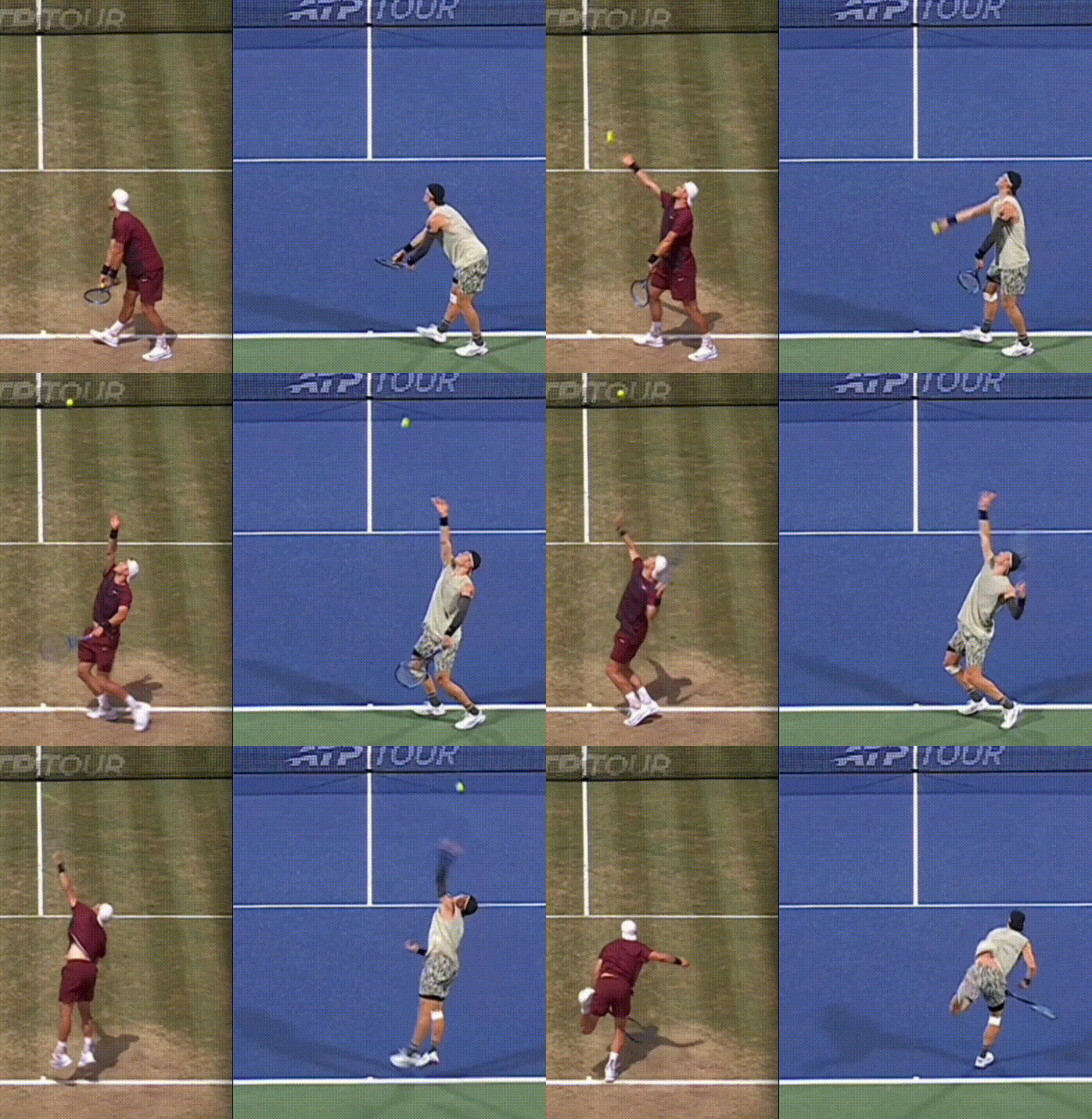
I like this change. Recall when I was talking about Musetti’s change last year around US Open time (emphasis added):
The serve is essentially a throw, but in an upward plane of motion and with a more turned/side-on torso orientation to the target compared to a pure throwing action.
By going to a platform stance, I think it does two things: (a) it makes it harder to create power, because it’s more difficult to drive off your back leg (the vertical speed of the back hip is one of the strongest correlates of serve power)and you have less forward momentum; but (b), I think it makes it easier to repeat the motion/secure the toss and also forces a more coiled torso. we don’t get data on serve spins, but my hunch would be more side-on players would be able to get more spin and thus control their serves. Look at the trophy poses. Draper is now more side on:
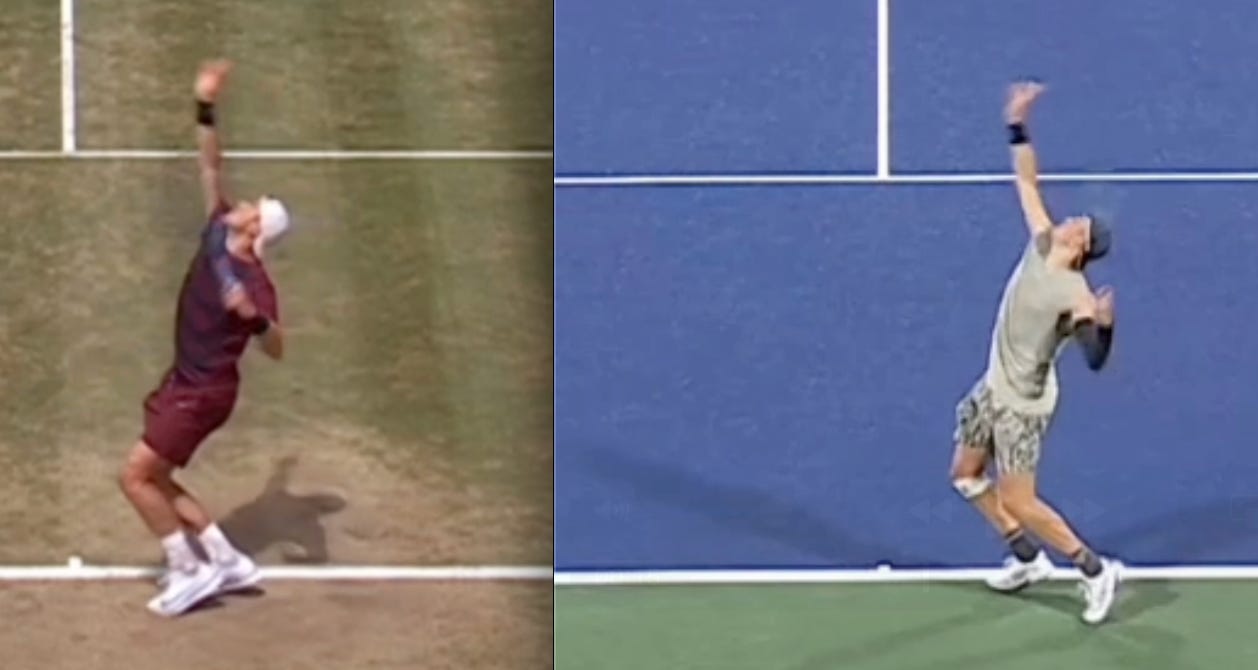
and at contact:
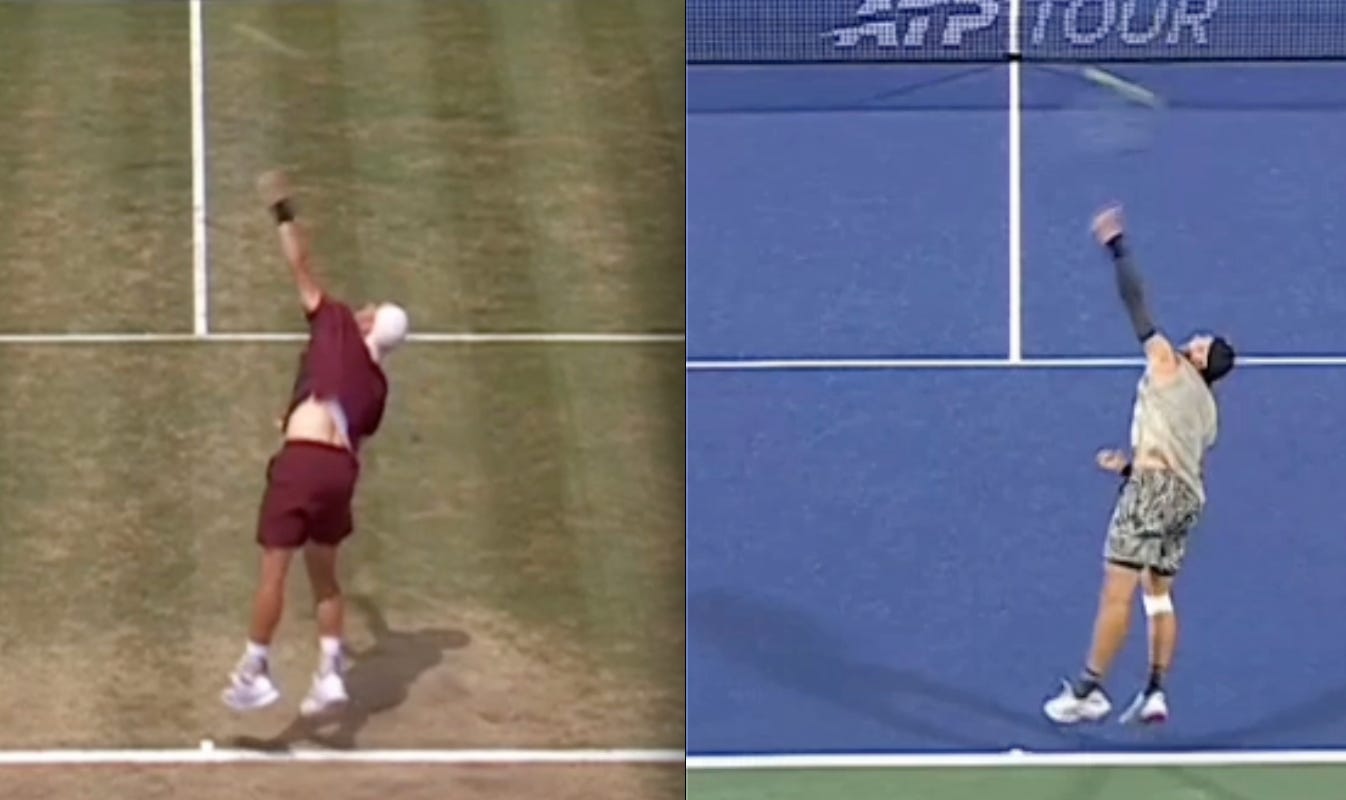
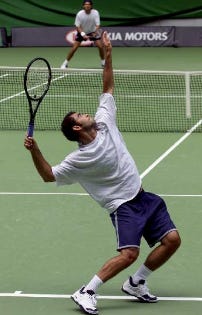
So many great spot-servers that come to mind were platform stance: Federer, Sampras, late-career Djokovic, Raonic, and Nakashima and Fritz for more contemporary players. I always love plugging a Sampras trophy pose:
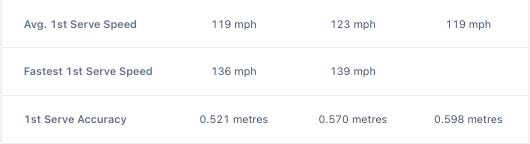
Two matches is a very small dataset, but I will be keeping track of the trend Draper started in his opening matches of 2026: a slower average first-serve speed, but with 5 centimetres more accuracy:
Matt Willis had another great graph breaking down serve-speed versus accuracy for top 20 players:
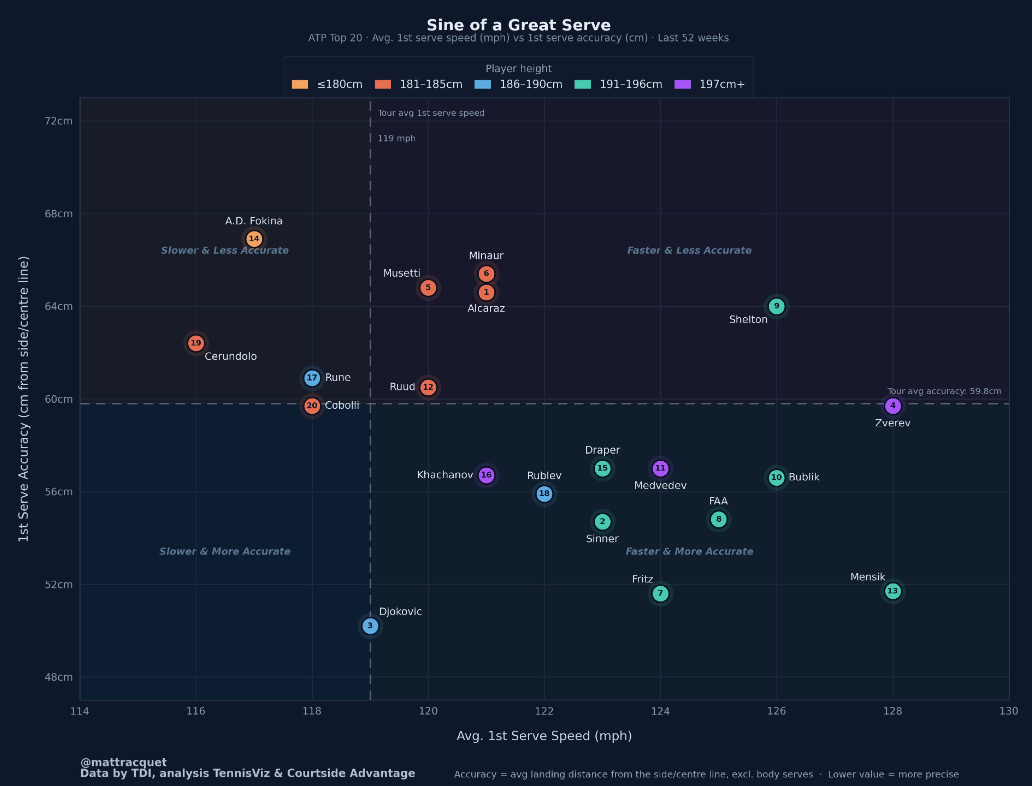
Of the top 20 players the most accurate are Djokovic (platform), Mensik (pinpoint), and Fritz (platform). The only player more accurate than this group is Brandon Nakashima, who is sub-50 centimetres for accuracy.
Indian Wells main draw action kicks off tomorrow. I’ll be back with some thoughts after the first few rounds.
See you in the comments. HC>