
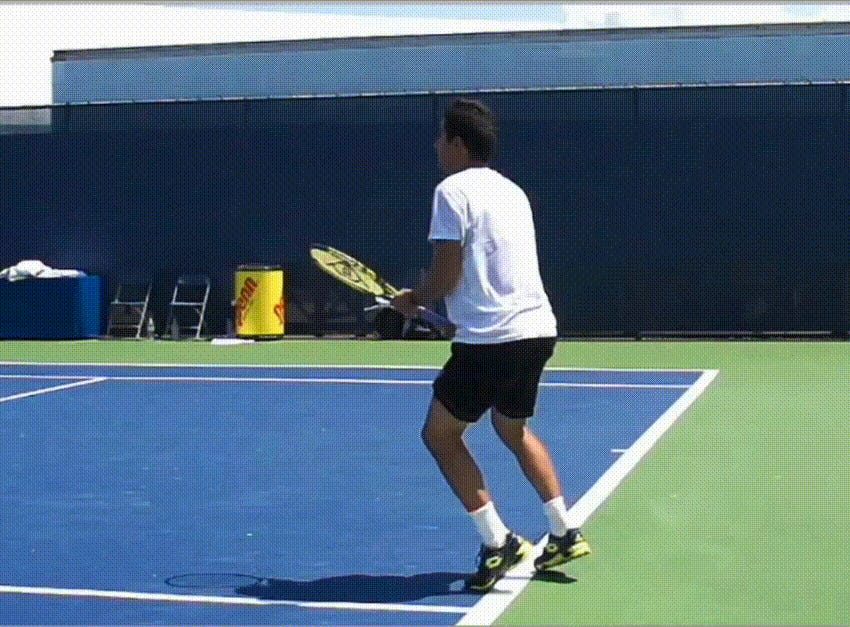
Happy New Year everyone. I’m looking forward to covering the 2026 season and excited to announce that I’ve partnered with TennisViz (known on X as Tennis Insights), and Tennis Data Innovations (TDI), and have access to their platform, Courtside Advantage, which means I can get my hands on advanced analytics to better tell the stories of these matches. If you’ve read recent pieces, you may have noticed a more granular take on things down the back end of 2025, like Sinner’s T-biased serve trend, Bublik’s uptick in forehand speed post-Babolat switch, or Musetti’s chip return being +1 fodder for top brass. It’s all thanks to TennisViz, and aligns perfectly with the mission of A Thread of Order: to find out what really moves the needle on performance. All data and graphics used in posts here and going forward are thanks to TennisViz and Courtside Advantage. I hope it makes your experience better.
What’s coming up in January?
I’ve got Death of a Forehand — Part IV dropping sometime next week. Long time readers and acolytes of extended wrist forehands rejoice.
2026 Predictions. Yes I know the season has started, but I think it’s almost better doing it this way. We can see if certain players made technical changes in these opening weeks, or who is still injured (Draper, Fils sadface).
And of course Australian Open coverage.
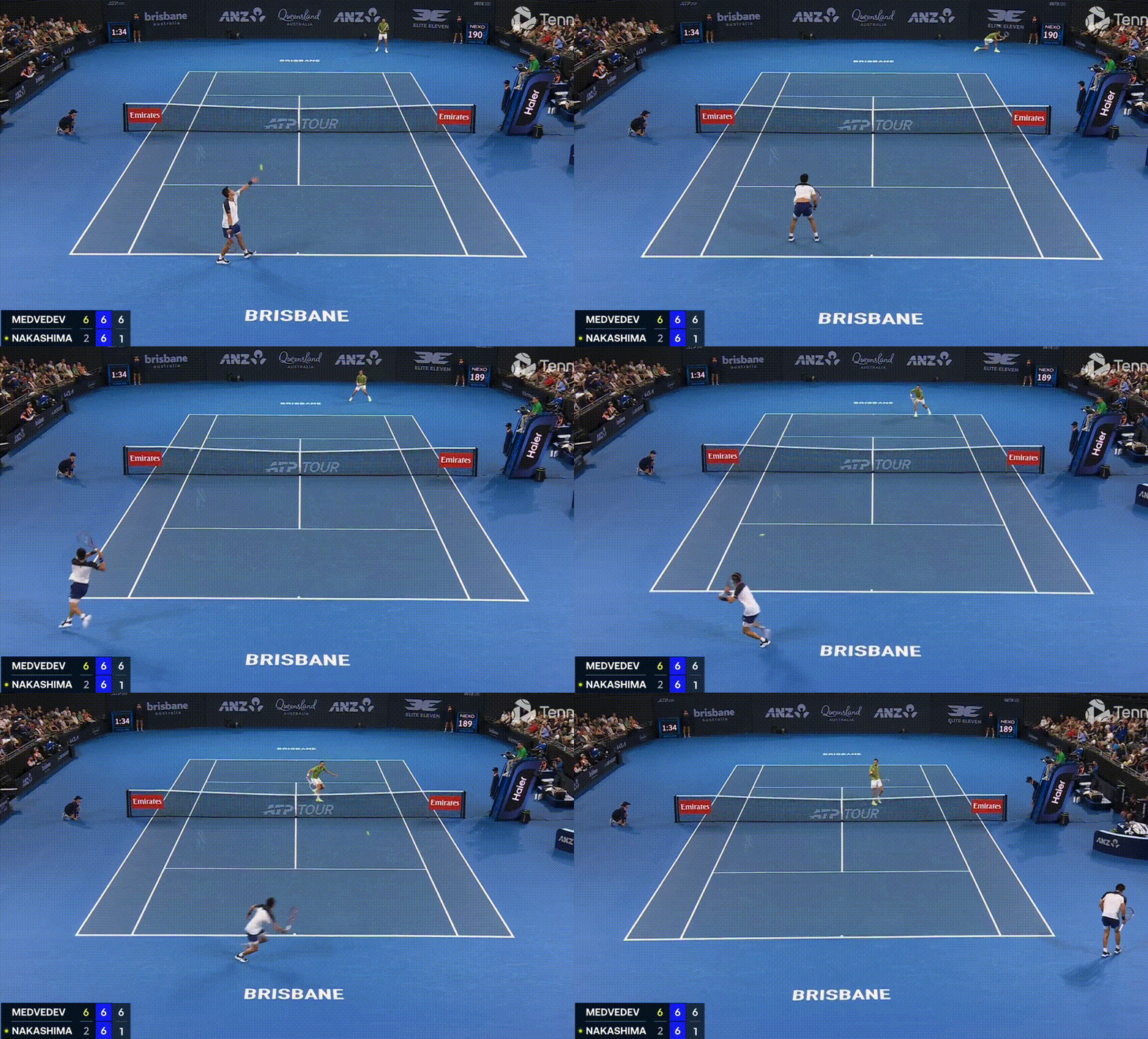
Daniil Medvedev won his 22nd career title in his 22nd city, defeating Brandon Nakashima 6/2 7/6 in the final of the Brisbane International on Sunday.
2025 was a forgettable season for the Russian, who had slipped to 13 in the rankings and won only one match during all the majors. The serve potency wasn’t there, and he had lost his baseline identity as a locked-in counterpuncher, trying to get more aggressive in the era of Sincaraz.
But the Russian looked more like the player of old on Sunday, breaking Nakashima in the opening game with that trademark metronomic consistency and depth. The first point of the match:
“… during the pre-season, we spent two weeks together, two great weeks. Of course, as I said, we work on everything, forehand, backhand, but we try to maybe put a bit more attention to the serve and the volley. Has been working well these first two matches.”
— Daniil Medvedev, via tennisworldusa.org
The serve was on all week, averaging 9.6 aces (2025 average of 7.6) and landing 66% (2025 average of 62%), and it’s the most important shot for him to compliment his baseline consistency. If that trend holds, I think he will find himself a top 5 player again in 2026.
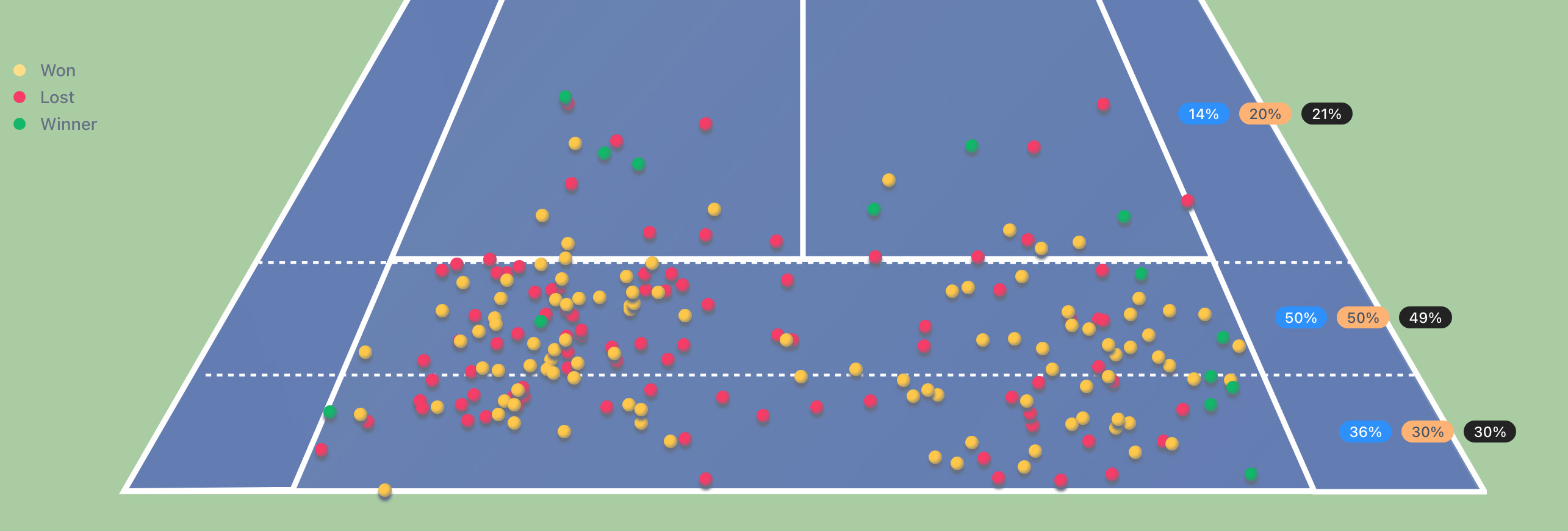
In the opening games the depth of Medvedev’s ball was outstanding. He’ll never win any speed and spin trophies, but the Russian’s best asset has always been his ability to land his flat strikes in the deep end of town at a relentlessly consistent clip:
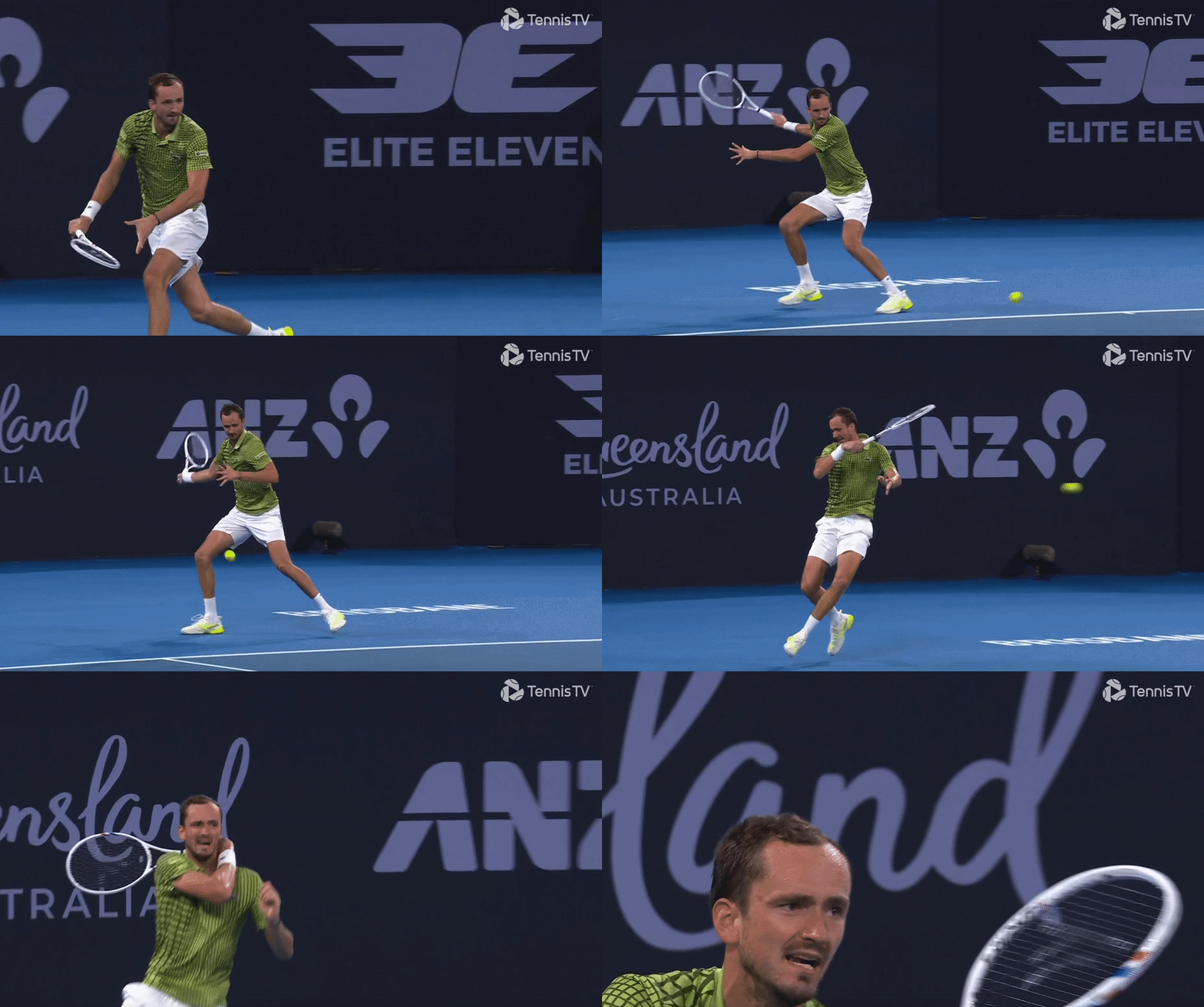
People often point at Medvedev when stating that technique is over-rated, and his “octopus” moniker has largely been driven by some of the outlandish positions that occur in the Russian on his forehand finish:
But the swing on the three-feet into contact is pretty damn clean. Fixed wrist, uses gravity and angular momentum of the racquet head. The only quirk is the fact that he “drops the racquet twice” — initially in the unit turn, and then on the forward swing. This is another reason — outside of the overall backswing length — that makes Medvedev’s forehand long, or time-sensitive.
But these quirks aren’t all that exploitable for most of the tour, and Nakashima didn’t have the firepower or variation from the baseline to disrupt Medvedev out of his comfort zone:
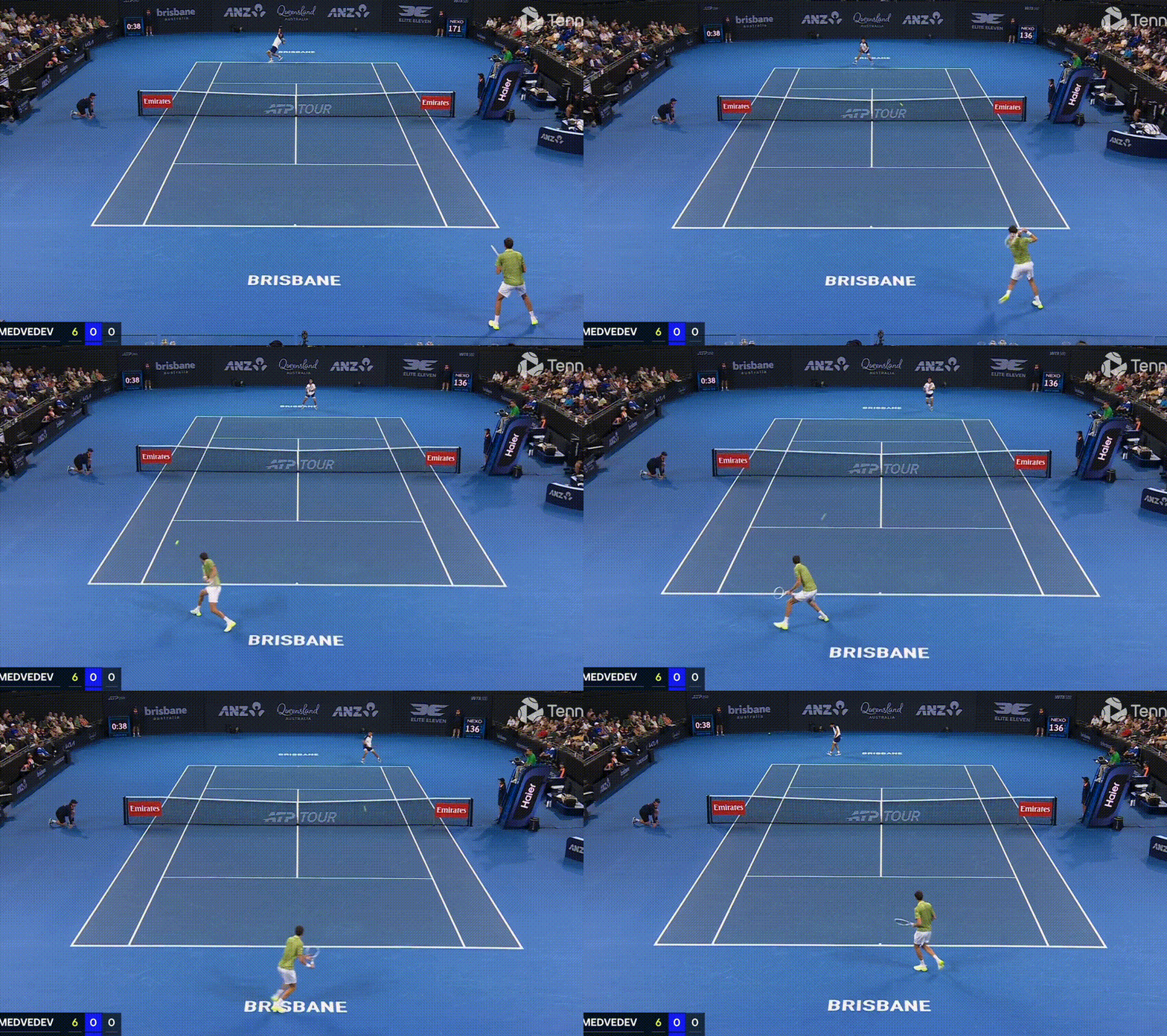
Which is all the more surprising that we didn’t see more of this:
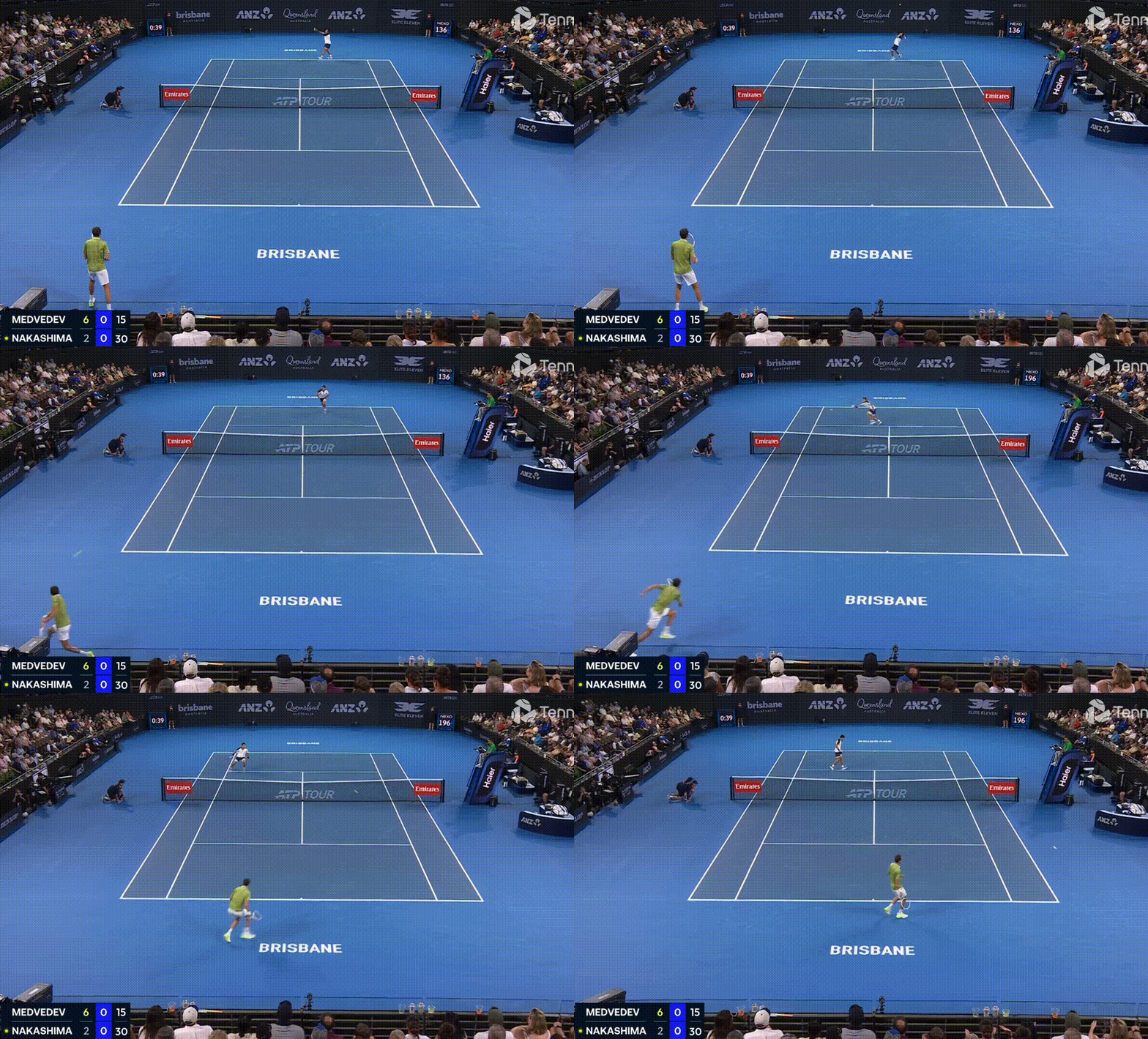
The American’s serve is sneaky potent given his accuracy (he’s 7cm closer to the lines than the tour average), and the serve-and-volley play has been used by many players successfully — Djokovic, Kyrgios, Alcaraz, Sinner — to expose the Russian’s deep return position.
And on the topic of net play, what is even more encouraging for Medvedev fans was his continued commitment to exploit the net game himself this week. This is where his attacking game can evolve, as he showed in his previous final victory in Almaty. I loved this off-backhand sneak:
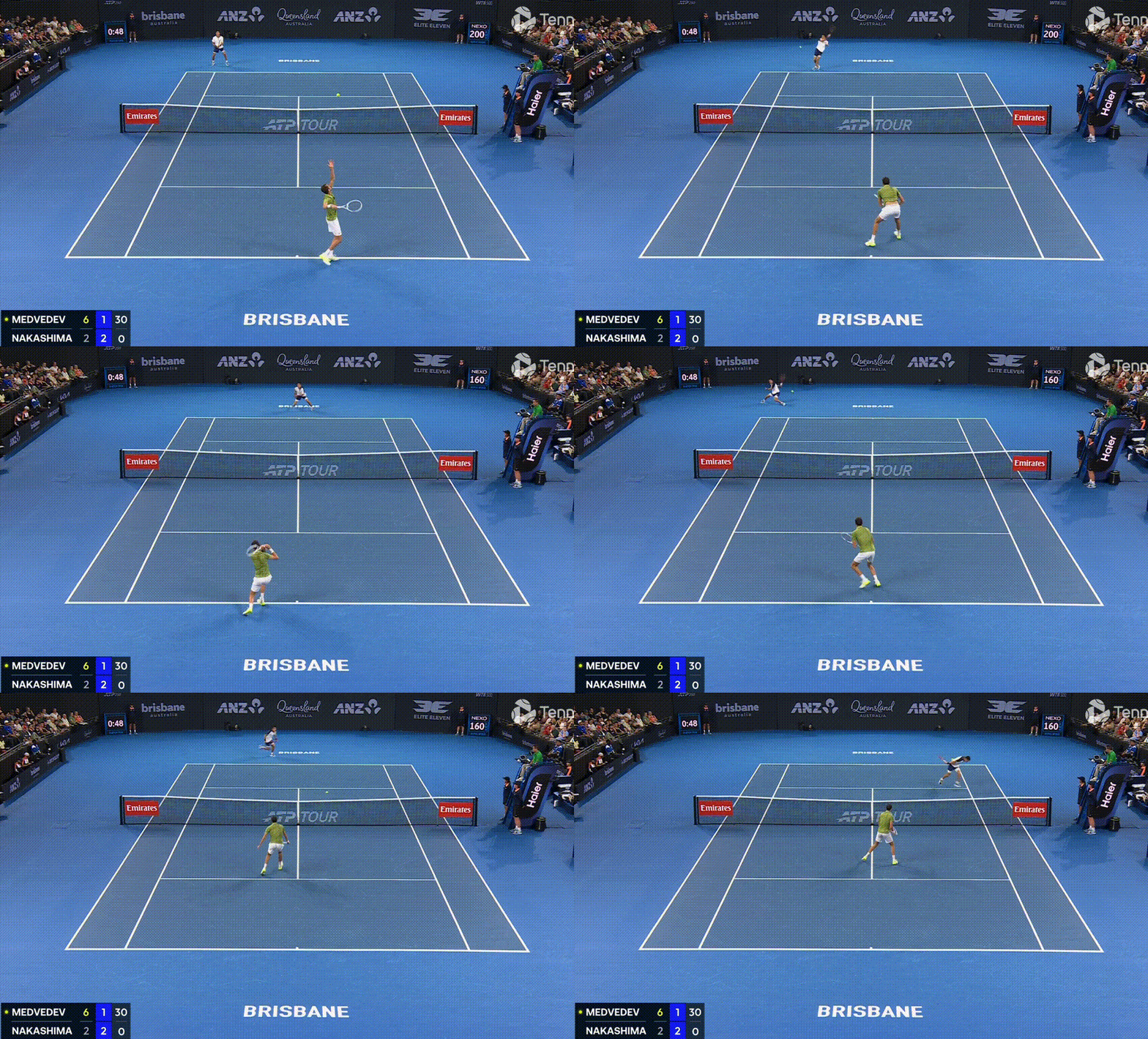
Nakashima did threaten in a couple of the last Medvedev service games, using his excellent backhand to go line and inside-out more himself. But again, you’d be scratching the head as the coach, as Nakashima only went backhand line 21% of the time:
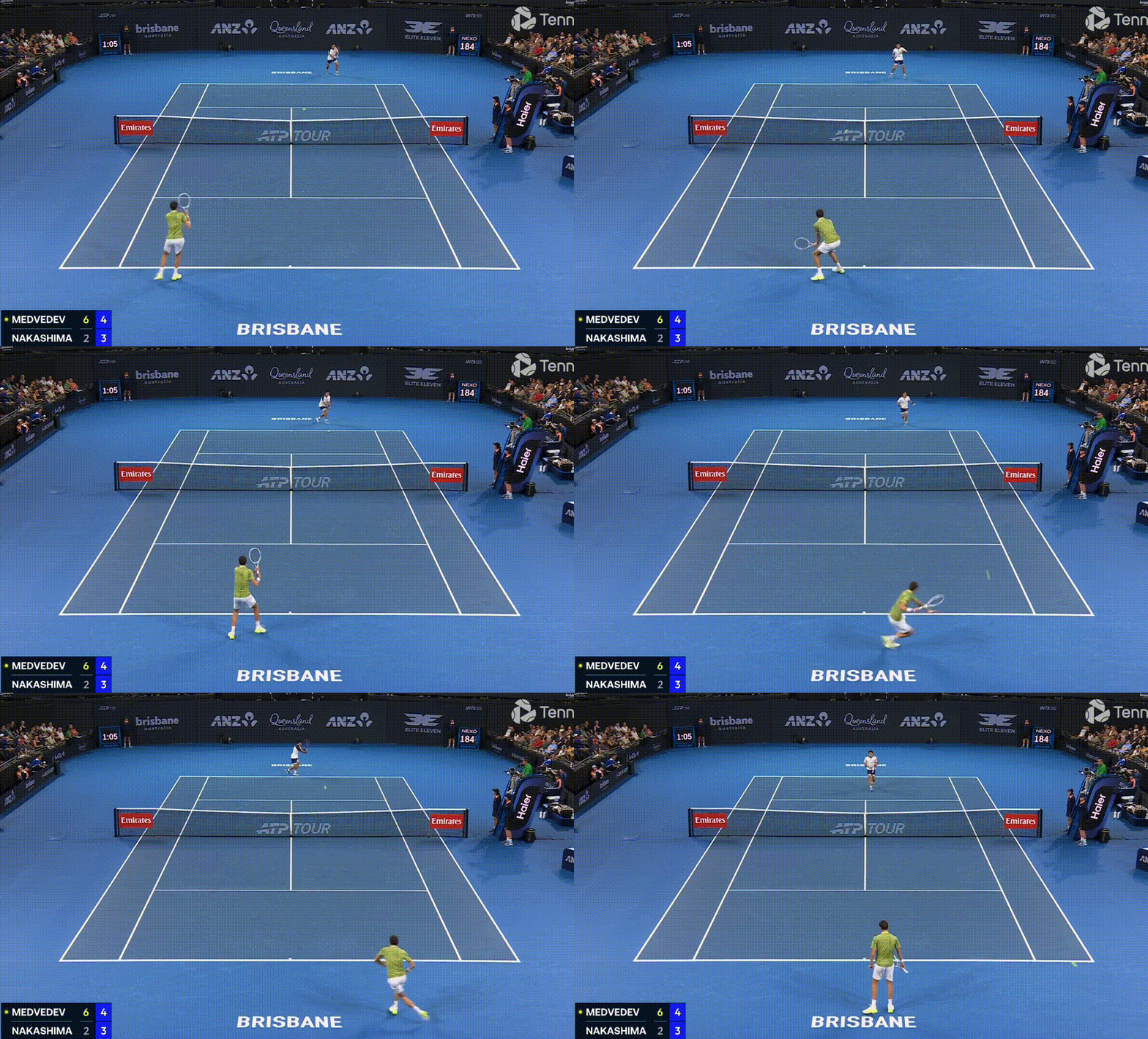
Look at that locked-wrist finish:
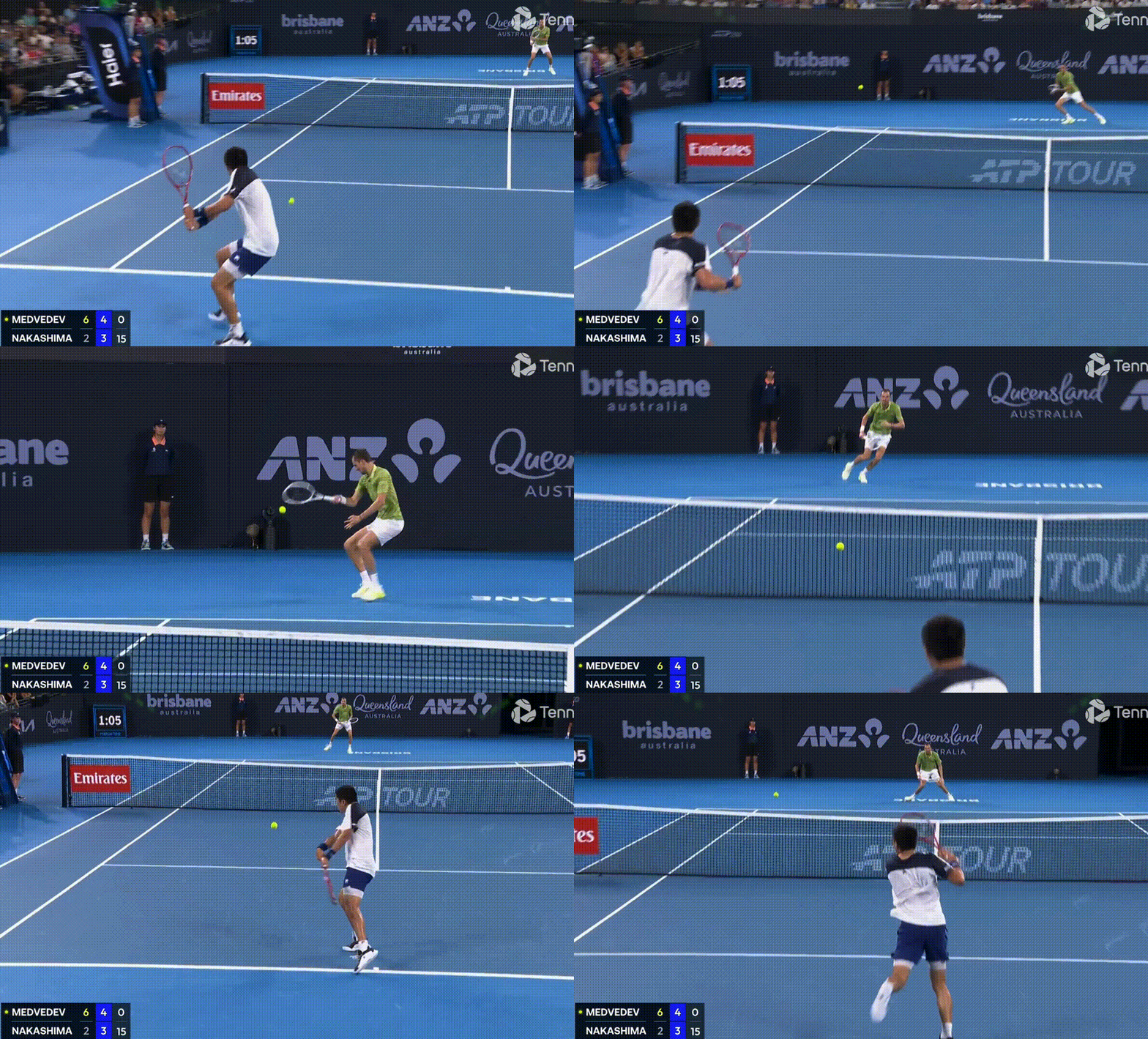
It was this exact play again that helped Nakashima eventually earn a break as Medvedev was serving for the title and blew three match points. It was the lone blip at a costly time. But in a show of renewed mental strength, Medvedev regathered, and re-earned, a bag of match points in the tie-breaker, winning the last two points with more transition game:
Alexander Bublik defeated Lorenzo Musetti 7/6 6/3 in the final of the Hong Kong Open on Sunday to clinch his ninth tour title and secure a place in the ATP top 10 rankings for the first time. To put his run of form in perspective, in March of 2025 the Kazakh was ranked 82.
A large part of the Bublik renaissance in 2025 was the uptick in potency once he switched to the Babolat Aero 98 post-Vegas. On the groundstrokes there was more speed, more winners, and less errors. Off both wings:

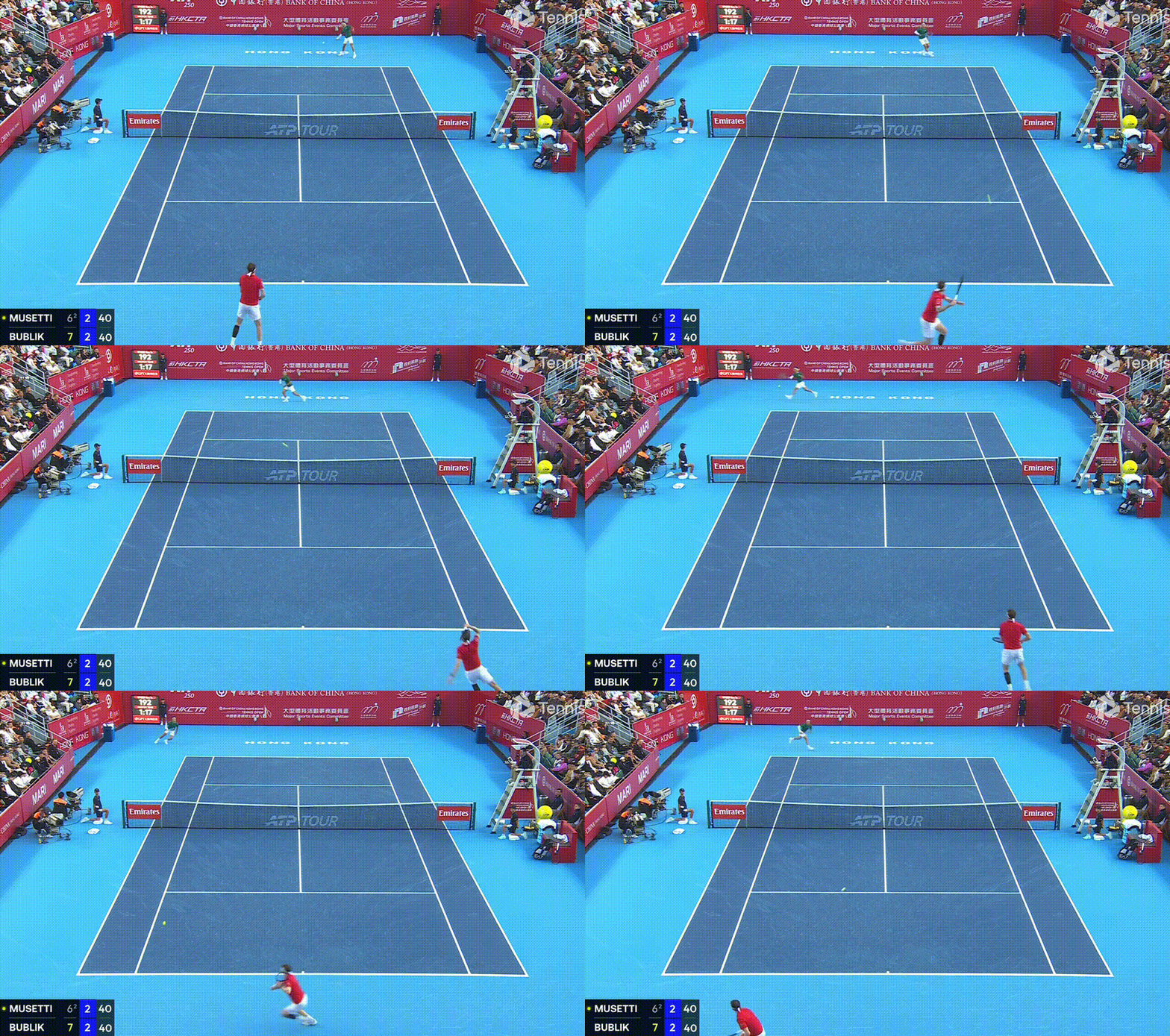
He wasted no time opening the shoulders on Sunday:
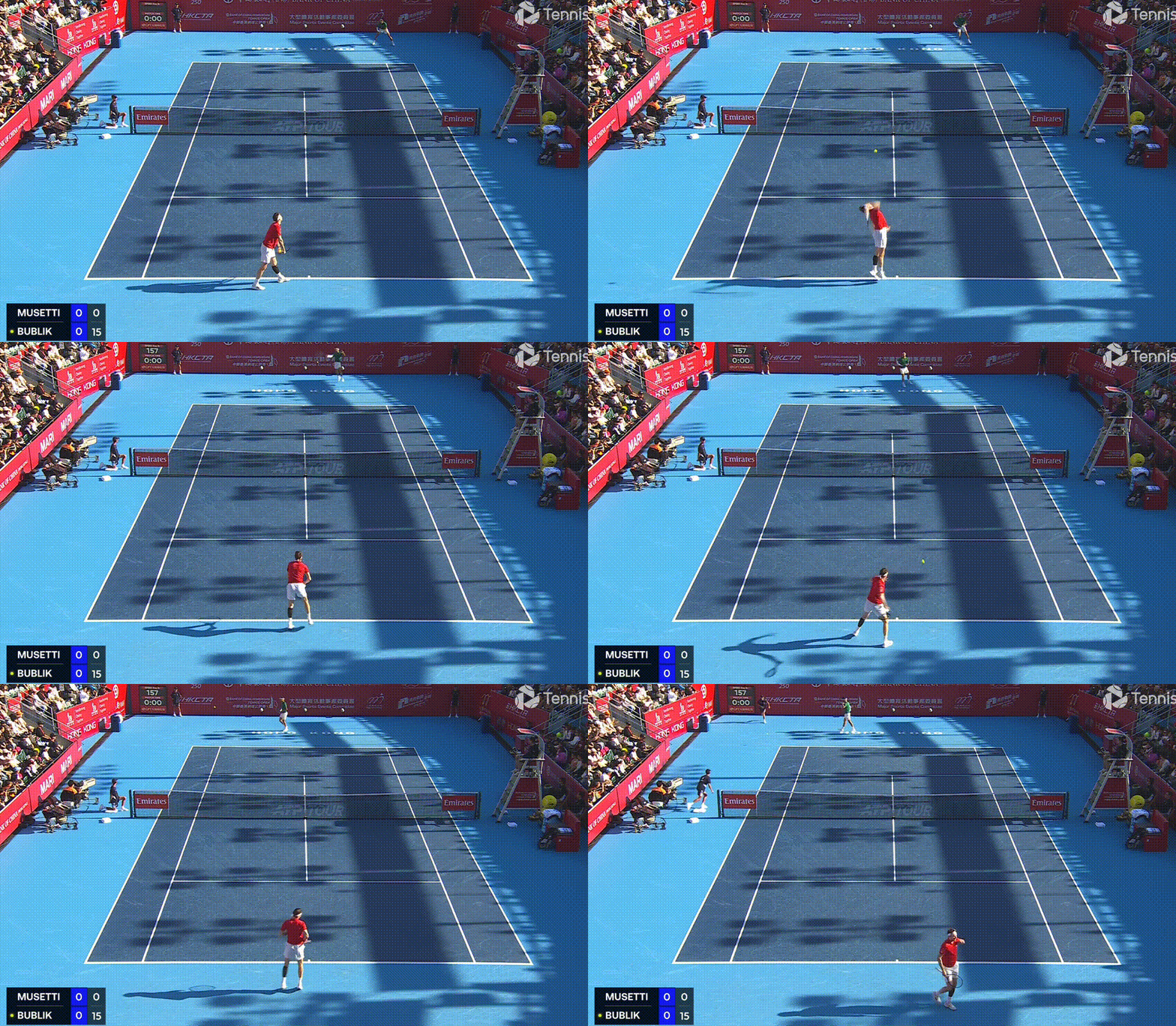
And it’s the same story on serve, from last year’s Mail Bag:
The speeds are the same, but the first serve-accuracy is up ~5cm, the aces/match are up slightly (from 9.5 in 2023/24 to 11 post-Vegas) but the double faults are way down (from ~6.8 in 2023/24 to 3.9 post-Vegas).
It was kind of an everything fix.
And all these stats are key in a matchup against Musetti (more power for less errors is great against anyone, to be fair), who is one of the best defenders on tour. The footspeed, the end-range creativity and flair, the crafty backhand slice; the Italian spins a web of defense that leaves most trapped in errors.
The Italian’s forehand has developed into a rock-solid stroke, and he has that Sinner-esque tendency/love for being fully stretched and flattening it out on the run, where the left leg is purposefully stepped across to act as a reactive break:
But on hard courts many of these features are blunted. Chip returns sit up higher and more predictably than grass, flighted topspin backhands don’t jump as much compared to clay, and there is less time afforded for angles and full-blooded strikes for his one-hander. It’s why the Italian has a clear dip in career win-% when you compare hard courts to the natural surfaces:

Bublik exploited this to the full extent. He won 81% of Deuce serves and 90% of Ad first-serves when serving to the Musetti backhand, and dominated on serve +1 forehands, winning 67% of those situations. It was a similar story in Musetti’s loss to Djokovic in Athens.
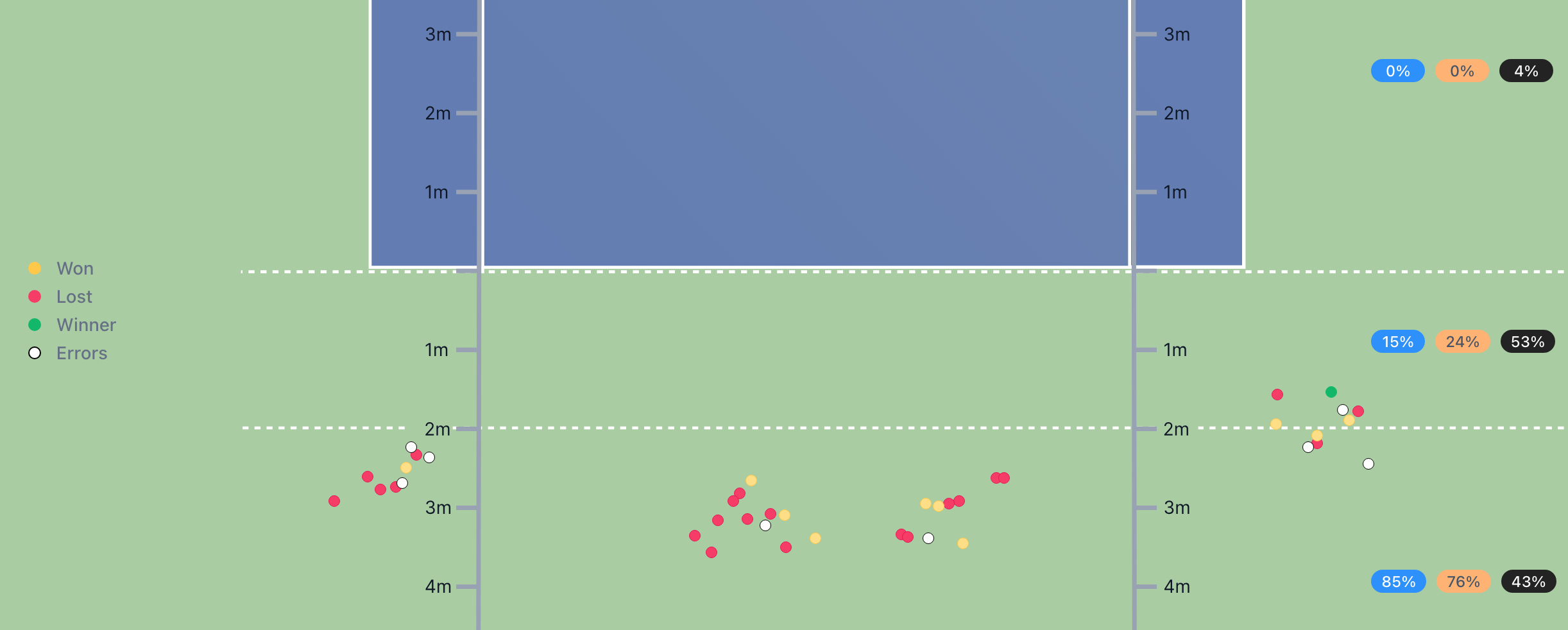
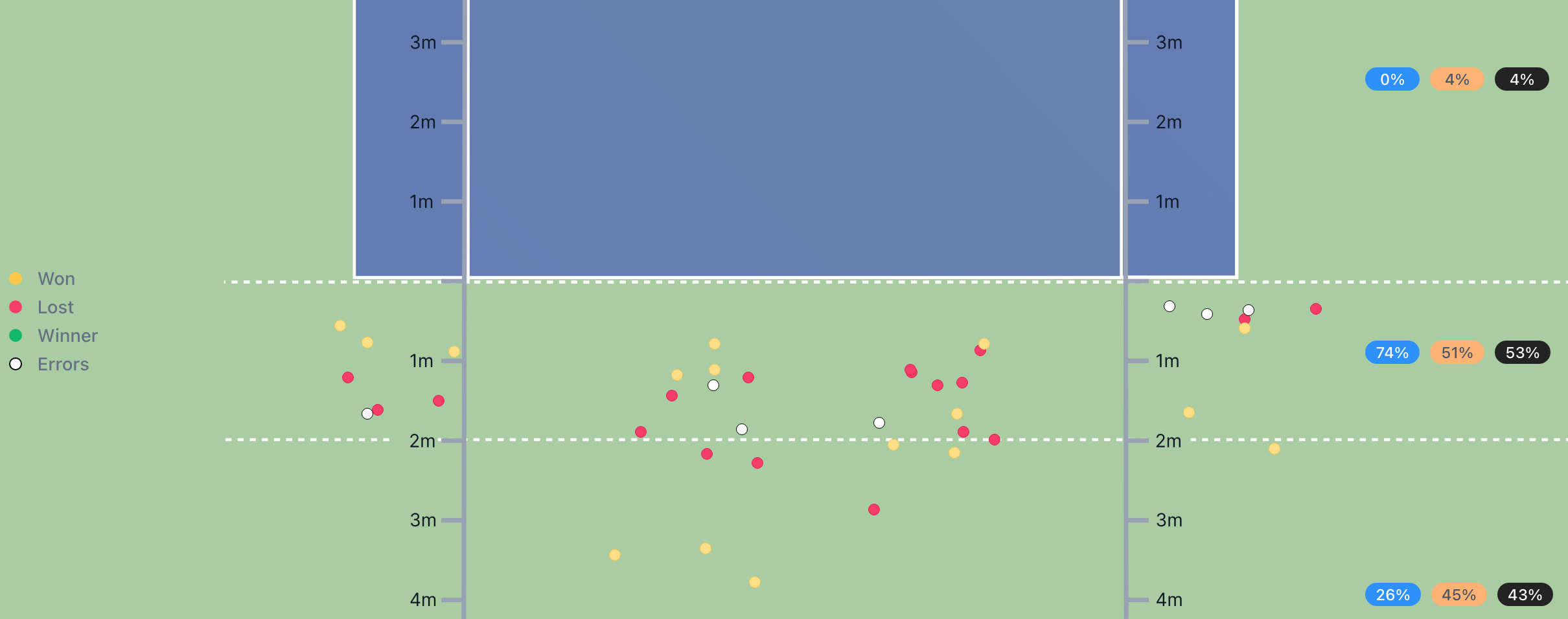
Look at the disparity in return contact points between Bublik and Musetti on their backhand wings. Keep in mind Musetti is likely chipping these with slice, whereas Bublik is more likely blocking flatter with two-hands, accentuating the difference in how quickly the return gets back on the server.
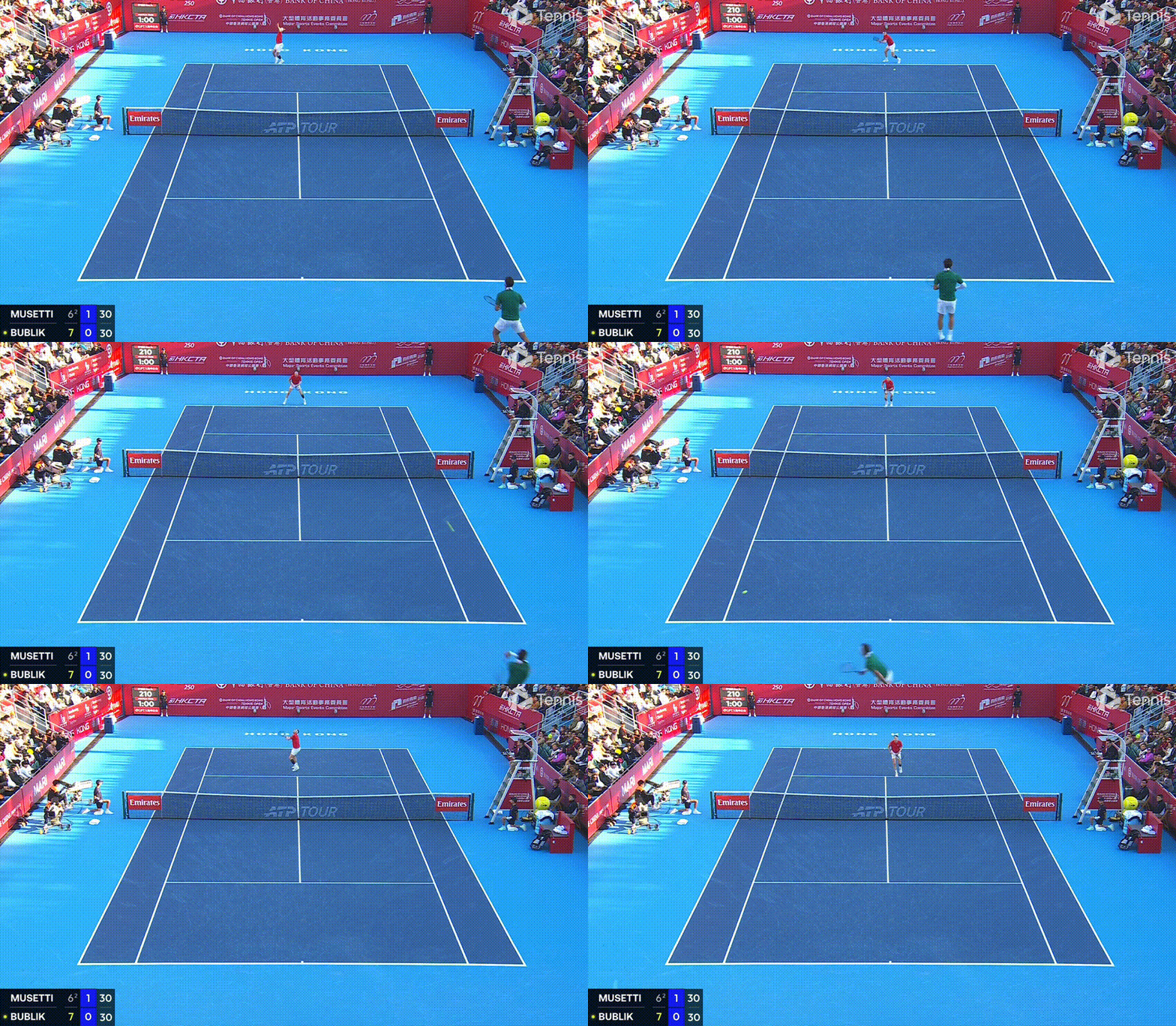
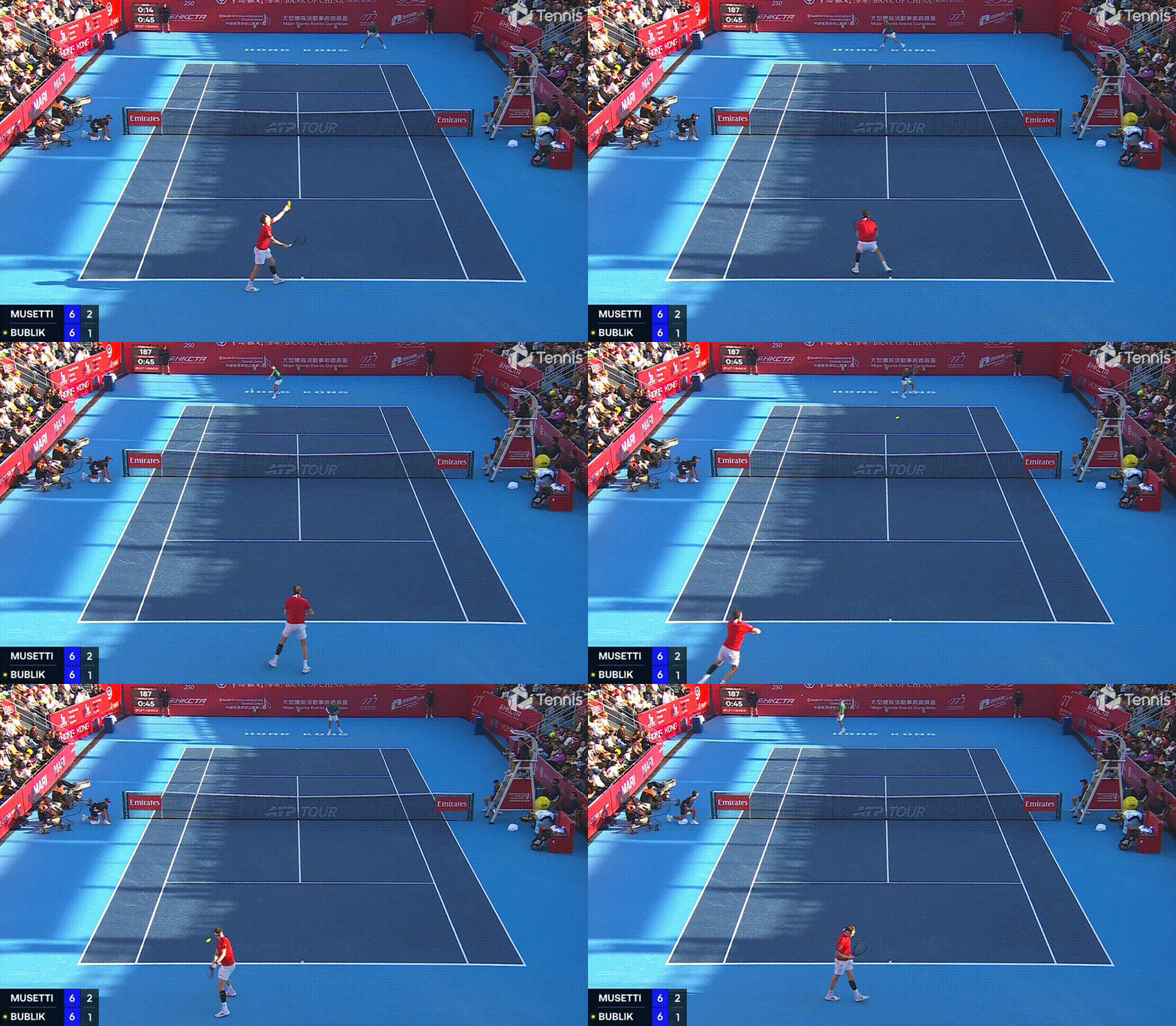
An example:
Gill Gross also pointed this out on his Monday Match Analysis. Emphasis mine:
“You’re seeing a lot of deep block returns, even successful block returns, get punished. And this is a credit to Bublik, because it takes a lot to get the ball through Lorenzo Musetti or force an error through Lorenzo Musetti when he’s in the middle of the court in a defensive position, and you’re dealing with a slow ball from behind the baseline. But it’s also the way of the tour right now. More players are great pace generators.”
I think this last sentence has made the one-hander’s position on tour even more precarious than it was 10 years ago, when Wawrinka and Federer were still enjoying slam success with chipped backhand returns. The tour is faster than ever, and two-handers profit from holding positions and using the speed of faster balls. They can prepare faster, have later contact points, and have more control, all at the same time:
One of the additional reasons Musetti is unlikely to ever get closer or more topspin-oriented on his backhand return is the degree of grip change he makes from forehand to backhand. He plays with a full Western forehand grip (bevel 5), and an Eastern one-handed backhand grip (bevel 1). The cardinal point nomenclature may not make sense to all, so here’s a visual from My tennis HQ:
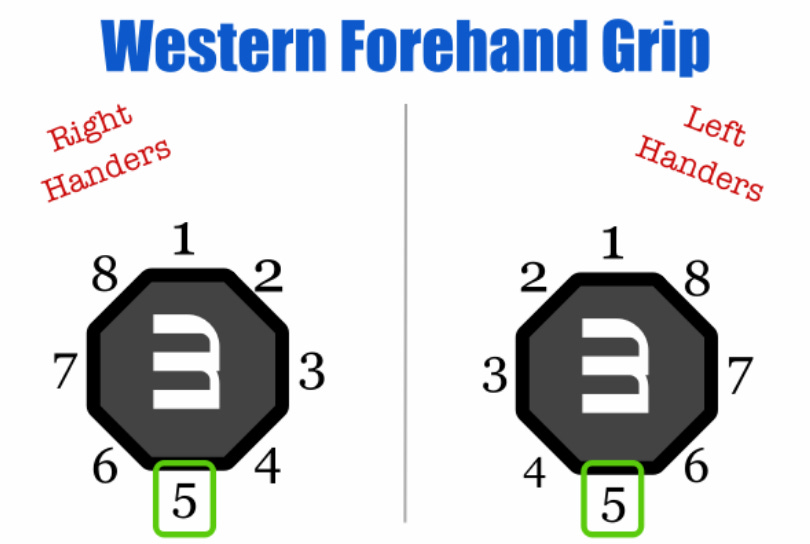
You can see that Musetti’s grip change from forehand to backhand is downright antipodean. And while this is only the movement of a couple of inches, they are ones that matter against the firepower of today’s first-serves.
By comparison, Federer’s Eastern forehand (bevel 3) meant the grip change was significantly less, and his forehand grip was better suited to deflecting speed anyway. For more extreme forehand grips, other workarounds have been made in the past. Philip Kohlschreiber and Nicholas Almagro simply kept their forehand grips and used the same side of the racquet for backhands:
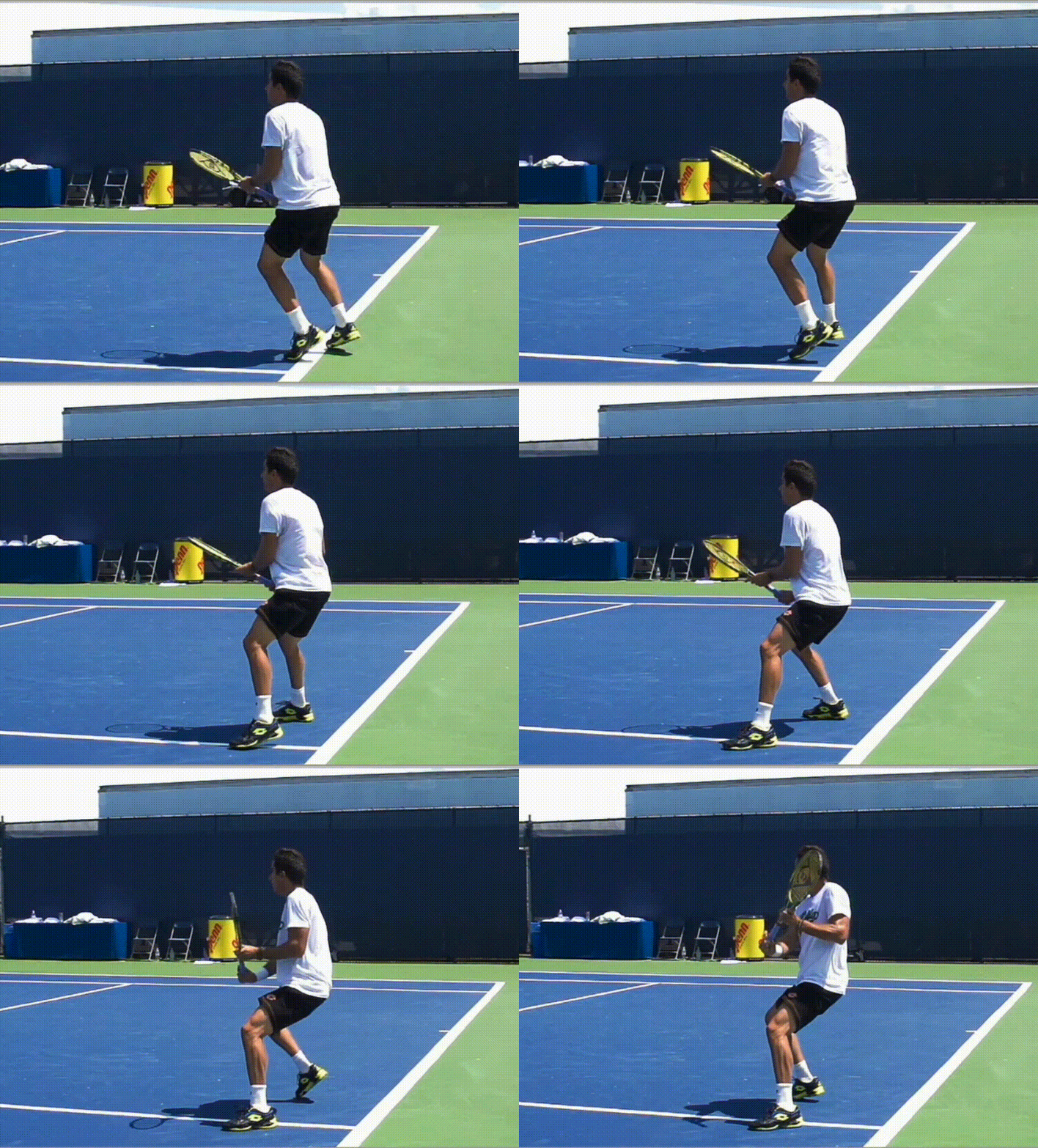
This is the one-handed backhand return equivalent of work-from-home and Zoom meetings.
Gill suggested Musetti could either move in closer to chip, maybe making it easier to keep the return lower and less floaty, or go even farther back like a Medvedev and play more topspin from there. I don’t think either is likely to work sufficiently against the best serve +1 players on hard courts. The other option is to just start guessing backhand more and take on the topspin grip, and if it goes forehand, chip that side. This is what Dusan Lajovic sometimes does, alternating his grip depending on what he anticipates is coming. I think on big points especially, when it’s more likely servers look to find that backhand chip return, Lorenzo could start anticipating that in a Rublev-esque “casino return” strategy and play it with his topspin stroke, as he does quite well on second serves. Seems like a decent gamble against top tier players on hard courts who win the lion’s share of points when he opts to block middle.
A final note on Bublik. With the Babolat racquet change — which is reportedly much, much lighter than his previous Tecnifibre — 2025 saw Bublik’s backhand get shaved down to that closed-face-Alcaraz-style-punch. Compare the muted power position this week to this time one year ago (Adelaide 2025):
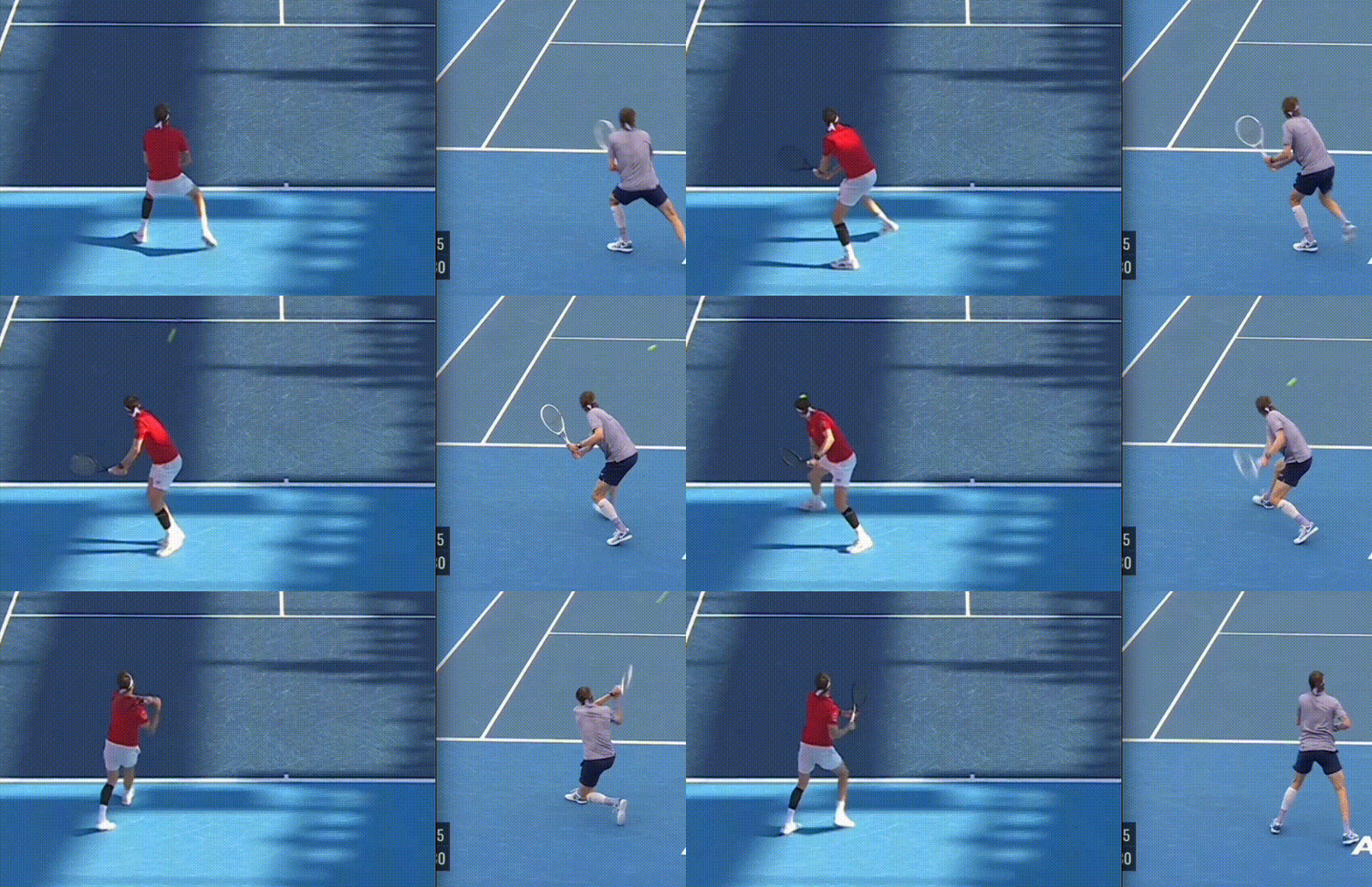
In today’s match, he averaged 73 mph, 2110 rpm, and made 90%. That’s up from his 52-week average of 72 mph, 1824 rpm, and 81% in.
More compact. Faster. Heavier. More consistent….Well I’m off to buy some Aero 98’s.
I’ll see you in the comments. HC.