
Mercedes-Benz Airmatic Air Suspension Failure: What Atlanta Drivers Need to Know
Your Mercedes-Benz was engineered to glide. Whether it’s an E-Class navigating Peachtree Street, an S-Class on I-285, or a GLE making the run up GA-400 toward Alpharetta, the Airmatic air suspension system is what gives these vehicles their signature ride quality — that smooth, planted, effortlessly controlled feeling that separates a Mercedes from everything else on the road.
When Airmatic starts to fail, that feeling disappears quickly. And in Atlanta’s stop-and-go traffic, where suspension systems work constantly across everything from smooth Buckhead boulevards to the pothole-scarred stretches of I-20, Airmatic problems don’t just affect ride comfort — they affect safety, handling, and the long-term health of surrounding suspension components.
Solo Motorsports has been diagnosing and repairing Mercedes-Benz Airmatic systems across the Atlanta metro since 2003. Here’s exactly what you need to know about how Airmatic works, what goes wrong, and when it’s time to bring your Mercedes in.
What Is the Mercedes Airmatic System?
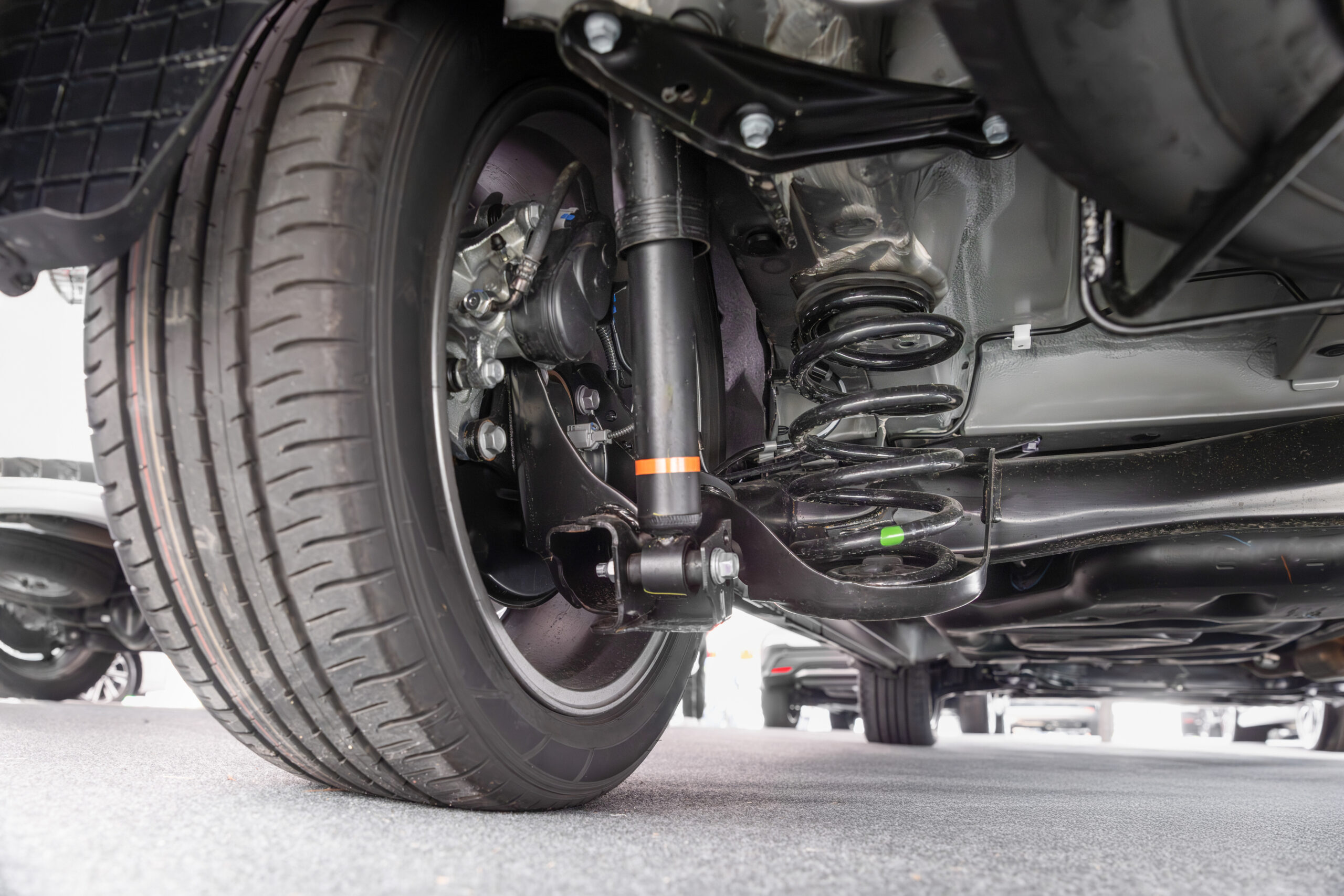
Airmatic is Mercedes-Benz’s electronically controlled air suspension system, found across the E-Class, S-Class, CLS, GLE, GLS, and ML lineups. Instead of traditional steel coil springs, Airmatic uses pressurized air struts at each corner of the vehicle to support its weight and absorb road impacts.
Everything in this system is headed by the central control module in order to ensure that the car is safely high enough off the ground, that the suspension isn’t too stiff depending on your speed, that road conditions are accounted for, and that all of this conforms to the comfort setting the driver has chosen. When you’re driving on a highway with few terrain changes, the vehicle will sit a bit lower for aerodynamics. When the road is rougher, the Airmatic system raises the vehicle slightly to avoid damage. If you switch to sport mode, the system will adjust and make steering a bit firmer, making handling more agile.
When it works correctly, it’s genuinely impressive technology. When it starts failing, the warning signs are hard to miss.
The Most Common Signs of Mercedes Airmatic Failure
The vehicle sits noticeably lower than normal. This is the most obvious Airmatic warning sign and the one Atlanta Mercedes owners most frequently notice first. If your Mercedes looks like it’s squatting — particularly on one corner or one axle — a failed air strut is almost certainly the cause. Air struts develop leaks at the rubber air sleeve, at the valve block connections, or at the strut cap, allowing pressurized air to escape and the vehicle to drop.
The suspension warning light is on. The Airmatic control module continuously monitors system pressure. When a strut loses pressure faster than the compressor can replace it, the module detects the fault and illuminates the suspension warning light on the instrument cluster. On some models, this appears as a car icon with wavy lines underneath. Don’t ignore it — driving with an active Airmatic fault accelerates compressor wear and can lead to complete system failure.
The compressor runs constantly or makes an unusual noise. The Airmatic compressor maintains system pressure by refilling struts as needed. A healthy compressor runs briefly after startup and occasionally during driving. A compressor on a car with a leaking strut runs almost continuously trying to compensate for the pressure loss — and eventually burns itself out from the effort. If you hear a sustained humming from the rear of your Mercedes while driving normally, the compressor is working too hard, which almost always means there’s a leak in the system.
The ride quality has changed noticeably. Airmatic failure doesn’t always present as a dramatic drop. In early stages, it can produce subtle changes — a slightly harsher ride over Atlanta’s rougher road surfaces, increased body roll through corners, or a vague, unsettled feeling at highway speeds on I-75 or I-85. If your Mercedes doesn’t feel like it used to, and you haven’t changed anything, the Airmatic system is worth inspecting.
The vehicle takes longer to reach the correct ride height after startup. On a healthy system, your Mercedes reaches its normal ride height within seconds of startup. A system with a slow leak or weakening compressor takes noticeably longer — sometimes a full minute or more. This is an early warning sign that catches Airmatic problems before they become severe.
Why Airmatic Problems Get Worse Quickly
The problem with allowing issues to persist on a Mercedes is that the Airmatic system is highly interdependent. When one component starts to break down, it will thereby negatively affect the rest of the system, eventually damaging other components. If something like the rear strut starts to leak, the compressor will be forced into working too hard, shortening its lifespan. If the valve block is causing the pressure to become unevenly distributed, all the struts will be overstressed. This cascading effect affects most aspects of the system, so make sure your Mercedes is regularly serviced.
Atlanta’s climate adds another layer of urgency. The heat and humidity that Georgia summers produce accelerate the degradation of Airmatic’s rubber air sleeves and seals — the same components that keep the system pressurized. A small leak that a Mercedes owner in a cooler climate might monitor for months can progress to a complete strut failure in a single Georgia summer.
Airmatic Repair at Solo Motorsports
Solo Motorsports diagnoses Airmatic faults using Mercedes-compatible diagnostic equipment that reads the full Airmatic control module — identifying exactly which component is failing, not just that a fault exists. This matters because Airmatic faults can originate from the struts, the compressor, the valve block, the pressure sensor, or the control module itself, and misidentifying the source leads to replacing the wrong part.
Our technicians use OEM and OEM-equivalent Airmatic components and verify correct system pressure and ride-height calibration after every repair, before the vehicle leaves the shop. We serve Mercedes-Benz owners across Atlanta, Alpharetta, Dunwoody, Johns Creek, Norcross, Roswell, and the full Georgia metro from our multiple locations.
Frequently Asked Questions About Mercedes Airmatic Suspension
Can I drive my Mercedes with a failed Airmatic strut? Technically, yes, but not for long and not without consequences. A severely dropped corner puts abnormal load on tires, wheel bearings, and adjacent suspension components. It also reduces your ability to control the vehicle in emergency maneuvers. Address it promptly.
How long do Airmatic struts last? On most Mercedes models, Airmatic struts last between 80,000 and 120,000 miles, depending on road conditions and climate. Atlanta’s roads and Georgia’s heat tend to put them at the lower end of that range.
Is it worth repairing Airmatic, or should I convert to coilovers? For daily-driven Mercedes vehicles, repairing the Airmatic system is almost always the right answer. Airmatic was engineered specifically for these vehicles, and removing it significantly affects ride quality, handling balance, and resale value.
How much does Mercedes Airmatic repair cost in Atlanta? Cost varies depending on which components need to be replaced. Solo Motorsports provides a full diagnosis before recommending any repair, so you know exactly what’s needed and why before we start. Contact any of our Atlanta area locations for a consultation.
Schedule Your Mercedes Airmatic Inspection at Solo Motorsports
If you’re finding that your Mercedes seems to be riding a bit lower than it should, you’re getting a suspension warning light, or the handling seems generally a bit off compared to when it was new, it’s likely time to take it in to our auto shop. The Airmatic system is fantastic, but when one part is faulty, it can significantly affect the other interdependent components of the system.
Solo Motorsports is an auto repair shop that happily services Mercedes-Benz vehicles throughout Georgia, including Atlanta, Alpharetta, Dunwoody, Gainesville, Johns Creek, Lawrenceville, Milton, Norcross, and Roswell. Visit one of our top-rated auto shop locations now or call our Mercedes mechanics near you for an inspection today!