
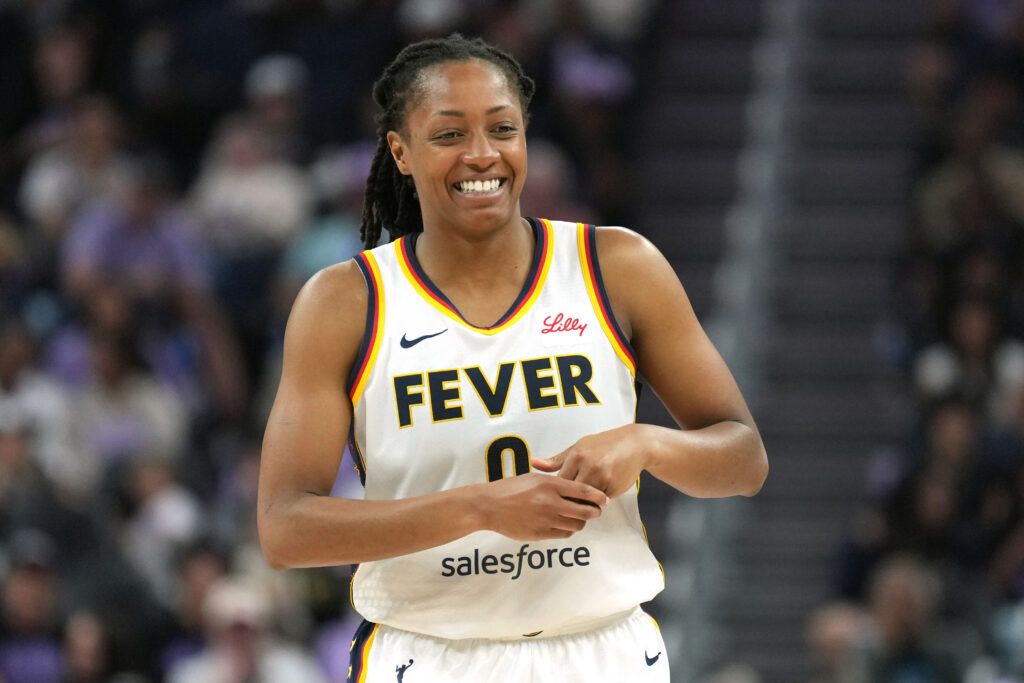
Kelsey Mitchell’s one-year, $1.4 million supermax deal with the Indiana Fever drew headlines Friday as one of the first contracts signed under the WNBA’s new collective bargaining agreement.
But Lynx beat writer Andrew Dukowitz saw something else in the structure. According to him, it’s a preview of what’s coming next spring.
Why the New WNBA CBA Might Lead Players to Choose Flexibility Over Stability
“I expect a lot of these,” Dukowitz posted on X shortly after the deal was reported. “The cap is expected to raise again next year, there might be a LOT of one year deals looking to build value and cash in next offseason. We might be doing this all over again next summer.”
I expect a lot of these, the cap is expected to raise again next year, there might be a LOT of one year deals looking to build value and cash in next offfseason.
We might be doing this all over again next summer— Andrew Dukowitz (@adukeMN) April 10, 2026
The logic underpinning Dukowitz’s prediction is baked directly into the CBA itself. Unlike the previous agreement, which set the salary cap to grow by a fixed 3% annually, the new deal ties the cap directly to league revenue through a revenue-sharing model.
The 2026 cap sits at $7 million, up from $1.5 million last season. By 2032, the league projects it will exceed $11 million.
That trajectory matters for players calculating their financial futures. If league revenues continue their recent surge, the cap could grow substantially year over year rather than incrementally. A player who locks into a three-year deal at today’s max might be leaving significant money on the table if the cap jumps again in 2027.
Mitchell isn’t alone in betting on herself. Jackie Young finalized a one-year deal worth $1.19 million with the Aces on Thursday, keeping her in Las Vegas alongside A’ja Wilson while maintaining full control of her playing future after this season.
Both players could have pushed for multiyear security. Both opted for flexibility instead.
More than 80% of the league became free agents in 2026 because veterans deliberately aligned their contracts to expire once the new CBA kicked in. They understood that waiting would pay off.
MORE: WNBA World Reacts to Kelsey Mitchell’s $1.4M Payday To Stay With Caitlin Clark, Fever
And it did, with minimum salaries now exceeding what the supermax paid just one year ago. Dukowitz is suggesting the same calculation could repeat if players believe 2027 will bring another meaningful cap increase.
There are counterarguments, though. Some players have signed multiyear deals. The Toronto Tempo gave Marina Mabrey and Brittney Sykes two-year max contracts, while Jewell Loyd reportedly landed a three-year deal to stay in Las Vegas.
For players prioritizing stability, championship contention, or life circumstances beyond pure earnings, longer commitments make sense. Teams, too, have an incentive to push for multiyear deals to avoid another offseason scramble.
But the revenue-sharing model introduces a new variable: genuine uncertainty about how much the cap will grow. If the WNBA’s media rights negotiations continue delivering, expansion fees keep flowing, and if attendance and merchandise sales maintain their upward trajectory, the financial landscape in 2027 could look markedly different from what it does today. Players who stay nimble will be positioned to capitalize.
Dukowitz’s theory doesn’t guarantee another free agency frenzy. It does, however, explain why some of the league’s smartest players might treat this summer’s contracts as one-year auditions rather than long-term commitments.
The new CBA was designed to let player salaries grow alongside the business. For veterans watching the league expand in real time, staying free might be the smartest financial play available.