

Buy The Art of Batting here:
“He’s lost a yard” is often the first line of most fast bowling obituaries.
That magical yard, snatched from them. Now, they are fast-medium, or worse, medium-fast. They’re dead to us. There is always another gun slinger who whangs it down; the fans and media are obsessing over them. Old quicks go from being trendy to disposable almost as rapidly as they bowl.
That has been the narrative for a hundred years. Fast men are quick to be discarded.
But Mitchell Starc is different.
But so is his era. In modern times, a better understanding of sports science has allowed elite athletes to prolong their careers. Serena Williams retired at 40, and LeBron James is still going strong at 41. And baseball pitchers are throwing faster than ever before the older they get.
In cricket, we have our own examples. Jimmy Anderson actually improved his career numbers after turning 35. Until mid-2021, Anderson actually hadn’t bowled a lot more deliveries in professional cricket than Darren Gough. But England made sure the majority of those are for them. You pair that with analysts, dietary plans, performance trackers and recovery windows to look after him. He can also look up all the times batter X was caught behind off a good length delivery on his phone.
It’s just a professional system all the way through. Gough just didn’t have the same privileges in his time.
But if England found a way to keep Anderson on the pitch, Australia have found a way to keep Starc quick.
He has had a record-breaking 2025. No bowler with 50 wickets in a calendar year ever took them as fast as he did. Only him and Waqar Younis in 1993 struck at less than one wicket every five overs. But these days everyone takes them quick. The year before had incredible numbers for Jasprit Bumrah and Gus Atkinson.
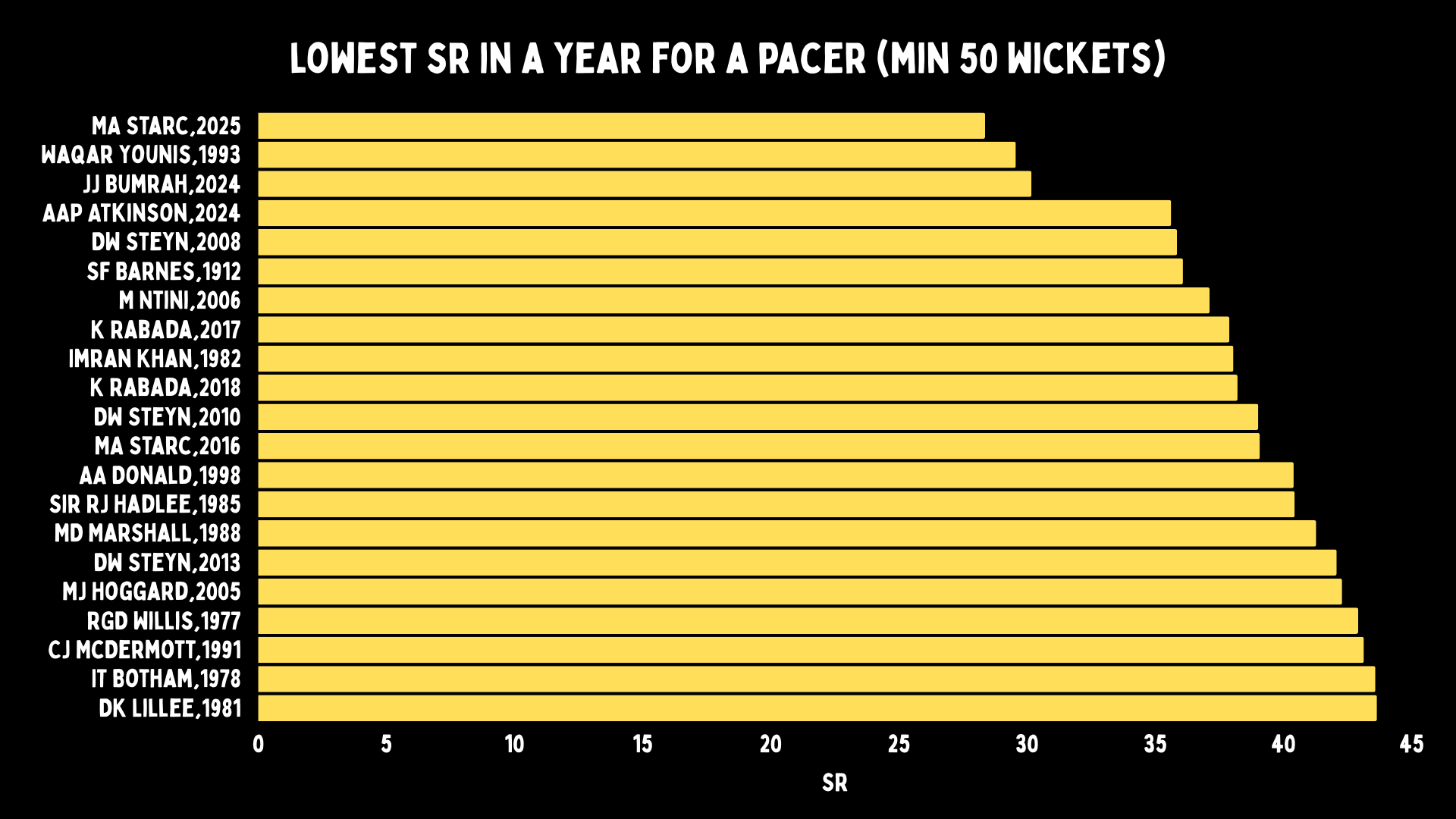
But raw numbers don’t tell us the full story. Starc got to play on some incredibly bowler-friendly wickets at home and in the Caribbean.
He still took his wickets 31% quicker than the other seamers in his games. But for context, Waqar’s ‘93 is second place all-time, and 2024 Bumrah was up at 57% as well. Both of those bowlers were in their peaks.
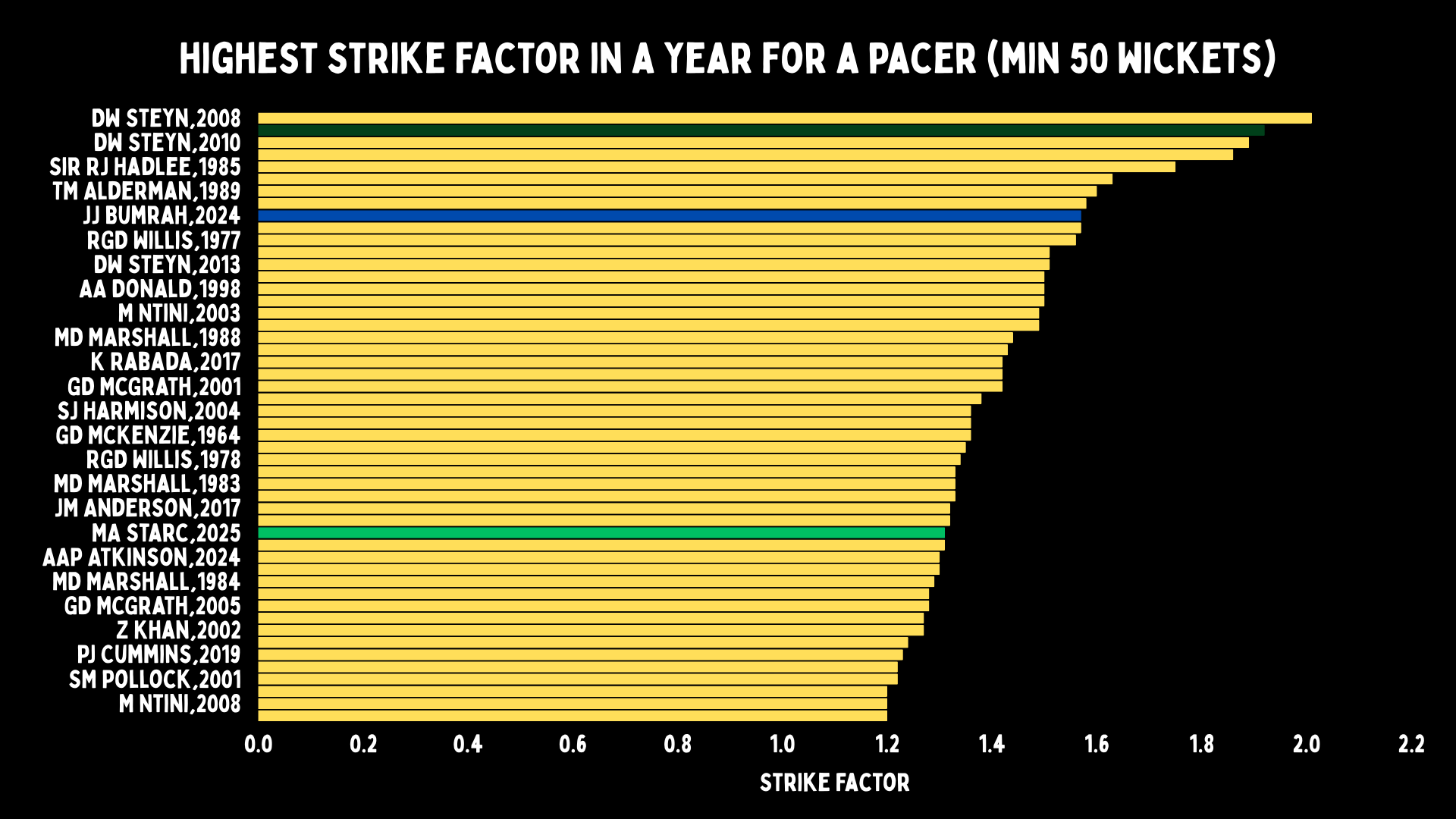
The difference is, neither of them were 35. Neither of them were thought of as a white (and pink) ball specialists for most of their career. A few years back, Starc was a slightly better than average red ball bowler who wasn’t swinging it that much. By 35, he should have been out of the game. Now, the only people who are out, are the ones facing him.
Many bowlers get more skilful as they age, but it doesn’t matter because they slow down. Mitchell Starc has not lost a yard.
***
At 35 and beyond, only the legendary Syd Barnes took more wickets at a lower average. And he was a hybrid between pace and spin. Even overall, it’s just Barnes’ two more years and Boland’s 2025 where an old pacer took their wickets more cheaply.
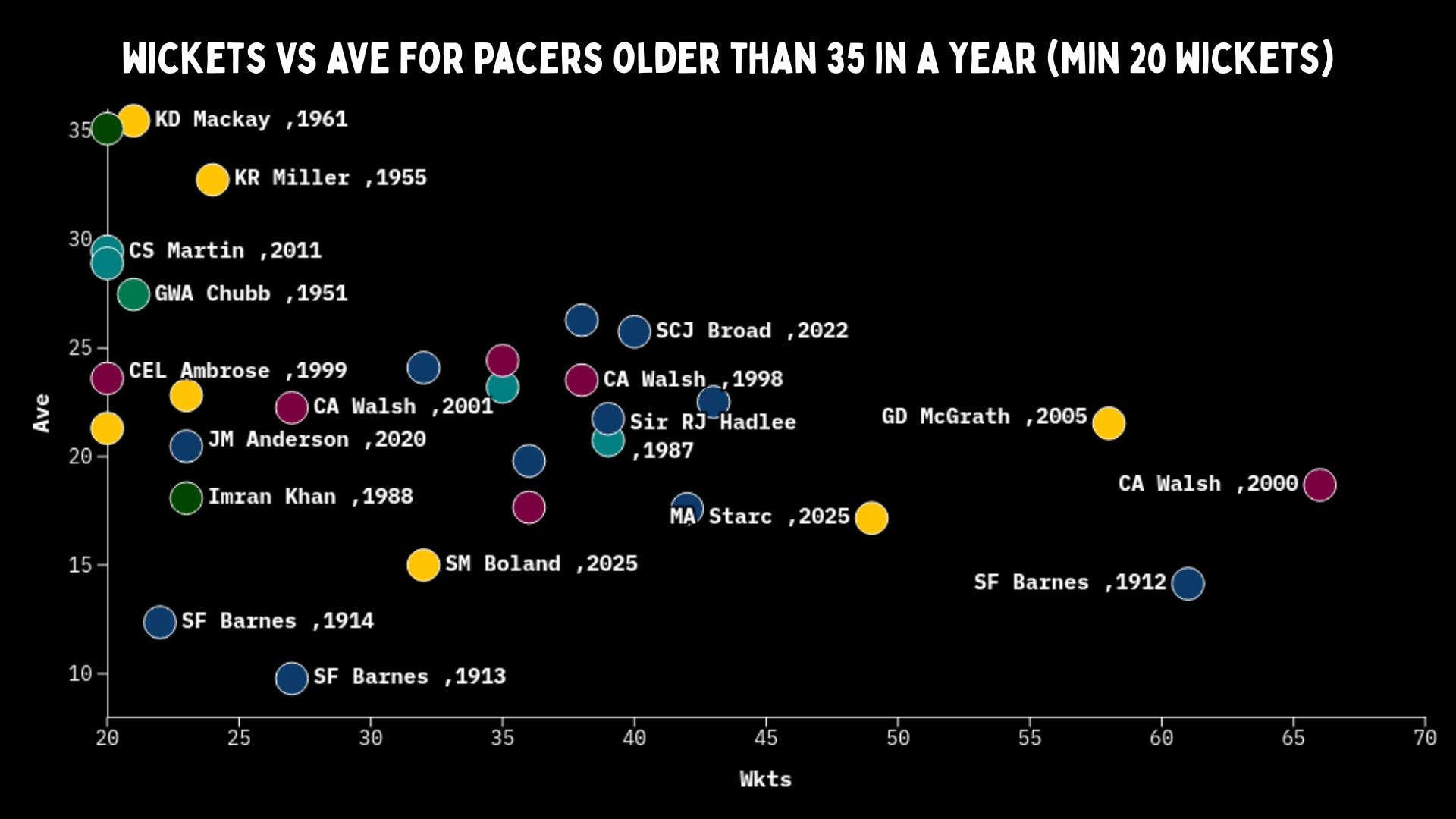
But we also have to remember that Boland still isn’t an automatic pick like Starc. He didn’t play in Sri Lanka, where the left-arm quick took six wickets in just 33 overs across two Tests.
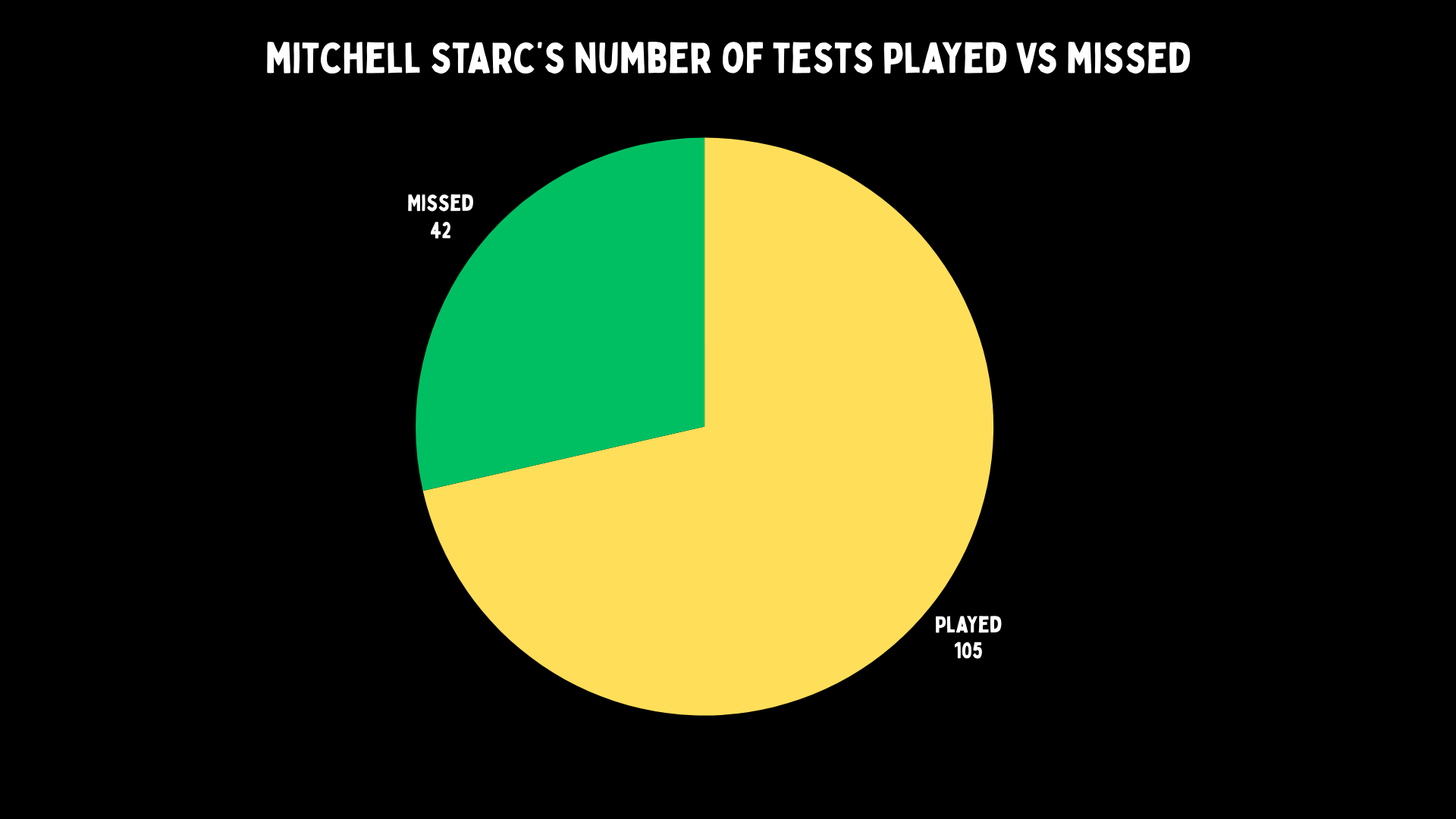
Boland also did not play in the WTC final that the Aussies lost, or the first two Tests in the West Indies. Starc did not miss a single game in 2025. He is like Australia’s workhorse, but still somehow their stallion.
A 90 mile an hour bowler who’s played more than 70% of his games is stunning. And he’s an all-format star. Only Tim Southee and Anderson have bowled more balls in international cricket since his Test debut, but they’re just not as quick.
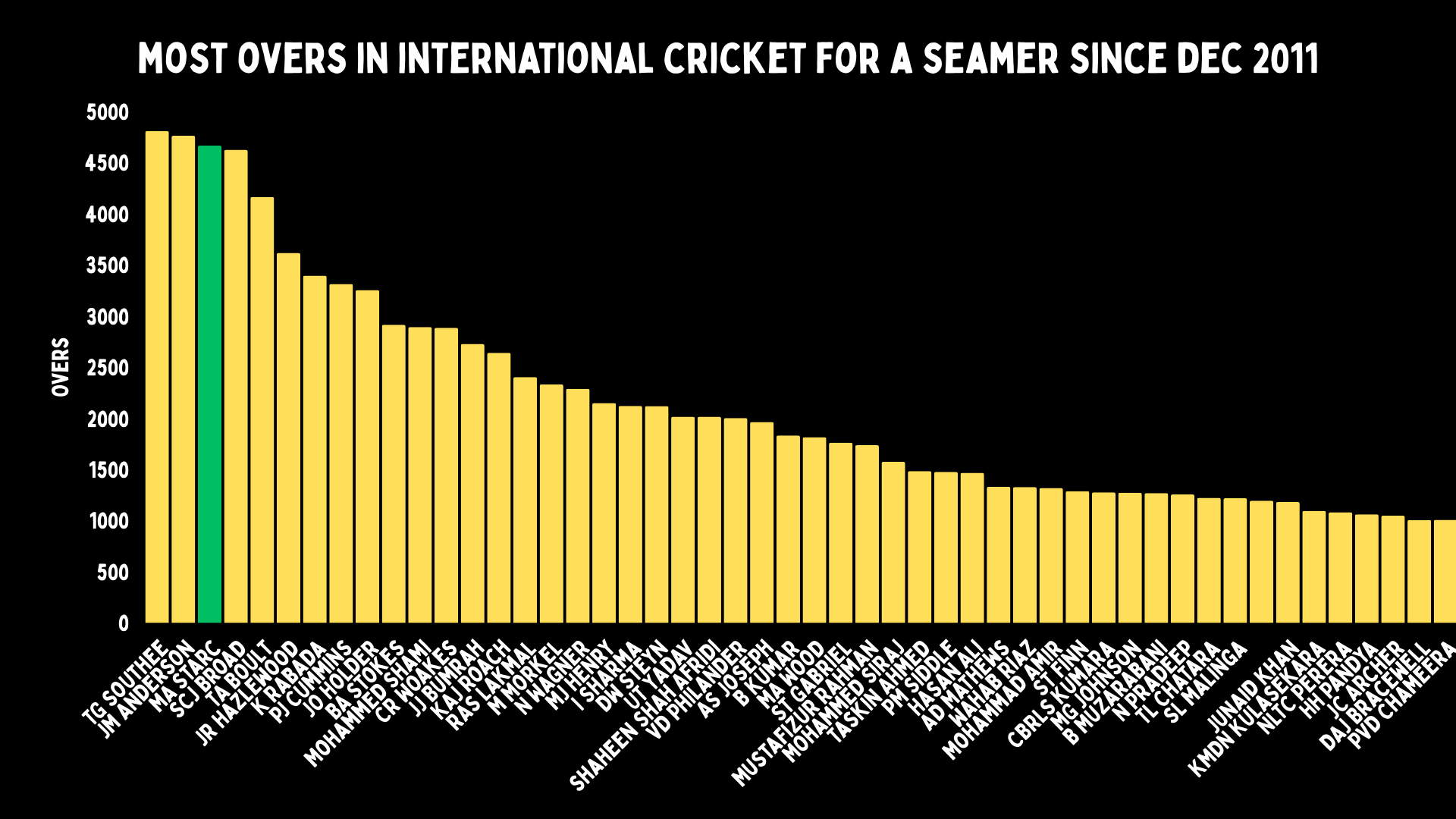
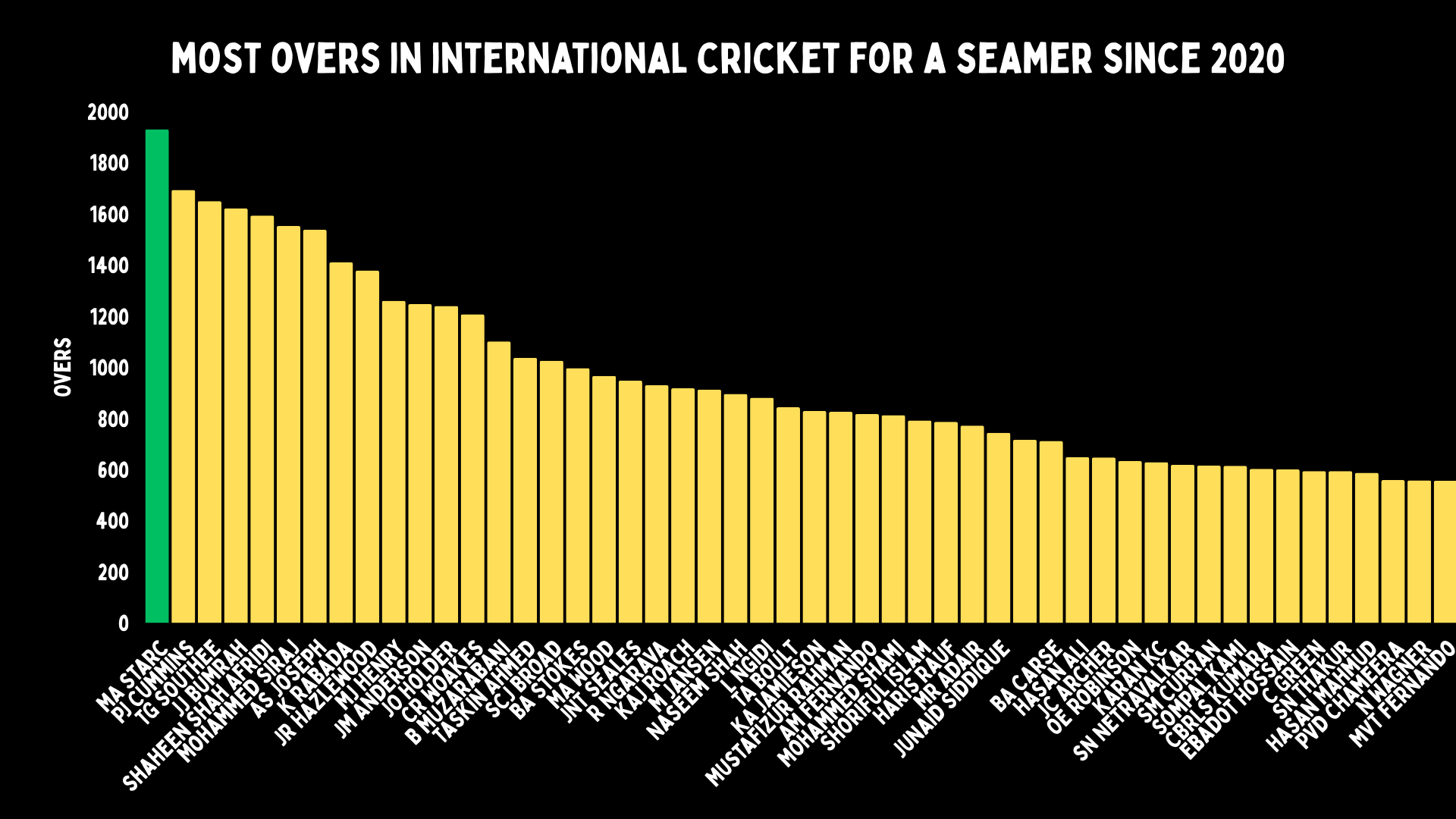
And it isn’t just that he does his work in whites. If you’ve tuned in to watch a random over of fast bowling this decade, it’s probably being bowled by him – especially at the start of games. The next-best, Cummins, is almost 220 overs less. Hazlewood is a mile back.
But in Tests, he has just taken it a notch further by missing only four matches. Three of those were due to injury, and he wasn’t picked for the Birmingham Test. So at an age he is supposed to be slowing down and being rested a lot, he is constantly quick and consistently playing.
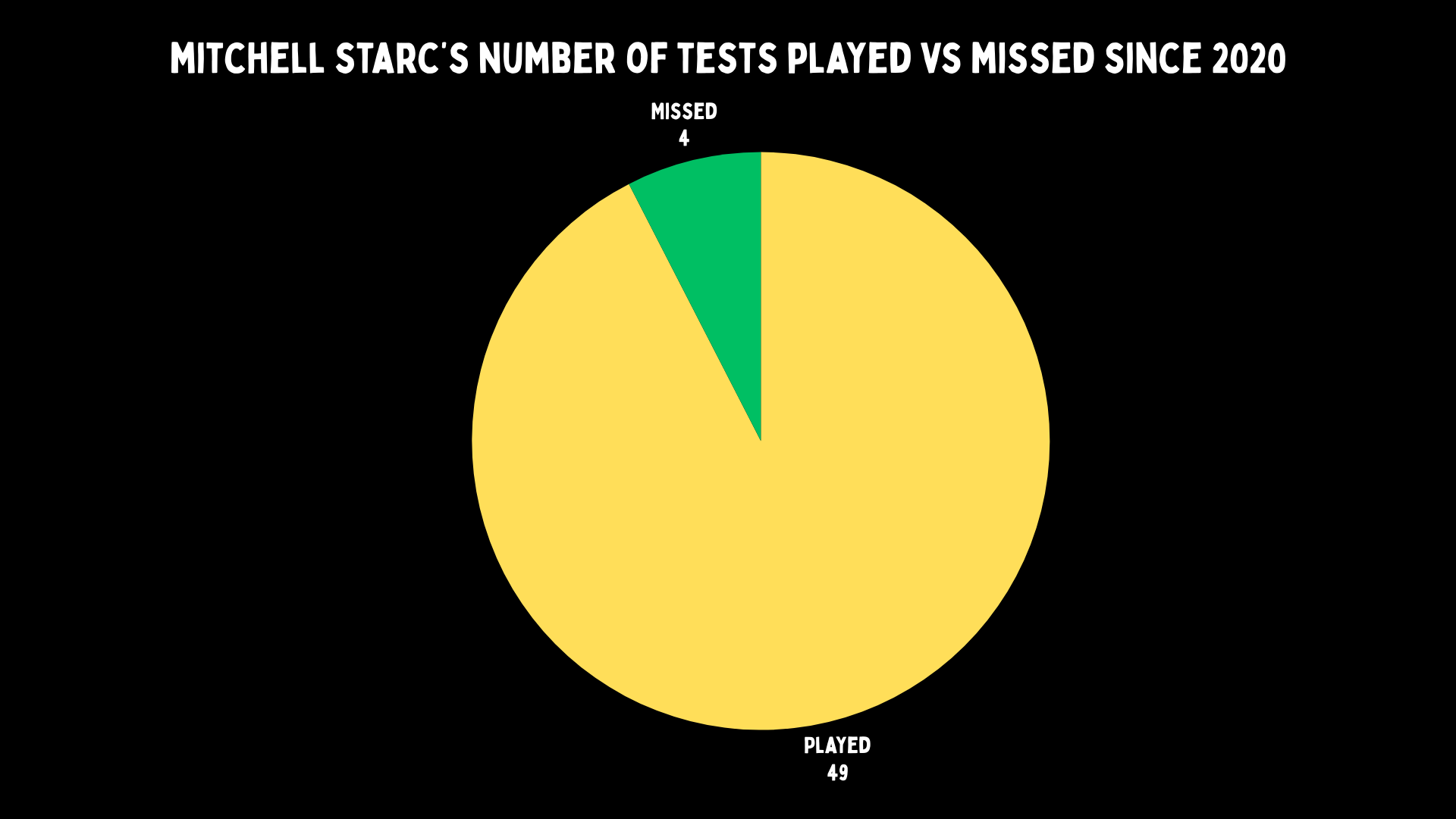
He said after that Test that he knows how it feels to be dropped, and that it’s probably not going to be the last time either. Since then, he has played 27 matches in a row, and was the Player of the Series for Australia in that Ashes.
This is the lowest Starc has ever averaged against England. But we need to account for the conditions as well, and on that the 2017/18 series stands out even more. It means he has had a significant impact on three series, while being relatively middling in the others.
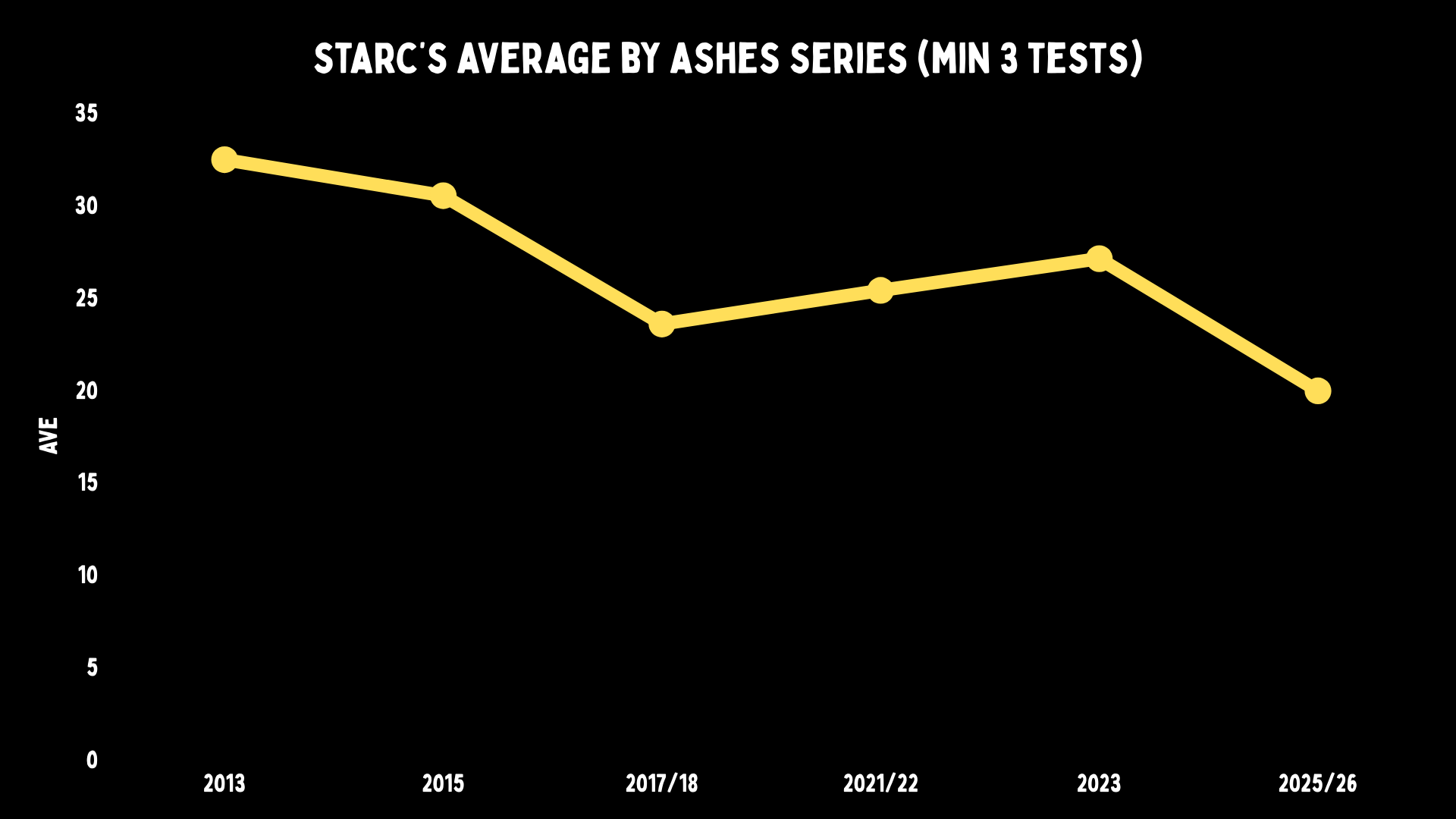
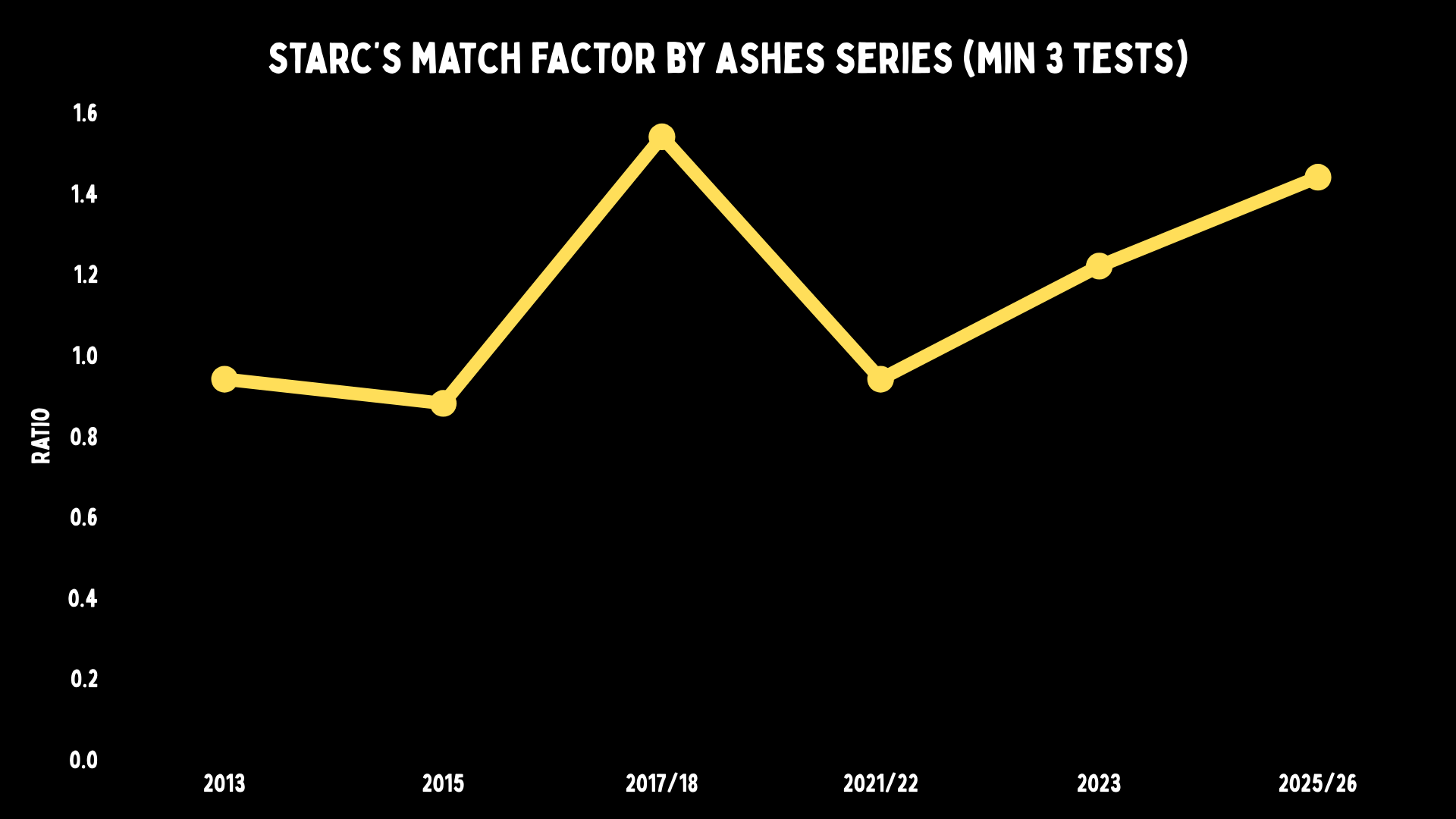
He has not been an Ashes destroyer, but has been a terrific support bowler. And yet, because he plays so much, only Glenn McGrath is (comfortably) ahead on wickets tally. Six Ashes series are a testament to his longevity.
He has had some incredible starts to Ashes. He’s taken a wicket with the first ball and in the first over. He is an extraordinary man with the new new ball.
But, the 2021/22 summer was a really new-ball dominant one, and his teammates were far more threatening in the first 30 overs.
When they went to England next, that just flipped on its head. Pat Cummins had deep backward point out even before a ball was bowled, and Zak Crawley creamed it through covers. The Aussies really struggled with the new ball then, though Starc was relatively better.
This Ashes was Crawley vs Starc in the first over, and it was the veteran who won that battle twice in the match.
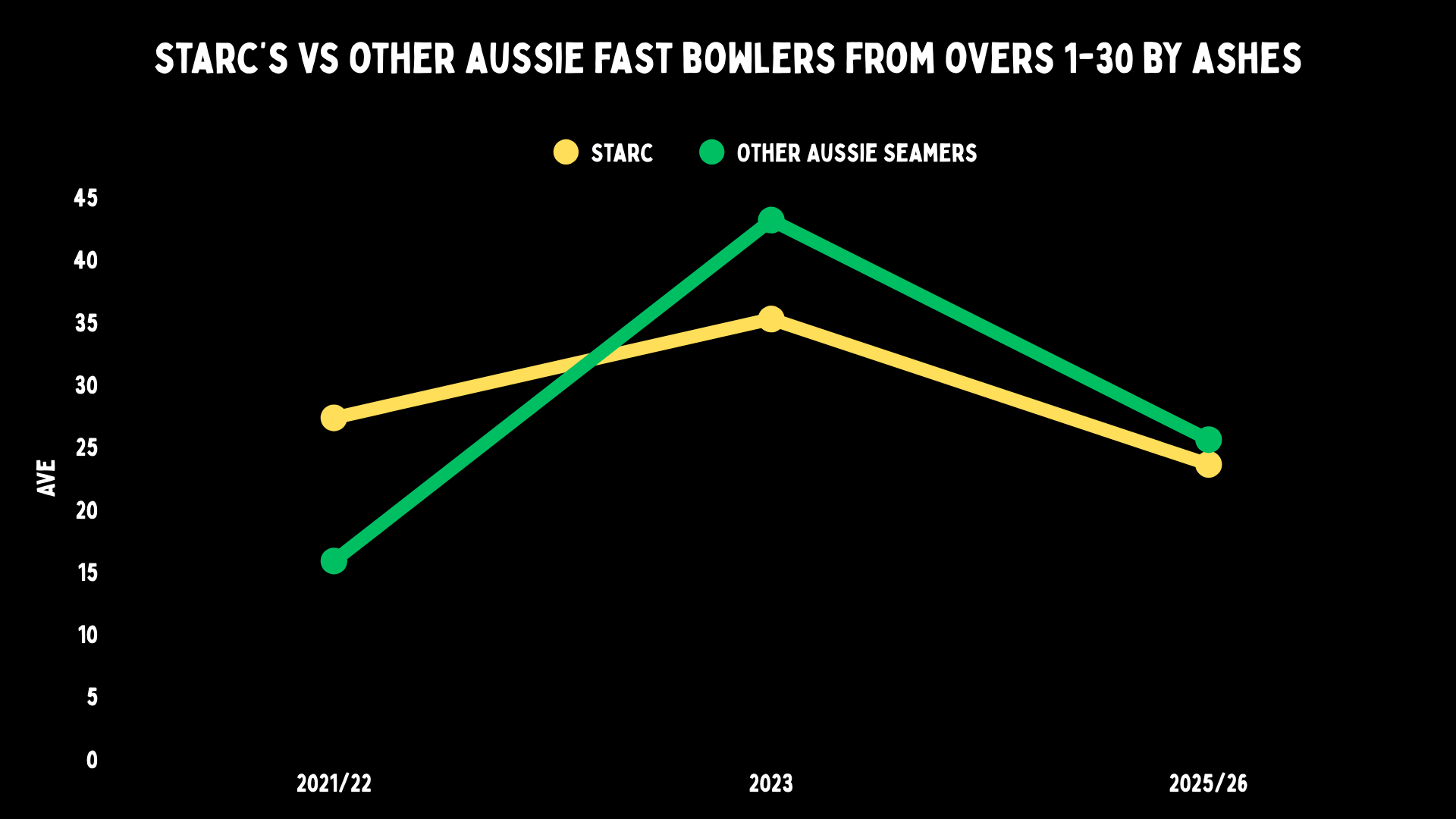
These numbers are worth talking about for a reason. While Starc had been known as a new ball bowler, he was really struggling for a while because he started to try the wobbleball. It meant he lost the ability to swing the brand new nut, and he also didn’t master the wobbleball. He was for a little while, a fast, straight bowler with bounce.
Perhaps the better way to show Starc is in overs 31-80. You can see that in 2021/22, England were terrible, and Starc was still worse than the other quicks. But in the next two series he has been incredible, because he can bowl for longer thanks to the wobbleball.
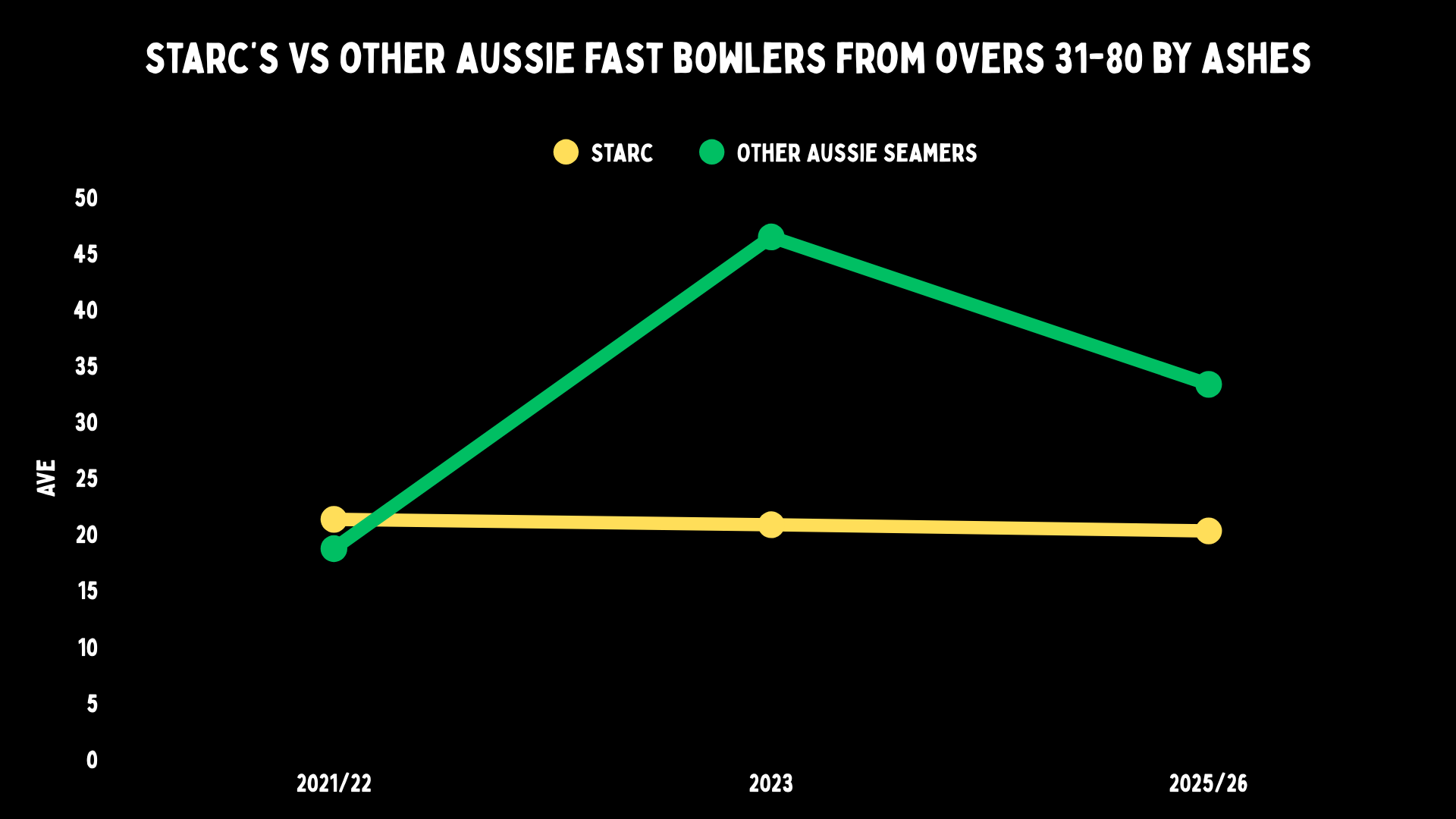
Because of Sandpapergate and just modern cricket, there is no reverse swing for him; that used to be his main weapon along with bouncers. Now he can probe away all innings long. Until the age of 32, probe was not a word you associated with Starc.
As we said before, in 2023, Starc was Australia’s player of the series. And he is better now.
***
For a lot of Starc’s career, he has relied on pure athleticism. When your brother has won a Commonwealth Gold for high jump, you have some natural advantages over others.
But he’s been smarter in recent years, and he’s become someone embracing biomechanics. In a Cricket Australia interview, Starc talks about after the 2019 Ashes he worked with different people like Troy Cooley and Craig McDermott to figure out his action. He found that if his bowling arm sits closer to the back hip at the backfoot landing, he feels that the timing and speed are in sync.
The key difference between Starc and someone like Boland is that the left-armer has a faster wrist snap. That allows him to keep pace up even when not fully fit. This helps when you’re old, and things get stiff.
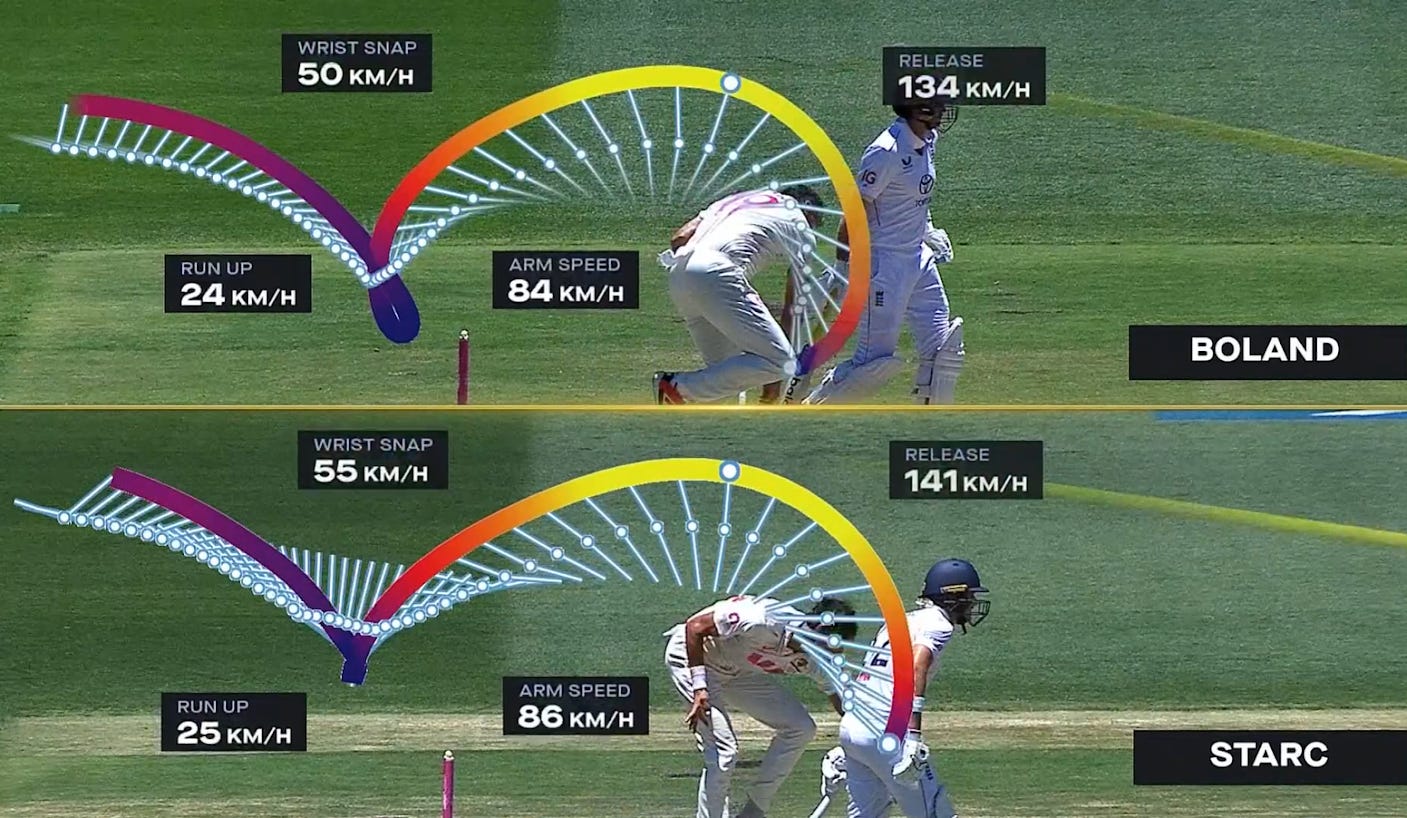
If he is feeling his age, we’re not seeing it. This actually seems like the best Starc has bowled with the red ball.
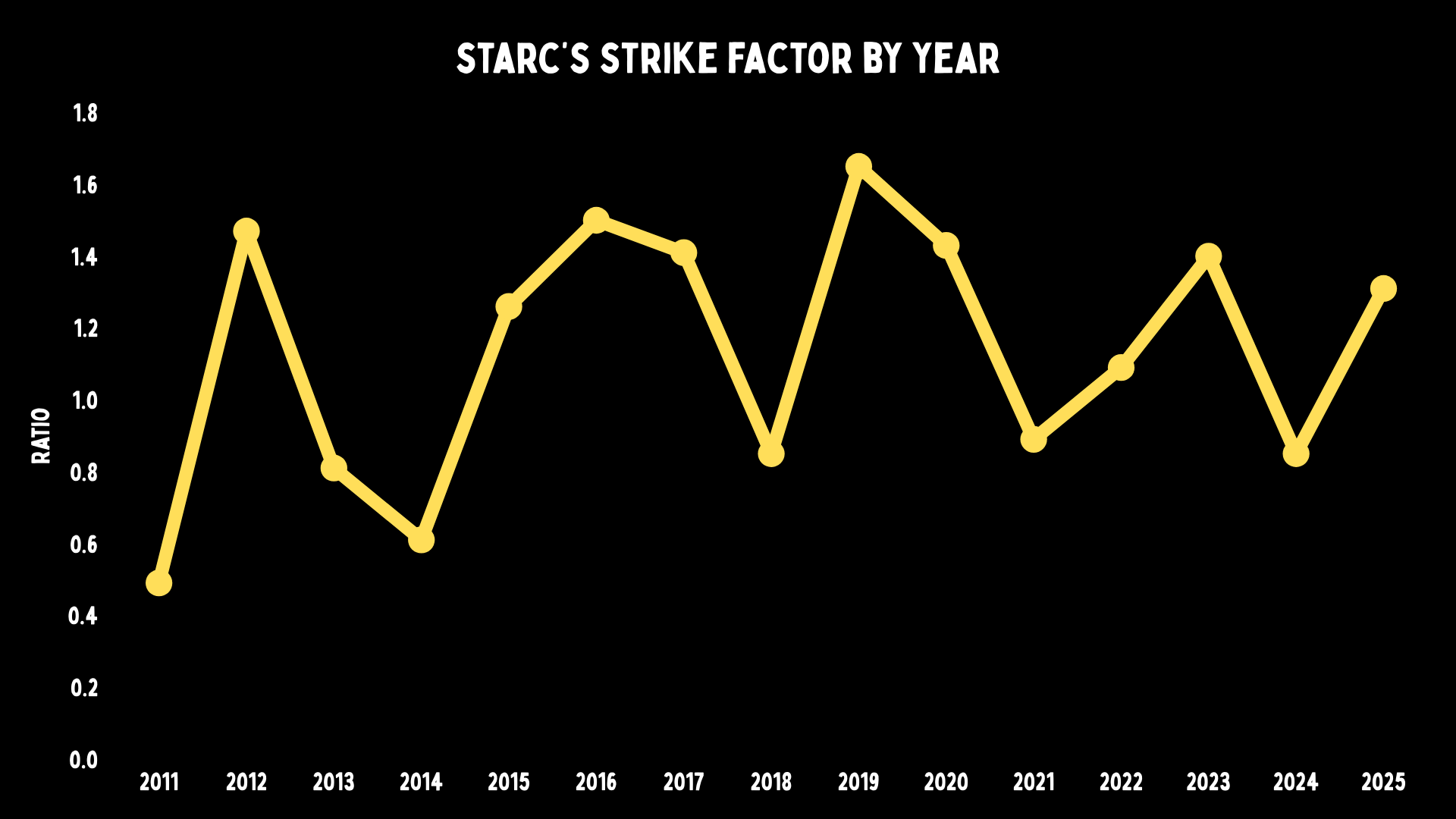
In terms of relative strike rate, he has had better years though. And even over a three-year stretch, 2015-17 was the bomb for him.
Because he is an attacking bowler, he does go for a few runs. But that profile just makes perfect sense in an attack with Cummins, Hazlewood, Boland and Nathan Lyon. The last two years have been an upgrade on 2023 in terms of control, but they’re still under par. In fact, he only ever crosses that barrier thrice, including once in 2015.
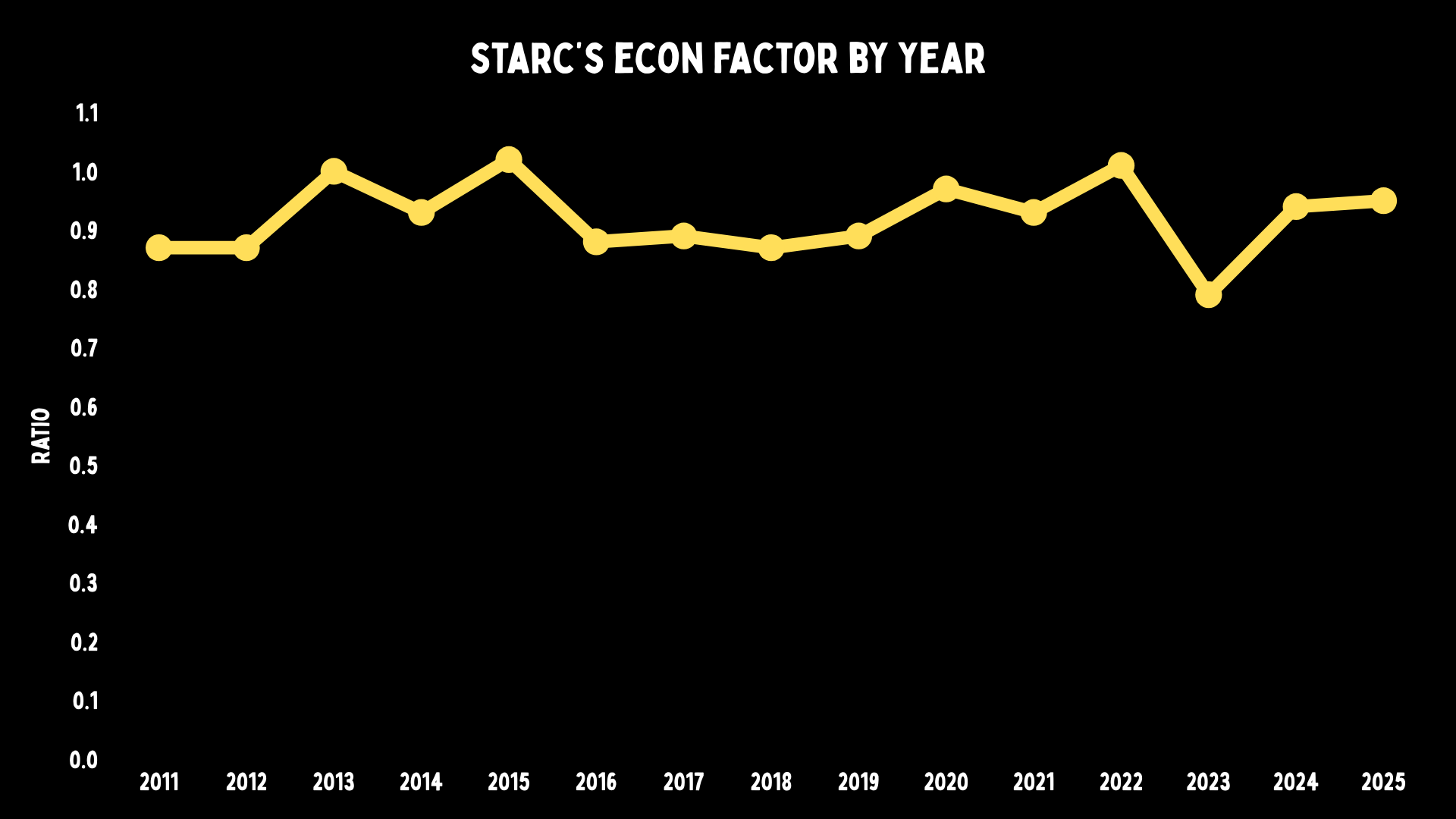
So the advanced stats tell us that he has had better periods in the past.
The difference now is that he is more rounded. Before he was incredible with the very new ball, or when it was reversing. And outside of that it was just bouncers (in an era where they were not as common). Now he can bowl at any time.
Not just the epic early overs like how he won Australia the 2015 World Cup against Brendon McCullum.
And being more skilled, while not losing his pace, means he is like a time traveller. He has the knowledge and the body.
But it’s not just his talent and athleticism, this takes professionalism. His skipper Pat Cummins says that he’s always battling with something, but he just doesn’t complain and gets on with it. Starc has made it very clear he wants to bowl for Australia in Tests for quite a while, and he does lots of smart things to make that happen.
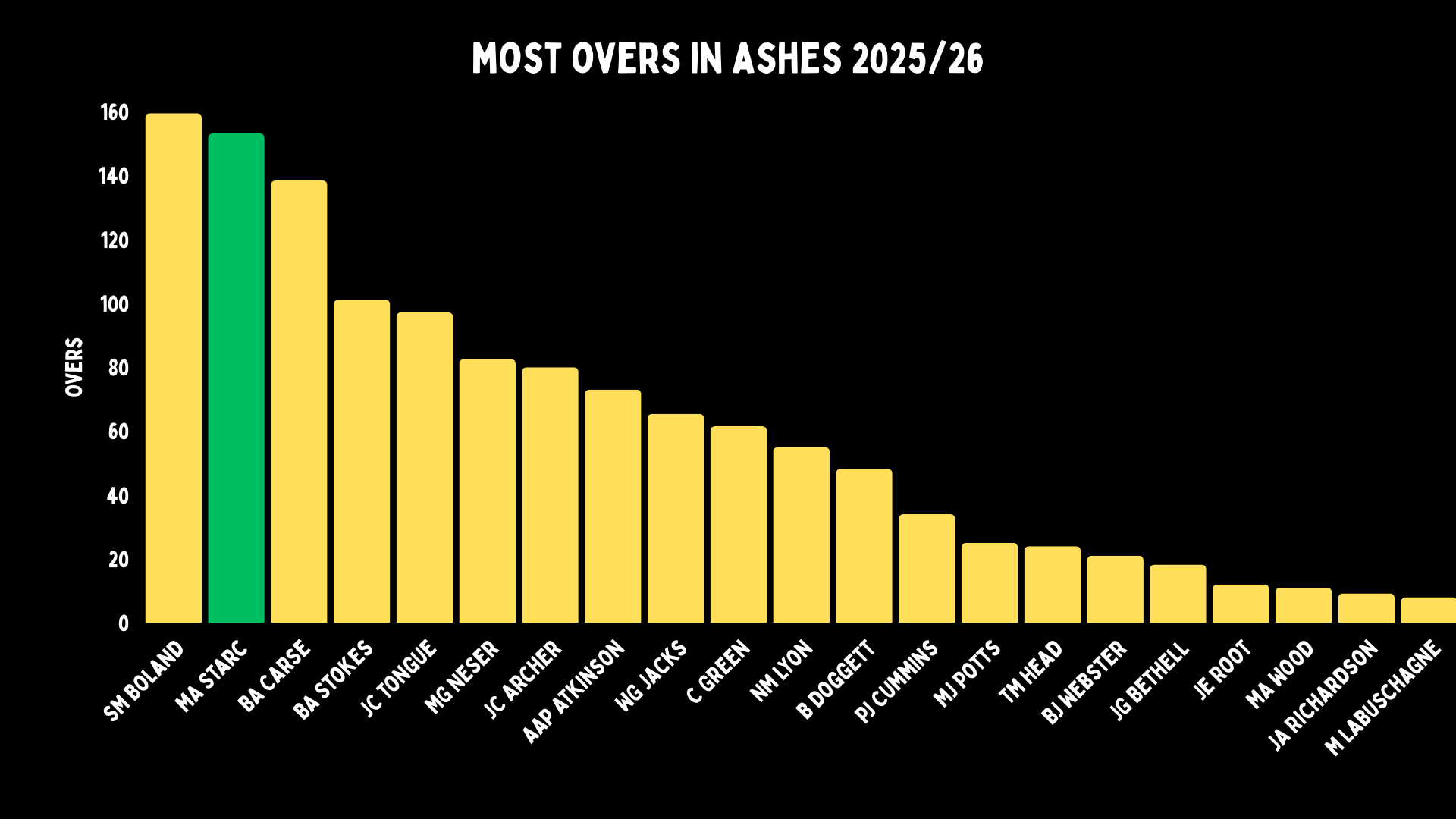
Starc’s average speed in this Ashes is 142.1 kph. That would be incredible on its own, before you realize he has bowled over 150 overs this summer. He has Scott Boland’s workload, plus an extra 8-10 kph. That is quite a few yards of pace.
And because of this, it’s another Aussie summer where Starc gets the better of Baz. Chuck in the fact that he is one of the most irritating No.9s to bowl to, making two fifties this Ashes, and you have the makings of an all-time great series.
We have Botham’s Ashes, Warne’s Ashes, Johnson’s Ashes, Smith’s Ashes. Is this Starc’s Ashes?
What we do know is, in this series he bowled 919 deliveries at a speed of 142 kph while taking 31 wickets every 29 balls at an average of 19.93. It started on day one.
That means, “He’s not lost a yard” is the first line of England’s 25/26 Ashes obituary.