
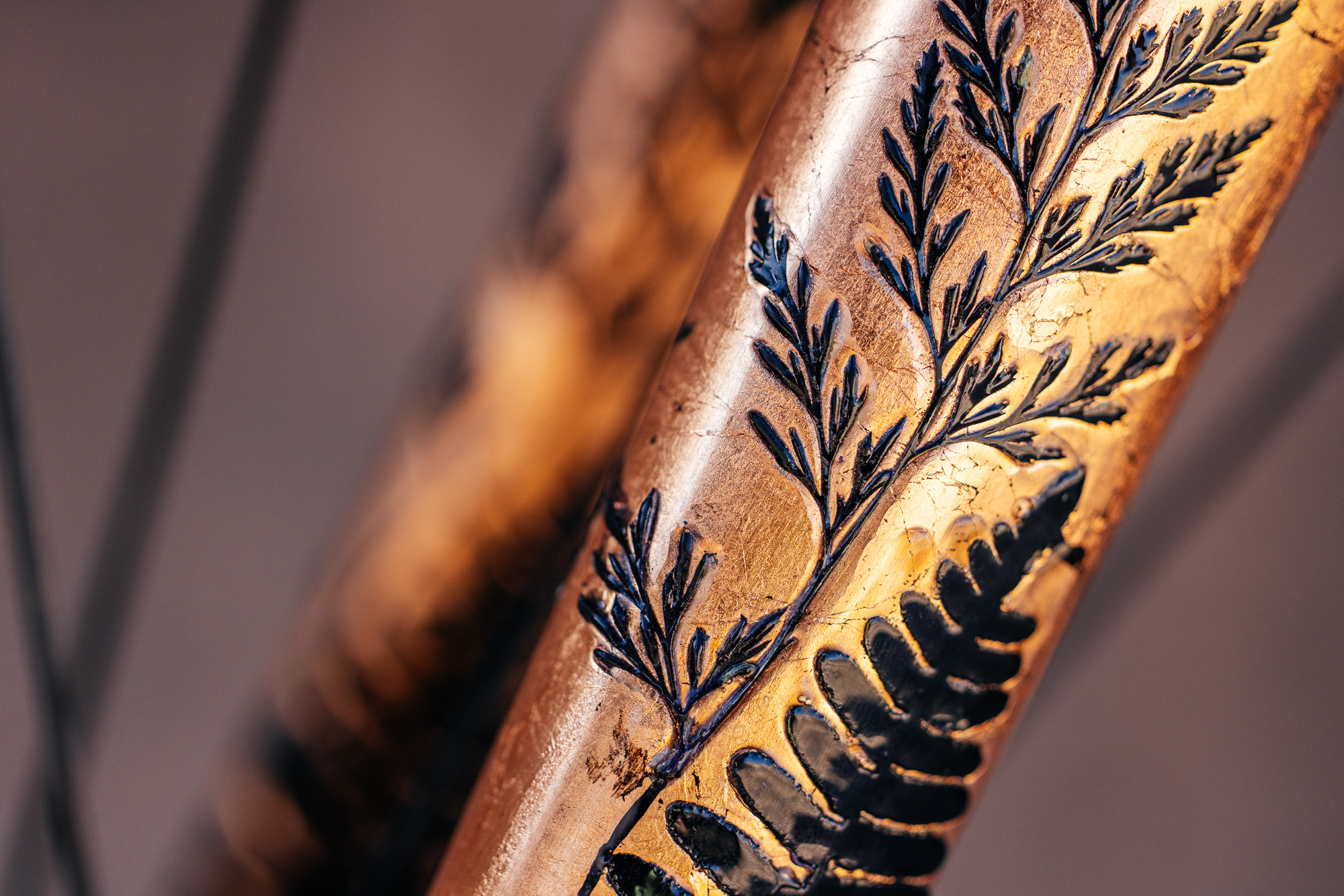
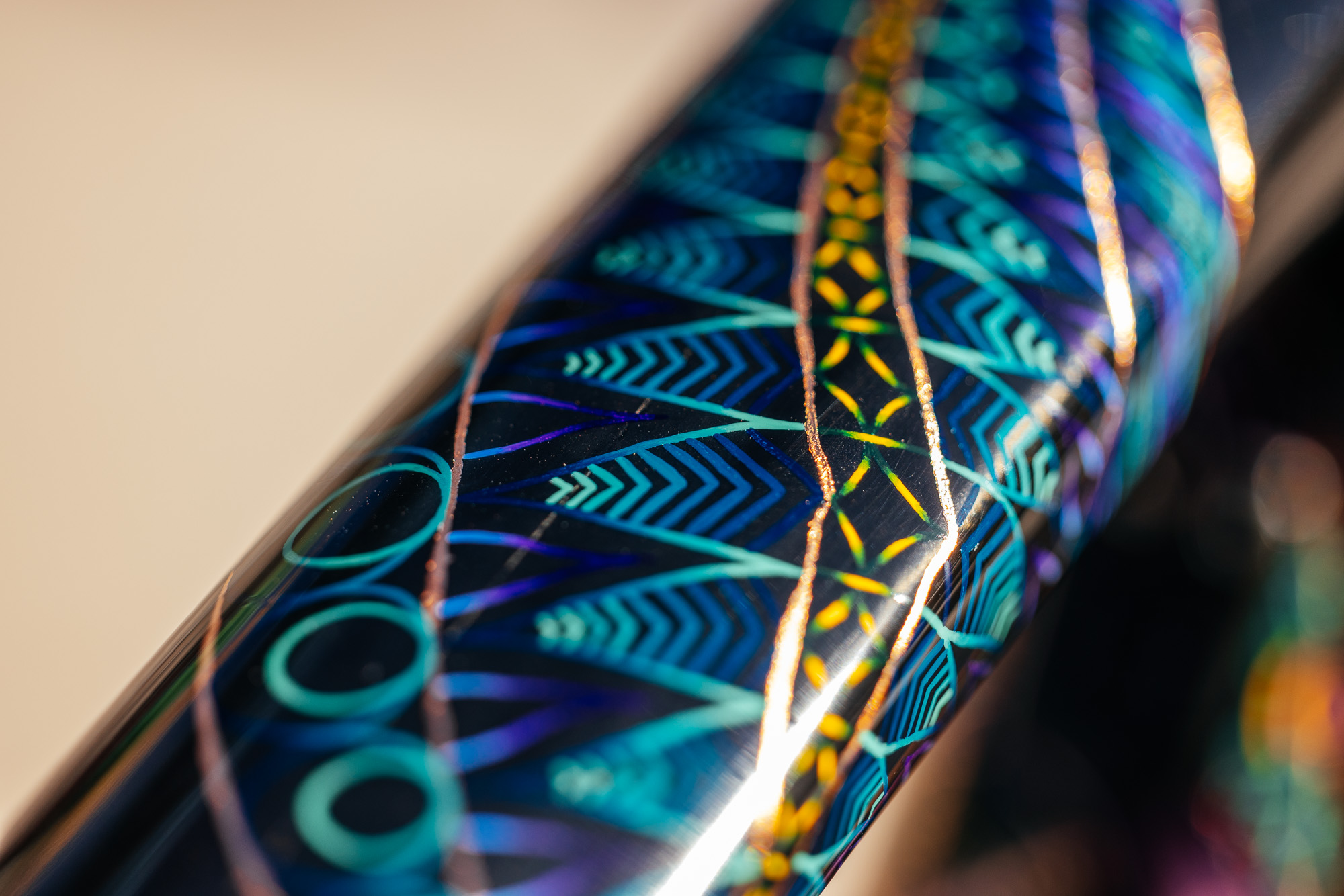
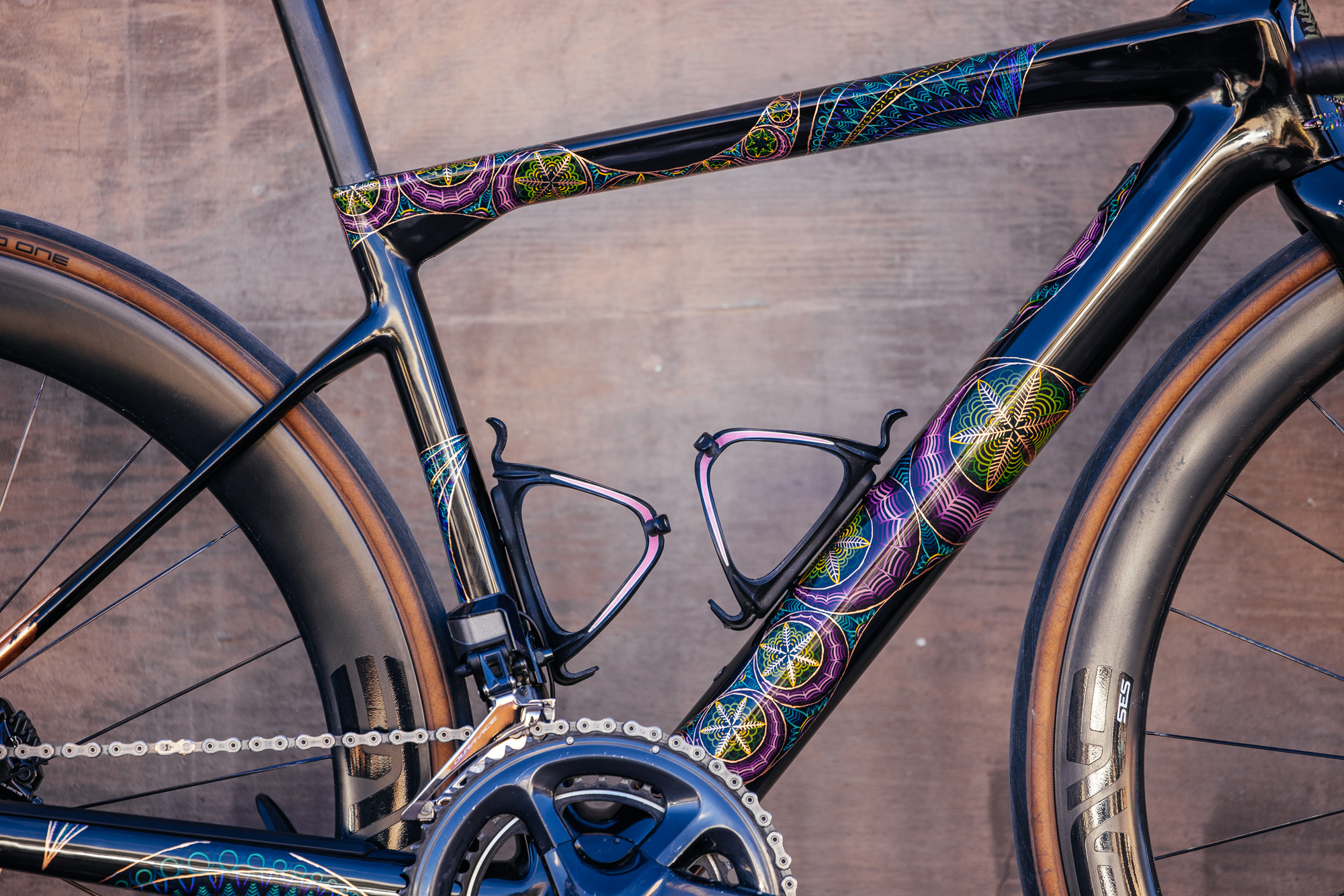
Santa Fe-based geologist Molly Baron was so captivated by the geology and flora of the Southern Rockies that she transformed two of her bikes into canvases and hand-painted them with artwork inspired by her scientific observations of the region. Below, Molly shares the story behind her art and process, alongside a full gallery of photographs featuring her custom BMC Team Machine road bike and Trek Checkpoint gravel bike, captured by John Watson.
Inspiration
In my work as a geologist, I’m so lucky to be able to witness the art of nature express itself in so many ways and at so many scales, from the kaleidoscope of colors that minerals flaunt under the microscope, to the endless fractals of plants, rocks, and landforms that seem to show themselves everywhere as we find new ways to see the world.
This “art seen through science” has always been what I’m most excited to share with others, and it just seems right to show it on a bicycle, this utilitarian machine made with precision and calculation that is also a unique portal for us to immerse ourselves in nature.
The Painting Process
The first part of the process is developing a design that sticks (and is possible). Many of the initial, more literal interpretations of some beautiful facets of nature that come to mind are beyond my skill level as a painter, but where I fall short in classical art technique, I can flourish as a nerd. I can research and emulate the underlying geometry of something I’d struggle to draw at a normal scale.
Unique textures can be created by introducing forces not governed by my hands, like static electricity or oxidation, and meaning can be conveyed by using a medium that uses the actual mechanisms that create the beauty we see in nature, like diffraction of light through crystals.
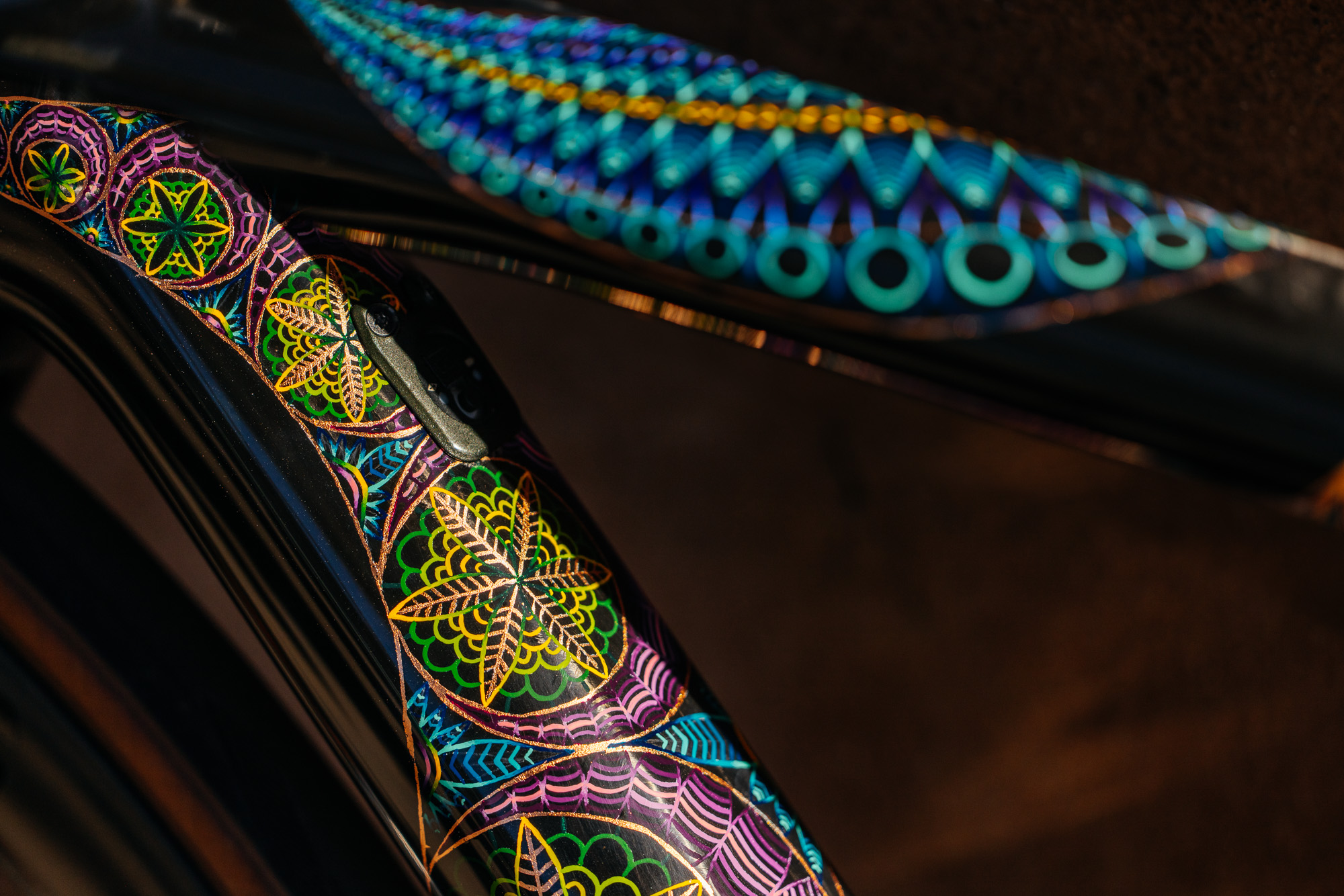
When I get to the point where a concept is becoming a theme that I can envision on a bike, I know it’s worth pursuing, and the next phase – testing if it’s possible – begins. I see every bike I’ve painted so far as a prototype. With each project, I’ve introduced a medium or technique that I haven’t tried before in any setting, much less a 3D object that must withstand constant movement, prolonged sun exposure, and (hopefully minor) impact. I test designs and material compatibility on flat carbon test boards and begin to daydream of how it will look on the complicated shape of a bicycle.
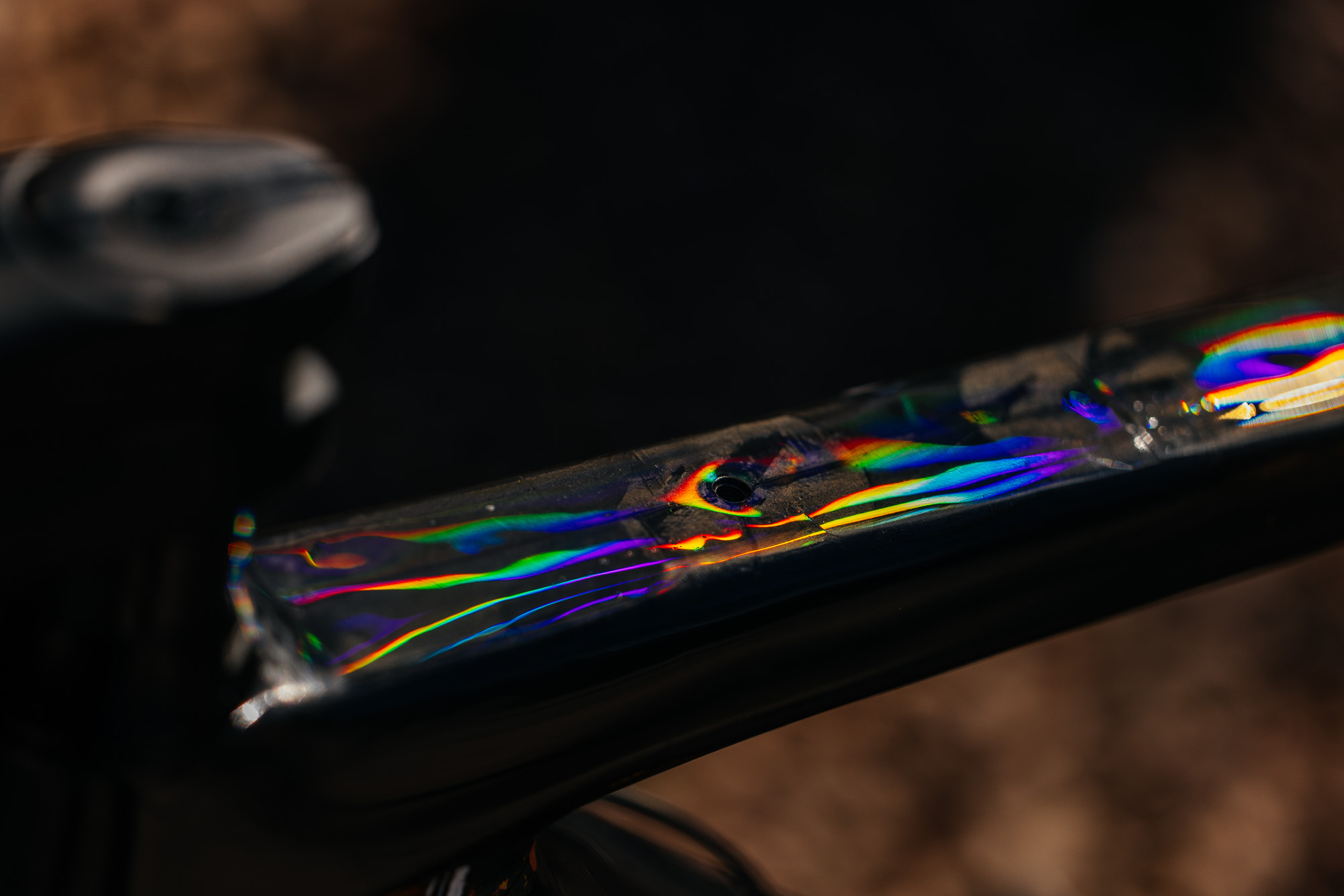
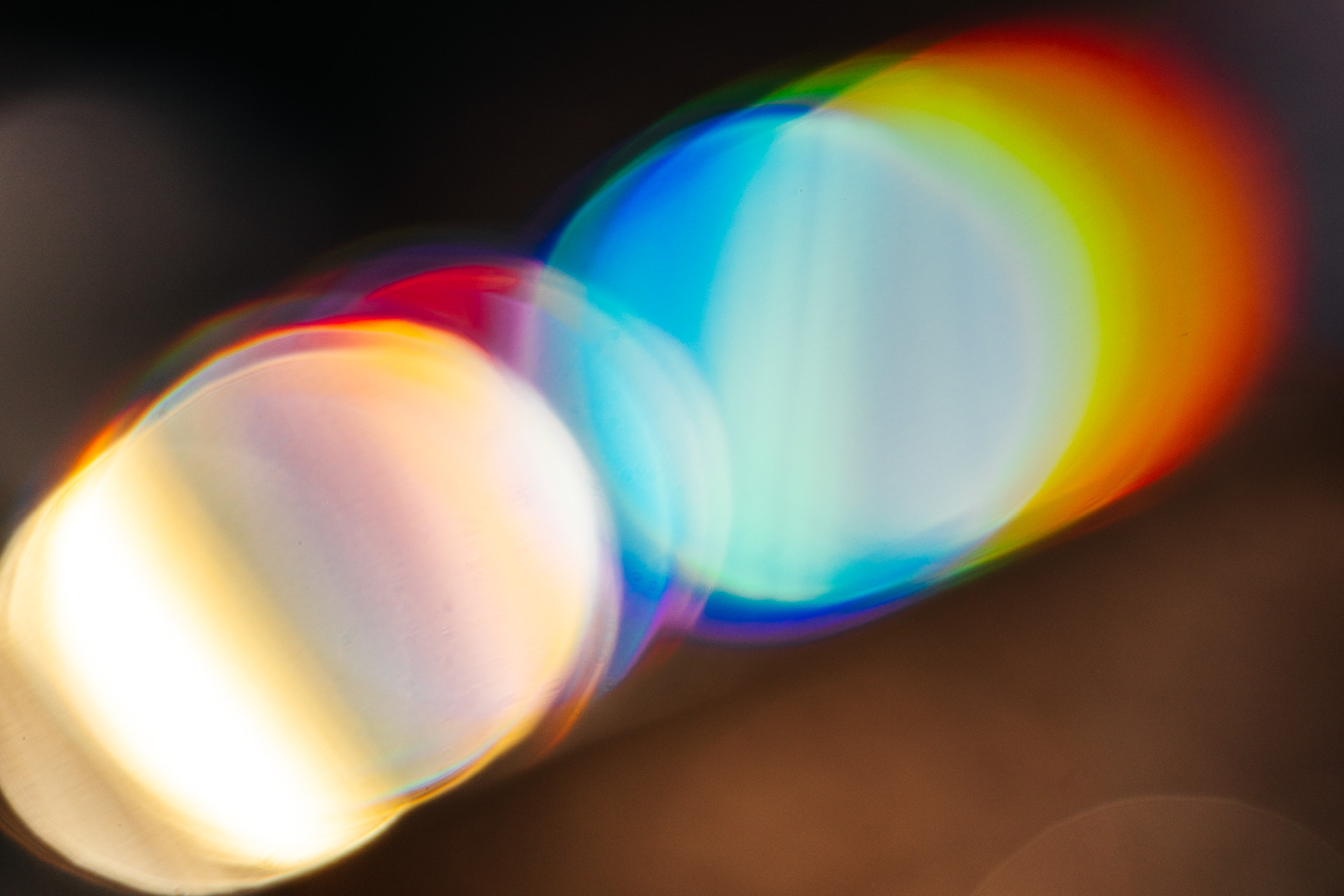
The next phase is translating the design onto the bike. After careful sanding, I transfer my drawn design onto the carbon or block off areas where other mediums will be applied and begin painting. This is the most time-consuming stage, and with such slow gratification, trusting the process is important, but seeing it come to life with each brush stroke is a kind of slow-burn excitement.
Finishing
Once the design is completed, the most nerve-wracking and instantly gratifying stage begins: Finishing the bike. This involves clear coating, sanding, and polishing. These steps, especially clear coating, are so tenuous because a flawed or contaminated clear coat can entirely ruin the hundreds of hours of work. However, they radically improve the final result.
Clear coating not only protects the delicate paint but also brings out the luminance of the carbon fibers. Polishing adds depth that feels essential. At this stage, every incremental change is exponentially more exciting as the project starts to resemble what was in my mind months ago.
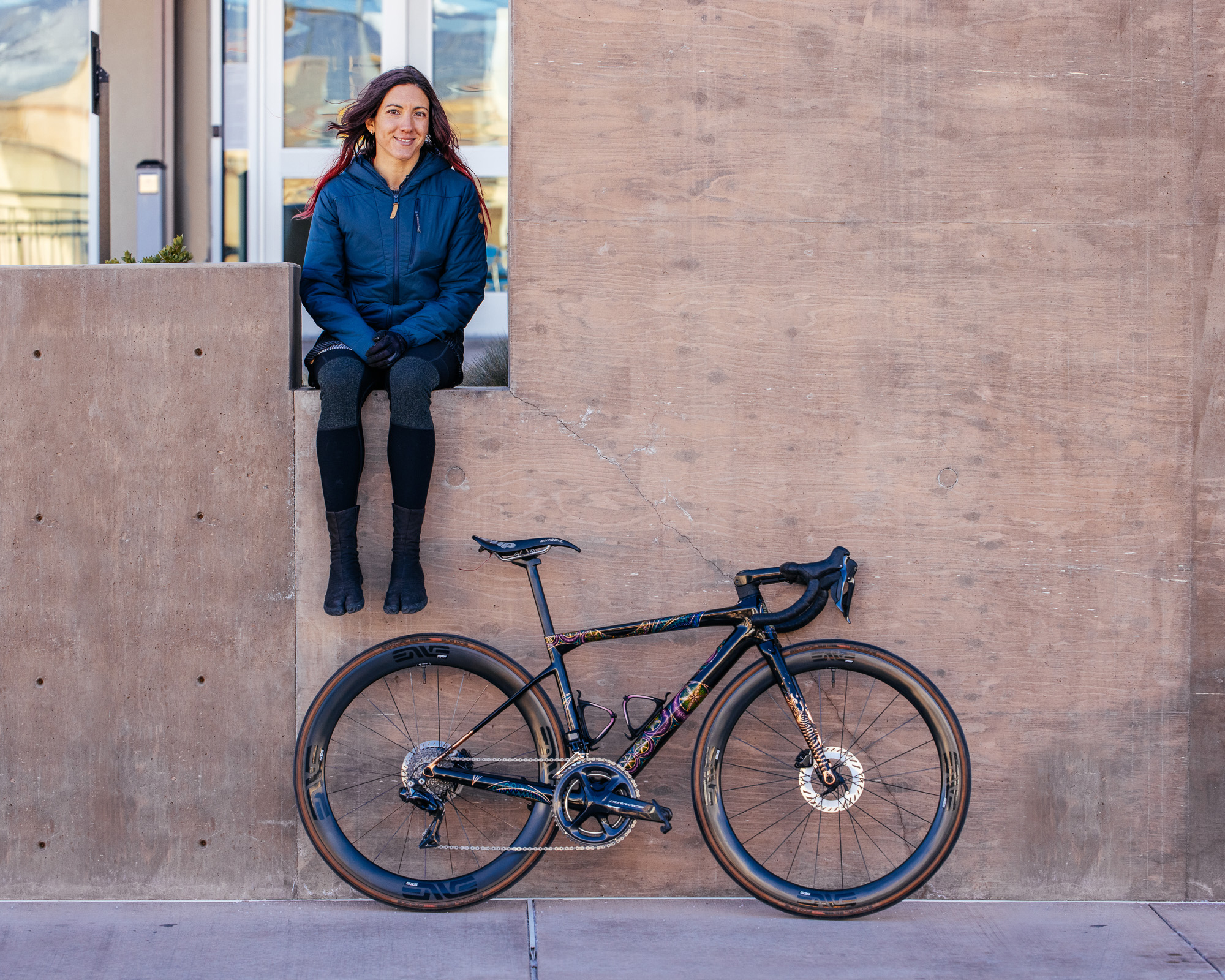
Building the bike and the first test ride are the epitome of stoke. The components and wheels put the strange shape of a bike frame into context, and that first ride brings the entire effort to life. Seeing all the elements interact with sunlight and the movement of the ground beneath from the rider’s perspective is so satisfying. This gradual but accelerating evolution of joy as an idea becomes reality has me daydreaming of what the next project will be, even as I clear the remnants of a completed one from my workspace…
Follow Molly and see videos of the painting process on her Instagram!