
The Cambridge Dictionary defines mountain biking as “the sport or activity of riding a mountain bike (= a bicycle for riding over hills and rough ground)”, which is good enough for me. Article over.
While that definition is super broad and could be updated to reflect the recent surge in gravel cycling, it’s a beautifully simple way to describe a sport that is pretty confusingly diverse. Mountain biking is a subcategory of cycling, and there are many subcategories within it. And as someone who has been obsessed with riding bikes since a very early age and has dabbled in all aspects of the sport, I feel like I have kept pretty good tabs on the new branches of the mountain bike family tree.
For many, mountain biking is more than just a sport; for those with a long history and deep love for the sport, it is a way of life. But for those who might not be completely devoted, some of the disciplines might be a little foggy, and this article is to outline what each sub-genre is all about.
How It All Started
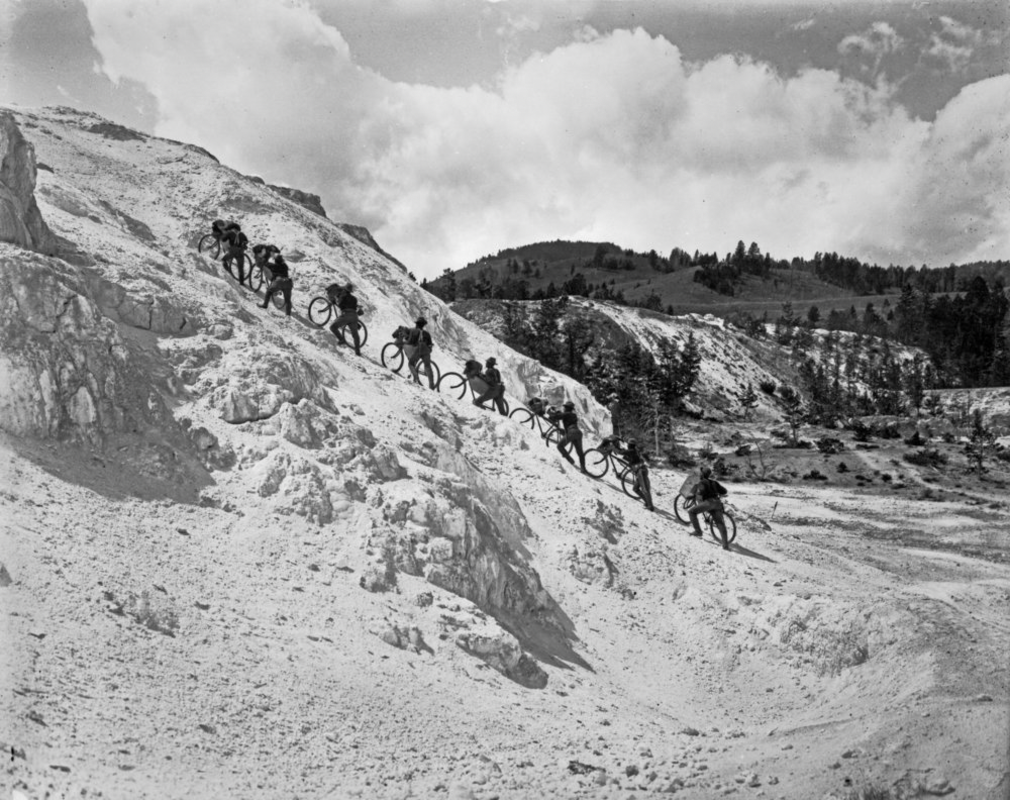
Mountain biking is a relatively young sport, not in terms of rider demographic, but in terms of the number of years it’s been categorized as what we now know as mountain biking. In reality, mountain biking, or adventure cycling, has been around since the late 1800s. The 25th Infantry Regiment Bicycle Corps could be seen as the kickoff of ‘mountain biking’, or at least the start of what would eventually become mountain biking, gravel cycling, bikepacking, and any form of riding a bike off-road.
Montana Historical Society
Although not the same as modern-day mountain biking, it planted the seed for what would, almost 100 years later, be coined “mountain biking” by a select group of radicals and dirtbags living in Colorado and California. The first mountain bikes were awfully similar to road bikes, just with wider tire clearance, flat bars, and a few minor details that made them better suited for bombing fire roads and riding steeper, gnarlier terrain.
Marin Museum of Bicycling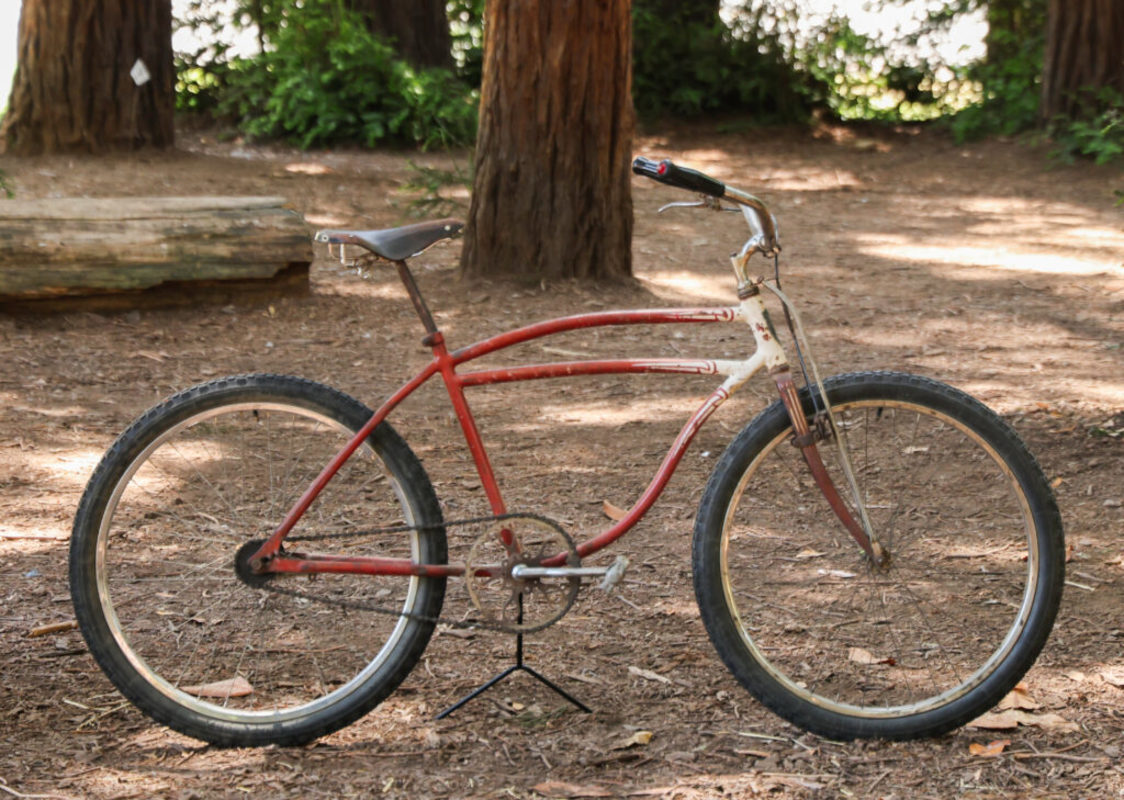
Throughout the 80s, 90s, and early 2000s, mountain biking went from a fringe sport to a mainstream, globally recognized phenomenon. It was marketable, exciting, and normalized a lifestyle and activity that had been relatively niche. Now, a quarter of a decade into its glory, mountain biking has developed into a handful of different genres, each with its own stereotypes and lifestyles.
What Are the Disciplines of Mountain Biking?
It used to be just one category that you fell into as a mountain biker, and now there are several, most of which require their own bikes, riding kit, and skills. Despite the variation, each subcategory shares the same core values of riding bikes in the mountains and having fun.
From XC to Slopestyle and all the genres in between, these are the most popular types of mountain biking, and as gravel bikes continue to become more aggressive, they might end up on this list before too long…
Cross Country
Fast, efficient, and performance-oriented, cross-country mountain biking or “XC” typically consists of equal parts climbing and descending, with trails often being a mix of punchy, technical, or prolonged climbs and descents with longer distances of flat or rolling terrain.
Trek Factory Racing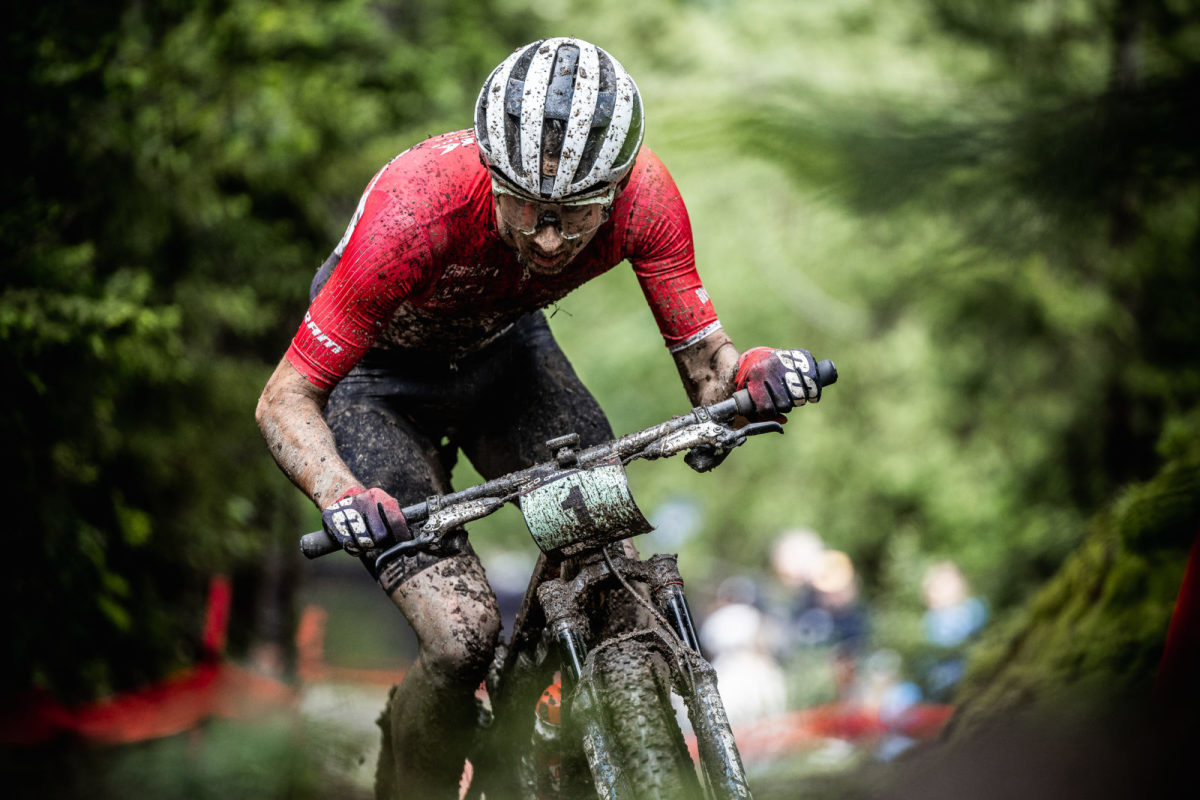
XC bikes are usually shorter-travel bikes with the ability to lock out the front and rear suspension. Weight is much more of a factor in XC riding and racing, with less emphasis on durability; however, the increased technicality of XC has led many XC bikes and components to blur the line between trail and XC purposes.
In terms of apparel and appearance, Lycra kit, as you’d see in road cycling, is much more common, along with more road and gravel-specific helmets that give riders an aero and weight advantage over looser-fitting and bulkier gear as you’d find in other disciplines of the sport.
XC is probably the discipline of modern mountain biking that most closely resembles the sport at its inception, though the bikes, clothing, and tech have evolved quite a bit since the early days.
Trail
This is such a loose and enigmatic category these days. XC bikes often check many of the boxes a “trail” bike would, but with geometry better suited to steeper trails and more technical terrain. Trail bikes and the riding that they excel at sit somewhere between enduro and XC, with more travel than an XC bike, but less than an enduro bike. The geometry is also somewhere in between, making them very versatile and suitable for a broad scope of riding.
Deven McCoy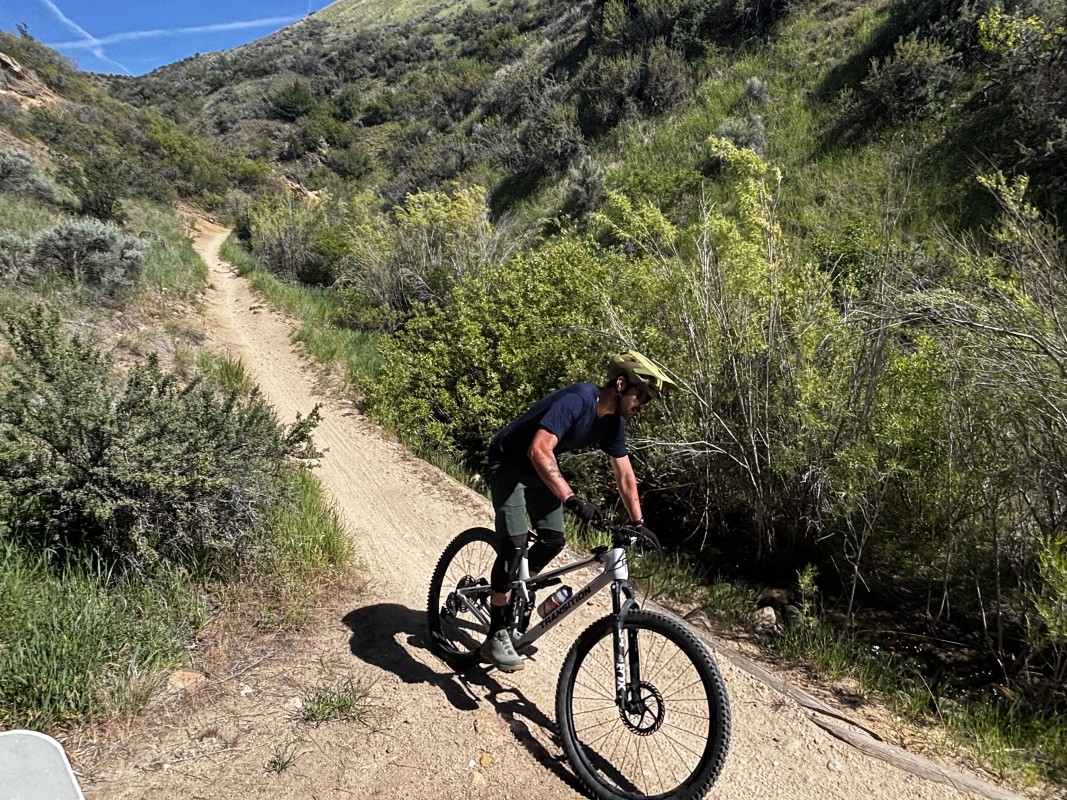
Trail bikes are, in my opinion, the perfect mountain bike for the average rider. They can be ridden on almost all trails (depending on your skill level) thanks to efficient suspension designs, less robust component specs, and well-considered geometry that promotes versatility.
You won’t see the Lycra kits and shaved legs as much in this category as you would in XC, but the bikes are capable enough to handle almost every trail type within reason. Trail bikes and trail riding are among the most popular in the sport, and it is pretty enigmatic in its definition because it covers such a broad spectrum of riding types.
Enduro
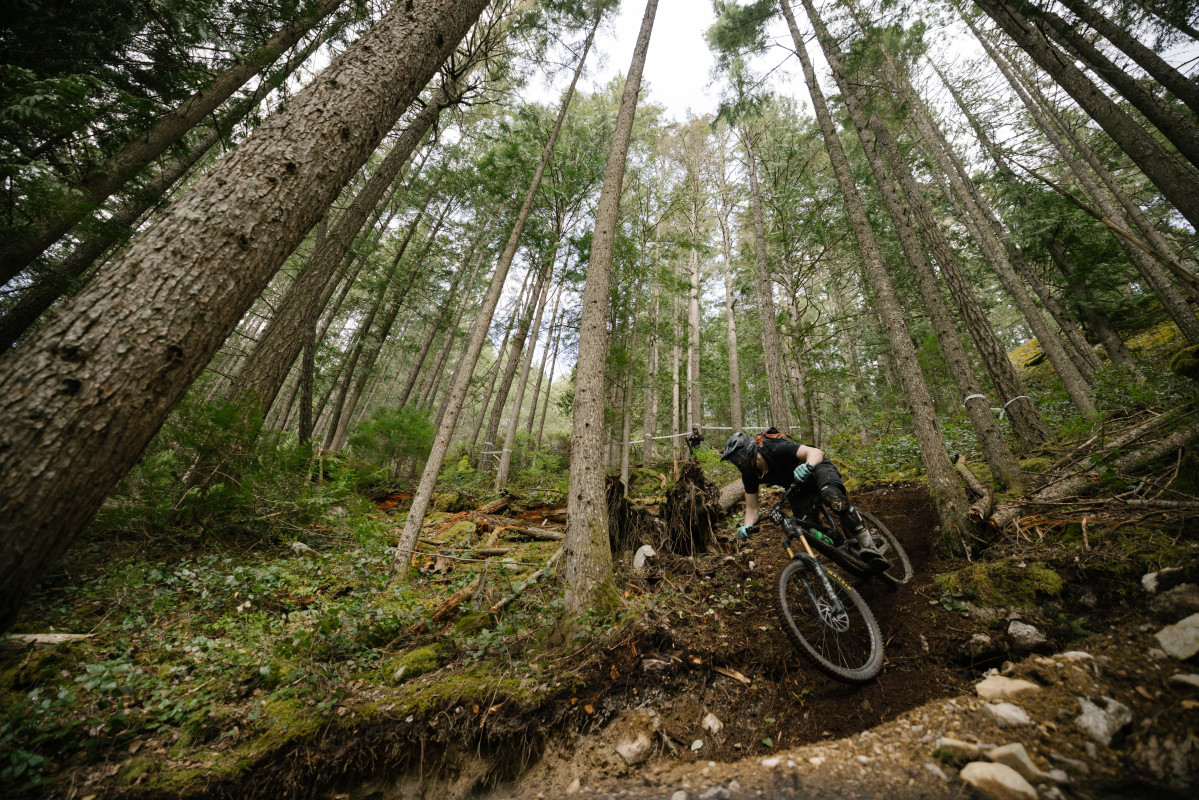
Enduro riding is a fairly new discipline in mountain biking and is a blend between XC and Downhill, with the bikes being designed to pedal up with relative efficiency, while still being strong enough to handle technical and long descents. Enduro, while not the most popular or widely known aspect of mountain biking, is one of the purest forms of the sport.
View the 2 images of this gallery on the
original article
The emphasis in enduro mountain biking is on being a well-rounded rider who is able to climb and ride all day, remain self-sufficient in the event of a mechanical, and still have the awareness and fitness to descend gnarly trails with composure and speed.
Enduro has somewhat replaced the category of ‘All-mountain’ in the scope of mountain biking. But the bikes and type of riding that fall into ‘Enduro’ will have ample travel, and slack geometry that lends itself to riding what are often classified as downhill trails, but with the pedaling efficiency and gear ranges to tackle long and sometimes technical climbs.
The gear for enduro mountain biking leans more into the downhill category, as safety and protection are more important than weight and aerodynamics. Enduro races consist of multiple stages, with timed descents, long climbs (transfers) that riders are responsible for making a time cut on, and an overall time that determines the winner.
Downhill
Downhill mountain biking is the most popular and widely known form of mountain biking, and is what comes to mind when the average person thinks of the sport. It’s all about speed and getting down some of the gnarliest trails with precision and focus.
Dirk Badenhorst / Pro Downhill Series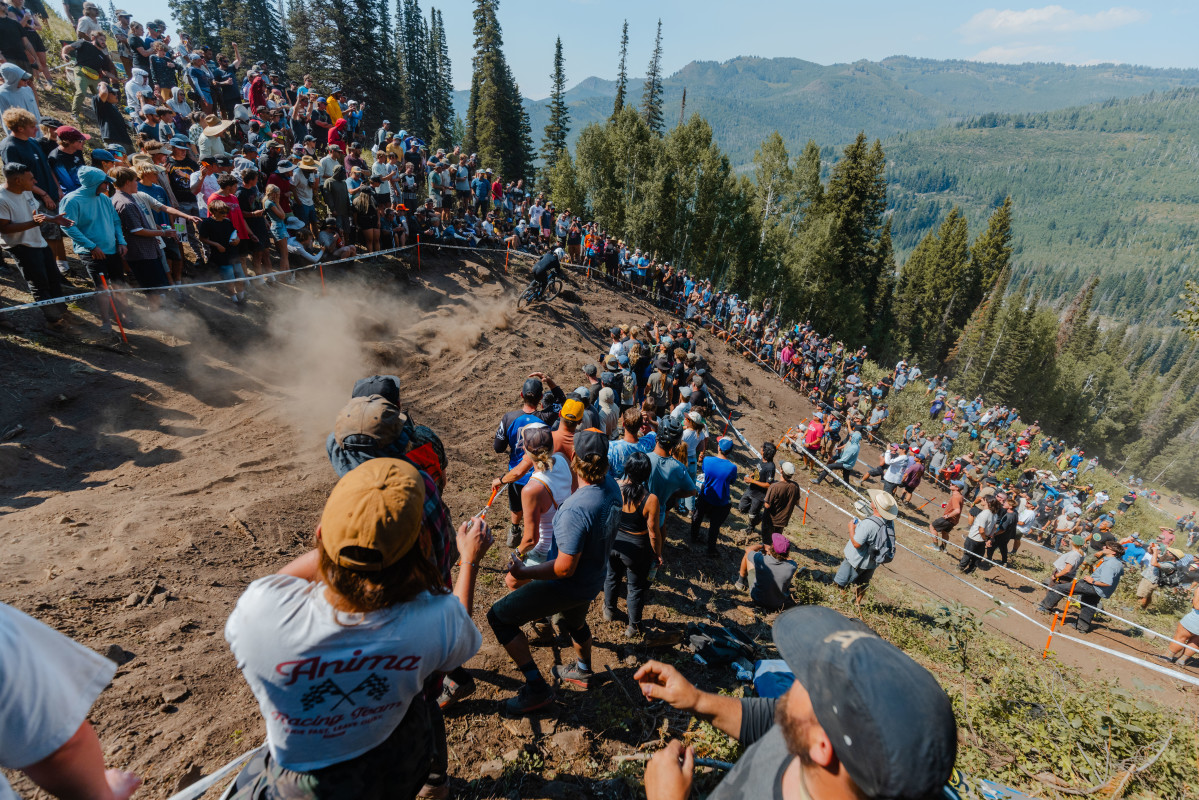
The bikes are designed for one thing: going downhill as fast and smoothly as possible. Weight is considered differently from cross-country bikes, with many riders adding lead ballasts to the lowest point of the frame to improve control and tracking. The travel for DH bikes is often 200mm or more, finely tuned valves and pressures, computer-actuated damper lockouts, and telemetry kits being monitored with eagle eyes after each practice run. Think Formula One, but for mountain bikes.
The courses aren’t terribly long, but they are steep and demanding on gear and the riders, with the podium often being decided within hundredths of a second, which makes for some incredibly exciting racing.
Slopestyle
Now this is a pretty niche one, and it is a blurred concept that blends BMX and mountain biking. When it comes to Slopestyle, the 26-inch wheel is still alive and well, and the skatepark or dirt jumps are still the epicenter of riding. There are no 12-speed drivetrains, no dropper posts, and no highly specialized gear list you need to kit yourself out with before you can fit in.
Clint Trahan/courtesy Crankworx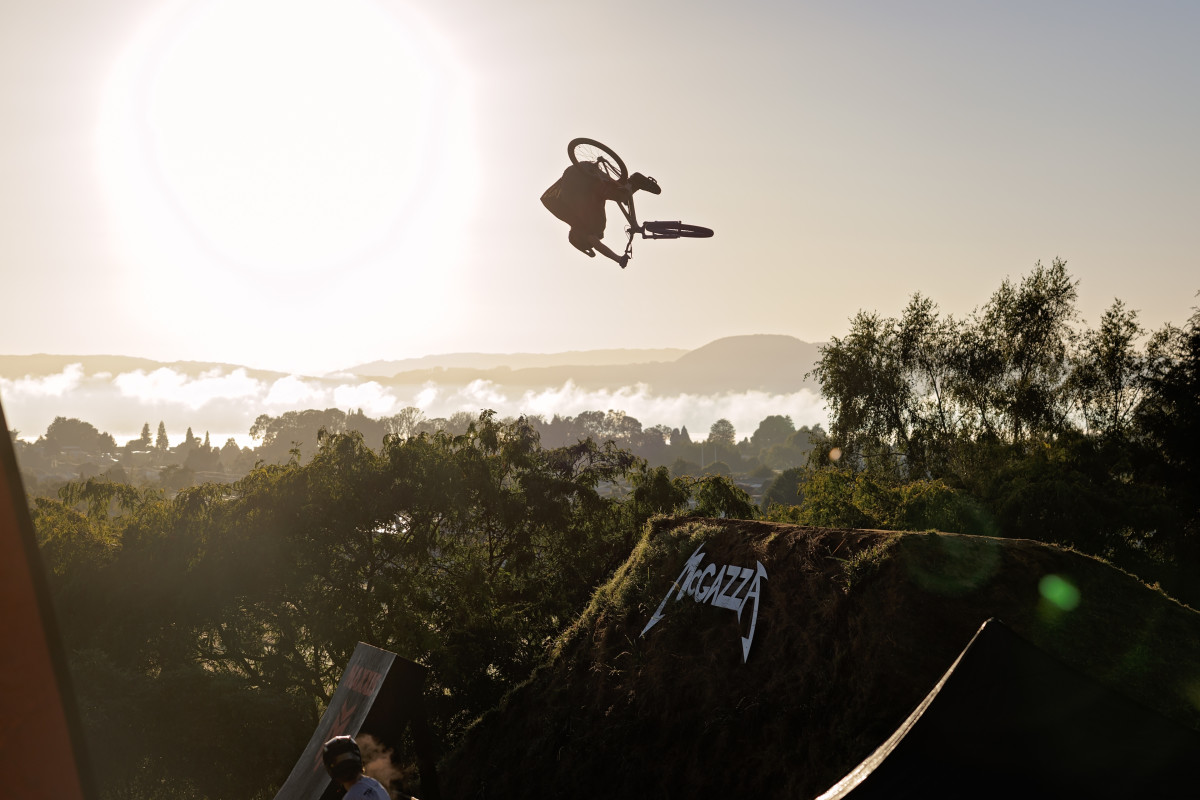
View the 2 images of this gallery on the
original article
It’s all down to skills and bike handling, and some of the greatest names in the sport are globally recognized as among the most talented riders in mountain biking. Names like Brandon Semenuk, Matt Jones, Syzmon Godziek, Tomas Lemoine, Emil Johansson, and Alma Wiggberg all represent the current generation of the most talented slopestyle athletes ever to do it.
A slopestyle bike is usually rolling on 26” wheels, minimal travel (100mm or less), and will typically have only a rear brake, sometimes with a hydraulic gyro that allows for all the barspins and tailwhips that are required to score big with the judges. Suspension is usually pumped up to the max, and tire pressures follow suit.
Freeride
As the name suggests, Freeride is free. But it’s not actually free. The bikes are highly specialized: bigger for travel, smaller for wheels, and sick for application. Freeride is like putting downhill and slopestyle in a blender, adding some baggy-ass pants and tiny-ass glasses from a gas station, and putting it on high. It’s all about riding new lines, boosting the biggest jumps, and finding all the side-hits on the local trail.
Blur Media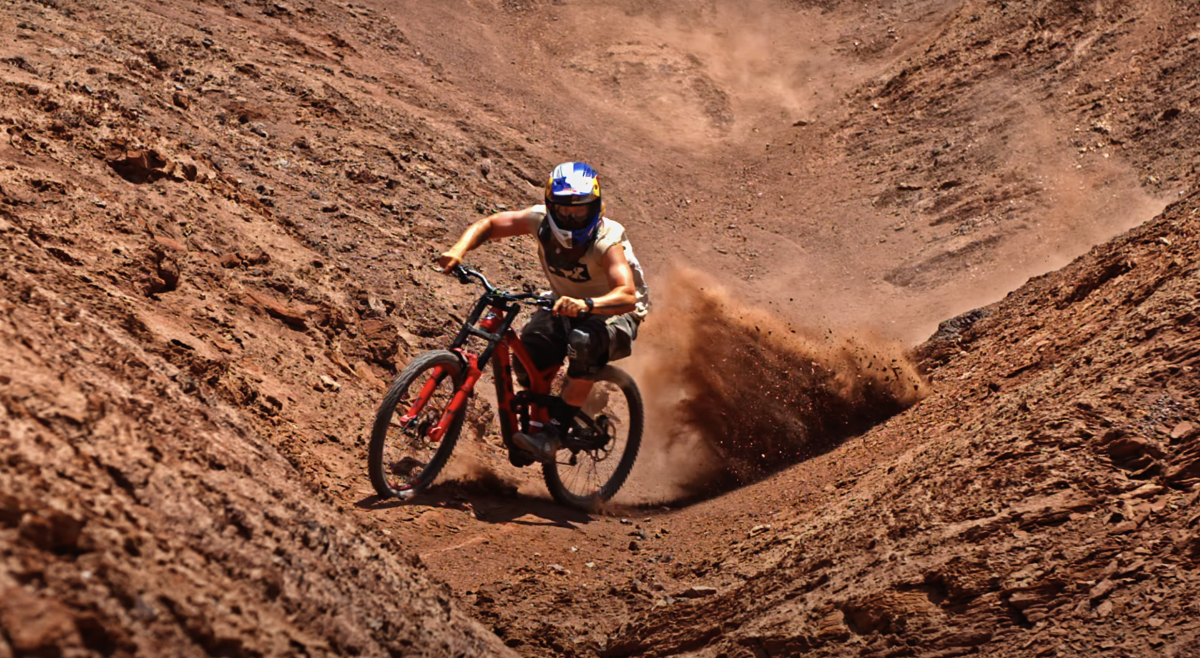
Freeride is having a bit of a moment right now, with a handful of crews, individuals, and events taking center stage and pushing the sport into a more mainstream focus. This is not to say that Freeride has been a super niche segment, and if you were riding in the early oughts, it’s highly likely that Freeride had a massive influence on your relationship with mountain biking. Think Red Bull Rampage, New World Disorder, Kranked, and more.
There is a new school of freeride carrying the torch and bringing it back to its roots with style, and we’re all here for it.
Dirt Jump / Pumptrack
This is a joint grouping, but could also fall under Slopestyle, as the bikes are very similar and the riding locations often overlap. However, in my opinion, there is a difference between the two. As slopestyle emphasizes tricks and spins, riding dirt jumps and pumptracks is more about flow and speed, and is a bit mellower than pure slopestyle.
Sebastian Schiek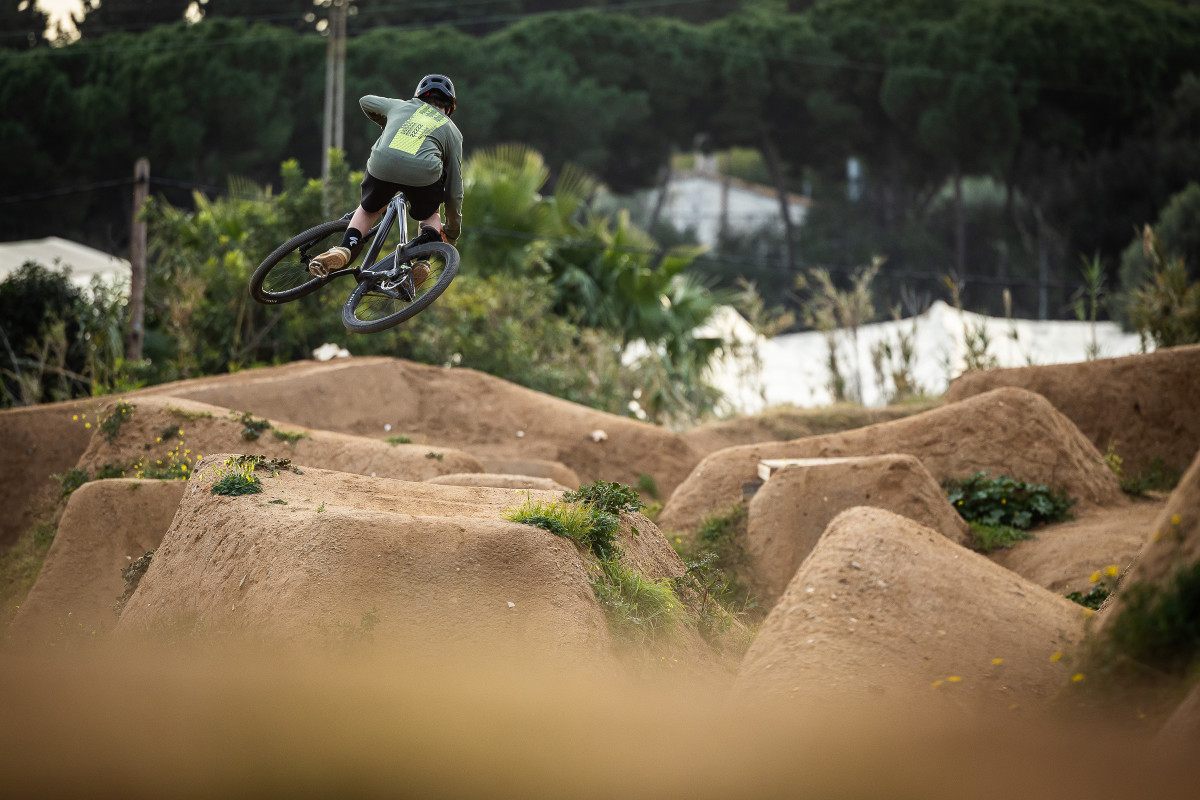
Dirt jumping and riding pump tracks are all about finding the rhythm, pumping the bike, and feeling how to use the inertia of each transition and take-off. It’s a more casual activity than those pushing the limits of slopestyle with trick-and-spin combinations.
Adventure Biking / Bikepacking
This is a segment of mountain biking that has been growing in popularity over the last few years, but it’s also the origin of the sport if you think about it. It’s all about multi-day epics or large single-day epics, with riders mostly self-supported, camping in the wild, and routes that take athletes through remote landscapes and wilderness terrain that isn’t always ideal for bike travel.
Calirado, Courtesy Adventure Scientists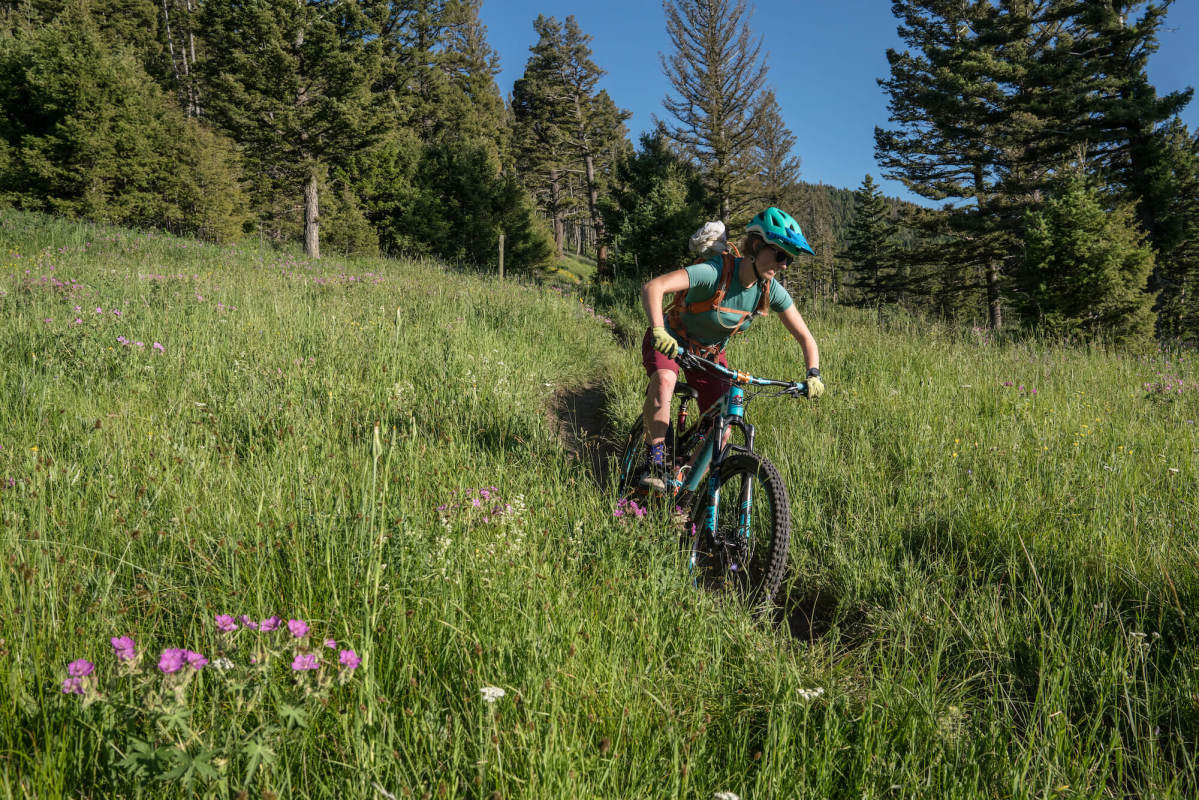
The bikes range from fully loaded bikepacking rigs designed to support multiple days in the backcountry to pared-down, speedy XC bikes made for speed and efficiency on raw terrain. Bikepacking and Adventure Bikes can be full-suspension, hardtail, drop bar, single speed, fat bikes, or whatever else you think is the best (or most fun) tool for the job. It’s all about getting out there and exploring.
Deven McCoy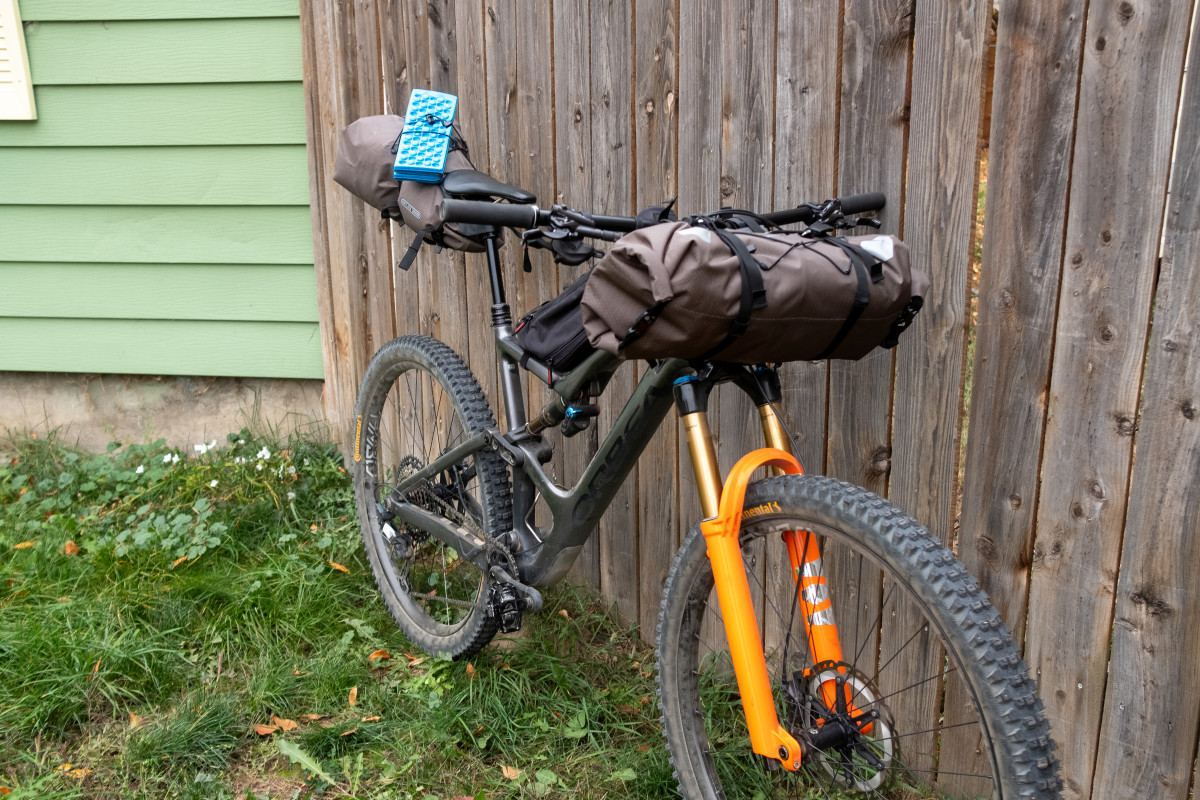
Events can span from multi-day, timed races to routes designed for mellow rides to remote places, to a single night of camping with friends. It’s a broad spectrum that is hard to put in a box, and that’s the beauty of it. Bikepacking and adventure riding can be packed with singletrack, gravel roads, hike-a-bike sections, and just about anything else that is between point A and point B.