
For the last year, Ryan Wilson has had a chance to put a pair of Mountain Laurel Designs Poco Panniers to the test on his ride across Asia. Read on to find out if these featherweight, minimalist bags stood up to the rigors of life on the road…
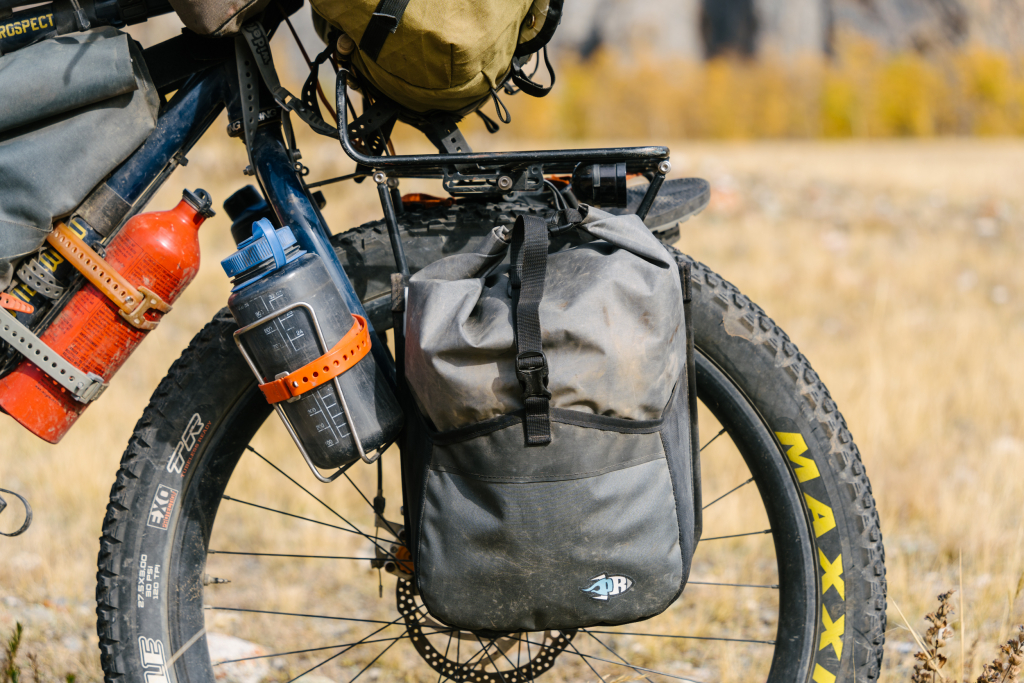
Mountain Laurel Designs (MLD) is a company that has mostly been known in the ultralight backpacking scene for their Virginia-made shelters and packs. At least that’s how I’ve always known them. It wasn’t until a few years ago that they started branching out into the “bikepacking” world, but I immediately had my interest piqued by their Poco panniers, which weigh in at an absurd ~450g for a pair of 13L bags, while still being fully waterproof.
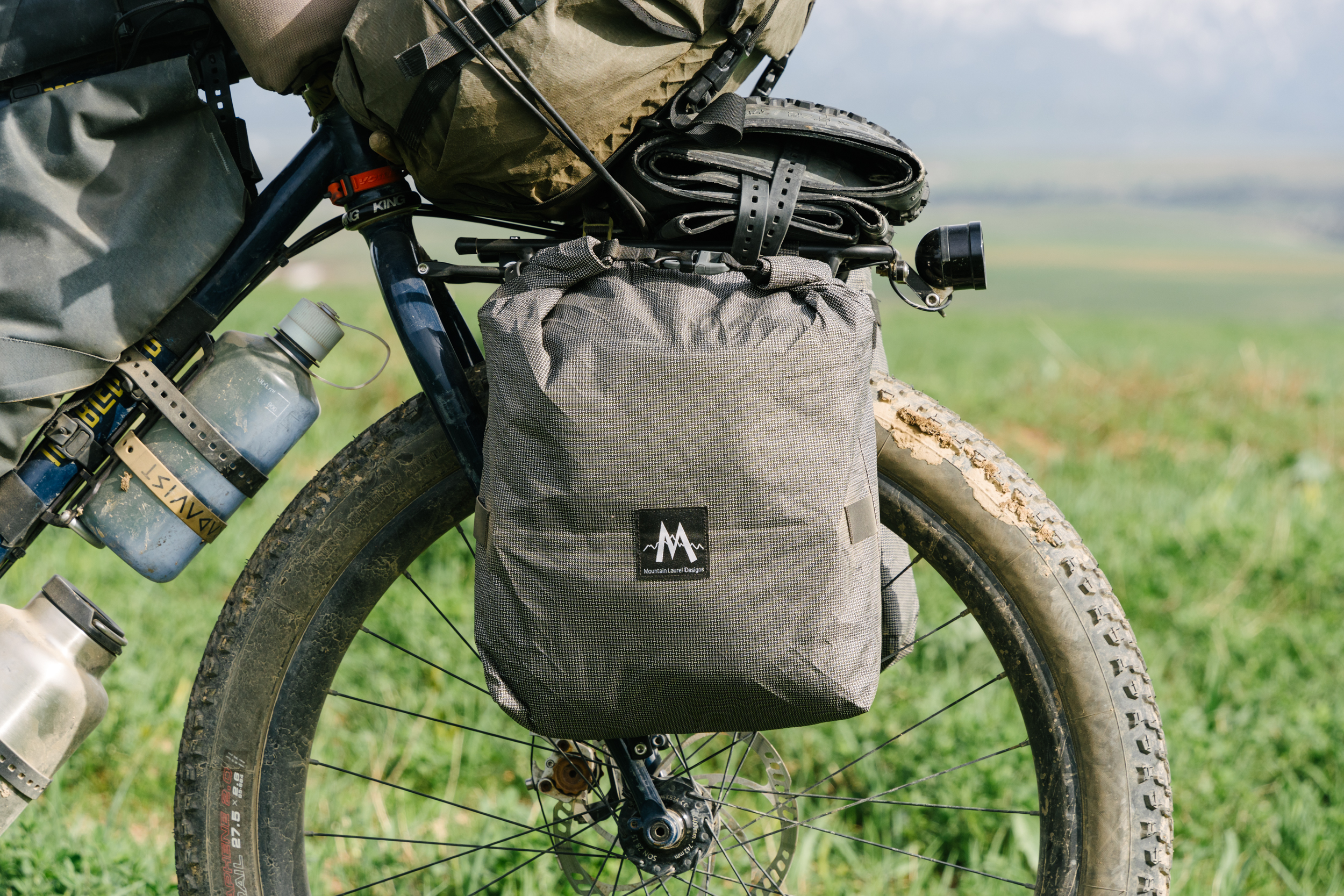
Quick Hits
- Waterproof Ultra 200X Fabric Back + Bottom
- Waterproof X-Pac RX30 100% Recycled Front (for non-gray options)
- Rear HDPE stiffener panel with a carbon wand.
- Font stiffener carbon fiber wand holds content flat.
- Ultra TNT Tape Seam: Waterproof Seals + adds significant seam strength.
- Dark Gray ULTRA 200X FABRIC: Tough, +80% recycled content, extremely high abrasion resistance.
- Woven 66% UHMWPE + 33% Recycled Polyester Face bonded with non-toxic carbon neutral bonding to a 100% recycled waterproof polyester backing.
- Available in Small (5-7L each), Medium (7-10L each), and Large (10-13L each, as tested here)
- Listed weights: Small (170g each), Medium (185g each), Large (215g each)
- Priced at $225-235 per pair
Included
- Four Tiny Straps – 8″ UV-resistant polyurethane ski strap with a nylon buckle.
- Two top deck mount accessory straps for more security.
- 25” of Velcro One Wrap to adjust and secure panniers to upper and lower rack rails.
- Two 12” bungees with mini carabiner clips to secure the bottom of the panniers to the lower rack.
- 3” x 6” Ultra TNT Repair Tape.
Materials and Waterproof Construction
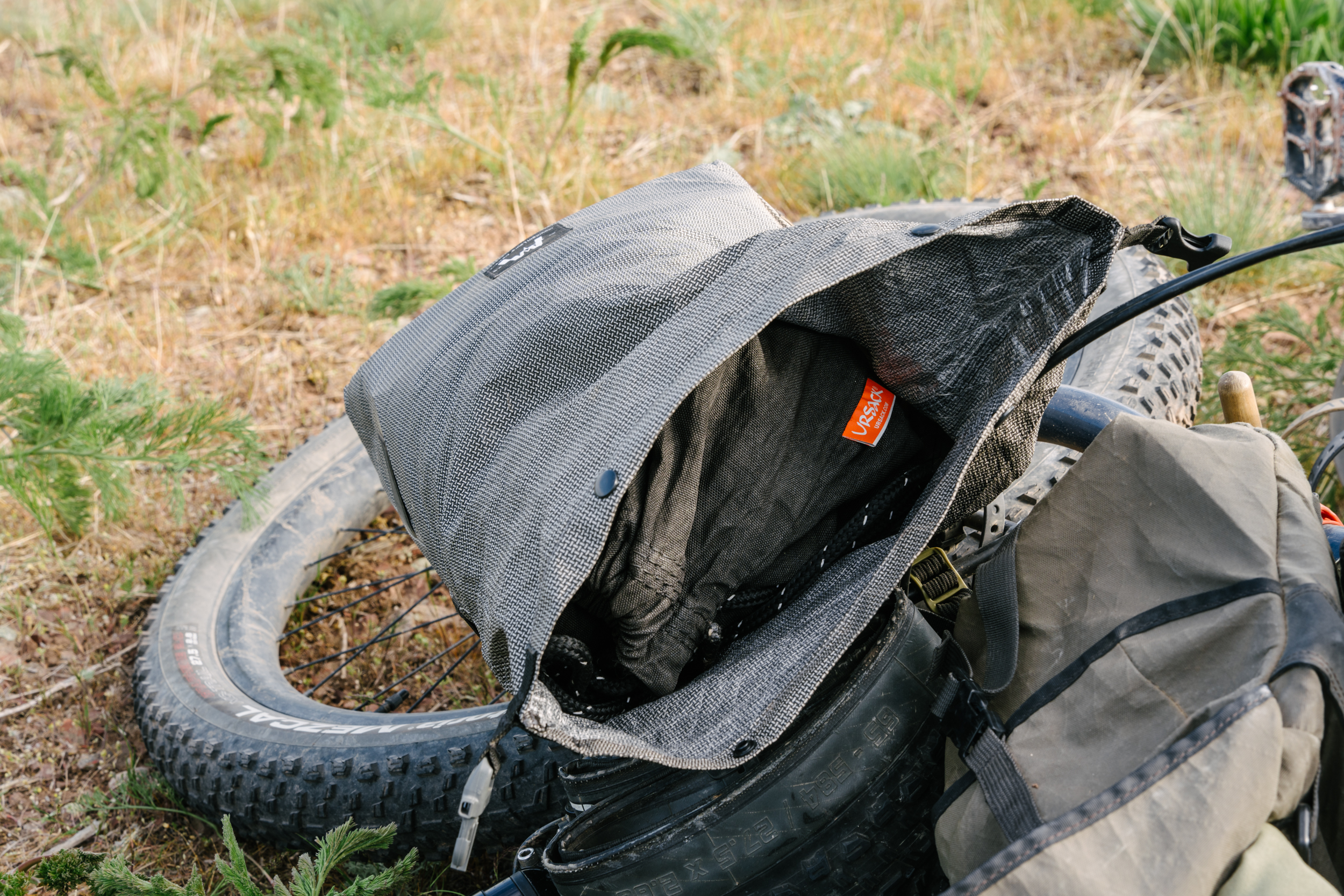
Just like MLD’s backpacking gear, the Poco Panniers have a minimalist design combined with modern fabrics. MLD uses ULTRA X 200 fabric, which, according to MLD, is more abrasion-resistant than 600d Cordura while weighing 3X less. You can read all of the technical jargon about the fabric over at MLD’s site.
I was impressed by how well the fabric held up to the abuse of time on the road, considering how lightweight it is. After a full year of use, I only found one small pinhole, which was in a spot where one of the bags was rubbing up against the fork a bit. Thankfully, MLD includes a portion of Ultra repair tape, which sticks very easily to the laminated interior of the bag.
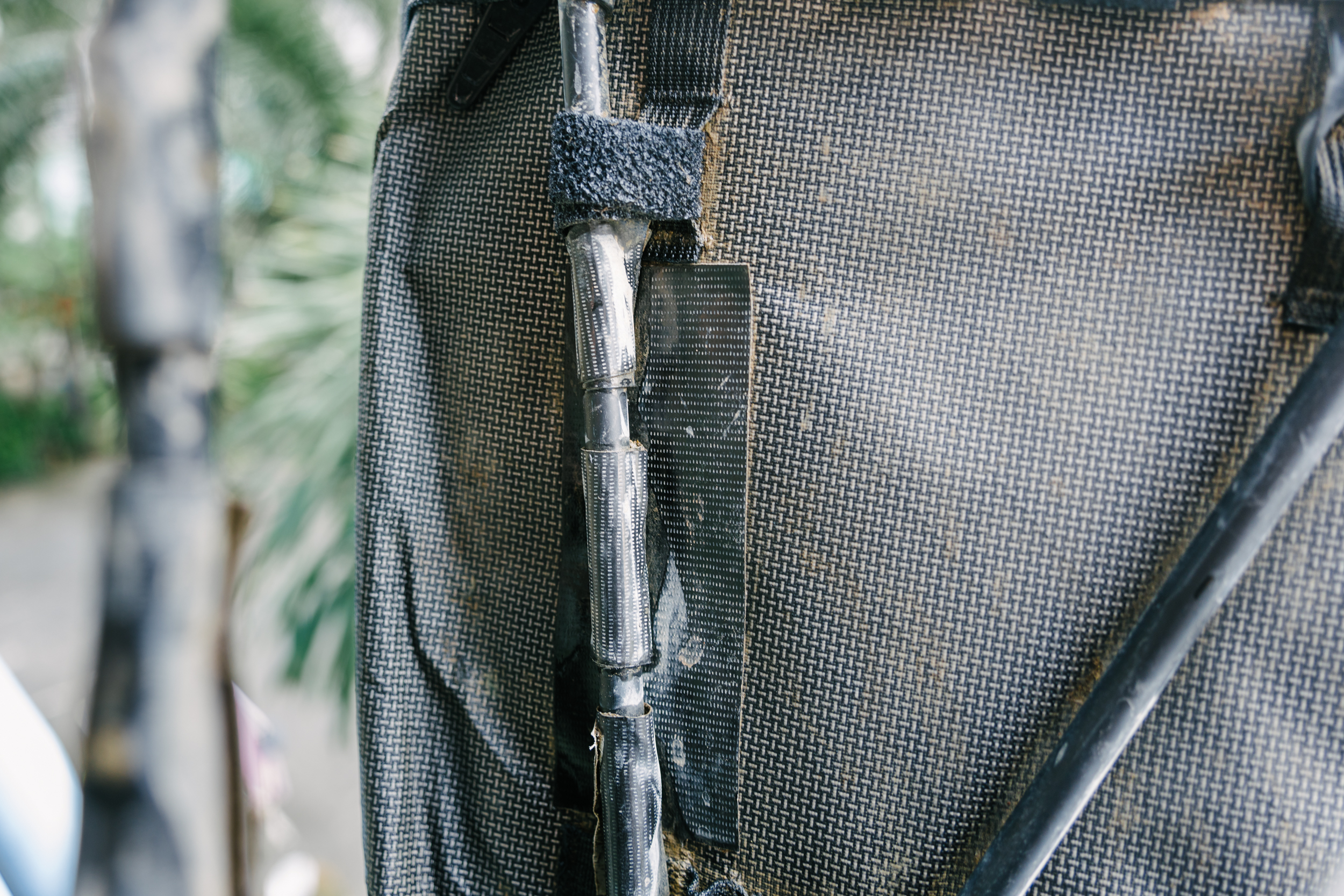
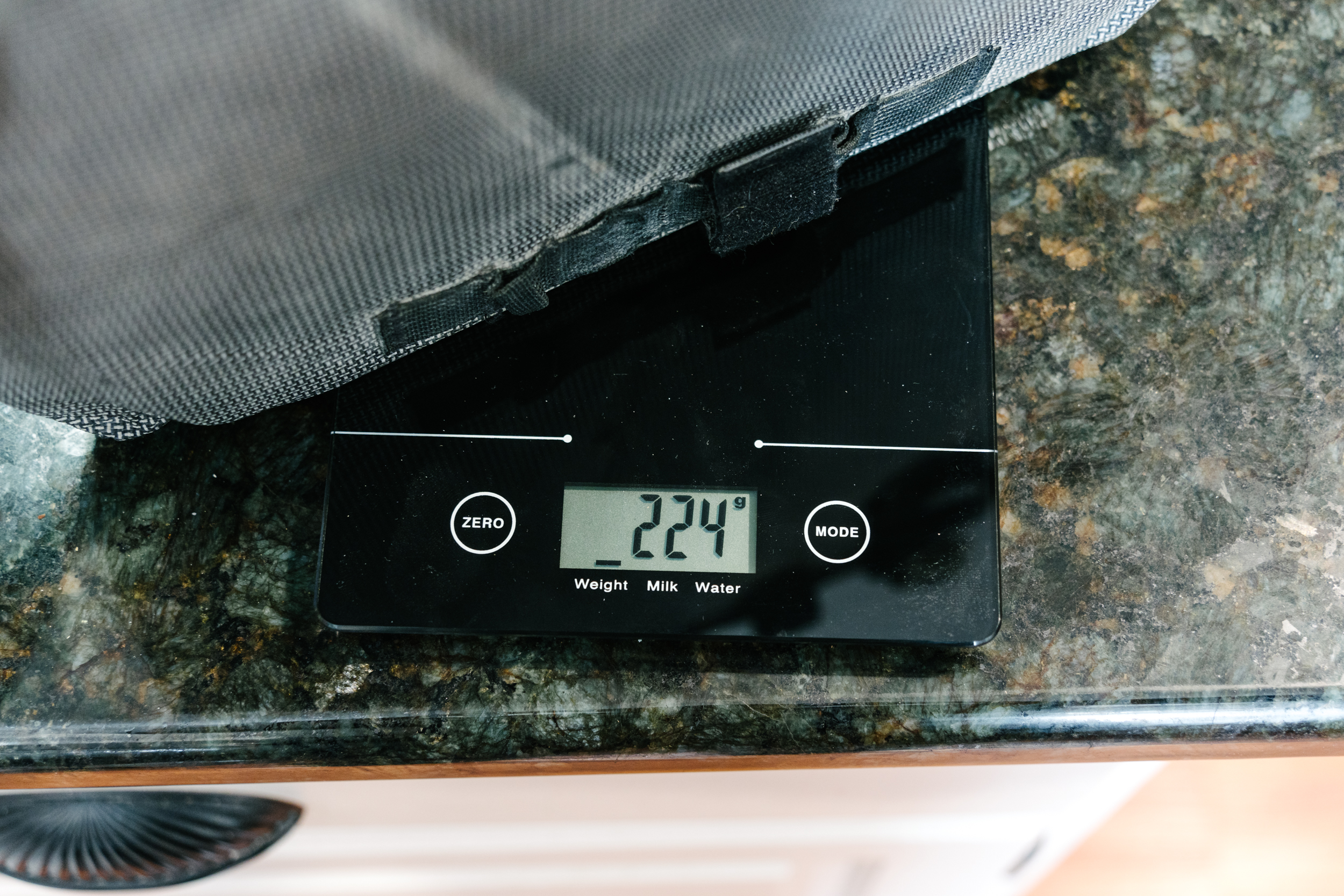
With that said, these are ultralight bags that weigh in at only 224g per 13L bag with a few mounting straps on my home scale, so they do require a degree of care and consideration to keep them functioning like new. As with any bag like this, I would closely consider where the contact points are and use something like Gorilla tape to mitigate potential issues. I taped off the triple-boss mounts on my rack to make sure I wouldn’t wear through the back of the bag, and it worked like a charm.
I had no issues with water ingress, even when I sprayed the bags down with a pressure washer, so MLD’s taped seams have held up well. I will be curious to see how the fabric holds up over the long run, as I’ve anecdotally heard of the older versions of Ultra fabrics delaminating over time. However, one year in, I haven’t noticed any significant degradation or delamination.
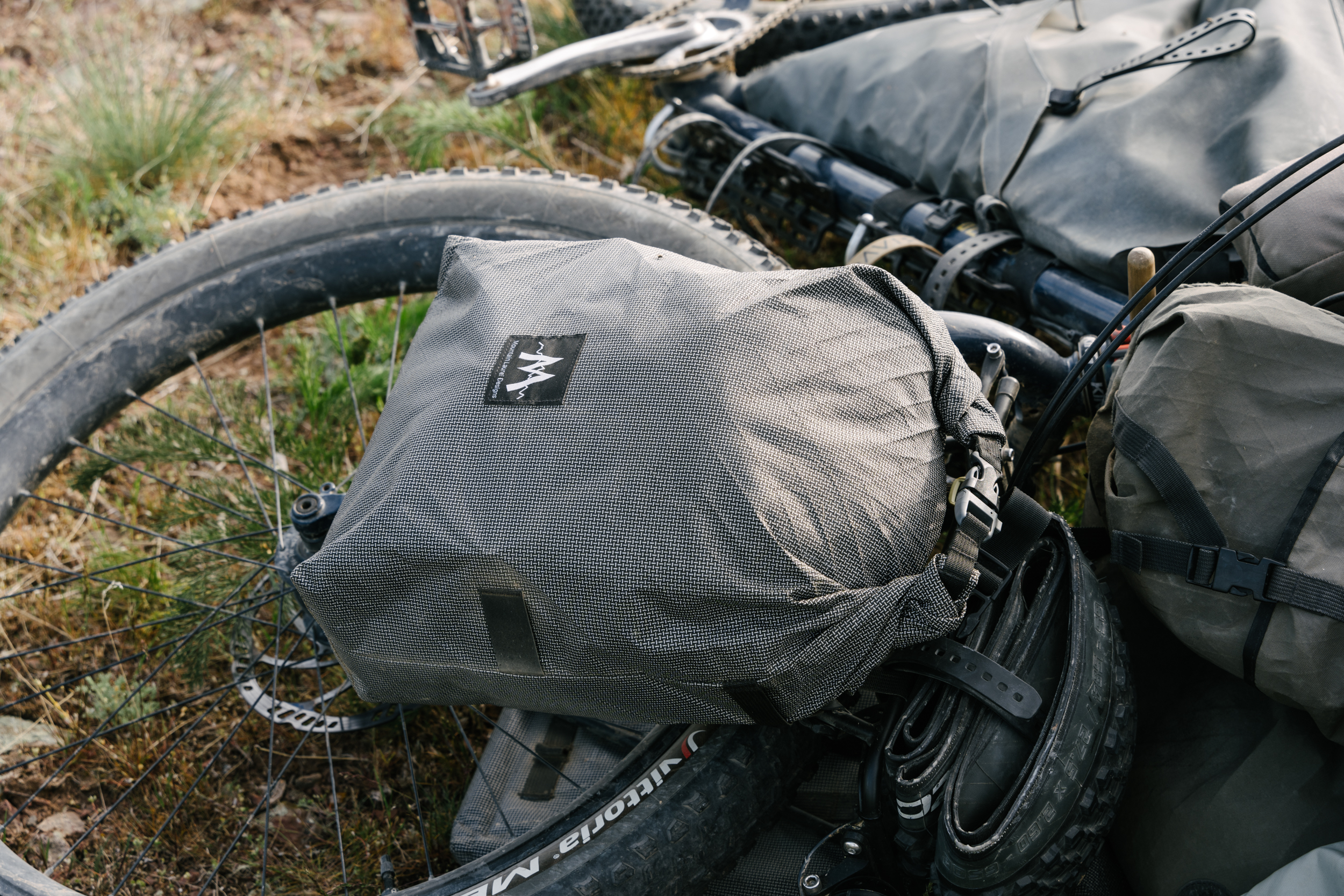
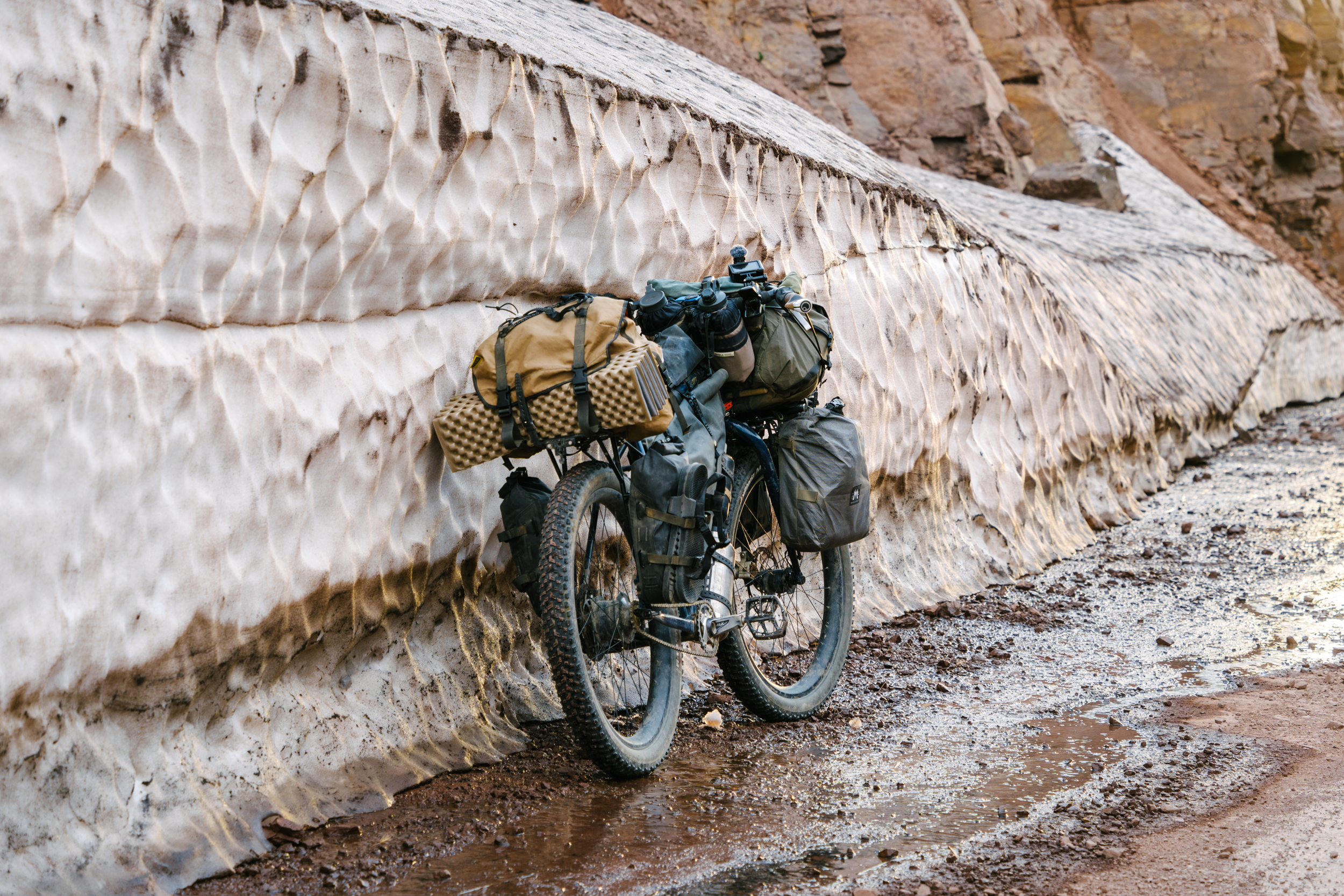
The rear panel of the panniers has an HDPE stiffener and a carbon strip, while the front has a carbon strip to help keep the shape of the bag. Unlike something like the Revelate Nano Pannier, there are no compression straps to keep the load as firmly secured down, so you’ll want to keep that in mind when you’re deciding what to put in them. The heavier the load, the more your bags will bounce on rough terrain. For the smaller-sized bags, this is fine, but it would be worth the small weight penalty to have some small compression straps for these larger bags, in my opinion. Still, it’s not a deal breaker as long as you have other places that you can carry heavier items, like a frame bag. MLD recommends carrying 3kg or less per pannier.
In terms of size, these “large” versions feel quite close to the Porcelain Rocket Microwave Panniers that I’ve used in the past. I do find this to be the goldilocks size for off-road touring, but the mediums (7-10L) might be more ideal for this specific type of bag, where going light is key. The 10-13L versions are 4.5 inches deep, while the mediums are 4 inches deep, making them good candidates for mounting on the rear rack without getting in the way too much during hike-a-bikes.
Minimalist Mounting
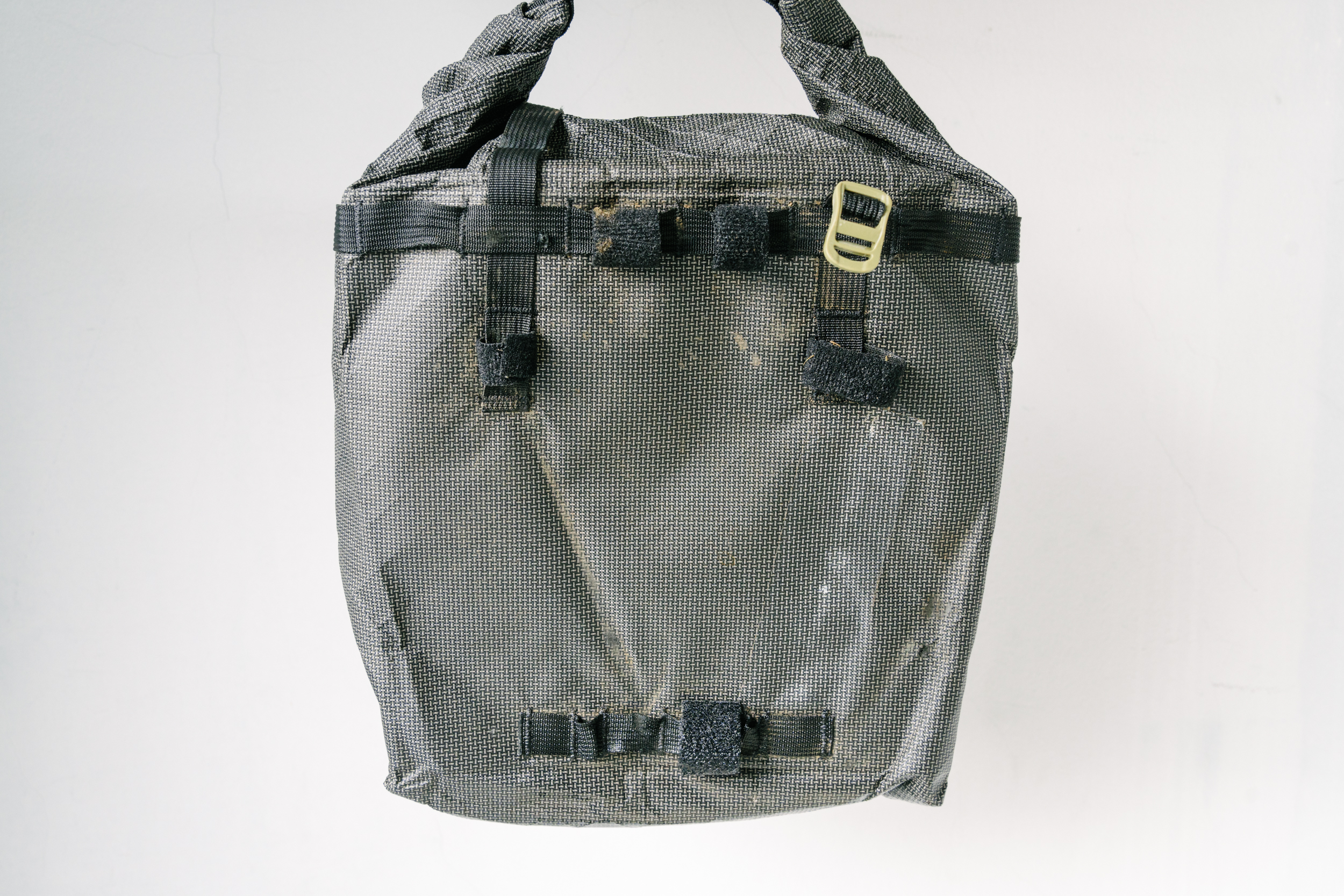
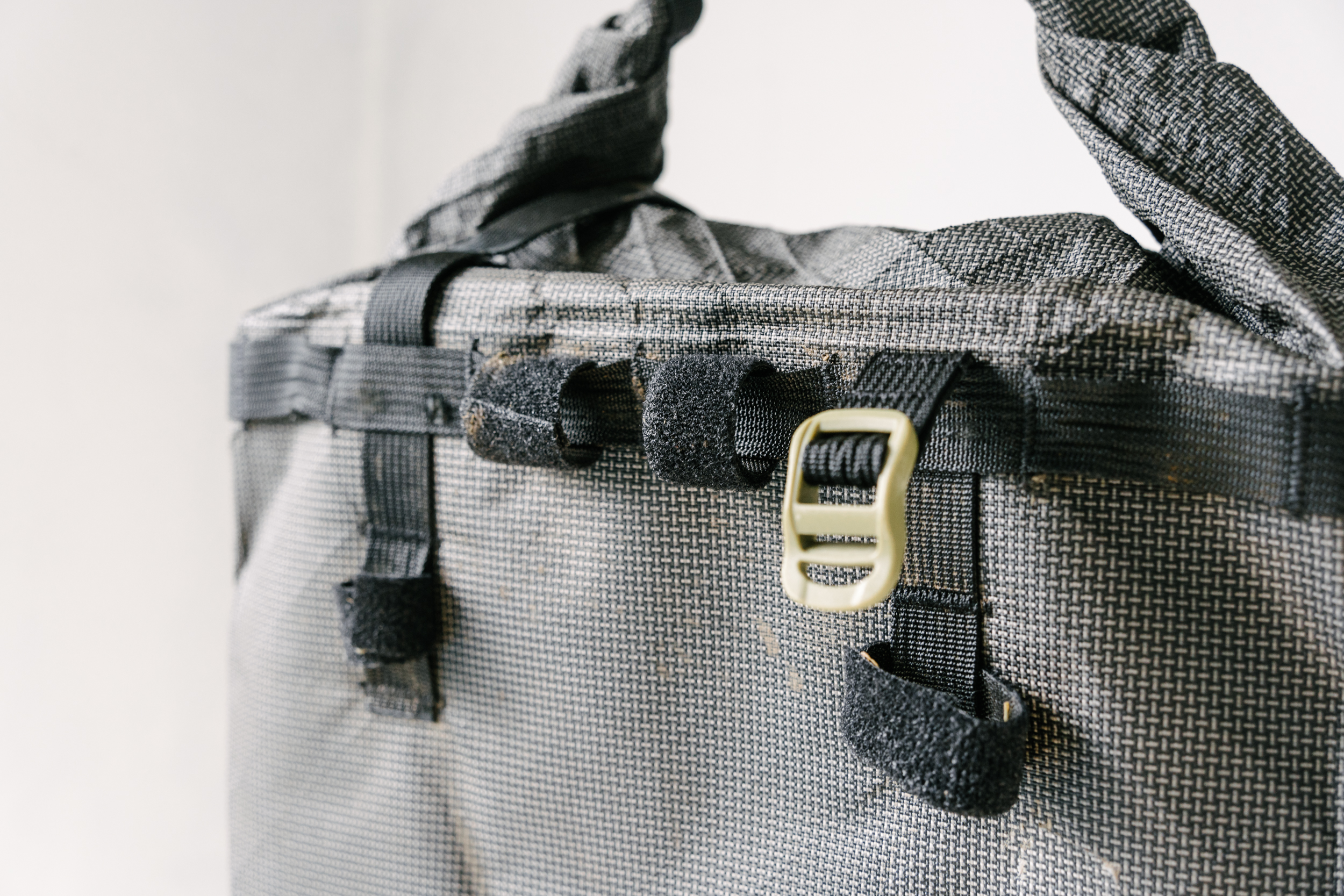
Like many panniers in this weight class, the mounting system is quite basic. There is no fancy, convenient quick-release system, which has its benefits and drawbacks. The Poco Panniers utilize two nylon webbing straps that wrap over the top of your rack and connect to the other bag to carry much of the weight, along with a daisy chain strip and velcro straps to keep everything securely positioned along the top rail. It’s worth noting that MLD recommends having an 8” long top rail like the Tumbleweed Mini Pannier rack for a secure fit. My particular rack was a little bit shorter than this, which meant I couldn’t strap the outside ends of the bag as flush to the rack as with the mini pannier rack, but they still did the job.
Depending on your rack, there is a carabiner and bungee system to keep everything tensioned and not flopping around, but on the particular rack I’m using, the bungee system wasn’t needed, as the lower webbing lined up perfectly with the lower portion of the rack. I also added a couple of mini TPU straps in addition to the velcro strips that MLD included, though MLD has recently started including TPU straps as well, to maximize mounting flexibility.
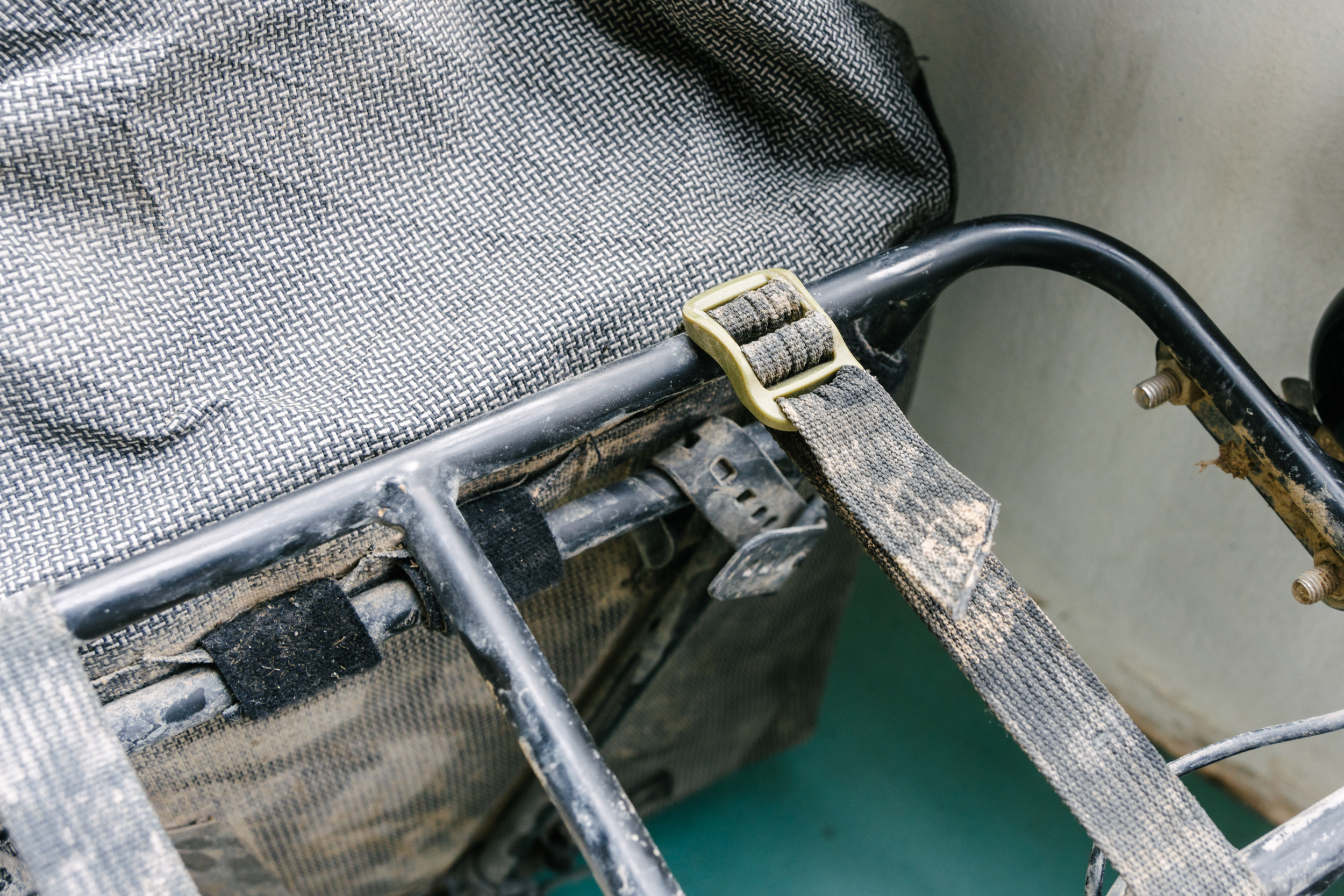
A system like this is lightweight and has no proprietary parts to break, which is nice, but they do take a few minutes to attach and remove, so you won’t want to be taking them on and off at camp all the time. That means loading and unloading them while they’re attached to the bike, which is a lot more inconvenient than loading up bags in your tent or your hotel room and bringing them back to the bike to attach.
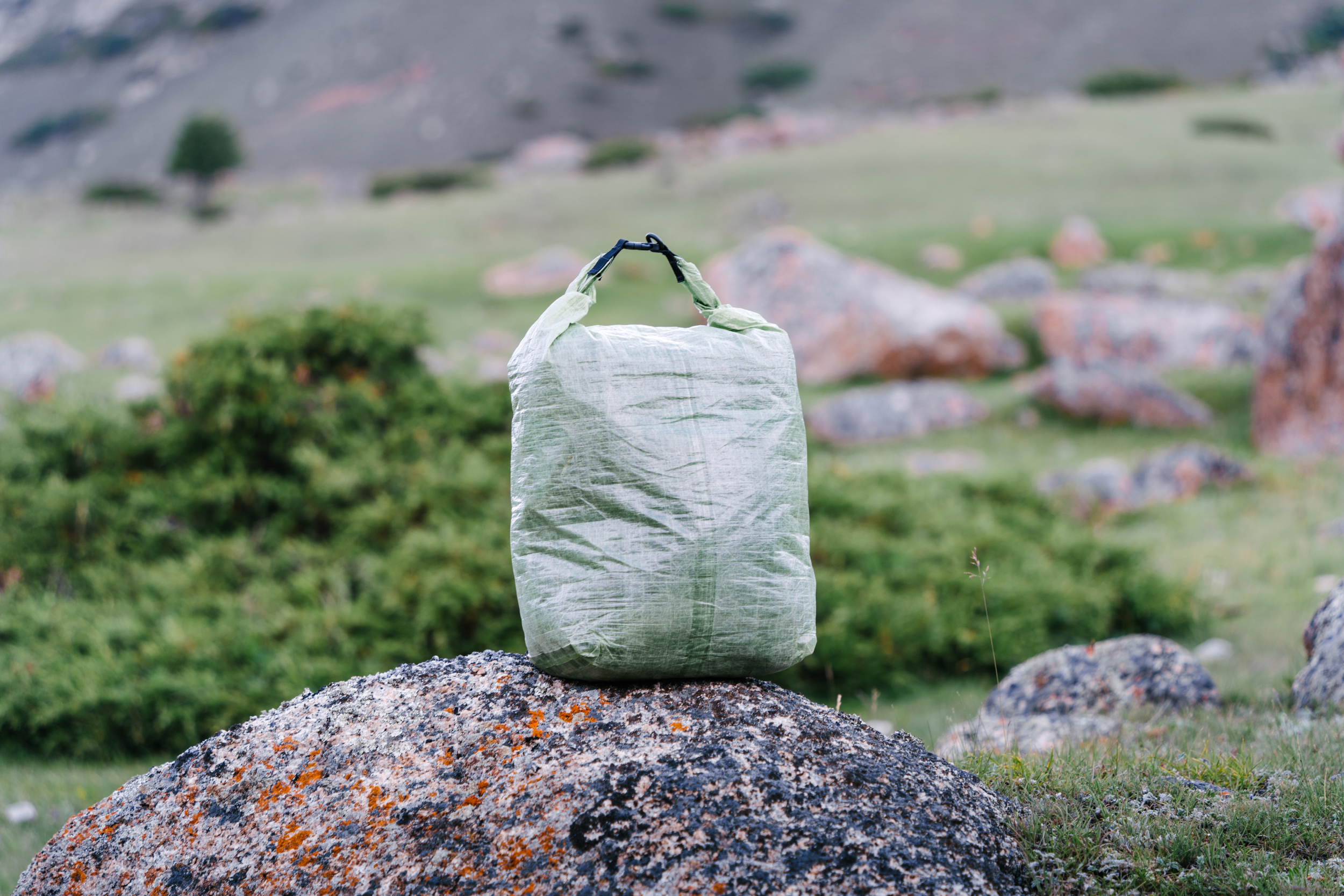
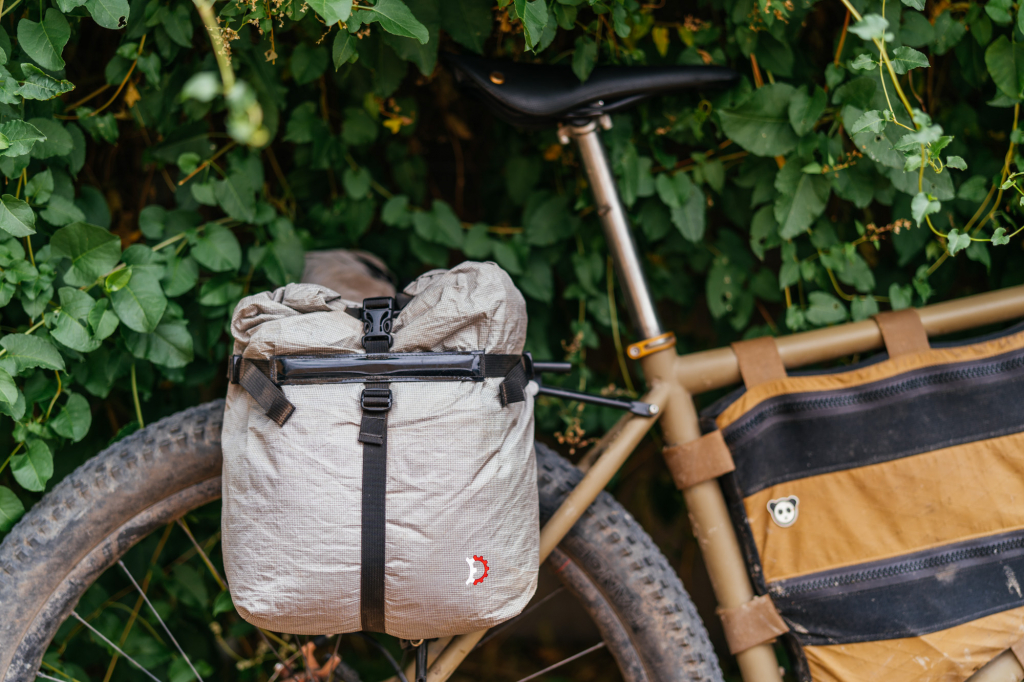
The amount of hassle this will cause you will depend on a few factors. If you’re putting mostly large, lightweight items in the panniers, like a sleeping bag or a tent, it won’t be a big issue. However, that is fairly limiting for 13L panniers like the large-sized version that I tested, so I opted to also get a set of Dyneema food bags that MLD makes, which are conveniently sized to fit perfectly into these bags. These essentially turn the panniers into “holsters”, allowing me to slide out the full contents of my pannier in one go, at the expense of 35 grams and $50 per side. You could also get away with something far cheaper, like normal nylon dry bags or grocery bags, though they probably won’t be tailor-made to fit, and thus, potentially a little more fiddly to load and unload.
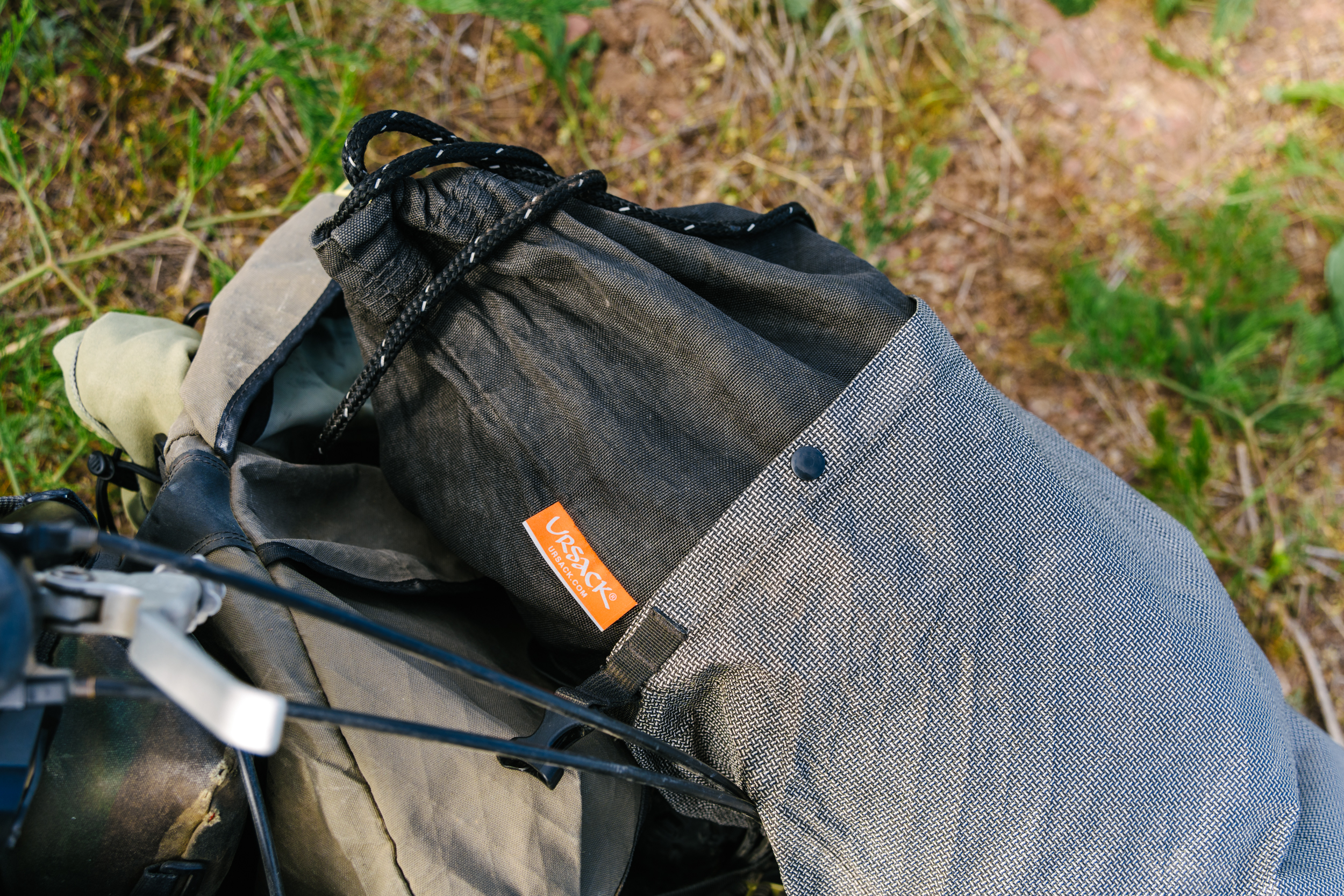
They also fit my 15L Ursack Bear Bag quite conveniently, allowing me to keep my food separate from the rest of my gear.
Alternatives and Wrap Up
In terms of weight-to-capacity ratio, I’m not sure anything else on the market can quite match the MLD Poco Panniers, though there are a few other options that sacrifice a bit of weight for convenience or stability. There are many brands with their rendition of a lightweight, mini-pannier, though the Revelate Designs Nano Panniers are the closest match. At 22L and 510g for a pair, they’re a bit smaller and not fully waterproof when compared to the 26L and ~450g large MLDs, but they do have a slightly more sophisticated mounting system and, most importantly, they have some vertical and horizontal compression capabilities to keep heavier loads from getting too bouncy on rough trails.
Arkel also makes the Dry-lites, which come in at 540g and 28L for a pair, and those are quite a bit cheaper than these Made in the USA offerings from MLD and Revelate. I haven’t tried those, but a lot of people swear by them.
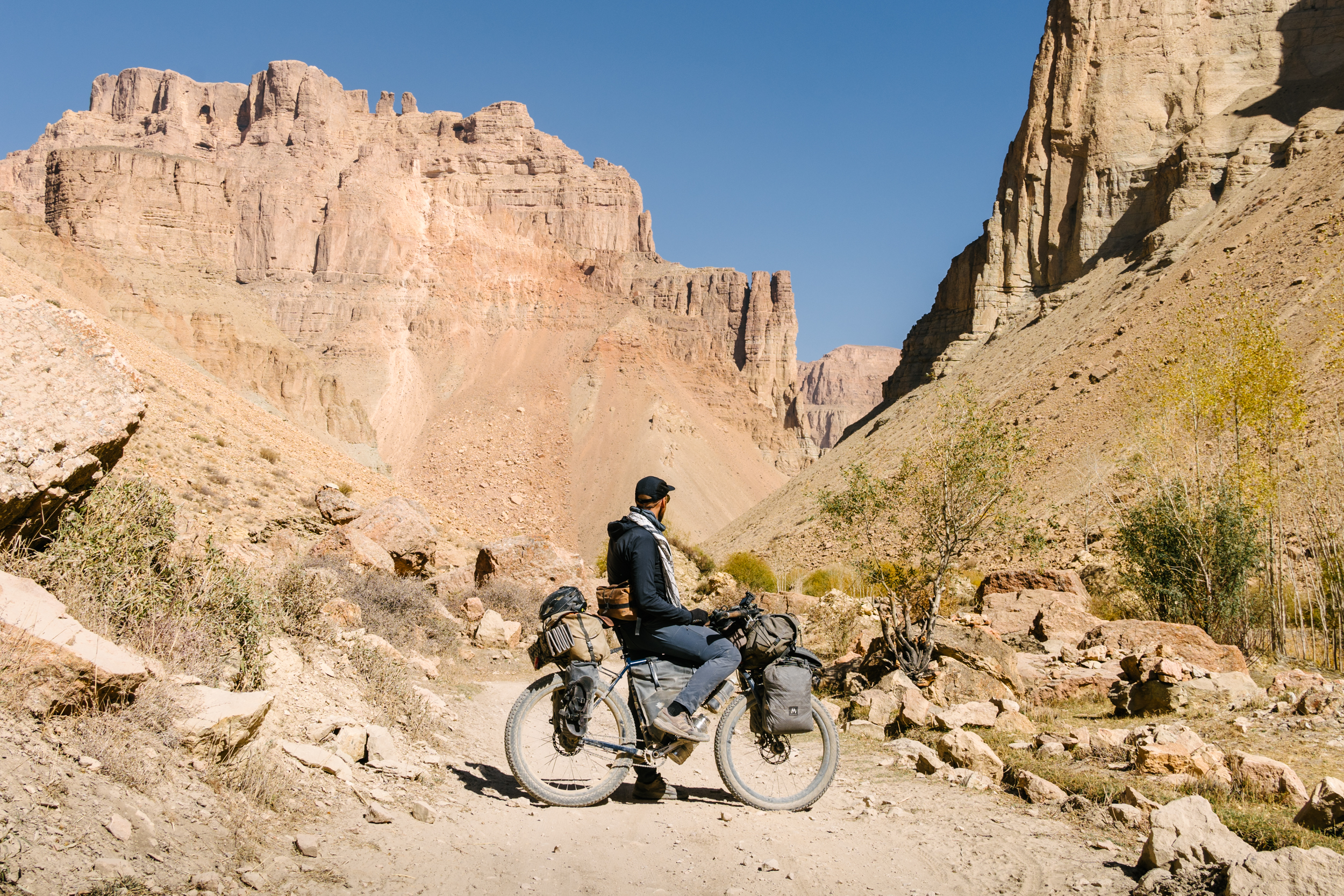
If you favor convenience over weight, holster panniers like the Rockgeist Microwaves or the Revelate Portage Panniers are the way to go in my mind. Those bags can carry heavier loads and have the advantage of removable dry bags straight off-the-shelf. However, if weight and simplicity are at the top priority of your priority list, the Mountain Laurel Designs Poco Panniers are a really solid option.
Pros
- Extremely lightweight for the capacity
- Multiple sizing options
- No hardware to break
- Rattle-free mount
- Waterproof design
- Made in the USA
- Easy to repair with the included tape
- Optional DCF inserts make them more convenient to use
- Many color options (though most are a bit too vibrant for my taste)
Cons
- Can be inconvenient to load gear in and out since there is no quick-release mechanism
- No compression straps, so heavier loads will get “bouncy”
- Expensive, but in line with other domestically produced options
- Some extra care must be taken with ultralight materials
For more info, head over to the Mountain Laurel Designs website.