
Buy The Art of Batting here:
Adil Rashid and Indian pitches (JK)
I hold two thoughts at the same time: Adil Rashid should have played more in the IPL, and Indian pitches don’t suit him. They are both right. For the IPL teams, they should just keep him on the bench and play him when they do, and that means skipping the slower surfaces, because his pace makes him so easy to play.
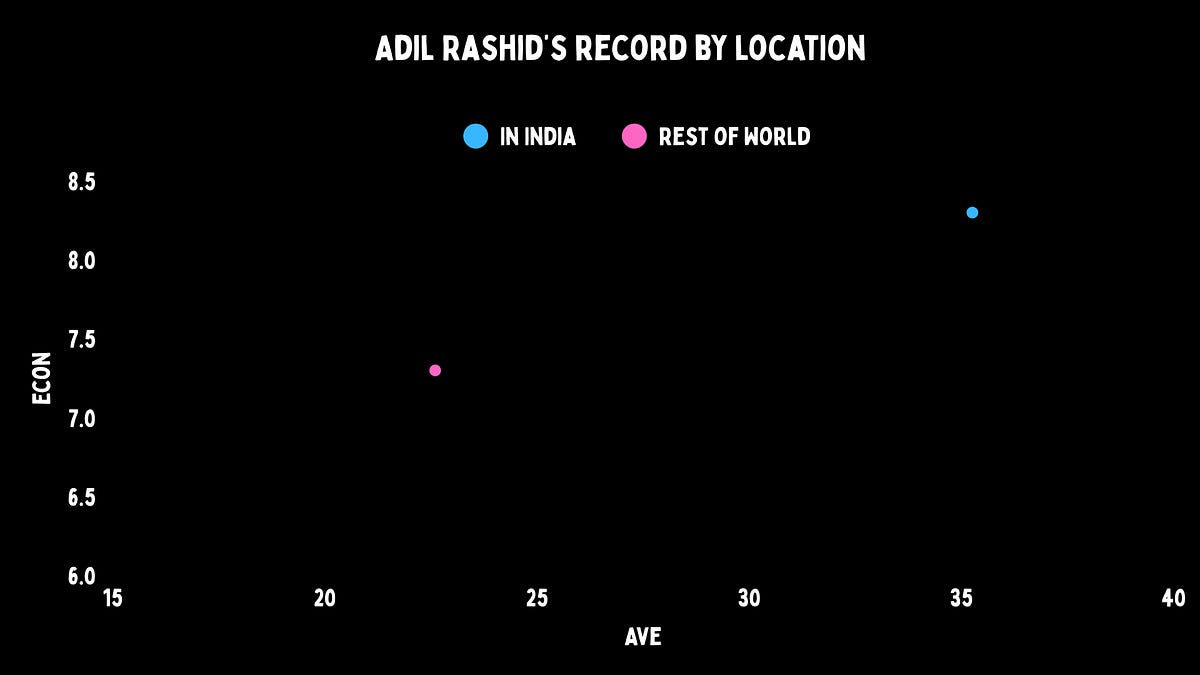
His career on Indian pitches for T20 so far has been poor, averaging more than 35; it is 22 in the rest of the world. Now, that could be because he goes up against Indian batters. But those numbers also hold up from the 2016 World Cup, and now from this game against Nepal, where he went for 42 runs without a wicket. Oh, and most importantly, he didn’t finish his four overs.
There was an incredible shot from Dipendra Singh Airee through the covers from a straight ball where he waited for the ball to come, knew it would spin, and played it inside out with power. Just a genius shot. But that is way harder to play on a faster wicket. It was the slowness and the spin that allowed for it.
You could argue that this wasn’t a surface for legspin, except that Sandeep Lamichhane took 1/25 in his four in the first innings. So maybe Rashid isn’t in form, except he was tormenting Sri Lanka on their wickets a week back.
This is one game, and it doesn’t mean much. But over a long stretch, against many different batting lineups, he goes at an economy of 8.3 on Indian wickets compared to 7.3 in the rest of the world.
For England to be a real chance this tournament, he has to at least bowl his four overs, and probably do way better than that.
Karan KC’s number eight strength (JK)
Karan KC did not have a good game for Nepal. His bowling is no longer international new ball level, and England humped him at more than ten an over. He then made one from one, and was at the other end during the last over.
But the thing that has changed for teams like Nepal is their all round strength. Karan came in at six wickets down, and he has a strike rate of 150. Now, it’s more sloggy than batting, but he has 39 career sixes, and 21 fours. England would know who he is, and know that their job is not done while he is there.
Associate teams have always produced upsets, but depth has been their concern. Nepal is not a great seam bowling side, but they bat to number eight, have many different kinds of spin options, and have good ability to clear the rope.
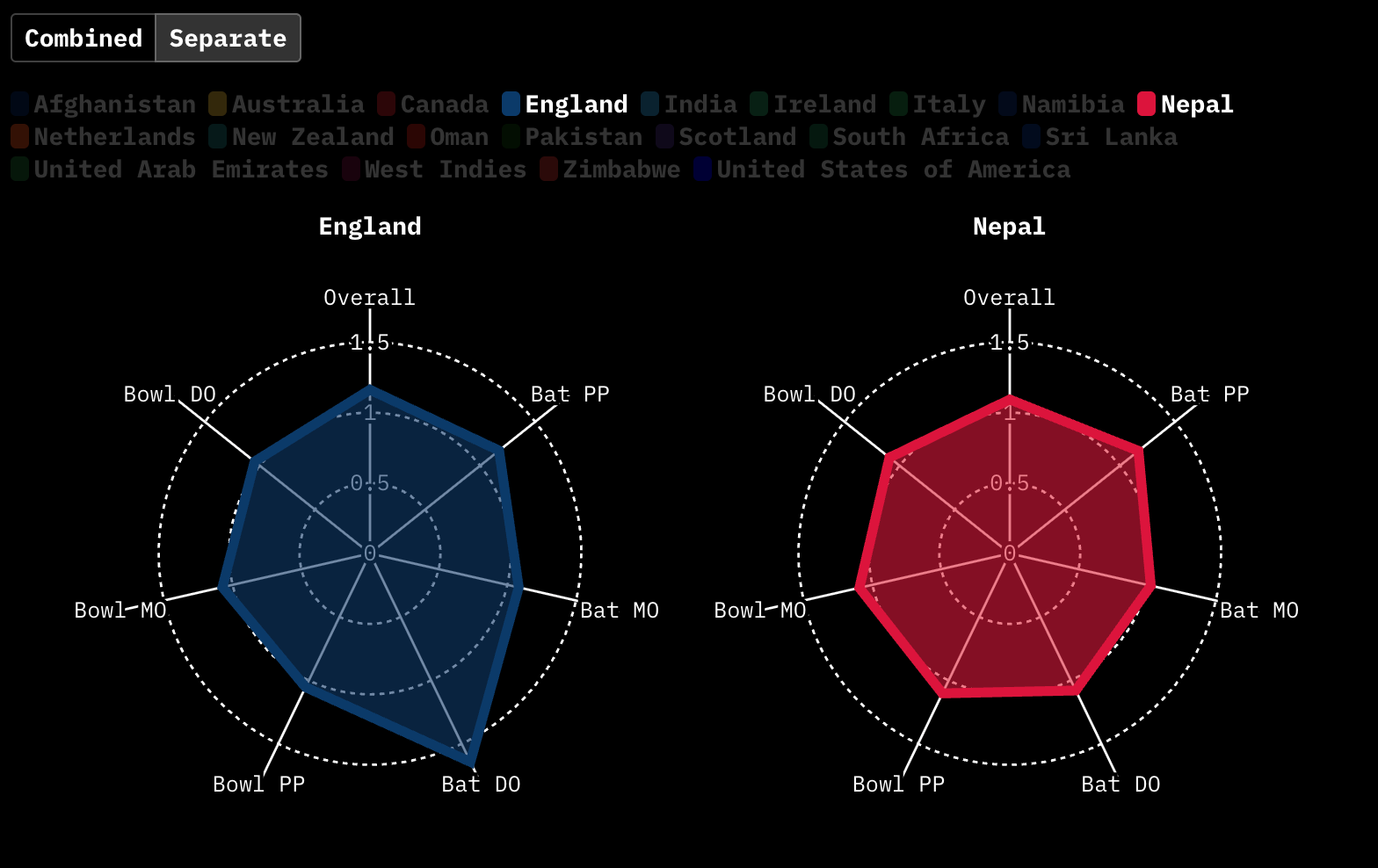
On our team maps, we have them as a very balanced side. They cover their new ball bowling deficiencies by good powerplay spinners, and they have threats all the way through. Coming in, I thought their issue was probably going to be that their team was set up for the Sri Lanka matches, and they were playing in India. But the Indian wickets are holding and spinning more. So that suits them a lot.
But the other thing is because they are such an even team, they are always in contests. England had plenty of chances to finish that game off, but Nepal never stop coming. They do that in associate cricket too. So many times they are massively out of games, and they just come back.
They did that in this game, but just couldn’t get over the line.