
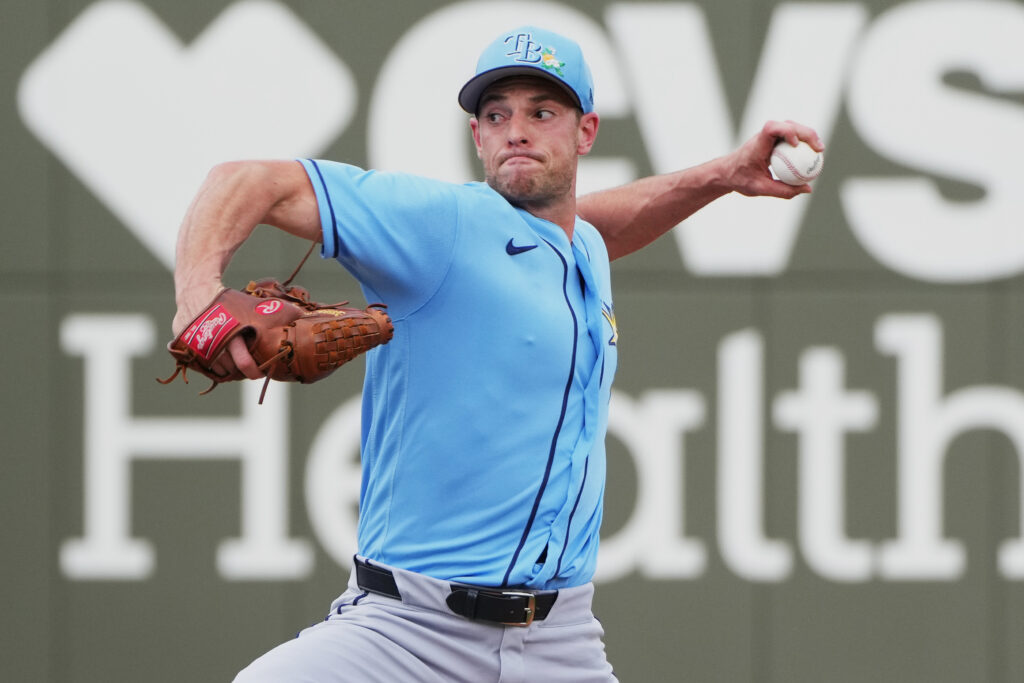
The Rays are always trying to walk a fine line between prioritizing the present and the future. Currently, they have even more future uncertainty than usual, but that didn’t stop them from constantly tinkering with the roster. They made over a dozen trades, including three separate three-team deals, while also working the waiver wire and signing a few free agents.
Major League Signings
2026 spending: $30.5MM
Total spending: $38MM
Trades and Claims
Option Decisions
Notable Minor League Signings
Extensions
Notable Losses
- Adrian Houser, Joey Gerber, Cole Wilcox, Garrett Acton (waivers), Caleb Boushley, Alex Faedo (still unsigned), Stuart Fairchild, Kameron Misner, Nate Lavender, Bob Seymour (released to sign in NPB), Tristan Gray, Forrest Whitley (released to sign in NPB), Eric Orze, Everson Pereira, Christopher Morel (non-tendered), Alexander Alberto (Rule 5 draft), Yoniel Curet, Tristan Peters, Shane Baz, Brandon Lowe, Jake Mangum, Mason Montgomery, Josh Lowe
The Rays generally run one of the lowest payrolls in the league. Despite that, they have found a decent amount of success over the years thanks to a strong player development system and an unsentimental approach to player retention. They usually strike a balance between fielding a strong big league team in the present while also keeping the future pipeline flowing.
It feels like the current moment in time is a bit more future-focused than usual. The Rays made the playoffs in five straight seasons from 2019 to 2023, but they dipped below .500 in the past two. At the 2025 trade deadline, they acted primarily as sellers. They picked up Adrian Houser and Griffin Jax but sent out Taj Bradley, Danny Jansen, Zack Littell and others.
Beyond the roster situation, there are plenty of other important factors at play. Due to hurricane damage, the team couldn’t play at Tropicana Field in 2025. They had to relocate to Steinbrenner Field, normally the home of the Tampa Tarpons, the Single-A affiliate of the Yankees. It’s also the spring training home for the Yankees, so it’s a decent facility, but it’s not huge. With the smaller capacity and the costs of moving for the year, the club’s finances were presumably not great last year.
The damage to The Trop also had domino effects. It scuttled a deal for a new stadium and ultimately contributed to the ouster of owner Stuart Sternberg. Late in 2025, Sternberg reached a deal to sell to a group led by real estate developer Patrick Zalupski. That deal didn’t become official until the end of the season.
The Rays appear to be on track to return to The Trop for the start of the 2026 campaign, but the plans beyond that are less certain. Their lease at that venue only runs through 2028. Zalupski and his group have plans to build a new stadium, as part of a mixed-use development, by the start of the 2029 season. However, it’s unclear if they can pull it off. They are hoping to get government funding to cover half the costs and it doesn’t appear they have strong support for that arrangement. Whispers of a potential move to Orlando can be heard from the corners, or sometimes the city is plainly evoked from a dais.
There’s also the Wander Franco situation lingering in the background. He is technically still owed millions through 2032 but hasn’t been paid in a while. Due to the sexual abuse allegations against him, Franco has been on the restricted list since 2024. It’s unlikely the Rays will have to pay him again, but the legal process is still playing out, so his contract is technically still on the books.
On top of all that, there’s the broadcast revenue situation. Like many clubs, the Rays have been hit hard by cord cutting. As of a few years ago, they were getting about $56MM annually from their regional sports network deal with Diamond Sports Group. That company, now known as Main Street Sports, appears to be circling the drain. The Rays were one of nine clubs to walk away from the company in January, and they’ll now be one of the teams letting MLB handle the broadcast side of things. That arrangement can help the club reach more fans via blackout-free local streaming but it leads to a worse revenue situation. Travis Sawchik of MLB.com says teams in this position only bring in about 50% of the previous RSN set-up.
Put it all together and it seems like the Rays aren’t as focused on near-term contention, but they never fully rebuild. Their 2025-26 offseason would somewhat resemble their 2025 trade deadline, as they leaned a bit more to the sell side but still looked to backfill what they sent out.
First up was the Pete Fairbanks decision. He had been a big part of the roster for many years but was in line for a big raise. He previously signed an extension with the Rays, a deal that paid him $3.67MM annually from 2023 to 2025. There was a $7MM club option for 2026, but Fairbanks through a series of escalators based on innings pitched and games finished, he pushed the option value up to $11MM — effectively triple what he was making before.
Despite the big jump, that still would have been a fair price for Fairbanks, but it seems the Rays didn’t want to pay it. They shopped around and seemed to get a bit of interest but not enough for them to pull the trigger on a deal. They bit the bullet and paid his $1MM buyout, sending him to free agency. He eventually secured a $13MM deal from the Marlins, so there was perhaps a bit of surplus value in his option, but not enough for any club to offer the Rays an enticing trade return in the first couple days of the offseason.
In the month of December, the buy/sell hybrid was on full display. Early in the month, they agreed to free agent deals with outfielder Cedric Mullins and left-hander Steven Matz. Shortly thereafter, they pulled off two big trades on the same day. On December 19th, they sent Shane Baz to the Orioles for four prospects and a draft pick. They also sent Brandon Lowe, Jake Mangum and Mason Montgomery to the Pirates in a three-team trade, getting prospects Jacob Melton and Anderson Brito from the Astros in return.
The two trades were clearly made with an eye on the future. Baz is 26 years old, turning 27 this year, and still has three years of club control remaining. He could have been a key cog in the rotation for the next few years. Perhaps the Rays felt the package was too good to pass up. Three of the four prospects they received were generally considered to be in Baltimore’s top 10-15 prospects before the deal, and the Rays got a draft pick as well.
It’s also possible they felt like selling high on Baz, in a sense. His 4.87 earned run average in 2025 was well below average, but it was easily his healthiest season. He was once one of the top pitching prospects in the sport but hasn’t been able to stay on the field due to injuries (including UCL surgery). Baz doubled his previous career highs in terms of both starts made and innings pitched. The Rays could hold him, hope for continued health and big gains in results — or cash him in now, when he was still something of an upside play. They cashed him in.
The Lowe trade was a classic and expected Rays move. Over the years, they have traded many core players just before they hit free agency. Since Lowe is slated for free agency after 2026, it wasn’t a shock to see him sent out the door.
Mangum and Montgomery were more controllable but perhaps not deemed core pieces. Mangum is a talented speed-and-defense outfielder with questionable offense. The Rays already have a few of those and seemingly felt Mangum was expendable. Montgomery is a reliever with exceptional stuff but significant control problems. Maybe he’ll click in Pittsburgh, but the Rays generally don’t have trouble finding good relievers. Parting with this group also netted Melton, who’s currently a top-100 prospect and could fill a long-term role in the outfield. He’s already made a brief (and rocky) MLB debut but hit .286/.389/.556 in Triple-A last season.
The Mullins signing effectively replaced some of the outfield depth lost by trading Mangum. The Rays had also flipped Kameron Misner, Everson Pereira and Tristan Peters in smaller deals earlier in the winter. Mullins is coming off a bit of a down year but was still a useful player, and his deal isn’t huge, as it essentially pays him like a second-year arbitration player.
Matz hasn’t been a full-time starter in a while but is coming off a good year of mostly relief work, as he posted a 3.05 ERA between the Cardinals and Red Sox. The Rays are going to try to stretch him back out, replacing some of the innings lost by trading Bradley and Baz, as well as Adrian Houser becoming a free agent.
The three-team Lowe trade left a hole at second base but the Rays addressed that in January… with another three-team Lowe trade. They sent Josh Lowe to the Angels in a swap that netted them Gavin Lux from the Reds. Lux was in a super utility role in 2025, playing the outfield more than the infield, but the Rays plan to plant him at the keystone. They believe the consistency will help him focus on getting the most out of his bat.
Josh Lowe seemed to have a breakout in 2023 but declined in the two seasons since, so the Rays are moving on as part of a larger outfield shake-up. Jake Fraley seems to have one spot. The Rays claimed him, non-tendered him and re-signed him in quick succession early in the offseason. Mullins will have a spot next to him. Chandler Simpson could have another. They also picked up Melton and could find space for him as the season rolls along. Smaller deals also netted Justyn-Henry Malloy, Ryan Vilade and Víctor Mesa Jr..
In February, the opportunity for yet another three-team trade came along. The Rays obviously cannot help themselves in this arena. Jon Becker of FanGraphs was among those to point out that the Rays have been involved in five of the past six three-team trades in MLB, the exception being the Tommy Edman/Erick Fedde/Miguel Vargas trade from 2024 involving the Dodgers, Cardinals and White Sox.
In Tampa’s third and final three-team trade of the winter, they were a minor player. The headliner was Brendan Donovan, who went from the Cardinals to the Mariners. The prospect talent went to St. Louis. But the Rays snuck in there to get infielder Ben Williamson from the Mariners while sending prospect Colton Ledbetter and a competitive balance round B draft pick (#72 overall) to the Cards.
Williamson hasn’t hit much but has received good grades for his third base defense. The Rays have Junior Caminero at the hot corner but his bat is better than his glove. Williamson could serve as a defensive replacement for him occasionally, and he has minor league experience at second and shortstop. He’ll give the Rays a right-handed bat who can provide some extra cover at those spots as well.
It’s a bit surprising that the Rays gave up a prospect and a pick to get a guy who seems like a utility player, but there’s also a logic to it. Ledbetter is a nice prospect but seems to be decent at most things without a standout tool. He may end up being a bench/depth piece somewhat similar to Williamson, as an outfielder, but not for a few years.
As for the pick, the Rays have shown a willingness to flip those for big leaguers, even if they’re not stars. They traded a pick last year for Bryan Baker, a good reliever but not an elite closer. “We’re drafting players, and the goal is to turn them into big leaguers,” president of baseball operations Erik Neander said to Adam Berry of MLB.com at the time of the Baker trade. “And this draft pick turned into a big leaguer very quickly.”
The Orioles used that pick they received for Baker to draft Slater de Brun … whom the Rays then acquired in the Baz deal. Tampa Bay also received a higher pick (#33 overall) in that trade, then flipped a competitive balance round B pick to the Cards in the Williamson/Donovan trade. In a sense, it’s emblematic of their overall approach. Buy here, sell there.
They capped off their winter with another free agent signing, getting Nick Martinez on a one-year deal worth $13MM. Martinez has been baseball’s preeminent swingman in recent years. Over the past four years, he has made 61 starts and 131 relief appearances, posting a 3.67 ERA in that time. He has been better as a reliever but serviceable as a starter. The Rays will begin the season using him in the rotation.
At the end of all the wheeling and dealing, the Rays go into 2026 with a rotation of unknowns. They subtracted Bradley and Baz in the past year but added Matz and Martinez. Ryan Pepiot is probably the guy with the least risk. Shane McClanahan has ace-caliber stuff and should be back after missing the past two seasons due to injury. Drew Rasmussen was healthy in 2025 but has a lengthy injury history. Martinez and Matz should have spots but could get pushed to the bullpen if other guys step up. Yoendrys Gómez, Ian Seymour, Joe Boyle, and Jesse Scholtens are all on the 40-man roster. Brody Hopkins is one of the club’s top prospects and he could push for a debut in 2026.
On the position player side of things, the Rays sent out a number of outfielders but also brought in a bunch. At second base, they subtracted Lowe and replaced him with Lux. In the process of all their moves, they added a lot of talent to the system, though whether they made the 2026 team better is debatable. Both the Projected Standings at FanGraphs and the PECOTA Standings at Baseball Prospectus project the Rays to finish last in a strong American League East.
Ultimately, it feels like a transition period for the franchise. The roster wasn’t bad but also wasn’t good enough in the past two years. They have a new owner and an uncertain future in terms of their stadium. The Franco deal may or may not come off the books at some point. Their broadcast revenue is up in the air. It’s a lot of uncertainty, but the front office seemed to operate in classic Rays fashion this offseason.
How would you grade the Rays’ offseason?
Photo courtesy of Jim Rassol, Imagn Images