
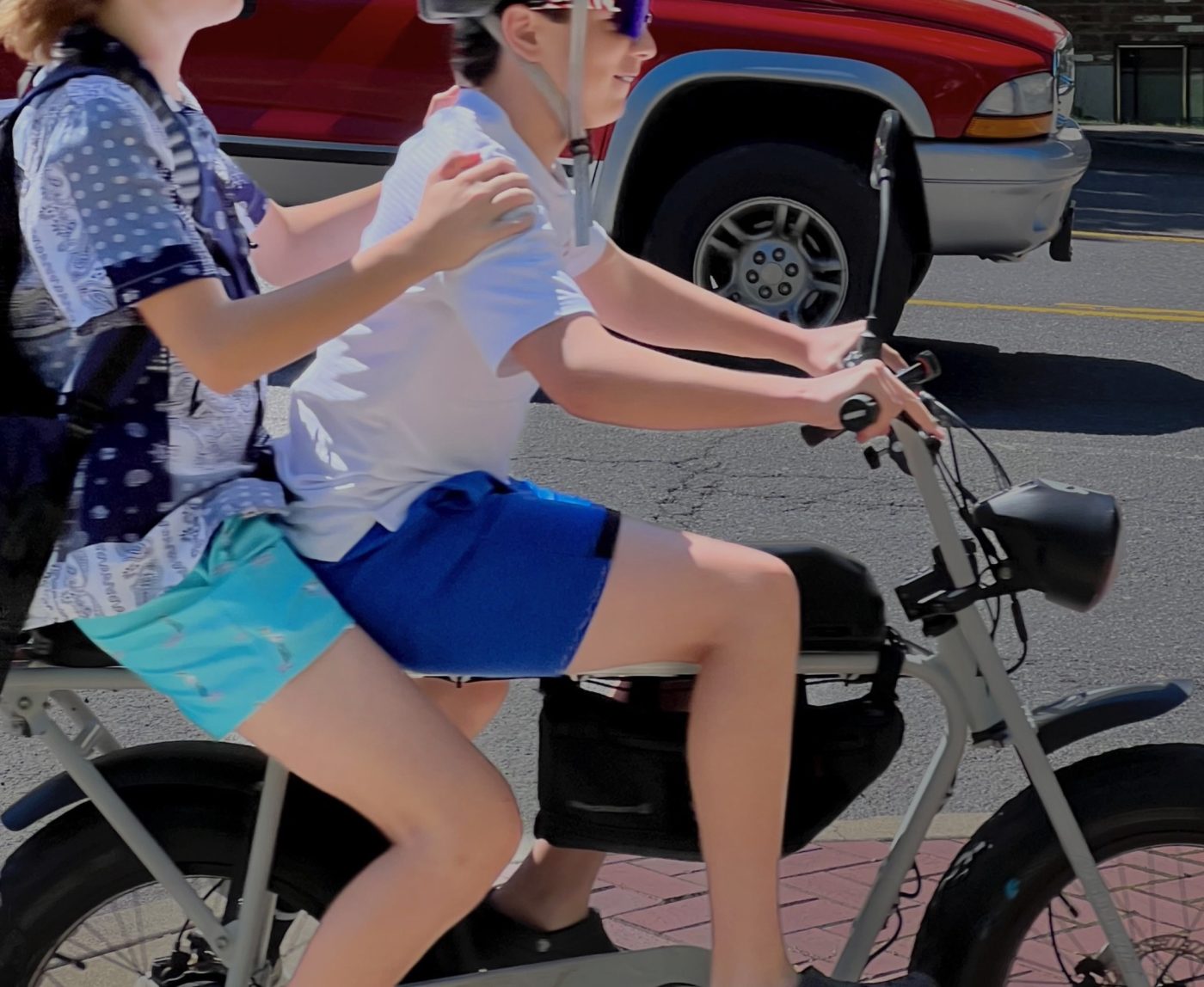
Oregon lawmakers have a chance to clean up laws related to electric bikes and the growing number of other battery-assisted vehicles that are showing up on our streets. House Bill 4007, championed by The Street Trust and based on a nearly identical bill from the 2025 legislative session, seeks to make several significant changes to existing law — including lowering the legal age for riding an e-bike from 16 to 14.
The bill is based on HB 3626, a similar bill from the 2025 regular session that passed the Joint Committee on Transportation, but got held up in Ways and Means (where bills with a fiscal impact often go to die).
Missing from this bill is the provision from the previous bill that would have required the state to establish an e-bike safety information and education campaign. Jake Weigler, a political consultant helping TST get this bill over the finish line, said that’s because during the short session it’d be impossible to move this bill if it required funding. Given that this is a short session (just 34 days left), only bills that have broad support, have been previously vetted, and don’t impact the budget are likely to pass.
HB 4007 aims to fix several elements of our current e-bike and battery-assisted vehicle laws: a market flooded with dangerous, low-quality batteries; confusion from products sold as “e-bikes” that are more akin to mopeds or motorcycles; concern from parents and police officers about age requirements; and the lack of clear definitions for new types of vehicles.
HB 4007 aims to help on all fronts. Here’s what it does, according to a one-pager created by The Street Trust:
- Creates offenses of improper sale or lease of a vehicle and selling imposter bikes, punishable by maximum fine of $250.
- Requires all riders under 16 to wear a safety helmet and that they must be at least 14 to use a class 1 e-bike or e-scooter that provides power up to a speed of 20 mph.
- Defines a micromobility device as including a propulsion system that provides assistance up to a speed of 28 miles per hour (mph), while distinguishing them from e-bikes, e-scooters, mopeds, motorcycles, and wheelchairs.
Asked why TST feels this bill is urgent enough for the short session, Weigler told BikePortland this morning they need to react to the popularity of e-bikes and e-motos in the market, and the dangers some of them pose to young people. “There are a lot of kids excited about these bikes and we want to facilitate using them safely, and now there’s not a lot of clarity in the market to help families make good decisions,” he shared.
As Hood River School District youth biking educator Megan Ramey shared on BikePortland last session when HB 3626 was still in play, Oregon currently treats Class 1 e-bikes — the lowest-power category of bikes that can go a maximum of 20 mph without pedal-assist — “like a car.” “And because under-16s are barred from riding them, schools can’t even legally provide education to the age group most eager to learn,” Ramey wrote.
Ben DeJarnette, owner of a business that rents e-bikes in the Columbia River Gorge, supports the bill’s changes to the age requirement. “We frequently have families come into our shop looking to rent e-bikes with their teenage kids (who have ridden e-bikes in other states) and we currently have to turn them away or require them to ride as passengers,” DeJarnette said in testimony submitted in advance of tomorrow’s hearing on the bill. “Updating Oregon’s e-bike laws will help small businesses like ours grow while creating a smarter, safer regulatory framework for micromobility devices.”
Another key provision of HB 4007 is to add a definition for “powered micromobility device” into Oregon law. The intent of this is to create a legal framework for devices like OneWheels, e-skateboards, and electric unicycles that separates them from e-bikes, mopeds, motorcycles, ATVs, and so on. PMDs would be vehicles that are designed to transport a person, have some type of propulsion system, have a maximum speed of 28 mph and an unloaded weight less than 100 pounds. The bill also explicitly allows PMDs to be ridden on bicycle lanes and paths.
HB 4007 also aims to discourage the sale and use of e-motos that can go over 28 mph, but are often marketed as e-bikes. The bill would make it illegal to sell an “impostor vehicle” — that is, selling a vehicle advertised as one thing, but that actually fits the legal definition of another. So if an Oregon retailer sold a battery-powered motorcycle that didn’t have functional pedals and could travel faster than 28 mph as an “e-bike,” they would receive a Class D traffic violation (with a presumptive fine of $115).
Batteries will also be more tightly regulated if HB 4007 passes. The bill would make it a Class D traffic violation to sell batteries that don’t come with a stamp of approval from, “an accredited testing laboratory as recognized by the United States Occupational Safety and Health Administration, the United States Consumer Product Safety Commission or an independent laboratory that has been certified by an accrediting body for compliance with nationally recognized battery standards or other standards deemed sufficient by the Department of Transportation.”
While it seems like a lot for lawmakers to ponder in a short session, keep in mind most of these provisions already passed committee last session. Also keep in mind that HB 4007 is an omnibus bill that House is using to stuff other, related laws into. That’s why there’s an entire section of this bill about laws for hauling milk (no, I’m not kidding).
Learn more about the bill on the official legislative session website and if you want to weigh in, here’s information about tomorrow’s public hearing.