
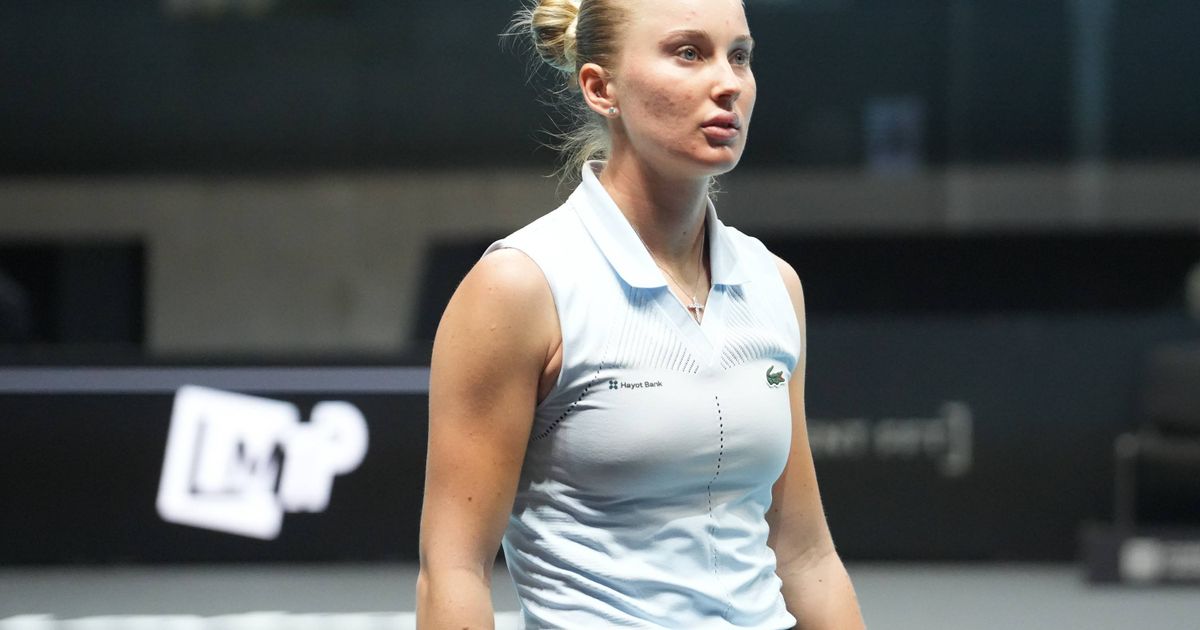
The contest carried an additional layer of context from the outset, with an on-screen message informing spectators that there would be no handshake at the net. As has become common in matches involving Ukrainian players, the traditional post-match gesture was omitted.
Oleksandra Oliynykova, competing under the Ukrainian flag, adhered to the now-established stance taken by several of her compatriots since 2022, declining physical acknowledgment against players linked to Russia or Belarus. The practice remains a visible and recurring element across the WTA Tour.
Nationality change adds further complexity
Kudermetova formally changed her sporting nationality from Russia to Uzbekistan toward the end of last season, joining a small but notable group of players who have altered national representation in recent years. While such changes are not uncommon in tennis, the timing and context inevitably draw additional scrutiny.
From a regulatory standpoint, the move aligns with WTA and ITF eligibility rules, which allow players to represent another nation provided administrative and federation requirements are met. However, in the current climate, nationality carries heightened symbolic weight—particularly in matches involving Ukrainian players.
“The players will not shake hands at the conclusion of this match,” read a message on the Charleston screens at the end of the match. “We appreciate your respect for both athletes following the match.”
Cases like Kudermetova’s sit in a grey area. While she no longer officially competes under the Russian flag, perceptions may not shift as quickly, especially given the broader stance adopted by Ukrainian athletes across sports. As a result, situations like the one seen in Charleston—where sporting protocol intersects with political reality—continue to surface with regularity on the WTA Tour.