
Porsche has chosen Formula E over racing in WEC and in this week’s Sustainable Motorsport Roundup you will find out why this is significant for electric racing. I also have news on IndyCar’s sustainable race tire plans and more!
Sustainable Motorsport News
Formula E Chief Sends “Naughty” Jeddah Invite to Verstappen After F1 2026 Criticism
Formula E CEO Jeff Dodds invited Max Verstappen to last weekend’s Jeddah E-Prix after the Red Bull driver slammed the 2026 Formula 1 cars as “Formula E on steroids”.
“I dropped Max a message yesterday to basically say, ‘you’re in Bahrain, I’m in Jeddah, if you fancy coming here instead, I’ll come and get you.’ So I was being naughty when I messaged him.”
Verstappen doubled down on his 2026 car criticisms while saying some complimentary things about the upcoming Formula E GEN4 car. “I’m sure that with the new car [Gen4] from what I’ve seen and talked to some of my friends in there, that’s going to be also a really cool car. But let them be Formula E and we should stay Formula 1, and let’s try not to mix that.”
Star Academies Relaunches Future Engineers Academy in England with Mercedes and Driven By Us
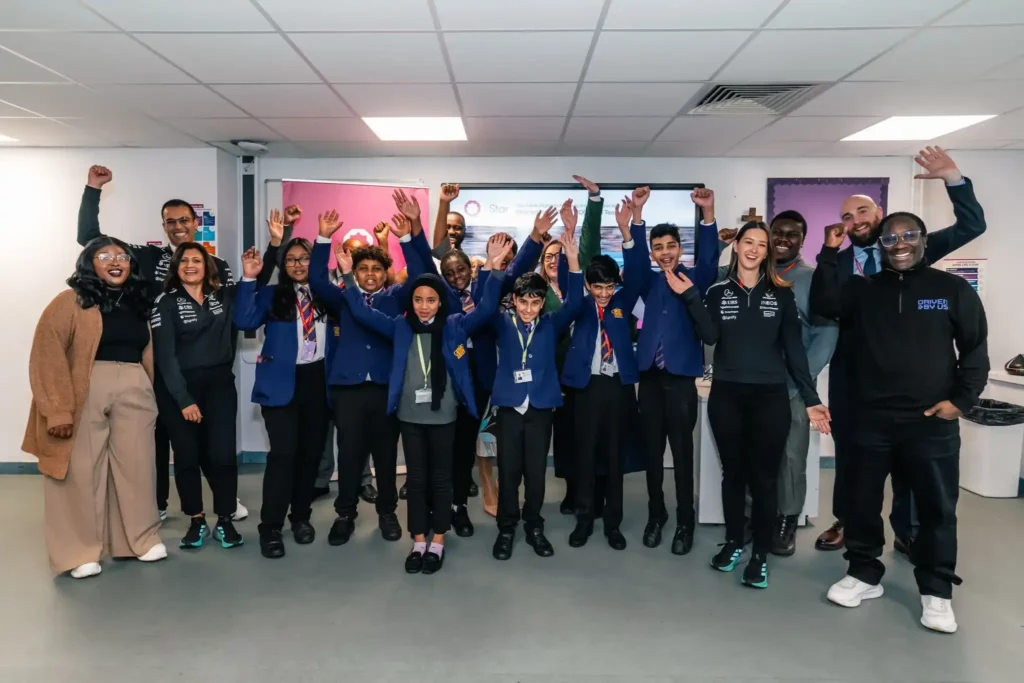
Star Academies in England has relaunched its Future Engineers Academy in partnership with Mercedes-AMG PETRONAS Formula One Team, with Driven By Us continuing as a delivery partner alongside Motivez. The program returns to schools in Birmingham following engagement with more than 1,300 students last year.
This year’s academy will introduce additional engineering and coding activities, a national kart build competition, and a new “Sustainable Star” challenge focused on motorsport sustainability. An end-of-year celebration recognizing student achievement is also planned.
Sustainable Motorsport Tech
IndyCar to Mandate Two Stints on Alternate Tires for Street Races
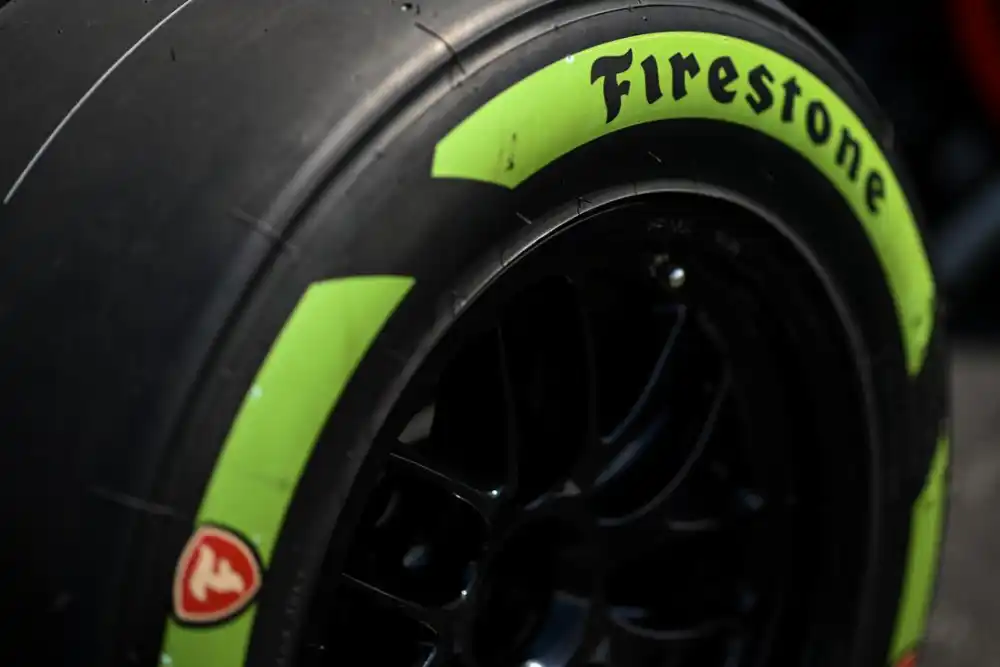
The IndyCar Series is turning something it trialed in 2025 into a formal change this season where drivers will be required to use Firestone’s faster alternate tire compound two times in each of the six street races.
“RACER has learned teams were recently made aware of the series’ intent to require double usage of the soft compound, which is identifiable on street courses by the green-colored sidewalls made from the renewable guayule shrub. Required use of Firestone’s more durable primary compound is unchanged and must be run one time at St. Petersburg, Arlington, Long Beach, Detroit, Markham, and Washington D.C.“
NASCAR Beats Rival Series to Sustainable Racing Breakthrough With Industry-First Fuel Initiative
NASCAR has announced a major new partnership with POET, which makes it the first major motorsport series to use zero-carbon bioethanol. This move puts the sport ahead of its rivals in blending sustainability with top-level performance. Races will still be fast, and engines will still be loud, but the difference will be in the fuel powering those moments that will now have a much smaller environmental footprint.
F1’s Other Big Performance Differentiator in 2026
This season has been called the biggest change of regulations in the Formula 1’s history by more than one team principal in the build-up to this year, and it’s not hard to see why.
“The molecules that we were using in 2025, they are all extracted from crude oil, or some kind of fossil feedstock,” Shell’s technology manager for motorsport operations and marketing, Valeria Loreti, tells RACER. “The molecules that we have to use [in 2026], with a small exception of up to 1% which is going to be additives and denaturants, everything else of the 99% of the fuel is going to be molecules extracted from different [advanced sustainable] feedstocks.”
Petronas in Race Against Time to Homologate F1 2026 Fuel
Petronas is engaged in a race against time to obtain certification and homologation for the sustainable fuel that Mercedes-powered teams will use in the 2026 Formula 1 campaign.
“This is a complex and inevitably lengthy procedure. Especially in the first season of application of the new system, delays in obtaining certifications, even from partner companies, cannot be ruled out. FIA regulations are particularly strict, the adoption of sustainable fuel is one of the pillars of the new 2026 regulations, and the federation intends to perform rigorous checks.”
Series News
Porsche’s WEC Exit a ‘Double-Plus’ for Formula E –Dodds
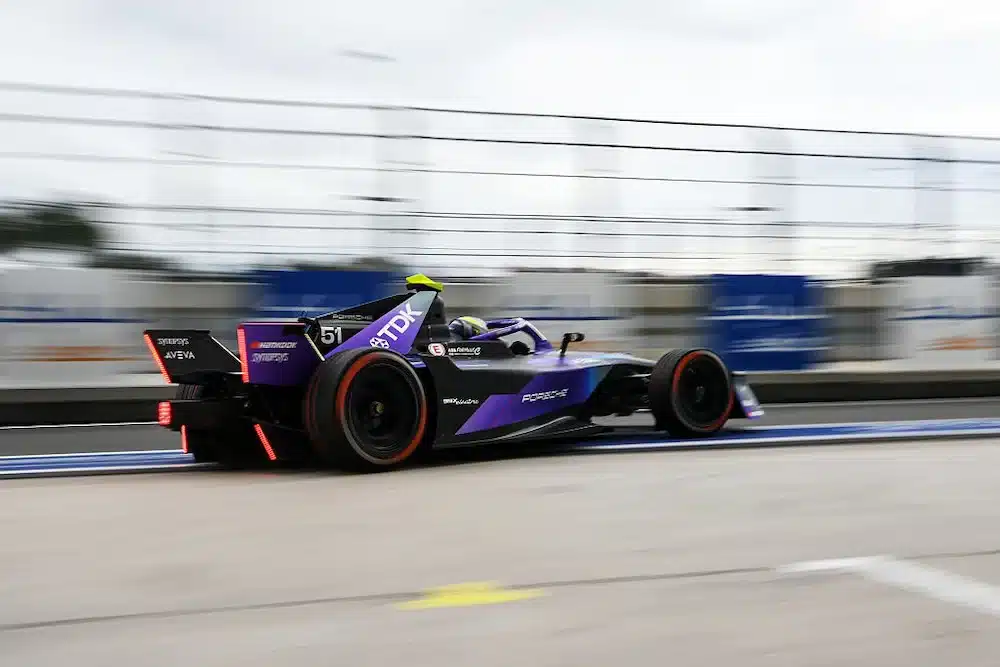
Porsche’s exit from the FIA World Endurance Championship at the end of last season meant that one of motorsport’s premier competitions lost one of its most successful participants.
But WEC’s loss was Formula E’s gain, because following the news of its WEC exit, Porsche immediately became the first manufacturer to commit to fielding two factory-operated FE teams.
“When you’ve got a brand with the brand power and global presence of Porsche committing two teams into a championship, that’s amazing,” Formula E Jeff Dodds told RACER. “Obviously it coincided with their withdrawal from WEC, so it was, almost like a double-plus for us, that they were coming out of one championship, doubling down in another.”
Formula E to Light Up Tokyo With its First-Ever Night Street Race Event in Japan
The 2026 Tokyo E-Prix will return as a spectacular night race, with both races of the double-header starting at 20:00 local time, making it the first time the all-electric series has raced after dark on the streets of Japan.
“To see the world’s most innovative electric race cars – the GEN3 Evo – competing under the dramatic lights of the Tokyo Bay waterfront will be an unforgettable moment for our passionate Japanese fans and those watching on at home.”
Formula E Working on a Longer Version of Jeddah F1 Track for Gen4 Era
Formula E is exploring plans with Saudi Arabian authorities to adopt an extended configuration of the Jeddah Corniche Circuit from the start of the Gen4 era in 2026/27.
“We’re doing simulations,” Formula E chief championship officer Alberto Longo told Autosport. “Not to break any news, but I don’t think we’re going to be using exactly the same track as we’re using today. But I don’t know if we’re going to be using the whole track. Probably it’s going to be something in the middle.”
Getting to the Track Sustainably
Work Starts on SkyNRG’s First SAF Production Facility
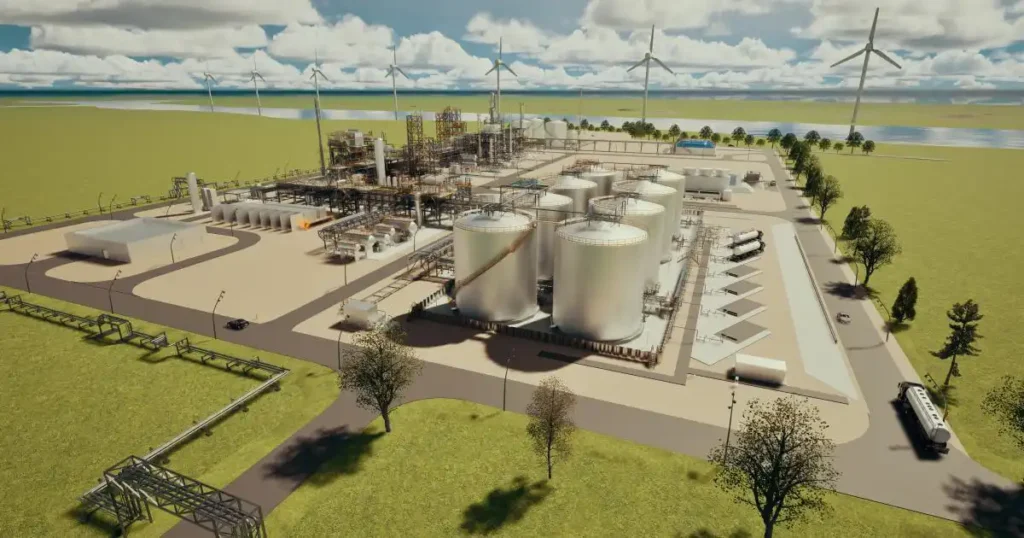
Sustainable aviation fuel (SAF) company SkyNRG has broken ground on DSL-01—its first production facility—in Delfzijl, the Netherlands. This marks the end of a seven-year-long development process, including permitting approvals and financing agreements, and the start of the company’s evolution from a SAF distributor to producer.
DSL-01 will use the HEFA pathway to produce SAF from renewable oils, fats, and greases. The plant is slated to come online in 2028 with an anticipated output of 34,200,000 gallons annually, along with 35,000 tonnes of sustainable byproducts such as propane, butane, and naphtha.