
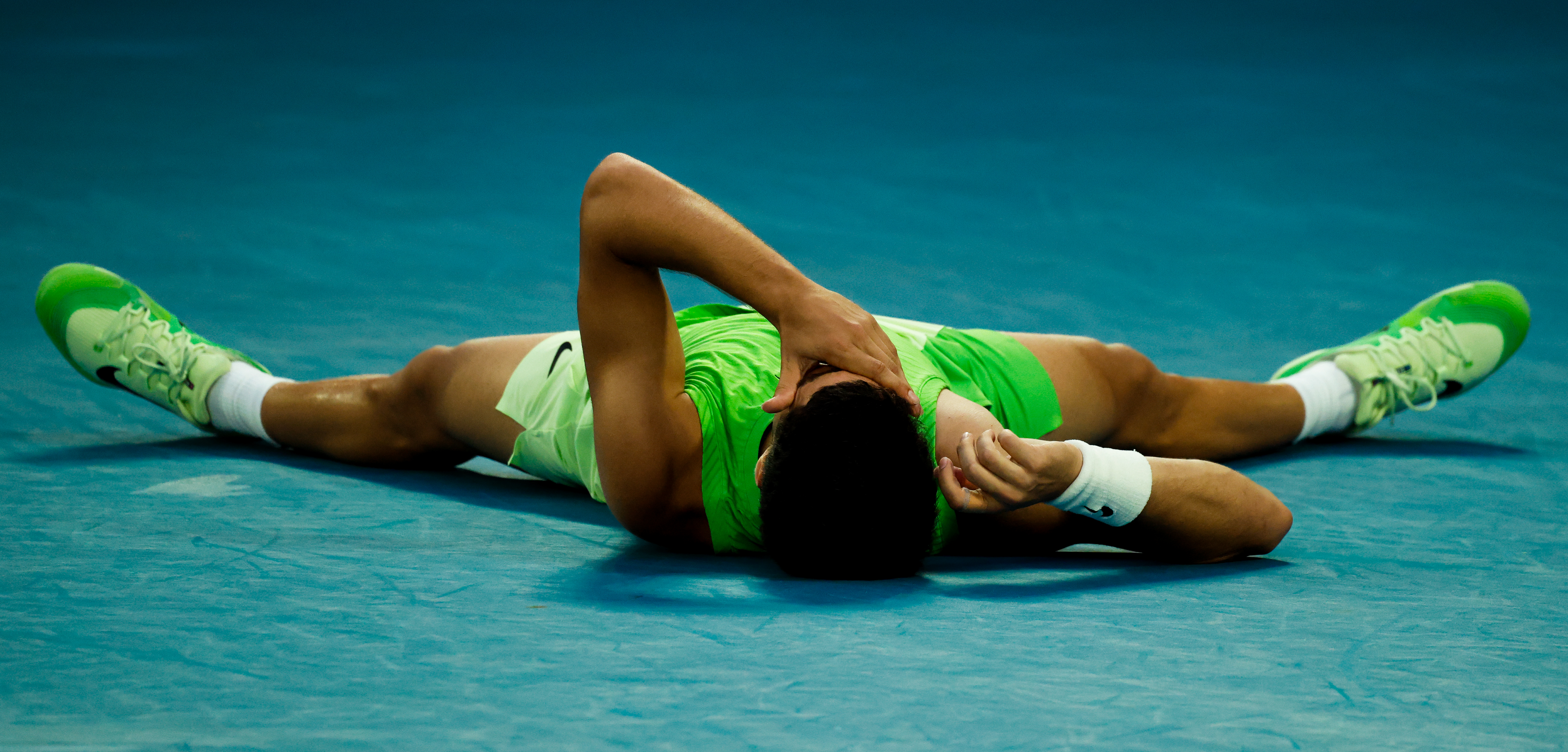
My week photographing the quarterfinals, semifinals, and finals at the Australian Open was surreal. Arriving on day 10 of the Open, I had a strict plan of coverage that quickly became flexible when I realized I had access to so many more resources and opportunities than I had anticipated. I simply wasn’t prepared for the shear size of the Open, the scale of the infrastructure, the number of people involved, and the level of celebration.
The AO took the form of a “theme park,” with every corner of Melbourne park designed to keep attendees of all interests engaged. Whether you were a devout tennis follower, food lover, paddle ball appreciator, merch collector, or concert fanatic, there was something there for you to enjoy. All of this was made accessible with a tram system that would take you to and from the heart of the city and Melbourne Park in less than thirty minutes, making the overall experience hassle free.
As a member of the media, my first stop every morning was the tennis headquarters, where I grabbed breakfast, finished up edits, and picked up some camera bodies and lenses to head over to my first match of the day. Spread across the six arenas and various courts in the park, player practices, singles, doubles, wheelchair, and junior matches saw several attendees a day, not to mention the spectators who followed the matches on massive screens accompanied by comfortable seating throughout the park. Alongside tennis, there were many music events housed in the John Cain Arena to spend the time as well. The crowd was abundant in all areas, the support for players was evident, the passion for the sport was obvious, and the excitement was electric overall.
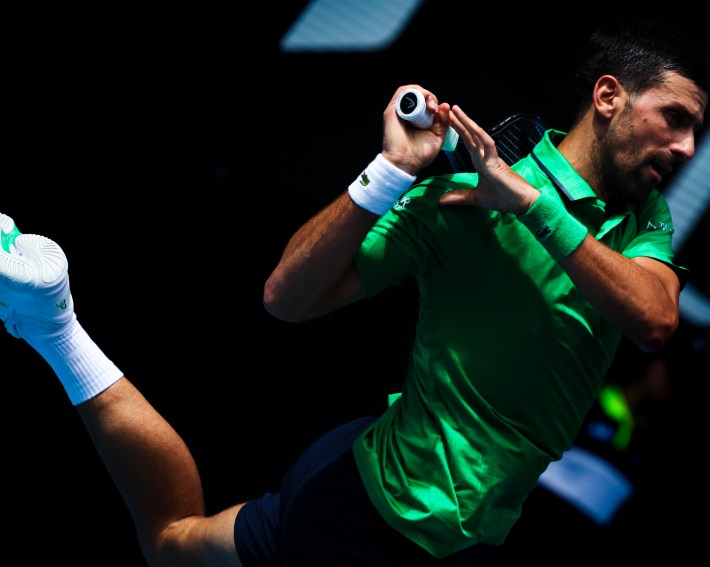
Stepping onto the iconic vibrant blue court at Rod Laver Arena for my first quarterfinal match left me speechless and eager to have a photo of my own that featured those bright white letters on the court spelling “MELBOURNE.”
Debuting as a photographer in the professional tennis circuit, I took the opportunity to depict tennis in a way that was more stylistic than documentarian. I challenged myself to experiment with shadows, light, saturation, double exposure, cropping, and blur to create a unique but cohesive coverage of the event. It became my goal to capture the struggle, relief, silence, and drama in both the sport and the audience.
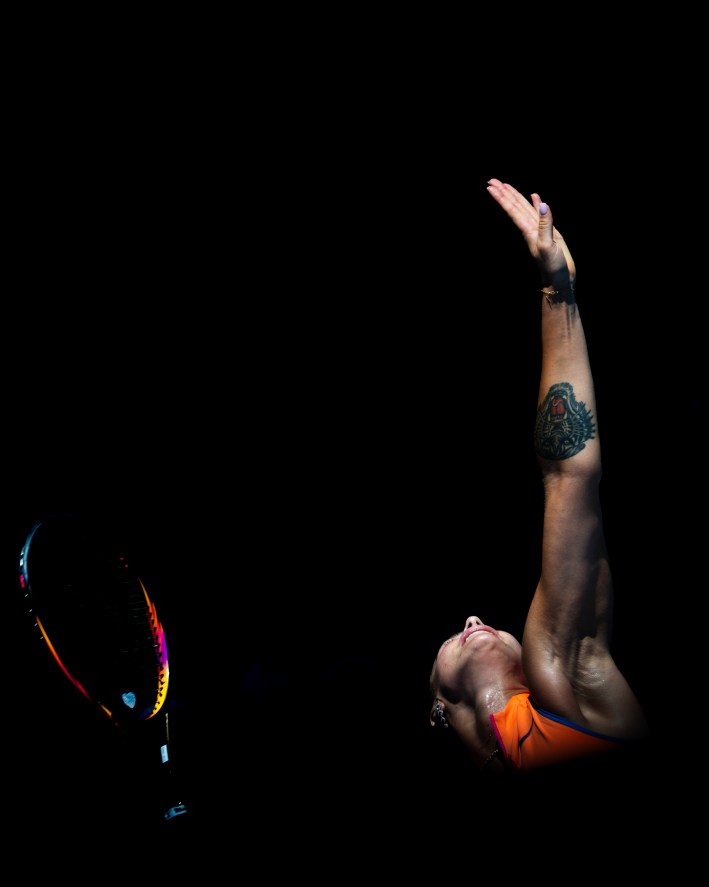
It was tricky at times to successfully follow the emotional arc of a two to six-hour match, so I often switched my photographic mediums (ex. digital camera, camcorder, going from Canon to Nikon) and position in the arenas (ex. courtside, on the concourse, among the audience members) to ensure I was maximizing my time and keeping myself engaged in the craft. While editing, it was always my intention to accentuate what was already available in an image; this meant darkening existing shadows, increasing the color vibrance, rotating to form unorthodox compositions, or cropping into available space.
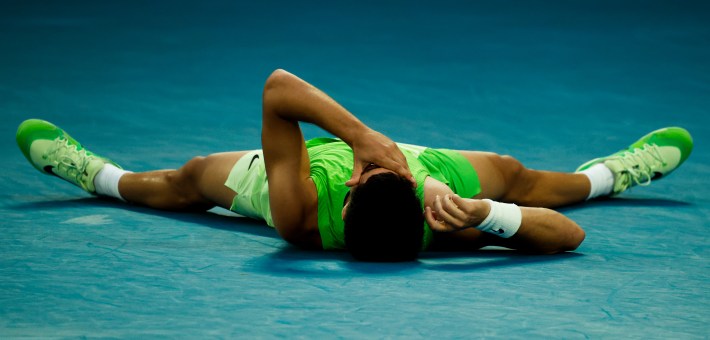
I want the viewers of my images to perceive the solitude and vulnerability of a player fighting for themselves on the court, accompanied by bold colors and angles that signal that the images are likely taken by me. As I pursue sports photography more consistently, I find the need to concretely establish my style in the field, and I’m grateful that both Racquet and AO offered me the platform to play around and come closer to understanding my priorities when capturing a game.
I left the Open this year with immense gratitude and a greater appreciation for the sport, the people involved, and the network of media personnel that supported me throughout. I can’t wait to return to Melbourne next year!

Hritika Chaturvedi is a photographer based in LA.