
Preseason Prep – March 6th, 2026
Minnesota’s Rotation
Spring has been rough for the Twins’ starters, with ace Pablo Lopez out for the season (torn UCL) and All-Star Joe Ryan sidelined with lower-back inflammation.
Ryan was replaced on the USA’s WBC Group Stage roster, but is hopeful to return during the knockout stage. Odd to say, but this injury might be a be a blessing for fantasy owners. If he does return, it will indicate full health, and he will likely be limited to relief appearances for Team USA. This limited workload could benefit fantasy owners, so he isn’t getting ramped up and starting in meaningful games before the MLB season starts. This bodes well for his fitness and effectiveness throughout the 2026 MLB season. Spring Training injury designations are never something you want to see, but for Ryan, he has time to work through it and be ready for Opening Day without the strain of a full WBC.
Veteran Bailey Ober also has a spot locked into the rotation in 2026. The 30-year-old struggled last season, which was likely in part due to a hip injury that ultimately landed him on the IL in July. Ober posted a 2.76 ERA, 3.14 FIP, and 25.3% Hard% across 29.1 IP in May, then a 9.00 ERA, 8.60 FIP, and 39.8% Hard% across 30.0 IP in June. That’s when the Twins ultimately shut him down until August 9th. Additionally, Ober’s already soft fastball was down 1.4 MPH in 2025 from 2024, so it stands to reason that the injury was holding him back. Still, a healthy Ober isn’t exactly a world beater. But he doesn’t walk guys (career 1.94 BB/9), and prior to 2025, he posted a 3.76 ERA with a 1.07 WHIP and 9.24 K/9 in 88 career starts.
Rounding out the rotation
Youngsters Simeon Woods-Richardson, Taj Bradley, and Zebby Matthews should start the season in the starting rotation, with Mick Abel lying in wait for his opportunity.
In his second season as a mainstay in the Twins’ rotation, Woods-Richardson had a 4.04 ERA with an 8.65 K/9 and 3.72 BB/9 across 111.1 IP last season. He’s proven to be a decent back-of-the-rotation guy thus far in his career, but what’s encouraging is how he ended the 2025 campaign. After being sent down to Triple-A in May and an IL stint in August, SWR toted a 2.33 ERA, 3.12 xFIP, .81 WHIP, 12.00 K/9, and .138 AVG across 27.0 IP in September. He began using a Splitter in his pitch mix in 2025, reduced his Curveball usage, and ditched his changeup entirely, which had an impact on his September results. In his pre-September outings, Woods-Richardson’s Splitter usage was 4.8%, his Curveball usage was 15.1%, and his Changeup usage was 5.5%. In September, those usage percentages were: 27.4% FS%, 6.1% CU%, and 0% CH%. It’s a small sample, but Woods-Richardson may have unlocked something with the extra confidence and usage of his Splitter.
Bradley has the most Major League experience of this group, albeit it has been mainly ineffective experience. He has exciting velocity (96.2 MPH vFA in 2025), and he’s improved his HardHit% and Barrel% in each of his first three seasons in the majors. He hasn’t honed his control (3.32 career BB/9) or figured out the pitches to use off of his 4-seamer yet…but at 24 years old, there is still time to improve in these areas. Bradley has always been done in by the long ball (1.49 HR/9), and that also can be vastly improved with experience and better pitch placement.
Matthews received nine Major League starts in 2024 and 16 in 2025, and the surface results weren’t great. Across his 25 starts, he owns a 5.92 ERA and 1.77 HR/9. However, last season the 25-year-old posted a 24.9% K% that ranked in the 68th percentile, driven by an impressive 27.5% Whiff% (68th Percentile) and 30.2% Chase% (74th Percentile). Like Bradley, Zebby averaged 96.2 MPH on his fastball last season. It seems that Zebby’s problem is location. He doesn’t like to walk guys (6.8% BB%), so his inability to locate doesn’t turn into free passes; it turns into grooved strikes. And those get hit hard. His stuff should play at the Major League level, but it won’t if he can’t consistently locate his pitches.
Abel might be the most intriguing arm of this bunch, which is largely due to being a high draft pick (Rd 1, Pick 15 in 2020) and a lack of Major League opportunity. Abel didn’t prove much in his first taste of the Majors in 2025; he got hit hard (49.2% HardHit% and 91.3 Avg Exit Velo) and posted a 6.23 ERA with a 9.2% BB%. However, Abel also displayed an impressive Velo of 96.2 MPH on his fastball (yes, the exact same as Bradley and Matthews), and he was very effective in Triple-A. Across 98.1 Triple-A Innings in 2025, he posted a 2.20 ERA and 10.43 K/9. Spring Training has also been positive for the 24-year-old; he hasn’t walked a batter or given up a run, while toting a hefty 16.50 K/9, albeit only across 6.0 innings of work. Beyond his four-seamer, he uses five other pitches, which is encouraging at his age, as he can still experiment with his pitch mix and see what works.
Old Faces New Places — Upgrade or Downgrade
After spending his first eight seasons with the Astros, Framber Valdez has moved on to Detroit. The 32-year-old was effective in Houston, which might make you hesitant about trusting him after the move; however, his profile should fit nicely in Detroit. Comerica Park is harder on right-hand hitters than Daikan Park. Valdez gets hit hard, but relies heavily on his hefty GB% to reduce damage. The Tigers’ infield defense is a bit of a question mark at this point, but the more friendly home park and joining a team on the rise give plenty of reasons to be optimistic. It might not be a full upgrade, but I wouldn’t call it a downgrade either…verdict: Slight Upgrade.
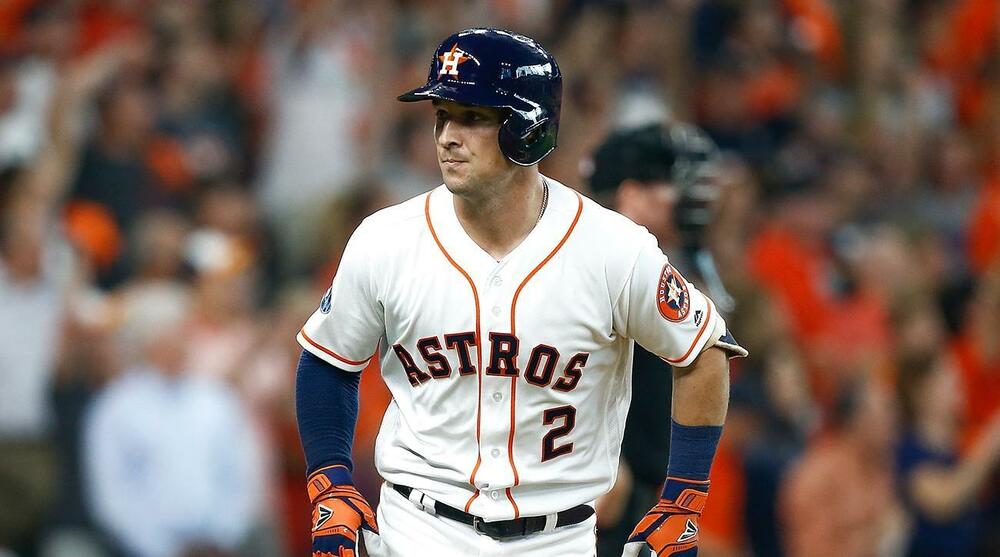
Alex Bregman has gone from Houston to Boston to Chicago. It’s hard to sell that as an upgrade. Wrigley isn’t as friendly to hitters overall as Houston or Boston, and for someone who’s been as pull-heavy as Bregman, it’s even worse. He posted a career-high 47.4% Pull% last season while posting a career-low 18.1 LD%. He also owned a 19.8% Chase% (95th Percentile), 15.0% Whiff% (92nd), 14.1% K% (88th), and 10.3% BB% (73rd). With that elite plate discipline, he will work counts and get balls to hit…but it will be harder for someone with his swing profile to capitalize on those playing half his games at the Friendly Confines…verdict: Downgrade.
Edwin Diaz is now with the Dodgers. After a less-than-magnificent 2024 campaign, the 31-year-old was as effective as ever last season with the Mets. His 38.0 K%, 41.5% Whiff%, and .170 xBA all ranked in the 99th percentile, while his 2.49 xERA ranked in the 98th. However, his fantasy value comes with saves, and he only logged 28 of those. Being on a better team should improve that; however, that team, being the Dodgers, brings its own difficulties. He will be used as the primary closer, but the Dodgers will finish teams early and be cautious with their assets, as they are always looking ahead to the postseason. But a team that is basically guaranteed to log 100+ wins gives a high-end closer a great opportunity to lead the league in saves…verdict: Upgrade.
Another established star and new Dodger is Kyle Tucker. It’s pretty simple: if Tucker is healthy, he will make hay for fantasy owners across all categories. Wherever he hits in this Dodger lineup, he will rack up all the counting stats. That being said, Tucker’s bat speed and lack of hard contact are a little concerning. In 2025, his 40.4% HardHit% ranked in the 38th percentile, and his 90.1 Avg Exit Velo ranked in the 53rd, while his 72.0 Bat Speed ranked in the 47th. Alas, given his pedigree, plate discipline abilities, and place in the team, Tucker is as close to a sure thing as can be…given he stays healthy, of course…verdict: Upgrade.
Sonny Gray had some turbulent times early in his career, but he’s been mainly solid since turning 30. His ERA wasn’t as impressive the past two seasons in St. Louis (3.84/4.28), but he showed strikeout ability (10.98/10.01 K/9), and his 2.82/3.07 xFIP were excellent. However, Busch Stadium is a hitter-friendly park; Fenway is not. And Gray is now 36 years old. His breaking ball still plays (97th Percentile in Breaking Run Value in 2025), but as his velo fades, that’s all that does play (-4 FB value, -3 Offspeed value). Gray is on a better team, which should help his win total, but age and Fenway will sap his ERA and Quality Starts… verdict: Downgrade.