
Billed as the next great hope in French cycling, 19-year-old Paul Seixas has been making waves over the past month following impressive wins at the Volta ao Algarve and Faun-Ardèche Classic. He sustained this momentum over the weekend to finish in second place at Strade Bianche, becoming the youngest rider to reach the podium in the race’s 20-year history.
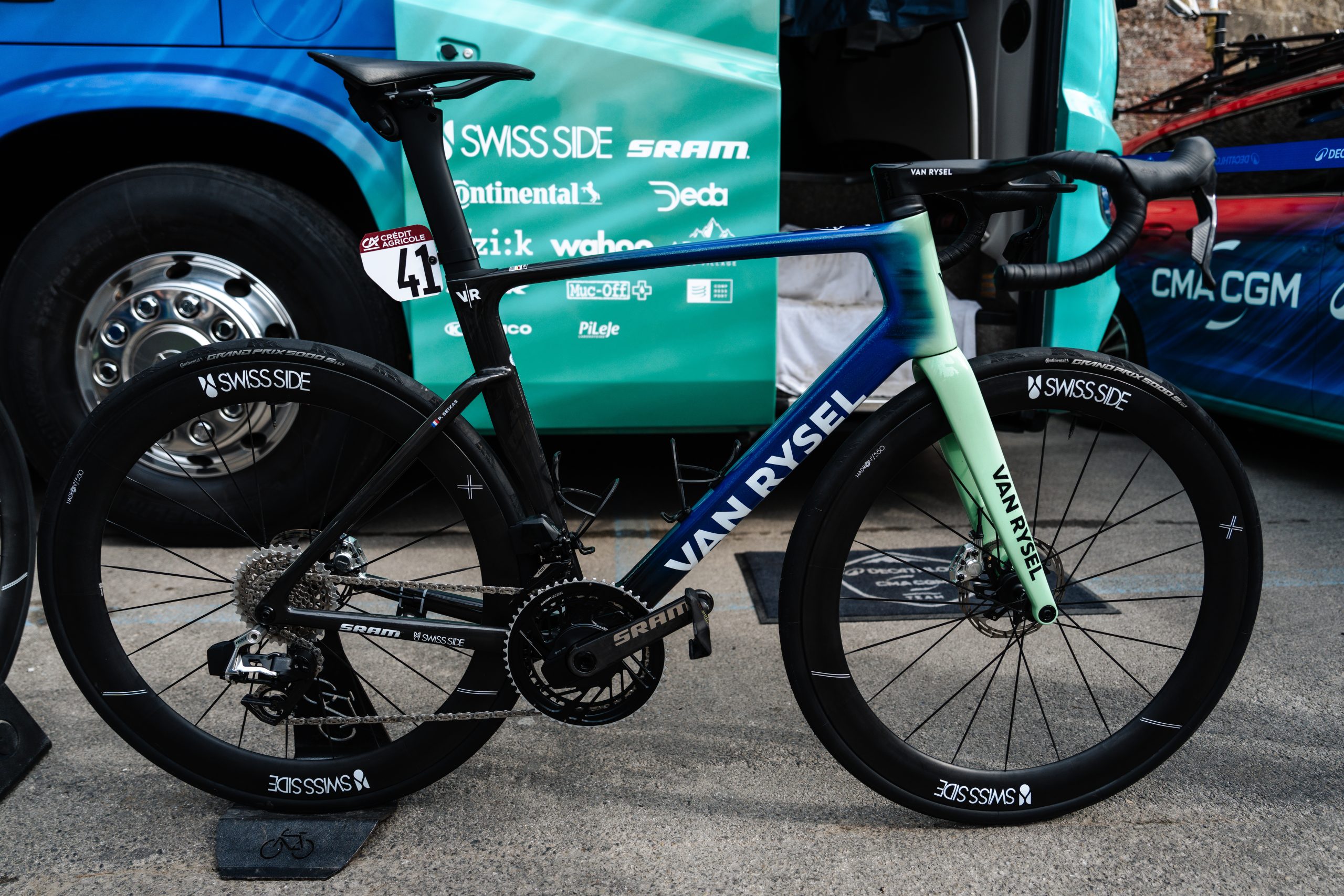
To bag that runners-up spot – and almost hold onto Pogačar’s wheel up the Monte Sante Marie – the Frenchman raced on Van Rysel’s RCR-R. Once just called the RCR, the all-round race bike now goes by the name of RCR-R to accommodate for the RCR-F aero bike.
Ahead of Seixas’s landmark ride on the Tuscan gravel, photographer Xavier Pereyron had the chance to shoot the teenager’s bike.
Paul Seixas’s Van Rysel RCR-R
Pogačar might have gone for his Y1Rs aero bike, but 19-year-old Seixas placed his trust in the traditional all-rounder RCR-R. The Pro build of this model is claimed to be around 6.9kg in weight, so not far off the UCI threshold of 6.8kg.
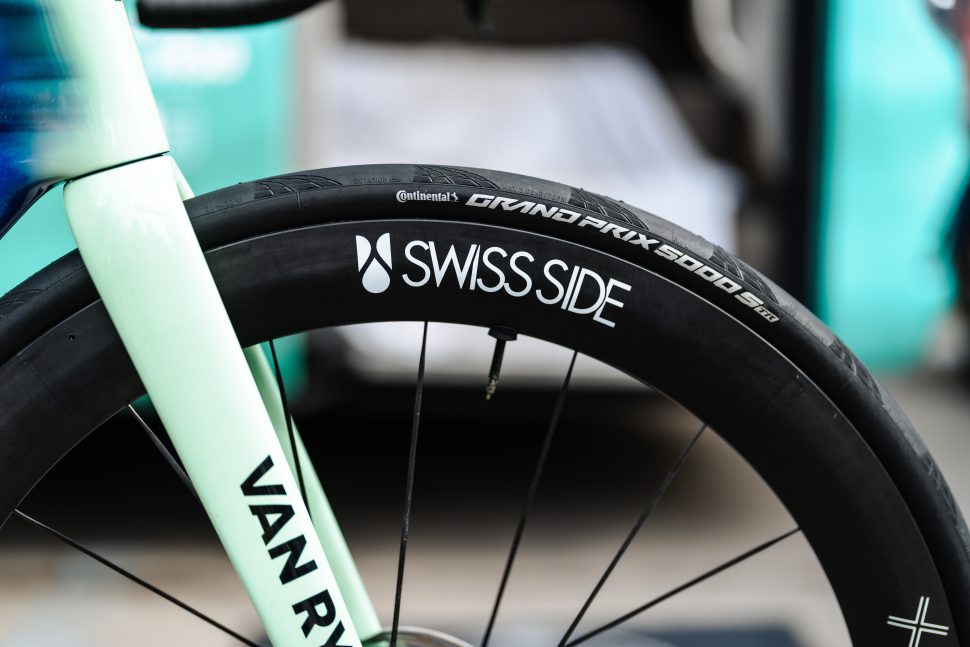
The team are riding with Swiss Side’s Hadron³ Ultimate wheelsets this year, with Van Rysel working closely with the Swiss brand on several key components of its bikes. For the gravel roads of Tuscany, Seixas was running exactly the same tyres as Pogačar: 30mm-wide Continental GP 5000 S TR.
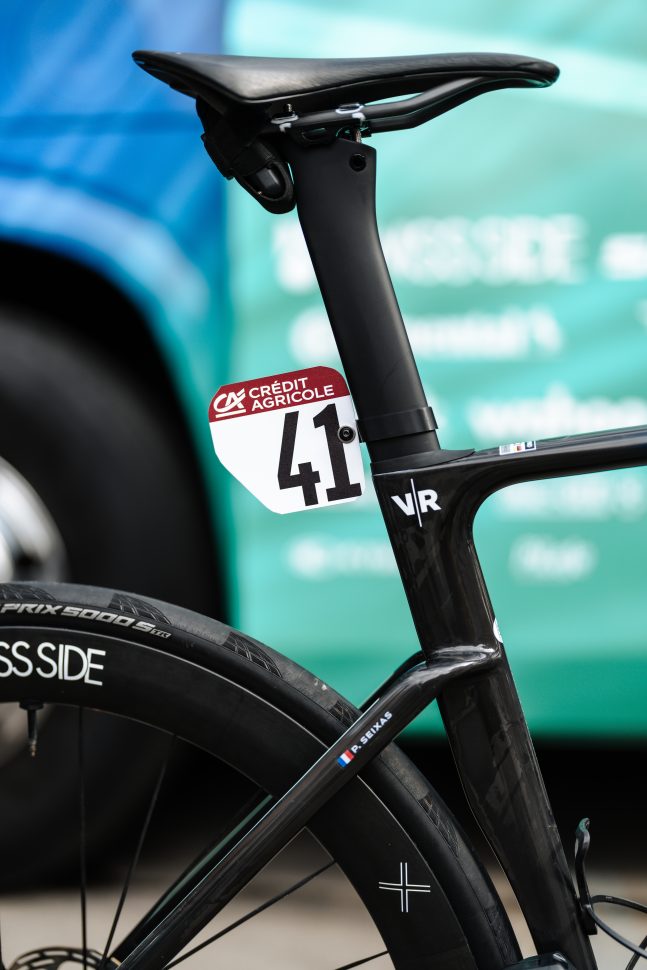
The RCR-R was first launched in 2024 when Decathlon jumped on board as title sponsors of the former AG2R team. In 2025, the RCR-F was added to the range as an all-out aero alternative for sprinters.
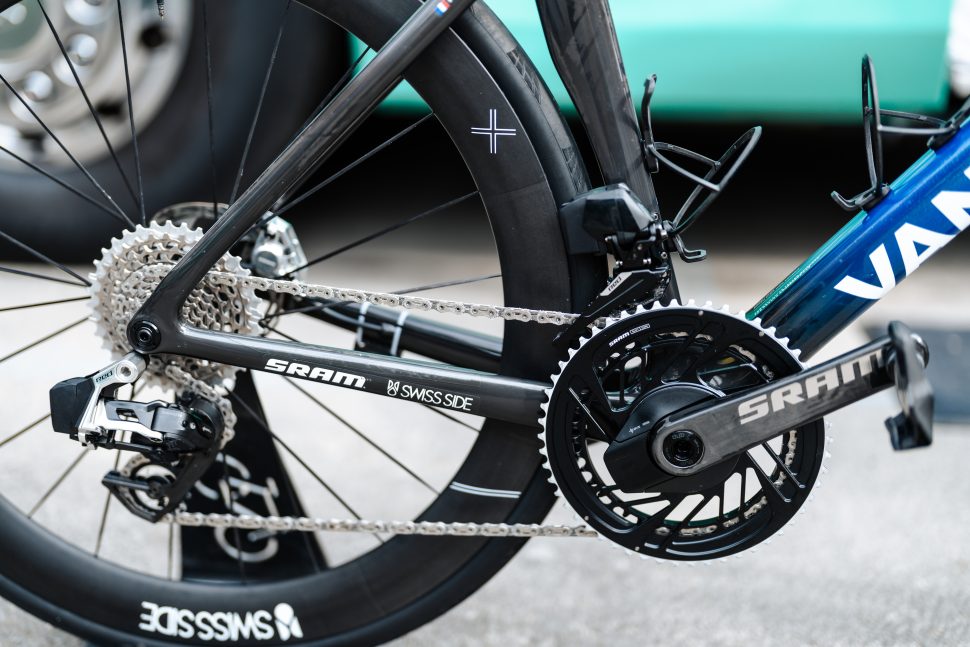
Decathlon-CMA CGM were one of a few top teams to quietly switch from Shimano to SRAM groupsets over the offseason. One of the benefits of that move is the flexibility in the setups, with many SRAM-sponsored riders regularly choosing to go 1x, but Seixas had a standard 2x drivetrain for Strade with 54/41T chainrings.
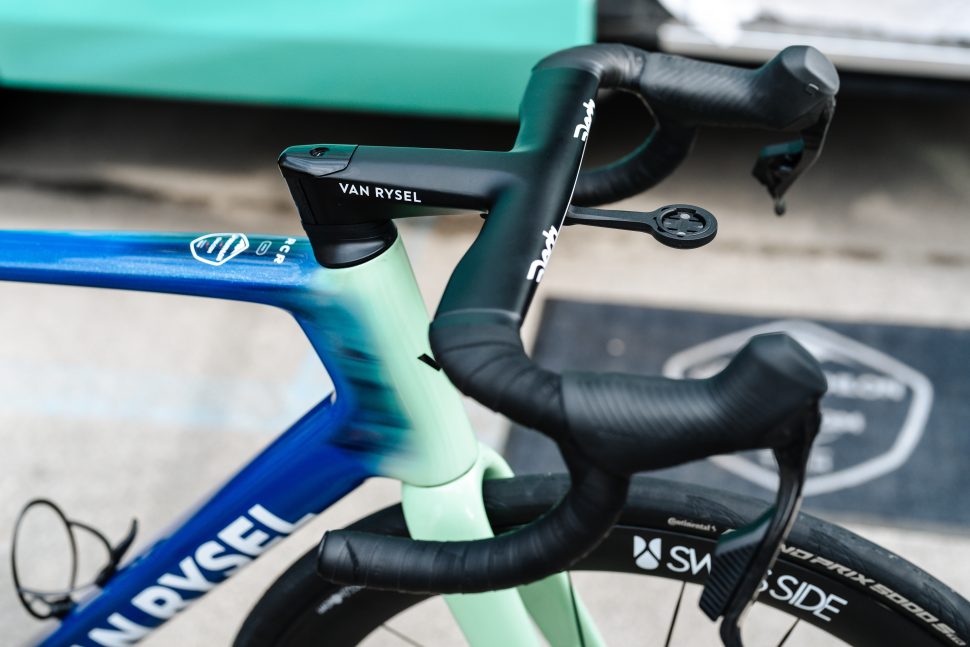
Seixas’ RCR-R had the standard one-piece cockpit, developed by Deda and Van Rysel. There’s a slight negative stem angle with two spacers underneath to fit the six-foot Frenchman.