
For the next installment of the Radical Rigs series, Paul Kalifatidi presents a self-portrait including his 1996 KZJ95 Land Cruiser Prado and his Baphomet Bicycles hardtail…
This article has been a long time coming. The whole idea behind this series started with this terrible purchase: a 1996 Land Cruiser Prado imported from Japan. In many ways, writing the following paragraphs feels more like a journal entry about myself than it does writing about a silly Toyota and a rusted bicycle. I hope you stick around, and I hope you’ve enjoyed all of my articles up until this point. So, let’s begin.

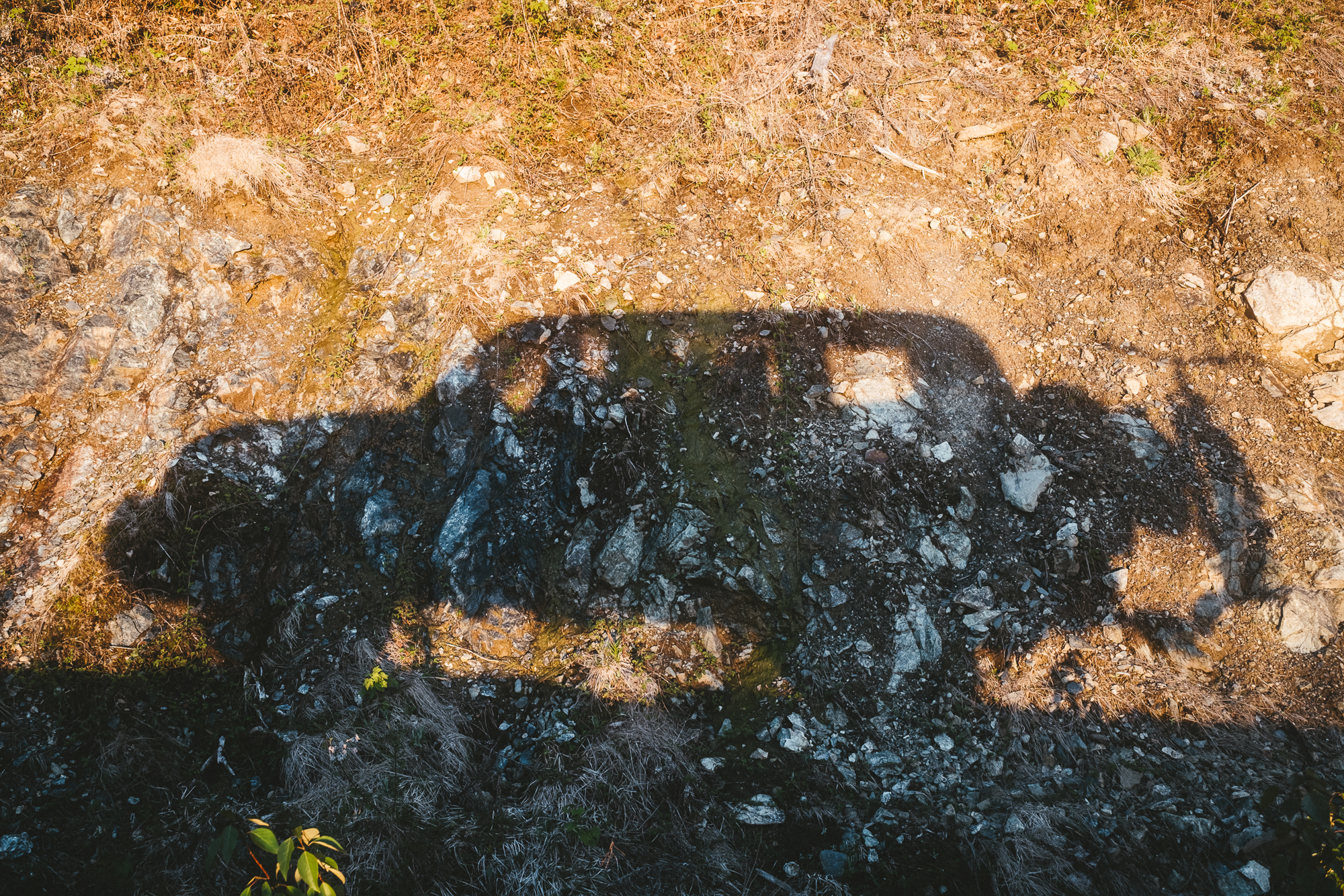
Bad Influences
Much of this story begins with meeting my best friend, Dillen Maurer. I’ve mentioned him many times on this platform, but he truly is the reason these words are in front of you. I discussed our meeting in the first Radical Rigs, where I profiled his 1992 Suzuki Jimny. His interest in quirky and unique cars planted the seeds for my own entrance into the automotive hobby. At the time, I owned a lemon of a 2013 Subaru Forester. It was my first car in five years. All through college and even after moving across the country, I exclusively operated under the power of my own two legs. Bicycles took me through my world. Eventually, my life started to require a car of my own. I felt like a burden the odd times I asked to borrow a friend’s car.
So I bought a moss-covered Subaru from a sleazy dealership and instantly regretted it. The clutch felt inconsistent, the headliner rattled, and the fuel gauge occasionally stopped working. I’m slightly a perfectionist, and these things drove me crazy. The silver lining of being rear-ended by a 2012 Fiat 500 (finished in the tasteful Verde Azzurro) and being shoved into a Kia Soul (finished in plain ol’ black) is that the resulting front and rear damage was enough for insurance to total out my Forester and pay me more than the original purchasing price. The fly in the ointment is that Dillen Maurer is my friend, and he convinced me to put that money into something fun and different that would motivate me to work on my own vehicles, and that’s how I ended up purchasing an imported Japanese truck.
Some Background on the Toyota Land Cruiser
I’m going to explain the Land Cruiser brand for a bit; bear with me. If you already speak Land Cruiser, go ahead and skip this paragraph. Globally, Land Cruiser is a family of vehicles in Toyota’s catalog. In the United States, the Land Cruiser was Toyota’s largest, most premium SUV. In other markets, the Land Cruiser name is almost more of a brand that contains multiple vehicle lineages: the heavy-duty 70 series vehicles (not sold stateside), the light-duty vehicles (sold in the US as the Lexus GX and internationally as the Prado), and the larger station wagon vehicles (what we’ve most had in the US). In other markets, the 70 series Land Cruisers are still available new from the factory with practically unchanged aesthetics from their initial 1980s design language. Fun fact: the only way to purchase a new 70 series in North America is to be a Canadian mining company.
The station wagon vehicles (55, 60, 80, 100, 200, and 250 series) are meant for more conventional people-carrying duties while still being built like tanks. We featured Blake Hansen and her 80 series in a previous article. The light-duty vehicles (70 Prado, 90, 120, 150, and 250 series) are slightly smaller and more affordable than their full-size station wagon counterparts. Yes, they made a 70 series Prado too. I’d love to have one. Prado means “prairie” in Spanish, which I joke is all they can drive through. These light-duty vehicles are still durable and capable, but built on lighter components. They actually share most frame and drivetrain parts with American Tacomas and 4Runners.
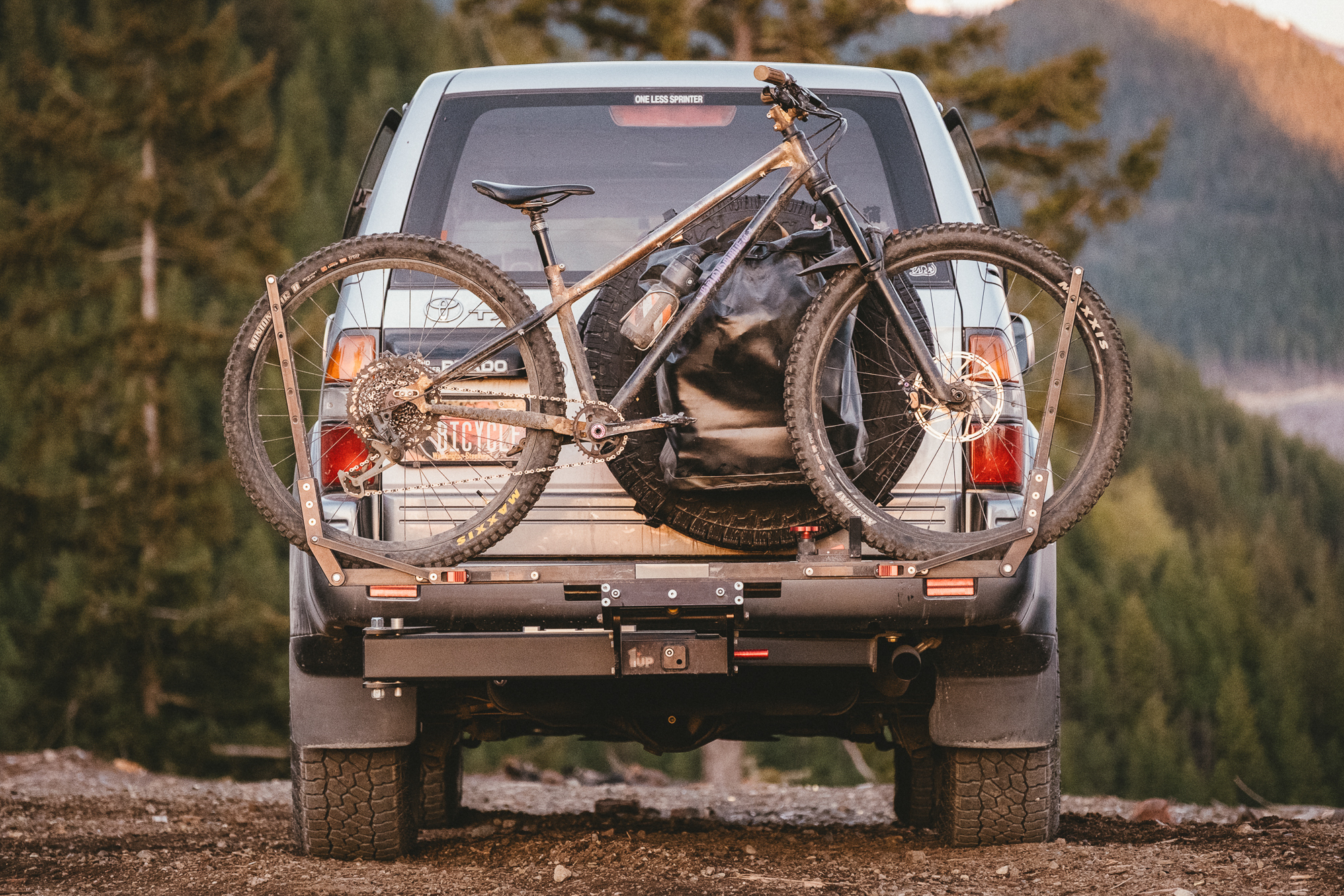
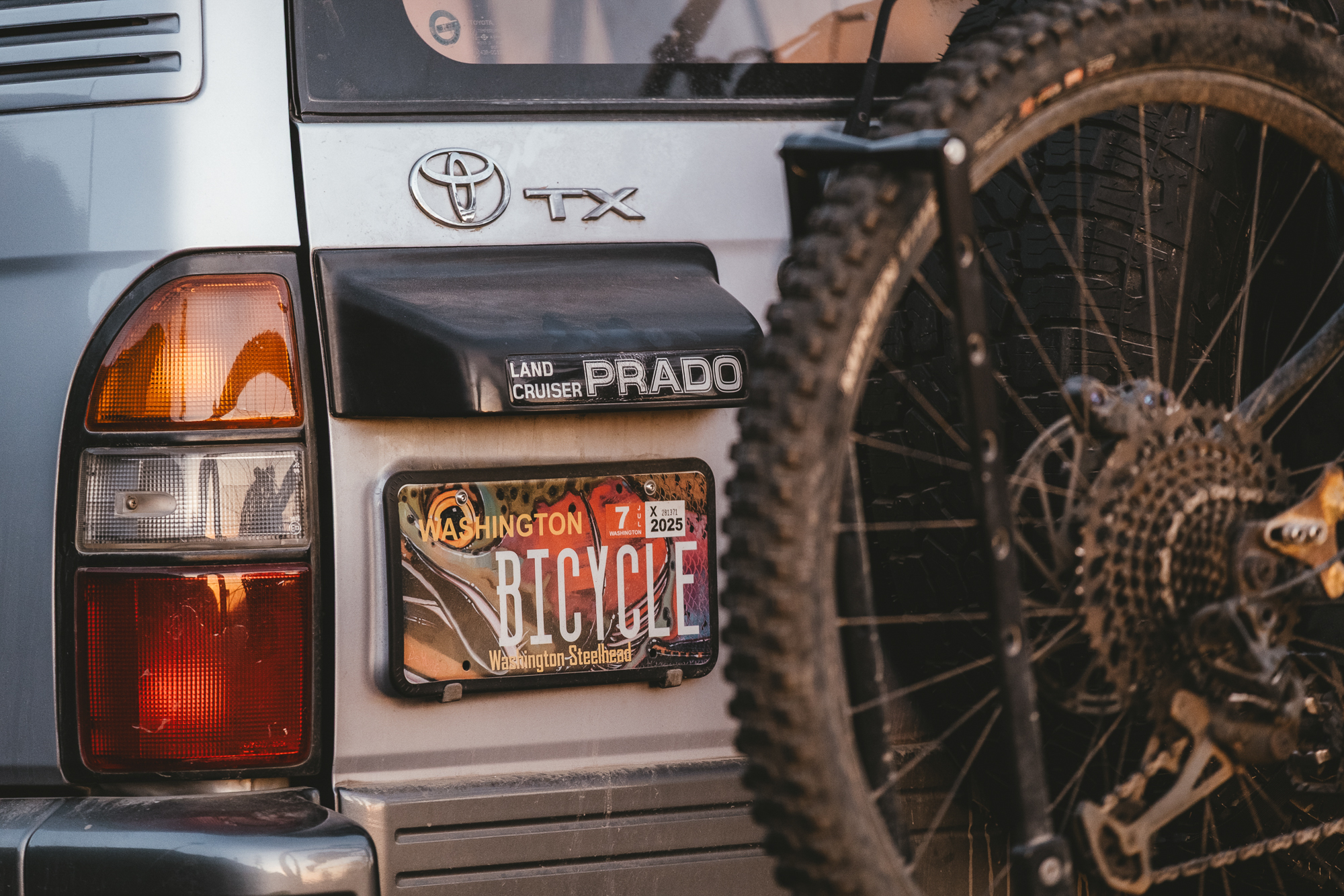
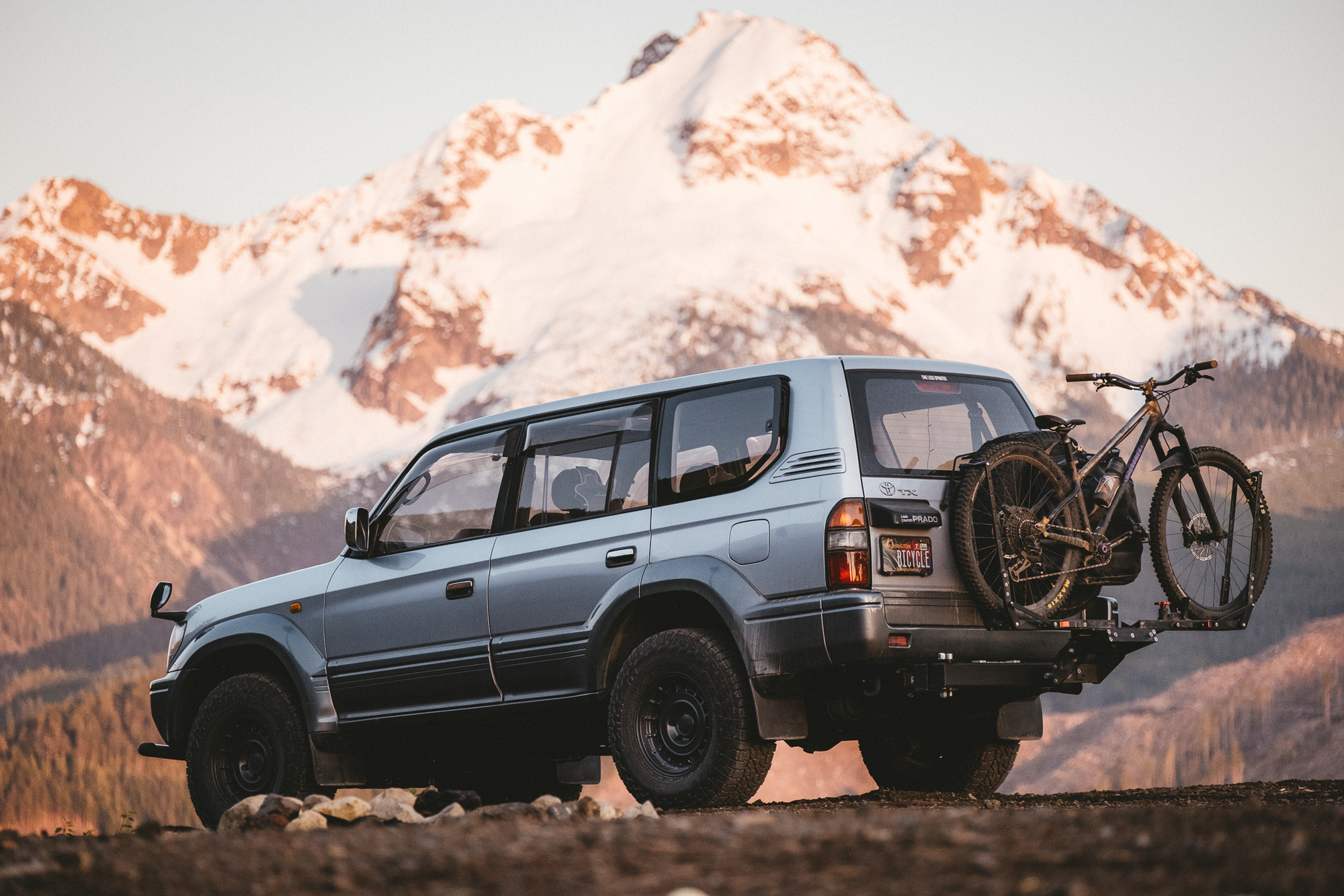
The 90 series Land Cruiser Prado was introduced in 1996 and offered through 2002. It could be purchased with a variety of engines, and with four doors or two doors. There were two gasoline engine options: the four-cylinder 2.7 L 3RZ-FE and the V6 3.4L 5VZ-FE that came in the Tacoma, 4Runner, and Tundra of the period. Initially, the four-cylinder 3.0 L 1KZ-TE turbo diesel was the only diesel engine available. Later models received the 1KD-FTV, the evolution of the 1KZ. My Prado has the 1KZ-TE and features a factory-equipped intercooler.
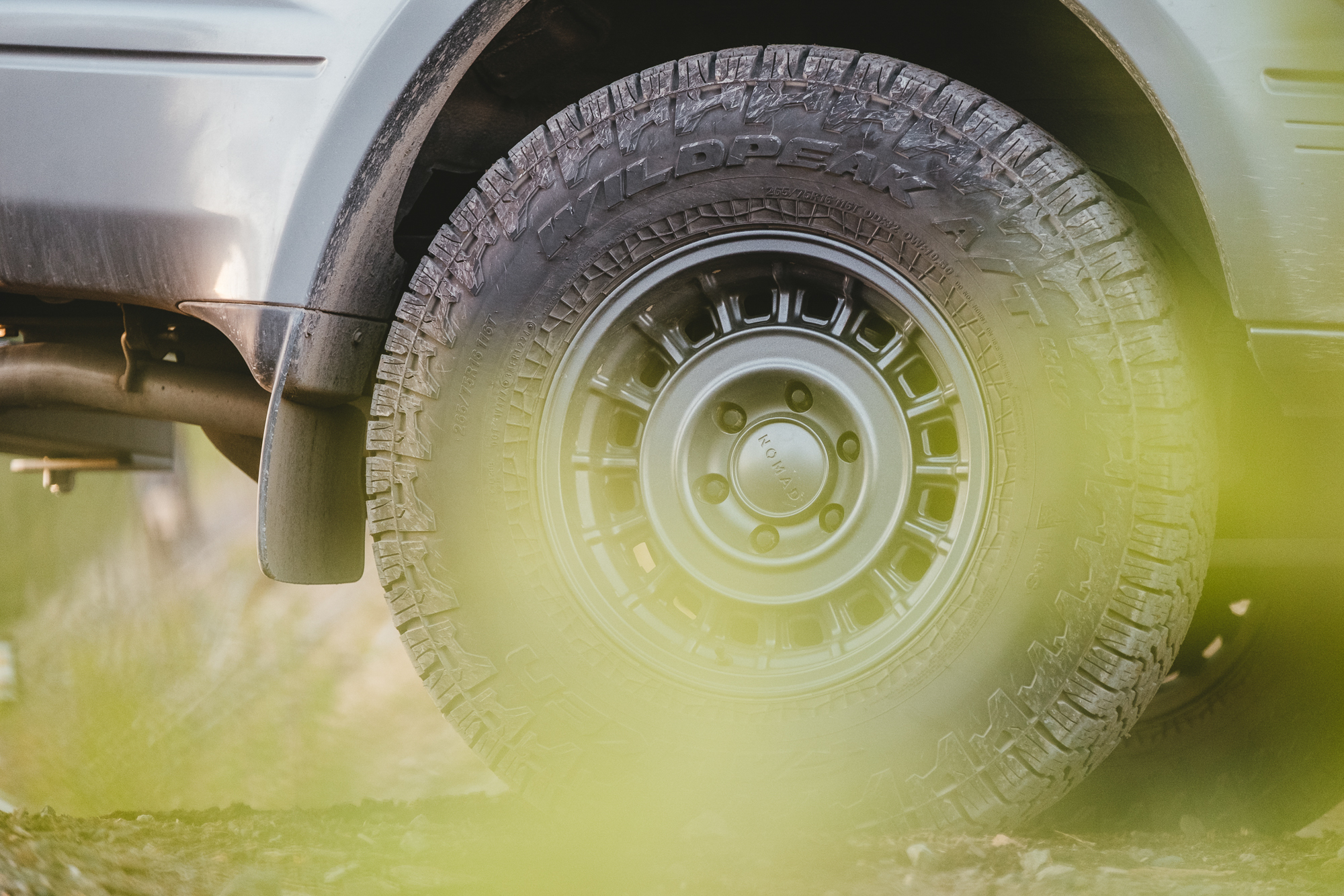
It is finished in a tasteful two-tone color scheme of Bluish Silver Metallic and Gray Metallic. Unlike the American Toyota trucks of the period, it has full-time four-wheel drive. I can choose to lock the center differential and place it in low range for times when the road gets particularly steep or loose. It’s perfect for my lifestyle, where I frequently drive on the gnarly forest service roads in the Mt. Baker-Snoqualmie National Forest and Eastern Oregon. Oh, and it also has an analog clock, something I’ve wanted in a car since I was a child.
Making Mistakes with the Land Cruiser Prado
Shortly after I bought the Prado, I made the mistake of wanting to learn some basic maintenance. The 1KZ-TE is a great engine when well-maintained. Glow plugs preheat the air and cylinder walls of the engine to assist in startup, and these need to be replaced after a while. The previous owner did not do so, as evidenced by the first glow plug removed having a broken ceramic tip, a sign that it had become brittle and broken off inside the cylinder. This could be a huge issue, as the ceramic glow plug tip can damage the cylinder wall or valves, impacting the performance of the engine or causing catastrophic damage. I forged ahead and made a big oopsie.
In a moment of negligent strength, I broke the final glow plug in the cylinder head. What should have been a one-hour job turned into four months of the most learning and spending I’ve ever done. Attempting to extract the broken glow plug ended up cracking the cylinder head. Ironically, a cracked cylinder head is a common failure of the 1KZ. And so, I removed the cylinder head. Uncovering the pistons revealed that the broken tip of the glow plug had indeed put a deep dent into the piston, which had then started carving a groove into the cylinder wall. And in that moment, I realized I’d now be learning how to do a full engine-out rebuild. To put it on par with a semester of college wouldn’t have done it justice. I spent the same amount of money but far more hours lying in oil on a frozen concrete floor. Previous to those four months, the most challenging automotive repair I had done was an oil change.
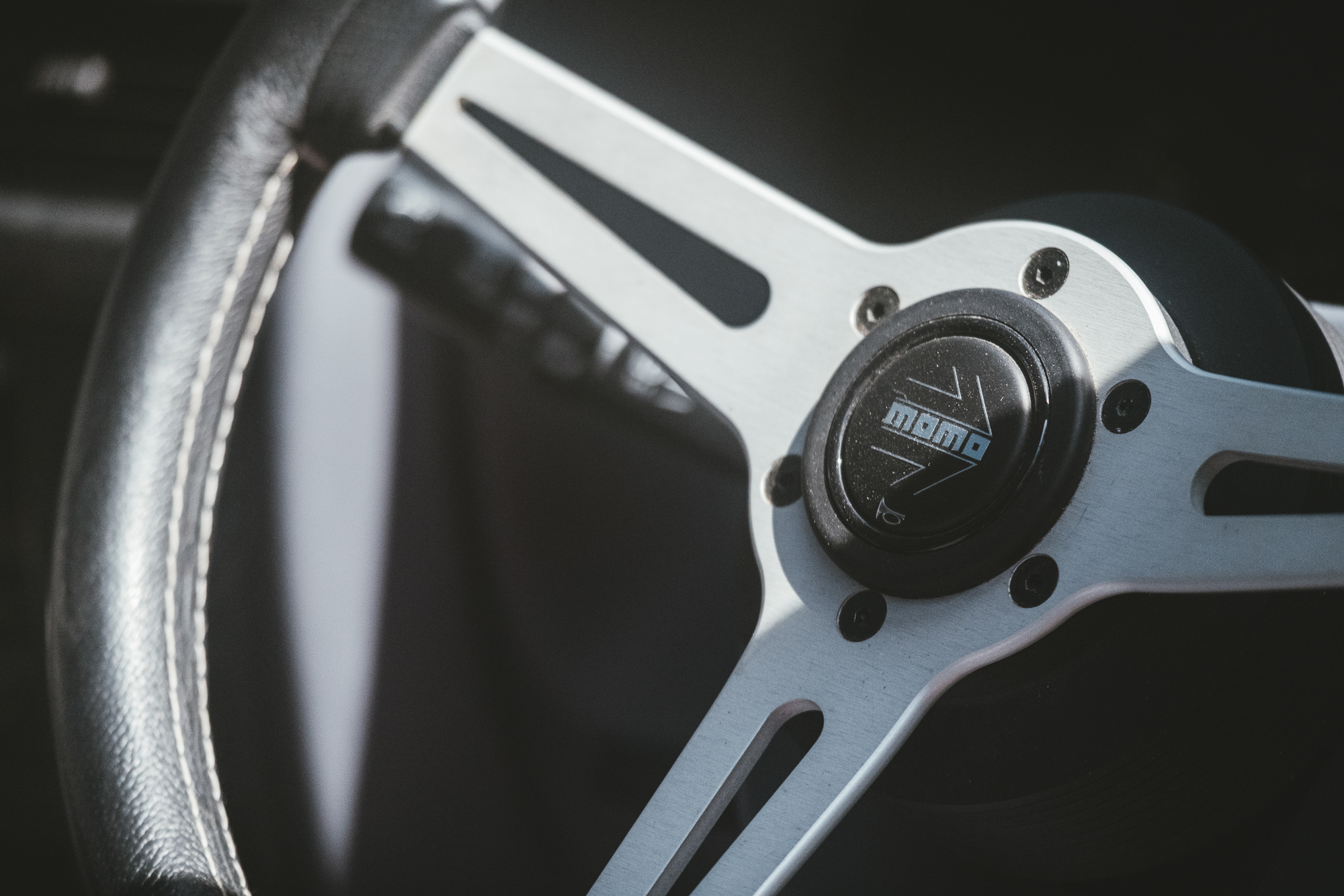
There aren’t many things that have put me in touch with myself in such a short amount of time, quite like this vehicle. Only a recent near-death moment in a river – but that’s a bit of an offshoot from this article. I’m going to make a bit of a stretch, and I’d like you to hear me out. Vehicles are more human than bicycles. I’m describing how they function and require care. An internal combustion engine is a living, breathing, bleeding thing. It needs the right temperatures, the right food, healthy blood work, and attention. Sometimes, vehicles are just temperamental or have a damn-near-undiagnosable symptom. In that way, we are the same. I know my bikes. Getting to know a car is a different level of intimacy. My bikes have had me cursing; my car has had me crying. Diving into an engine bay or crawling deep under the transmission just puts you in touch with the vehicle. Working on bikes is like tinkering; working on cars is like surgery. For me, the pains of my Prado became my own.
In the two years I’ve owned this truck, I have rebuilt the motor, replaced shift solenoids, rebuilt the starter, replaced the glow plugs, replaced the ECU (twice – thank you, sketchy ECU guy), replaced weather gaskets, and even spray-painted the windshield wipers. Truly, there isn’t a part of the car I haven’t scrutinized or worked on. Every time I get minorly inconvenienced by it, I joke that it’s time to sell. Yet every time I fix the issue, I’m reminded just how much I love the truck. That being said, if anybody has a spare 90 series windshield lying around, a rock and mine connected rather aggressively on a stretch of Washington’s Highway 20 on my birthday.
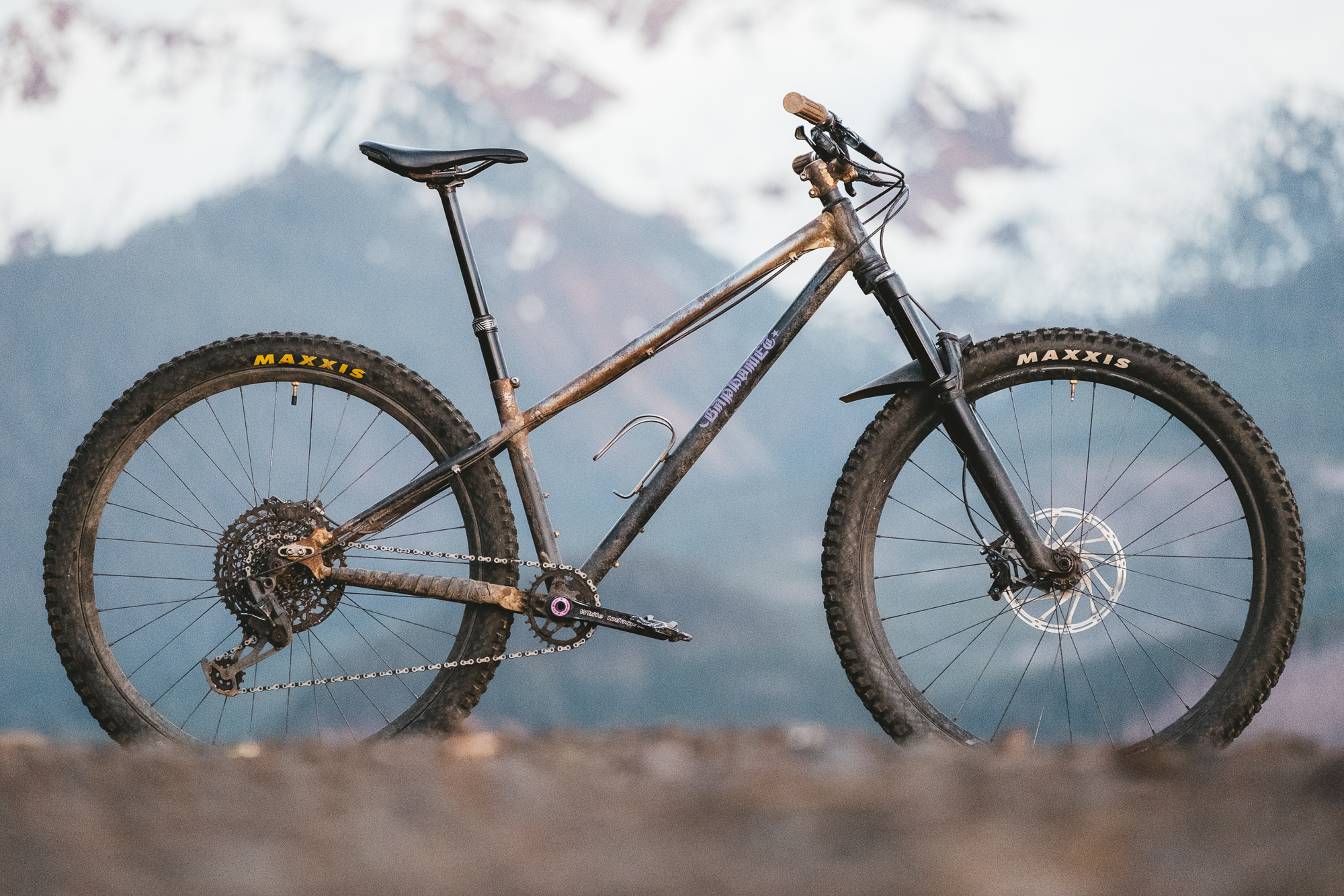
Brazing New Life into a Baphomet Hardtail
Right around the time I bought the truck, my grandpa passed away after fighting dementia for a number of years. My heart goes out to everyone who has had that experience. Nobody should go through watching their family become trapped inside themselves. I spent the next many months reliving and remembering. Lots of nights were spent lying on the concrete. There were many moments where I knew how proud he’d be. I come from a family of tinkerers, and trial by fire seems to be in our blood. This felt on brand for my lineage.
On the subject of tinkerers: my bicycle. Prior to it being my bike, Dillen from Baphomet had built it for a friend. That friend had ridden it sufficiently to find some limitations in the materials. The top tube had failed at a spot where the tube changed butting, and the chainstays had cracked at the tight apex of the tire clearance dimples. We debated whether it would fit me, as it was slightly smaller than the bike I was riding at the time. We pondered long enough that we decided to repair it, build it up, and see if the geometry and I got along. Naturally, we repaired the chainstays using steel sourced from the off-cuts and mystery chunks in the recycling bin that appeared usable.
Dillen suggested I take a stab at brazing it back together. We chose to practice by making a slingshot. After my best attempts at creating a rock chucker that wouldn’t send mystery metal into my eye socket, Dillen gently suggested that my skills would be better applied to slingshots and not bicycles. Once we were sure all the tubes were properly misaligned, Dillen set them into a state of near permanence using melted bronze. Now it was time to figure out if the bike and I got along. Tragically, we did.
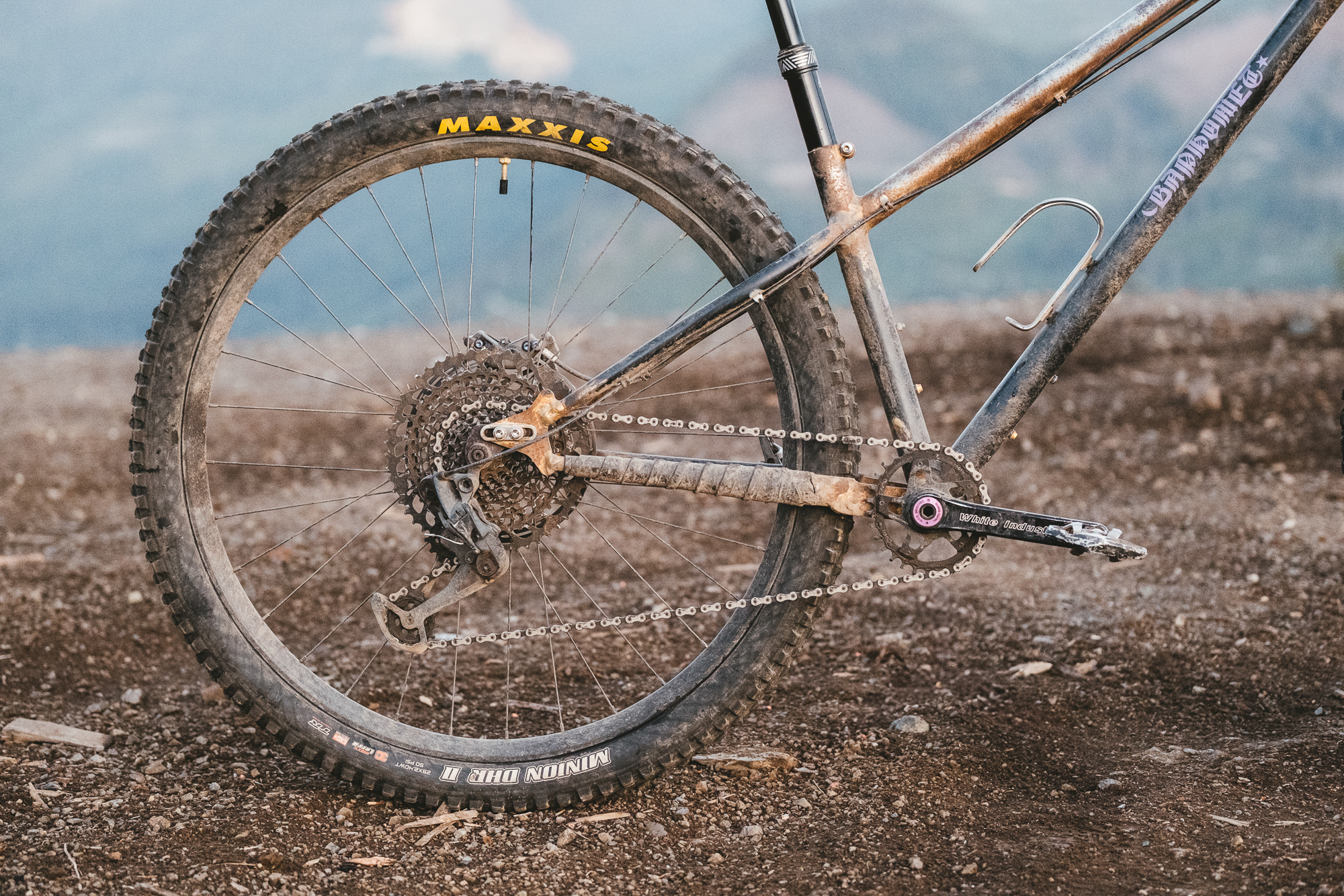
What actually happened was that I learned to love the poppier nature of the smaller frame. Sadly, I have a style of riding that seatstays and wheel bearings hate, and I managed to crack the non-drive-side seatstay. Logically, we filled the crack and added a brace. I rode it around for another month and found a crack in the same place on the drive-side seatstay. We mirrored the repair from the other side of the bike, and now I’m waiting to build the frame back up and enjoy it some more. I’ll be penning my full thoughts on this bike, geometry musings, and the decision to keep riding it in a coming article.
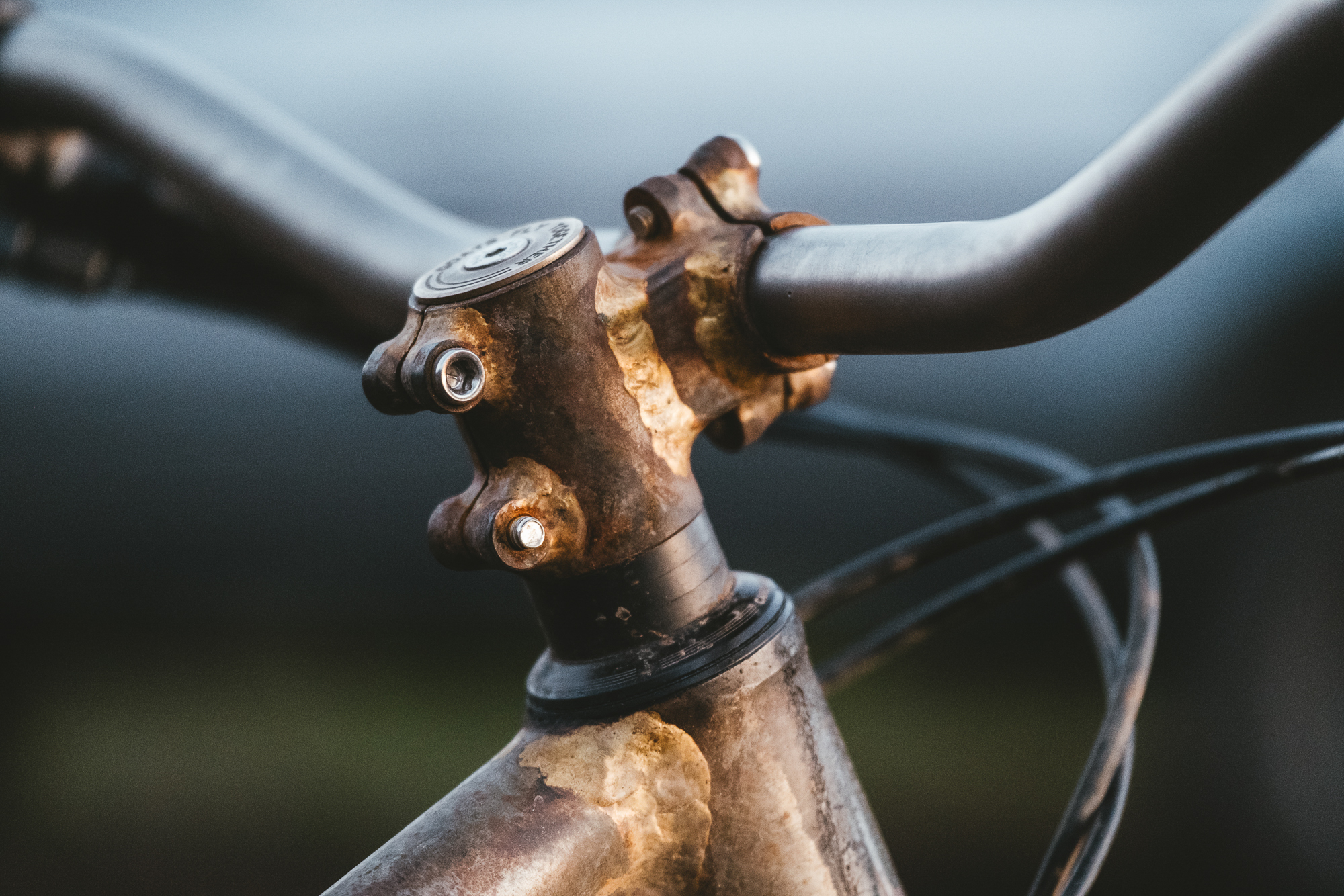
Dillen frequently says to never accuse him of making something well. Sadly, this bicycle is evidence that such an accusation might be warranted. Yes, some tubes are a little cattywampus. Yes, there used to be a second half to this paint job. Yes, the only tubes that haven’t cracked are the head tube and down tube. Yes, the dropouts sometimes slip. Yes, there’s probably too much seatpost. Unfortunately, all of this means that this is my favorite bicycle I’ve ever ridden or owned. It has personality and presence that so many bikes lack.
Bellingham is filled with carbon full-suspension bikes, and I appreciate having something that feels like the antithesis to the lemming mentality. I don’t ride a bike only for how it rides. That’s boring. If the world revolved around performance, then wooden boat builders wouldn’t exist. There is something beautiful about building and owning a wooden boat. Thank you, Grandpa, for showing me that.

Perfect Pairings
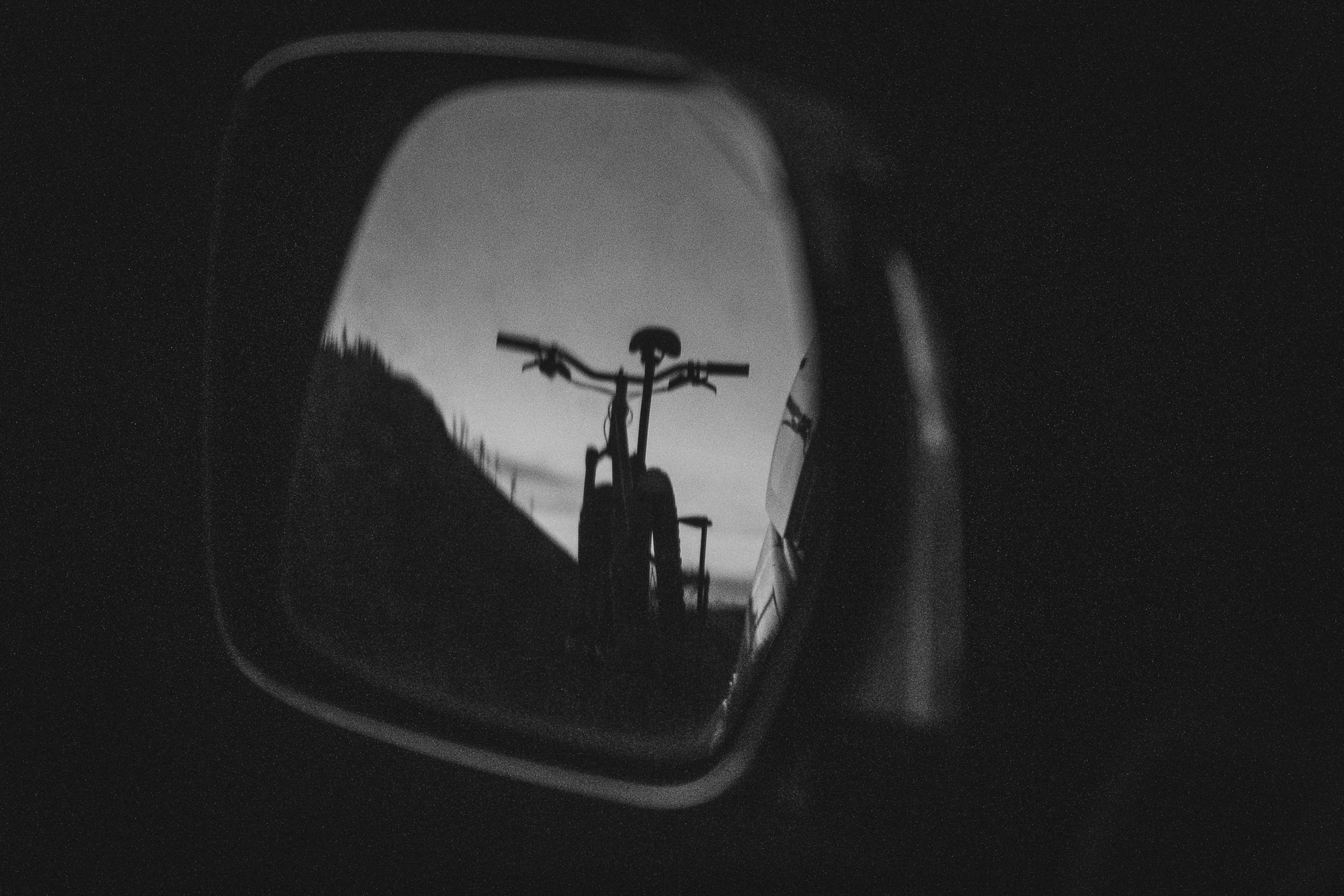
I like owning these unique rigs. Seeing them merged on my 1 Up Super Duty feels like the most perfect of pairings, like pinot noir and prosciutto, or grapes and chicken, or hard-packed dirt and a plump tire. They go together, and I love the places we’ve all been. Truly, my life would be quite different if these two oddities hadn’t ridden into it. Taking care of them is more than just mechanical welfare; it’s self-understanding and discovery. This series has been similar, and I feel like it’s been steering me towards something that resembles a career. Regardless of where this road goes, I’m happy that I’m on it. I appreciate all of you who have read, commented, or even found me in person and told me that you enjoy these articles and my ramblings. It really helps.
Anyways, I wish all of you quizzical mechanical conundrums and affordable solutions. Those are the best.
Kindly,
Paul
1996 Toyota Land Cruiser Prado
- Model code: KZJ95
- 3.0 L 1KZ-TE turbocharged diesel motor (inline-four cylinder, 8 valves, indirect injection)
- 96 kW (130 hp) and 343 Nm (253 ft-lb) of torque
- 4-speed Toyota / Aisin A343F transmission
- Full-time four-wheel drive with a two-speed transfer case and a locking center differential
- Front independent double wishbone suspension
- Rear solid axle with coil springs
- Years Produced: 1996–2002
- Wheelbase: 2,670 mm (105.1 in)
- Length: 4,675 mm (184.1 in)
- Width: 1,820 mm (71.7 in)
- Height: 1,880 mm (74.0 in)
- Curb weight: ≈1,900 kg (4,190 lbs)