
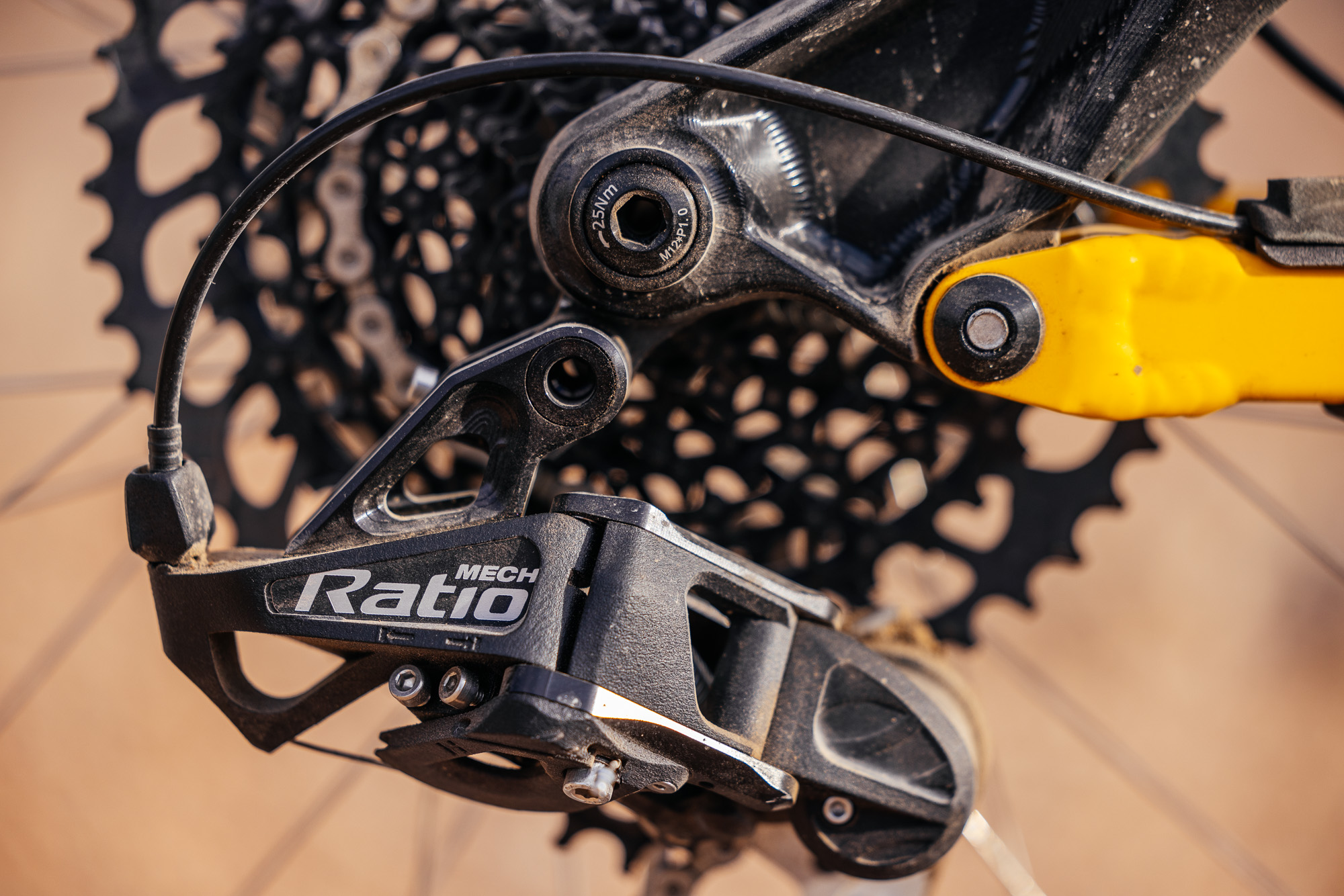
UK-based company Ratio began making conversion kits that paired drop-bar levers with mountain bike derailleurs, and last year it finally released its own derailleur, simply called Mech. John’s been riding the Mech (£287.50) for a few months and is ready to talk about it…
Yes, we’re here to talk about the Ratio Mech, which I’ve been riding since it was released last year. But first, we have to look at how we got here with all of these bespoke derailleurs!
Bespoke Derailleur Revival
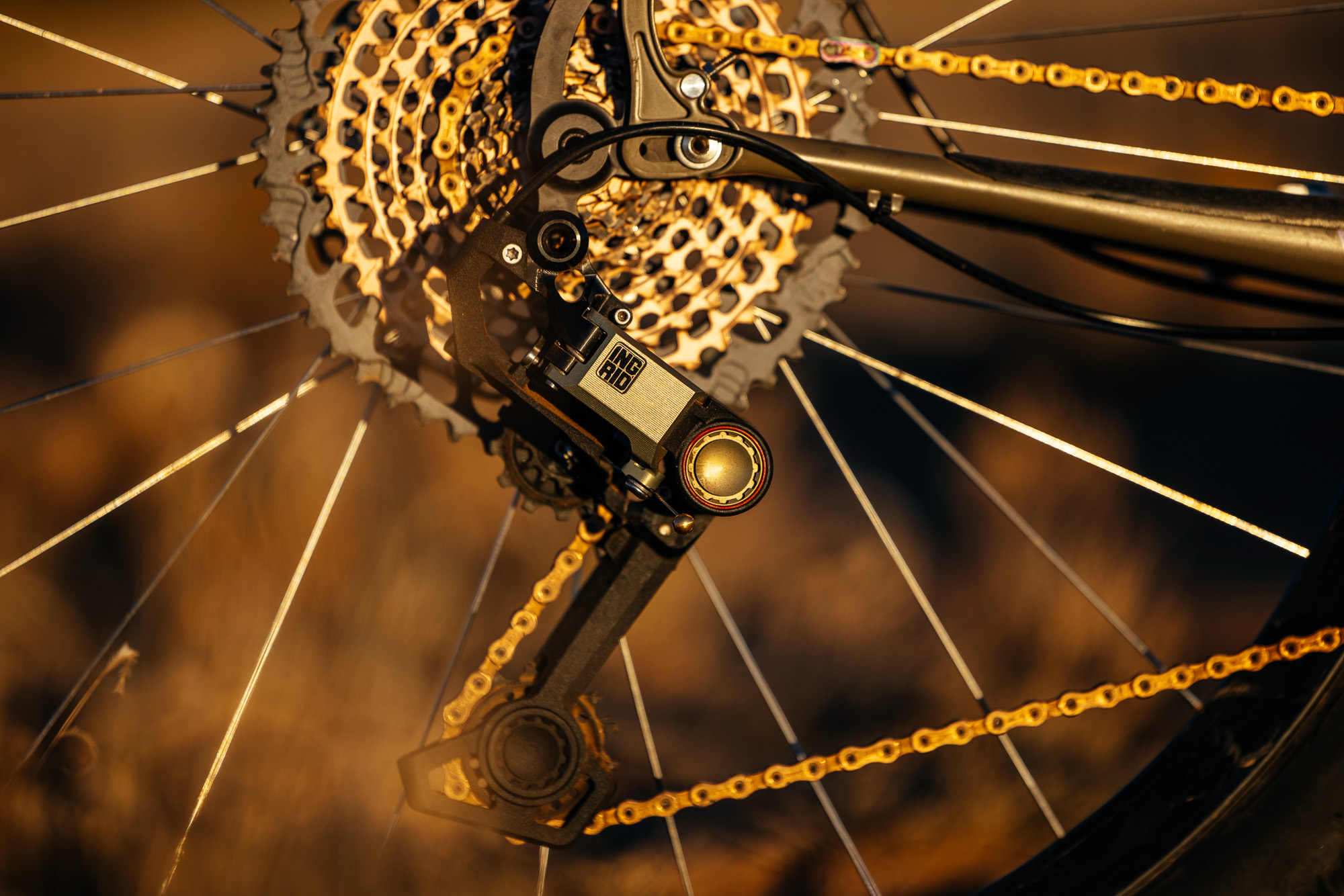
It all began with the Ingrid RD1 rear derailleur, in my opinion anyway. Ingrid’s derailleur proved that a small company could take on the bigger drivetrain manufacturers and produce something that is truly unique to its brand. While personally, the Ingrid RD1 is still one of my favorites, I feel like the brand is left out of these conversations, mostly due to its high pricepoint. My review even called it “Gucci,” as a compliment.

Then, longtime bike industry designer John Calendrille launched the Vivo Enduro derailleur with its completely rebuildable chassis and sealed bearing pivot points. This derailleur is pure sex but lacks replaceable fins to change its compatibility across drivetrains.

All the while, Madrone was developing its Jab derailleur as well, upping the ante by offering a series of fins designed to increase compatibility of its derailleur across various cable pull geometries. I really liked the Jab derailleur. It’s cross-compatible with various drivetrains.
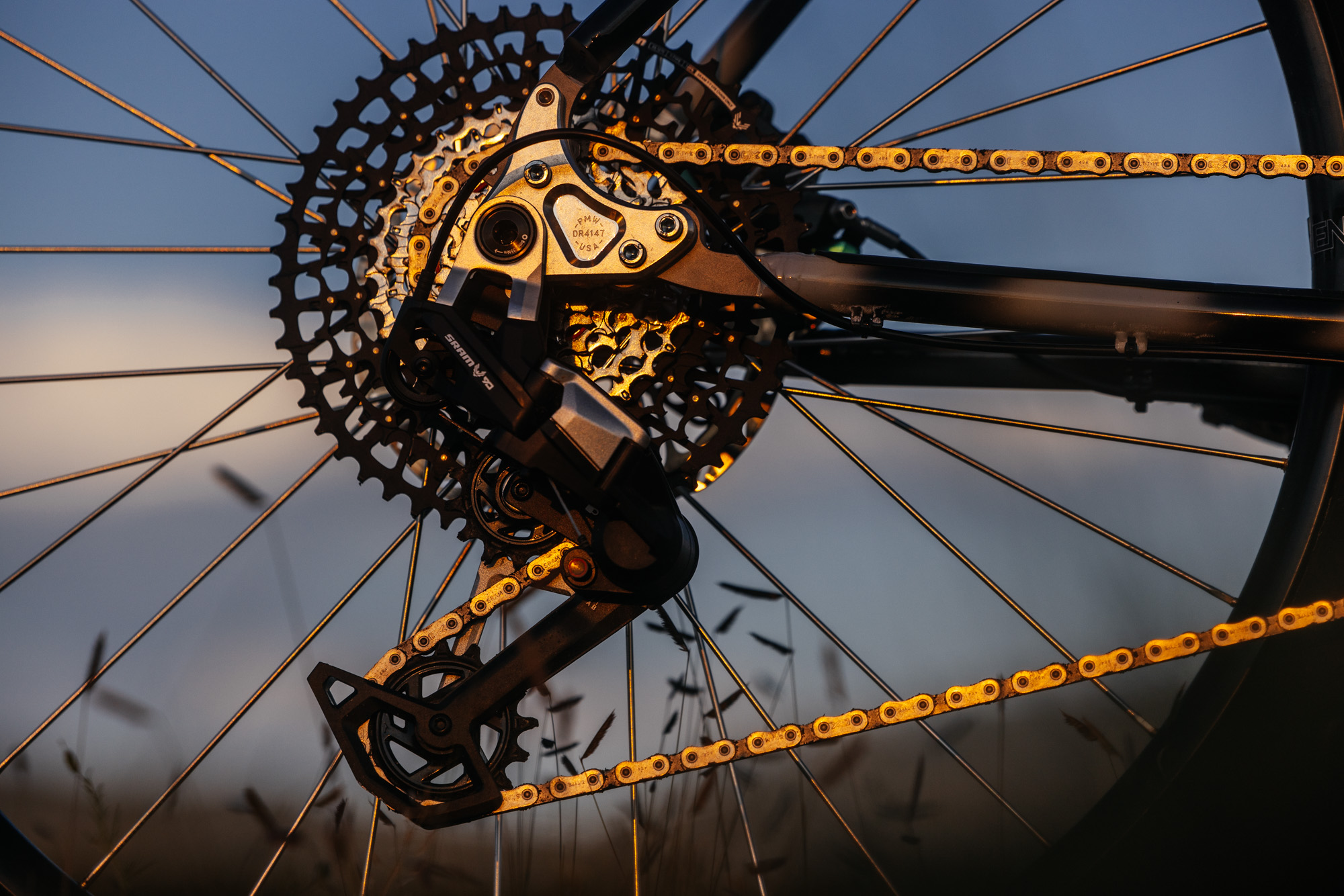
It should also be noted that Sram’s Eagle 90 derailleur is fully rebuildable, which I feel was a nod to the momentum created by these small, boutique brands. For a self-proclaimed Luddite, it was nice seeing Sram offer a high-end cable-actuated derailleur again.
Which brings us to the derailleur at hand, Ratio’s Mech.
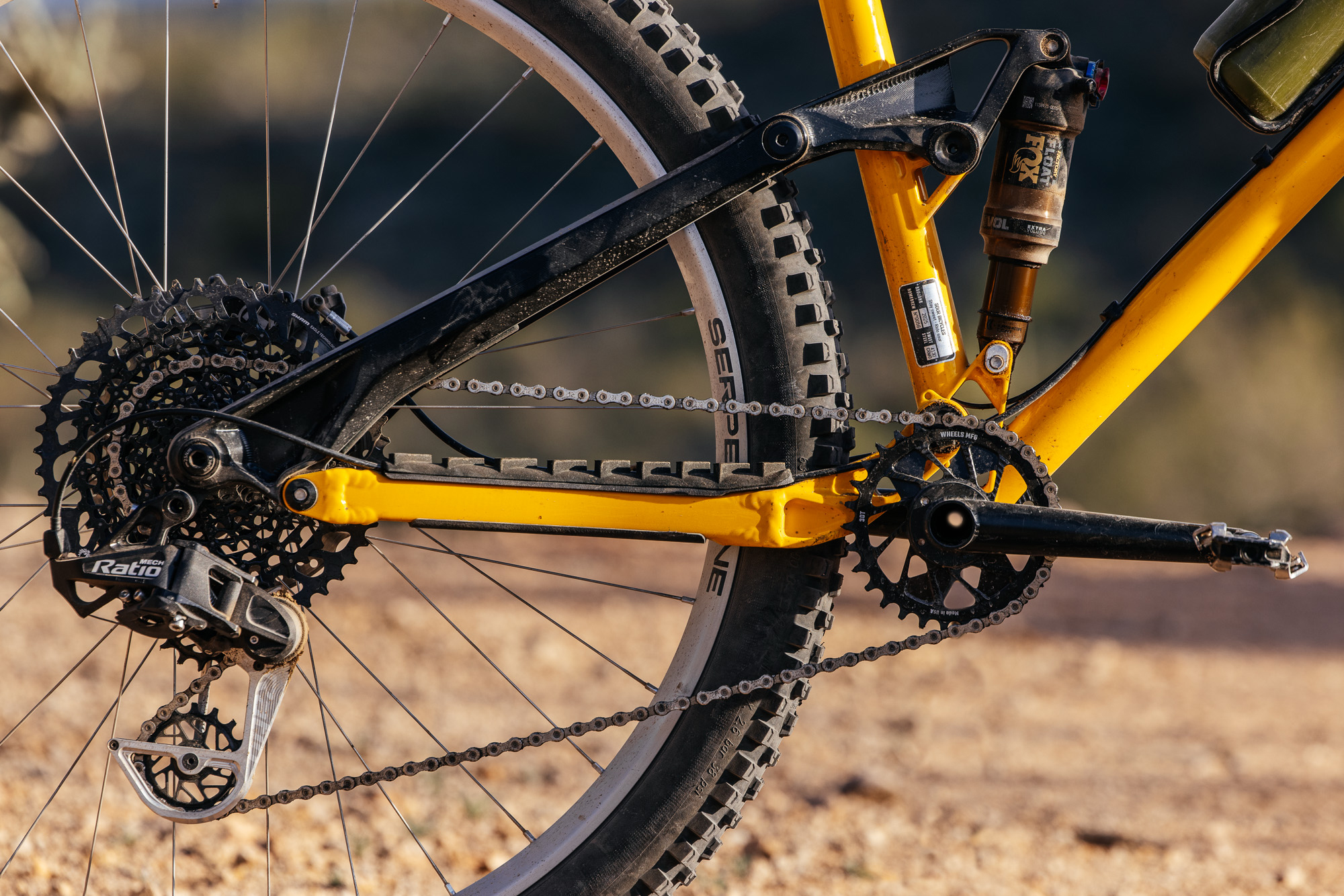
Ratio Mech Quick Hits
- £287.50
- 377 g for Direct Mount / Long Cage
- 340 g for Hanger / Short Cage
- 10-12 Speed
- Flat Bar or Drop Bar Compatible; currently 8 cable fin options with more to follow
- UDH compatible
- Compatible with any modern cassette
- Standard hanger compatible, too
- 1x shifting only (although you could maybe hack something together with friction shifting)
- Rebuildable
- Easy to upgrade with a multi-tool
- Wholly made in the UK

Shifting Paradigms
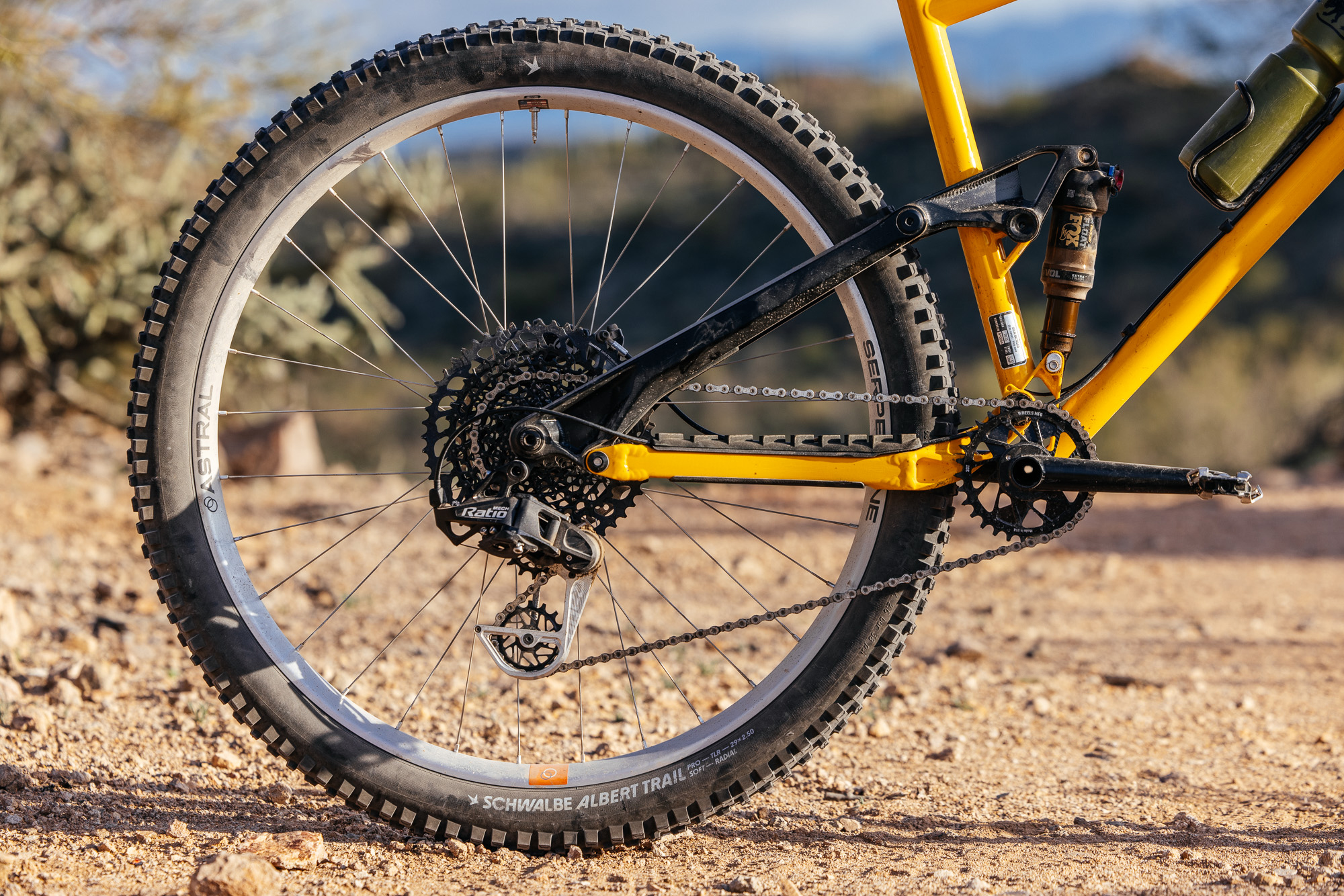
At this point, my head is spinning like a pulley wheel after reviewing several bespoke derailleurs over the past few years. To be honest, drivetrain tech isn’t my forte. I’m a set it and forget it kinda guy. All of my bikes have cable-actuated drivetrains. No electronic shifting here. Half of my bikes are friction shifting, the other half are 12-speed. I’m a borderline Luddite but love the maker community and seeing how small companies steer the larger bike industry.
Putting on my tinfoil hat here for a second, I fully believe that Ratio’s tinkering with Sram drivetrains pushed Sram to finally release its Apex Eagle group; something we’ve been wanting for years.
All this to say that my head reverts to Shimano XT as my baseline for shifting performance. If something expensive can’t perform at least at XT’s level, then it’s more worthwhile as a paperweight. Modern XT is the echelon in cable-actuated shifting. There’s nothing better on the market currently. It’s affordable, ubiquitous, and bomber. But it’s not UDH compatible. Yet, it’s pigeon-holed within its own drivetrain ecosystem. Sure, you can get GRX to do the same thing as XT in terms of gearing, but then you’re buying a new derailleur.
That’s where small brands like Ratio are thinking more progressively.
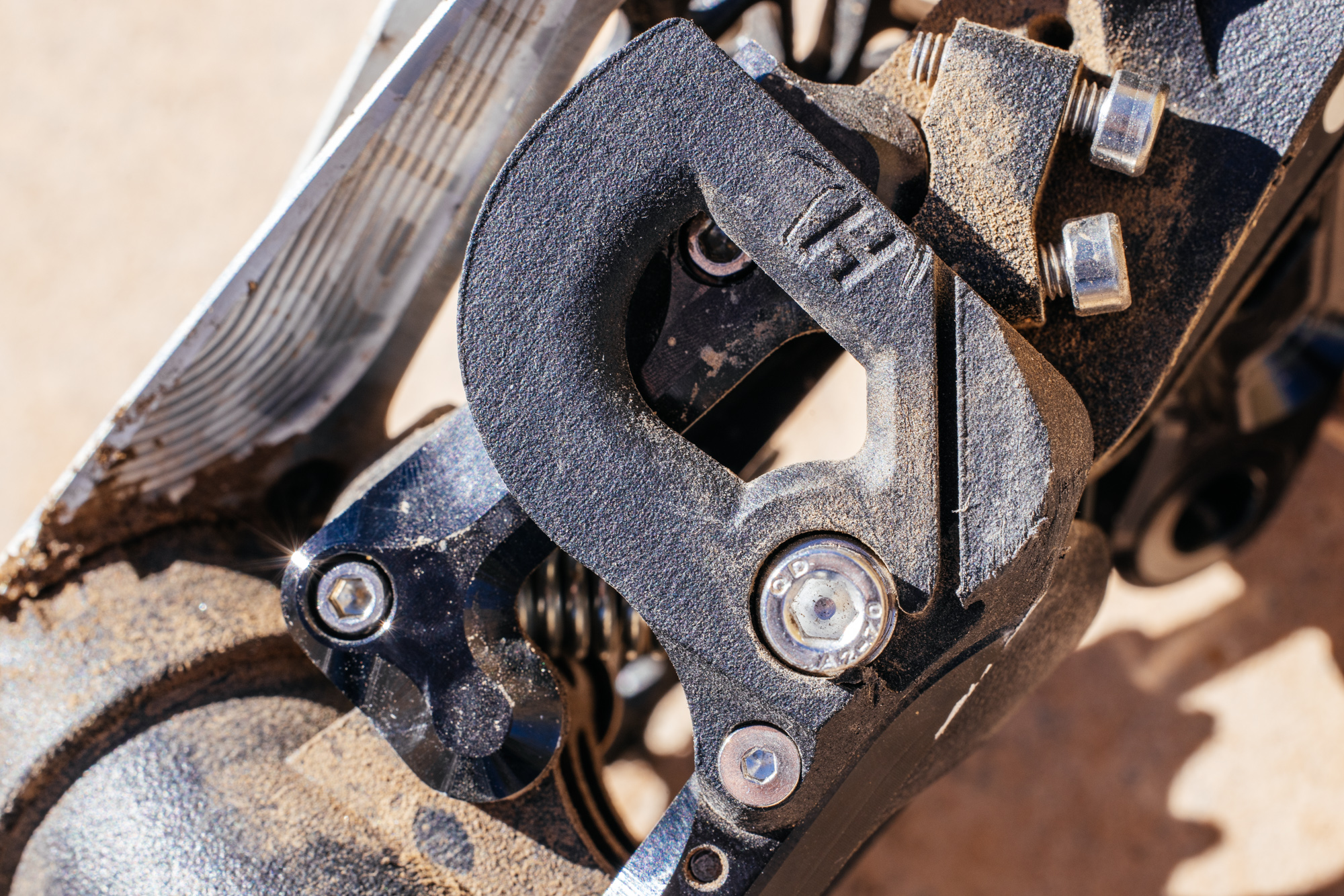
Same Mech, Different Pull Ratios, 1x Optimized
In what I feel is the genius behind these bespoke derailleurs and the Mech’s design – again giving Ingrid credit here for being the “first” – is the fact that you can swap out various fins to use the same chassis on different shifters. Road, mountain, Sram, Shimano, 10 through 12-speed. That, to me, is worth the premium you pay, even if customers will order a Shimano MTB 12-speed compatible Mech, and never, ever swap the fin out for 12-speed Shimano road, people still like the option to do so.
While the Mech can be updated across different pull ratios, it is, however, optimized strictly to the geometry for modern 1x cassettes. This is very common with modern derailleurs, and the Ratio team used a combination of Python modelling and real-world testing to ensure that the Mech’s B-gap is optimized. Meaning it maintains a consistent gap across a wide range of modern cassette options. It ensures you get the best bang for your buck by offering two different cage lengths.
Using a combination of geometric linkage and an offset upper jockey wheel, the Mech flawlessly tracks the cassette sprockets during shifting, regardless of manufacturer.
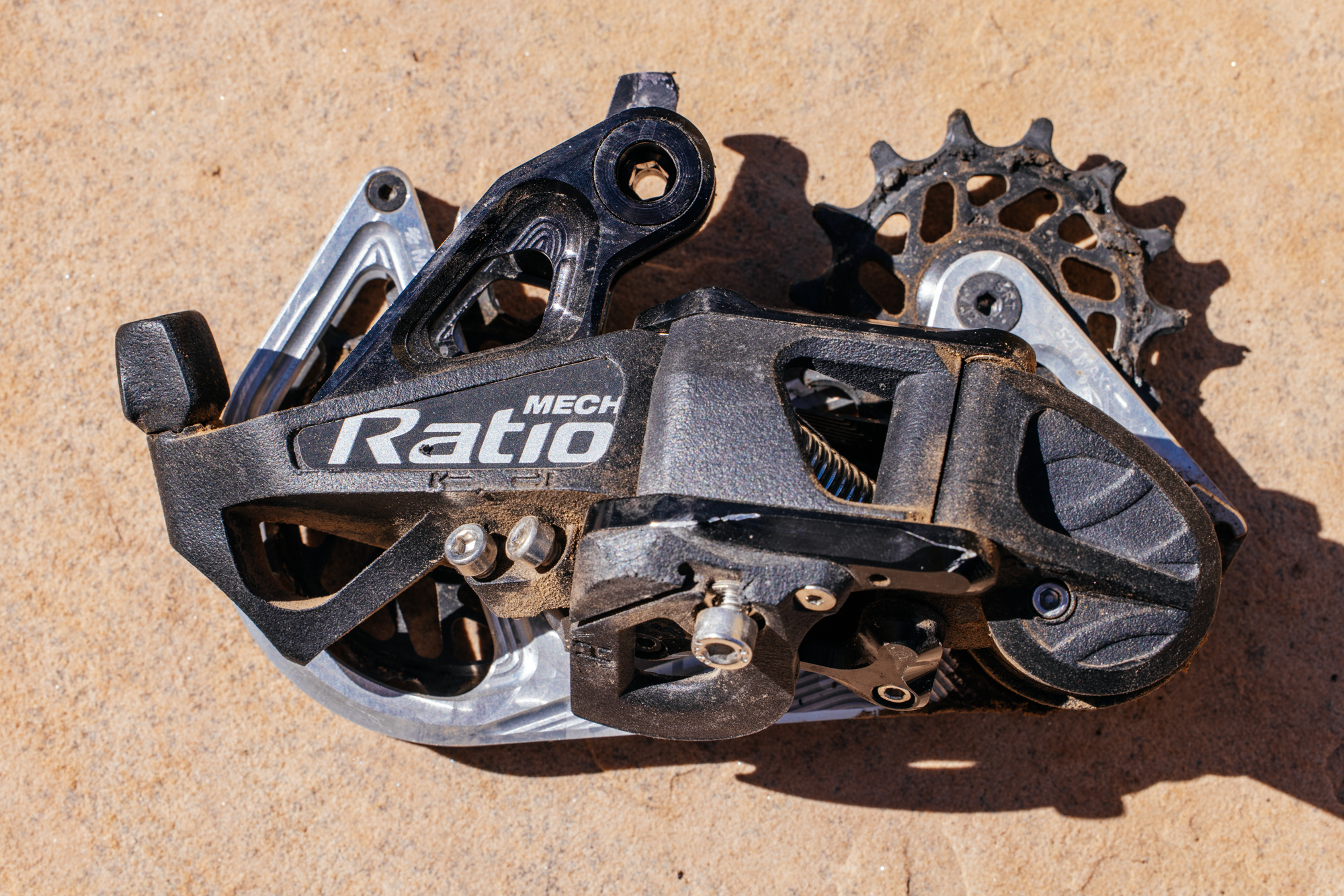
Mech is Made in the UK and Rebuildable
Ratio’s Mech is wholly built in the UK. That means all the machining is done in the UK. The assemblage is done in the UK. And yes, the 3D printed nylon parts are printed in the UK. If something breaks or tires, or whatever, you can order replacement parts and do your own surgery on your £287.50 investment. Ratio has a video on its website that showcases the link replacement procedure.
When I reached out to Ratio for clarification on its made in the UK labeling, Tom Simpson, Ratio co-founder/owner, replied:
“The Mech is entirely UK-made, but not every component is manufactured in-house at Ratio; the nylon parts are made for us by our long-term subcontractor in Kent. We tend to follow a ‘function over form’ ethos in our design, although whether that’s positive or negative is up for debate! What it means in this case is that we made material and manufacturing choices based on the function of the Mech, rather than simply being tempted into machining everything. The structural, strength, and stiffness-constrained parts are machined from 7075 aluminium. These are the cage plates, links, and mounting arms. The two main nylon parts are the P knuckle and B knuckles.”
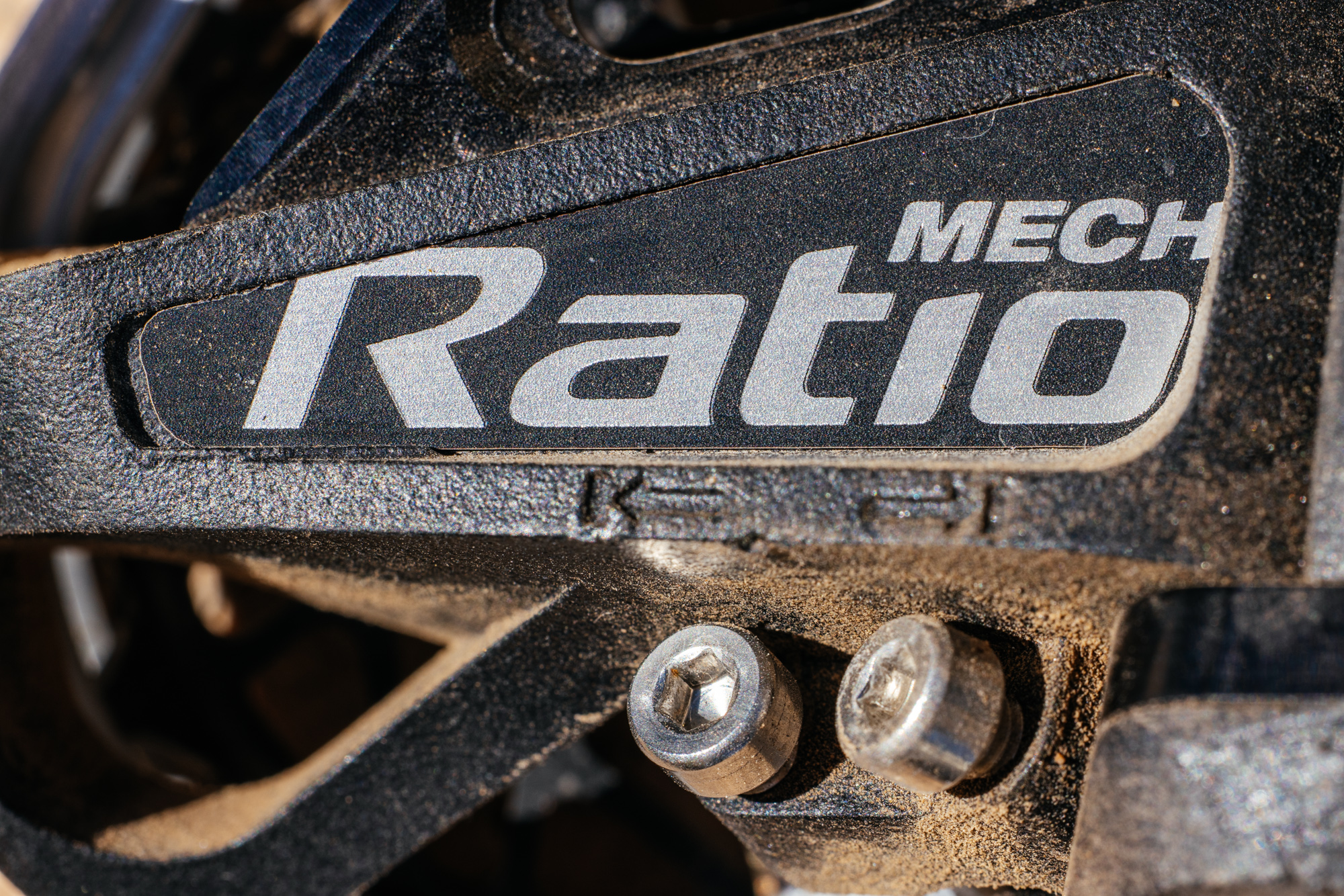
And because I felt like our readership would ask about the 3D-printed nylon parts, Tom explained why they went this direction, instead of more machining:
“The [P]ivot knuckle (the knuckle that joints to the cage) is an easy choice for nylon over aluminium; it’s the standard material of choice for SRAM and Shimano, because the geometry is complex and the loading is not huge – it’s not normally impacted in a crash, for example. The [B]racket knuckle is a more nuanced choice…”
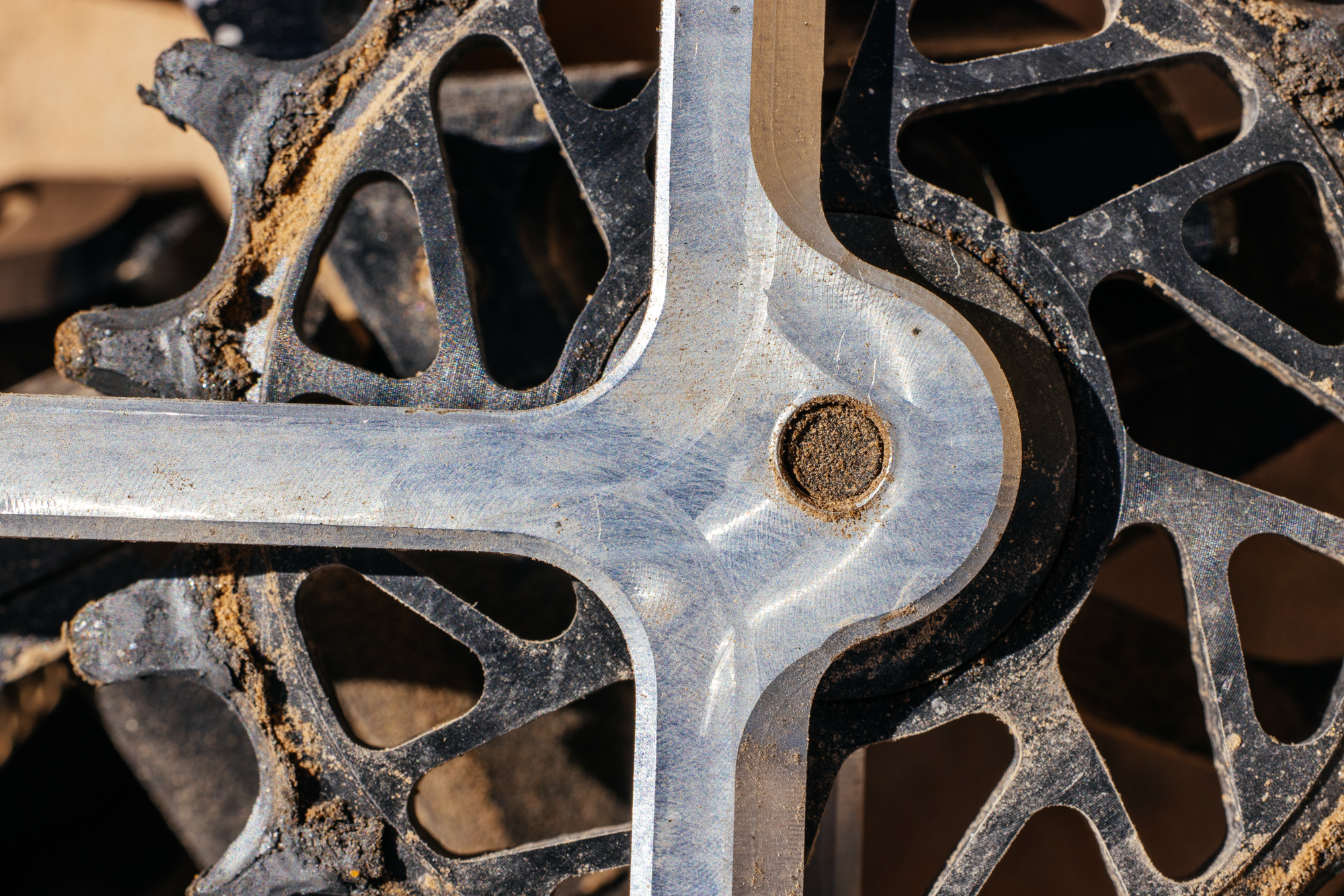

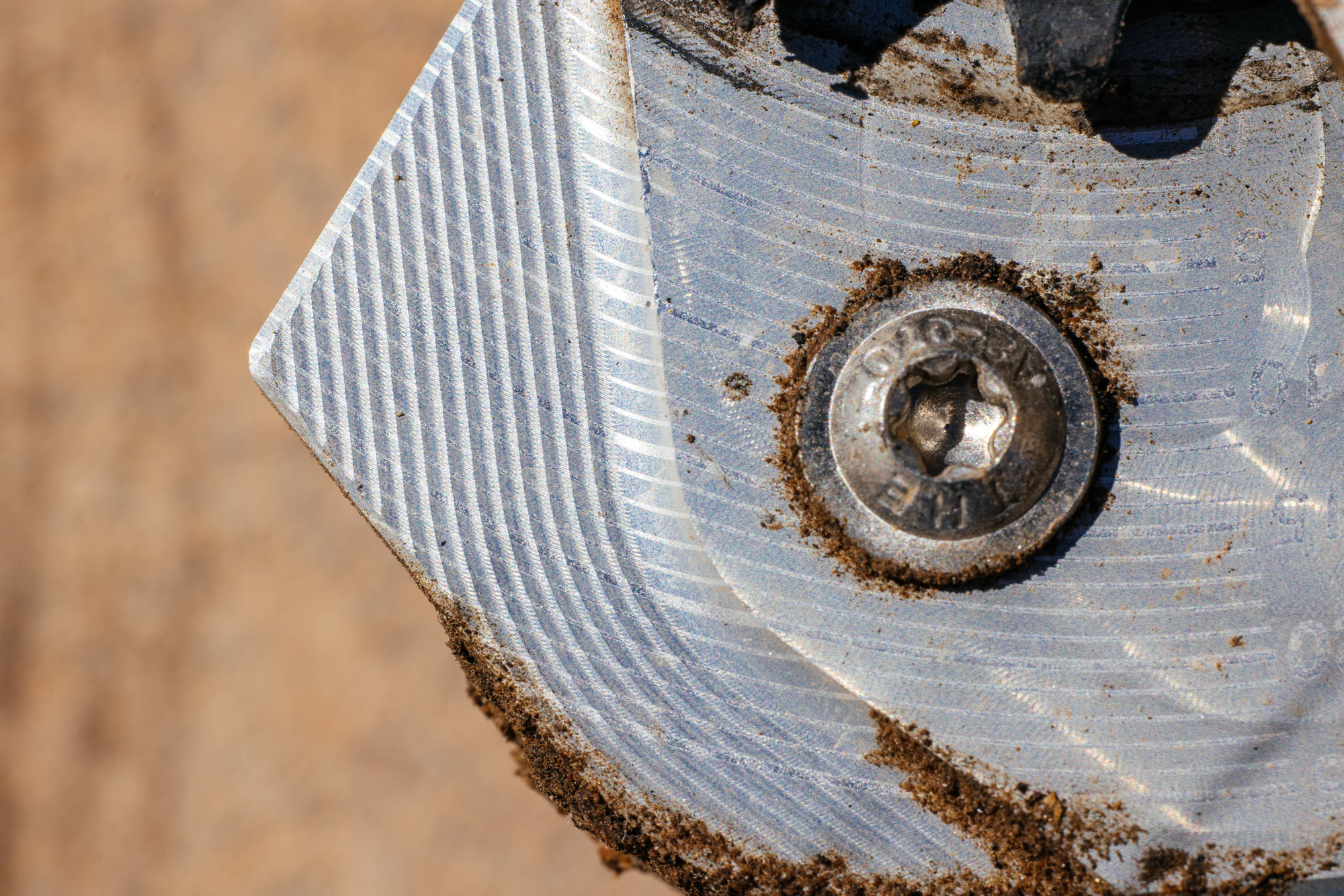
He continued to say,
“This meant we could machine the strength-limited parts – particularly the long direct mount arms – from relatively small pieces of aluminium, reducing wastage, and manage the complex geometry of the B knuckle pivots, limit screws, and cable channel using AM nylon. By keeping the link pivot axles very close to the arms in the assembly, we keep it stiff and strong.”
At this point, Tom may be overexplaining this, but I enjoy this level of detail in a response. He went on with,
“Ultimately, as machinists, machining is always going to be the more fun option. In reality, though, every material has its pros and cons, and the important thing is choose the material and manufacturing method based on the requirements for a particular part.”

Big Ass Wheel
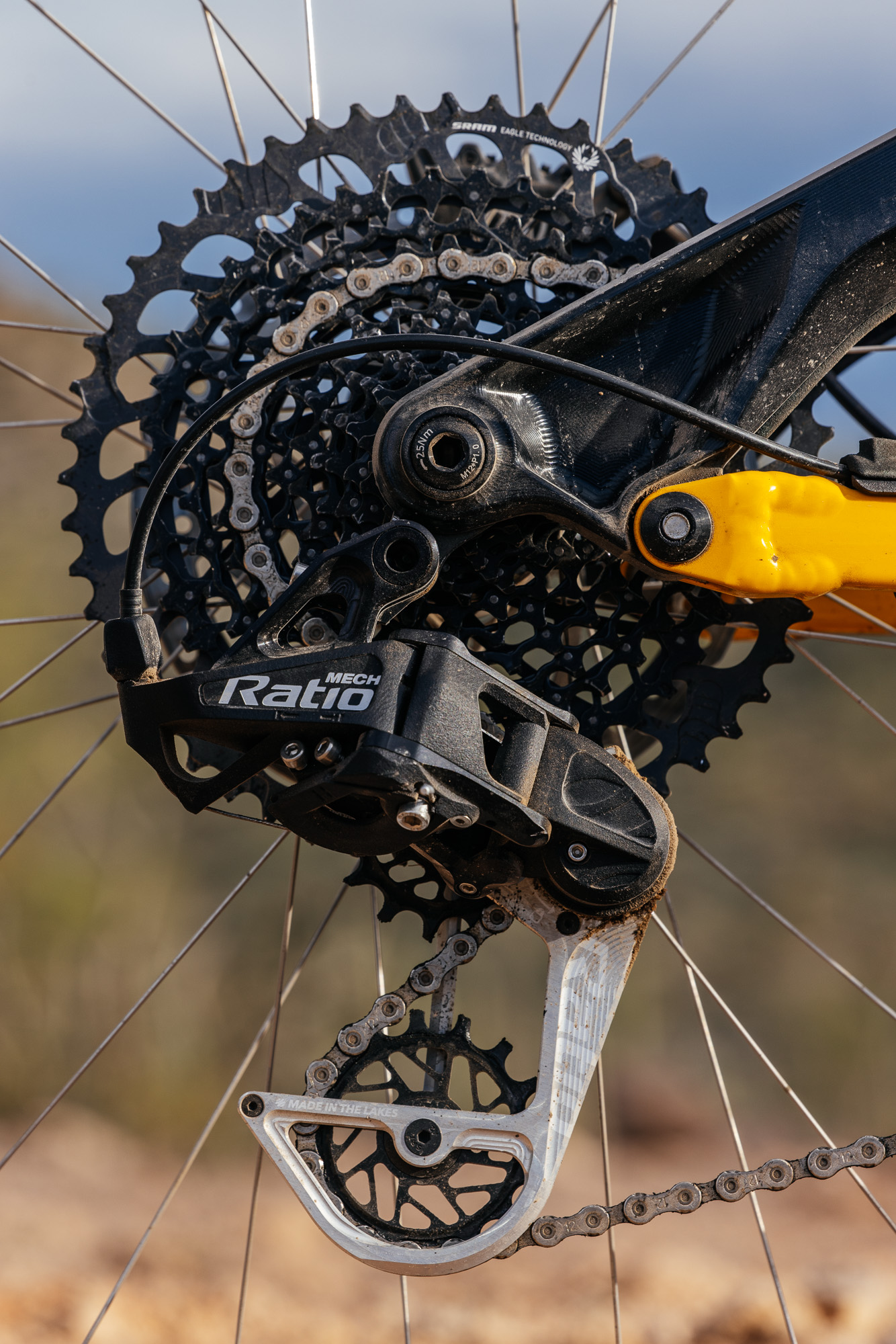
My favorite part about the Mech is its large pulley wheel. As someone who, again, is on the fringes of drivetrain performance, I have noticed an uptick in cage and pulley upgrade kits over recent years, claiming to provide better shifting performance. Thinking this is why Ratio went this route, Tom again went into detail:
“There are a few reasons we went for larger jockeys in the Mech cage. Firstly, there’s wear (and its flip-side, efficiency). The larger jockey rotates at a lower rate for a given pedalling cadence/chain speed, so the jockey bearing lasts longer. Additionally, the articulation angle of each link around the jockey (360 / n, where n is the tooth count of the jockey) is smaller for a larger jockey, which is better for the chain. None of these effects are huge because the load on the chain is small on the slack side of the drivetrain as it passes around the jockeys, but they do count for something. Additionally, for the upper jockey, increasing the size means supporting a larger section of the chain along the length of the ‘B span’ between the jockey and the sprocket. We find that giving this span more lateral support as it disengages from the jockey improves shifting.”
All of this leads to my personal, subjective experience with the Mech…

TL;DR: As Good as XT
One of my first correspondents with Ratio’s team was that I had completely forgotten that I was riding the Mech. Instead, I just defaulted to it being XT, only because so many of the review bikes I circulate through come specced with XT. There was no fussiness getting it set up, no real dialing it in, or adjusting cable slack. Even after hundreds of miles of riding, I’ve had to rotate the cable tensioner at the Sram GX shifter I was using once, which is normal as the cable stretches.
In fact, the Mech shifted super smoothly, even under obtuse load, and completely disappeared from my riding experience. After my initial conversations with the team, I regretted not going Full Mount with the Mech, taking advantage of it and the Cowboy Cookie’s UDH compatibility, but I truthfully didn’t notice any lack of stiffness from the normal mount’s shifting precision.
I wanted to see if I could press its abilities, but honestly, I really couldn’t find its limits. Short, punchy climbs, it still crept into gear. Even dumping gears while coasting downhill, the Mech just kept up with my stride.

Every time Luddite John pressed the shifter, the derailleur instantly shifted. Case closed.
As good as XT is a high compliment but where it excells, once again, is its adaptability and rebuildability. Is that worth the £287.50 premium price? That’s up to you to decide.
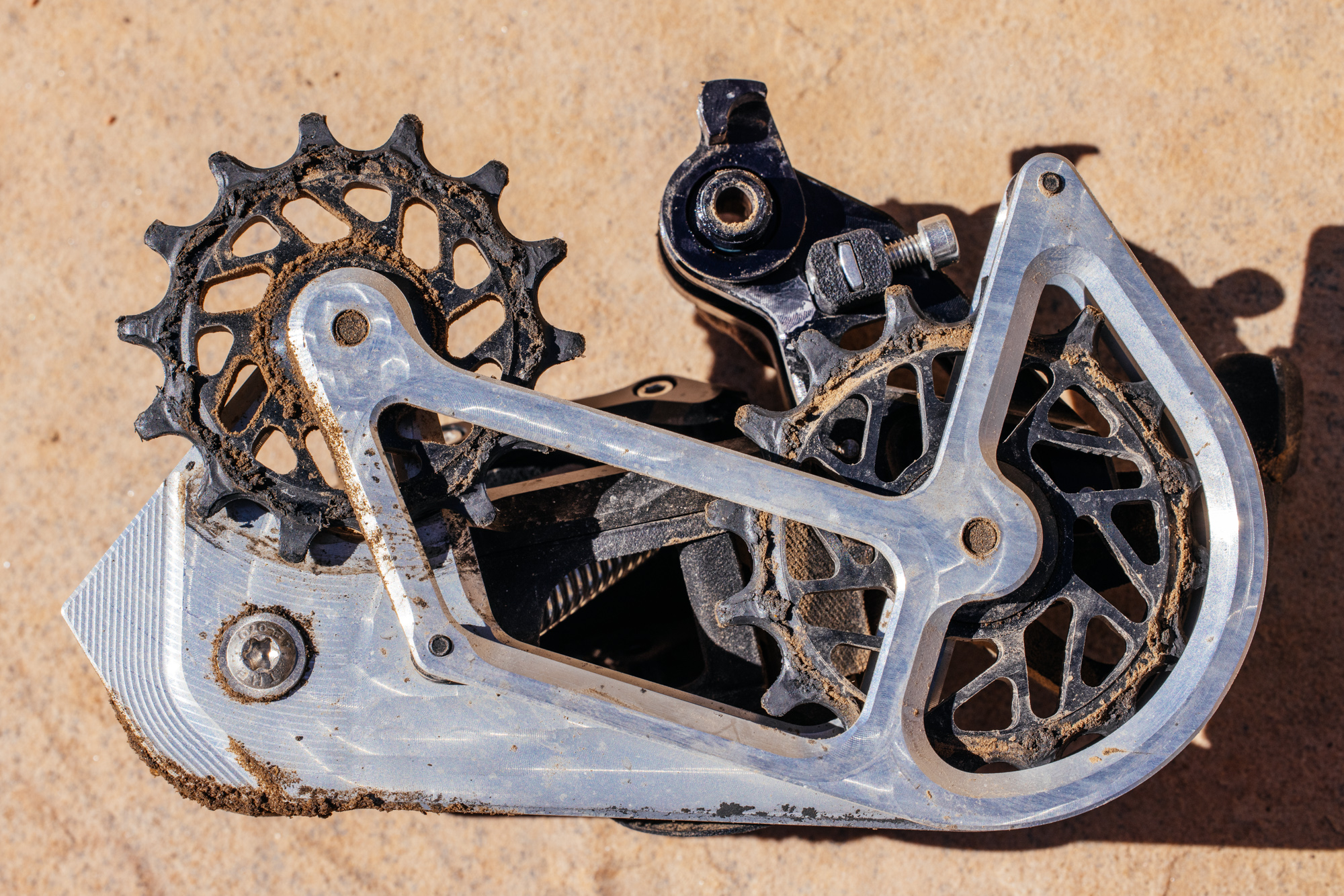
For me, it is. Because brands like Ratio have fundamentally made drivetrain tinkering mainstream and pushed the paradigm forward across the larger bike industry. Bigger brands took note and improved upon their offerings.
Yet, we still need to support the little guys, because they make the gear we want. They listen and develop products that can be adapted across various options. Even if we don’t use those options, they are still available.
Pros
- Phenomenal performance
- Supporting small companies is the best
- As good as XT in terms of shifting, but it is rebuildable and compatible across all modern drivetrain systems.
Cons
- Expensive
- Some plastic parts, not all metal
- Some people will complain that it’s not 2x compatible
See more at Ratio.