
Updated March 5, 2026 05:52AM
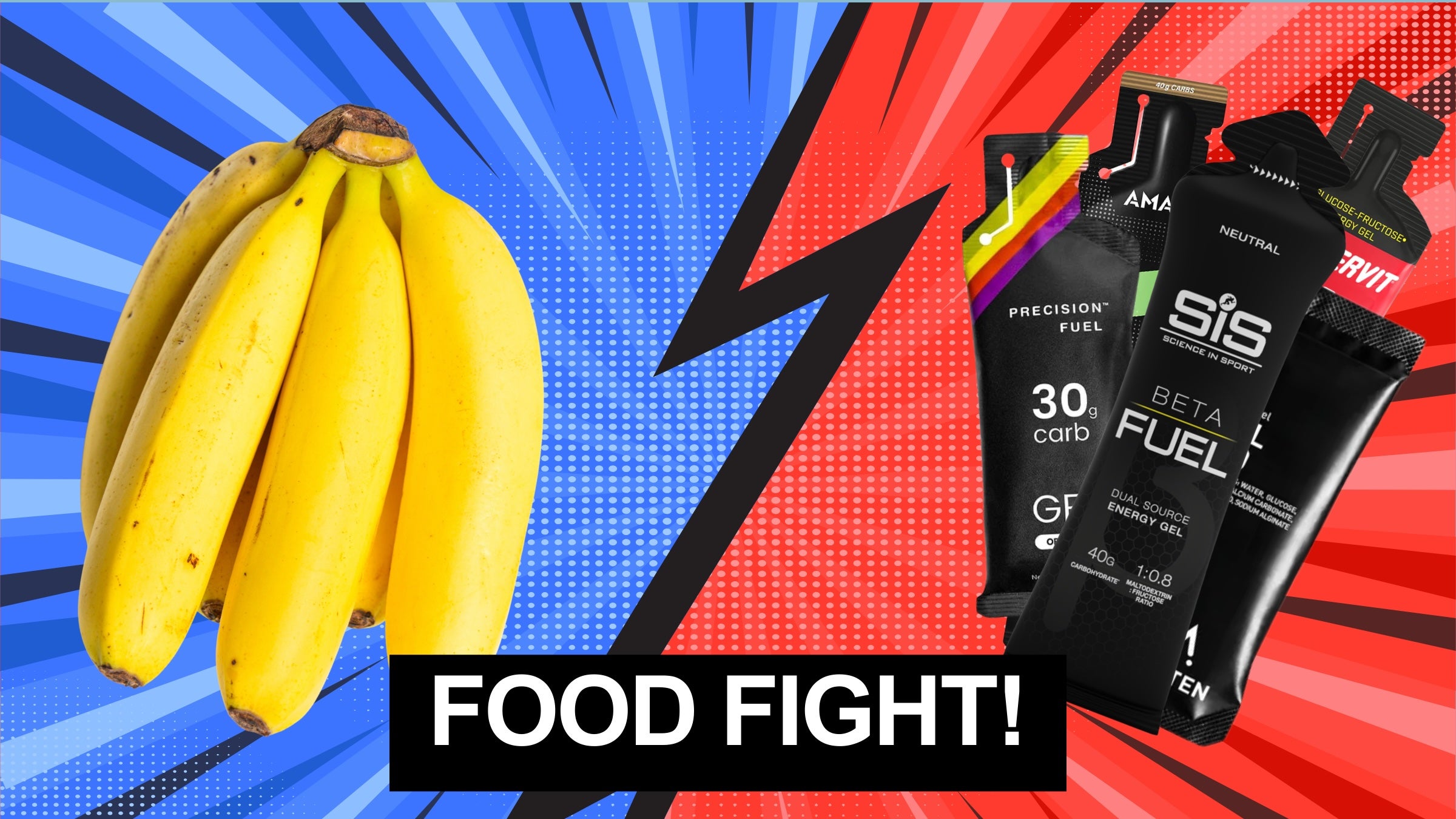
Should I fuel my ride with “real” food or gunky gels and costly carbohydrate drinks?
It’s as hotly debated a topic as “socks over or under tights” and “should I lift weights.”
Well obviously, of course you can toss the gels and stuff your pockets with bananas and candies. But it’s not always optimal, and it depends on the type of ride you’ve got planned.
There are 5 factors to consider when you’re next scratching through your kitchen cabinets and mulling your fuelling options. They’ll protect your bank balance, save your guts, and prevent a bonkfest.
Duration and the 90-minute threshold
Firstly, do you even need to eat anything?
In some cases, no.
The body’s glycogen stores are typically sufficient to see you through a ride lasting up to around 90 minutes. If you’re well fed before rollout, you might just want to take a bottle of water to wet your whistle and that emergency gel that’s festering in your bar bag.
Will Girling, pro nutritionist at Red Bull-Bora-Hansgrohe, caveated that the intensity of those 90 minutes matters.
“The only time I’d suggest feeding a ride less than 90 minutes is if it’s going to be particularly intense, like some intervals or a race. In which case, you might want one item, like one carb drink or one gel, for example,” Girling told Velo.
The 90-minute rule should also be ignored for rides that begin fasted (which are typically no longer advised unless under expert guidance, BTW) or for workouts that are part of a “double day.”
If you are going to feed your ride, here’s what to consider when you’re chewing over “real food or energy gels?”
1. Price
We’ll start with the obvious one. Price.
Everything is getting more expensive nowadays, but seriously, WTF is going on with sports nutrition? The inflation in the cost of a gel or packet of carb powder has been bonkers.
In 2026, a single higher-carb gel averages at around $4.00 per piece, and only marginally less when purchased in bulk. A rider who wants to fuel hard with gels for 4 hours will come home with a bunch of kilometers on their Strava account and a fistful less cash in their bank account.
Any rider who fuels exclusively with sports nutrition is likely sponsored, fuelling low, or earning big.
Girling said his riders at Red Bull only ever use sports products. But he also suggested some workarounds that can be almost as effective.
“If you’re on a budget, Haribo gummy sweets are perfect – they’re basically pure sugar,” Girling said. “I also really like pre-roll cake icing. It’s around $2.00 a packet and provides 10-15 portions of around 20 grams of carbs.
“And for a drink, you can just put sugar in your water with a bit of citrus to help saliva production,” he continued. “You can also put a pinch of salt in there for the electrolyte balance.
“If you want to advance the drink, you can buy bags of maltodextrin and fructose for very cheap.”
2. Unwanted (or maybe wanted?) extras
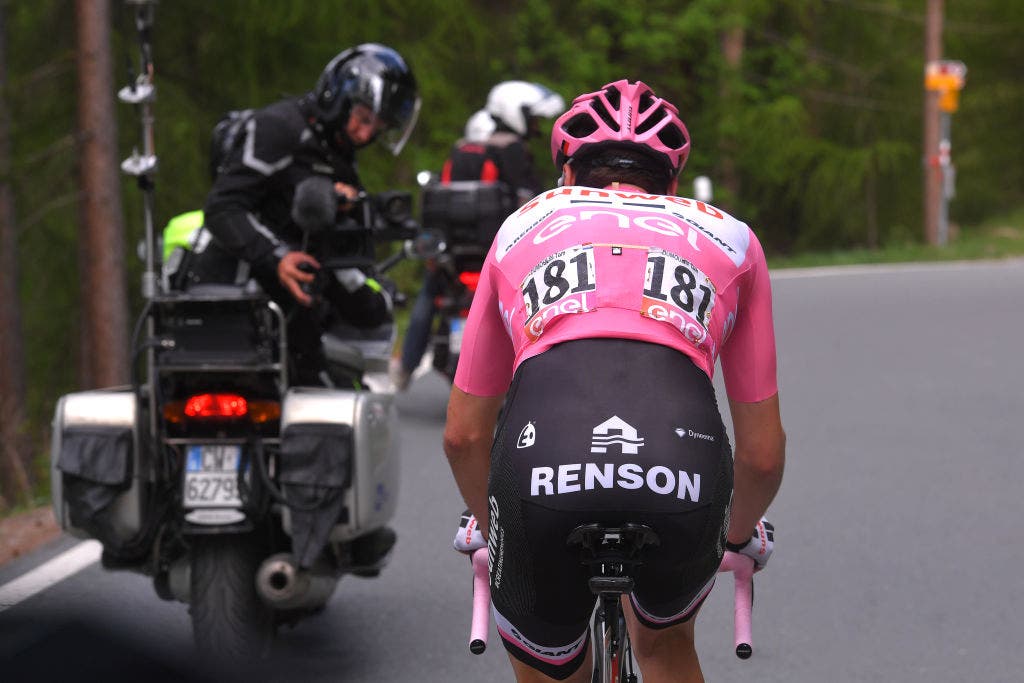
If you’re riding hard, all you want is carbohydrates. Proteins, fats, and fiber can stay home.
Carbs are rapidly broken down into the simple energy-loaded sugars which bring da’ watts.
All “other” macronutrients are harder for the body to digest, slower sources of energy, and can cause G.I. distress.
“If you’re riding at any level of intensity, proteins and fats have no purpose at all,” Girling said. “They’re even likely to hinder you as much as they help you.”
And that’s the benefit of “food” that’s been made in a factory.
Most modern endurance nutrition is 100 percent sugar, zero percent protein, zero percent fat. And of course, sports nutrition might also be laced with other goodies like electrolytes and caffeine.
The post-pandemic devotion to carbohydrates has rendered the fat-laden rice cakes of the Team Sky days obsolete. Leaner, meaner sugar-stuffed krispies bars are the peloton’s new staple.
So if you want to fuel a hard ride with “real food,” look for options that are as low in fiber and fat as possible. Candies are king, not chocolate.
Save the Snickers for when you get home and the bliss of the sofa.
3. The magic ratio and fueling targets
There’s no escaping the hype for high-carb fueling right now – and rightly so. It’s transformed modern endurance sport. We’ve covered the “carbohydrate revolution” many times here at Velo.
But don’t think you can join the revolution with a bag of gummy bears and a bottle of sugar-water.
Why?
Because not all sugars are the same.
The body relies on two simple, single-molecule sugars for fast fuel – glucose and fructose.
And crucially, they’re absorbed into the gut by two different transporters.
Glucose is the body’s primary source of fuel, but its specific absorption pathway gets maxed out at around 60-70g per hour. Athletes who want to push beyond 60g per hour also need to tap into their fructose transporters to max out their fueling potential.
To achieve maximal carbohydrate absorption and hit the magic 120, athletes need a cocktail of glucose and fructose, mixed to a specific ratio. Sport science mixologists agree that a 2:1 or 1:08 blend of glucose to fructose is optimal for fast, gut-friendly fueling.
These ratios are used by every modern nutrition company, but are almost never found in any natural foods.
The short story? When you’re fueling at below 60g per hour, any sugary snacks, whether bananas, candies, dates, or whatever else, will work fine. If you’re going beyond 60g of carbohydrate per hour, it’s time to think a little more fancy.
4. Practicality
This is a pretty obvious one.
What would you prefer to put in the pocket of your super-premium jersey? Some perfectly packaged energy products, or a banana that will inevitably be smooshed into the fabrics of your “aero-optimized, wind tunnel-tested” apparel?
And not to labour the point, do you really want to be fumbling with the Ziploc seal of your candy baggie while you rattle down a gravel descent?
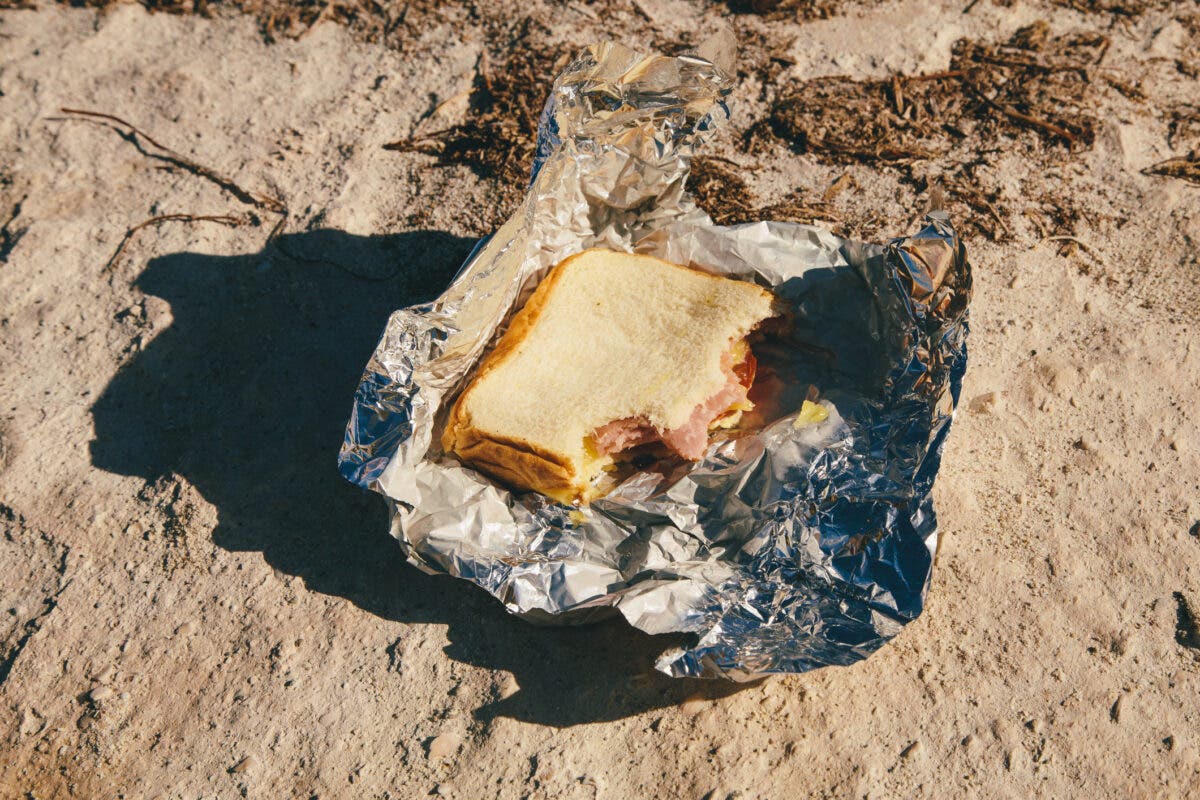
Real food is tasty, cheap, and natural. But it’s no good if you can’t carry and access it without causing carnage.
Weekend crusin’? Sure, take the foil-packaged sando.
Working out? Invest in sports nutrition and invest in a better, safer session.
5. Satiety and satisfaction
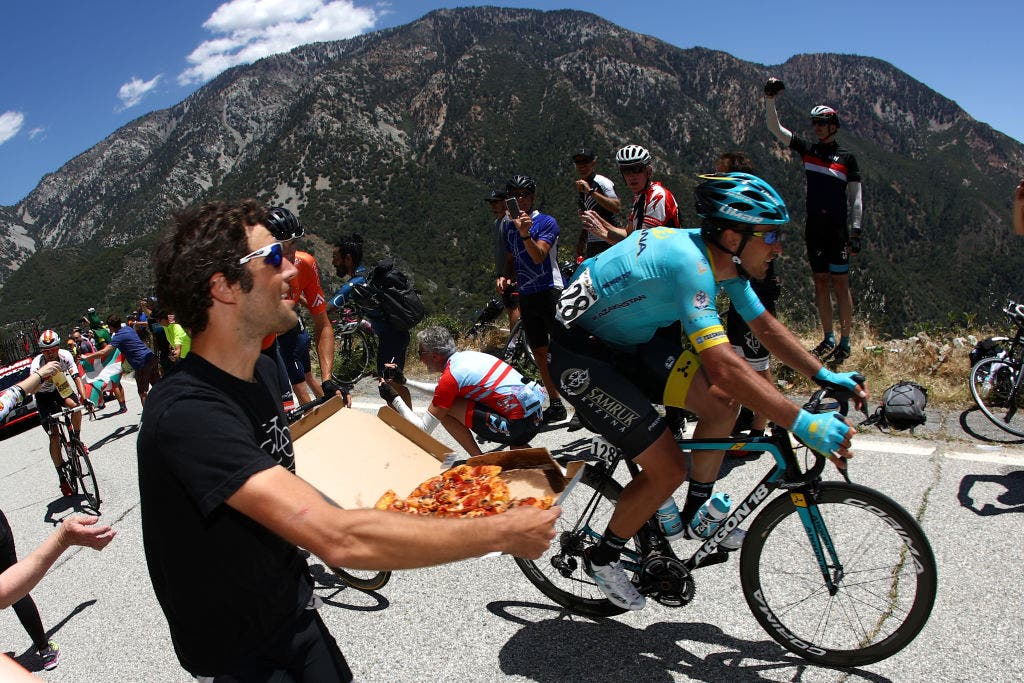
Let’s face it, you’ve got to be a crazy person with guts of steel if you feed a long ride only with energy products.
For the feeble majority, flavor fatigue or a bout of poops and pukes will inevitably nuke a 100-percent sports fuel strategy (unless you’ve done your gut training).
Even the pros who win the 350-mile Unbound XL admit that the fueling plan goes out the window when they’re riding for 18 hours. Across the sporting divide, runners at the front of the Western States and UTMB 100-milers slam noodles and pizza at aid stations while their crews load their pockets with gels and drinks.
Real foods – and all the fats and proteins within them – definitely have a place when going long. The demand for fast carbs is reduced at lower exercise intensities, as is the risk of G.I. distress.
While studies refute the old notion that mid-workout protein can boost recovery in well-fueled athletes who take protein after a session, there’s no doubt it will keep you satiated and bring variety. Meanwhile, fats are so calorically dense that a handful of nuts could keep you cycling for days.
And let’s face it, there’s nothing better than a questionable slice of gas station pepperoni and an ice-cold Coke when you’re 6 hours deep and barely halfway.