
Published April 4, 2026 03:49PM
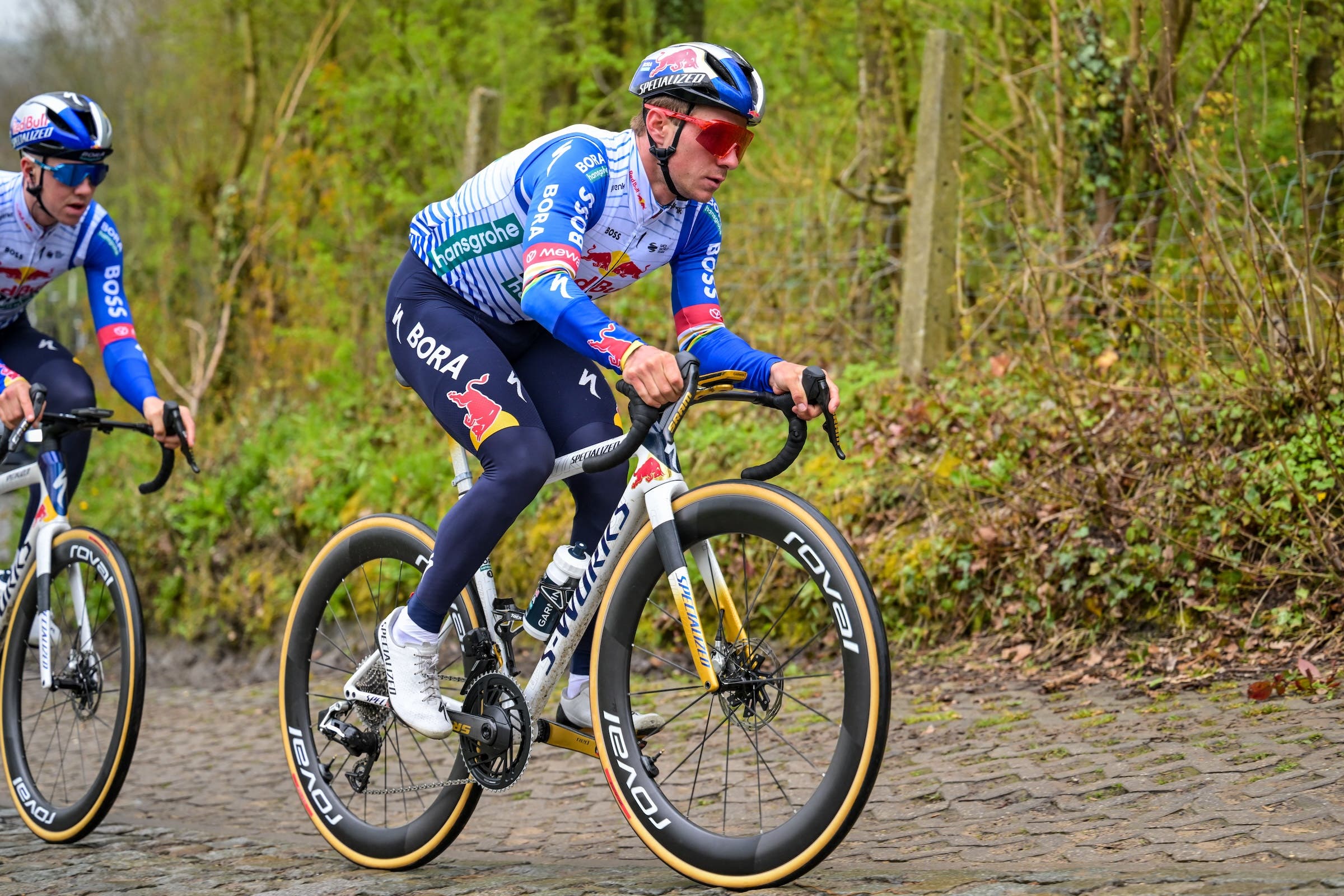
When Remco Evenepoel and members of his team were seen riding on the course of the Tour of Flanders at the end of December, speculation was rife the Belgian star would make a long-awaited debut in the race.
As reported then by Het Nieuwsblad, the 25 year old champion was spotted at the Oude Kwaremont and the Paterberg, doing those climbs at least twice. Also present was his Red Bull-Bora-hansgrohe Gianni Vermeersch, plus sports directors Klaas Lodewyck and Sven Vanthourenhout.
Given his past excellence in one day races—he is the current Olympic title holder, a past world champ and a two-time winner of Liège-Bastogne-Liège—it seemed logical to link the course reconnaissance and the race and to conclude he would make his career debut in April.
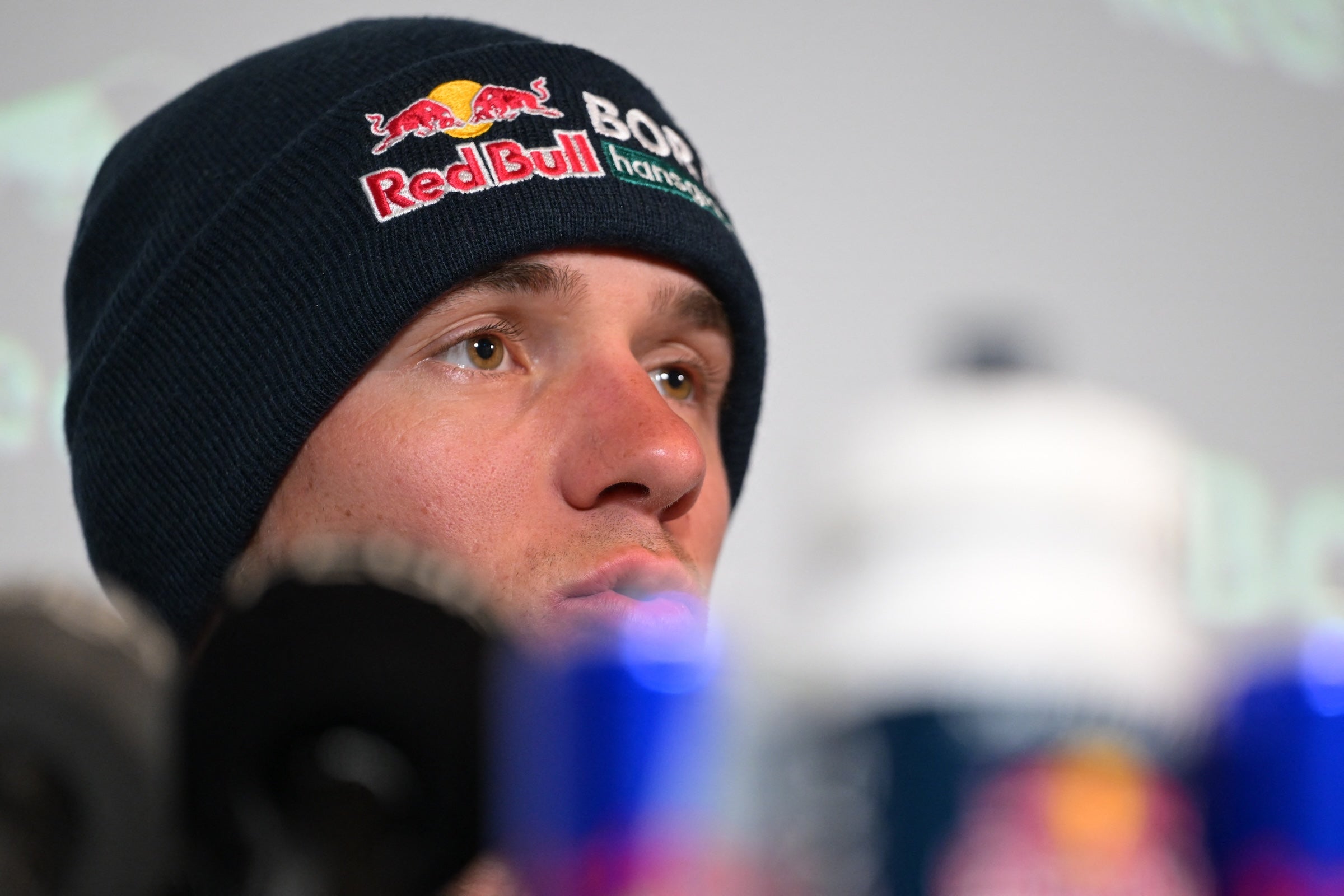
Not so, said Evenepoel on more than one occasion. Not so, said Red Bull.
One denial was very specific. “We want to have a normal season,” he told journalists, according to Wielerflits. “Last year was very difficult for me because of that collision with the mail van in December 2024. That’s why we are aiming for a good season next year, one that is easy going. Without too many crazy things.
“Hopefully, I will then have a season without interruptions. What the future holds is for later. This season will be busy enough already, and that’s why we decided not to do Flanders.”
New directeur sportif Zak Dempster echoed that stance, further dismissing the suggestion. He acknowledged as a Belgian rider the race had appeal for Evenepoel, but that beating Tadej Pogačar at the Tour de France would take precedence over everything else.
“At this moment, we do not believe that participating in the Tour of Flanders contributes to that. Remco is here to grow into a better rider, to perform, and to win big races. Let’s first focus on the races we can actually win.”
Months later, those statements have proven untrue. Big deal? Actually it is.
‘Some kind of honor code’
Let’s get something straight: Evenepoel riding Belgium’s biggest one day race is a really big story.
He’s one of the top riders in the sport and has passion and drive that brings a lot to pro cycling. You only have to consider his stubborn, sublime and ultimately unsuccessful bid to win stage 3 of the recent Volta a Catalunya to see the buzz he brings to the sport.
He’s a more accomplished one day rider than a stage race competitor and the short steep bergs of Flanders are perfectly suited to his punchy riding style. Consider too the long flat roads following the final climb plus his TT strengths and you can see why Evenepoel riding is big, big news.
And yet. In his weekly column for Het Nieuwsblad, Evenepoel’s former team manager Patrick Lefevere warned the rider that untruths are inadvisable.
“I don’t want to be too strict about all of this, but you have to be careful when lying to journalists,” he said. “I have never done it, and certainly not as flagrantly as Evenepoel and co. have in recent months, weeks, and even days.
“There was at least some kind of honour code that you didn’t take each other too much for a fool. Lying is dangerous. There are journalists with long memories and thick skin.”
Lefevere is known for a history of objectionable comments in the media, including belittling women, criticizing his riders and comparing contract signings to domestic abuse. But, in this matter, he’s completely correct.
Cycling journalist Daniel Benson was too when he expressed his own dissatisfaction.
He had a lot more to say about it afterwards, revealing how seriously Belgian media was taking it.
Telling untruths about race participation is hardly the biggest issue in the sport but denying you will start a race and then revealing it was a goal all along is problematic, both for rider and for team.
Even more so when you release a video showing plans to ride the race date back to at least December, if not before.
Sure, the news got Red Bull reams and reams of publicity and has been one of the biggest stories of the week, but there’s a much bigger picture to consider in all of this.
Why truth matters
Anyone with any knowledge of the history of the sport will concede that cycling has long had a credibility problem. The Festina Affair is a perfect example of this. So too the US Postal Service/Lance Armstrong debacle. There’s long been examples of scandal and suspicion, of denial and deceit.
Teams and riders have said so many things subsequently proven to be untrue that trust has become a hard earned currency.
Riding a race you categorically denied you would be part of is very different to taking banned substances but, given that long history, looking people in the eye and telling them one thing while planning another does little to build trust.
In a statement released on April 1st announcing Evenepoel’s participation, Red Bull-Bora-Hansgrohe CEO Ralph Denk explained the subterfuge.
“The connection between Remco and the Tour of Flanders is deep and emotional. A plan like this does not come together overnight. We deliberately kept it under the radar to create a special moment for the fans – revealing it as a surprise on April 1,” he said. “The fact that we were able to keep this internal for more than 100 days speaks to the cohesion and unity of this team.”
Or, to put it another way, the ability to keep secrets and issue denials when asked direct questions by journalists.
It’s clear that Red Bull and Evenepoel have pulled off a bit of a marketing coup. Whichever way his race goes on Sunday the brand and the rider have already secured huge publicity. The reconnaissance video released this week has, at the time of writing, over 250,000 views.
Is it worth it? As stated already, professional cycling has had a troubled history and a tangled relationship with the truth. Credibility is everything and while this matter is simply about a race and a rider, it’s also about trust and transparency.
There may come a time when riders or staff members from the team face other, bigger and more awkward questions. Those questions may or may not be justified but what is crucial is being able to believe the answers.
Lefevere has been wrong in sentiment in many of his columns, but in this he is correct. Given the history of the sport, lying to journalists—no matter what the topic—is really not a good idea.