
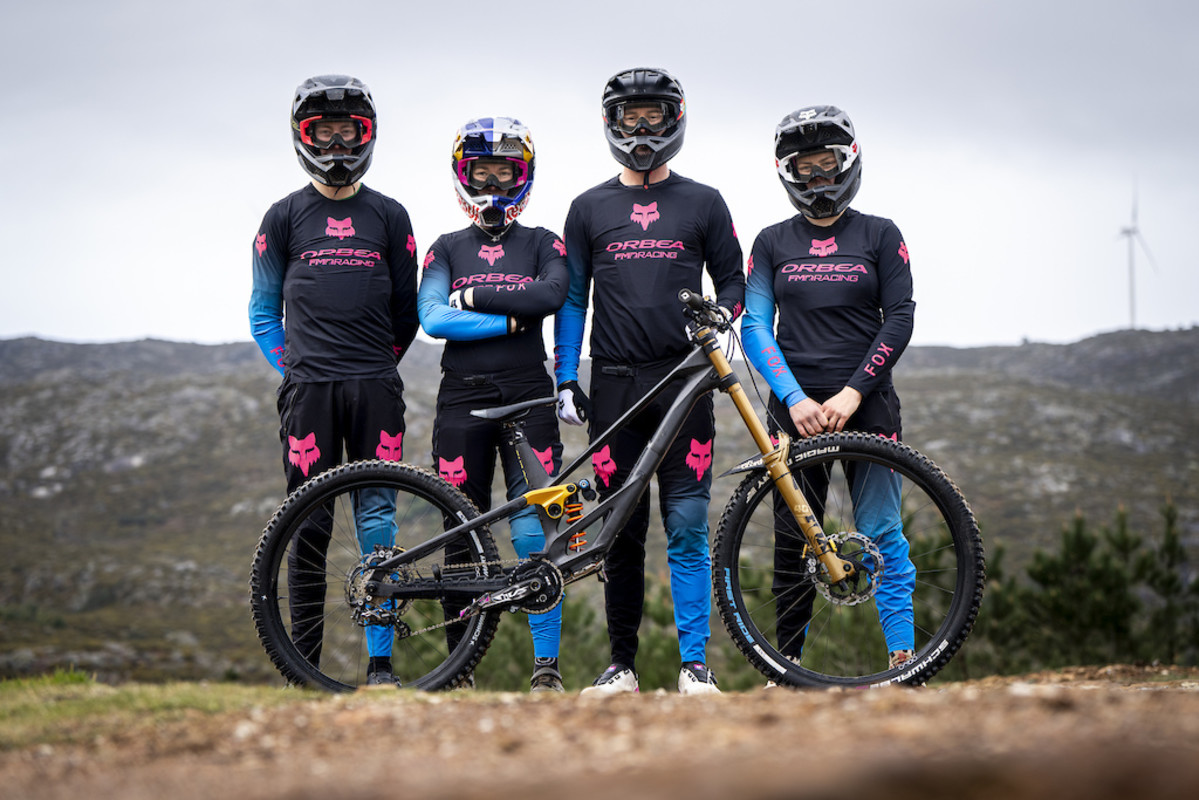
Nothing quite like tearing a downhill team down to the studs in the off-season, right? While these kinds of cataclysmic overhauls are full of trials and tribulations, at times it’s this complete reset that lays the foundation for long-term future success. For FMD Racing and Orbea Bicycles, it’s exactly what it took to turn the tides from skepticism to success story in the 2025 UCI Downhill World Cup season.
After parting ways with their longtime bike partner Canyon, reshuffling their roster, and rebuilding their team infrastructure from scratch, FMD came into the season with not only a massive chip on their shoulder, but a lot to prove. The team features some of the sport’s best and brightest, and without a doubt there were careers, credibility, and the possibility of world championships as well—all riding on the back of an untested and undeveloped bike from Orbea.
In Episode 1 of Orbea’s new doc-series, How We Roll, we are given an extensive and detailed peek behind the curtain into one of the most interesting downhill story arcs we have seen in quite some time.
A NEW ERA: THE ORBEA FMD PROJECT
At the center of this narrative is the partnership that birthed Orbea FMD Racing – The Gravity Cooperative, a long-term project aimed at redefining how a factory DH program develops tech, nurtures talent, and builds a culture. For Orbea, a brand with roots deep in the Basque Country and a growing presence across enduro and XC, the move into elite downhill wasn’t a marketing exercise—it was a commitment to embracing a new chapter in the history of their brand while supporting elite-level riders pushing the absolute limit.
Behind the scenes, Orbea’s experimental division, OOLAB, had been quietly developing a prototype DH frame since 2021. The bike would eventually evolve into the new Rallon DH, but at the start of this season, it was little more than an unproven platform with a simple yet massive mandate: be a true competitor on the World Cup circuit.
For FMD, the timing aligned perfectly. While the legacy of the FMD team has been built deeply on grit, style, and raw authenticity, they suddenly faced the reality of a factory-level development pipeline and a completely untested concept for what 2026 had in store.
From development of the bike to testing, signing athletes, and restructuring their race program, FMD had more questions than answers as the season was set to begin. But thanks to the work of their team and an unwavering commitment to chasing perfection, they seemed to have cracked the code and done the unthinkable.
But beyond the sponsorships, the expectations, and the pressure to perform lies something much more important: the people involved. At the heart of FMD lies many notable figureheads, but perhaps none more recognizable than the Seagraves.
TAHNÉE, KAOS, AND A TEAM IN TRANSITION
The Seagrave siblings have always been at the heart of the program, and in a sense they seem, year after year, to be the oligarchs and emotional anchors of FMD. Tahnee is not only one of the World Cup’s elite riders, but has been on an arduous journey carrying the weight of her long battle back from injuries and concussion trauma. Additionally, Kaos—the freeride-forward wildcard whose style-first approach made him one of mountain biking’s biggest personalities—has been an undoubtedly influential figurehead in the world of freeride. But with the new partnership from Orbea came a hard discussion: What place does Kaos have inside a team built for World Cup points?
The decision was equal parts pragmatic and true to the commitment they have to their riders, which is woven into FMD’s DNA. Kaos would stay with Orbea FMD, not as a full-time World Cup racer, but as a freeride and media athlete, pursuing Fest stops, video projects, and big-mountain lines while remaining part of the team’s cultural core and exploring what is possible at the limits of Orbea’s race-ready platform.
Meanwhile, Tahnee would lead the elite women’s squad alongside Phoebe Gale. Martin Maes would shift fully back into DH while remaining with the team at Orbea, and Oliver Zwar and junior Darragh Ryan rounded out a roster built to evolve and contend at the highest level of the sport.
It was a dream lineup with extreme potential—but it was piggybacking on an unproven prototype fresh from the factory.
Photo: Orbea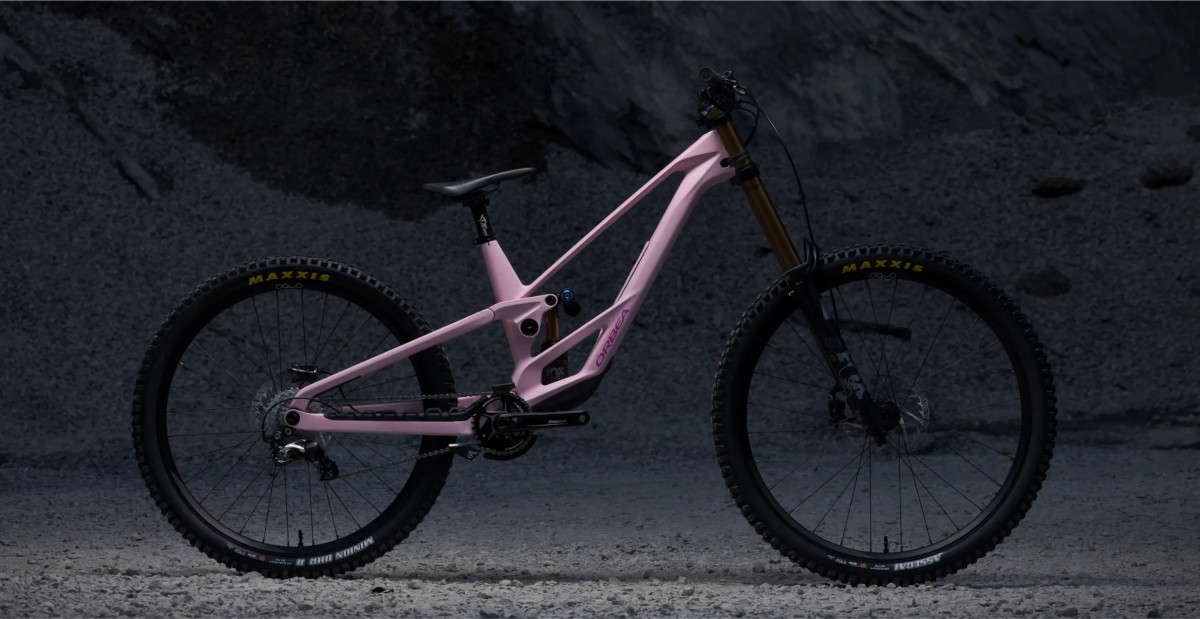
THE PROTOTYPE: TESTING A GAMBLE
At the heart of Episode 1, we are brought along into the high-tension world of bike development. Orbea’s DH platform had never been raced. The frame was built from four years of secret development and was informed by Orbea’s growing engineering ecosystem and commitment to excellence. But an unproven bike is still an unproven bike—and especially at the most competitive level of racing the sport has to offer. As they say: the proof is in the pudding.
For the Rallon DH, only time would tell if it would be a race-winning rocket ship or a dream-crushing liability. Ultimately, if the bike isn’t fast, the season isn’t salvageable. But regardless of how ready everyone felt, it was time to race.
ROUND ONE: THE CHAOS OF POLAND
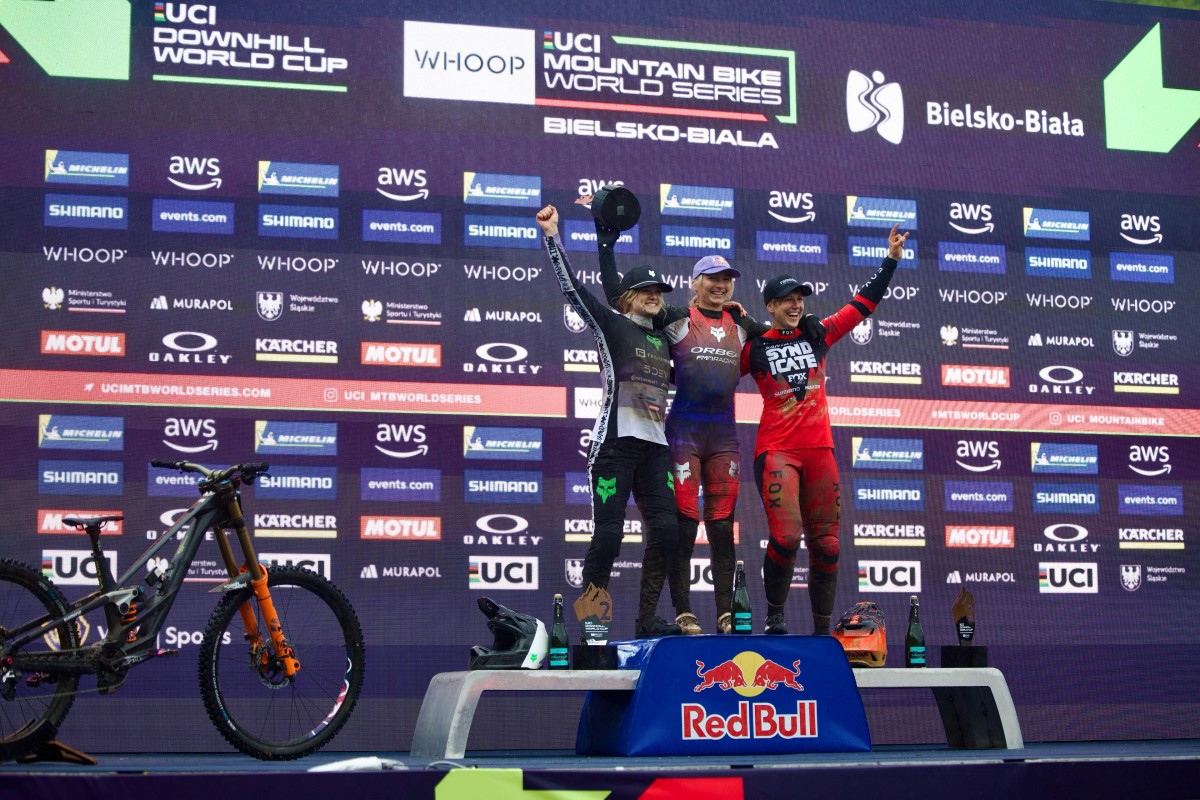
The 2025 World Cup opener in Bielsko-Biała, Poland was a test not only for the bike, but for the entire FMD team—mentally, physically, and emotionally. With extreme weather inbound and an untested platform, it seemed that the goal of the weekend was more likely survival than success. From extreme rain, snow, and otherwise horrendous racing conditions to crashes, mechanicals, and many of the worst-case scenarios riders face on the circuit, the riders certainly had their work cut out for them.
The ebbs and flows are natural when it comes to uncontrollable factors like weather, and at times it’s what separates the good riders from the great ones. While many were tested—including several of Orbea’s own—fortune favors the bold (and a little experience doesn’t hurt either). For Tahnee, things took a different route than many of her fellow competitors and teammates.
TAHNÉE SEAGRAVE: A WIN YEARS IN THE MAKING
Tahnee Seagrave’s victory in Poland wasn’t just a win—it was a landmark moment in modern downhill, and for Orbea, proof that every ounce of effort had paid off. Her last few seasons had been defined by concussions, self-doubt, recovery setbacks, and the mental darkness that follows a dream derailed. Media outlets had described her rebound arc as “barbaric,” “painful,” “extraordinary,” and “hard-won,” but in this case it was even more than that—it was a monumental breakthrough not only for Seagrave herself, but for FMD and the entire Orbea team.
What began as a far-fetched dream and a unifying vision came full circle much quicker than many could’ve ever imagined. Not only was it the first World Cup win for the new team and the new bike, but it was concrete evidence that the efforts made by so many people over the course of this process had real traction and were providing real-world results in dream-like fashion. It was a moment not just for Seagrave, but for a team that put everything into a gamble most teams would never even consider—let alone find a way to make happen.
WHERE DO WE GO FROM HERE?
How We Roll, Episode 1 isn’t just a look behind the scenes of another World Cup race team—it’s the blueprint of how a modern DH program evolves in real time. It’s a portrait of resilience. A study in engineering under pressure. A reminder that great performance is born from uncertainty, not comfort. Perhaps most of all, it’s the narrative backbone to a season that was nothing short of extraordinary in so many ways. Orbea FMD didn’t stumble into success; they built it through risk, reinvention, and a willingness to step into the unknown.