
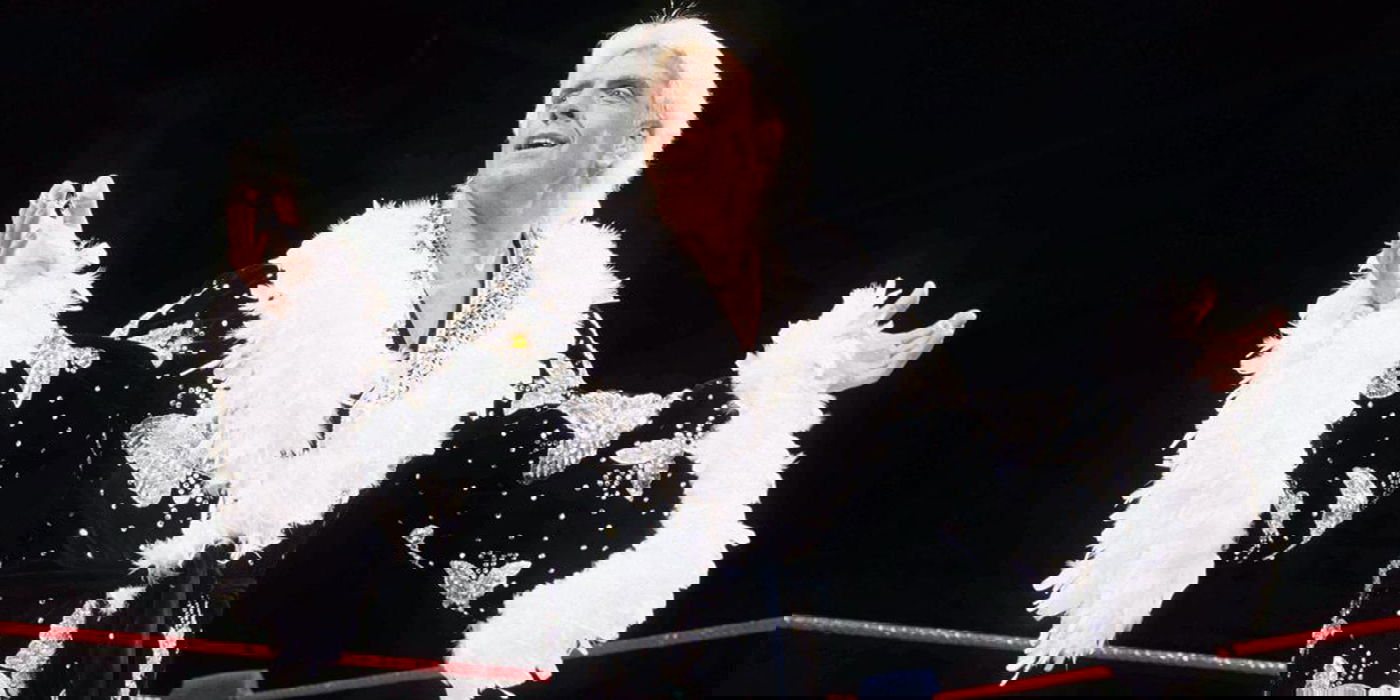
Wrestling fans love to romanticize the larger-than-life personalities of past generations, but the conversation usually stops at what happened between the ropes. The stories that shaped locker room bonds, reputations, and even on-screen chemistry often happened long after the arenas emptied out. That gap between myth and reality resurfaced when Ric Flair pulled back the curtain on how deeply partying culture was woven into wrestling’s golden eras.
Flair has never hidden who he was outside the ring, and even at 76, he speaks about that lifestyle with zero nostalgia filters. While recounting his career, he framed the road as a place where camaraderie was forged as much in bars and hotel lobbies as in main events. That context matters, because it helps explain how certain relationships became legendary.
Flair pointed first to the 1980s, when the grind of touring was balanced by nights out with trusted road partners. “In the 80s? Arn Anderson and I had a ball,” he recalled, before shifting to one of his most infamous running mates. His stories involving The Undertaker were delivered with equal parts admiration and disbelief. “I lost two Rolex watches with The Undertaker,” Flair laughed, adding that the Deadman could more than hold his own when Jack Daniels was involved. Not everyone joined those nights out, though. “Paul Bearer never came with us. He was a calm man,” Flair noted, drawing a sharp contrast between the gimmick and the person.
European tours stood out as their own beast. Flair described a schedule that allowed wrestlers to stay overnight in each city, a setup that amplified the excess. “’Taker and I would tear Europe apart,” he said, singling out Germany as the wildest stops and England as a close second. One trip, arranged by Vince McMahon, took Flair and Undertaker to Japan before heading to London. On the flight home, after drinks flowed freely, Undertaker played a prank that left Flair briefly disoriented. “They said, ‘Mr. Flair, you have to get off the plane,’ and I said, ‘Where are we?’” he recalled, waking up to find his arms crossed over his chest.
Those stories set the stage for an even older chapter of wrestling lore, involving Flair’s time driving Andre the Giant. Before André became a global attraction, Flair was one of the people responsible for getting him town to town. “I drove André for a year when he was Jean Ferré,” Flair explained. “I’d take him to see all the bars. It was tremendous.” André fit comfortably in the back seat at the time, long before his weight ballooned later in his career.
The drinking stories that follow have become almost mythological, yet Flair insists they are grounded in reality. “He could drink, boy. You’ve never seen anybody like that in your life. 106 beers. I saw him do it,” Flair said, before joking that André once drained nearly every bottle of vodka on a plane. What stunned Flair most was that André rarely appeared affected. “He wouldn’t even be drunk,” he added.
Taken together, these stories highlight how wrestling’s past was shaped by a culture that blurred personal and professional lives. The bonds formed during those nights out often translated into trust in the ring, influencing match quality, locker room hierarchies, and long-term loyalty. It also reframes how fans understand the chemistry between legends who seemed inseparable on screen.
In an era where modern wrestling emphasizes wellness policies and tightly controlled schedules, Flair’s recollections feel almost alien. Yet they explain why so many legends speak about their peers with familial reverence. Those experiences may never return, but they remain a crucial piece of understanding how wrestling’s biggest personalities became exactly who they were.