
In this Rider’s Lens, we introduce the work of Swiss sketch artist Maurizio Ceraldi, who has traveled all around the world by bicycle over the past two decades. Find a collection of his drawings and read his thoughts on how adding some pens and pencils to your pack list can open doors and deepen connections here…
I’m Maurizio, a 52-year-old cyclist, lawyer, and sketch artist based in Switzerland. Over the past 23 years, I’ve explored the world by bicycle—from a year-long pilgrimage to Mount Kailash in Tibet to two years pedaling through 25 African countries. After a 28-year break from drawing, I picked up a sketchbook again during the pandemic. Now it travels with me everywhere.


I grew up near Basel with my three siblings. My mother is Spanish, my father Italian, and though German was my first language, French became my favorite. Those languages later opened doors while traveling. In 2002, I cycled from Switzerland to Santiago de Compostela in Galicia, my mother’s homeland, and something clicked. That honest, muscle-powered way of moving through the world became my compass.
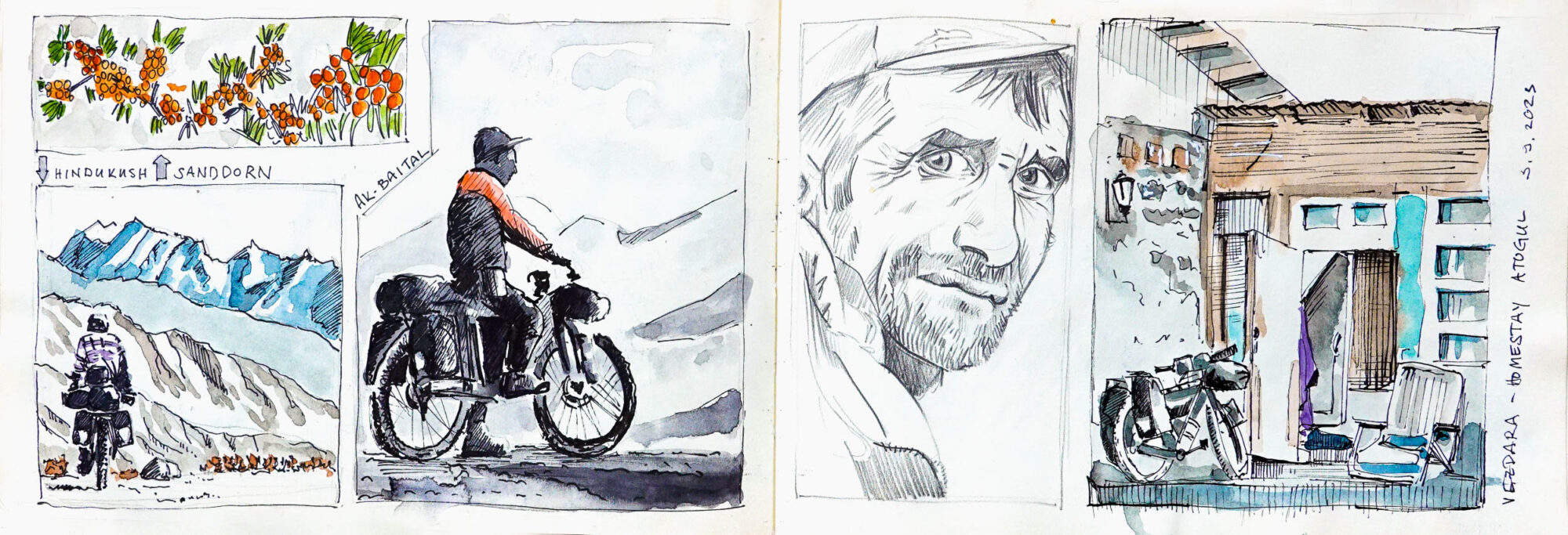
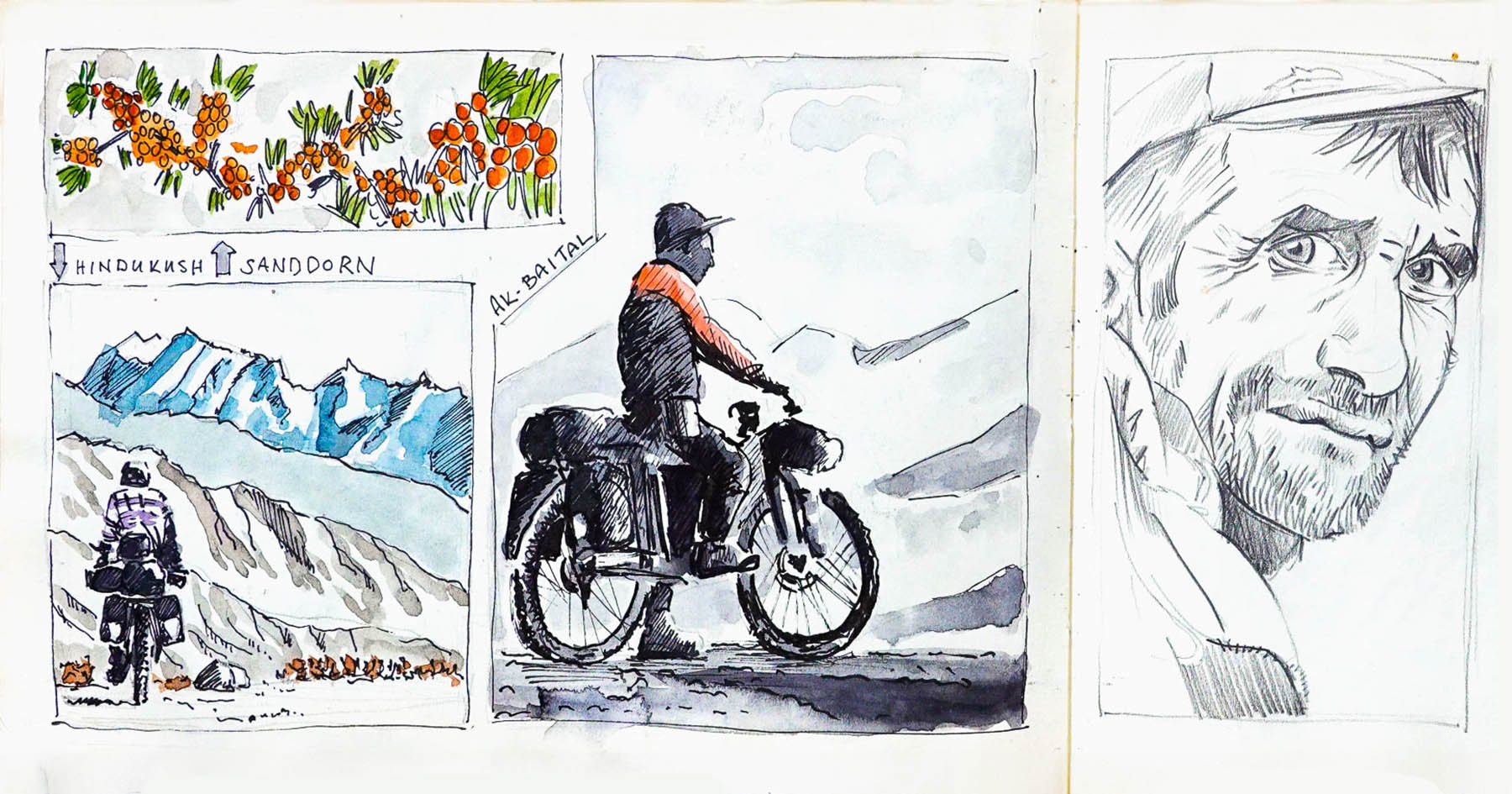
I started drawing and painting at 17. After graduating from high school, I attended art school for a year before choosing a legal career. Then, I completely stopped sketching. The spark to pick up the pencil again was Enrico Marini, a Basel-based comic artist who’s made a name in France’s BD scene. I found encouragement in social media and the local urban sketching community, and spent countless hours drawing portraits and figures. I’m still learning, simply enjoying the process of diving deep into a medium. Mostly fineliners these days, though I experiment with watercolors, water-soluble pencils, and classic graphite.
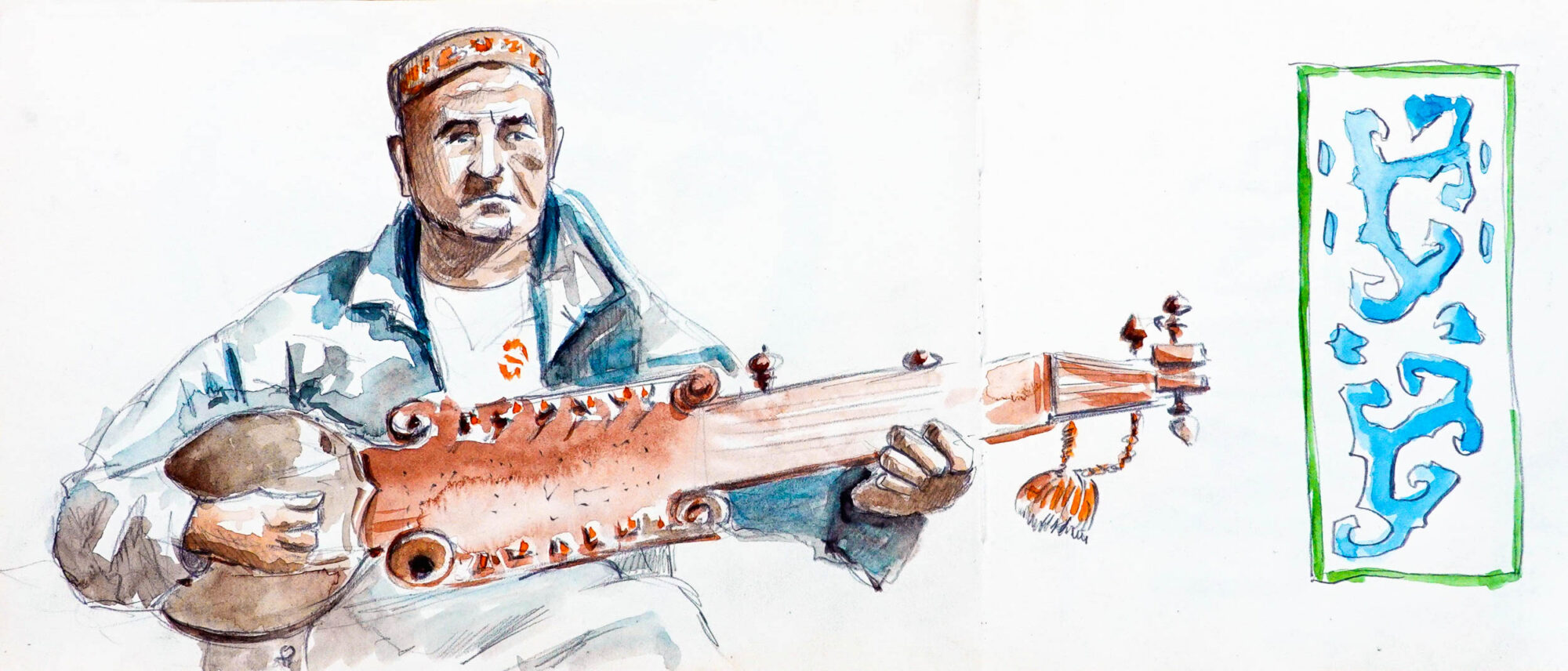
The real joy of sketching is in the moment: sitting down somewhere, opening my sketchbook, seeing what unfolds. It’s a form of meditation. A highlight was returning to Central Asia in 2023, some 17 years after my first journey through the region. In 2006, infrastructure was scarce, and I relied heavily on local hospitality. This time, I brought a sketchbook. It was a pleasure to reconnect with many of those same hosts. Especially in Zong, at the end of the Wakhan Corridor, where the reunion with Nazar and his family was intense.
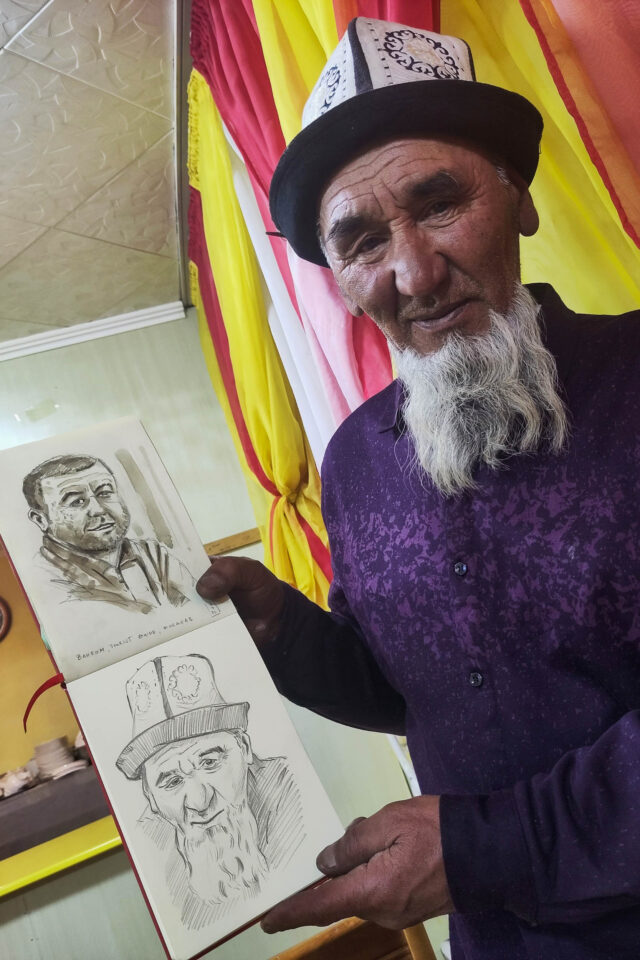
In Tajikistan’s Bartang Valley, I drew people in almost every village. The moment I sat down to sketch, small crowds would gather—neighbors recognizing each other in previous sketches, asking to be drawn too. My Russian is limited, so the sketchbook became a bridge where language couldn’t reach. It opened hearts and doors in a way my bicycle alone never had.
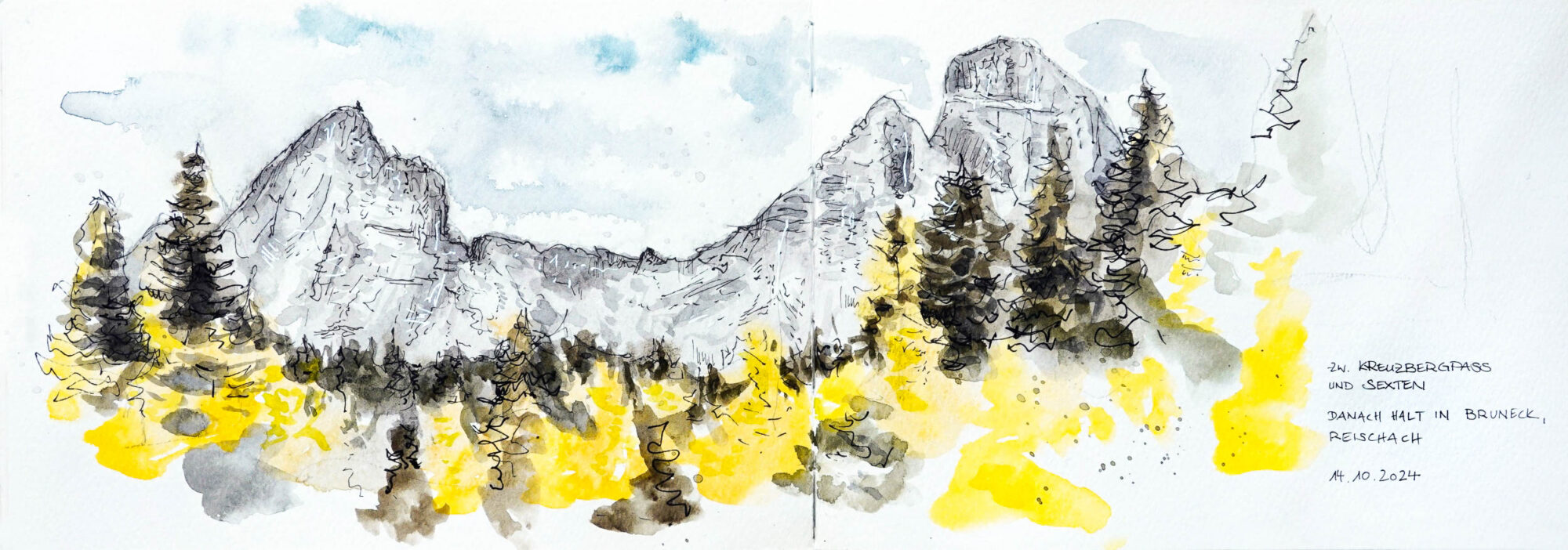
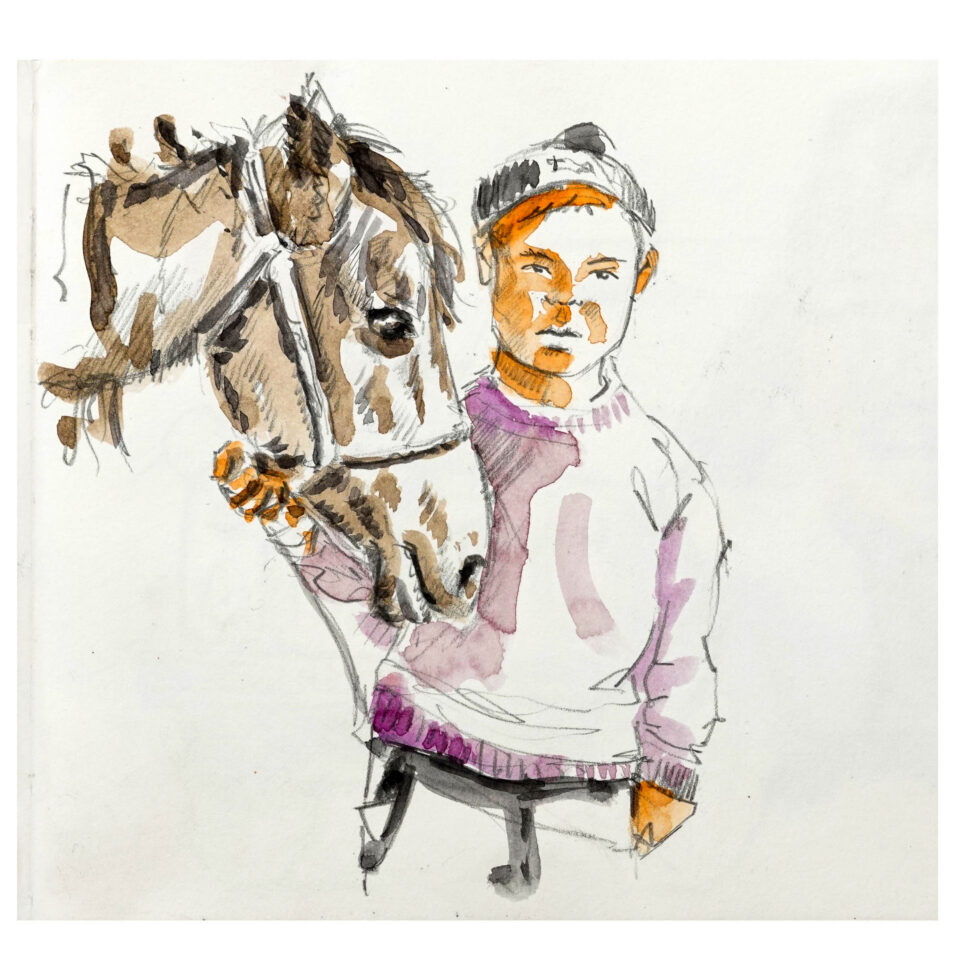
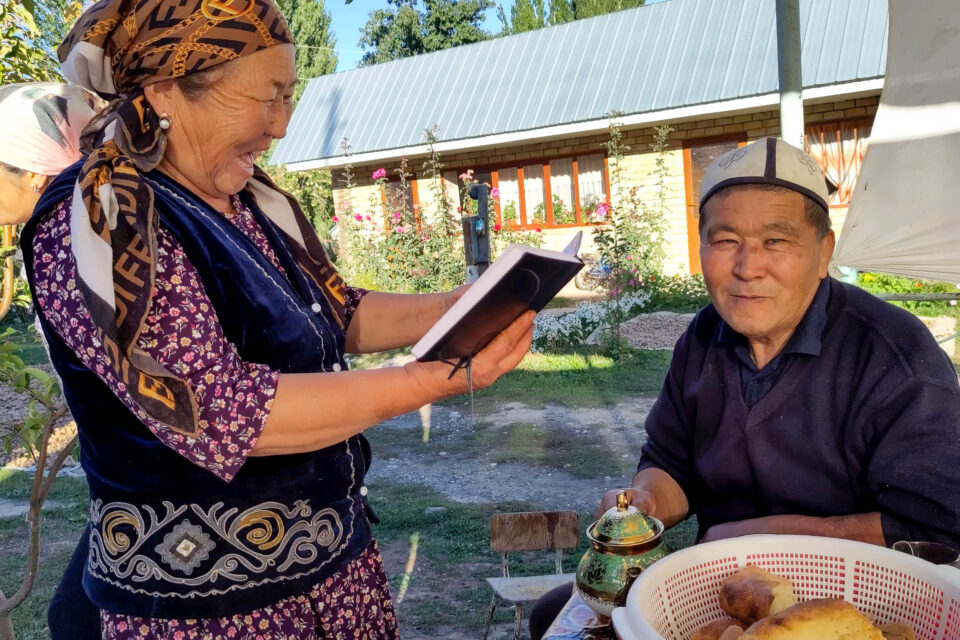
The sketchbook creates encounters and invitations. In a French bar a few kilometers before Sault, the starting point for Mont Ventoux, I asked a burly gentleman if I could draw him. At the end, he paid my entire bill: two large beers and an herbal schnapps. Luckily, the municipal campground was just a stone’s throw away. In Kyrgyzstan, in Jangy Talap, I was sketching a horse when boys gathered around me. Soon, a woman from next door came out and invited me for lunch. In Murghab, Tajikistan, two girls insisted on paying me for my work and pressed a few somoni into my hand. Fortunately, most people have phones and are content to take photos of their portraits. For those who want a paper souvenir, I carry a small notebook that I can tear pages from.
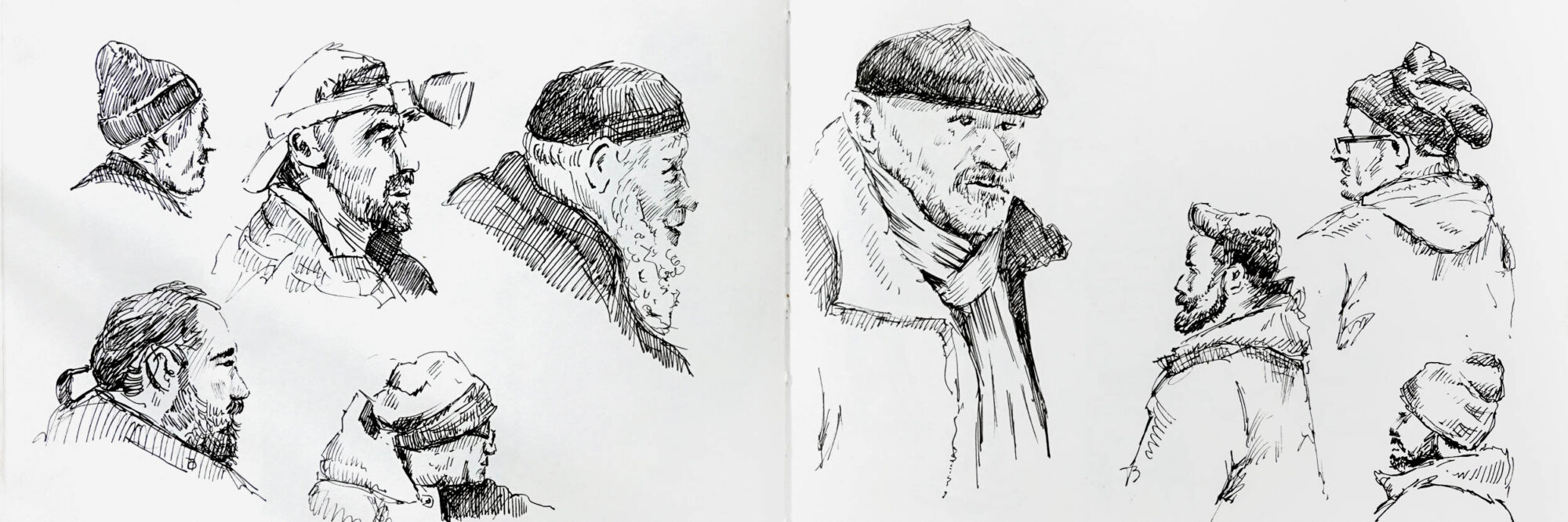
I find inspiration from great classical artists like Rembrandt, Caravaggio, and Degas, as well as in comic artists like Hugo Pratt, Cosey, Hermann, and Moebius. Public transport is my best training ground. Within minutes, I can sketch passengers—mostly unnoticed, thanks to people staring at smartphones. Portraits and figures by the dozens. Fast, just a few moments or minutes each. That sharpens both eye and hand. Sometimes, after making eye contact, I ask the person directly if I can draw them. The response is always positive. I also enjoy attending sketch events in Basel.

In my free time, I enjoy cycling, obviously. Road bike, gravel, touring bike—I’m not picky. I particularly like multi-day gravel tours with a tent and sleeping bag in lesser-known corners of France. For the past seven years, I’ve spent my summers mostly in the Swiss Alps, mountaineering and hiking. I became a tour leader for the Swiss Alpine Club in Basel.
Bike travel has taught me to find joy in small things, to appreciate what really counts: clean water, good food, meaningful encounters with locals or fellow travelers. I let myself drift more than I used to. A bike journey is always good for surprises. In Nigeria, I got to play a small role in a Nollywood movie. In Benin, I was named an honorary citizen of a small community after delivering donations for a new village well. I was interviewed by a local newspaper in South Africa. And I rode into Cairo the day the military toppled President Mursi.

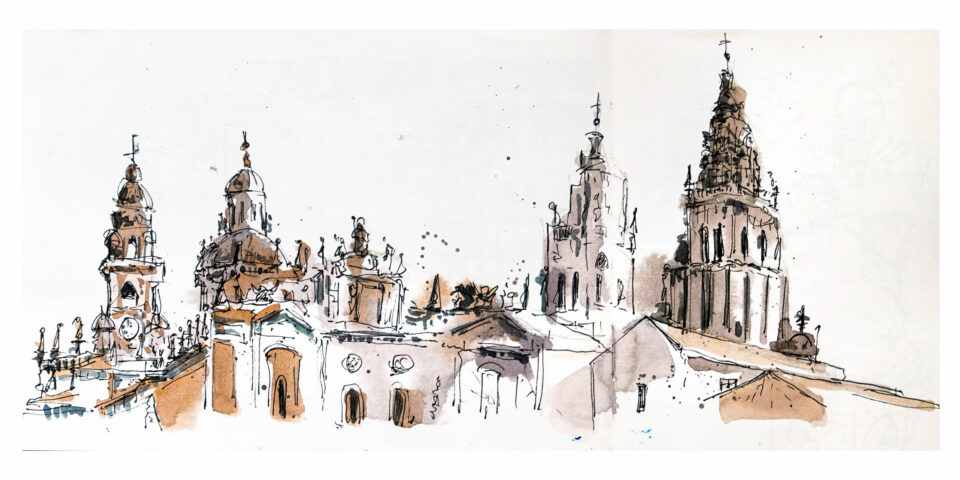
During any journey, there are quiet moments you can fill with drawing. I take time to pull over and sketch whenever I see something really inspiring. Locals today are used to tourists with high-end video and photo equipment. But drawing is still perceived as a craft, something made by hand. People respond to that differently than they do to a camera lens.
In terms of my craft, I’m still practicing, still experimenting with different materials. My results don’t always thrill me—I see myself as a draftsman still at the beginning of his development. But that’s part of the pleasure: not knowing where it leads. One small project I’m planning is illustrating short stories for a friend, and developing more elaborate, finished illustrations. I hope my drawing takes me back to Africa soon. Inshallah. The sketchbook will come with me.
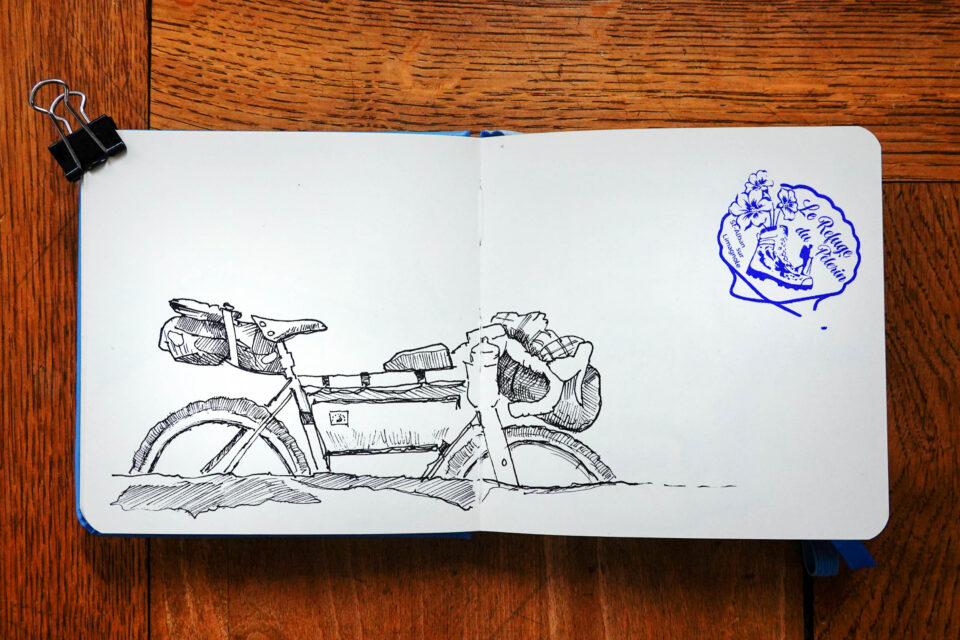

If you’re interested in taking up drawing, I suggest finding a cheap sketchbook and a pen. Find something simple. Forget the result—focus on the process, on developing a loose hand. Practice and practice. Sketch on a bus; the movement will naturally loosen your style. Find inspiration in social media, but don’t let it intimidate you.
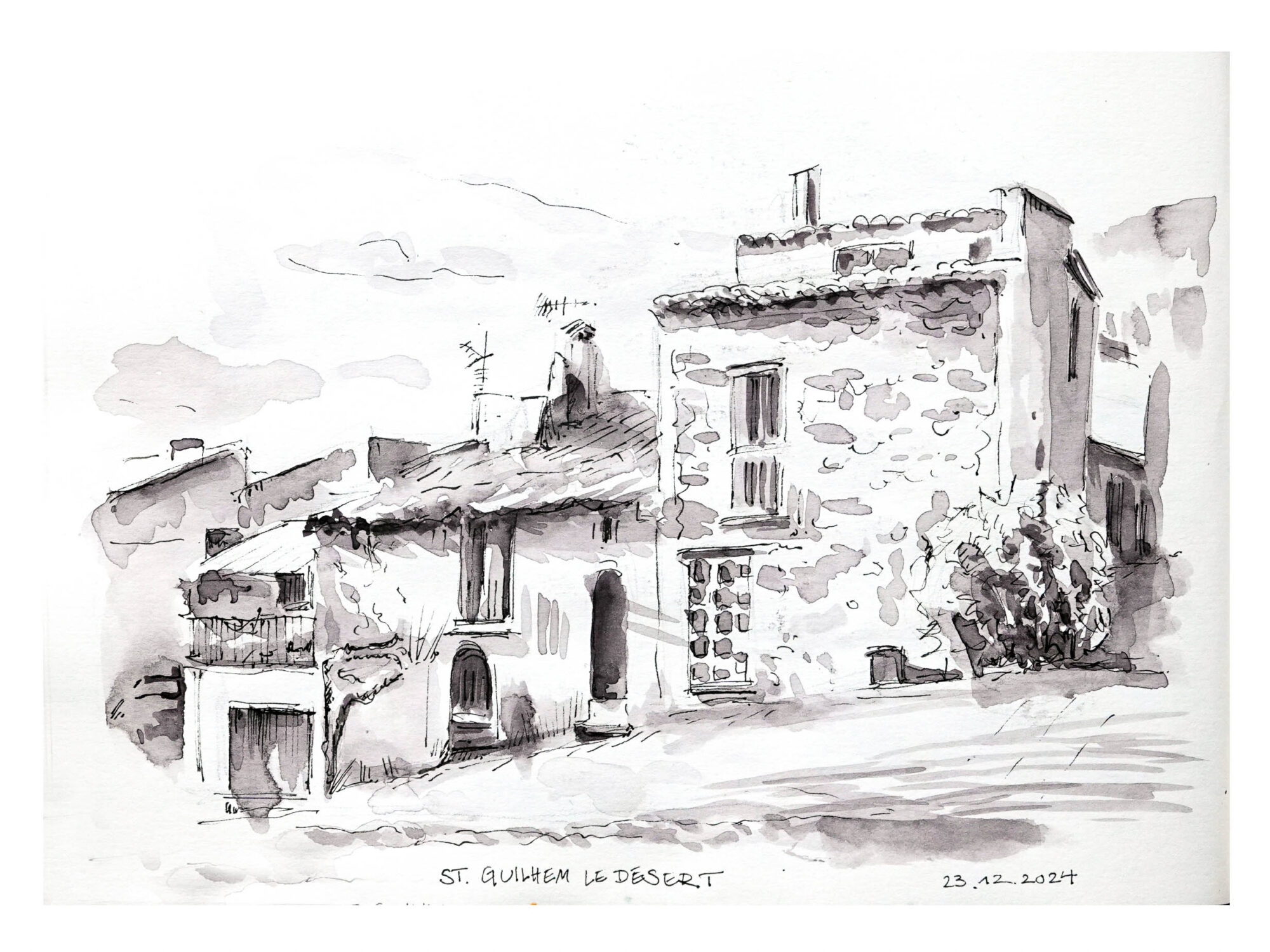
Turn off your brain and forget what you’re looking at. Focus on light and dark. Try drawing a face upside down. Try to simplify complex forms. Don’t get lost in the details. Play with empty spaces. For every minute of YouTube tutorial you watch, spend at least five times that practicing. Look up the Loomis Method book online—his approach to portrait drawing is still incredibly valuable. Daily routine matters. Go through your sketches periodically. What turned out well? Keep working from there.
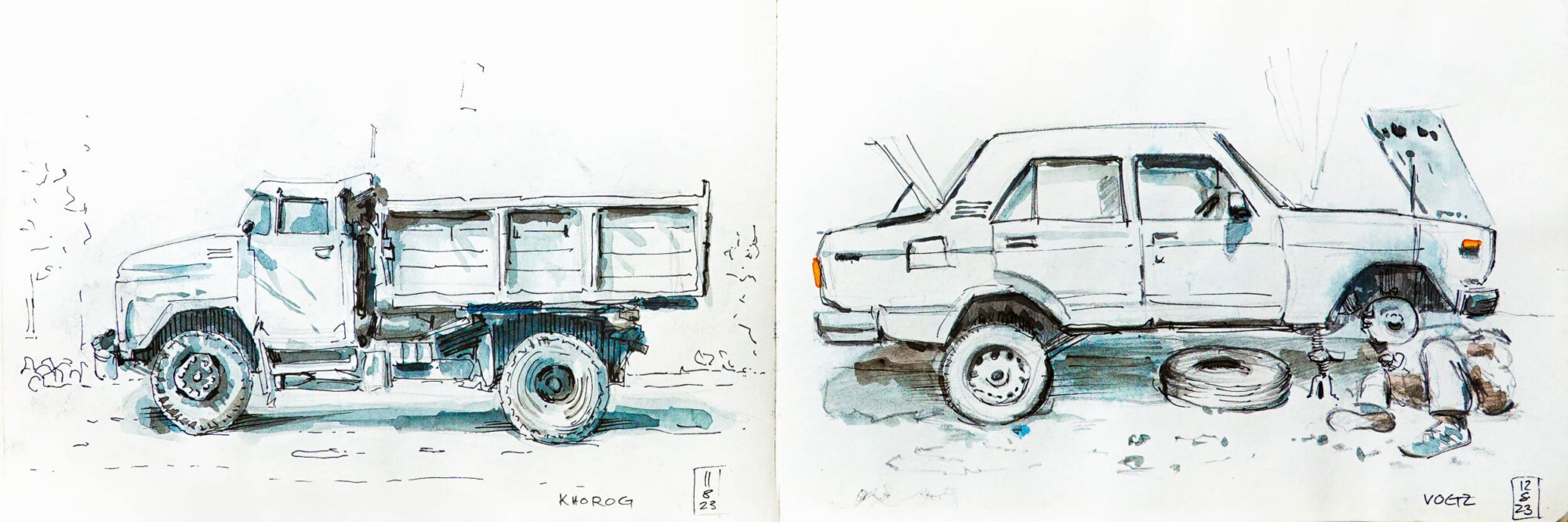
I shed my inhibitions and perfectionism quickly. Sometimes sketches turn out well, often not (the ones I don’t show here). It doesn’t matter much. What counts is the moment, getting in the flow, the process. If a sketch turns out nicely, I’m happy. If not: turn the page and keep going.

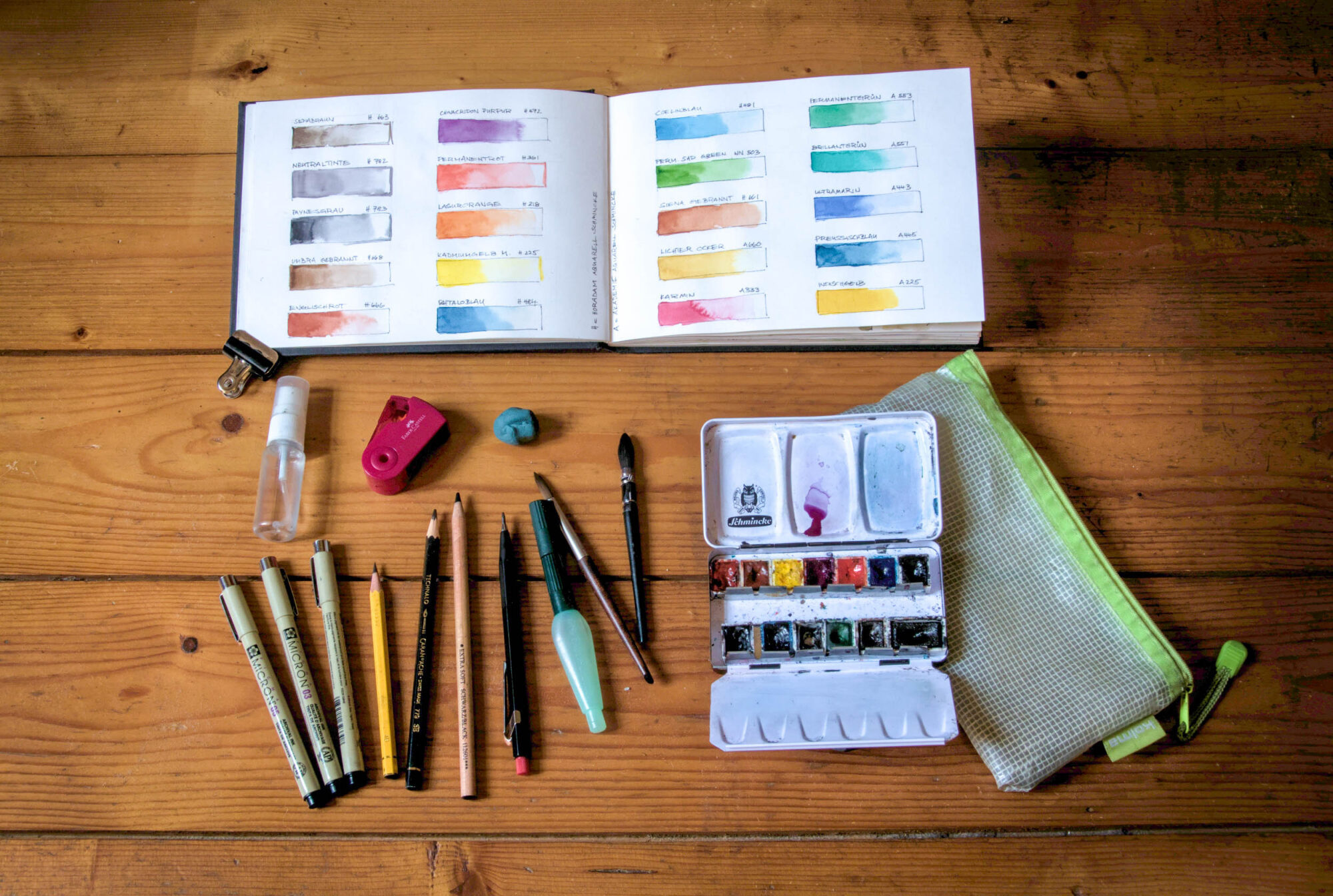
Maurizio’s Illustration Tools
My kit stays minimal. It includes:
- Fineliners (Micron brand)
- Pencils (regular and water-soluble)
- Watercolors (6 or 9 pans of Winsor & Newton in a small tin when bikepacking)
- Water brush (with reservoir) plus one or two additional brushes
- White marker pen (Sakura White Gelly Roll)
- Sketchbooks: Leuchtturm1917 or Moleskine for fineliner work; A5 landscape-format sketchbooks for mixed media
Everything fits in a cheap waterproof case that slots into my frame bag or hip pack. Once you’ve gained some confidence with watercolors, it’s worth upgrading to better materials.
Featured Illustration
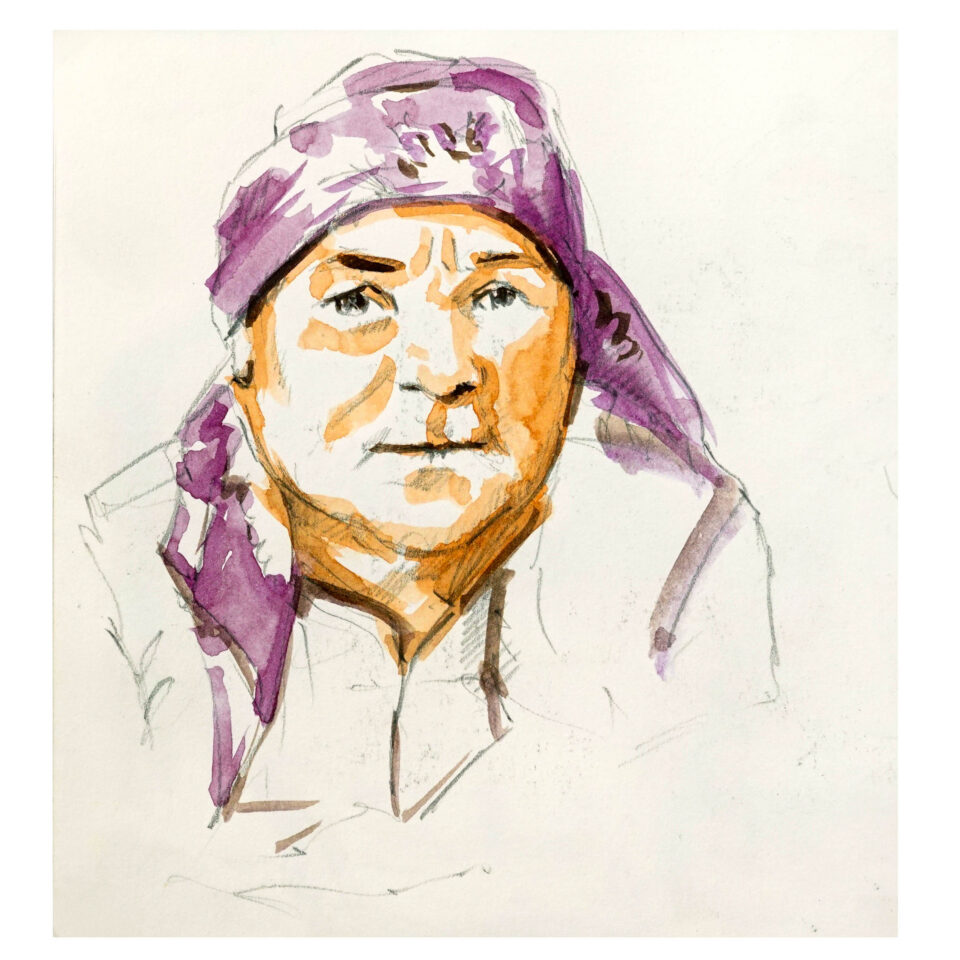
These portraits are from a chance encounter in Qazigurt, a small Kazakh town near Tashkent. I’d asked around for a guesthouse when Mels, an electrical engineer in his forties, decided on the spot to take me home to his parents instead.
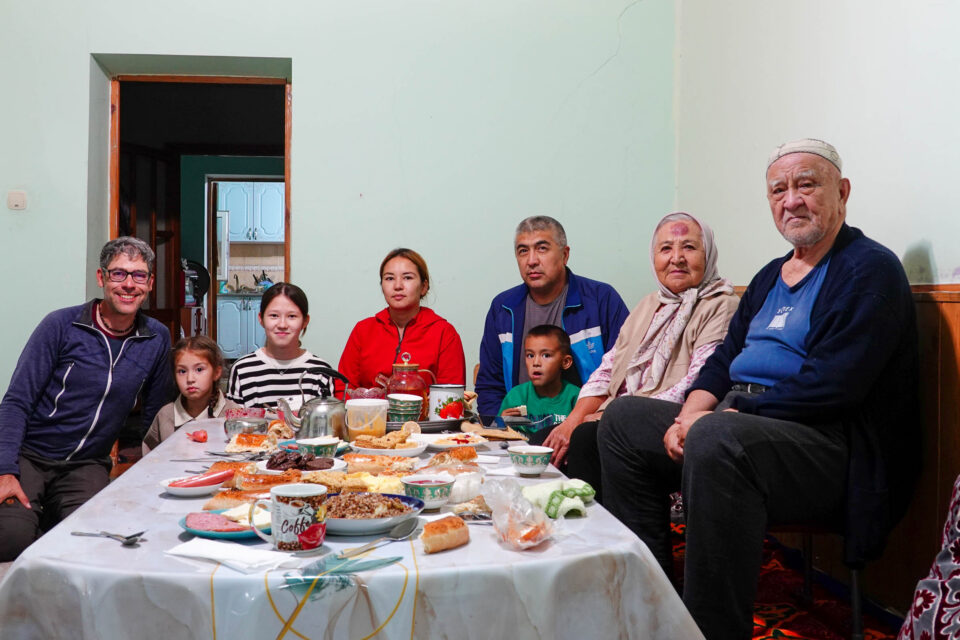
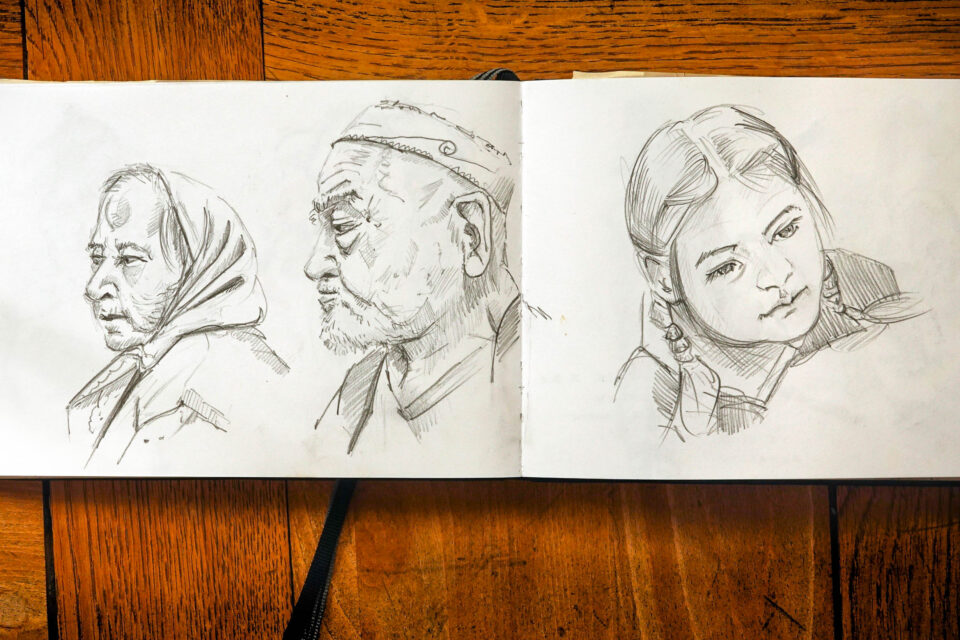
What started as a simple question turned into an evening with three generations under one roof. We shared tea, food, and stories that my limited Russian could barely keep up with. But the sketchbook filled the gaps. Drawing became our shared language—a way to connect beyond words, to slow down and really see each other. It’s moments like these that remind me why I carry a sketchbook: not only for the drawings themselves, but for the doors they open and the time they create. The bike gets you there. The sketchbook lets you stay.
You can see more of Maurizio’s work at Ceraldi.ch.
Further Reading
Make sure to dig into these related articles for more info…
Please keep the conversation civil, constructive, and inclusive, or your comment will be removed.