
The furore around Lindsey Vonn’s decision to compete at the Winter Olympics is not only a reminder that danger is inherent in elite sport, but that there is a contradiction in the court of public opinion when it comes to what is expected of athletes, writes Verity Ockenden.
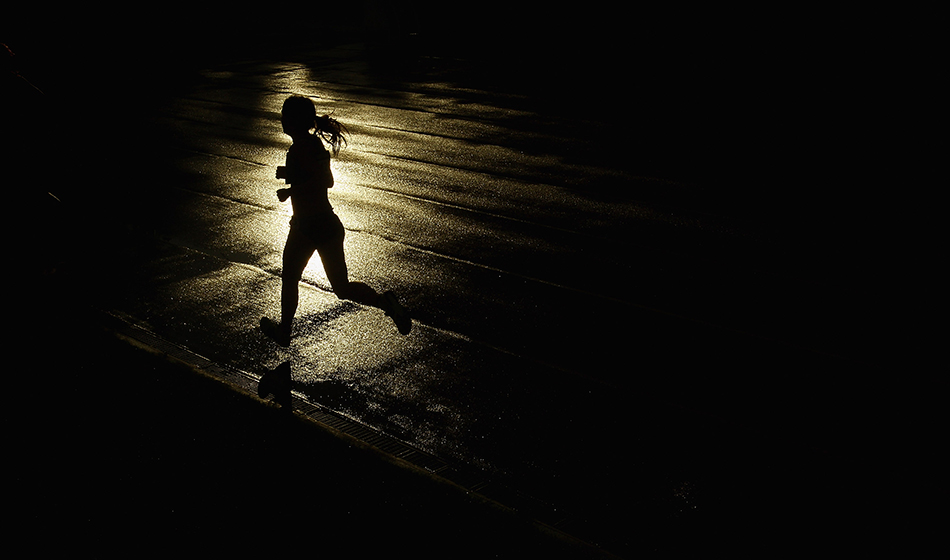
Recently, as I set out for a 90-minute progressive long run, I threw caution to the wind – quite literally. A seasoned local had warned me the evening before that I would be wiser to postpone the session. Torrential rain and high winds were forecast for the entirety of the day. It would be a hiding to nothing to attempt to run fast in such conditions.
I weighed his advice carefully as I laid out my kit before bed that night. I told myself I would make a sensible decision in the morning and set my alarm with a kind of conditional optimism: if the rain was biblical, I would roll over and reclaim the duvet before heading to the gym to train indoors instead. Of course, when the sun rose, although it wasn’t at all obvious that it actually had, I was always going to lace up.
Within two minutes I was soaked to the skin. The rain wasn’t falling so much as travelling horizontally, driven by gusts that seemed personally offended by my presence. My head was angled awkwardly downward for the entire 13 miles to keep my cap from taking flight. Passing motorists slowed incredulously and shouted: “It’s raining, you know!” Others muttered darkly about “colpo d’aria” as they drove off.
Colpo d’aria is the Italian conviction that being “hit by cold air”, particularly while sweating, will lead to a catalogue of ailments ranging from stiff necks to near-certain pneumonia. The small part of me that has culturally adapted to Italy, this place I now call home, had acknowledged this grave possibility by donning a turtle-neck to protect my apparently most vulnerable region.
I politely declined two separate offers of a lift home from concerned strangers and told myself that Great Britain would never have won a single medal if we were a nation afraid of going out in the rain. By the final progression, shoes squelching like sponges, I couldn’t entirely say whether the decision had been wise. Physiologically, perhaps the session was sub-optimal. Mentally, however, it felt like something far more valuable had been tested.
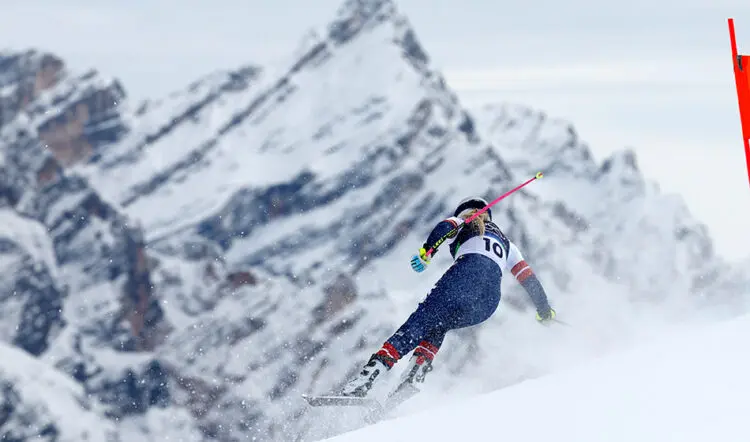
As I ticked off each sodden mile, my thoughts drifted to a much grander stage than the flooded back roads of northern Italy’s Pianura Padana: the slopes of the Winter Olympics taking place not so very far away in Milano-Cortina and the scrutiny faced by American ski legend Lindsey Vonn. Her decision to compete despite serious injury had been voraciously dissected by anybody and everybody over the past week. From official commentators and event journalists to instagram influencers and armchair experts, she was alternately diagnosed by some as reckless and delusional, and by others as heroically determined.
My long run, by comparison, was inconsequential. Any negative repercussions would be judged by perhaps six people at most – three of whom were complete strangers whose opinions I could theoretically discount. Yet as the rain lashed at my face, I felt the trickle-down effect of Lindsey’s tabloid judgement arrive in a messy puddle of feelings at my feet. Why, even as a seasoned professional accustomed to filtering out such noise, did it still hit such a nerve to watch another athlete’s choices be torn apart?
I’m conscious of my own hypocrisy here in adding to the melting pot by writing about it, but part of the answer, I suspect, lies in the peculiar contradiction at the heart of elite sport. The public appetite for athletic performance is insatiable. We celebrate those who push beyond perceived human limits, who race through pain barriers, who return from injury sooner than seems reasonable, who toe the line when logic says rest.
We elevate them to hero status precisely because they defy normal parameters. Yet we also expect them to conform to conventional standards of prudence. We demand transcendence, but only within boundaries we ourselves deem acceptable. We want athletes to be extraordinary, but not inconveniently so, and definitely not uncomfortably so. Risk-taking is applauded only in retrospect, provided it culminates in a medal. If it ends in defeat, it is reframed as folly.
The very nature of professional sport requires us to inhabit a space that most people will never fully understand. We will always be a niche community of anomalous outliers. Of course there will be misunderstanding. Of course there will be judgment.
What I hope for – perhaps naively – is a deeper appreciation of the calculus behind our choices. When an athlete steps on to a start line injured, or heads out into a storm to complete a session, it is rarely done lightly. We are not thrill-seekers courting disaster for the drama of it. We are individuals who have already reconciled ourselves with the risk of failure and we understand all of the potential costs. But, for most of us, the greatest cost would be in failing to try.
As athletes, we also become adept at managing external narratives. We curate social media with caution; we develop polite, practised responses to probing questions; we learn to compartmentalise criticism. And yet, watching someone like Lindsey Vonn have her motives dissected so publicly still unsettles me. Perhaps because it reminds me that vulnerability is inherent in what we do.
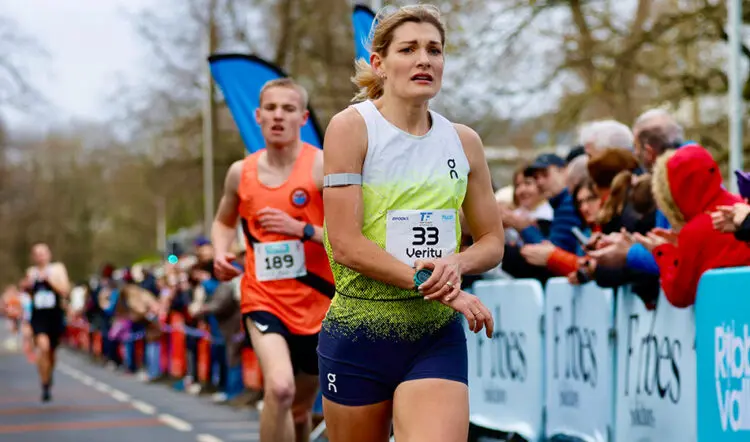
When we compete – or even when we train – we are making a statement of intent. We are saying: “This matters enough to me to risk discomfort, embarrassment, even failure.” That is an inherently vulnerable position. To strive publicly is to accept that the outcome will be judged publicly, too.
As my own miles accumulated that day and the wind changed its direction just as I did, thus depriving me of the tailwind I had been so looking forward to on my way home, I considered what success actually meant in such moments. Had I opted for the treadmill or taken the day off, I would have been warm, dry and arguably sensible. But I would also have known, quietly, that I had chosen comfort over commitment. The session might not have been textbook perfect, but it reaffirmed something essential: that resilience is not built in ideal conditions.
Elite sport is often romanticised as a procession of podiums and personal bests. In reality, it is a mosaic of small, sometimes questionable, decisions made in solitude. It is the alarm that goes off when the rain is hammering the windows. It is the choice to train when motivation flickers. It is the calculation – sometimes imperfect – about whether or not to step on to a start line.
Public discourse tends to flatten these complexities into binary verdicts: brave or foolish, tough or reckless, but inside the athlete’s mind the terrain is far more nuanced. There is consultation with coaches and physios, a weighing of long-term goals against short-term gains, an honest interrogation of one’s own motives. And yes, occasionally, behind it all is just the sheer stubbornness that some of us, for our sins, are born with.
“Elite sport is often romanticised as a procession of podiums and personal bests. In reality, it is a mosaic of small, sometimes questionable, decisions made in solitude”
By the time I reached home, I had had no grand epiphany. I had simply been reminded that our profession demands an unusual relationship with discomfort and risk. To outsiders, that can look irrational. To us, it is often the only way forward and we also know that one day, the next step forward is going to be the last.
The rain eventually stopped. My shoes dried out and the world moved on. But the question lingers, far beyond a single stormy long run: if we celebrate athletes for daring greatly, can we also allow them the dignity of making their own calculations about when and how to do so?
Because in the heart of every competitor – whether on a snowy Olympic slope or a wind-swept agricultural plain – there is an understanding that cuts deeper than any public opinion. The greatest failure is rarely losing but in not making an attempt in the first place, and that intrinsic knowledge will also be far harder to live with than any external outcome.